Last updated: September 25, 2026
Cauliflower au gratin turns a humble head of cauliflower into a creamy, cheesy, golden-topped side dish that disappears fast at the table. You will find the full recipe card below, but the prose here walks you through every stage so you can make this with confidence the first time.
What You Need for This Cauliflower Au Gratin
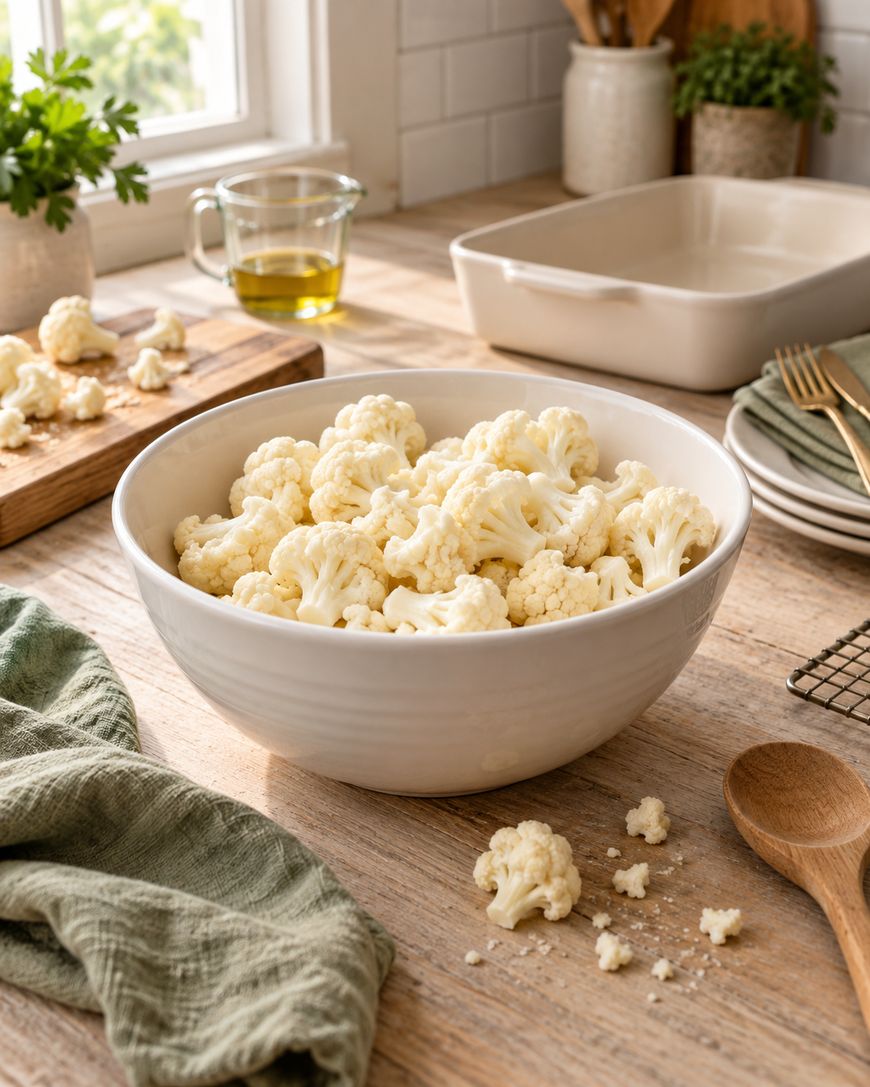
You will build this dish around one large head of cauliflower, cut into bite-sized florets, and a classic béchamel sauce made from butter, flour, whole milk, and two cheeses.
Gruyère brings a nutty depth that makes this cauliflower au gratin taste like it came from a French bistro, while sharp cheddar adds the golden color and gooey pull you want on top. A little Dijon mustard wakes up the sauce without tasting like mustard at all, and a pinch of nutmeg is the classic partner to béchamel for a reason.
You will also want fresh garlic, a splash of white wine or extra milk to deglaze the pan, panko breadcrumbs for the topping, and fresh thyme if you have it on hand.
Choosing Your Cauliflower
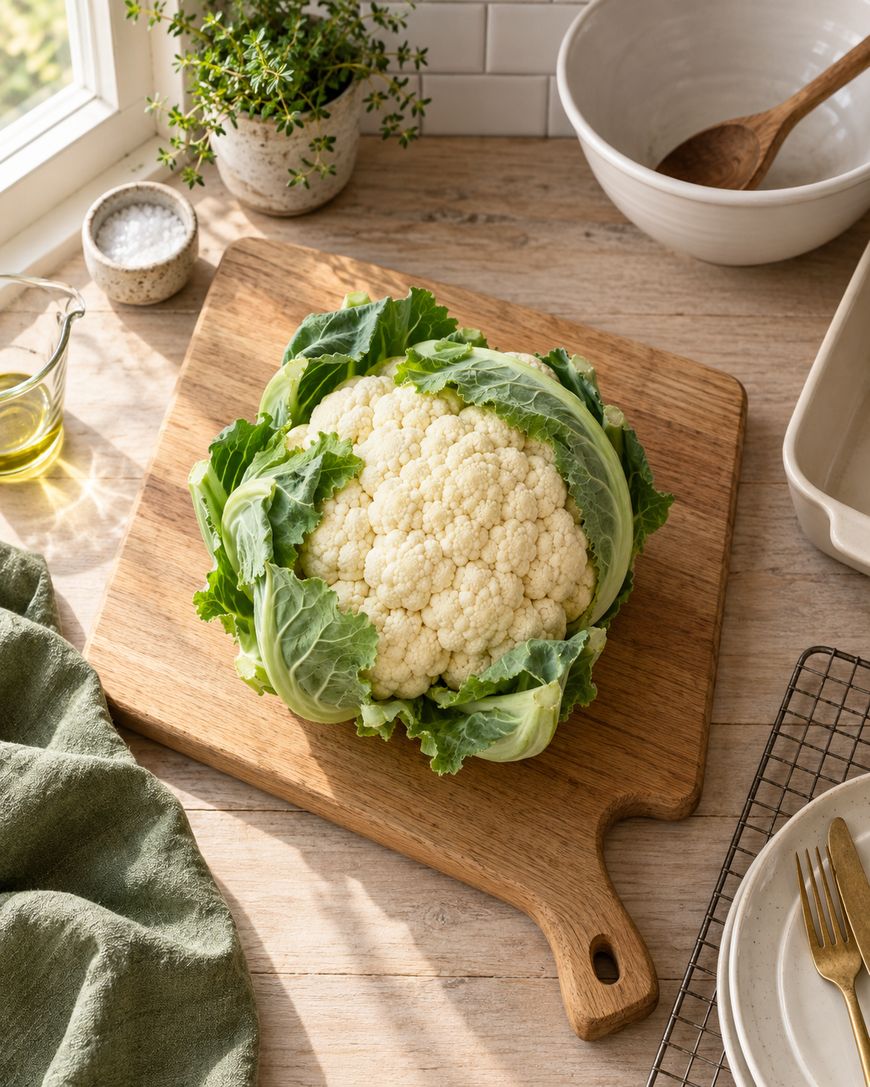
Pick a head that feels heavy for its size with tightly packed, creamy white florets and no brown spots. You want florets roughly the same size, about 1 to 1.5 inches, so they cook evenly in the oven.
How to Make Cauliflower Au Gratin
Step One: Parboil the Cauliflower
Bring a large pot of salted water to a boil and add your cauliflower florets. Cook for 4 to 5 minutes, just until the edges turn tender but the centers still hold firm, since the cauliflower will keep cooking in the oven.
Drain the florets well and let them sit in the colander for a few minutes so excess water can steam off. Skipping this step is the most common reason a cauliflower gratin turns watery instead of creamy, so do not rush it.
Step Two: Build the Béchamel
Melt butter in a saucepan over medium heat, then whisk in the flour and cook for about a minute, stirring constantly, until the mixture smells lightly toasted and loses its raw flour smell.
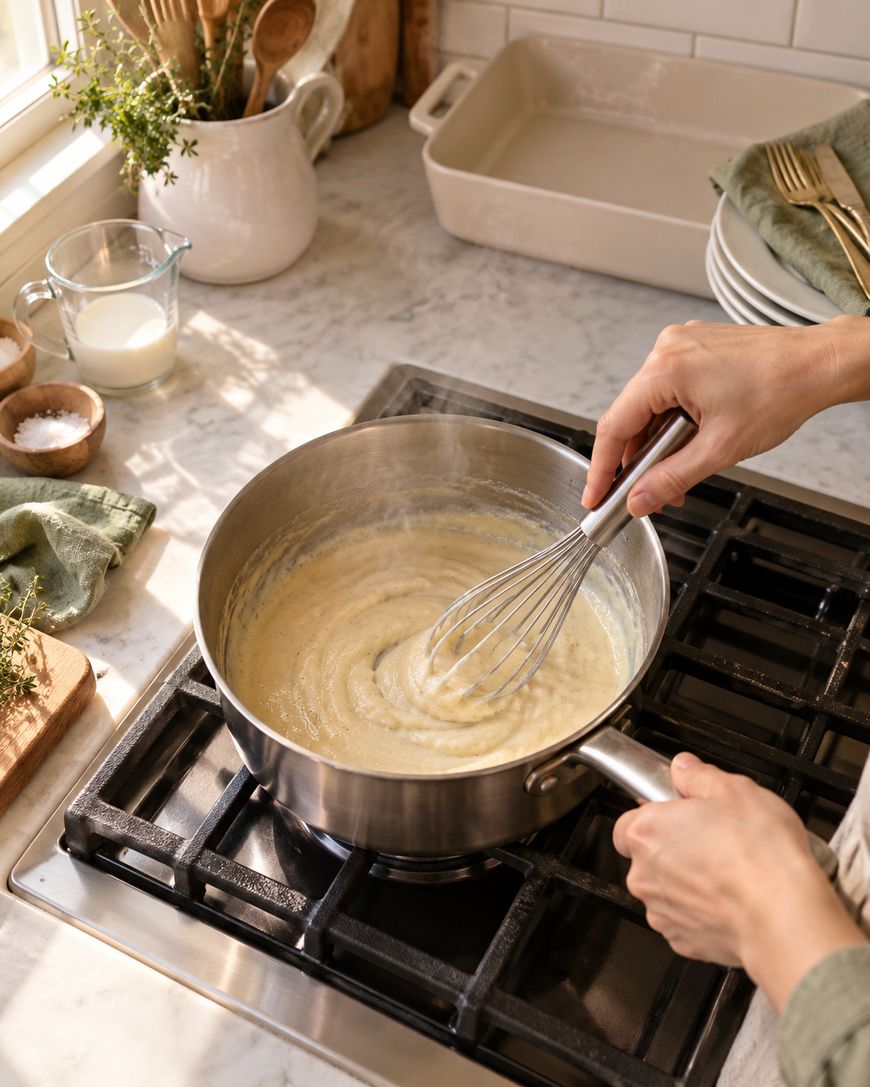
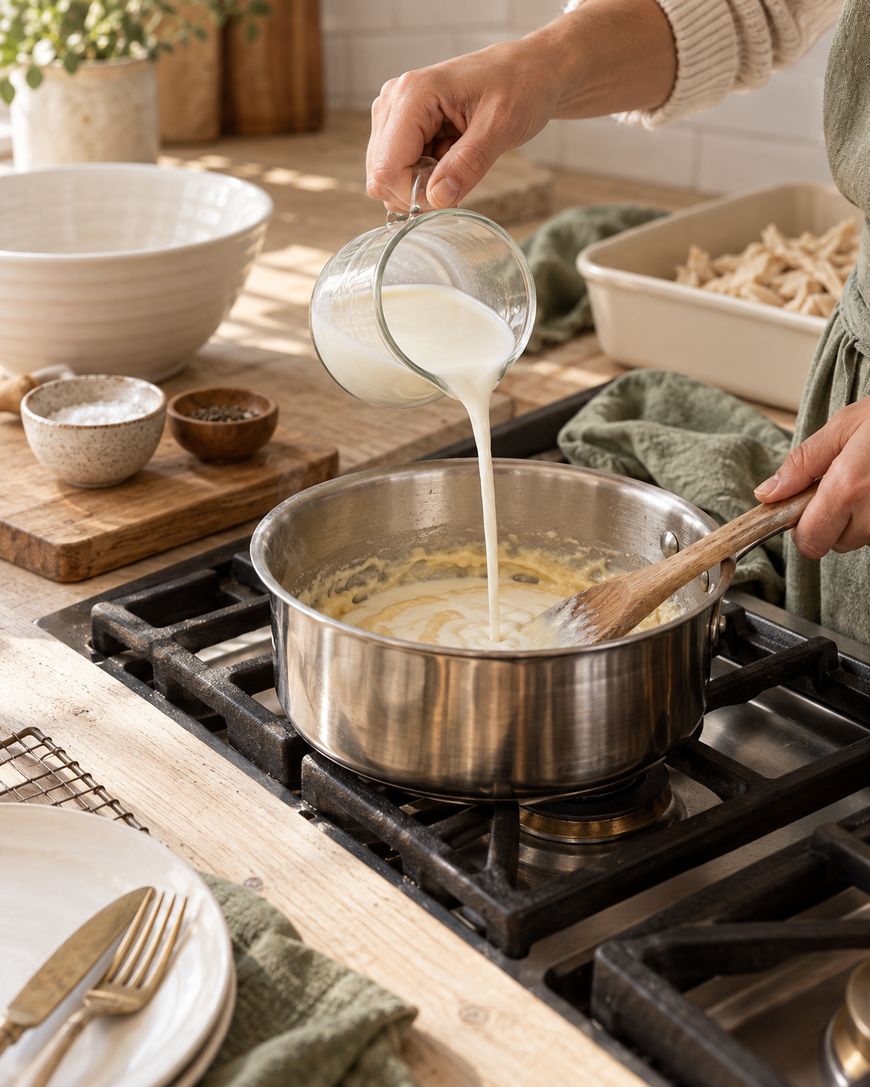
Slowly whisk in the milk, a little at a time at first, making sure each addition is fully smooth before adding more. This gradual pour is what keeps the sauce silky instead of lumpy, so resist the urge to dump it all in at once.
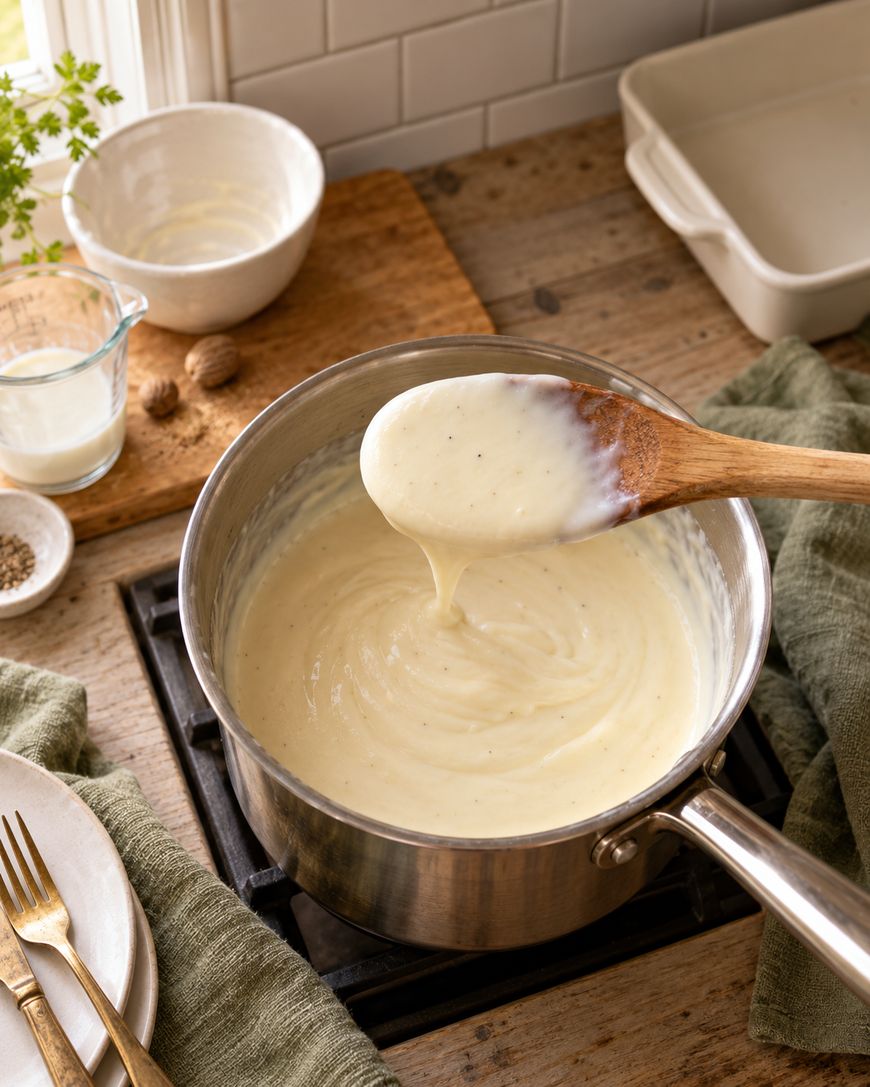
Keep whisking over medium heat until the sauce thickens enough to coat the back of a spoon, about 5 to 7 minutes. Stir in the minced garlic, Dijon mustard, and a pinch of nutmeg, then season with salt and pepper.
Step Three: Melt in the Cheese
Take the sauce off the heat before adding the cheese. This matters because cheese added over direct heat can turn grainy or split, while cheese stirred in off the heat melts into a smooth, glossy sauce.
Stir in most of the Gruyère and cheddar, reserving a handful of each for the topping. Taste the sauce here and adjust the salt, since this is your last chance before it goes into the oven.
Step Four: Assemble and Bake
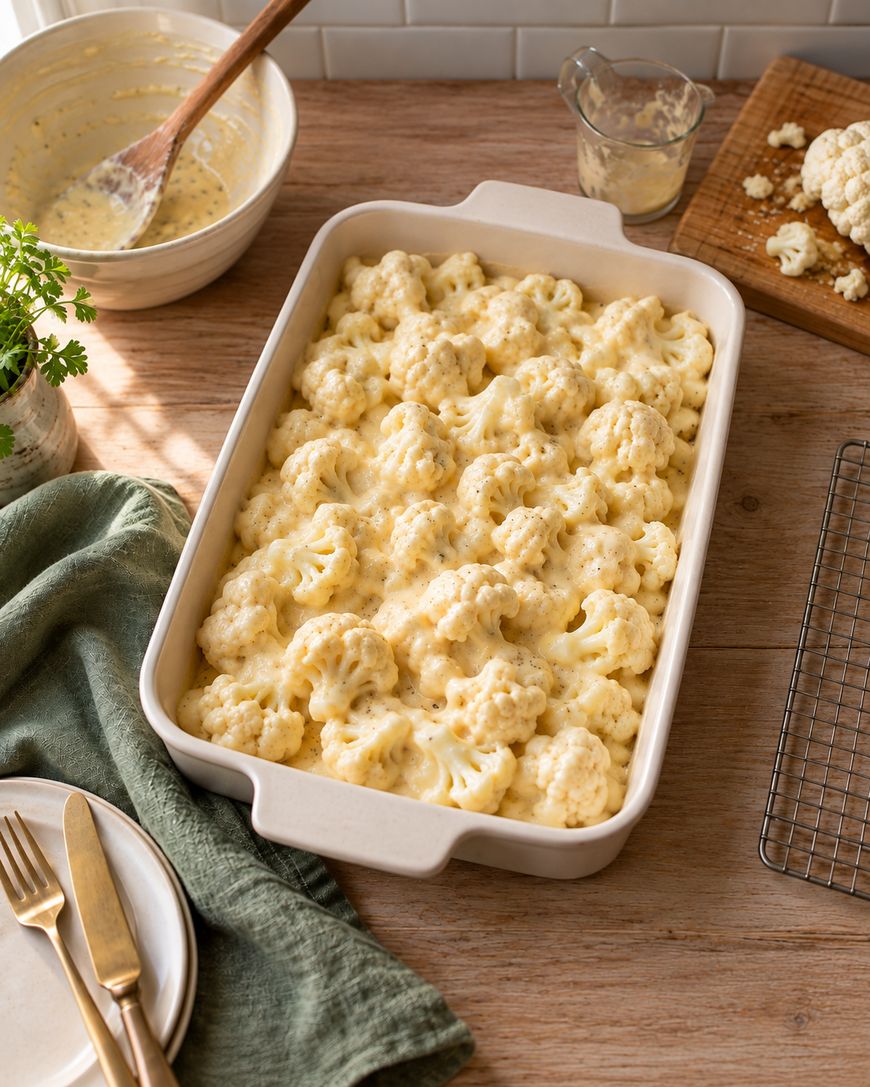
Fold the parboiled cauliflower into the cheese sauce until every floret is coated, then spread the mixture into a buttered baking dish in an even layer.
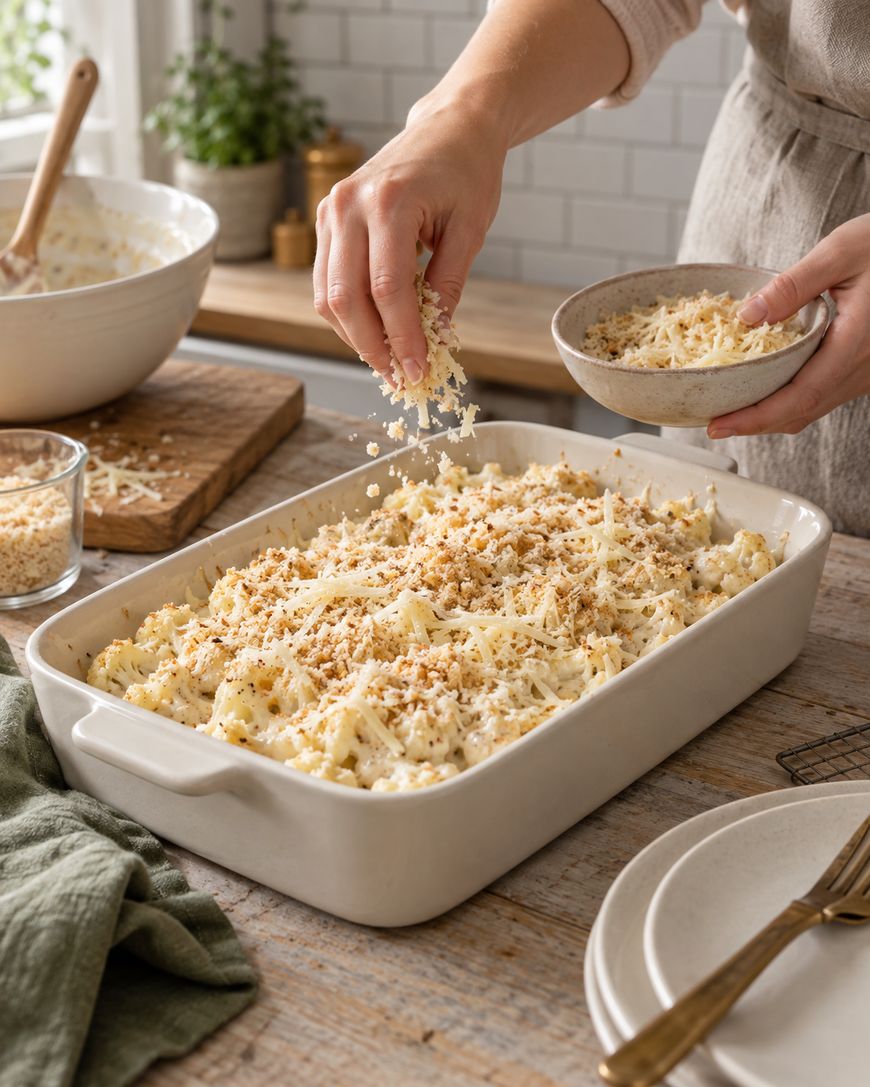
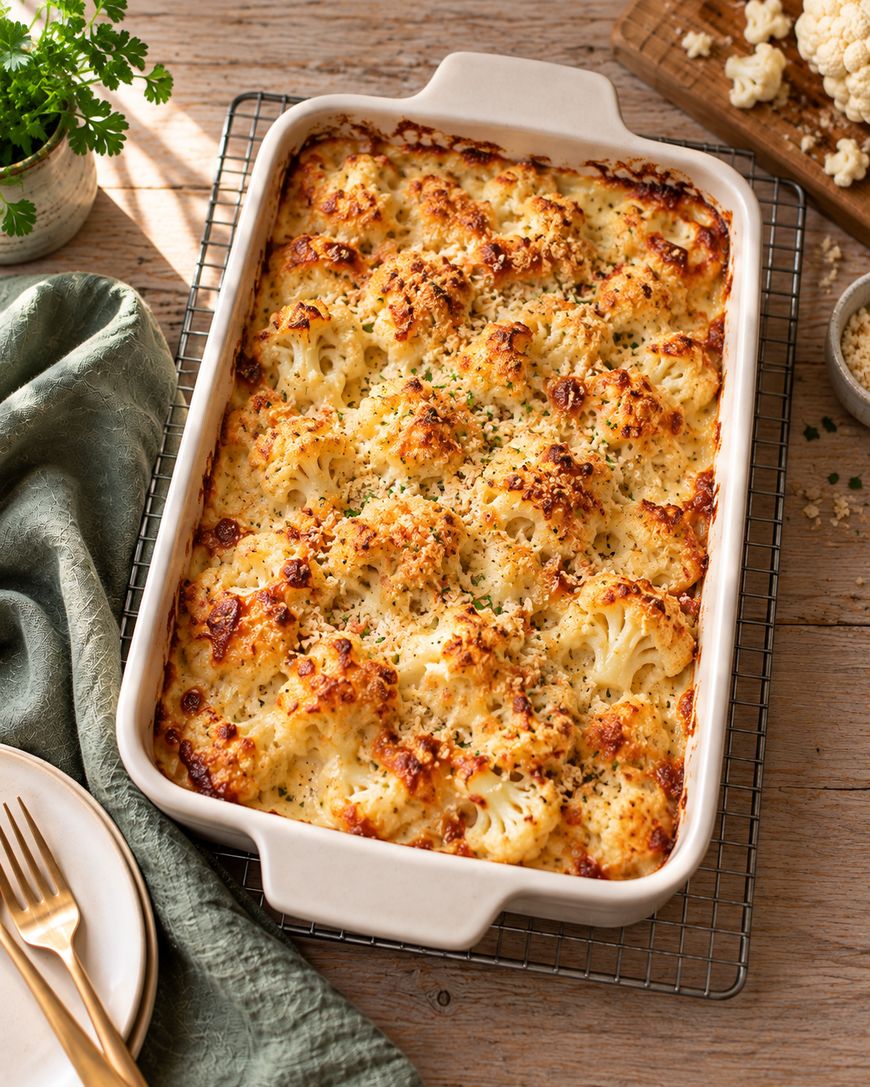
Scatter the reserved cheese over the top, followed by a light layer of panko breadcrumbs for crunch. Bake in a preheated oven until the sauce is bubbling at the edges and the top is deep golden brown, then let the dish rest for about 5 minutes before serving so the sauce can set slightly.
Variations on Cauliflower Au Gratin
Swap in Gouda or fontina for the Gruyère if that is what you have, or use a sharp white cheddar throughout for a bolder, tangier flavor. Crumbled crispy bacon or diced ham folded in with the cauliflower turns this into a heartier main dish.
For a lighter version, swap half the milk for chicken or vegetable stock, which lightens the sauce while still keeping it creamy. Broccoli florets work beautifully mixed in with the cauliflower, or you can use half broccoli and half cauliflower for a two-tone gratin.
Storage and Make-Ahead Tips
Store leftover cauliflower au gratin in an airtight container in the refrigerator for up to 3 days. Reheat individual portions in the oven or toaster oven at 350°F until warmed through, since the microwave can make the sauce separate slightly.
You can assemble the full dish up to a day ahead, cover it tightly, and refrigerate it unbaked, then bake it straight from the fridge, adding a few extra minutes to the bake time. This makes cauliflower au gratin an easy make-ahead side for busy dinners and holiday tables alike.
Serving Suggestions
Cauliflower au gratin pairs naturally with roasted chicken, seared steak, or a holiday ham, since its richness balances simply prepared proteins. A crisp green salad with a sharp vinaigrette on the side cuts through the creaminess nicely.
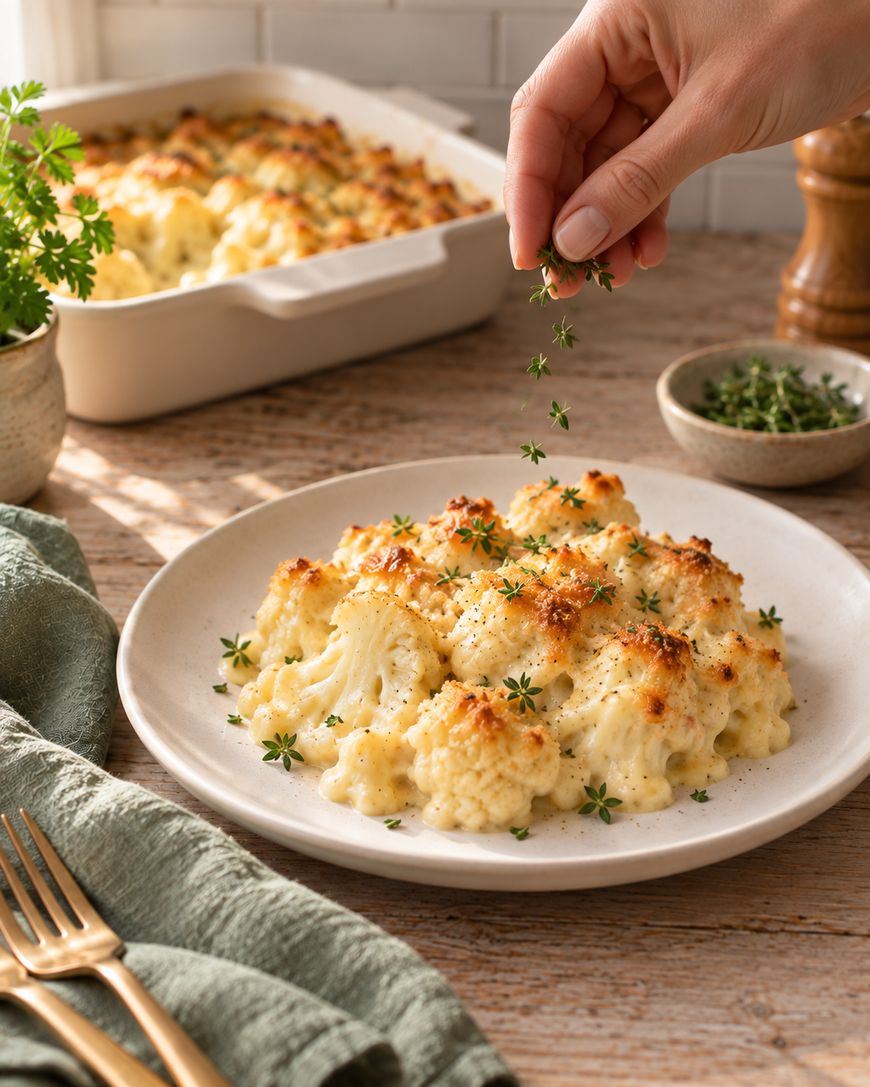
Fresh thyme or chopped parsley scattered over the top right before serving adds a bright note and a bit of color against the golden crust.
The Story Behind Cauliflower Au Gratin
Gratin dishes trace back to French home cooking, where the word simply describes a dish finished with a browned, often cheesy, crust under the broiler or in a hot oven. Cauliflower became a natural candidate for this treatment because its mild flavor and sturdy texture hold up beautifully under a rich sauce.
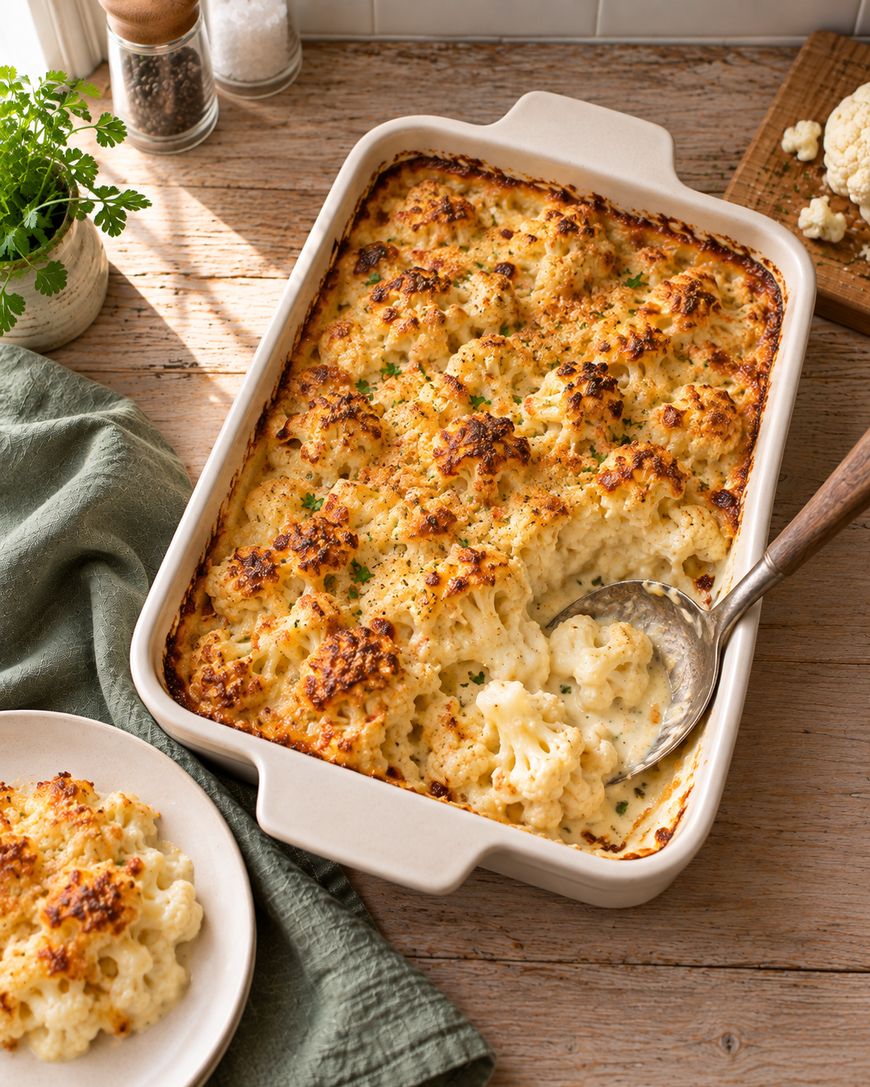
Over time, cauliflower au gratin became a staple on both sides of the Atlantic, showing up on Sunday dinner tables and holiday spreads as a way to make a humble vegetable feel like a special occasion side.
Ready to see exactly how the ingredients and timing come together? Use the recipe card below to cook along step by step.
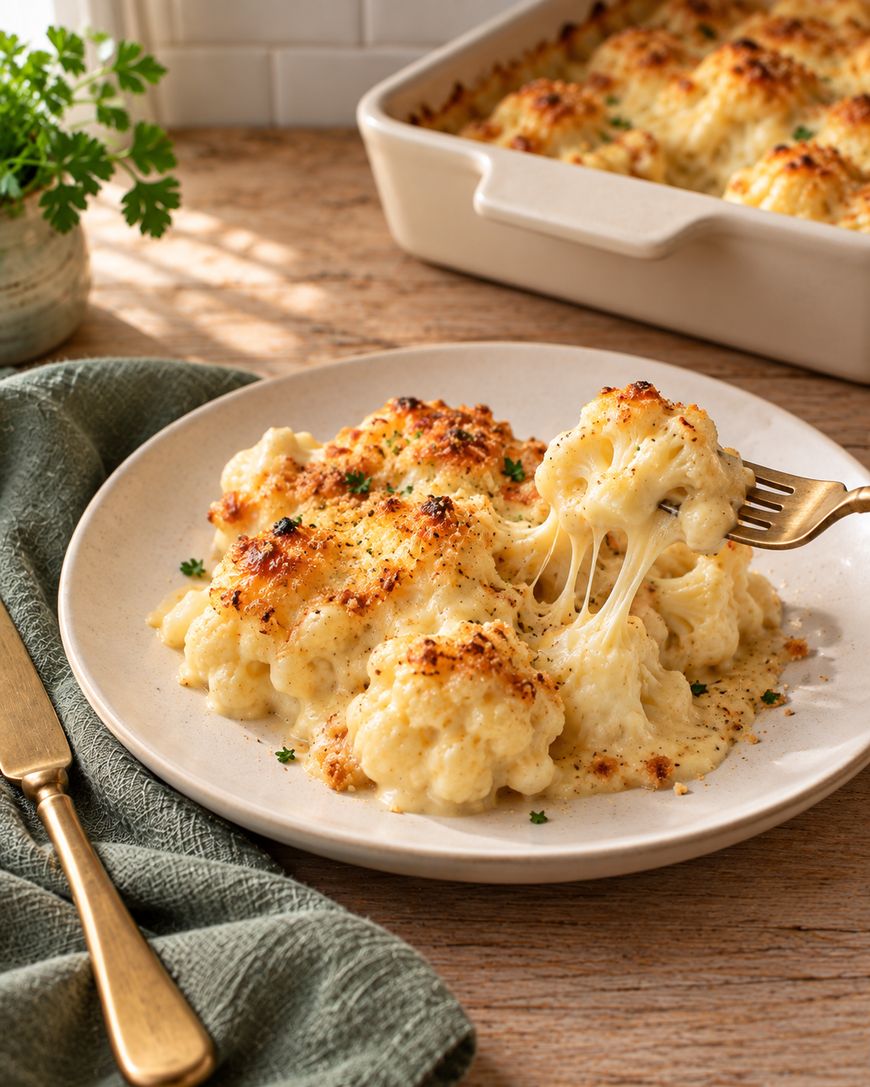
Cauliflower Au Gratin
A creamy, cheesy cauliflower au gratin made with a classic béchamel sauce, Gruyère, and sharp cheddar, finished with a golden panko topping.
Ingredients
- 1 large head cauliflower, cut into 1 to 1.5-inch florets
- 4 tablespoons unsalted butter
- 1/4 cup all-purpose flour
- 2 1/2 cups whole milk
- 2 cloves garlic, minced
- 1 teaspoon Dijon mustard
- 1/4 teaspoon ground nutmeg
- 1 1/2 cups shredded Gruyère cheese, divided
- 1 cup shredded sharp cheddar cheese, divided
- 1/2 teaspoon salt, plus more to taste
- 1/4 teaspoon black pepper
- 1/2 cup panko breadcrumbs
- 1 tablespoon fresh thyme leaves, for garnish (optional)
Instructions
- Preheat the oven to 375°F and butter a 9x13-inch baking dish.
- Bring a large pot of salted water to a boil. Add the cauliflower florets and cook for 4 to 5 minutes, until the edges are just tender. Drain well and let sit in the colander for a few minutes to release excess water.
- In a large saucepan, melt the butter over medium heat. Whisk in the flour and cook for 1 minute, stirring constantly.
- Gradually whisk in the milk, a little at a time, making sure each addition is smooth before adding more. Cook, whisking frequently, for 5 to 7 minutes, until the sauce thickens enough to coat the back of a spoon.
- Remove the sauce from the heat. Stir in the garlic, Dijon mustard, nutmeg, salt, and pepper.
- Stir in 1 cup of the Gruyère and 3/4 cup of the cheddar until melted and smooth. Taste and adjust seasoning.
- Fold the drained cauliflower into the cheese sauce until evenly coated. Spread the mixture into the prepared baking dish.
- Sprinkle the remaining 1/2 cup Gruyère and 1/4 cup cheddar over the top, followed by the panko breadcrumbs.
- Bake for 20 to 25 minutes, until bubbling at the edges and golden brown on top.
- Let rest for 5 minutes, garnish with fresh thyme if using, and serve warm.
Notes
Leftovers keep in an airtight container in the refrigerator for up to 3 days; reheat in the oven at 350°F. To make ahead, assemble unbaked, cover, and refrigerate up to 1 day, adding a few extra minutes to the bake time when baking from cold.
Nutrition Information:
Yield:
6Serving Size:
about 1 cupAmount Per Serving: Calories: 320Total Fat: 23gSaturated Fat: 14gSodium: 480mgCarbohydrates: 14gFiber: 3gSugar: 5gProtein: 15g
Cauliflower Au Gratin Questions and Answers
Can I use frozen cauliflower for this recipe?
Fresh cauliflower gives the best texture, but frozen florets work in a pinch if you thaw and pat them dry first. Frozen cauliflower holds extra water, so skip the parboiling step and go straight to draining and drying it well before mixing it into the sauce.
Why did my cheese sauce turn grainy?
A grainy sauce almost always means the cheese was added while the pan was still over direct heat, or the heat was too high when it melted in. Always pull the béchamel off the burner before stirring in the cheese, and use freshly grated cheese rather than pre-shredded, which contains anti-caking starches that can affect texture.
Can I make cauliflower au gratin ahead of time?
Yes, you can assemble the full dish up to a day ahead and refrigerate it unbaked, then bake it straight from the fridge with a few extra minutes added to the bake time. You can also fully bake it, refrigerate for up to 3 days, and reheat individual portions in the oven.
What can I substitute for Gruyère cheese?
Gouda, fontina, or a good quality Swiss cheese all melt beautifully and bring a similar nutty character to the sauce. In a pinch, an extra handful of sharp cheddar on its own still makes a delicious, if slightly less complex, gratin.
How do I keep the gratin from turning watery?
Watery gratin almost always comes down to excess moisture from the cauliflower, so parboil it briefly, drain it thoroughly, and let it sit in the colander a few extra minutes before mixing it into the sauce. A béchamel that has been properly thickened on the stove, until it coats the back of a spoon, also helps the finished dish hold together.
Can I freeze cauliflower au gratin?
Cream sauces can separate slightly after freezing and thawing, so this dish is best enjoyed fresh or refrigerated rather than frozen. If you do freeze it, thaw it fully in the refrigerator overnight and expect the sauce to be a touch less silky once reheated.
Why This Recipe Works
This cauliflower au gratin relies on a classic roux-based béchamel, where butter and flour are cooked together first and then loosened gradually with milk, which is what gives the sauce its silky, spoon-coating texture rather than a thin or lumpy one.
Parboiling the cauliflower briefly before baking means it finishes cooking gently in the oven alongside the sauce, so it turns tender without ever turning mushy or watering down the dish. Pulling the sauce off the heat before stirring in the cheese keeps the fats and proteins from breaking, which is the difference between a glossy sauce and a grainy one.
Finally, the combination of Gruyère for flavor and cheddar for color and pull, finished with a light layer of panko, gives this dish the deeply golden, crackly top that makes a gratin worth making again.
Cauliflower Au Gratin Is Worth the Extra Step
Cauliflower au gratin takes a little more effort than simply roasting a head of cauliflower, but the creamy, cheesy payoff makes it worth every step. Once you have made the béchamel a time or two, this dish becomes an easy, reliable side for weeknight dinners and holiday tables alike.
Colcannon Recipe That Turns Simple Mash Into Sunday Comfort
The Crockpot Hashbrown Casserole That Frees Up Your Oven for Everything Else