Last updated: October 12, 2026
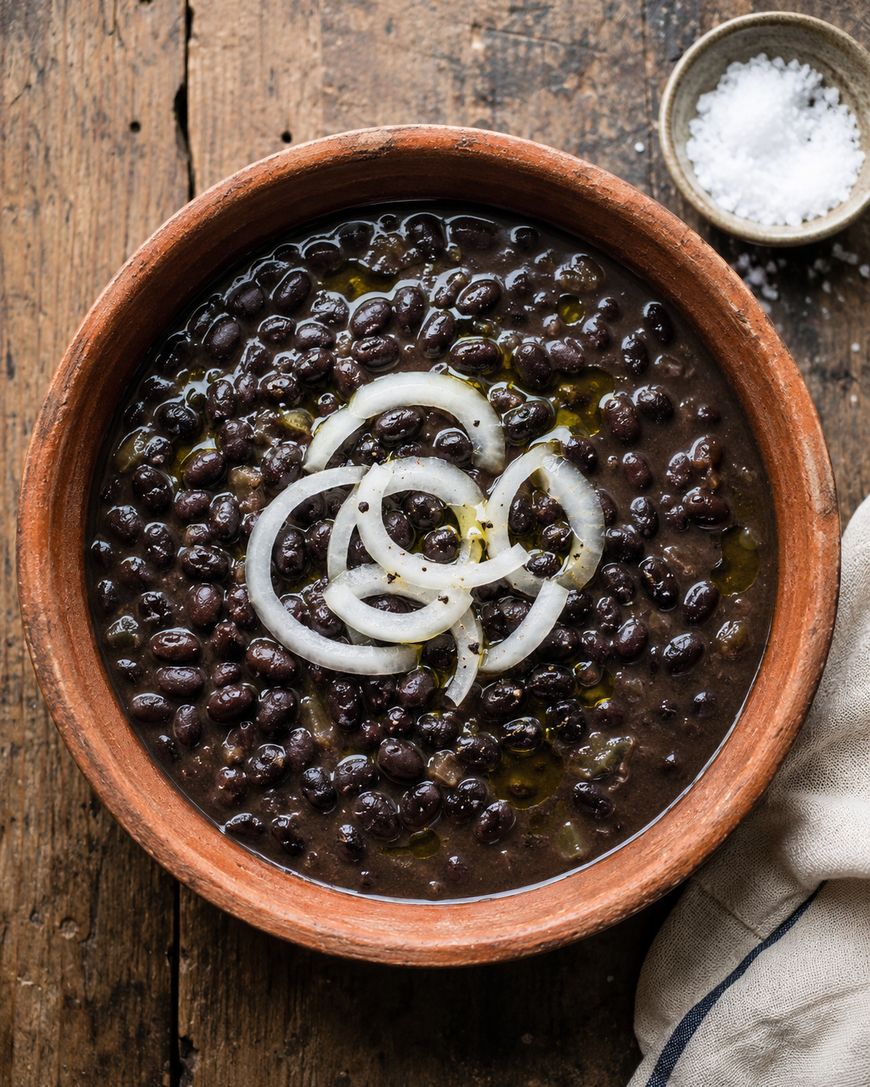
This Cuban black beans recipe produces the deeply flavored, silky frijoles negros that anchor nearly every meal across the island of Cuba. Follow the recipe card below for a streamlined version, or read through the full guide for every technique and tip you need.
What Makes Cuban Black Beans Different
Cuban black beans are not simply seasoned beans. The defining technique is the sofrito, a slow-cooked base of aromatics that infuses the entire pot with layers of flavor before the beans ever join it.
The sofrito used in Cuban cooking centers on green bell pepper, white onion, and garlic cooked down in olive oil. This is distinct from Puerto Rican or Dominican sofrito, which typically include culantro, tomatoes, or aji dulce peppers.
The Role of Cumin and Bay Leaves
Ground cumin is non-negotiable in an authentic Cuban black beans recipe. It gives the pot its characteristic earthiness that separates these beans from a simple pot of cooked legumes.
Bay leaves are added early and left in throughout the simmer. Two dried bay leaves per pound of beans is the standard measure used in Cuban home kitchens and restaurants like Versailles in Miami’s Little Havana.
Ingredients
Dried Beans vs. Canned Beans
Dried black beans produce a superior result because they release starch as they cook, thickening the pot liquid naturally into a glossy, almost sauce-like consistency. One pound of dried black beans, sorted and soaked overnight, is the starting point for this recipe.
Canned beans are a viable weeknight substitute. Use two 15-ounce cans of black beans, drained but not rinsed, and reduce the simmering time to 20 minutes since the beans are already fully cooked.
Full Ingredient List
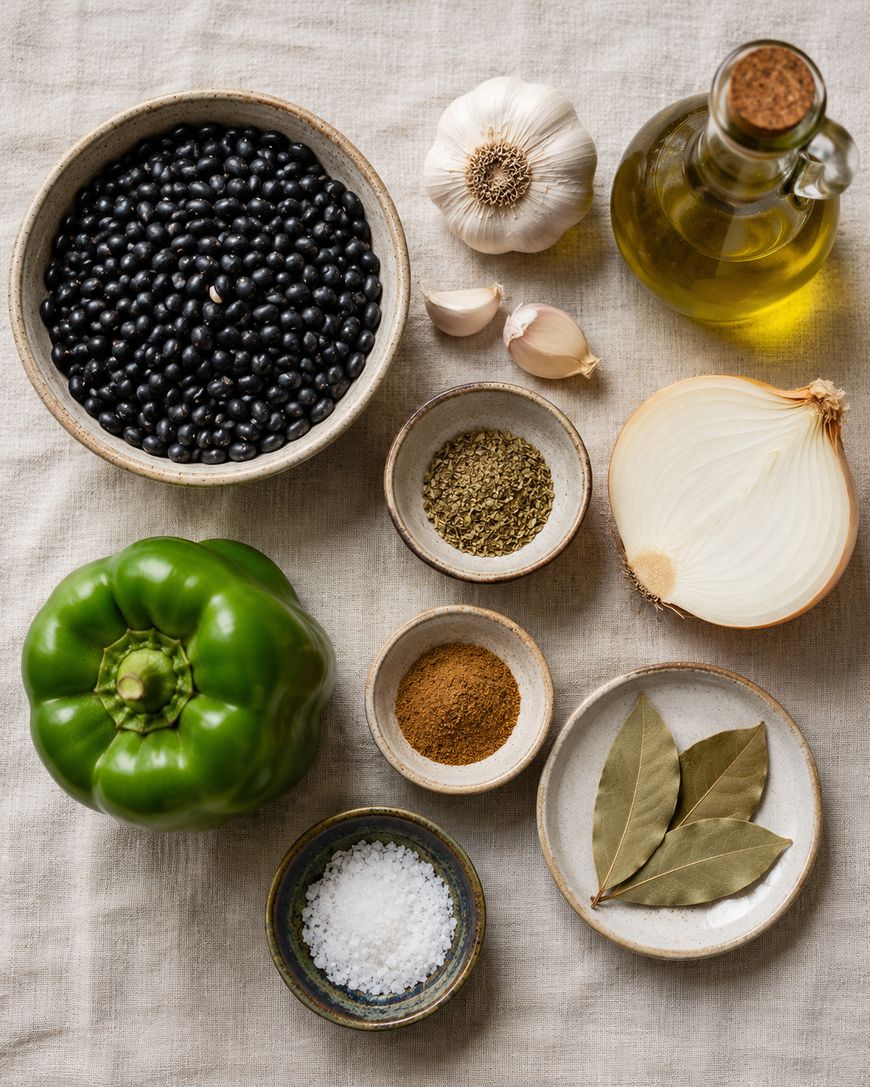
One pound dried black beans, soaked 8 hours or overnight. Three tablespoons extra-virgin olive oil. One large white onion, finely diced. One large green bell pepper, finely diced. Eight cloves of garlic, minced. Two teaspoons ground cumin. One teaspoon dried oregano. Two bay leaves. One tablespoon white wine vinegar. One teaspoon granulated sugar. Salt and black pepper to taste. Optional: one quarter teaspoon smoked paprika for added depth.
How to Cook Cuban Black Beans Step by Step
Soaking the Beans
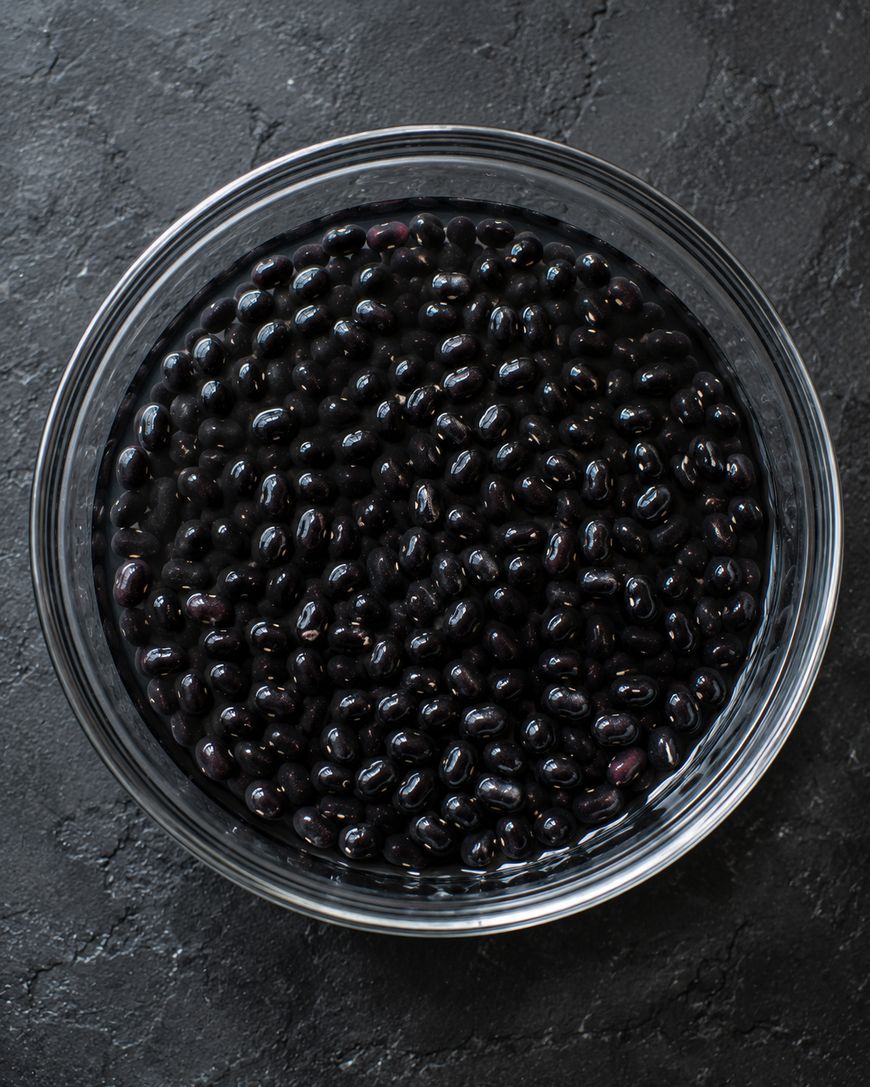
Sort the dried beans on a clean surface, removing any shriveled beans or debris. Cover with cold water by three inches and soak for a minimum of eight hours. The beans will roughly double in size.
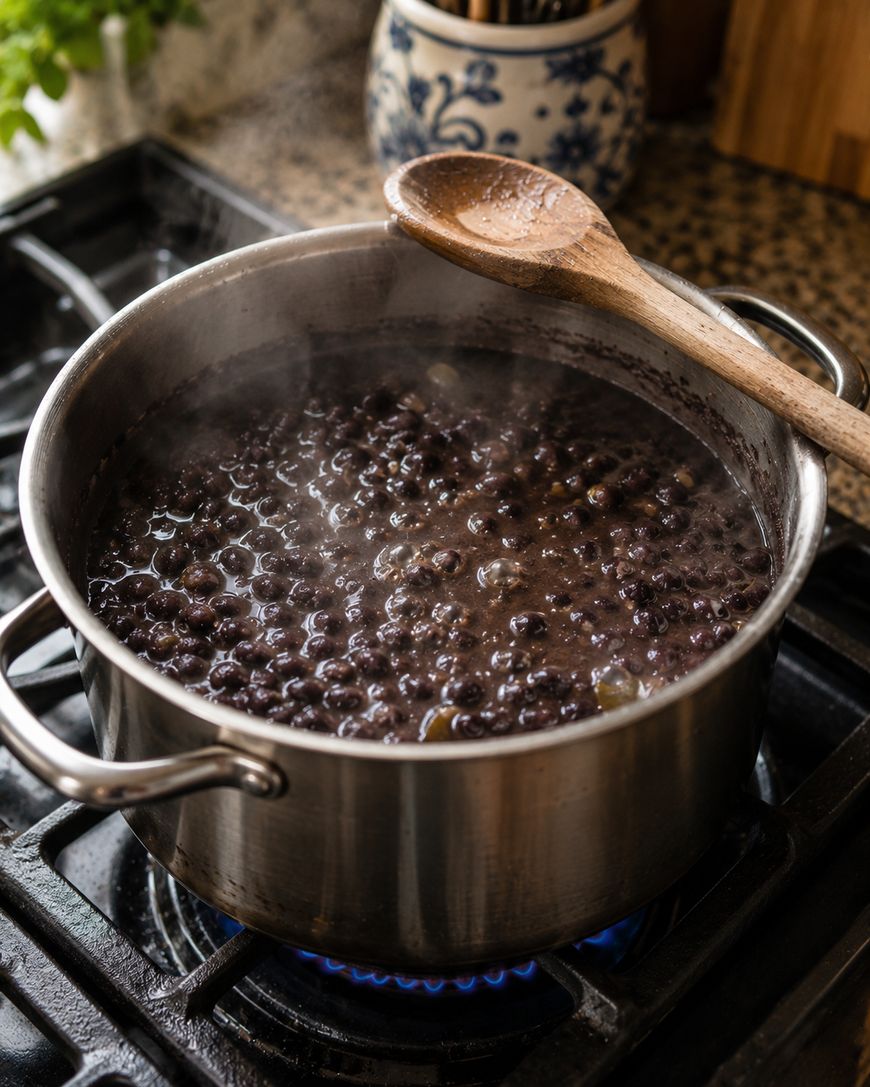
Drain and rinse the soaked beans, then cover with fresh water in a large heavy pot, at least four quarts, and bring to a boil. Skim off any foam that rises during the first five minutes.
Building the Sofrito
While the beans begin their first boil, heat olive oil in a separate skillet over medium heat. Add the onion and green bell pepper and cook, stirring occasionally, for eight to ten minutes until soft and translucent.
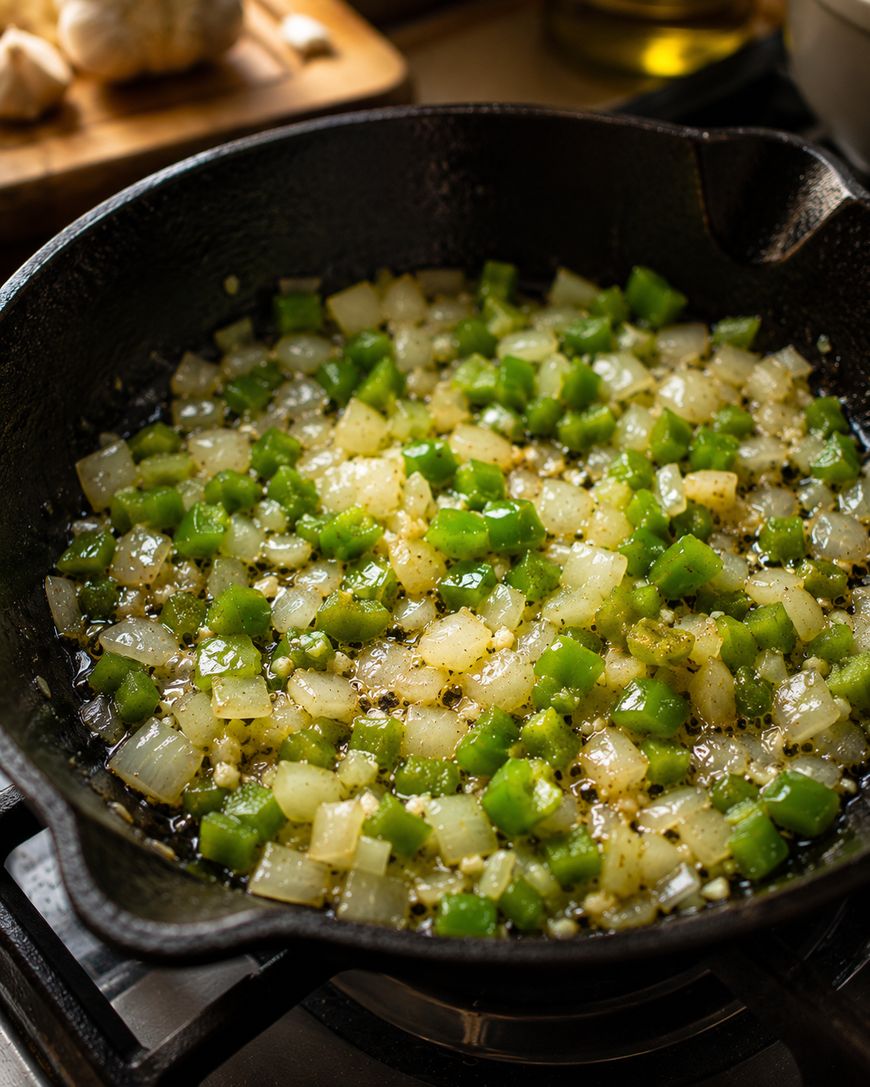
Add the garlic and cook for two more minutes, stirring constantly so it does not brown. Add the cumin, oregano, and smoked paprika if using, stir to coat the aromatics, and cook for thirty more seconds to bloom the spices.
Combining and Simmering
Add the entire sofrito directly into the pot of beans along with the bay leaves. Reduce the heat to a low simmer, cover partially, and cook for 90 minutes to two hours until the beans are completely tender.
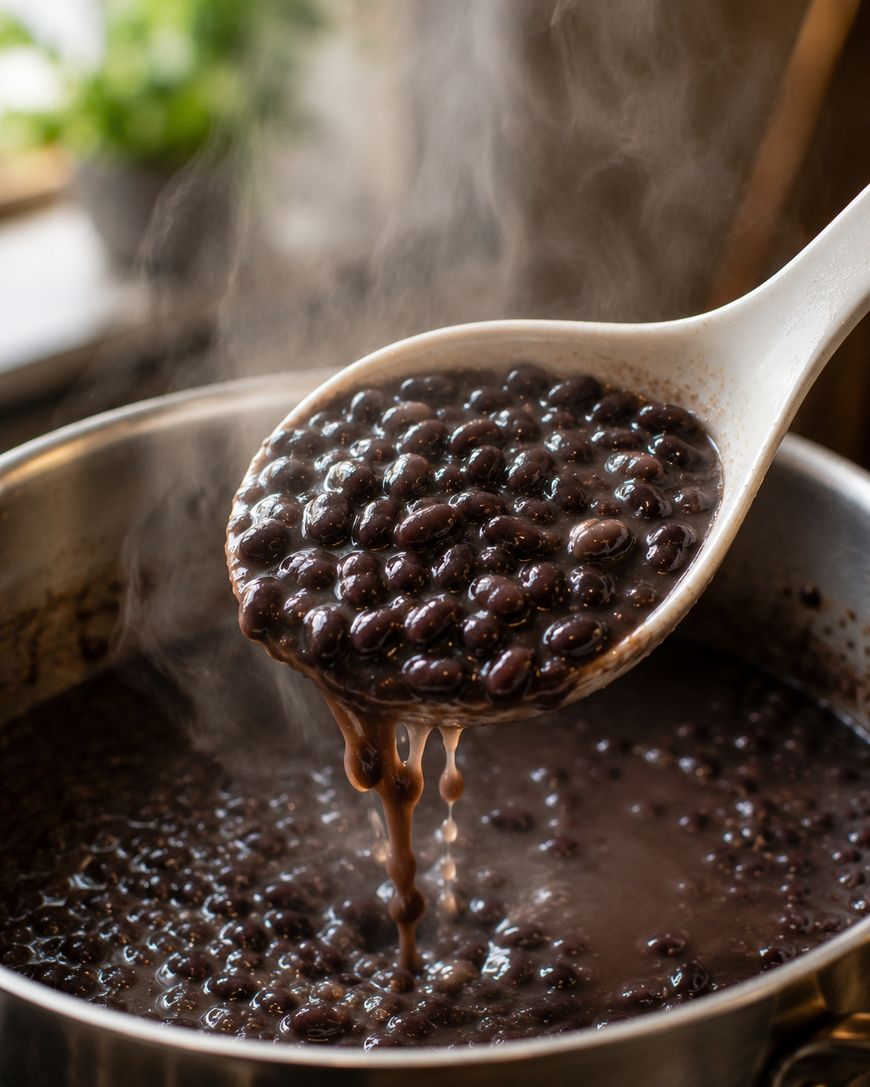
A bean is done when you can press it easily between two fingers with no chalky resistance at the center. Underdone beans will not absorb the seasoning properly.
The Secret Step: Mashing Some Beans
Once the beans are tender, use a fork or the back of a ladle to mash approximately one quarter cup of beans against the side of the pot. Stir this back into the liquid.
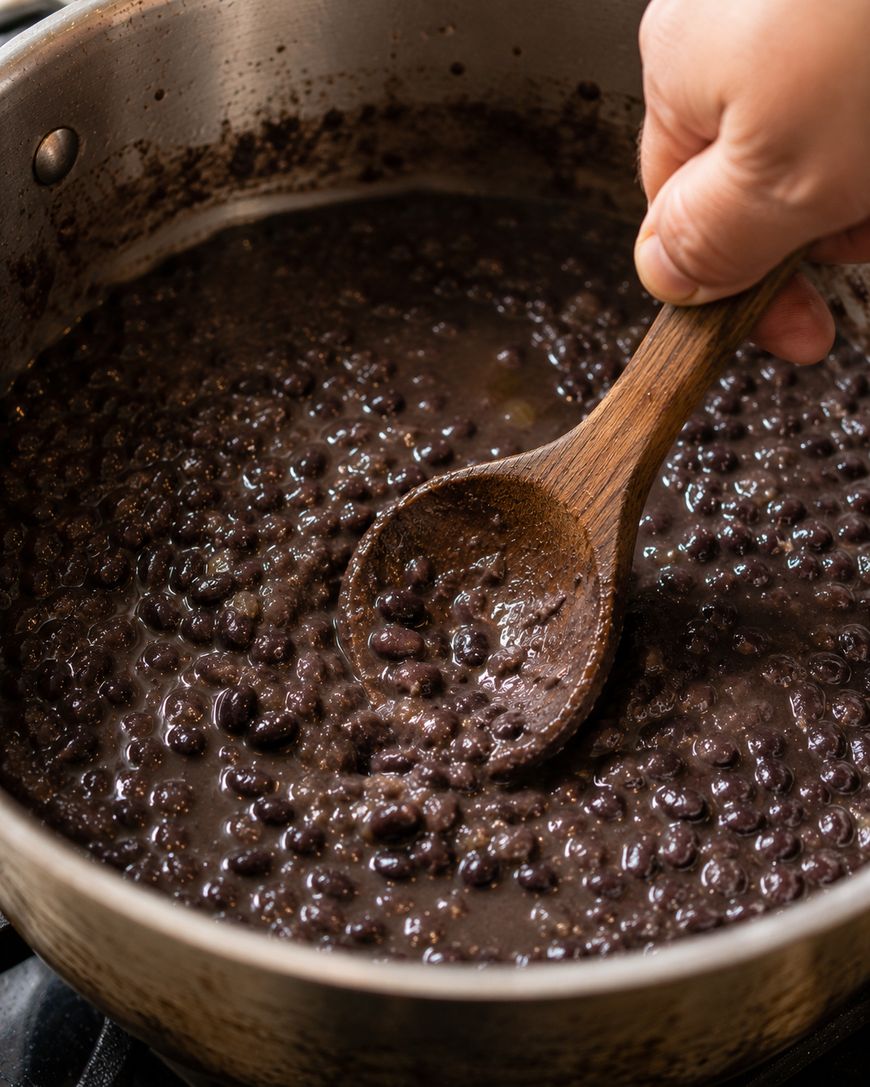
This single step thickens the pot naturally without adding any cornstarch or other thickeners. It is the technique used in Cuban restaurants throughout Miami and Tampa’s Ybor City to achieve that characteristic glossy consistency.
Final Seasoning
Stir in the white wine vinegar and sugar. These two ingredients balance each other: the vinegar cuts richness and brightens the flavor while the sugar rounds off any bitterness from the beans or cumin.
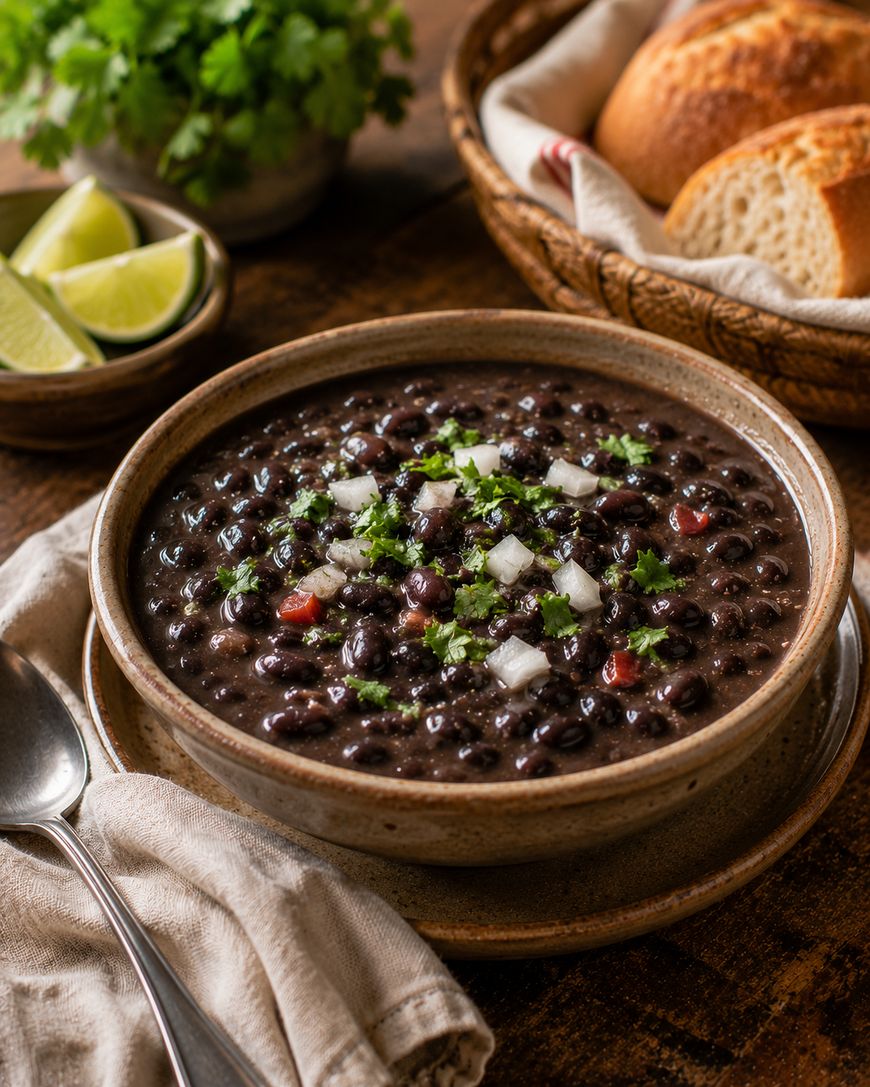
Taste and adjust with salt. Cuban black beans are boldly seasoned, so do not be timid. Remove the bay leaves before serving.
Variations
Frijoles Negros con Chorizo
Add two ounces of diced Spanish chorizo, not Mexican chorizo, to the sofrito at the start. The fat from the chorizo renders into the oil and perfumes the entire pot with paprika and pork.
This version is common in eastern Cuba, particularly in Santiago de Cuba, where Spanish culinary influence remains strong.
Instant Pot Cuban Black Beans
Combine soaked beans, sofrito, bay leaves, and four cups of water in the Instant Pot. Cook on high pressure for 25 minutes, then allow a natural pressure release for 15 minutes. Complete the mashing step and final seasoning as written.
Vegan and Vegetarian Notes
This recipe is naturally vegan. Ensure the chorizo is omitted for a fully plant-based version. The depth of flavor comes entirely from the sofrito and spices, so no meat is required to produce a satisfying result.
Substitutions
Green bell pepper is traditional but can be substituted with poblano pepper for a mildly smoky variation. White wine vinegar can be replaced with apple cider vinegar in equal measure. Olive oil can be replaced with avocado oil.
Garlic powder is not a suitable substitute for fresh garlic in Cuban black beans. The fresh garlic blooms differently in the hot oil and delivers a flavor that garlic powder cannot replicate.
Storage and Reheating
Cuban black beans keep refrigerated for five days in an airtight container. The flavor deepens significantly on day two and day three as the spices continue to develop.
To reheat, add a splash of water or vegetable broth before warming over medium-low heat to prevent the thickened beans from scorching. Stir frequently.
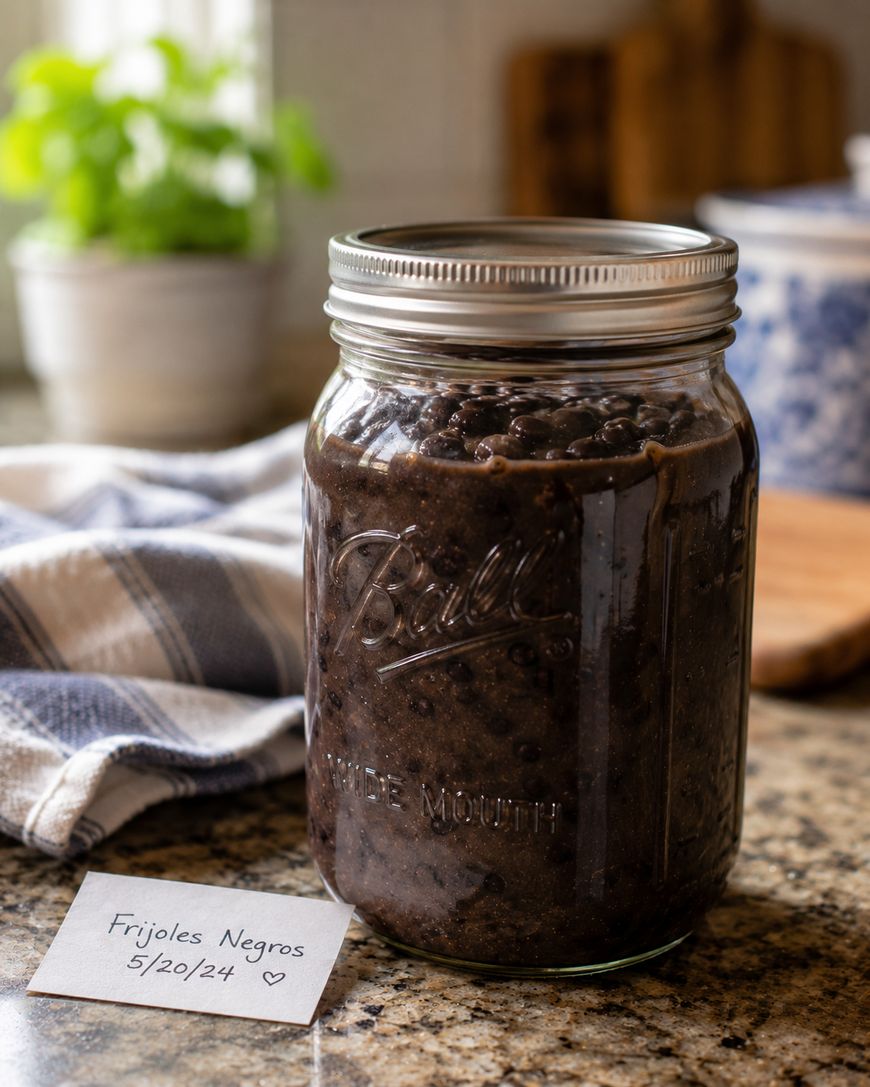
Cuban black beans freeze exceptionally well for up to three months. Freeze in individual portions for easy weeknight meals.
Serving Suggestions
With White Rice
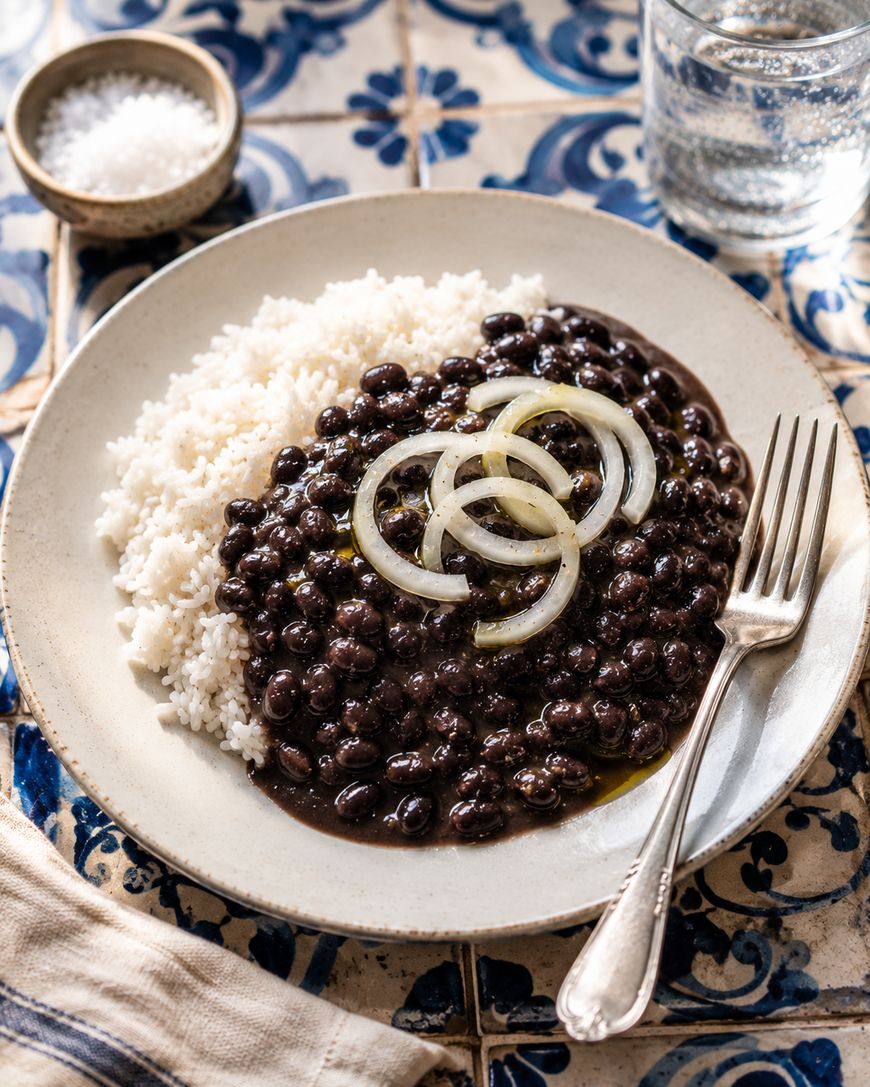
The classic pairing is arroz con frijoles negros, white rice served alongside or topped with a generous ladle of beans. Long-grain white rice, cooked separately, is the traditional choice throughout Cuba and Cuban-American communities.
Congri, also called moros y cristianos, is the version where black beans and white rice are cooked together in the same pot. It is a staple side dish for Nochebuena, the Cuban Christmas Eve feast.
With Other Cuban Dishes
Serve alongside ropa vieja, the braised shredded beef stew, or lechon asado, Cuban-style roasted pork. Tostones, twice-fried green plantains, round out the plate as a crunchy counterpoint to the creamy beans.
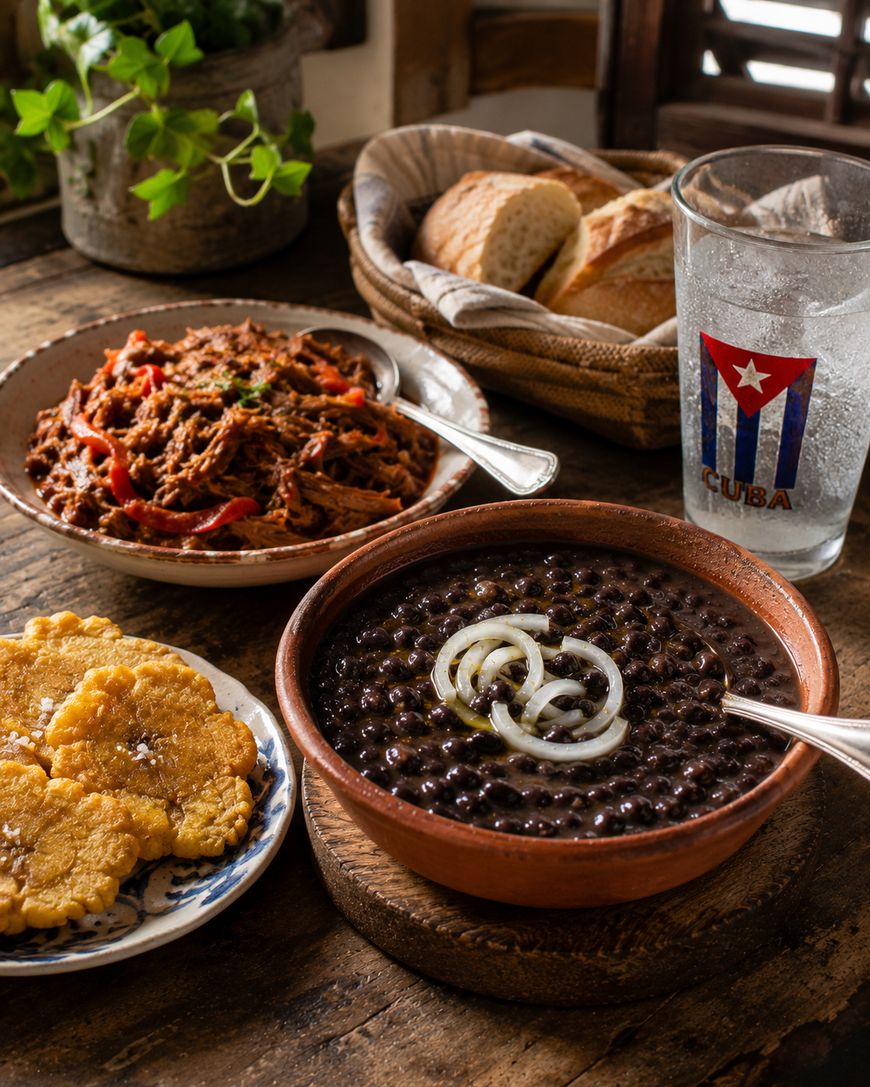
A drizzle of olive oil and thinly sliced raw white onion over the finished beans is a traditional garnish seen at restaurants across Miami and Havana.
The History and Origins of Cuban Black Beans
Black beans arrived in Cuba through a complex web of Taino indigenous cultivation and West African culinary traditions brought by enslaved people during the colonial period. The Taino people of the Caribbean grew and ate black beans long before Spanish contact in 1492.
The Spanish colonial kitchen absorbed indigenous ingredients and began combining them with Moorish-influenced techniques including the sofrito, which itself arrived in Spain from North Africa. This layering of cultures produced the distinct flavor profile that defines Cuban black beans today.
Frijoles negros became so central to Cuban identity that the phrase “black beans and rice” is used colloquially by Cuban exiles to refer to home, or Cuba itself. The dish appears on the table at least once a day in most traditional Cuban households, from Havana to the Cuban-American enclaves of Hialeah and Union City, New Jersey.
Once you have the technique down, reach for the recipe card to keep the key measurements and steps at your fingertips.
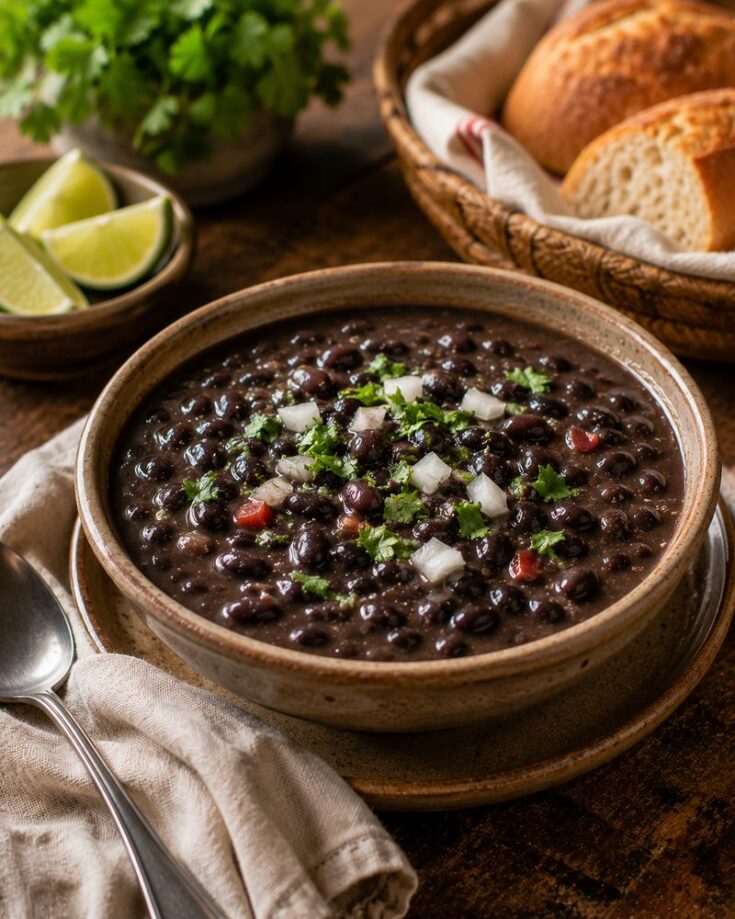
Cuban Black Beans Recipe (Frijoles Negros)
Authentic Cuban black beans made from scratch with a classic green pepper and onion sofrito, cumin, and a splash of white wine vinegar. Rich, glossy, and deeply flavorful frijoles negros just like the Cuban table.
Ingredients
- 1 lb dried black beans, sorted and soaked 8 hours
- 3 tbsp extra-virgin olive oil
- 1 large white onion, finely diced
- 1 large green bell pepper, finely diced
- 8 cloves garlic, minced
- 2 tsp ground cumin
- 1 tsp dried oregano
- 2 bay leaves
- 1 tbsp white wine vinegar
- 1 tsp granulated sugar
- Salt and black pepper to taste
Instructions
- Drain and rinse soaked beans. Place in a large pot, cover with fresh water by 3 inches, and bring to a boil. Skim any foam. Reduce to a simmer.
- In a skillet, heat olive oil over medium heat. Cook onion and green bell pepper for 8 to 10 minutes until soft.
- Add garlic, cook 2 minutes. Add cumin and oregano, stir and cook 30 seconds.
- Pour sofrito into the pot of beans. Add bay leaves. Partially cover and simmer 90 minutes to 2 hours until beans are completely tender.
- Mash approximately 1/4 cup of beans against the side of the pot. Stir to thicken the liquid.
- Stir in white wine vinegar and sugar. Season generously with salt and pepper. Remove bay leaves and serve.
Notes
For canned beans, use 2 cans (15 oz each), drained. Reduce simmering time to 20 minutes. Beans improve in flavor on day 2. Freeze well for up to 3 months.
Nutrition Information:
Yield:
6Serving Size:
approximately 3/4 cupAmount Per Serving: Calories: 285Total Fat: 7gSaturated Fat: 1gSodium: 310mgCarbohydrates: 44gFiber: 11gSugar: 4gProtein: 14g
This site provides estimated nutritional information. This information comes from online calculators. Although we try to provide accurate nutritional information, these figures are only estimates.
Frequently Asked Questions
Do Cuban black beans need to be soaked overnight?
Soaking overnight reduces cooking time and improves digestibility by removing some of the oligosaccharides that cause gas. The minimum effective soak is eight hours. A quick soak, covering beans with water, boiling for two minutes, then soaking for one hour, works as an emergency substitute but produces a slightly less creamy result.
Why are my Cuban black beans not thickening?
The most common reason is that the beans were not cooked long enough before mashing. The beans must be completely soft so that when you mash a portion against the pot wall, they break down into a smooth paste that dissolves into the liquid. If the beans are still firm, continue cooking and check again in 15-minute increments.
Can you make Cuban black beans without soaking?
Yes, with a longer cook time. Unsoaked dried beans require two and a half to three hours of simmering to become fully tender. This method works but increases the risk of uneven cooking where some beans split and others remain firm. Soaking is strongly recommended for consistent results.
What is the difference between Cuban black beans and Brazilian black beans?
Cuban black beans rely on a green pepper and onion sofrito seasoned with cumin and oregano. Brazilian feijoada uses a heavier mix of smoked pork products including chourico, bacon, and pork ribs, with fewer aromatics. Feijoada is a stew where the meat is the focus; Cuban frijoles negros are a seasoned bean dish where the sofrito flavor is the star.
How do you know when Cuban black beans are done?
The beans are done when they are uniformly soft with no chalky center when pressed between two fingers, the liquid has deepened from a thin gray water to a dark, opaque broth, and the mashed portion dissolves smoothly into the pot without leaving visible chunks. The aroma shifts from raw bean smell to a rich, cumin-forward fragrance.
Can Cuban black beans be made in a slow cooker?
Yes. Combine soaked beans, sofrito, bay leaves, and enough water to cover by two inches in a slow cooker. Cook on low for eight hours or on high for four to five hours. Complete the mashing and seasoning steps as written. The slow cooker method produces very tender beans but a thinner liquid than stovetop, so allow extra simmering time with the lid off at the end to reduce.
The Best Cuban Black Beans Recipe Starts with Patience
A great Cuban black beans recipe rewards those who give it time. The long simmer, the careful sofrito, and the final seasoning adjustments are what separate a memorable pot of frijoles negros from a forgettable one. Whether served at a weeknight dinner or as part of a full Cuban feast, this recipe delivers the authentic, soul-satisfying flavor of the Cuban table.