Last updated: September 13, 2026
This croissant recipe breaks down real French lamination into steps you can actually follow at home, and the recipe card below has your exact ingredient amounts and timing.
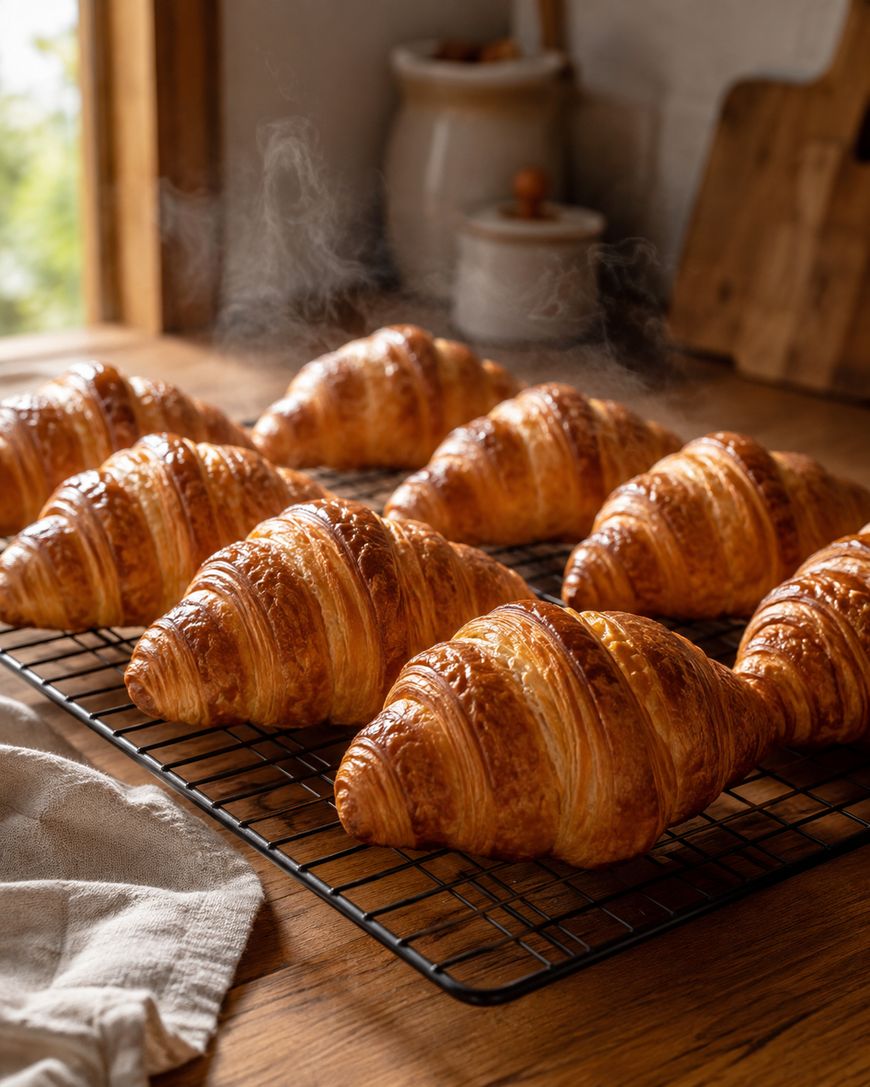
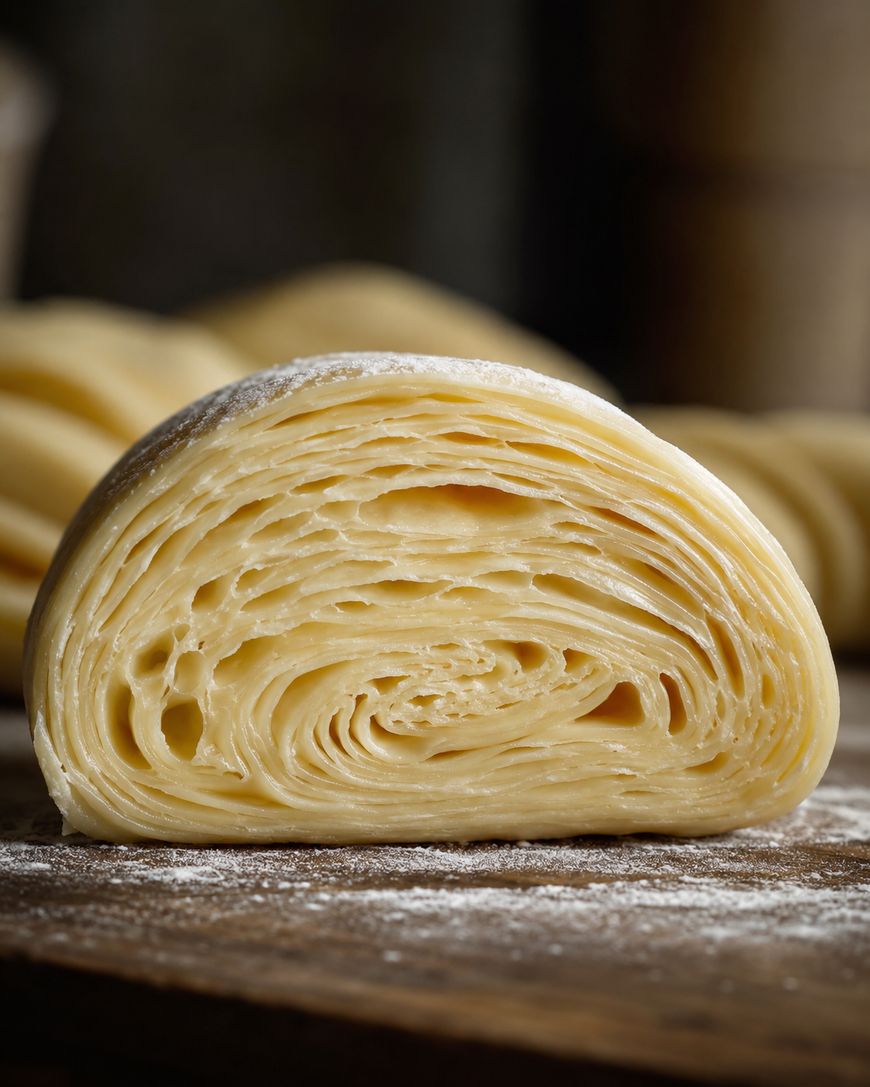
You end up with dozens of thin, buttery layers that shatter when you bite into them, and a golden, honeycomb-like interior underneath.
What Makes a Great Croissant Recipe
A great croissant recipe comes down to one thing: butter distributed evenly through the dough in as many thin layers as possible without the layers merging together.
The Role of European-Style Butter
Professional bakers reach for European-style butter, like Plugra or President, because it carries a higher fat content, usually around 82 to 84 percent, compared to the 80 percent standard in most American butter.
That extra fat means less water in the butter block, which keeps your lamination clean and your steam pockets distinct once the croissants hit the oven.
Why Dough Temperature Controls Everything
Croissant dough, called detrempe in French pastry kitchens, needs to stay cold and firm through every fold so the butter stays solid and separate from the dough rather than absorbing into it.
If your kitchen runs warm, work in shorter bursts and return the dough to the refrigerator anytime it starts to feel soft or the butter begins to show through.
Ingredients for Homemade Croissants
You will need bread flour or a strong all-purpose flour for structure, since croissant dough needs enough gluten to hold up under all that folding and rolling.
Whole milk, active dry yeast, granulated sugar, fine sea salt, and a small amount of melted butter go into the base dough, while a full block of cold unsalted European-style butter becomes the lamination layer, or beurrage.
The exact quantities and full ingredient list are in the recipe card below, so you can shop with confidence before you start.
How to Make Croissants Step by Step
Mixing and Resting the Detrempe
Combine your warmed milk with the yeast and a pinch of sugar first, and let it sit for about five minutes until it turns foamy, which confirms your yeast is active.
Mix the flour, remaining sugar, and salt together, then add the yeast mixture and melted butter, kneading until you get a smooth, slightly tacky dough that pulls cleanly from the sides of the bowl.
Shape the dough into a rough rectangle, wrap it tightly, and refrigerate it for at least four hours, though overnight works best since a fully chilled dough laminates far more evenly.
Preparing the Butter Block
While the dough chills, pound your cold butter between two sheets of parchment paper into a flat, even square, roughly half the size of your rolled-out dough rectangle.
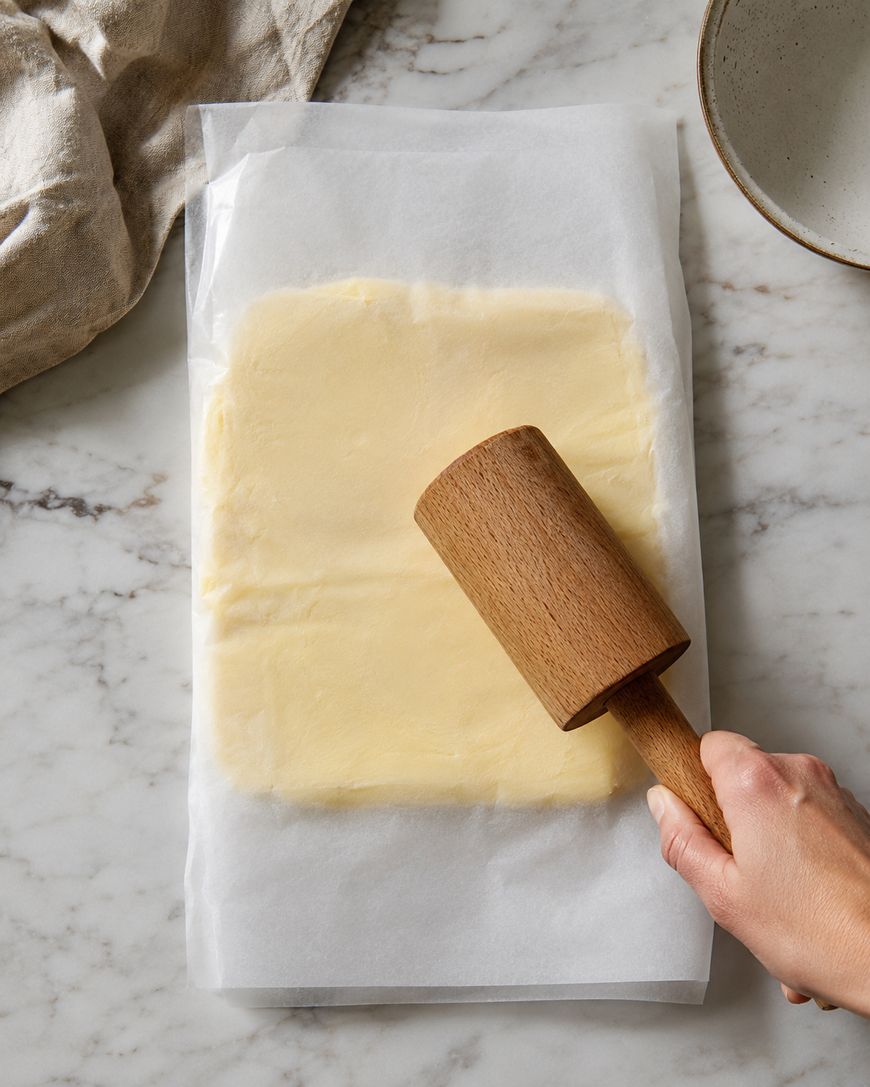
Keep the corners as sharp and even as the center, since uneven thickness here is the most common reason home croissants end up with patchy, uneven layers.
Refrigerate the butter block until it matches the firmness of the dough, which usually takes about thirty minutes.
Laminating: The Single and Double Fold
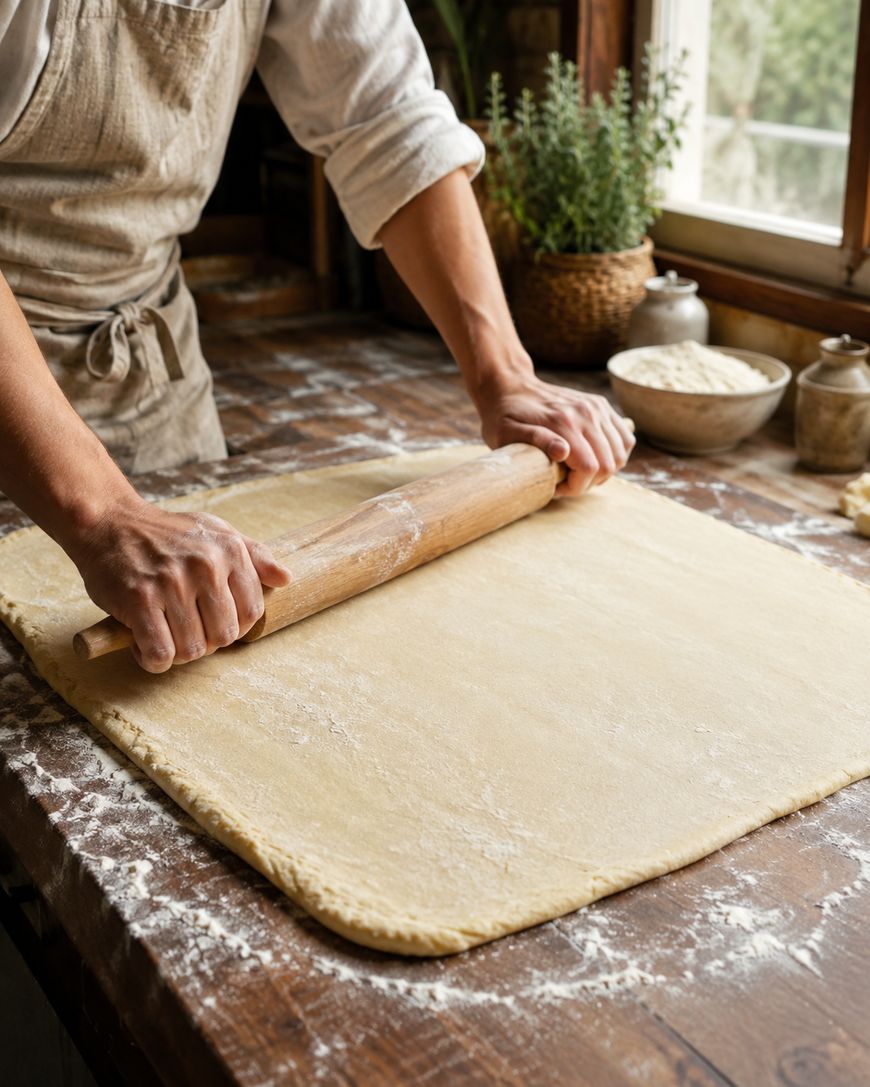
Roll your chilled dough into a large rectangle, place the butter block in the center at a 45-degree angle, and fold the dough corners over it like an envelope to fully enclose the butter.
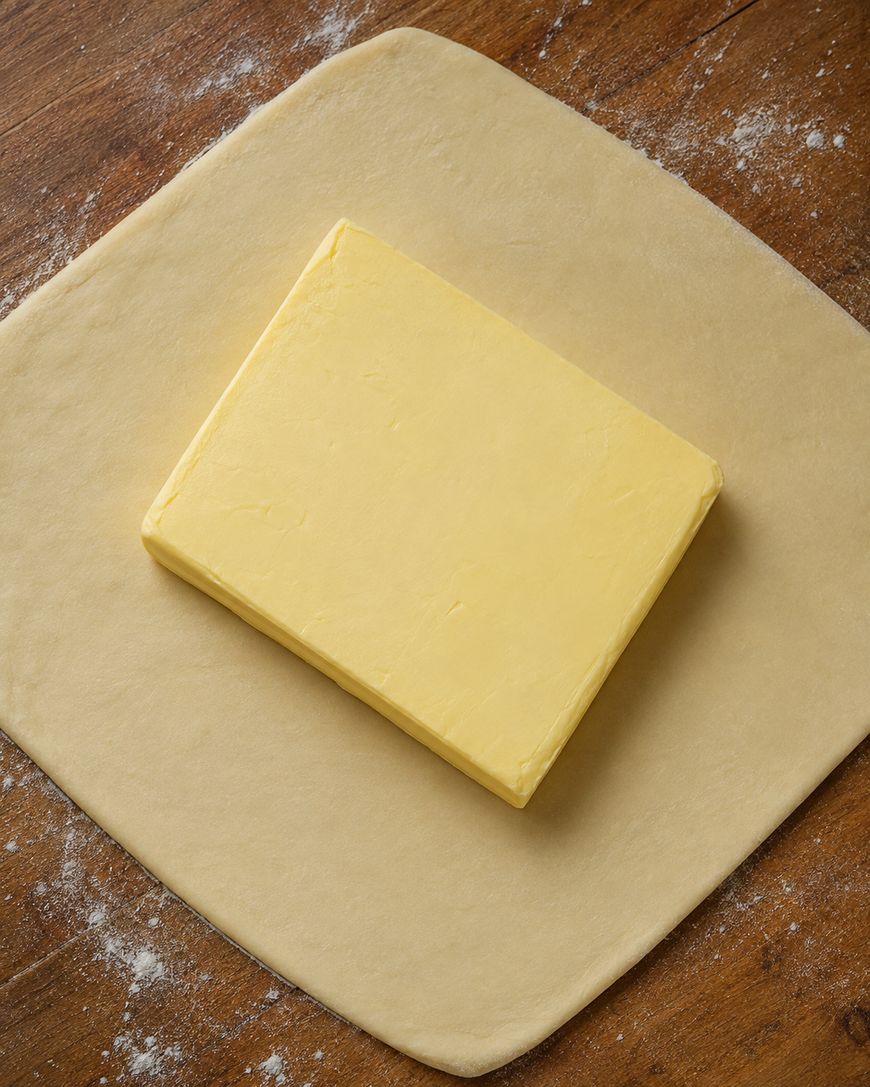
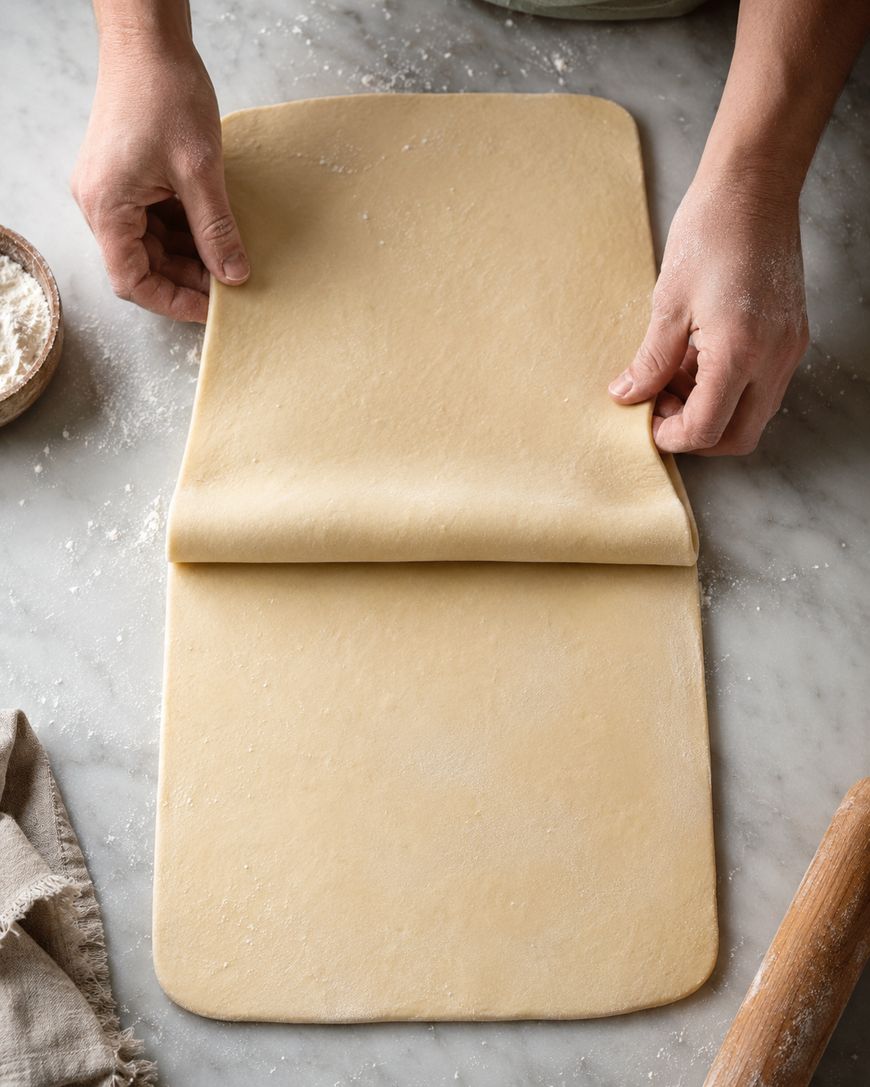
Roll the dough out to about a quarter inch thick, then perform a single fold by bringing one-third of the dough over the middle and the remaining third over that, like folding a letter.
Wrap and chill the dough for thirty to forty-five minutes, then repeat with a double fold, where you fold both short ends in to meet at the center before folding the whole thing in half again.
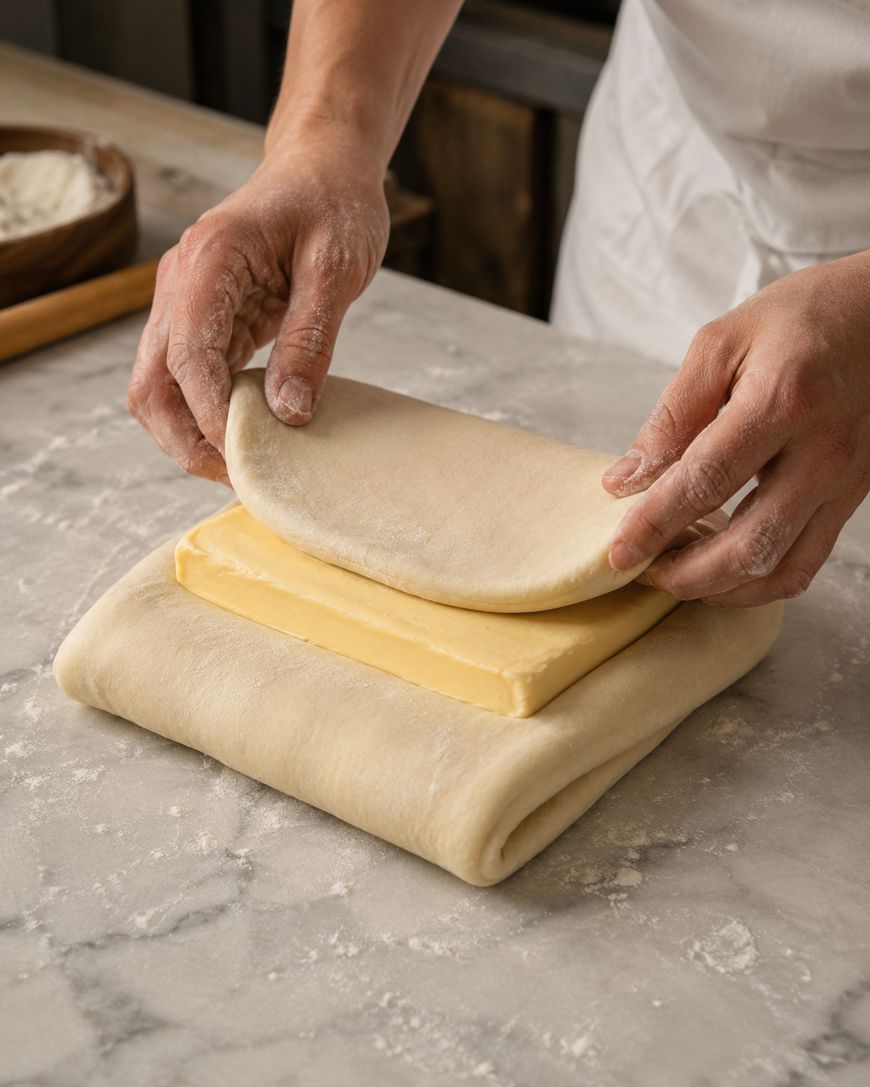
Chill again for at least thirty minutes between every fold, and never skip a rest, since rushing this stage is what causes butter to break through the dough or layers to fuse together.
Shaping the Croissants
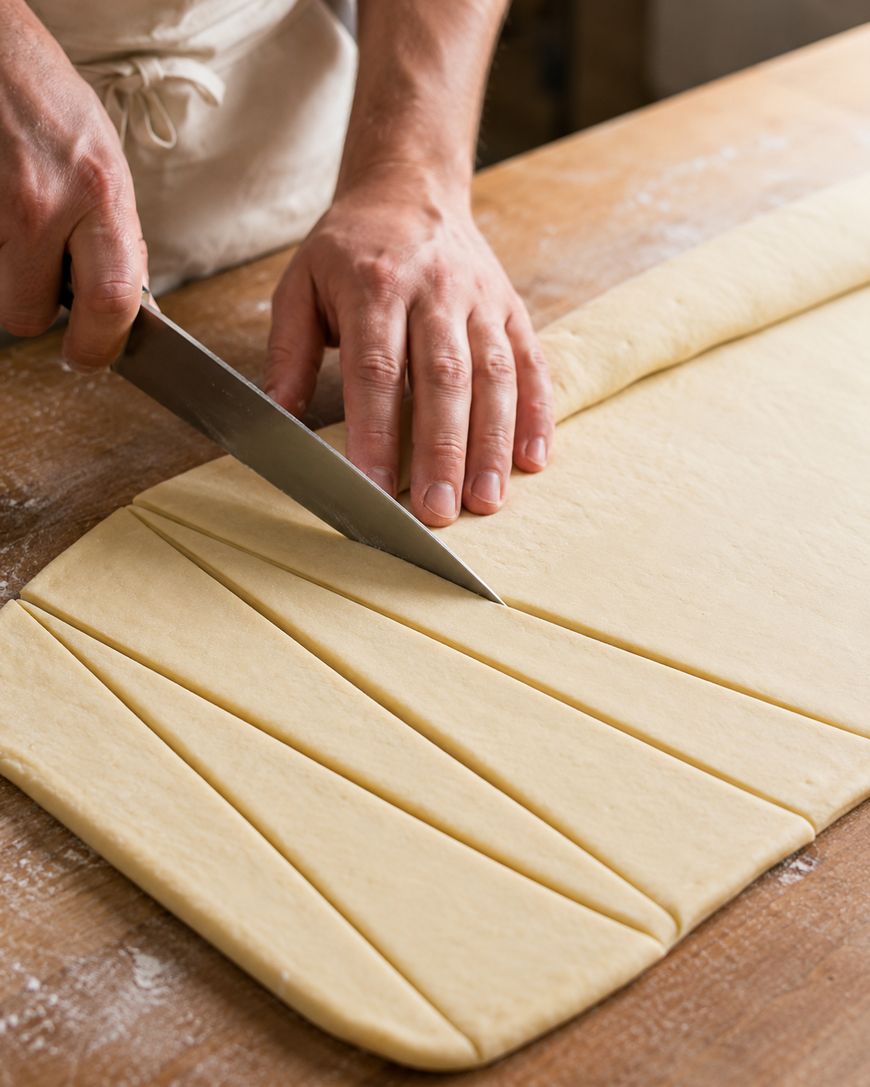
After your final fold and a longer chill of about an hour, roll the dough into a long rectangle roughly a quarter inch thick, then trim the ragged edges with a sharp knife or pizza cutter for clean layers.
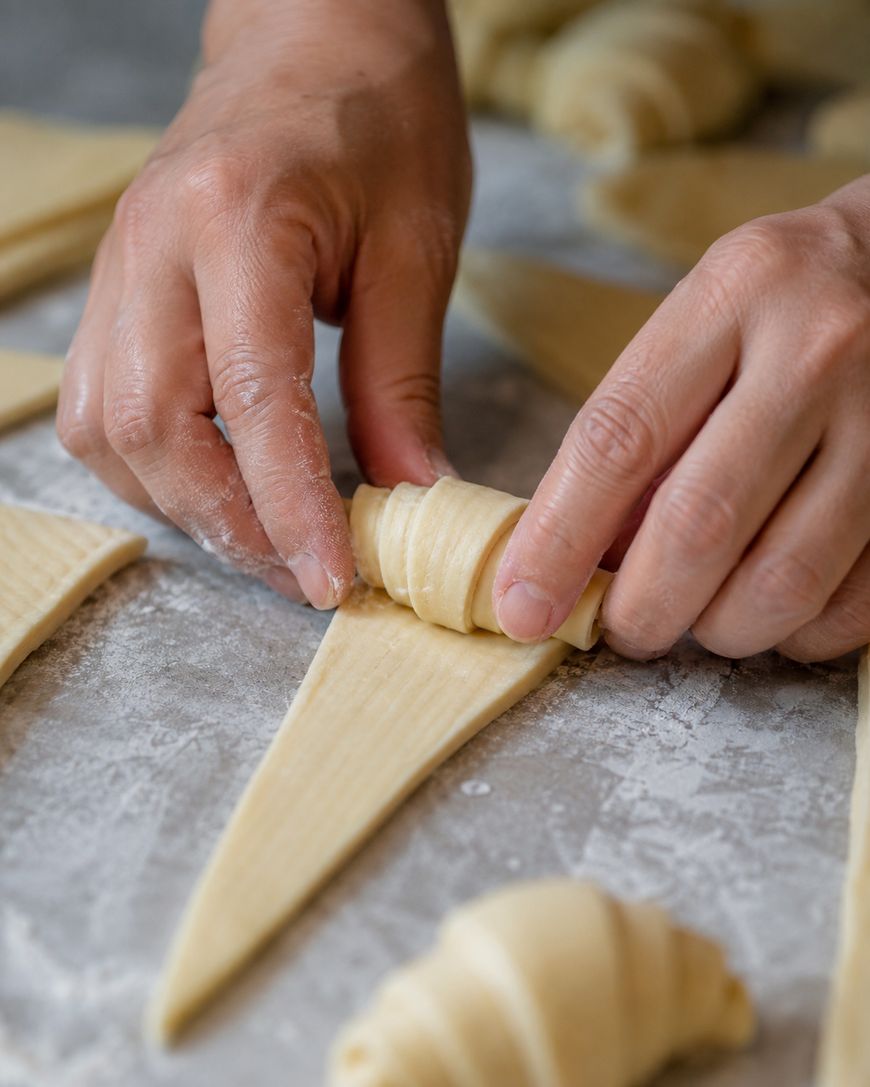
Cut the dough into long triangles, each with a base around four inches wide, then make a small notch in the center of each base before rolling from the wide end toward the point.
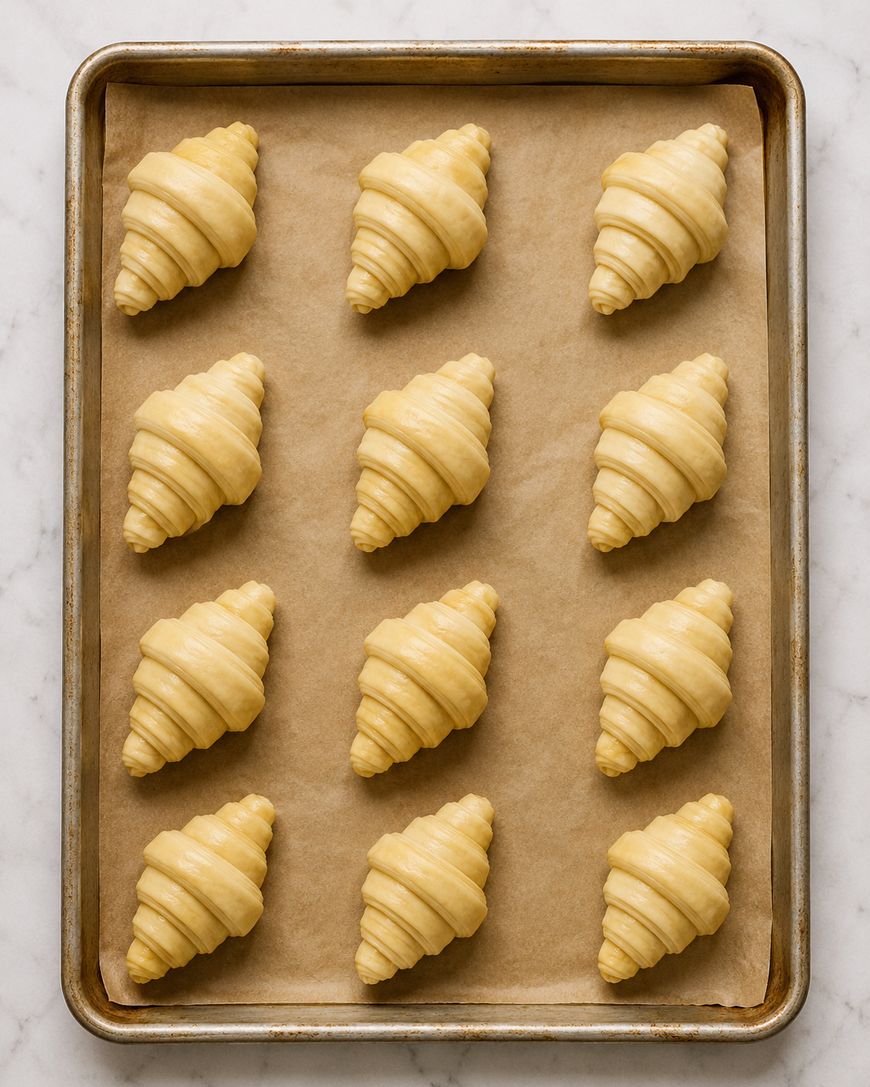
Curve the ends slightly inward as you set each croissant on a parchment-lined baking sheet, which gives you that classic crescent shape, though a straighter shape works too and is actually more traditional for all-butter croissants.
Proofing and Baking
Cover the shaped croissants loosely and let them proof somewhere around 75 to 80 degrees Fahrenheit for two to three hours, until they look visibly puffy and jiggle slightly when you nudge the tray.
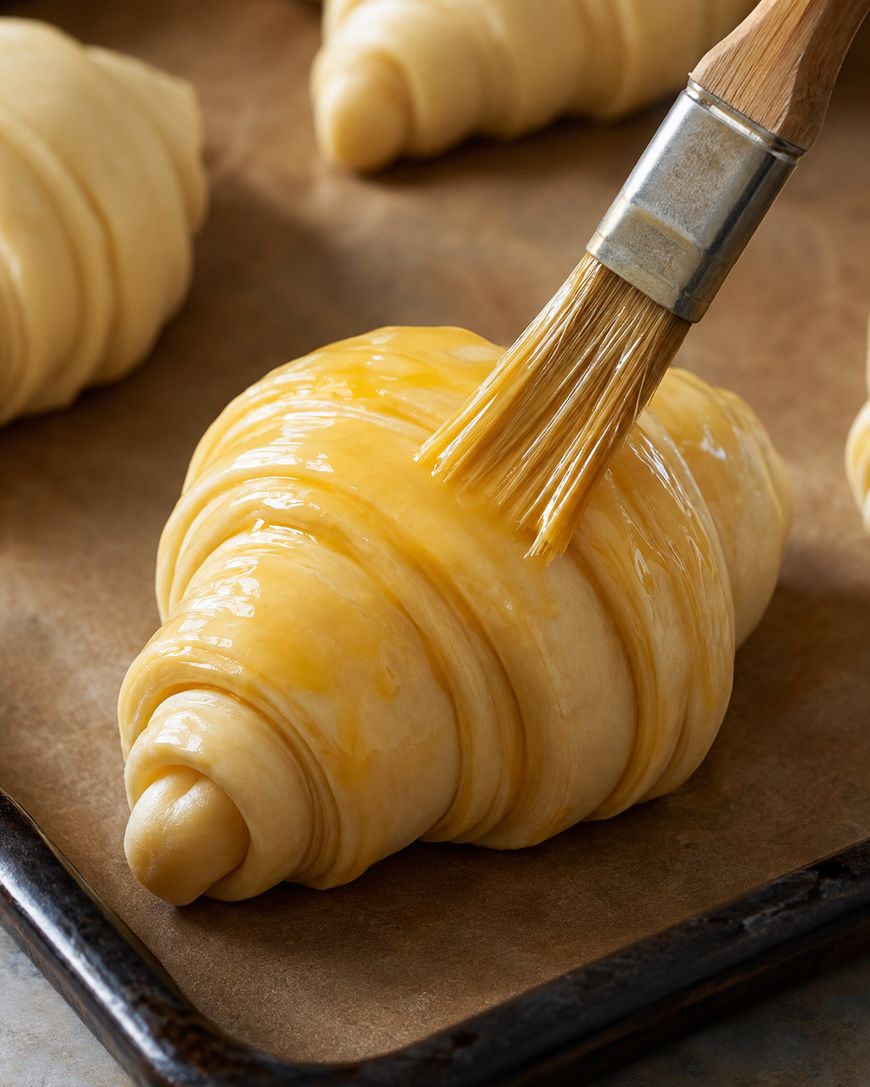
Brush each croissant gently with an egg wash made from one egg beaten with a splash of milk, taking care not to press down or you will flatten the delicate layers.
Bake at 375 degrees Fahrenheit for about 18 to 22 minutes, rotating the pan halfway through, until the croissants turn deep golden brown and sound hollow when you tap the bottom.
Variations and Substitutions
Swap in dark chocolate batons before rolling for pain au chocolat, or fold in a thin layer of almond cream, called frangipane, for almond croissants once they have baked and cooled slightly.
If you cannot find European-style butter, standard unsalted butter still works, though your layers may turn out a touch less crisp and defined.
For a same-day version, you can shorten the initial dough rest to two hours, though the flavor and texture will be noticeably less developed than an overnight rest.
Storage and Serving Suggestions
Baked croissants keep well at room temperature in a paper bag for up to two days, and a quick five-minute reheat at 300 degrees Fahrenheit brings back their crisp exterior.

Shaped, unbaked croissants freeze beautifully on a tray before proofing, so you can pull a few out overnight, let them come to room temperature and proof the next morning, and bake fresh whenever you want.
Serve them warm with good butter and jam, alongside coffee or a bowl of fruit, for a breakfast that feels like a trip to a French bakery.
The Origin of the Croissant
The croissant traces its shape back to the Austrian kipferl, a crescent-shaped pastry that predates the French version by centuries, but the laminated, yeasted dough we know today developed in French bakeries during the 19th century.
Viennese baker August Zang is often credited with bringing the crescent pastry to Paris in the 1830s, where French bakers eventually refined it into the buttery, laminated version that became a defining symbol of French patisserie.
Today, croissants remain a benchmark pastry in professional baking, and pulling one off successfully at home is genuinely something to be proud of.
Ready to see your exact measurements and timing laid out step by step? Use the recipe card below to make this croissant recipe from start to finish.

Homemade Croissants
Buttery, flaky French croissants made from scratch with classic lamination technique for dozens of delicate layers.
Ingredients
- 4 cups bread flour, plus more for dusting
- 1/4 cup granulated sugar
- 2 1/4 teaspoons active dry yeast (1 packet)
- 1 1/2 teaspoons fine sea salt
- 1 1/4 cups whole milk, warmed to 110°F
- 3 tablespoons unsalted butter, melted
- 1 1/2 cups (3 sticks) cold European-style unsalted butter, for lamination
- 1 large egg
- 1 tablespoon milk, for egg wash
Instructions
- Warm the milk to about 110°F, stir in the yeast and a pinch of sugar, and let sit 5 minutes until foamy.
- In a large bowl, whisk together the flour, remaining sugar, and salt.
- Add the yeast mixture and melted butter, then knead by hand or with a stand mixer until a smooth, slightly tacky dough forms, about 8 minutes.
- Shape the dough into a rectangle, wrap tightly, and refrigerate at least 4 hours or overnight.
- Pound the cold lamination butter between parchment into an even square about 7x7 inches, and chill until firm.
- Roll the chilled dough into a rectangle roughly twice the size of the butter block, place the butter in the center at an angle, and fold the dough over to enclose it completely.
- Roll the dough to about 1/4 inch thick, then perform a single fold by folding one-third over the center and the other third on top.
- Wrap and chill 30 to 45 minutes.
- Roll out again and perform a double fold, folding both short ends to meet in the center, then folding the dough in half.
- Wrap and chill at least 30 minutes, then repeat with one more single fold, chilling again for 1 hour.
- Roll the dough into a long rectangle about 1/4 inch thick, trim the edges, and cut into triangles with a 4-inch base.
- Notch the center of each triangle base, then roll each one from the wide end to the point, curving the ends slightly.
- Place on parchment-lined baking sheets, cover loosely, and proof at 75-80°F for 2 to 3 hours until puffy.
- Preheat the oven to 375°F. Whisk the egg with 1 tablespoon milk and gently brush over each croissant.
- Bake 18 to 22 minutes, rotating the pan halfway, until deep golden brown and hollow-sounding when tapped.
- Cool on a wire rack for at least 10 minutes before serving.
Notes
For best results, use European-style butter with at least 82% fat. Dough and butter should be equally firm before laminating. Shaped, unbaked croissants freeze well for up to a month.
Nutrition Information:
Yield:
12Serving Size:
1 croissantAmount Per Serving: Calories: 320Total Fat: 22gSaturated Fat: 14gSodium: 260mgCarbohydrates: 27gFiber: 1gSugar: 3gProtein: 5g
This site provides estimated nutritional information. This information comes from online calculators. Although we try to provide accurate nutritional information, these figures are only estimates.
Croissant Recipe Questions
Why did my croissants turn out dense instead of flaky?
Dense croissants usually mean the butter melted into the dough during lamination, often from working too fast or in a warm kitchen.
Chill the dough for the full thirty minutes between every fold, and work quickly once the butter is exposed.
Can I make croissant dough ahead of time?
Yes, the dough can rest in the refrigerator overnight after mixing, and shaped, unbaked croissants freeze well for up to a month.
Just thaw them overnight in the fridge before letting them proof at room temperature the next morning.
What is the best flour for a croissant recipe?
Bread flour or a strong all-purpose flour with at least 12 percent protein gives you the gluten structure needed to support all the folding.
Cake flour and pastry flour are too soft and will not hold up through lamination.
Why is my butter breaking through the dough?
This usually means the dough and butter block were not the same temperature when you started laminating.
Let both rest in the refrigerator until they feel equally firm before you begin any fold.
Do I need a stand mixer to make croissants?
A stand mixer with a dough hook makes mixing easier, but you can absolutely knead this dough by hand.
The lamination itself, which is the technique that actually defines a croissant, is always done by hand with a rolling pin regardless.
How many folds does a classic croissant recipe need?
Most classic recipes use one single fold followed by one double fold, which creates roughly 27 layers of butter and dough.
Adding more folds beyond this actually breaks the layers down too finely and can make your croissants less flaky, not more.
Once you get the rhythm of chilling, rolling, and folding, this croissant recipe becomes less intimidating and more like a relaxing weekend project, and the payoff of pulling flaky, golden croissants out of your own oven is hard to beat.
Try this brioche bread recipe next