Last updated: October 17, 2026
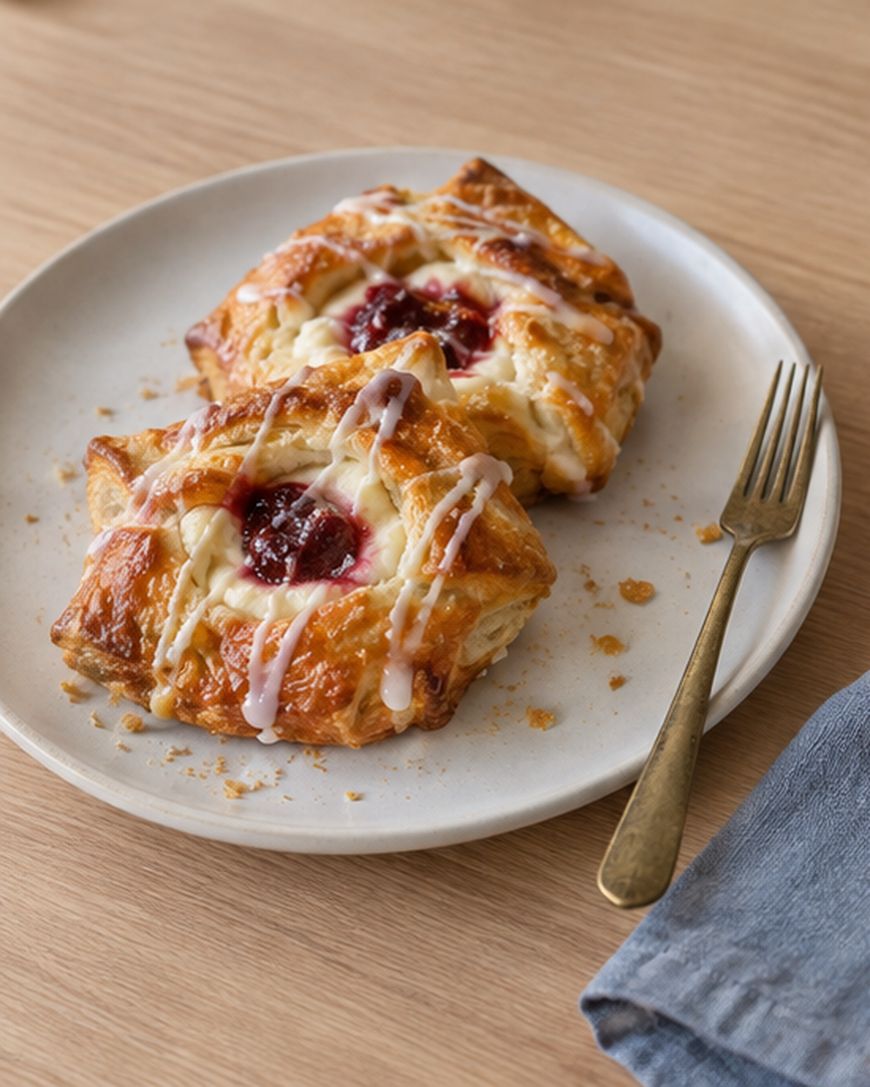
This danish pastry has dozens of flaky, buttery layers, a tangy cream cheese filling, and a spoonful of raspberry jam on top. The recipe card below has every ingredient and step, and the walkthrough that follows explains how to keep the butter cold and the layers distinct.
How to Make Danish Pastry From Scratch
Danish pastry is made by wrapping a yeasted dough around a block of cold butter, folding it into thirds three times, then cutting it into squares, shaping, proofing, and baking at 400°F for 18 to 22 minutes. The recipe makes 12 pastries and takes about 1 hour 30 minutes of hands-on work, plus 3 hours of chilling, up to 1 hour 30 minutes of proofing, and 20 minutes of baking.
Plan on roughly 6 hours 20 minutes from start to finish, although most of that time is hands off. If you want warm pastries for breakfast, you can build the dough the day before and finish it the next morning.
Gather Your Danish Pastry Ingredients
The dough needs 3 cups (375 grams) of all-purpose flour, 1/4 cup (50 grams) of granulated sugar, 1 teaspoon of fine salt, 2 1/4 teaspoons (one packet) of instant yeast, and 1/2 teaspoon of ground cardamom. It also needs 3/4 cup (180 milliliters) of cold whole milk, 1 large cold egg, 3 tablespoons (42 grams) of softened unsalted butter, and 1 teaspoon of vanilla extract.
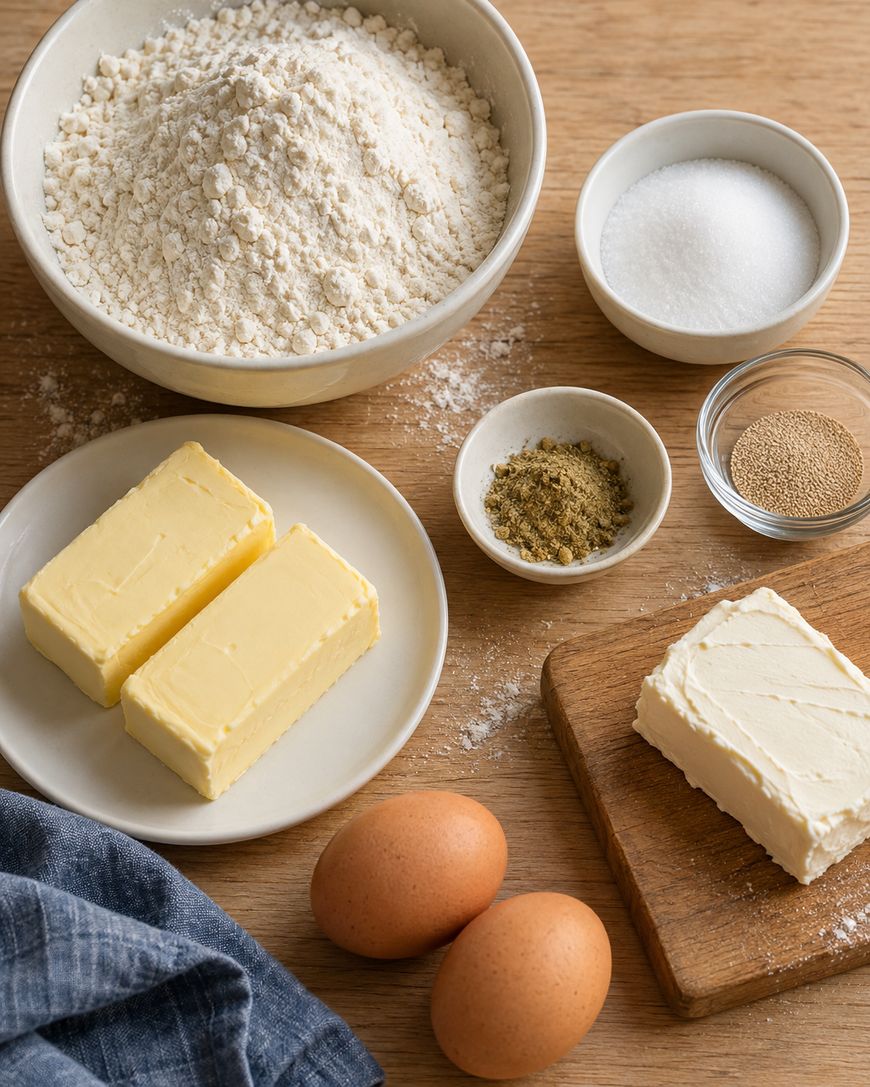
The butter block is 1 cup (2 sticks, 227 grams) of cold unsalted butter, ideally a European-style butter such as Kerrygold or Plugra because the higher fat content makes it more pliable and less watery. Standard American butter works too, but it needs a little more care to keep it from cracking.
The filling uses 8 ounces (226 grams) of softened cream cheese, 1/4 cup (50 grams) of granulated sugar, 1 large egg yolk, 1 teaspoon of vanilla extract, and 1 teaspoon of lemon zest. You also need 1/4 cup of raspberry or apricot jam, plus 1 large egg and 1 tablespoon of whole milk for the egg wash.
The glaze is 1/2 cup (60 grams) of powdered sugar, 1 1/2 tablespoons of whole milk, and 1/2 teaspoon of vanilla extract. For equipment, you need a stand mixer with a dough hook, a rolling pin, a ruler, a bench scraper, parchment paper, two rimmed baking sheets, and a sharp knife or pizza cutter.
Mix and Chill the Dough
Whisk the flour, sugar, salt, yeast, and cardamom together in the bowl of a stand mixer. Add the cold milk, egg, softened butter, and vanilla, then mix with the dough hook on low until the dough comes together.
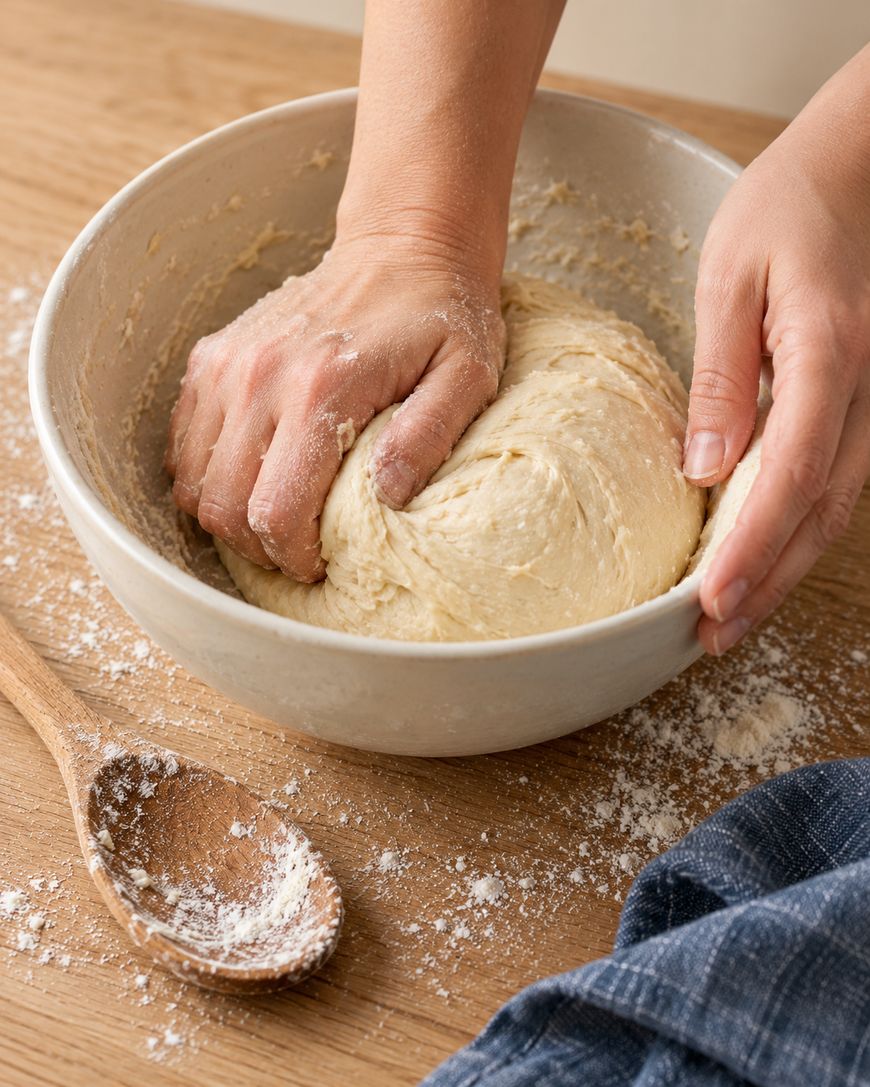
Knead on medium-low for 5 minutes, or by hand for about 8 minutes, until the dough is smooth and slightly tacky. Shape it into a flat rectangle, wrap it tightly, and chill it for 1 hour.
The dough starts cold on purpose. Cold milk and a cold egg keep the dough close to the temperature of the butter block, which lets the two roll out together as one piece.
Shape the Butter Block
While the dough chills, place the cold butter between two sheets of parchment paper, pound it with the rolling pin, and roll it into a 6-inch square about 1/2 inch thick. Wrap it in the parchment and refrigerate it until you are ready to laminate.
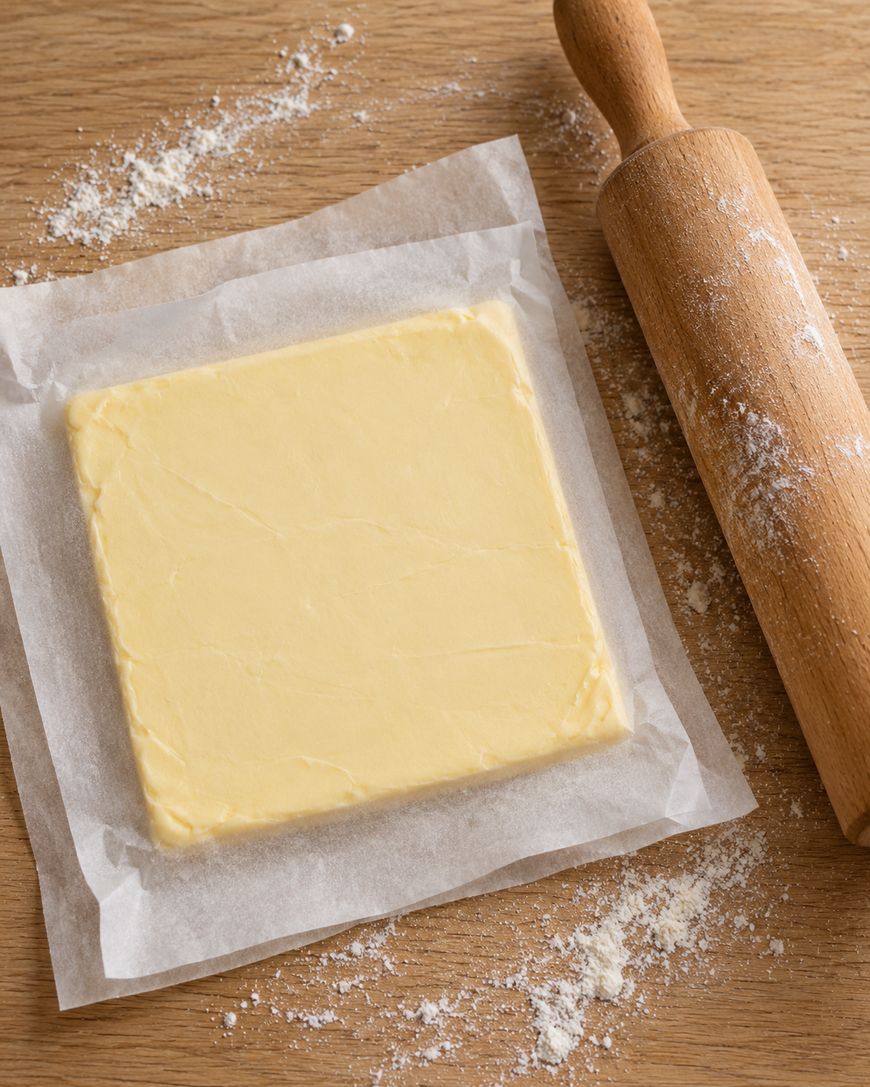
The butter should be cold and firm but bend slightly without snapping. If it cracks, let it sit out for 5 minutes, and if it feels greasy, chill it for 10 minutes.
Lock In the Butter and Fold the Layers
Roll the chilled dough on a lightly floured counter into a 12 by 8 inch rectangle with a long side facing you. Set the butter square in the center, fold the two ends over it so they meet in the middle, and pinch the seams and edges closed so no butter can escape.
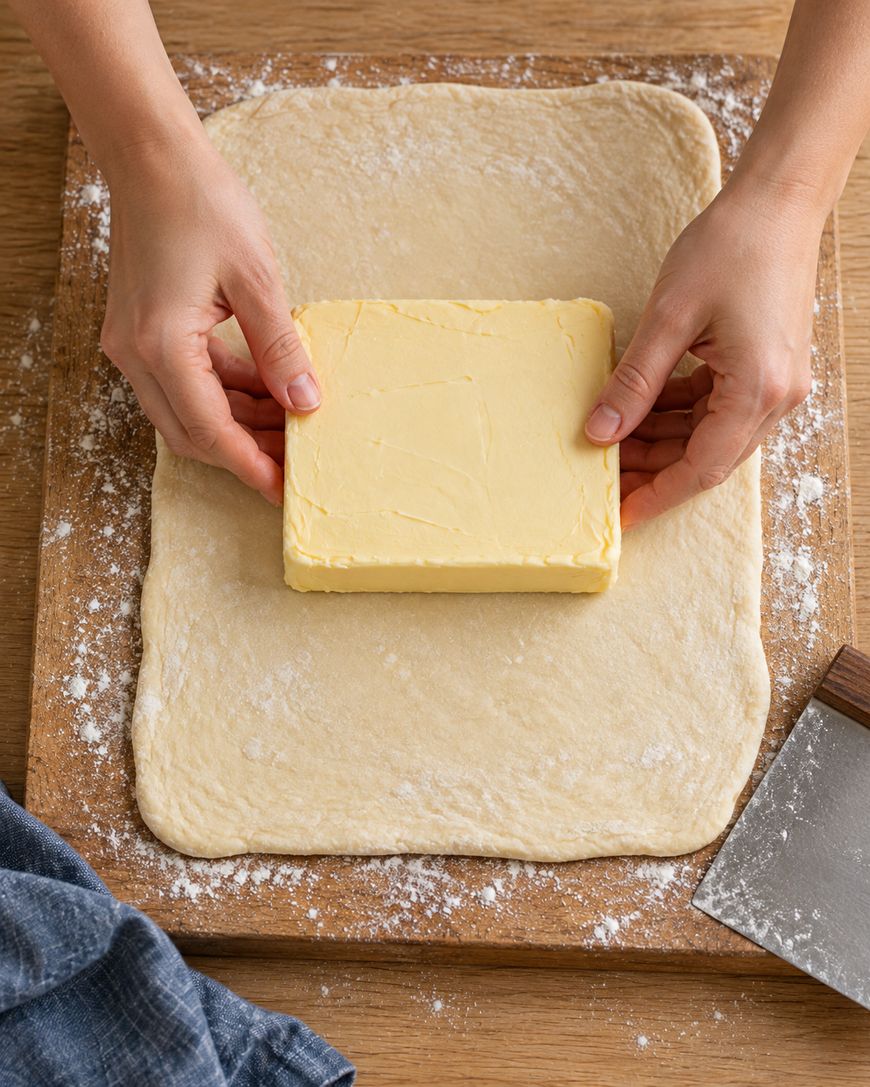
Now roll the package into an 8 by 18 inch rectangle, brushing off excess flour as you go. Fold it into thirds like a business letter, wrap it, and chill it for 30 minutes.
Repeat that roll and fold a second time, chill for another 30 minutes, then roll and fold a third time. After the third fold, wrap the dough and chill it for at least 1 hour, or up to 24 hours.
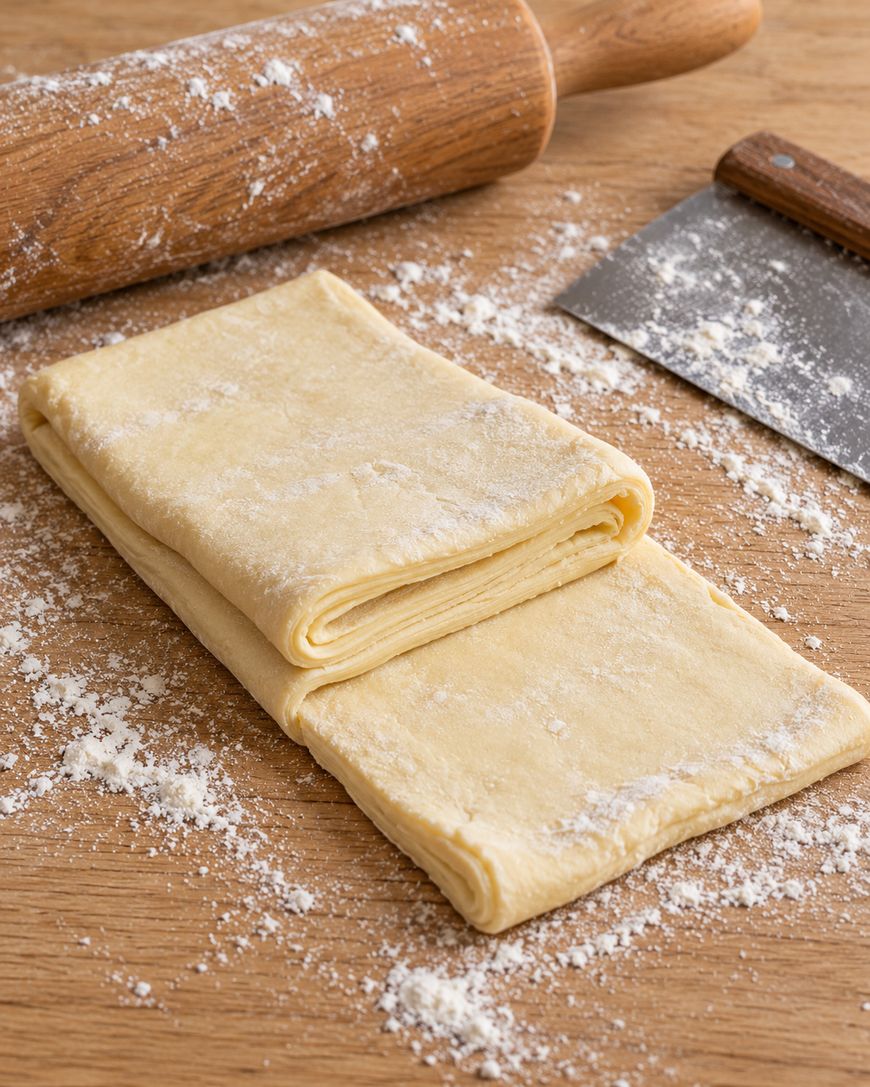
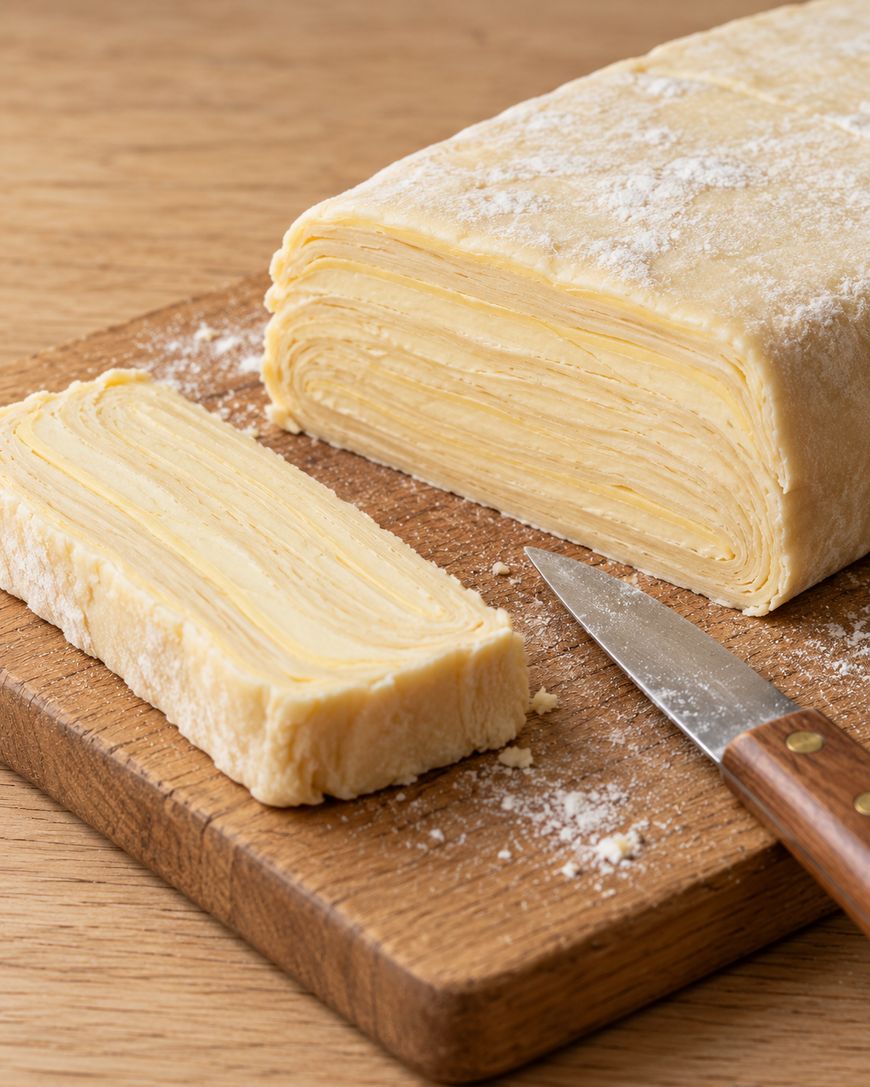
Each fold multiplies the number of butter and dough layers, and the steam released by those thin butter layers in a hot oven is what puffs the pastry apart. If butter leaks out or the dough starts springing back when you roll it, stop and chill it for 15 minutes before continuing.
Cut and Shape the Pinwheels
Roll the chilled dough into a 12 by 16 inch rectangle about 1/4 inch thick, then trim a sliver off each edge with a sharp knife so the layers are exposed. Cut the dough into twelve squares, three rows of four.
Make a cut from each corner toward the center, stopping 1/2 inch from the middle. Fold every other point into the center, press down firmly to seal, and set six pinwheels on each of two parchment-lined baking sheets, spaced about 3 inches apart.
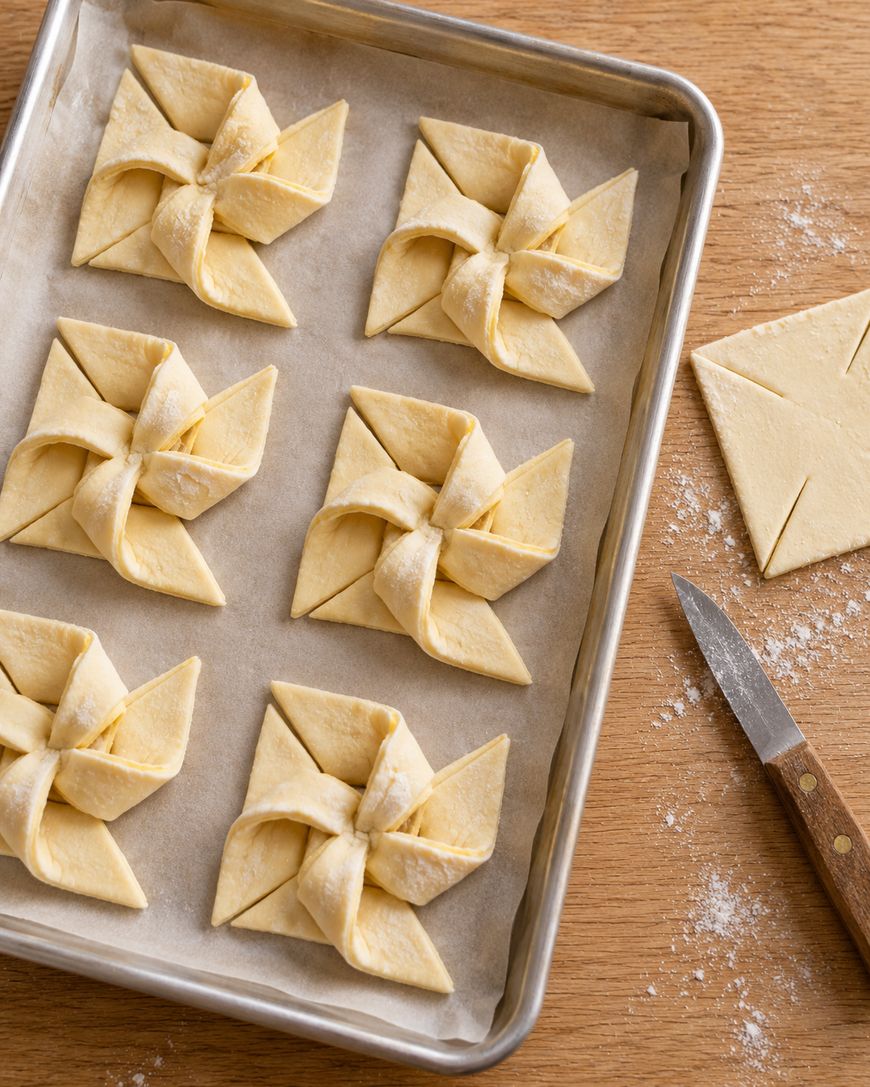
A sharp knife or pizza cutter matters here because dragging a dull blade presses the layers together and keeps them from rising.
Proof the Pastries
Cover the pans loosely with greased plastic wrap and let the pastries proof at about 75°F (24°C) for 60 to 90 minutes. They are ready when they look puffy, show visible layers at the edges, and jiggle slightly when you nudge the pan.

Avoid proofing in a spot warmer than 80°F, because the butter will melt out of the layers before the pastries reach the oven. While they proof, beat the cream cheese, sugar, egg yolk, vanilla, and lemon zest until completely smooth.
Heat the oven to 400°F (200°C) with racks in the upper and lower thirds during the last 20 minutes of proofing.
Fill, Egg Wash, and Bake
Beat the remaining egg with 1 tablespoon of milk and brush it over the dough. Press the back of a spoon into the center of each pinwheel to make a shallow well, spoon in about 1 1/2 tablespoons of the cream cheese filling, and top with 1 teaspoon of jam.

Bake for 18 to 22 minutes, swapping the pans top to bottom and front to back halfway through, until the pastries are deep golden brown and the filling looks set. Cool them on the pans for 10 minutes.
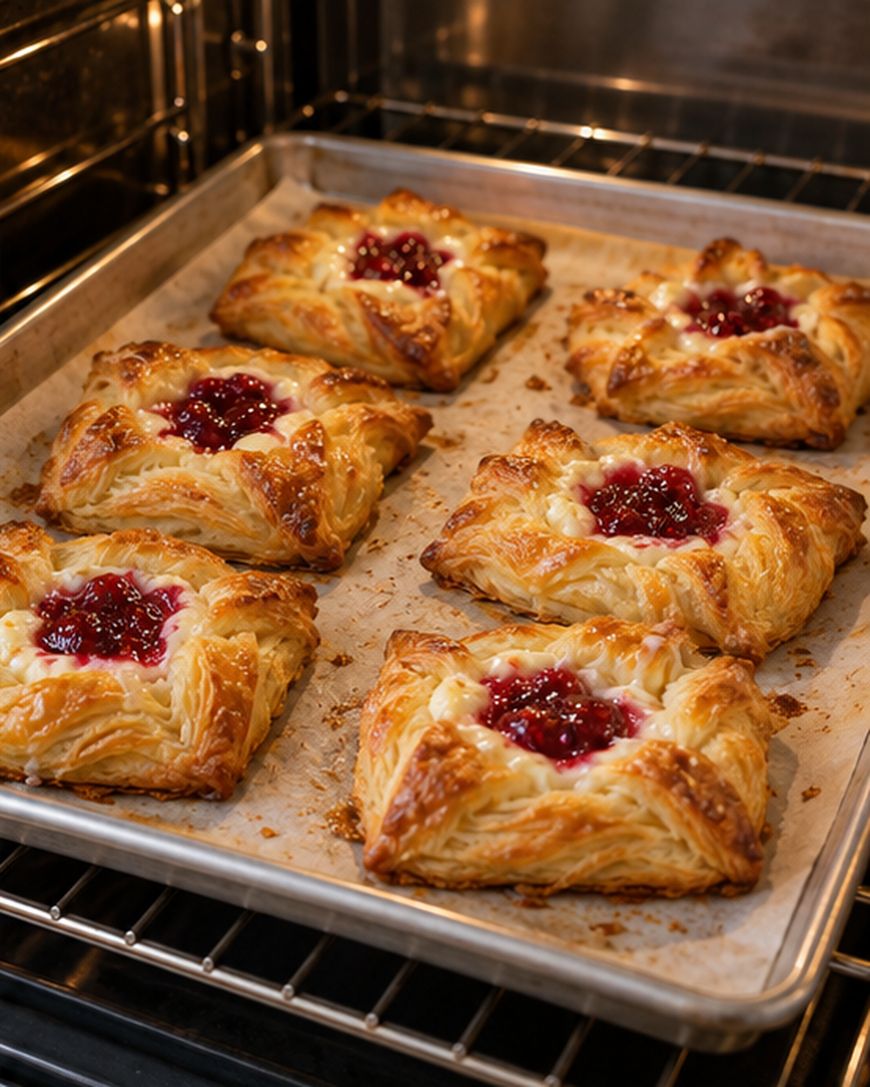
Whisk the powdered sugar, 1 1/2 tablespoons of milk, and the vanilla into a thick glaze, then drizzle it over the warm pastries.
Tips for Flaky Danish Pastry Every Time
Keep Everything Cold
Cold dough and cold butter are the whole secret of danish pastry. If your kitchen is warm, work in shorter bursts and slide the dough into the refrigerator whenever the butter starts to soften.
Go Easy on the Flour
Dust the counter and rolling pin lightly, and brush off excess flour before each fold. Extra flour trapped between the layers makes the pastry dry and keeps the folds from sticking together.
Try Optional Variations
The card uses raspberry or apricot jam, but you can top each pastry with 1 teaspoon of lemon curd instead. Almond extract (1/4 teaspoon in the filling) and sliced almonds on top are also lovely, but the card leaves both out, so treat them as optional.
Store and Make Ahead
Refrigerate the pastries within 2 hours of baking, following USDA guidance for perishable foods, because the filling contains cream cheese and egg yolk. Store them covered in the refrigerator for up to 3 days, then reheat at 325°F for 8 to 10 minutes.
Freeze baked, unglazed pastries for up to 2 months, thaw them overnight in the refrigerator, and reheat at 325°F for 8 to 10 minutes before glazing. The laminated dough can also wait in the refrigerator for up to 24 hours after the third fold.
The Story Behind Danish Pastry
Where Danish Pastry Comes From
Danish pastry is a laminated, yeast-raised pastry made from an enriched dough layered with butter, and in Denmark it is called wienerbrød, which means Vienna bread. A popular account says Austrian bakers brought the technique to Copenhagen around 1850 during a bakers’ strike, and Danish bakers made it their own.
Modern bakeries fill danish pastry with everything from fruit preserves and almond paste to vanilla custard. The cream cheese and jam version here is a popular American style, and the pinwheel shape is the one most people picture at a coffee shop counter.
How to Serve Danish Pastry
Serve these danish pastries warm with hot coffee, black tea, or a tall glass of cold milk. They also work well on a brunch table next to scrambled eggs, fresh berries, and sliced melon.

If you are baking for a crowd, make the dough the day before and shape the pastries the morning of your gathering. Fresh out of the oven, the layers shatter at the edges and the center stays creamy.
Use the recipe card below for the full ingredient list, every step, and nutrition information.
Danish Pastry
Flaky, buttery danish pastry pinwheels made with a folded yeast dough, filled with a creamy lemon cream cheese filling and topped with jam and a vanilla glaze.
Ingredients
- 3 cups (375 g) all-purpose flour, plus more for dusting
- 1/4 cup (50 g) granulated sugar
- 1 teaspoon fine salt
- 2 1/4 teaspoons (1 packet) instant yeast
- 1/2 teaspoon ground cardamom
- 3/4 cup (180 ml) cold whole milk
- 1 large egg, cold
- 3 tablespoons (42 g) unsalted butter, softened
- 1 teaspoon vanilla extract
- 1 cup (2 sticks, 227 g) cold unsalted butter, for the butter block
- 8 ounces (226 g) cream cheese, softened
- 1/4 cup (50 g) granulated sugar, for the filling
- 1 large egg yolk
- 1 teaspoon vanilla extract, for the filling
- 1 teaspoon lemon zest
- 1/4 cup raspberry or apricot jam
- 1 large egg, for the egg wash
- 1 tablespoon whole milk, for the egg wash
- 1/2 cup (60 g) powdered sugar
- 1 1/2 tablespoons whole milk, for the glaze
- 1/2 teaspoon vanilla extract, for the glaze
Instructions
- Whisk the flour, sugar, salt, yeast, and cardamom in a stand mixer bowl, add the cold milk, cold egg, softened butter, and vanilla, and mix with the dough hook on low until the dough comes together.
- Knead on medium-low for 5 minutes, or by hand for about 8 minutes, until smooth and slightly tacky, then shape into a flat rectangle, wrap tightly, and chill for 1 hour.
- While the dough chills, pound and roll the cold butter between two sheets of parchment into a 6-inch square about 1/2 inch thick, then wrap and refrigerate it.
- Roll the chilled dough on a lightly floured counter into a 12 by 8 inch rectangle, set the butter square in the center, fold the two ends over it so they meet in the middle, and pinch the seams and edges closed.
- Roll the package into an 8 by 18 inch rectangle, brushing off excess flour, fold it into thirds like a letter, wrap it, and chill for 30 minutes.
- Repeat the roll and fold a second time and chill for 30 minutes, then roll and fold a third time, wrap, and chill for at least 1 hour or up to 24 hours.
- Roll the chilled dough into a 12 by 16 inch rectangle about 1/4 inch thick, trim a sliver off each edge with a sharp knife, and cut into twelve squares, three rows of four.
- Cut from each corner toward the center, stopping 1/2 inch from the middle, fold every other point into the center, press firmly to seal, and place six pinwheels on each of two parchment-lined baking sheets, about 3 inches apart.
- Cover loosely with greased plastic wrap and proof at about 75°F (24°C) for 60 to 90 minutes, until puffy, visibly layered, and slightly jiggly, keeping the spot below 80°F so the butter does not melt.
- While the pastries proof, beat the cream cheese, sugar, egg yolk, vanilla, and lemon zest until completely smooth, and heat the oven to 400°F (200°C) with racks in the upper and lower thirds during the last 20 minutes of proofing.
- Beat the remaining egg with 1 tablespoon of milk and brush it over the dough, press a shallow well in the center of each pinwheel with the back of a spoon, spoon in about 1 1/2 tablespoons of filling, and top with 1 teaspoon of jam.
- Bake for 18 to 22 minutes, swapping the pans top to bottom and front to back halfway through, until deep golden brown and the filling looks set, then cool on the pans for 10 minutes.
- Whisk the powdered sugar, 1 1/2 tablespoons of milk, and the vanilla into a thick glaze and drizzle it over the warm pastries.
Notes
Cooling time is not included in the total time. Refrigerate the pastries within 2 hours of baking, following USDA guidance for perishable foods, and store covered in the refrigerator for up to 3 days, reheating at 325°F for 8 to 10 minutes. Freeze baked, unglazed pastries for up to 2 months, thaw overnight in the refrigerator, and reheat at 325°F for 8 to 10 minutes before glazing. The laminated dough can be refrigerated for up to 24 hours after the third fold. If butter leaks out or the dough springs back while rolling, chill it for 15 minutes before continuing. Optional additions not in the recipe as written: 1 teaspoon of lemon curd per pastry instead of jam, 1/4 teaspoon of almond extract in the filling, or sliced almonds on top.
Nutrition Information:
Yield:
12Serving Size:
1 pastryAmount Per Serving: Calories: 430Total Fat: 26gSaturated Fat: 16gSodium: 290mgCarbohydrates: 42gFiber: 1gSugar: 17gProtein: 6g
Danish Pastry FAQs
Why Did the Butter Leak Out of the Danish Pastry?
Butter leaks when the dough gets warm during folding or proofing, or when the seams were not sealed. Keep the proofing spot at about 75°F, chill between folds, and pinch the seams closed after the lock-in step.
Is a Stand Mixer Necessary for Danish Pastry?
No. You can knead the dough by hand for about 8 minutes until it is smooth and slightly tacky, and the rest of the recipe needs only a rolling pin and your hands.
How Can You Tell When Danish Pastry Is Proofed Enough?
The pastries look puffy, show visible layers at the edges, and jiggle slightly when you nudge the pan. That usually takes 60 to 90 minutes at about 75°F.
How Should You Store Leftover Danish Pastry?
Refrigerate the pastries within 2 hours of baking and keep them covered for up to 3 days. For longer storage, freeze baked, unglazed pastries for up to 2 months and reheat them at 325°F for 8 to 10 minutes.
Is Danish Pastry the Same as Croissant Dough?
The two are close cousins because both are laminated with butter. Danish dough usually adds egg and more sugar, so it bakes up richer and softer, while croissant dough is leaner and crisper.
Why This Danish Pastry Recipe Works
The recipe works because it keeps the butter and dough at the same cold temperature from the first fold to the oven. A 1 cup butter block wrapped in an enriched dough and folded three times makes layers that stay separate instead of melting together.
The dough is lightly enriched with 3 tablespoons of butter, an egg, and sugar, and the cardamom gives it the warm bakery flavor that defines a classic danish pastry.
A proof of 60 to 90 minutes at about 75°F lets the yeast inflate the layers without melting the butter. The hot 400°F oven then turns the butter into steam fast enough to push the layers apart, and the egg yolk in the cream cheese filling helps it set instead of running out.
Final Thoughts on Making Danish Pastry at Home
Homemade danish pastry takes patience, but every step is simple, and the reward is a pan of flaky, buttery pinwheels with a creamy center. Keep everything cold, follow the recipe card, and let the oven do the rest.
Clear your counter for a weekend baking project, then come back and tell us in the comments how your danish pastry turned out.