Last updated: August 8, 2026
You don’t need years of practice to make your loaves look like they came from a professional bakery. These fall sourdough scoring patterns turn a simple boule into a seasonal centerpiece with just a lame and a little confidence.
Below you’ll find seven designs, from beginner-friendly to more advanced, along with the timing and technique that makes each one work.
What You Need Before You Start Scoring
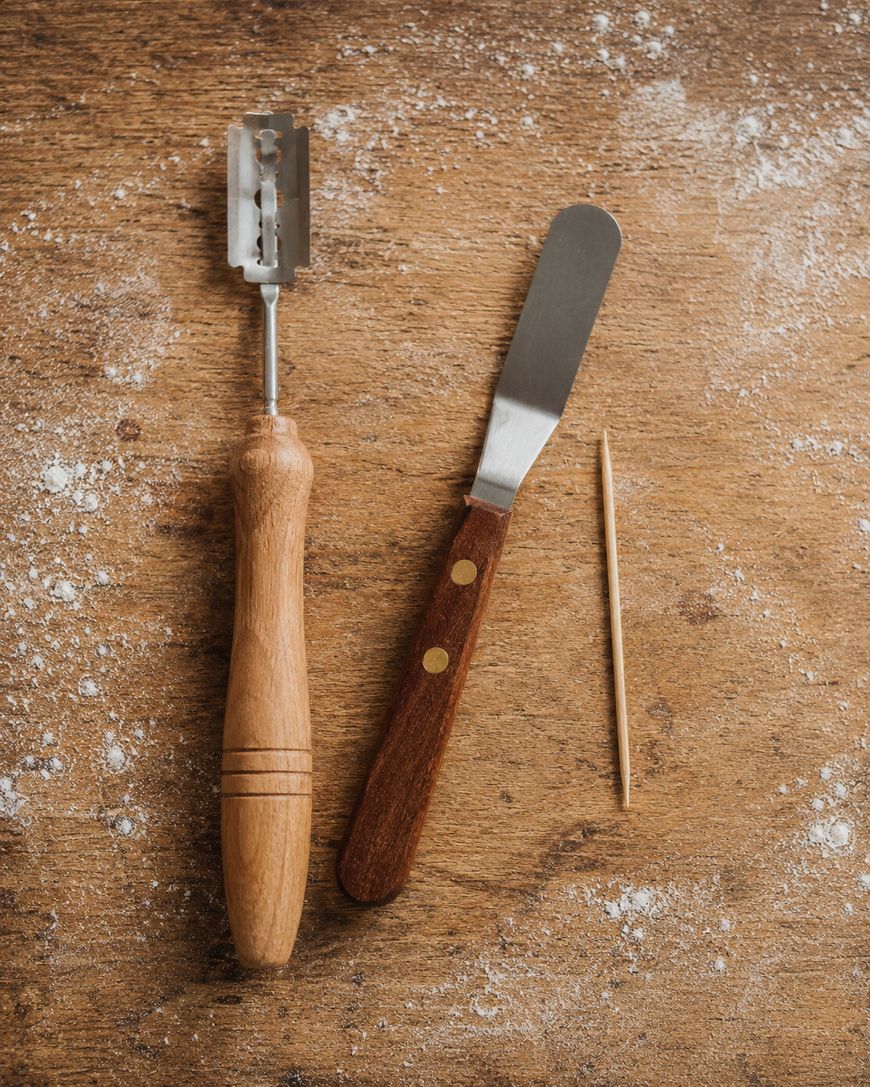
A sharp blade makes all the difference here. A bread lame with a fresh razor gives you clean, controlled lines, while a dull blade drags the dough and ruins crisp detail.
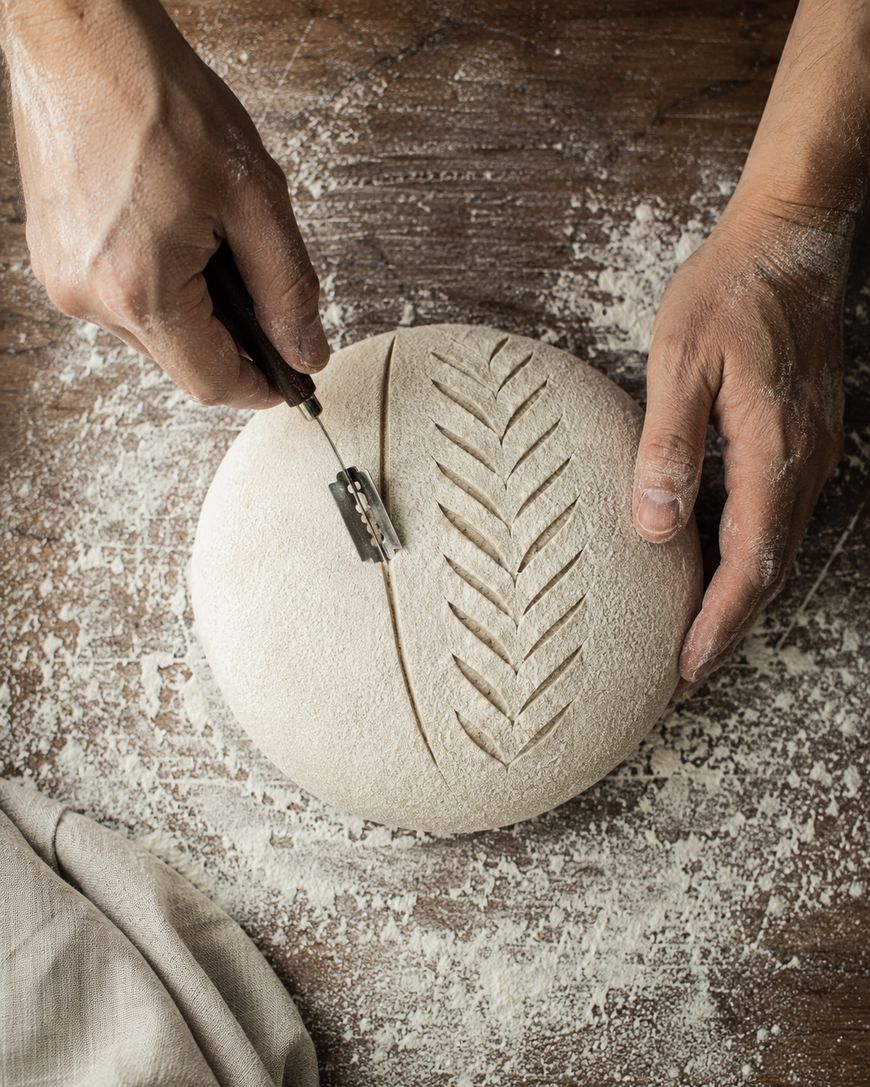
Chill your dough for 20-30 minutes before scoring if it feels soft or sticky. Cold dough holds its shape better and makes fine patterns, like wheat stalks or leaf veins, much easier to execute cleanly.
Work quickly once you start. The longer your shaped loaf sits at room temperature before baking, the more it relaxes, and fine details can blur or spread before they hit the oven.
Pattern 1: The Wheat Stalk
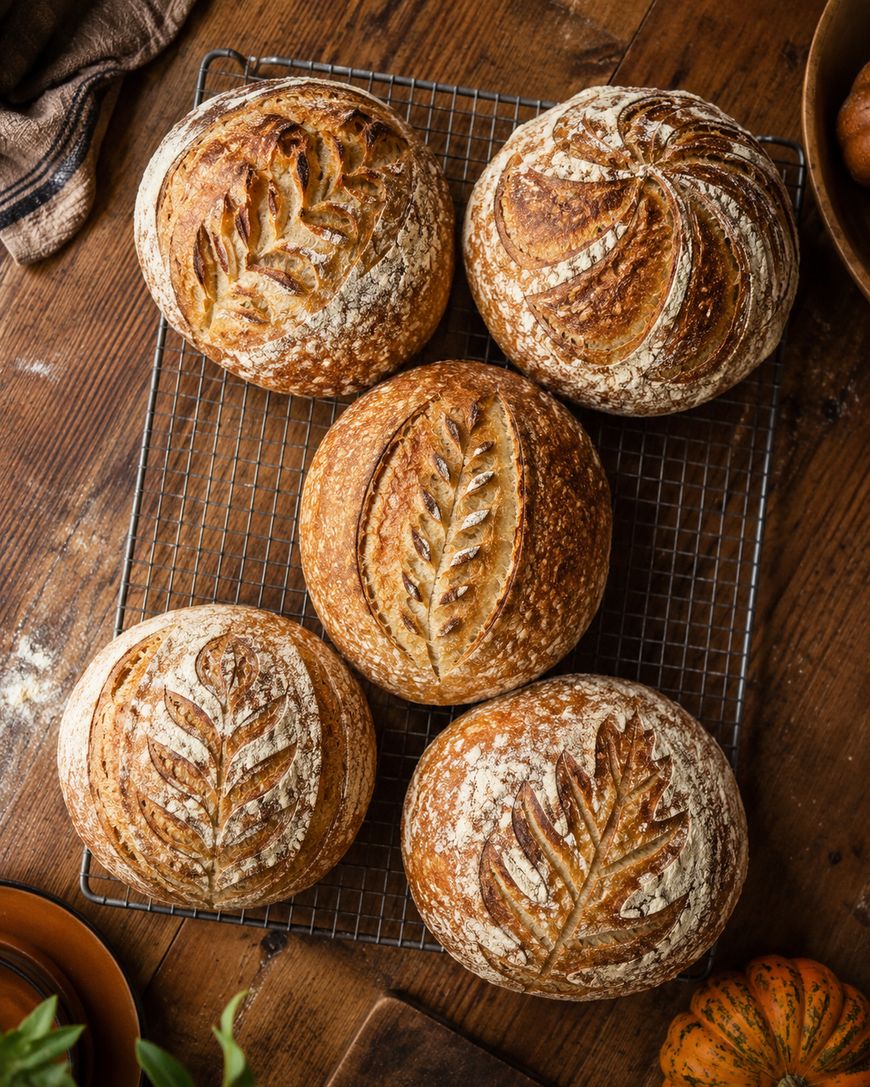
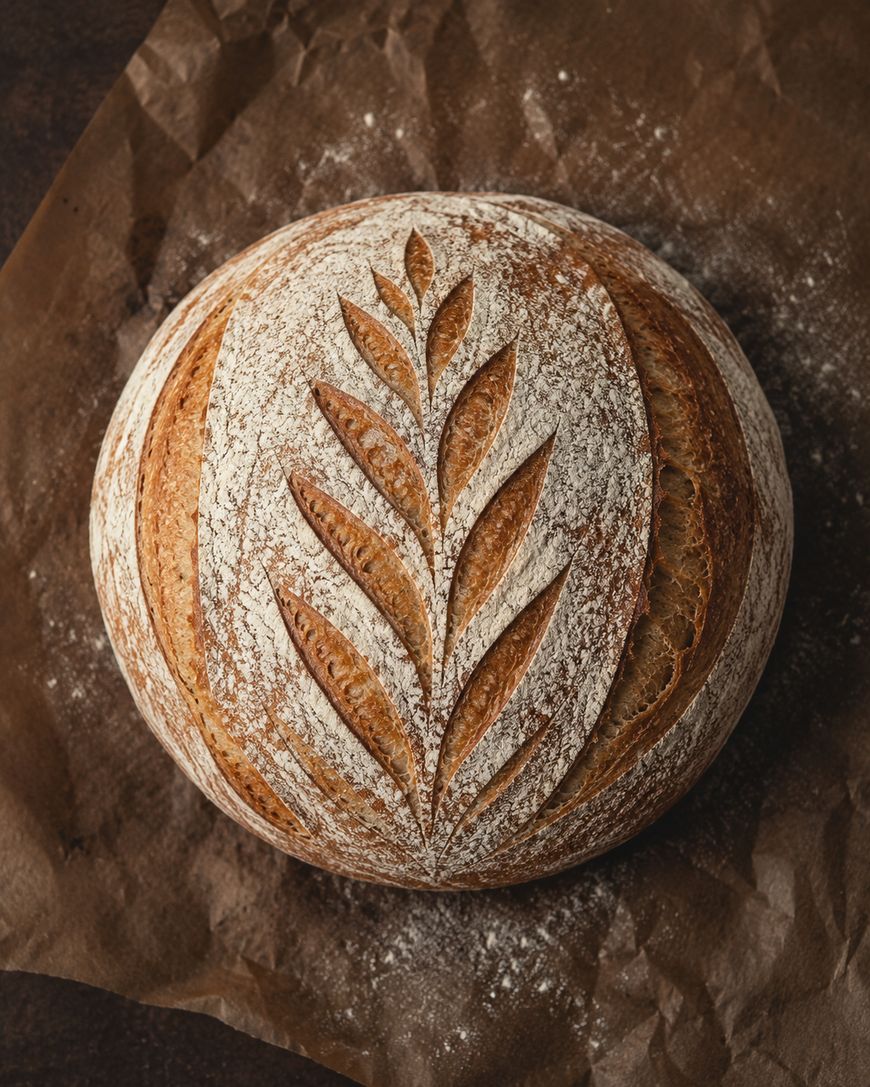
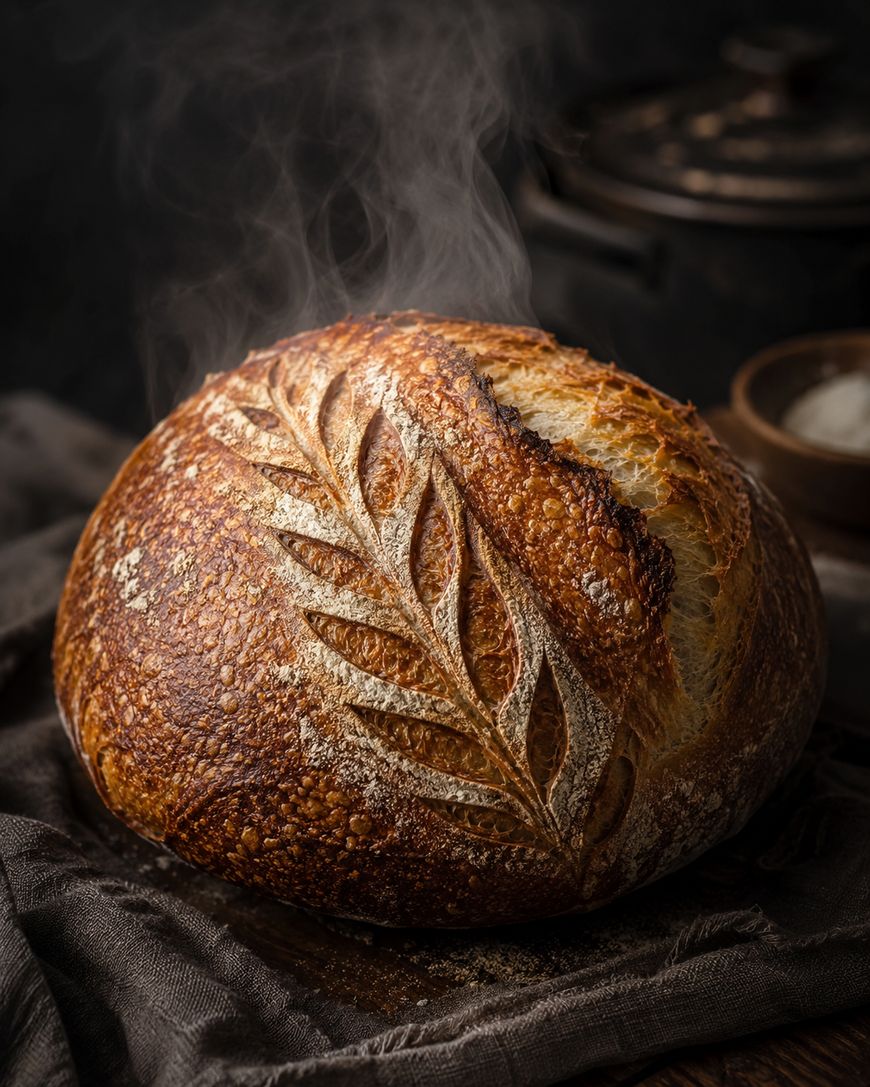
This is one of the most popular fall sourdough scoring patterns because it reads clearly even on a small boule. Start with one long, deep center line down the length of the loaf.
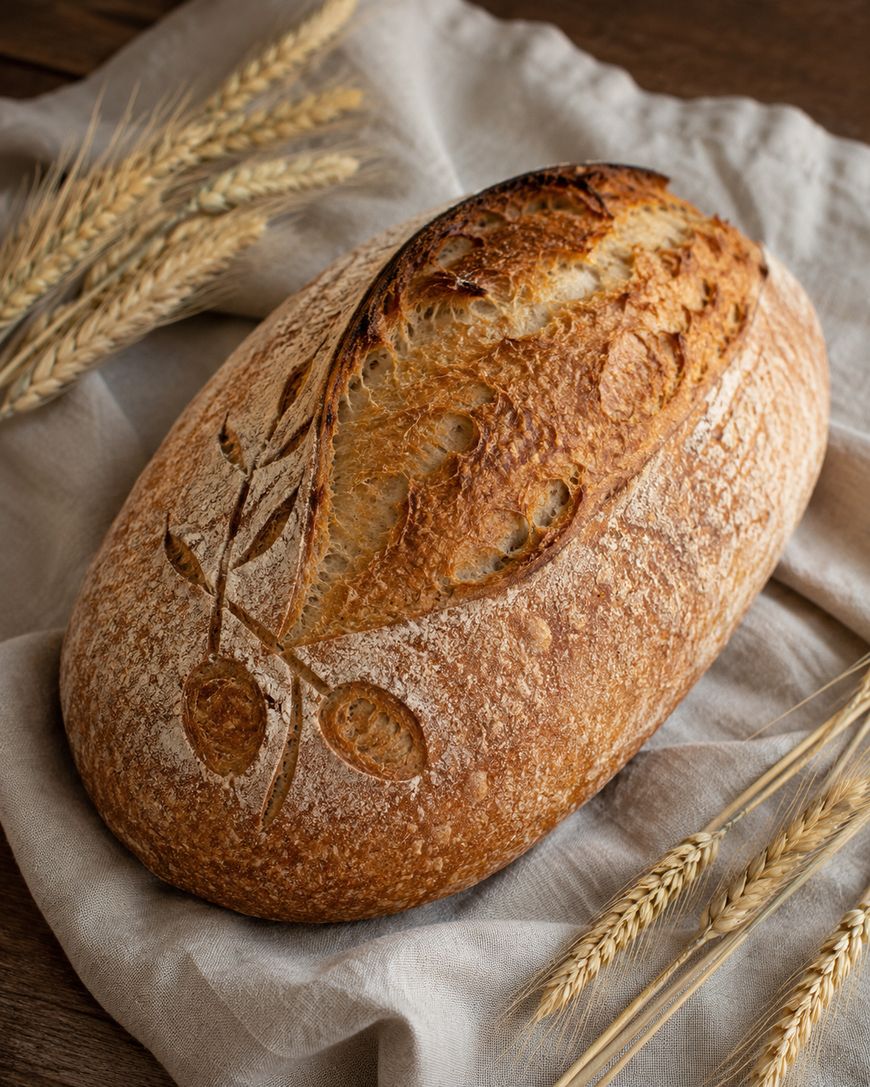
From that spine, angle short diagonal cuts outward on both sides, like the veins of a leaf, working from the top down. Keep each cut shallow and consistent in length for a tidy, symmetrical stalk.
Pattern 2: The Maple Leaf
A maple leaf pattern gives your loaf an unmistakable autumn look without requiring stencils. Score a central vein first, then add three or four shorter veins branching off at angles on either side.
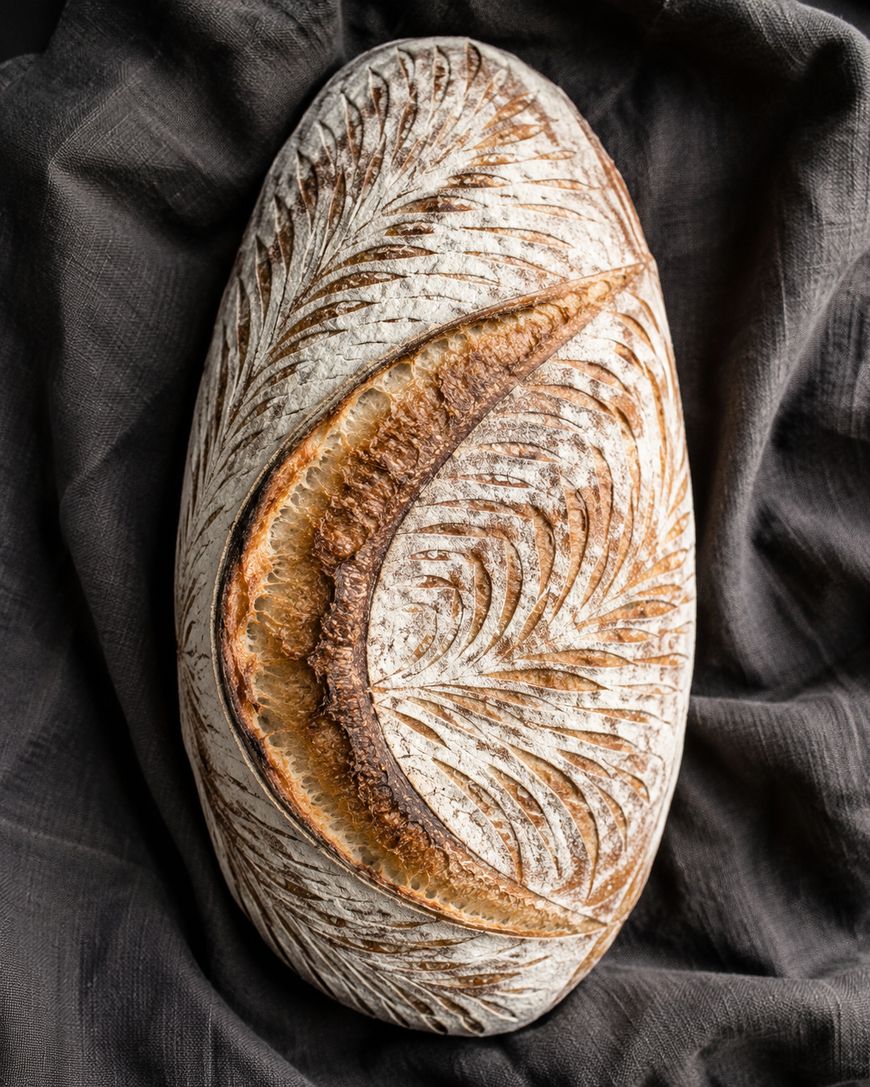
Connect the tips of the veins with light curved cuts to suggest the leaf’s jagged edges. This pattern works best on a round boule where there’s enough surface area for the branching lines to spread naturally.
Pattern 3: The Pumpkin Spiral
For a pumpkin-shaped loaf baked in a round banneton, score curved lines radiating out from the center like spokes on a wheel. Six to eight curved lines, evenly spaced, create the ridged look of a pumpkin.
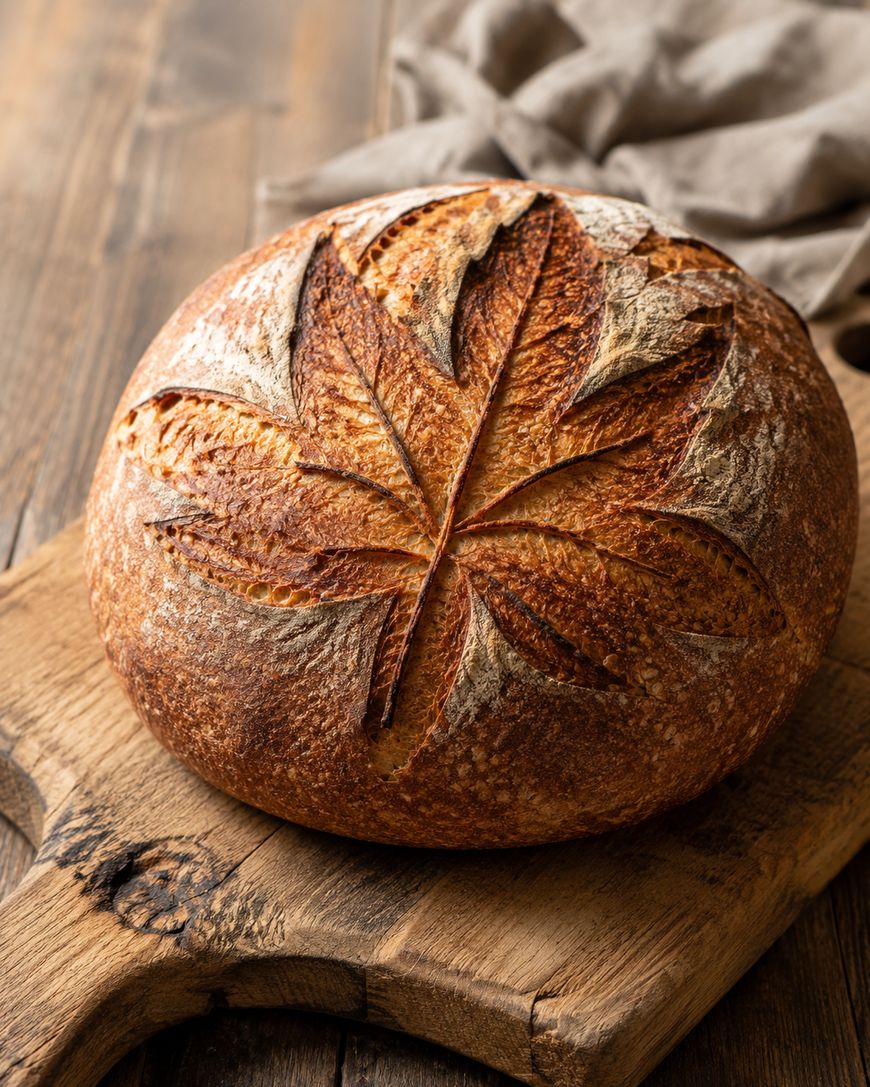
Finish with one small vertical score at the top center to mimic a stem. This pattern is forgiving because slight unevenness in spacing still reads as natural pumpkin ridges once baked.
Pattern 4: The Acorn Cluster
Group three or four small oval scores together near one side of the loaf, each about an inch long, to represent acorns. Add a tiny cap shape, a shallow curved line, at the top of each oval.
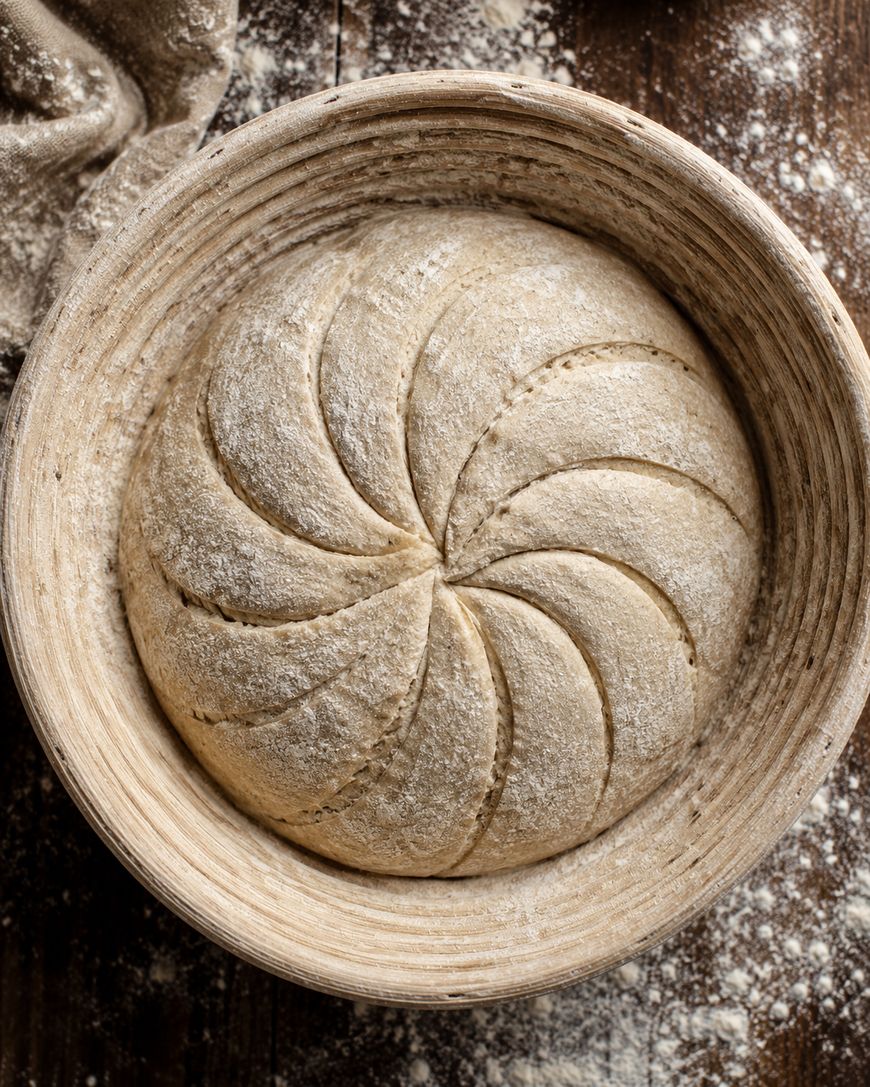
Fill the remaining space with simple leaf shapes or a single long ear-of-wheat line for balance. This pattern looks especially good on smaller batards where the cluster can sit off-center.
Pattern 5: The Herringbone
The herringbone pattern is technically a classic, but it reads as distinctly fall when paired with a rye or whole wheat crust color. Score short diagonal lines in two opposing directions down the center of the loaf, alternating sides.
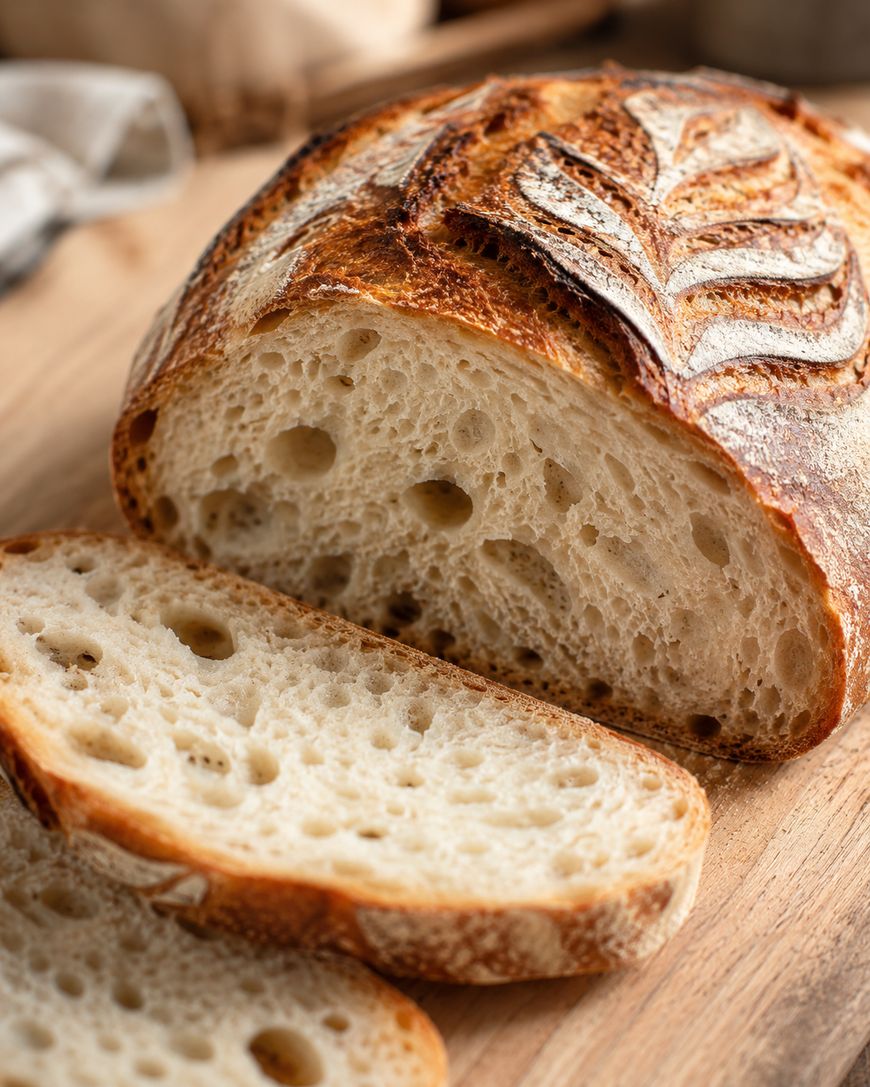
Keep the angle and length consistent throughout for the woven look this pattern is known for. It’s a great choice when you want texture and drama without freehand leaf or pumpkin shapes.
Pattern 6: The Falling Leaves
Scatter three to five simple leaf outlines across the top of the loaf instead of concentrating your design in the center. Each leaf needs only a short center vein and two or three angled side veins to read clearly.
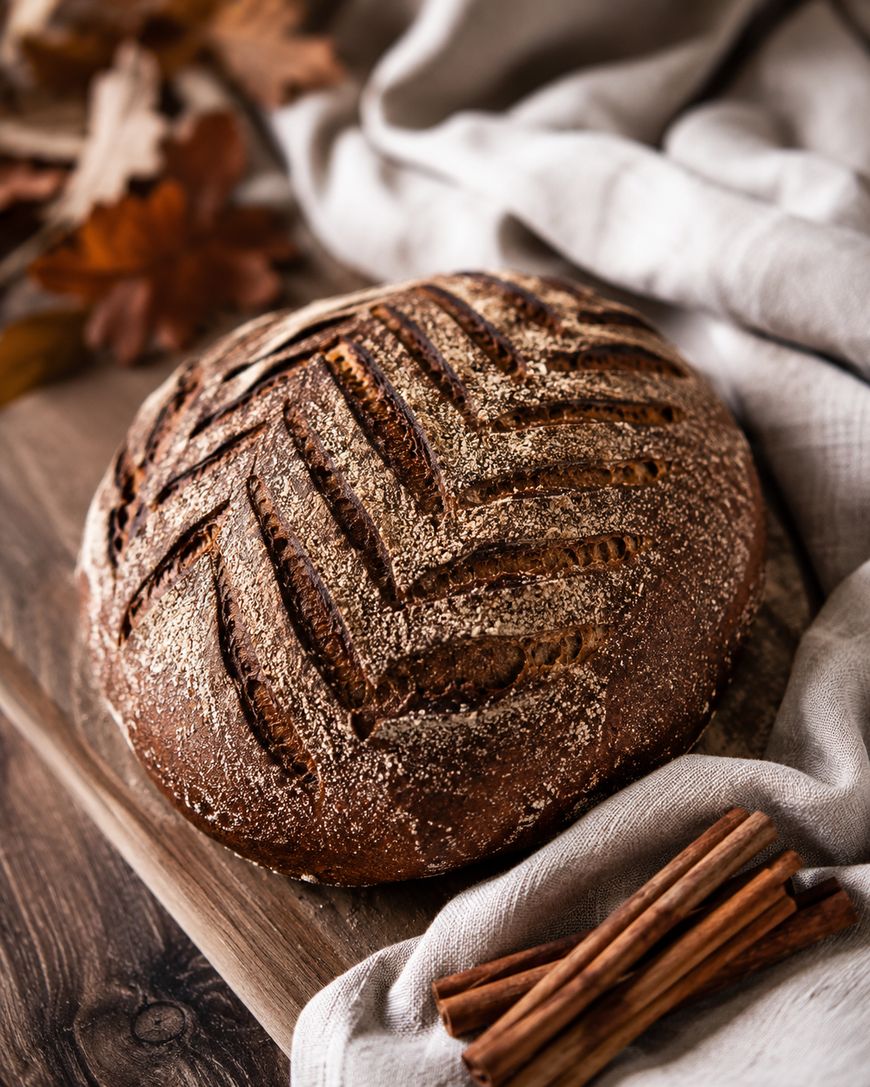
Vary the size and angle of each leaf slightly so the scatter looks natural rather than mechanical. This pattern works well when you want something decorative but don’t want to commit to one large centered design.
Pattern 7: The Cornucopia Curve
Score one long, gently curving line from one side of the loaf to the other, mimicking the shape of a cornucopia’s horn. Add short feathered lines branching off the curve to suggest spilling grain or leaves.
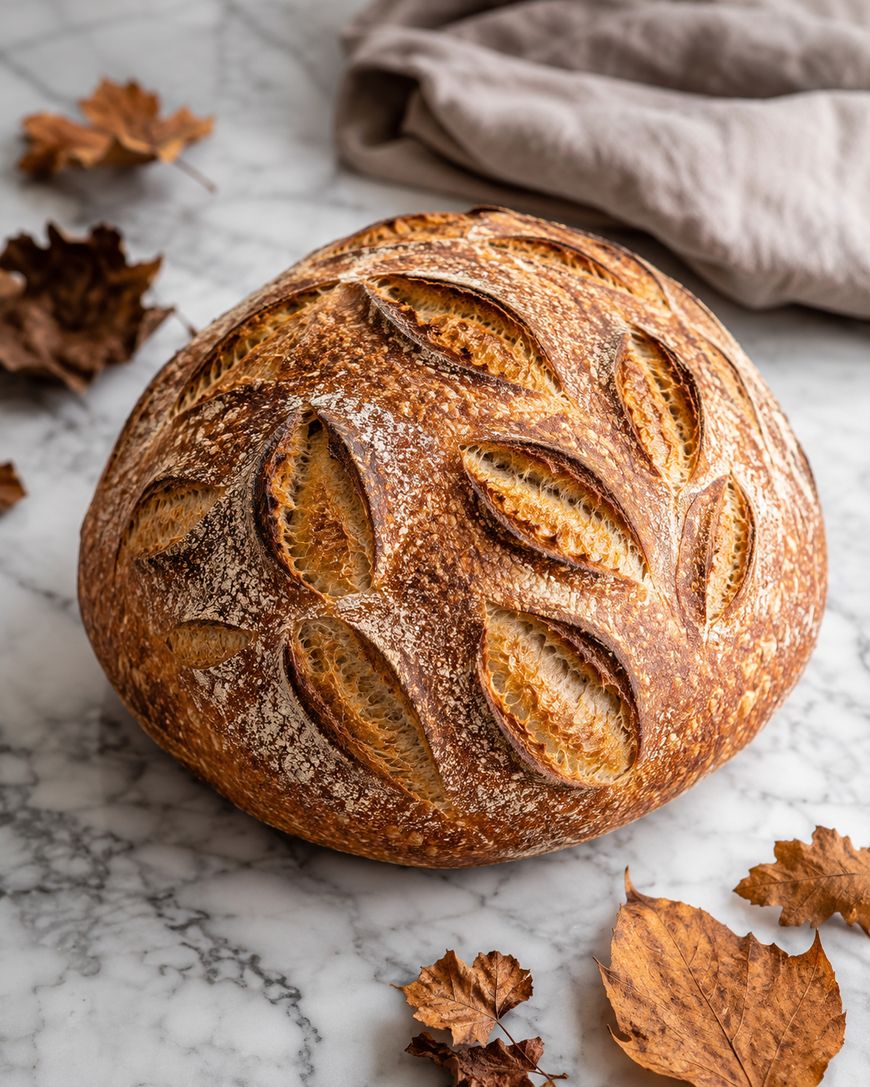
This pattern takes the most practice since the curve needs to stay smooth, but it makes a striking centerpiece loaf for a fall gathering. Practice the curve on a scrap of parchment first if you’re nervous about committing to the cut.
Why Scoring Matters Beyond Looks
Scoring isn’t just decorative. Those cuts control where your loaf expands in the oven, guiding steam and gas release so the crust doesn’t tear randomly during oven spring.
A well-placed score also helps heat distribute more evenly across the crust, which is part of why bakery loaves often have such consistent color and rise. Once you’re comfortable with basic technique, these fall sourdough scoring patterns let you control both the look and the structure of your bake at the same time.
Frequently Asked Questions
What’s the best blade for detailed scoring patterns?
A bread lame with a curved razor blade gives you the most control for fine lines like leaf veins or wheat stalks. Straight blades work too, but curved ones glide through dough more smoothly on angled cuts.
How deep should I score for these patterns?
Aim for about 1/4 to 1/2 inch deep for most designs. Deeper cuts work for the main structural lines, like a wheat stalk’s spine, while decorative details should stay shallow so they don’t distort during baking.
Can I use these patterns on any type of sourdough?
Yes, these patterns work on white, whole wheat, and rye sourdough alike. Darker flours like rye tend to show scoring contrast beautifully once baked, especially with patterns like the herringbone.
Why did my scoring pattern blur during baking?
This usually happens when the dough over-proofed before baking or sat too long after scoring before going into the oven. Try chilling your dough longer before scoring and baking immediately after you finish the design.
Do I need special tools beyond a lame?
Not really. A lame, a small offset spatula for cleaning up crumbs, and a steady hand cover almost every pattern here. Some bakers also keep a toothpick on hand for very fine detail work on veins.
Can beginners try the more advanced patterns right away?
Start with the wheat stalk or falling leaves pattern if you’re new to scoring, since both are forgiving of small imperfections. Once those feel comfortable, the pumpkin spiral and cornucopia curve are natural next steps.
Ready to Score Your Next Loaf
Pick one pattern from this list for your next bake and give yourself permission to keep it simple. With a little practice, these fall sourdough scoring patterns will become second nature every time autumn baking season rolls around.
You might also like: Sourdough Add Ins and Sourdough Discard Recipes.