Last updated: July 17, 2026
Focaccia bread art has taken over kitchens everywhere, and we are here for it. In this post, you will find the most beautiful and achievable focaccia bread art ideas, from beginner-friendly garden designs to show-stopping floral arrangements that will wow your guests.
Whether you are a seasoned baker or picking up a rolling pin for the first time, these ideas will give you everything you need to create edible art right in your own kitchen.
The Best Focaccia Bread Art Ideas for Beginners
If you are new to focaccia art, starting simple is the smartest move. A few well-placed toppings can produce a stunning result without requiring any special skills.
Garden Focaccia
Garden focaccia is the most popular style for beginners, and it is easy to see why. You press sliced vegetables and fresh herbs into the dough to mimic a lush garden scene, complete with “stems,” “leaves,” and “flowers.”
Use cherry tomatoes halved side-up for blooms, fresh rosemary sprigs for shrubs and stems, thinly sliced red onion for petals, and zucchini rounds or cucumber slices for leafy accents.
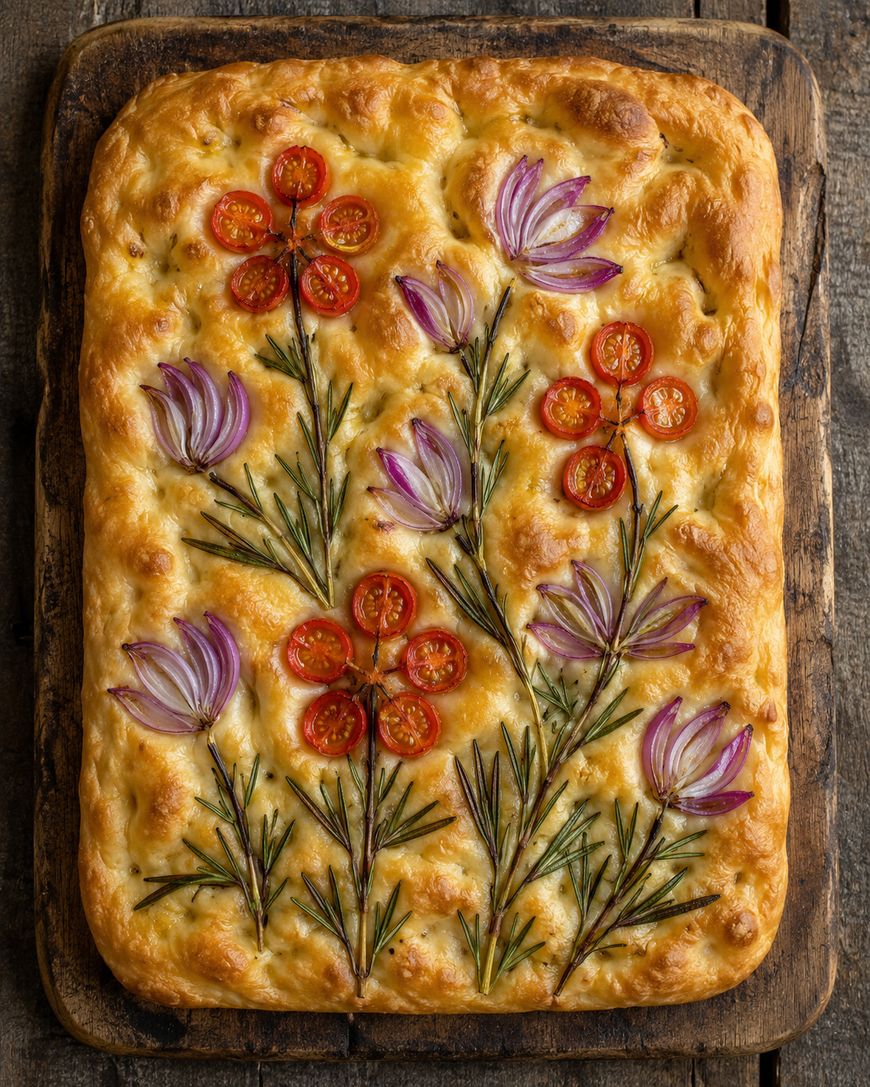
The trick is to press each topping firmly into the dough so it stays anchored during the rise and bake. Arrange your flowers first, then fill in the green space with herbs and greens.
Sun and Clouds Focaccia
This cheerful design uses simple shapes that even kids can help with. Slice a lemon into thin rounds for a bright yellow sun, then use white onion or fennel fronds to suggest drifting clouds.
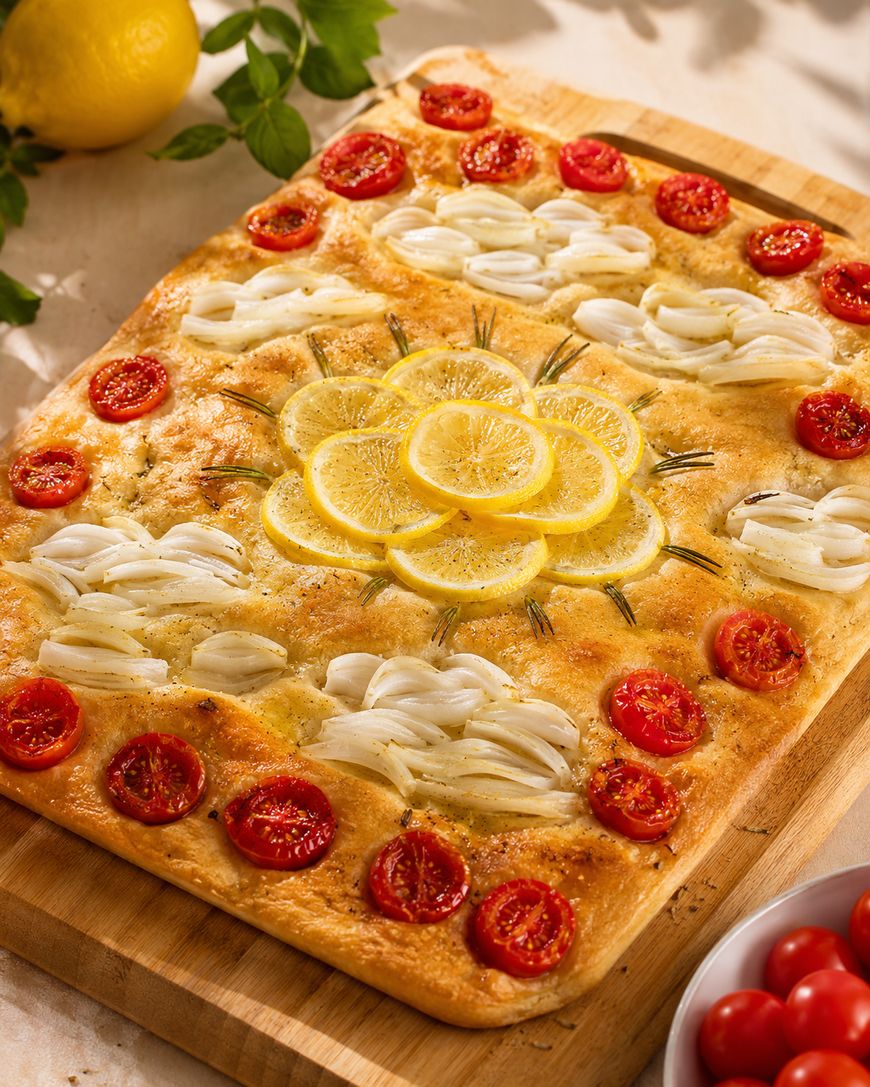
Add pops of color with cherry tomato halves or olive slices scattered around the edges. The result looks like a playful, sunny day — a perfect centerpiece for a summer brunch or picnic spread.
Simple Herb Spiral
If you want something that feels artistic without requiring a lot of planning, the herb spiral is your answer. Press fresh thyme, rosemary, and sage into the dough in a loose spiral pattern from the center outward.
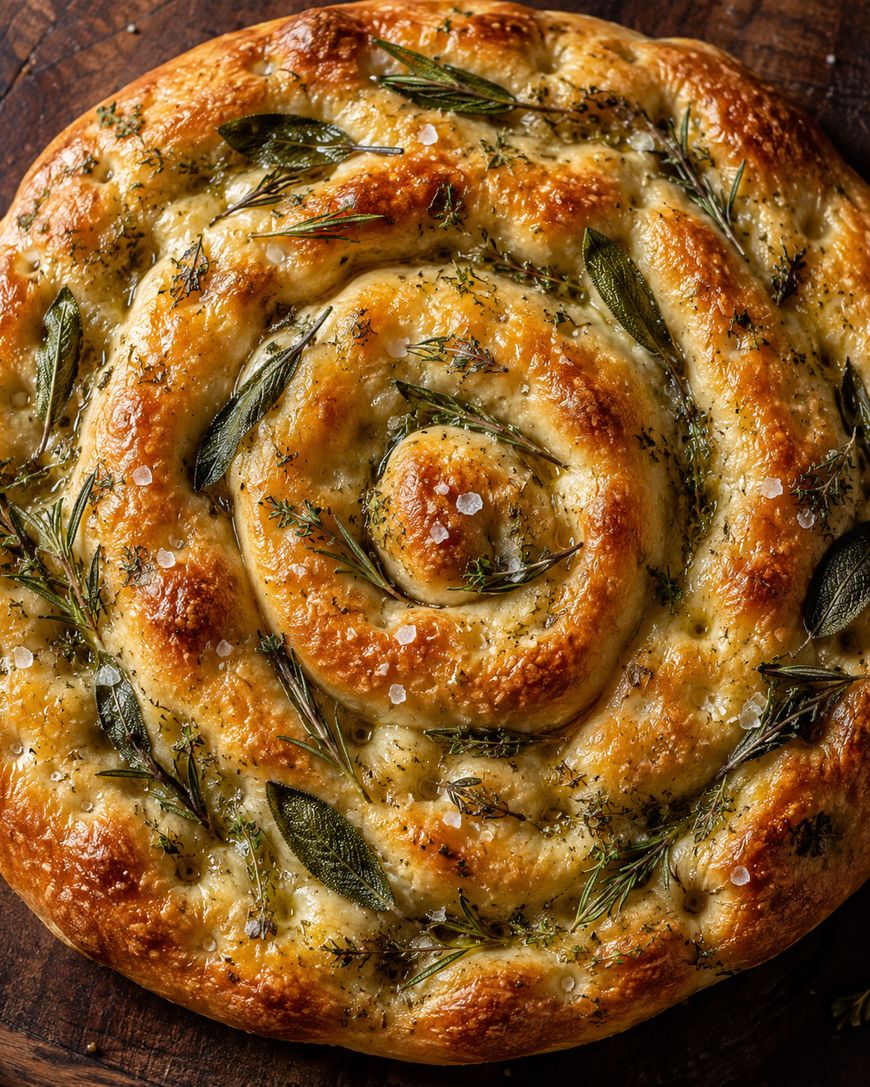
As the focaccia bakes and puffs up, the spiral takes on a beautiful organic shape. Finish with flaky sea salt and a generous drizzle of good olive oil for a design that looks intentional and elegant with minimal effort.
Intermediate Focaccia Art Ideas to Try Next
Once you feel comfortable with the basics, these slightly more involved focaccia bread art ideas will push your creativity further without overwhelming you.
Floral Bouquet Focaccia
A floral bouquet design is one of the most impressive-looking focaccia art styles, and it is more approachable than it appears. Use a mix of vegetables to build each “flower” — a halved radish becomes a dahlia, thinly sliced bell pepper strips become petals, and capers make perfect flower centers.
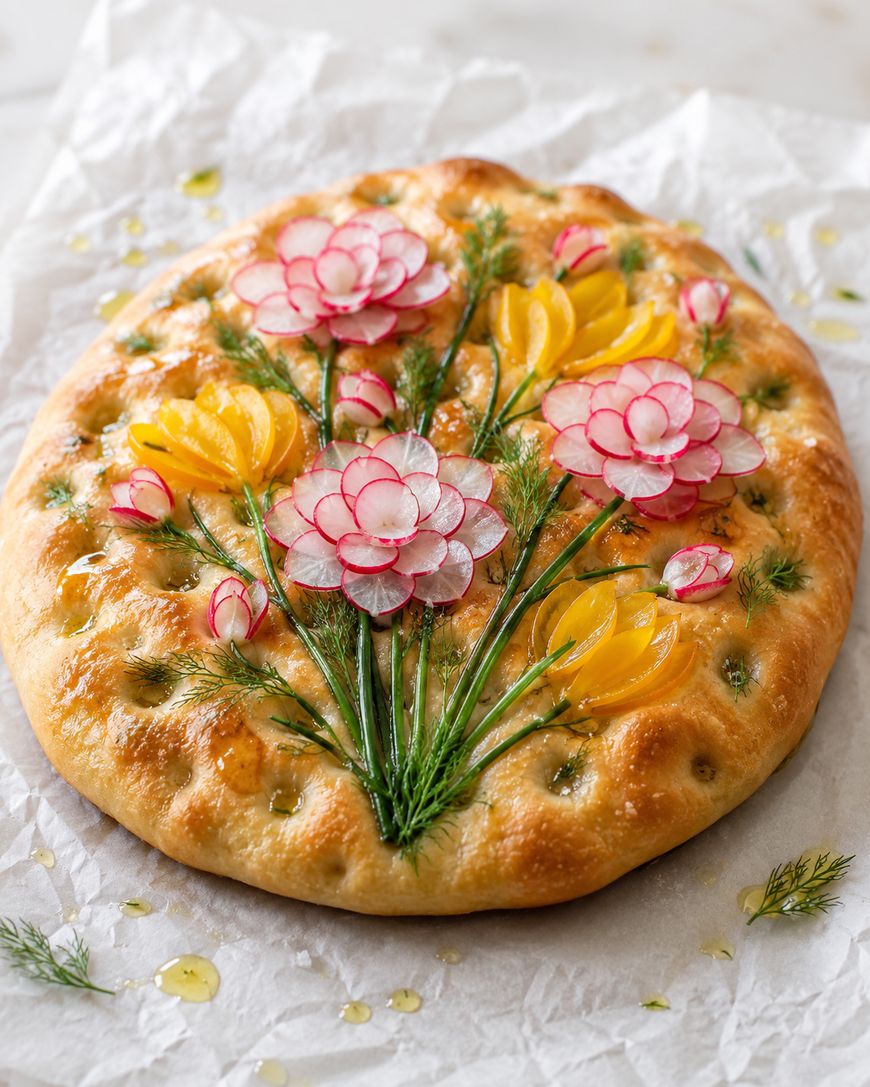
Arrange your blooms in a loose bunch in the center of the dough, then use fresh herb sprigs like dill, chive, and parsley as the stems and greenery. Tie the bouquet together visually by pressing a strip of leek or green onion across the bottom to suggest a wrapped stem.
The key to a convincing bouquet is layering — place larger flowers first, then tuck smaller details in around them. Do not worry about perfection; slightly overlapping petals add to the realistic feel.
Ocean and Beach Scene
This design is as fun to make as it is to serve. Use blue-tinted dough (add a small amount of butterfly pea flower powder to your recipe) or simply let the baked focaccia be your backdrop and layer the design on top.
Press sliced olives and capers into wavy rows to suggest ocean waves. Add shells made from thinly sliced fennel bulb or use halved cherry tomatoes for a glowing sun setting over the water.
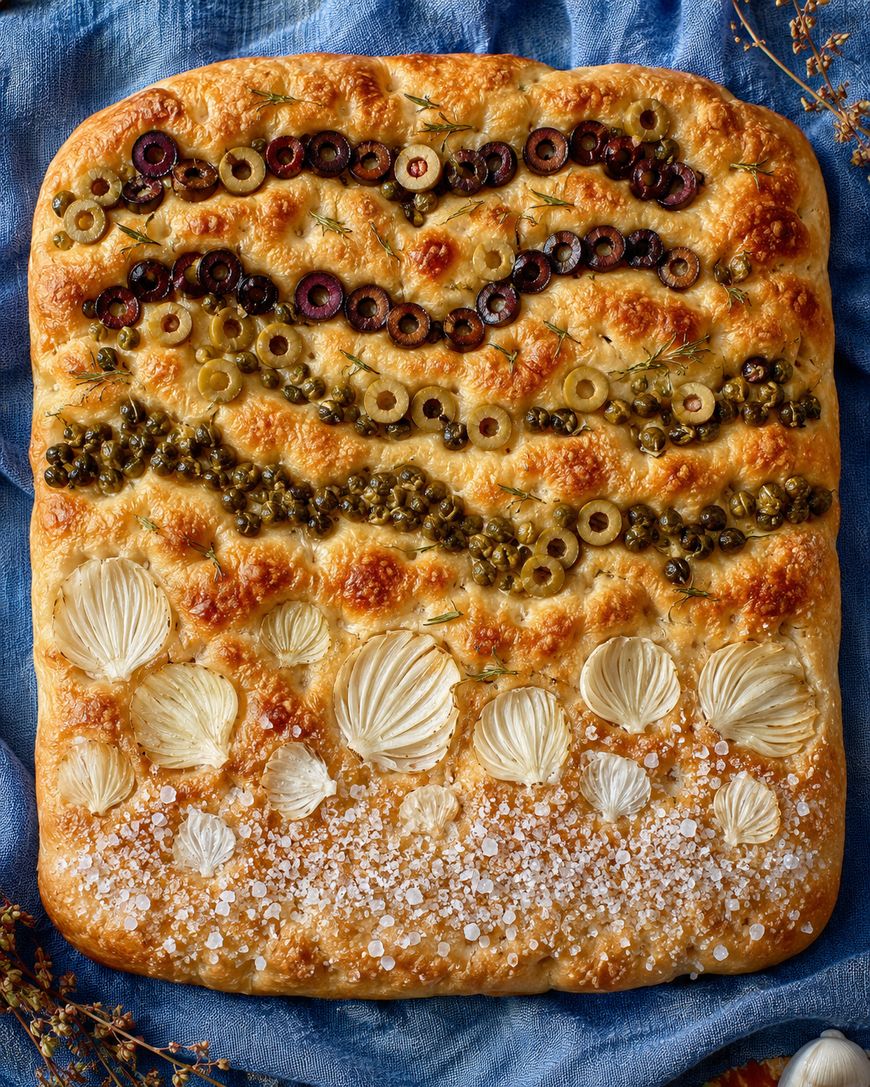
Sprinkle flaky salt generously along the bottom edge of the design to evoke sandy beach texture. This one is a guaranteed conversation starter at any summer gathering or coastal-themed dinner party.
Woodland Mushroom Scene
Fall is the perfect time to try a woodland-themed focaccia. Slice button mushrooms, cremini, and shiitake into different sizes and press them into the dough at gentle angles to suggest a forest floor full of mushrooms in various stages of growth.
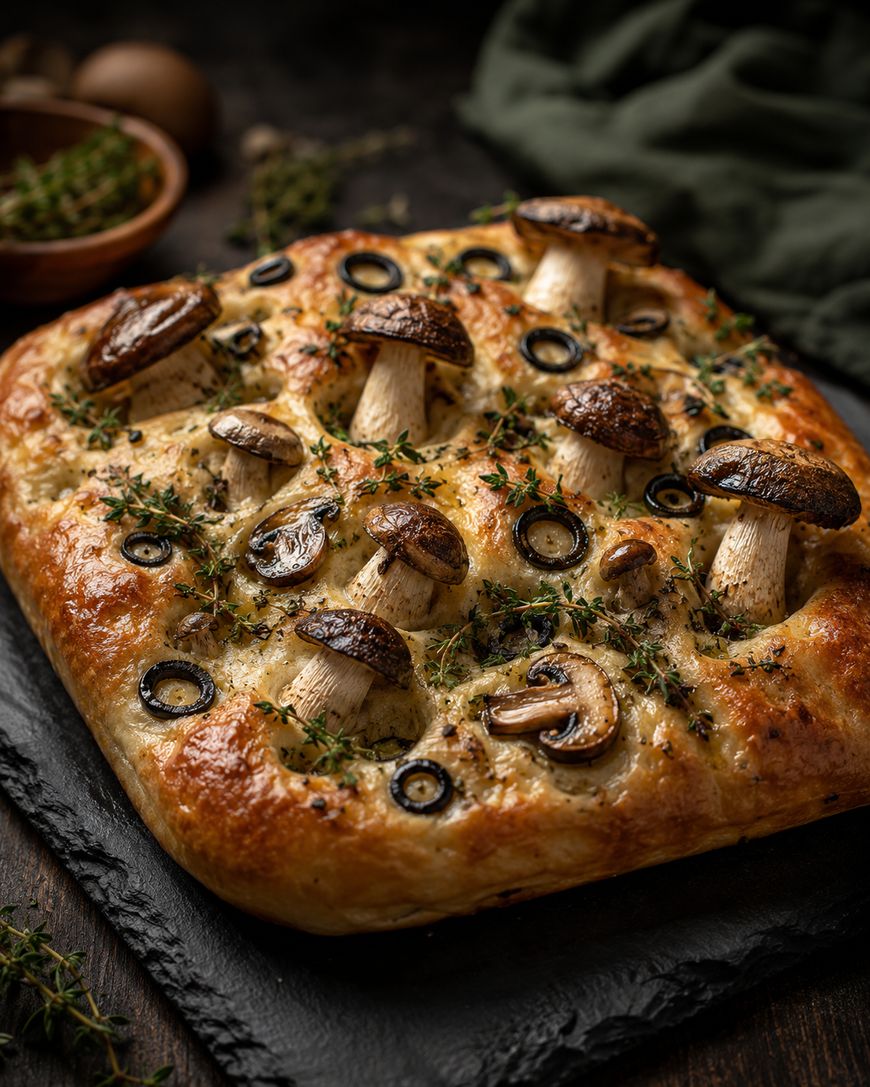
Add dried oregano or fresh thyme sprigs around the mushrooms for undergrowth, and press in a few olive rounds to suggest stones or fallen leaves. A light drizzle of truffle oil before serving ties the whole earthy theme together beautifully.
Advanced Focaccia Bread Art Ideas for Ambitious Bakers
For bakers who want to push the focaccia art form to its limits, these advanced ideas will challenge and excite you.
Portrait and Landscape Focaccia
Some focaccia artists have become so skilled that they recreate portraits, cityscapes, and famous paintings entirely in vegetables and herbs. These pieces require planning your design on paper first, then working methodically section by section across the dough.
Use a skewer or toothpick to lightly outline your design in the dough before you start placing toppings. This gives you a roadmap to follow so the proportions stay consistent.
Work with a wide variety of colors — red and yellow bell peppers, purple cabbage, green herbs, black olives, white onion, and orange carrots — to build tonal range into your design. The more colors you have at your disposal, the more detailed and painterly your final piece will look.
Four Seasons Focaccia
Divide your focaccia dough into four equal rectangular sections and dedicate each to one of the four seasons. Spring gets cherry blossoms made from pink radish slices; summer gets sunflowers in yellow bell pepper; fall gets maple leaves cut from orange pepper; and winter gets snowflake patterns pressed with fennel fronds.
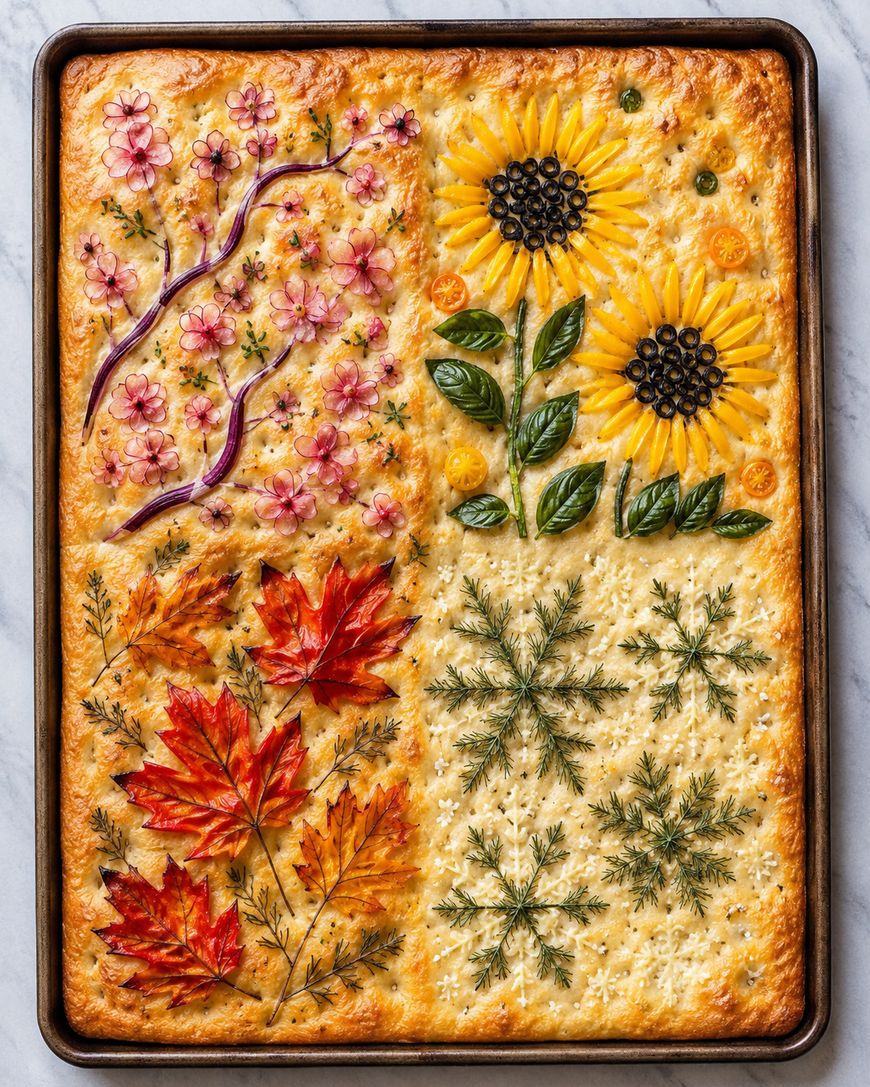
This design works beautifully as a large sheet pan focaccia, and it is a breathtaking showpiece for a holiday table, fall gathering, or celebration dinner.
Stained Glass Focaccia
This technique creates a focaccia that genuinely resembles colorful stained glass when held up to light. Press an intricate geometric pattern into the dough using thin strips of various colored vegetables — red onion, yellow squash, green zucchini, purple cabbage — arranged in a mosaic.
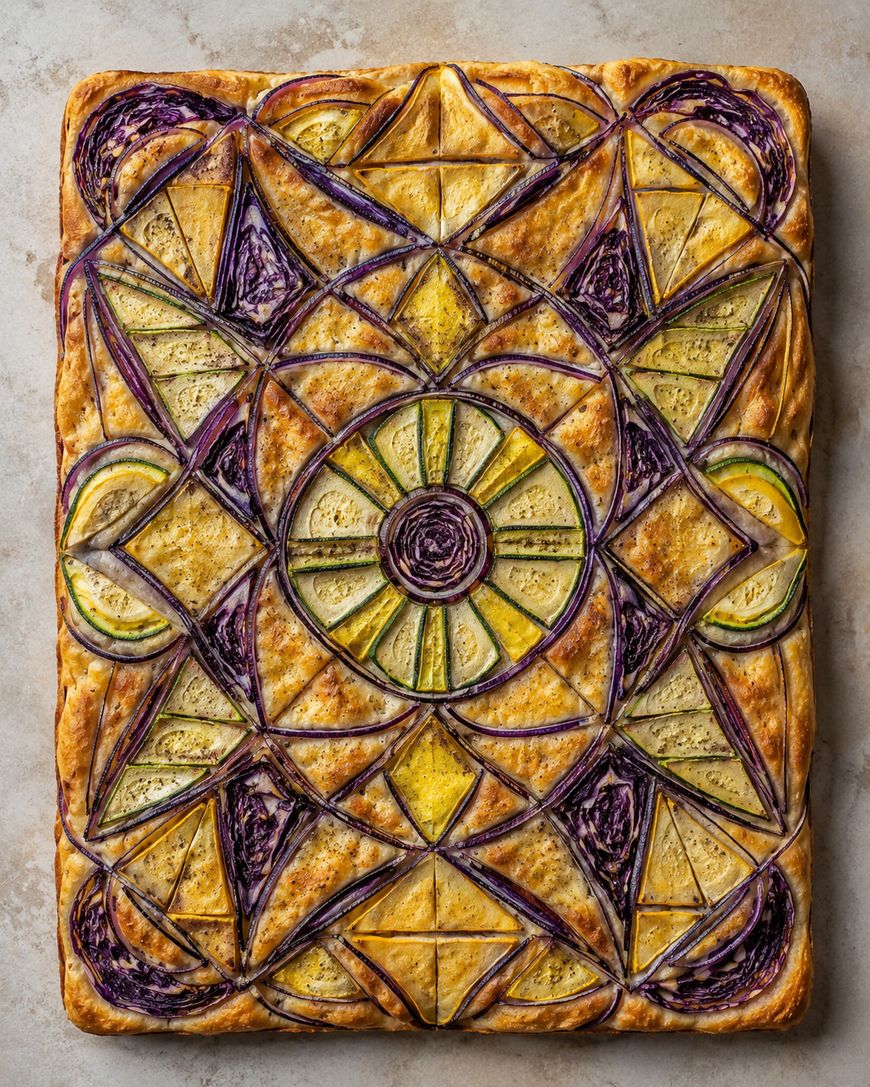
Add a light brush of olive oil over the entire surface before baking to give the vegetables a luminous, almost translucent quality once cooked. The result is extraordinary and photographs beautifully.
Tips for Making Your Focaccia Art Look Professional
Getting great results with focaccia bread art is as much about technique as it is about creativity. A few key habits will take your designs from amateur to artisan.
Use a good olive oil generously. The oil keeps the dough moist, helps the toppings adhere, and gives the finished bread a beautiful golden color. Do not skip this step.
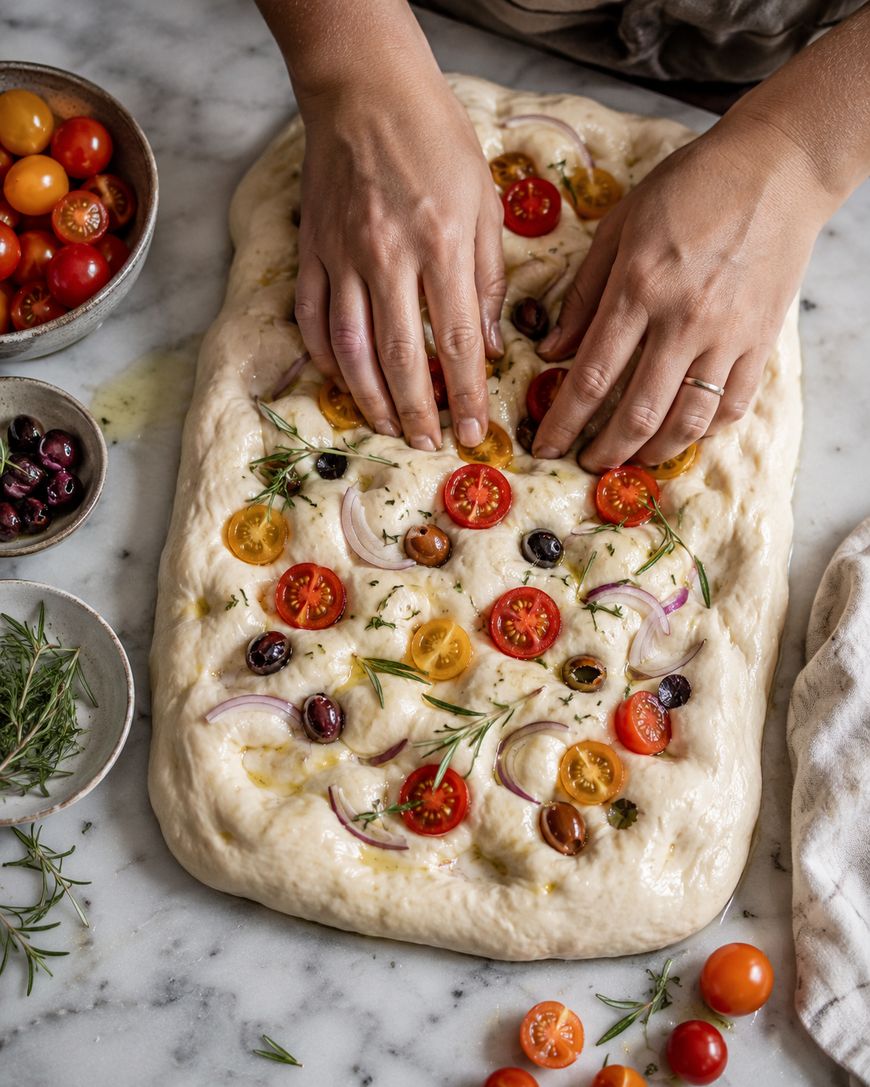
Slice your vegetables thinly and consistently. Thick chunks puff up unevenly during baking and can slide off the surface. A mandoline slicer is a worthwhile investment if you plan to make focaccia art regularly.
Let your decorated dough rest before baking. After pressing in your toppings, give the dough another 20 to 30 minutes to relax. This prevents the design from distorting as the dough puffs in the oven.
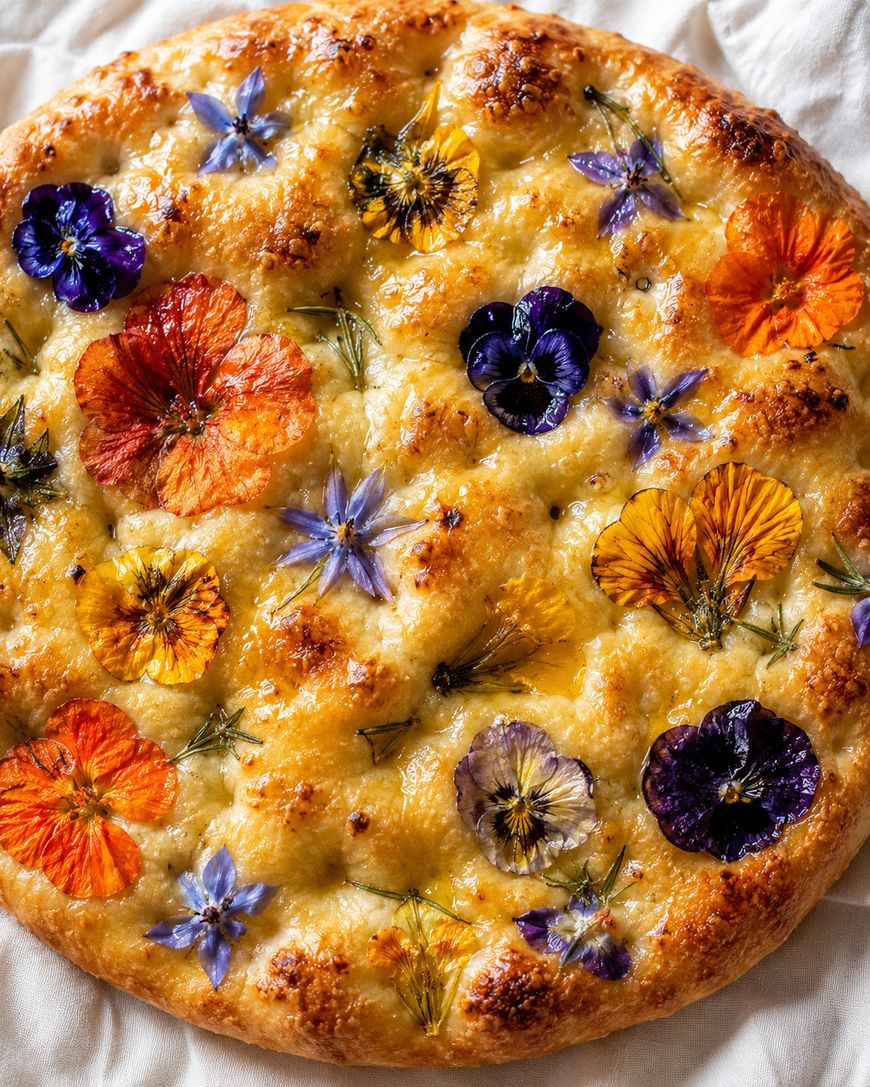
Use edible flowers for a stunning finishing touch. Nasturtiums, pansies, and borage flowers hold their color and shape beautifully in the oven and add an authentic, whimsical garden quality to any design.
Press toppings firmly into the dough. If a topping sits on top rather than being pressed in, it will likely slide off during baking. Give each piece a confident push down so it is nestled into the surface.
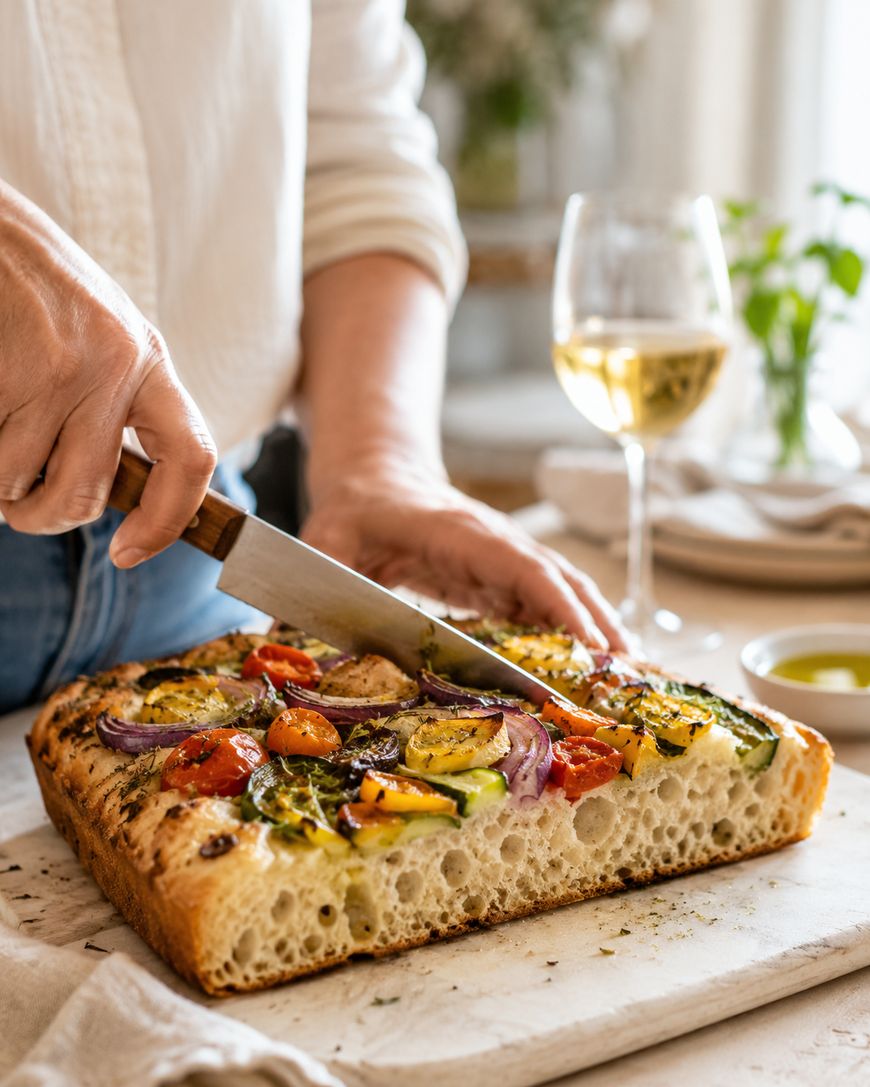
What Toppings Work Best for Focaccia Bread Art?
Choosing the right toppings makes a significant difference in how your focaccia art turns out in the oven. Some vegetables hold their color and shape beautifully; others get too soft or brown.
Reliable options include cherry tomatoes, olives, capers, radishes, red onion, bell peppers, zucchini, and fresh herbs like rosemary, thyme, and dill. These toppings retain their visual character through the heat of baking.
Avoid delicate leafy greens like spinach or basil as main design elements — they tend to shrivel and blacken. If you want green color, stick to heartier herbs or add fresh basil after the focaccia comes out of the oven while it is still warm.
Edible flowers can go in before baking for a subtle, pressed-flower effect, or they can be added fresh after baking for brighter color and a more vibrant presentation.
What Is Focaccia Bread Art?
Focaccia bread art is the practice of decorating raw focaccia dough with vegetables, herbs, and other toppings to create stunning visual designs before baking.
The magic happens because focaccia dough is thick, pillowy, and forgiving — it acts like a canvas that holds toppings in place as it bakes, preserving your design with beautiful color and texture.
Traditional Italian focaccia is typically topped with olive oil, rosemary, and flaky salt. Modern focaccia art takes that concept in a wildly creative direction, using colorful vegetables and edible flowers to paint entire landscapes, portraits, and botanical scenes.
The trend exploded on social media around 2020, when home bakers started sharing their garden focaccia creations online. Since then, it has evolved into a genuine art form with its own techniques, communities, and dedicated ingredient suppliers.
You do not need to be a professional baker or an artist to try focaccia bread art. The dough is simple to make and extremely accommodating, and even imperfect designs look beautiful once they come out of the oven.
Frequently Asked Questions About Focaccia Bread Art Ideas
What kind of dough works best for focaccia art?
A simple no-knead focaccia dough with a higher hydration level (around 75 to 80%) gives you the most forgiving and pillowy canvas for your designs.
Higher hydration means a wetter, stickier dough that bakes up airy and open-crumbed, which helps the toppings stay in place and creates beautiful crisp edges.
Do I need special tools to make focaccia art?
You do not need any specialized equipment beyond a large baking pan, a good olive oil, and a collection of fresh produce.
A mandoline slicer is helpful for getting thin, even vegetable slices, and small cookie cutters can be useful for cutting precise shapes from bell pepper or zucchini.
How far in advance can I decorate focaccia?
You can decorate your focaccia dough and then refrigerate it uncovered for up to 24 hours before baking, which actually improves the flavor.
This make-ahead approach also makes it easier to plan your design without feeling rushed — you can take your time pressing in toppings and still have fresh focaccia ready the next day.
Will the toppings burn in the oven?
Most vegetable toppings brown beautifully at the 425°F baking temperature recommended for focaccia without burning, especially with a generous coat of olive oil.
If you are worried about delicate toppings, tent the focaccia loosely with foil for the first 15 minutes of baking, then remove it for the final 10 minutes to get a golden finish.
Can I make focaccia art gluten-free?
Yes, there are excellent gluten-free focaccia recipes that use a blend of rice flour, tapioca starch, and psyllium husk to mimic the texture of traditional focaccia dough.
The artistic process is identical — the dough still acts as a canvas and holds toppings the same way, so all of the focaccia bread art ideas in this post translate directly to a gluten-free version.
Is focaccia bread art difficult for kids?
Focaccia art is one of the most kid-friendly baking activities you can try, because it requires no precise measuring of ingredients during the decorating stage and every design turns out looking great.
Give kids their own small piece of dough and a selection of colorful toppings and let them create freely. The results are always charming, and the process builds real kitchen confidence.
How to Serve and Store Your Focaccia Art
Focaccia bread art is best served the day it is baked, when the crust is crisp and the inside is still soft and pillowy. Let it cool for at least 10 minutes after coming out of the oven before slicing so the crumb has time to set.
Serve it as an appetizer with a side of good quality olive oil and balsamic vinegar for dipping, or slice it as an accompaniment to a big salad or bowl of soup. It also makes a stunning addition to a charcuterie board.
Leftover focaccia keeps well at room temperature wrapped in a clean kitchen towel for up to two days. To refresh it, place slices in a dry skillet over medium heat for a few minutes until the bottom crisps up again.
You can also freeze baked focaccia for up to a month. Wrap individual slices in plastic wrap and then foil, and reheat them directly from frozen in a 375°F oven for about 10 minutes.
Start Your Focaccia Bread Art Journey Today
Focaccia bread art is one of those rare activities that is genuinely fun, deeply satisfying, and delicious — all at once. Whether you try a simple herb spiral this weekend or spend an afternoon planning an ambitious landscape design, you will end up with something beautiful to share and eat.
Gather your favorite vegetables and herbs, mix up a batch of pillowy focaccia dough, and let your creativity take over. We would love to see what you create — share your focaccia bread art ideas in the comments below and inspire someone else to pick up this gorgeous edible art form.