Last updated: June 17, 2026
Growing fruit in containers is the practice of raising fruit plants in pots or planters instead of in-ground soil, using the right container size, potting mix, and sun to get reliable harvests in small spaces. The simplest approach is to start with one or two beginner-friendly options (like strawberries or dwarf citrus), put them in the right-size pot with a high-quality potting mix, and commit to consistent watering plus a basic slow-release fertilizer schedule.
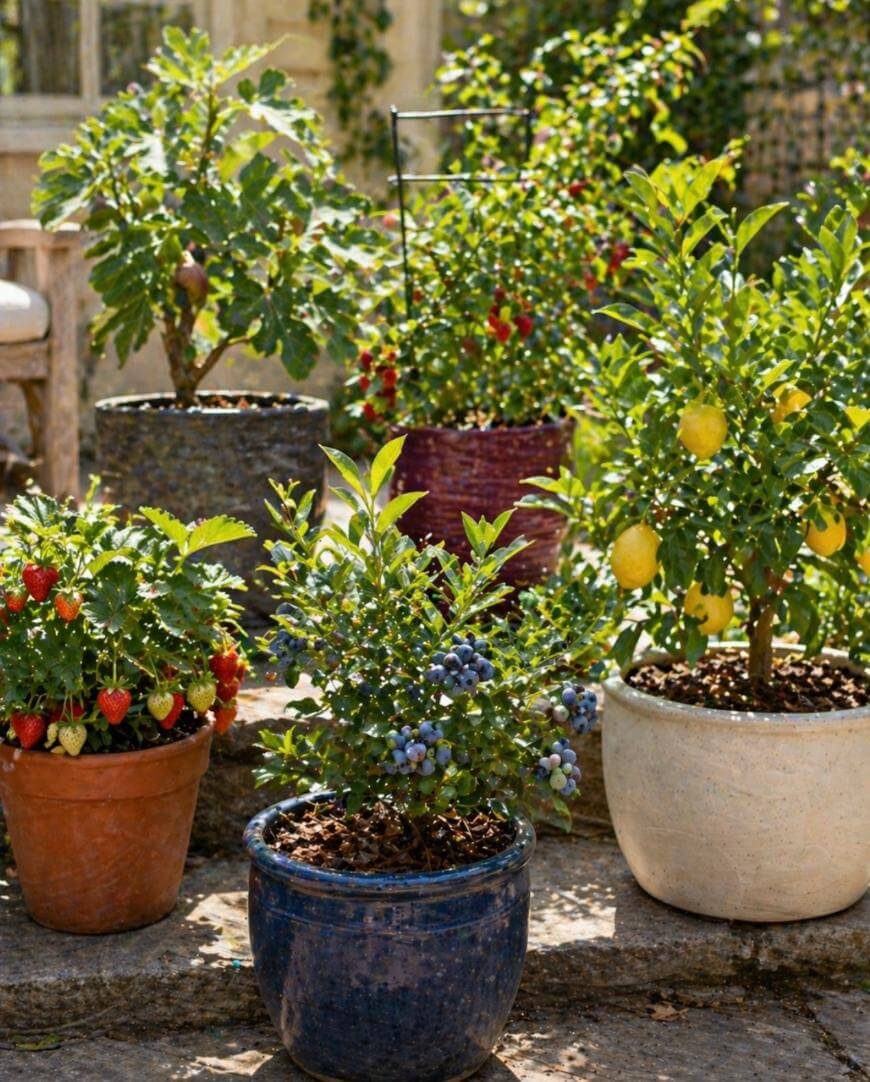
Fruit plants that are perfect for containers
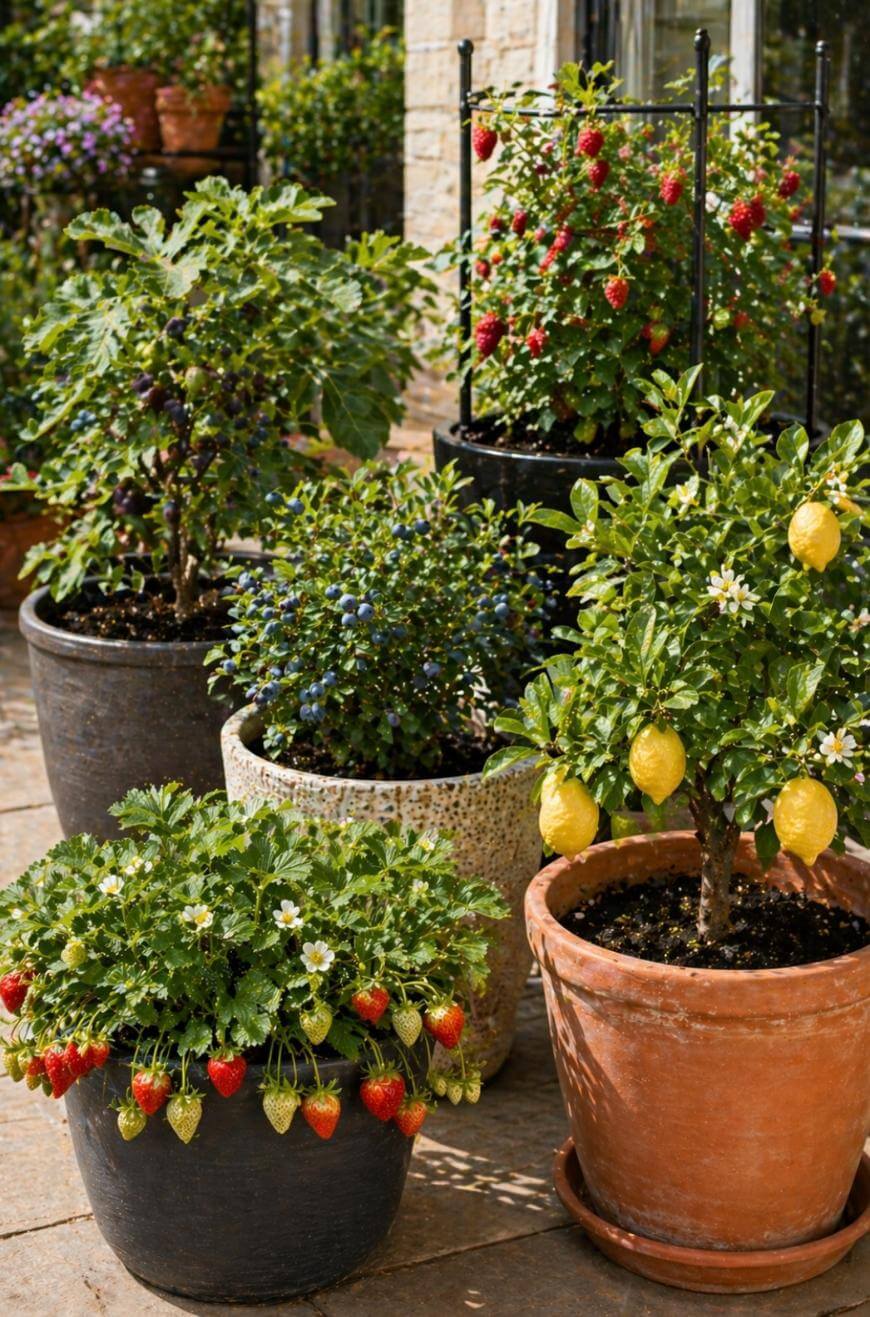
1. Strawberries
Strawberries are one of the easiest container fruits because they have shallow roots and produce quickly. They’re ideal for patios, balconies, and even sunny windowsills.
Start with 3–5 plants in a 12–14 inch hanging basket or wide pot. Keep the soil evenly moist and aim for full sun for best fruiting.

2. Blueberries (Dwarf Or Patio Varieties)
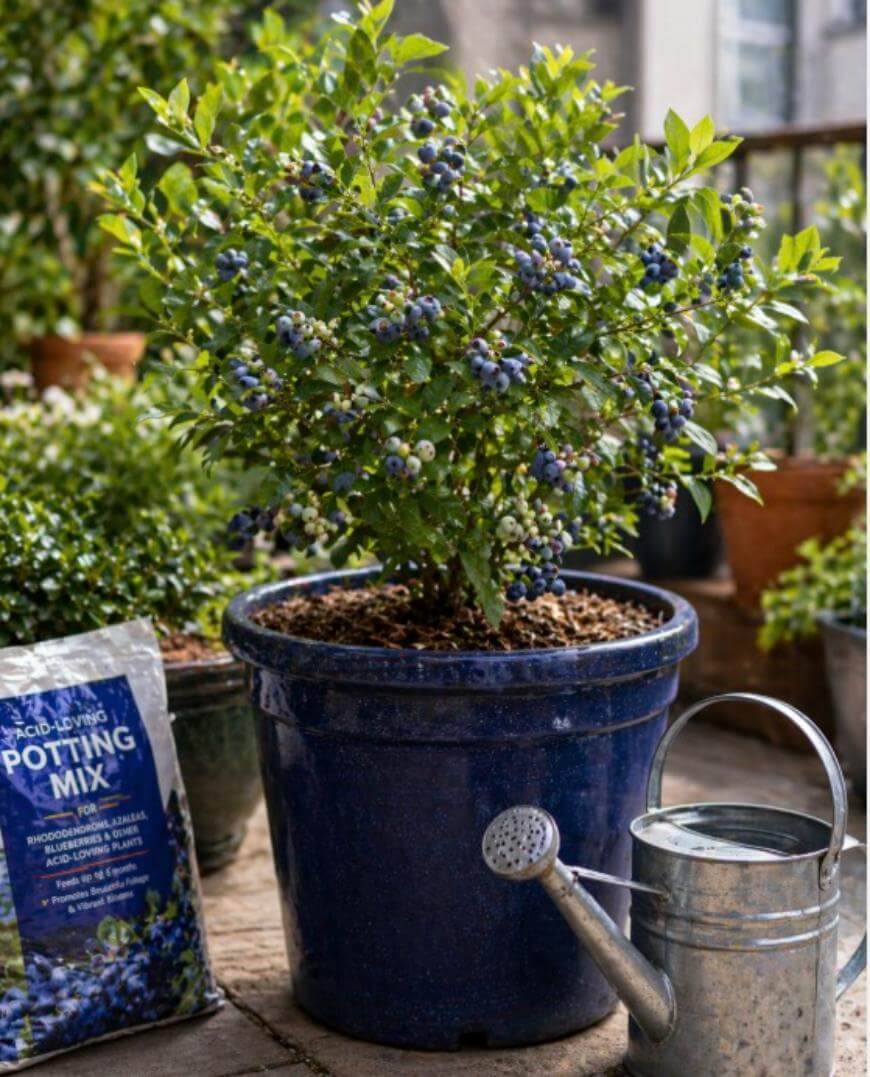
Blueberries work well in pots because you can control the soil acidity, which is the main key to success. They also look good year-round and can be very productive once established.
Use a 10–15 gallon pot and an acid-loving potting mix. If you can fit two plants, choose two compatible varieties for better harvests.
3. Dwarf Citrus (Lemon, Lime, Mandarin, Calamondin)
Dwarf citrus is a top choice for containers because it can flower and fruit reliably in a pot. The biggest requirements are strong sun and consistent feeding.
A 20–25 gallon container is a solid starting point with a fast-draining mix. If winters are cold where you live, plan to move it indoors to a bright spot.

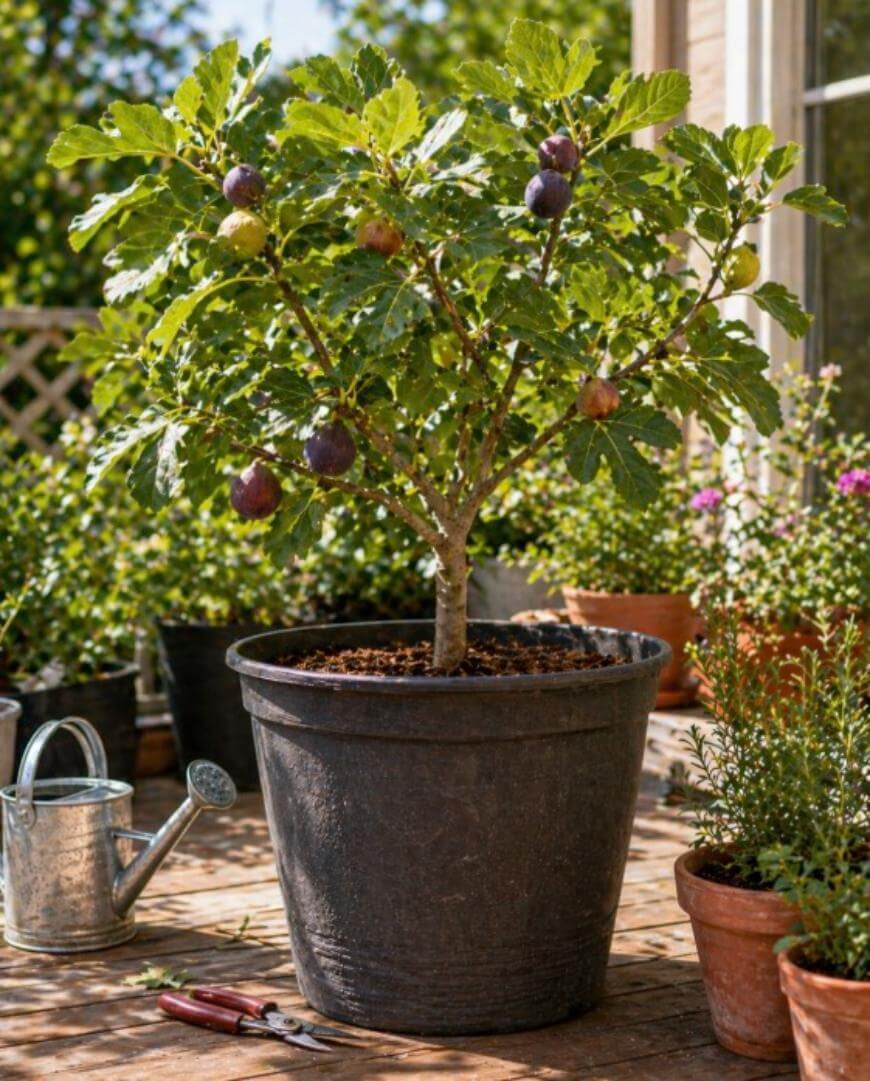
4. Figs (Compact Or Container-Friendly Types)
Figs are tough, forgiving, and usually self-fertile, which makes them great for beginners. They also handle pruning well, so you can keep them compact.
Start in a 15–25 gallon pot and water deeply during fruit development. Avoid letting the pot swing from bone-dry to soaking wet, because that can cause fruit drop.
5. Raspberries (Compact/Patio Types)
Raspberries can be very productive in containers when you choose compact varieties and give them support. They’re a great option if you want lots of fruit without a tree.
Use a 10–15 gallon pot and add a simple trellis or stake system. After fruiting, remove old canes so the plant stays tidy and productive.
6. Blackberries (Thornless, Compact Types)
Container blackberries do best when you choose thornless, compact cultivars and keep them trained. They’re a strong choice if you want bigger harvest potential in a small space.
Start with a 15–20 gallon pot and tie canes to a support early. If you wait too long, they tangle and become harder to manage.
7. Dwarf Apple Trees
Apples can grow well in containers if you buy true dwarf rootstock and prune for size. They’re a great long-term container fruit if you have good sun.
Plan on a 20–25 gallon container for stability and moisture control. Check pollination needs before buying, because many apples need a second variety nearby.
8. Dwarf Peach Or Nectarine Trees
Peaches and nectarines can be great in pots if you pick dwarf varieties and stay consistent with watering and feeding. They’re also one of the most rewarding fruits when you get it right.
Use a 20–25 gallon pot and thin fruit so branches don’t overload. Leaving space between developing fruits helps them size up and improves overall quality.

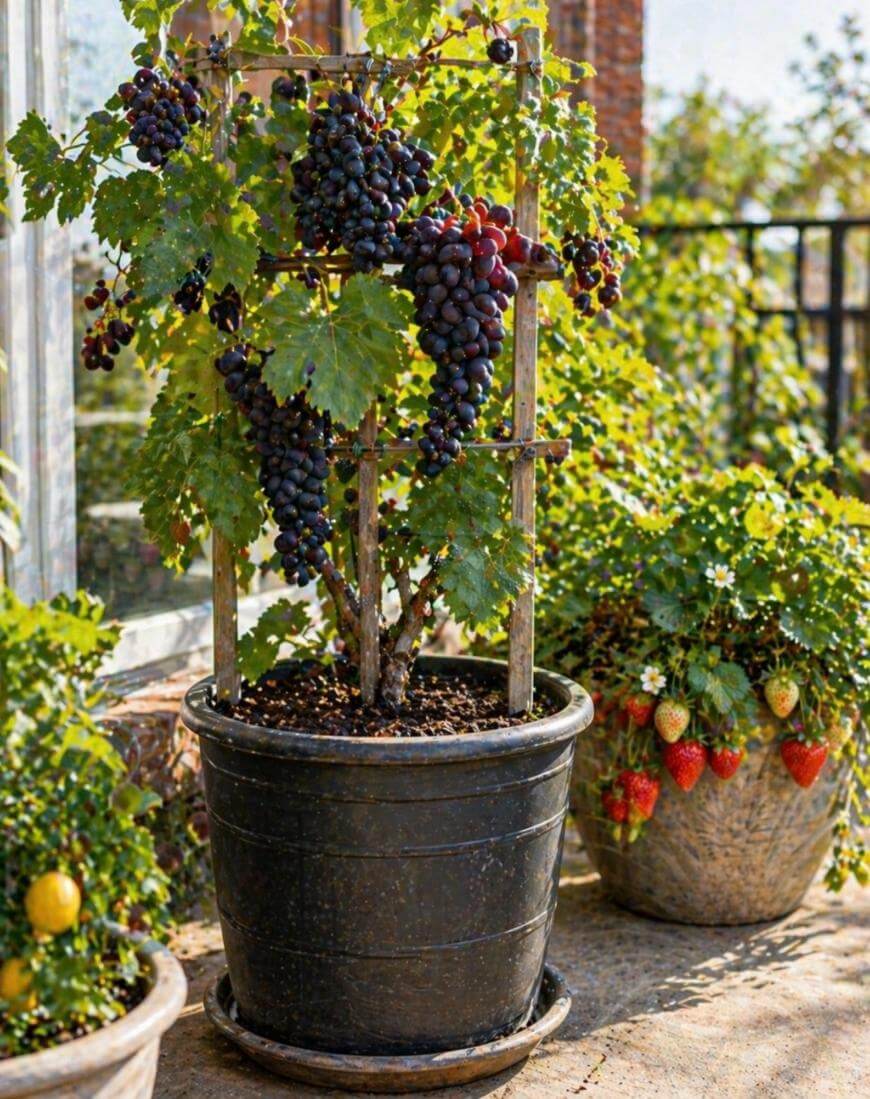
9. Grapes (Compact Types)
Grapes can be trained vertically in containers, which makes them perfect for small patios. The key is providing a sturdy trellis and pruning correctly.
Use a 15–25 gallon pot and a strong support from day one. If you skip pruning, you’ll usually get lots of leaves and less fruit.
10. Pineapple (Indoor Or Warm-Patio Option)
Pineapple is surprisingly container-friendly and works well as a warm-climate or indoor project. It’s not the fastest fruit, but it’s straightforward and fun.
Use a 3–7 gallon pot with gritty, fast-draining mix and bright light. Let the mix dry slightly between waterings, because overwatering is the main issue with pineapple.
20+ Practical Ideas For Growing Fruit In Containers
1. Start With The Easiest “Wins” First
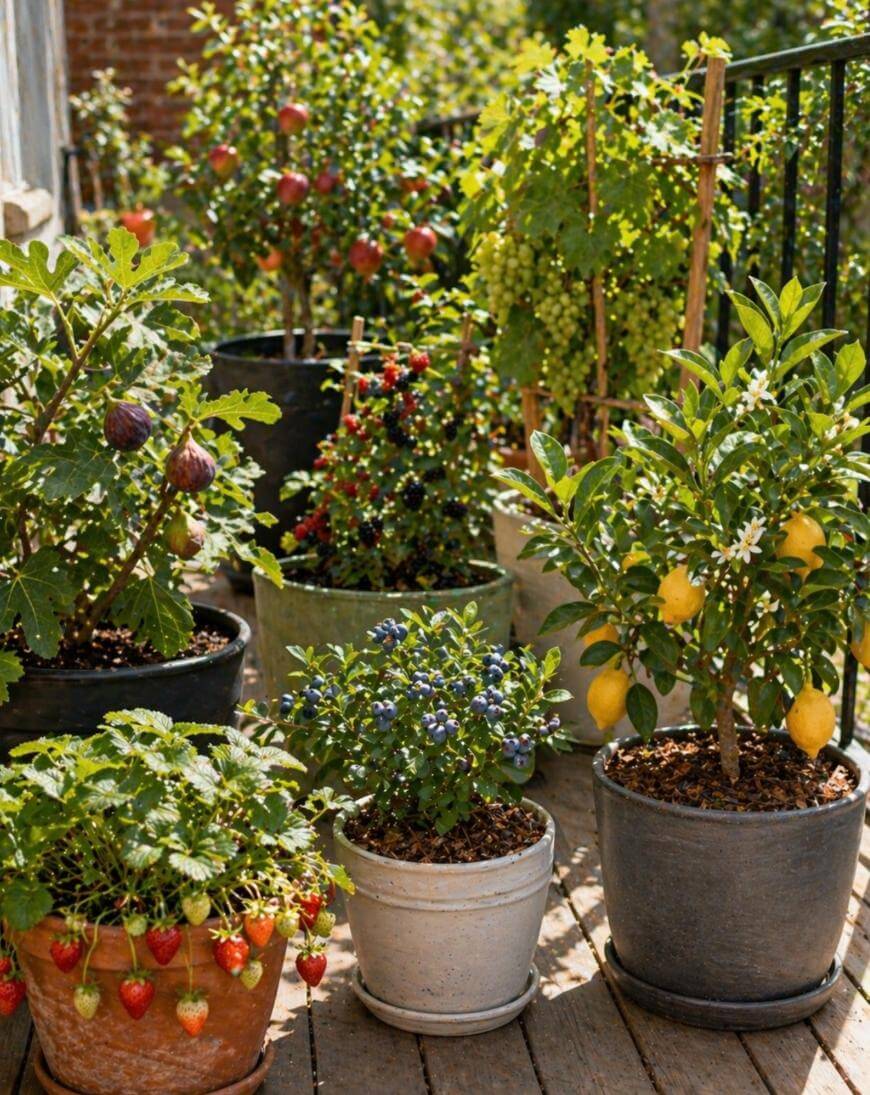
The fastest way to stay motivated is to choose fruit that performs well in pots with minimal fuss. Strawberries, blueberries (with the right soil), dwarf citrus, and figs are common container “success stories.”
If you’re brand new, start with one plant type and learn its watering rhythm for 2–3 weeks before adding more. Most container failures come from treating every pot the same.
2. Match The Pot Size To The Plant, Not The Patio
Container fruit works when roots have room to grow and moisture doesn’t swing wildly. As a practical rule, most dwarf fruit trees do best in at least a 15–25 gallon container, while berries can thrive in 3–10 gallons depending on the plant.
If you under-pot, you’ll be stuck watering constantly and the plant will stall. If you over-pot too early, the mix can stay too wet and cause root rot.
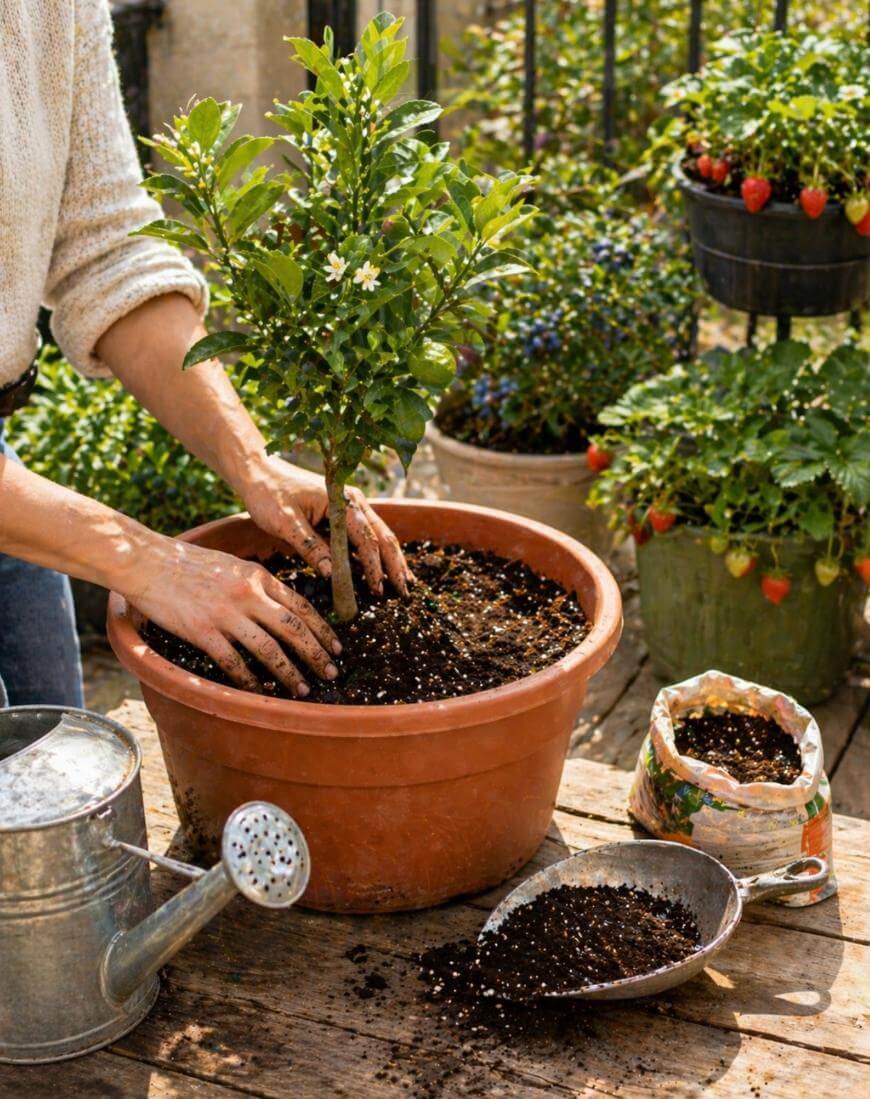
3. Choose A Container With Serious Drainage
Fruit plants hate “wet feet,” especially in containers. Pick pots with multiple drainage holes, and avoid anything that turns into a swamp after a heavy watering.
If you love the look of a decorative pot with no holes, use it as a cachepot. Keep the fruit plant in a nursery pot inside, then pull it out to water and drain fully.
4. Use Pot Feet Or A Plant Stand For Better Airflow
Elevating containers improves drainage and reduces fungus and pests that thrive in soggy conditions. Even a half inch of lift can help excess water escape quickly.
This is especially useful for heavy pots on a flat patio where water puddles. A simple plant caddy also makes turning and moving the pot easier.
5. Pick A Potting Mix Designed For Containers
Garden soil compacts in pots and suffocates roots. For fruit, you want a light, well-draining potting mix that still holds moisture long enough for roots to drink.
A solid upgrade is mixing in extra perlite for drainage and a small amount of compost for slow nutrition. Don’t overdo compost in containers, because it can hold too much water.
6. Plan For Sun Like It’s A Non-Negotiable
Most fruit needs 6–8 hours of direct sun daily to flower and set fruit. In containers, you can “cheat” a little by moving pots to chase the light, but shade still reduces harvests.
If your space only gets 4–6 hours, focus on strawberries, some figs, and certain berry varieties. Citrus and most tree fruit will struggle without strong sun.
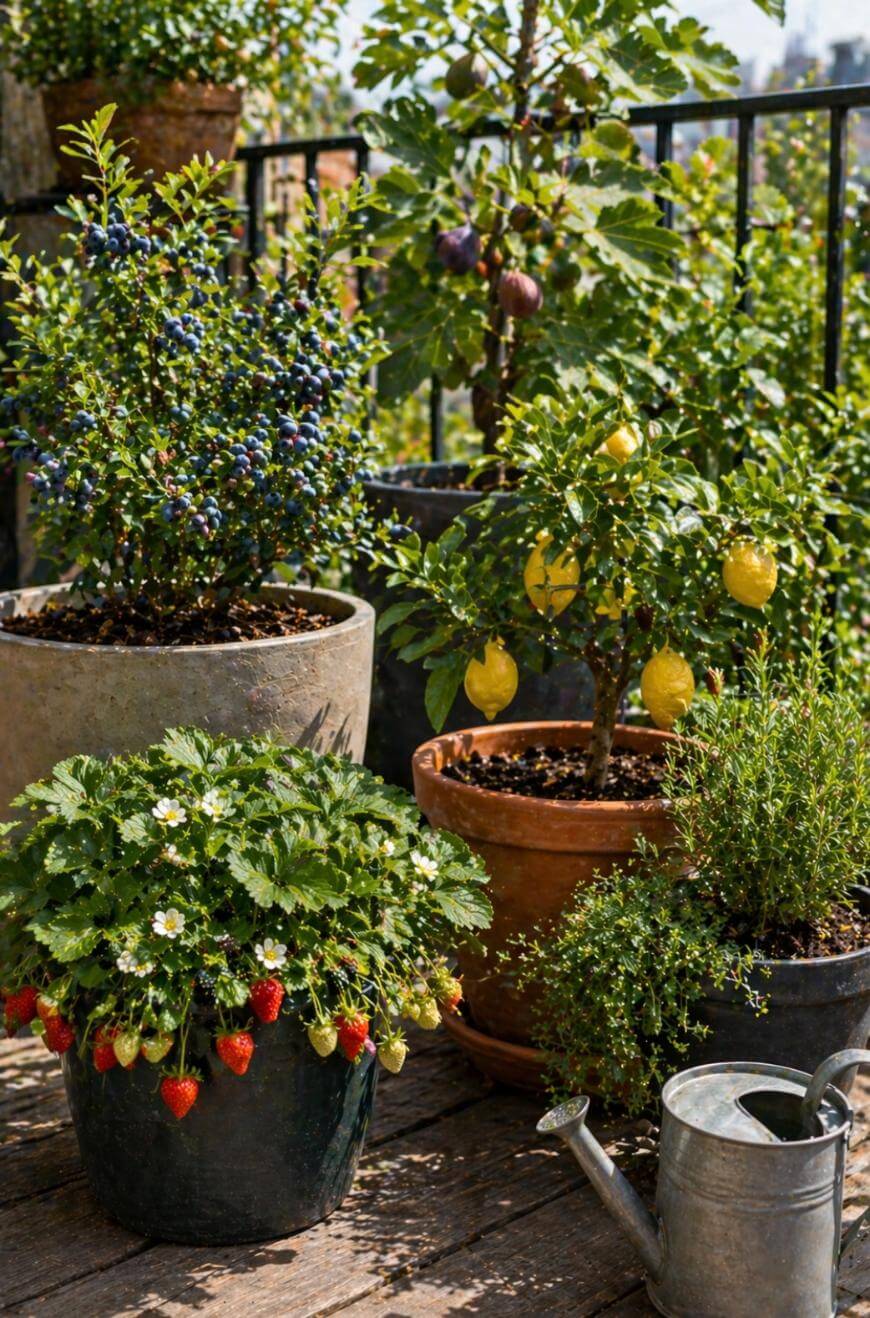
7. Use A Simple Watering Rule To Avoid Root Rot
A reliable method is to water deeply until it runs out the bottom, then wait until the top 1–2 inches of mix are dry before watering again. This keeps roots oxygenated and prevents constant sogginess.
In summer heat, that might mean watering every day for small pots. In cooler weather, it could be every 3–7 days depending on sun, wind, and pot size.
8. Add Mulch On Top Of The Potting Mix
A 1–2 inch layer of mulch (like bark fines or straw) slows evaporation and helps container soil stay evenly moist. That steadier moisture supports flowering and fruiting.
Mulch also reduces splash-back when you water, which can lower disease risk. Just keep mulch pulled slightly away from the plant’s crown or trunk.
9. Fertilize On A Schedule, Not On A Feeling
Container fruit relies on you for nutrients because pots don’t have a natural soil ecosystem. A simple baseline is slow-release fertilizer at the start of the growing season plus a liquid feed every 2–4 weeks during active growth.
If you prefer easy mode, pick one “fruit and citrus” fertilizer and follow the label rates. Overfeeding is just as damaging as underfeeding, especially for citrus and blueberries.
10. Choose Dwarf And Patio Varieties On Purpose
For container success, plant genetics matter. Look for labels like “dwarf,” “patio,” “compact,” or “semi-dwarf,” especially for citrus, apples, peaches, and cherries.
A common mistake is buying a standard fruit tree and hoping the pot will keep it small. You’ll fight constant stress, poor fruiting, and root issues.
11. Understand Pollination Before You Buy
Some fruit plants are self-fertile and will fruit alone, while others need a second variety for pollination. In small spaces, this can make or break your harvest.
If you want one-pot simplicity, prioritize self-fertile options like many figs, some blueberries (though yields improve with two), and certain strawberries. If a plant needs a pollinator, plan a matching second pot.
12. Use A Trellis For Vining Fruits To Save Space
Grapes, some berries, and even compact kiwifruit can be trained upward in containers. This gives you more fruit per square foot and keeps plants healthier with better airflow.
A sturdy trellis also makes pruning and harvesting easier. The upgrade is a trellis that can handle wind, because a top-heavy pot is more likely to tip.
13. Grow Strawberries In Hanging Baskets Or Tiered Planters
Strawberries are one of the best container fruits because they root shallowly and fruit quickly. Hanging baskets reduce slug problems and make picking easy.
For a simple numeric guideline, aim for 3–5 strawberry plants in a 12–14 inch basket. If you cram more, plants compete and berries get smaller.
14. Treat Blueberries Like A Special Soil Project
Blueberries can thrive in containers, but they need acidic soil and consistent moisture. Use an acid-loving potting mix and keep the plant in a larger pot than you think you need.
A good starting size is 10–15 gallons for one blueberry plant. The biggest mistake is using standard potting mix and tap water that slowly pushes pH too high.
15. Try Dwarf Citrus For High Reward In A Single Pot
Citrus is perfect for container growing if you can provide sun, warmth, and regular feeding. Dwarf lemons, limes, and mandarins are popular because they flower and fruit in pots.
A practical setup is a 20–25 gallon pot with a fast-draining mix and consistent fertilizer during growth. Bring plants inside or protect them if your winters are cold.
16. Grow Figs If You Want A Tough Container Tree
Figs are forgiving, productive, and often self-fertile. They can handle container life well and still reward you with fruit in the right conditions.
The key is pruning to maintain shape and size, then feeding and watering consistently during fruit development. If you let a fig dry out repeatedly, you’ll get fruit drop.
17. Use A Simple Pruning System To Keep Plants Productive
Pruning in containers is about balancing the top growth with the root space. Remove dead wood, thin crowded branches, and keep a shape that allows light into the center.
For many container fruit trees, a practical goal is to keep the canopy around 3–6 feet tall depending on your space. If you skip pruning, the plant becomes stressed and fruiting slows.
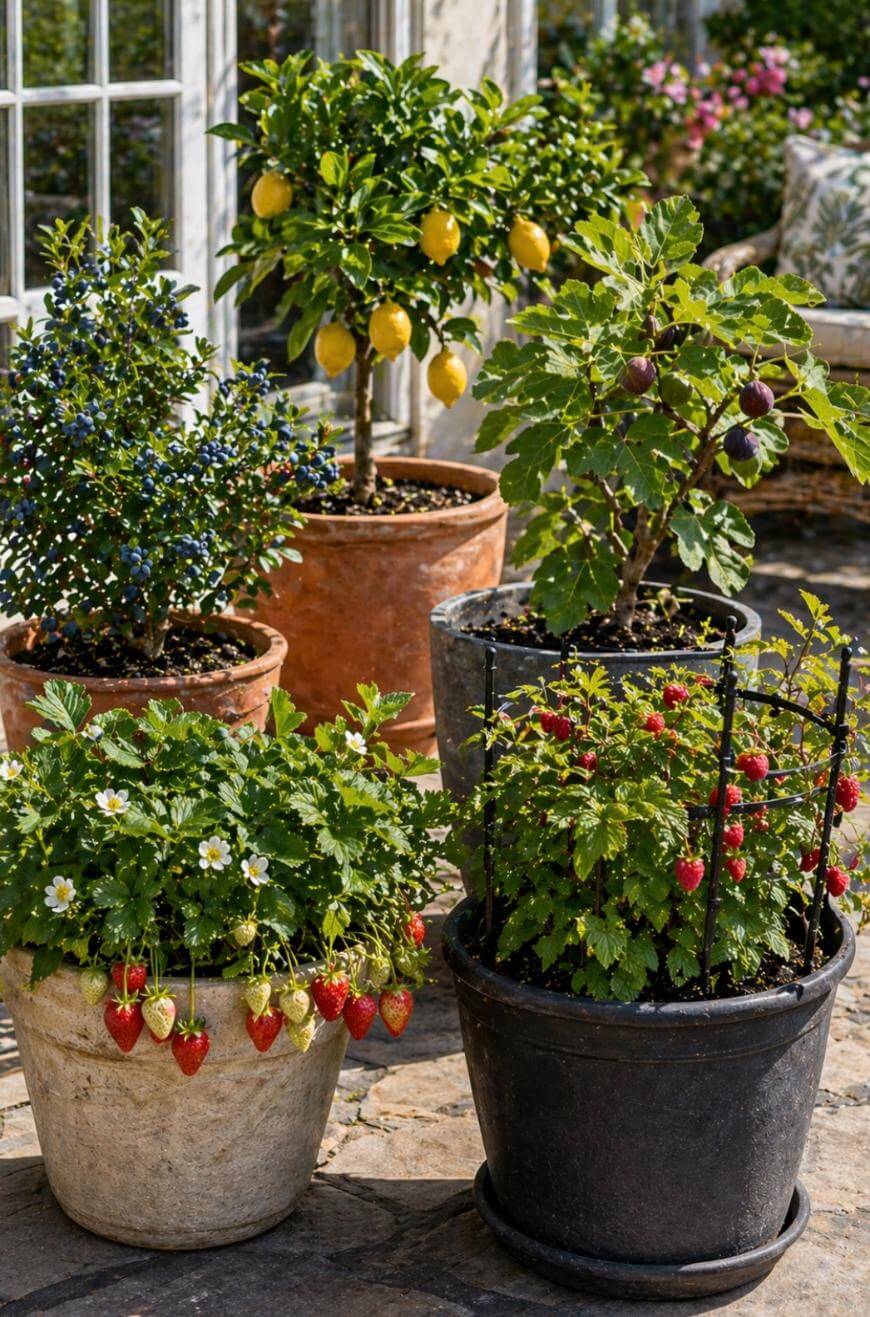
18. Repot On A Predictable Timeline
Over time, container fruit gets root-bound and the mix breaks down. A basic repot schedule is every 1–2 years for fast growers and every 2–3 years for slower-growing fruit trees, depending on vigor.
If the plant dries out extremely fast, roots circle the pot, or growth stalls despite feeding, it’s usually repot time. Root pruning plus fresh mix can reboot productivity.
19. Prevent Pests With Weekly “Two-Minute Checks”
Container plants are easier to inspect than in-ground gardens. Check leaves (top and bottom), stems, and soil surface weekly to catch aphids, spider mites, and scale early.
If you spot a problem, a strong spray of water and insecticidal soap often works for mild infestations. The mistake is waiting until leaves are curling and sticky, when the population has exploded.
20. Use Saucers Carefully To Avoid Hidden Waterlogging
Saucers protect decks, but they can trap water and drown roots. If you use one, empty it after watering so the pot doesn’t sit in runoff.
A better upgrade is a deep saucer with pot feet inside it, so the pot is elevated above any collected water. That protects your surface without suffocating roots.
21. Choose A “Mobile Orchard” Approach For Seasons
One of the biggest benefits of container fruit is flexibility. You can move pots to warmer spots in spring, into full sun in summer, and into shelter in fall.
If you only do one thing, rotate pots weekly so all sides get light. This prevents lopsided growth and improves flowering.
22. Plan A Budget-Friendly Setup That Still Works
You can start small without spending a fortune. A realistic starter budget is $25–$60 per plant when you include a pot, potting mix, and a basic fertilizer, with dwarf trees often costing more upfront.
If you want to save money, reuse food-safe buckets or large nursery pots and spend your “real” money on quality potting mix. The mix matters more than the container aesthetics.
23. Keep A Simple Harvest Notebook So You Improve Faster
Track three things: sun hours, watering frequency, and fertilizer timing. When fruiting is weak, those notes usually reveal the cause.
Even one short note per week is enough. You’ll quickly learn what your space does in heat waves, wind, and rainy weeks.
24. Grow A Mix Of “Fast” And “Slow” Fruits For Better Payoff
Some fruits pay you back quickly (strawberries), while others are a longer game (dwarf trees). Combining both gives you early wins and long-term harvests.
A practical combo is one strawberry basket plus one dwarf citrus or fig. That keeps you harvesting while your tree settles in.
How To Set Up A Container Fruit Plant Step By Step
25. Pick The Right Pot Size And Place It First
Place the container where it will live before you fill it, because a 20–25 gallon pot becomes very heavy. Make sure it gets the strongest sun you have.
If you’re unsure, place it for two days and watch sunlight patterns. The brightest spot usually beats the most convenient spot.
26. Fill With Potting Mix And Leave Headspace
Fill the pot and leave about 1–2 inches of space at the top so watering doesn’t overflow. This also gives you room for mulch.
Don’t pack the mix down hard. Roots grow best in a fluffy, oxygen-rich environment.
27. Plant At The Correct Depth And Water Thoroughly
Plant so the root ball top sits at the same level it was growing before. Water until it runs from the drainage holes, then let it drain completely.
A common mistake is planting too deep, which can stress trunks and crowns. If you’re between two depths, slightly higher is safer than lower.
28. Add Mulch And Set A Watering Reminder For Two Weeks
Mulch immediately to stabilize moisture while the plant adjusts. Then set a simple reminder to check soil moisture daily for the first 14 days.
This “learning phase” teaches you how quickly the pot dries in your specific sun and wind. After that, you’ll water by habit and feel.
29. Begin Feeding After New Growth Starts
Wait until you see new leaves or obvious growth, then begin your fertilizer routine. This prevents fertilizer burn on stressed roots.
If you’re using slow-release fertilizer, follow the label rate and water normally. If you’re using liquid fertilizer, start at half-strength for the first feeding.
What To Avoid When Growing Fruit In Containers
30. Avoid Tiny Pots For Anything You Want To Fruit Heavily
A plant can survive in a small pot, but heavy fruiting requires root space and stable moisture. Tiny pots also swing between drought and sogginess quickly.
If you’re limited on space, choose naturally small fruits like strawberries instead of trying to force a tree into a small container.
31. Avoid Inconsistent Watering During Flowering And Fruiting
The most common reason for flower drop and small fruit is irregular moisture. Containers dry out faster than ground soil, especially in sun and wind.
If you struggle with watering, use a larger pot, mulch, and a moisture meter. Those three changes alone fix most “my plant won’t fruit” frustrations.
32. Avoid Ignoring Winter Protection And Temperature Swings
Container roots get colder faster than in-ground roots. Even hardy plants can be damaged if the root zone freezes solid for long periods.
Move pots near a sheltered wall, wrap containers, or bring tender plants inside. The goal is to protect roots, not to create a tropical environment.
Key Takeaways
Choose fruit varieties bred for containers, especially dwarf and patio types.
Most fruit needs 6–8 hours of direct sun to produce well.
Use a well-draining potting mix and containers with real drainage holes.
Water deeply, then wait until the top 1–2 inches of mix dries before watering again.
Feed consistently during active growth, not randomly.
Repot or root-prune every 1–3 years to keep plants productive.
FAQ
Can You Grow Fruit In Containers Without Full Sun?
Yes, but yields will be lower and plant choices matter. Stick to strawberries and some berries, and use your brightest 4–6 hour spot consistently.
What Is The Best Container Size For A Dwarf Fruit Tree?
A 15–25 gallon container is a strong starting range for many dwarf trees. Bigger pots reduce watering stress and generally support better fruiting.
How Often Should You Water Container Fruit Plants?
You should water when the top 1–2 inches of mix are dry. In summer, that can be daily for smaller pots, while larger pots may need water every 2–4 days.
Can You Use Garden Soil In Pots For Fruit?
No, garden soil compacts and drains poorly in containers. Use a container potting mix so roots get oxygen and excess water can escape.