Last updated: June 17, 2026
If you’ve ever watched a heavy tomato vine collapse under its own weight, you know how quickly a promising harvest can go sideways. These tomato support ideas will help you choose the right structure for every variety you grow, whether you’re working with a tiny balcony container or a sprawling backyard garden.
You don’t need to spend a fortune or build anything complicated to keep your plants standing strong. From classic wire cages to creative DIY solutions, we’ll walk through every option so you can decide what works best for your space and your tomatoes.
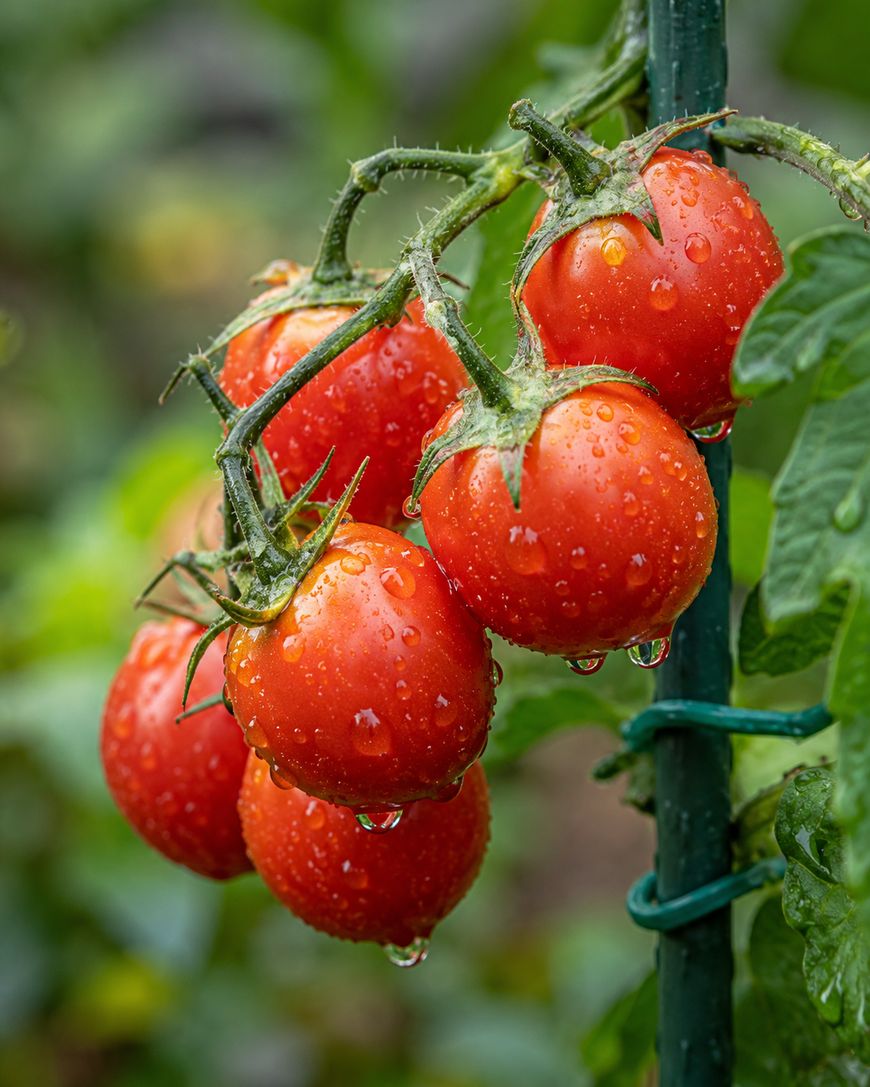
Classic Tomato Cages: The Go-To Option for Most Gardeners
The round wire tomato cage is the most recognizable support structure in American gardens, and it earns that status by being genuinely useful for a wide range of varieties. You can find them at any garden center, they require no installation skill, and they work immediately the moment you place them around a young plant.
Standard store-bought cages are typically made from lightweight wire formed into a cone or cylinder shape. They work reasonably well for determinate varieties—the kinds that grow to a set height and ripen most of their fruit at once. If you’re growing compact patio tomatoes or small slicing types, a basic cage will handle the job without any fuss.
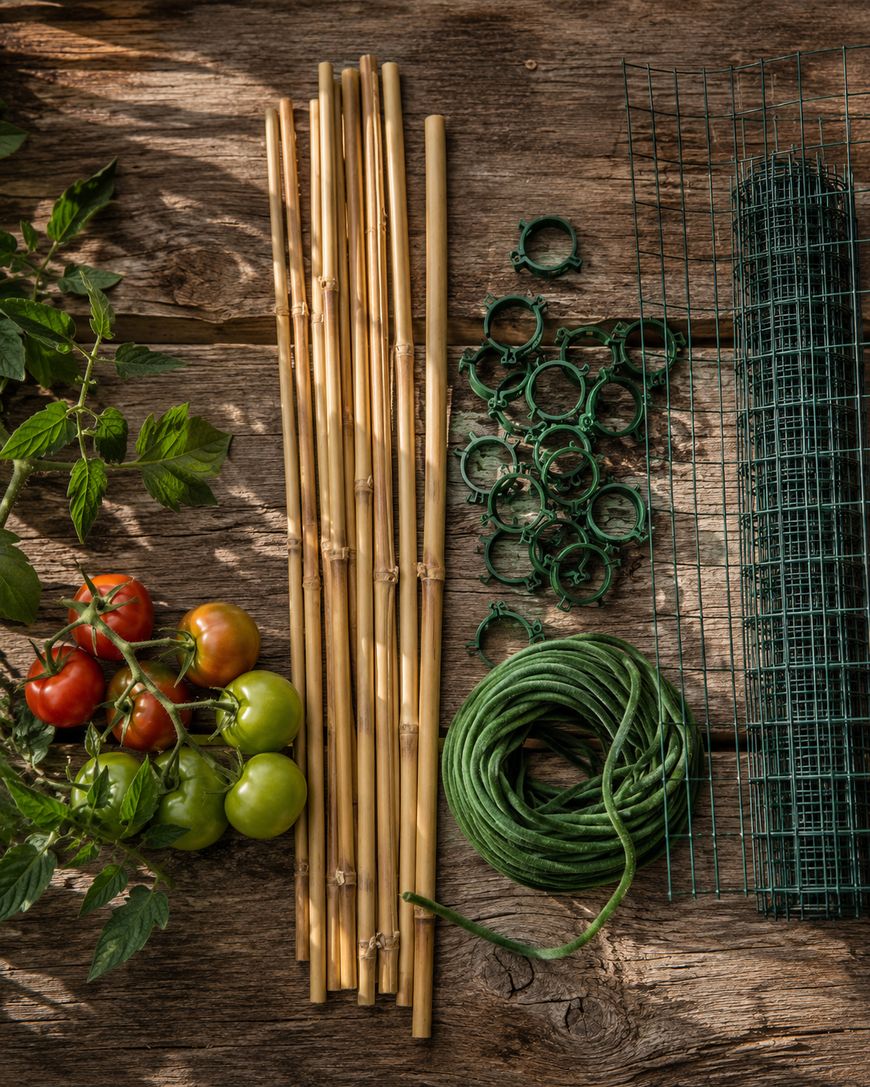
The main limitation of cheap wire cages is that they tend to be too flimsy and too short for vigorous indeterminate varieties. Beefsteak, heirloom, and cherry tomato plants that keep growing all season long can easily reach five or six feet, and a 30-inch cage simply won’t contain them.
If you want the cage approach to work for larger plants, look for heavy-gauge concrete reinforcing wire (also called remesh or welded wire) at your local hardware store. You can form it into cylinders of any diameter and height, and the sturdy grid provides excellent support for even the heaviest fruit clusters. A 5-foot cylinder made from this material will outlast decades of garden seasons.
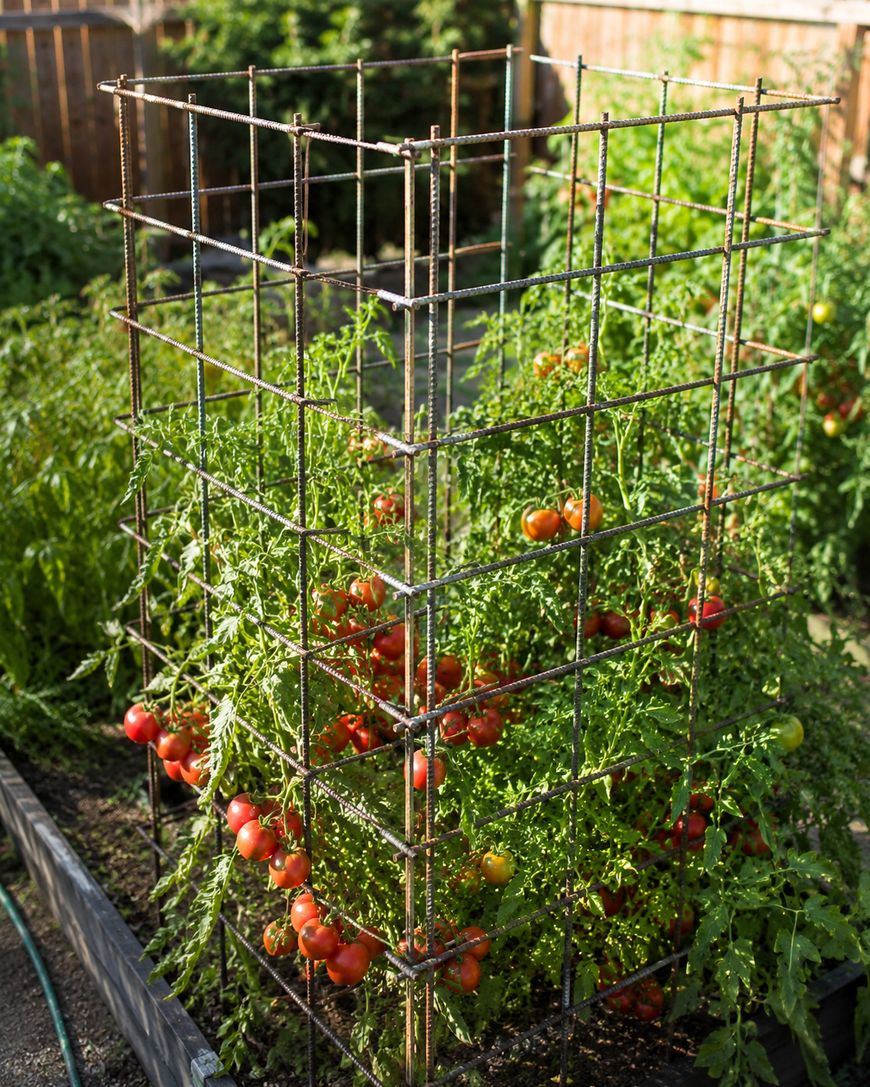
Stakes and Ties: Simple, Flexible Tomato Support Ideas
A single sturdy stake driven into the ground next to your tomato plant is one of the oldest and most reliable support methods around. Wooden stakes, bamboo poles, rebar, and metal electrical conduit all work well, and each has its own set of advantages depending on your budget and how long you need the support to last.
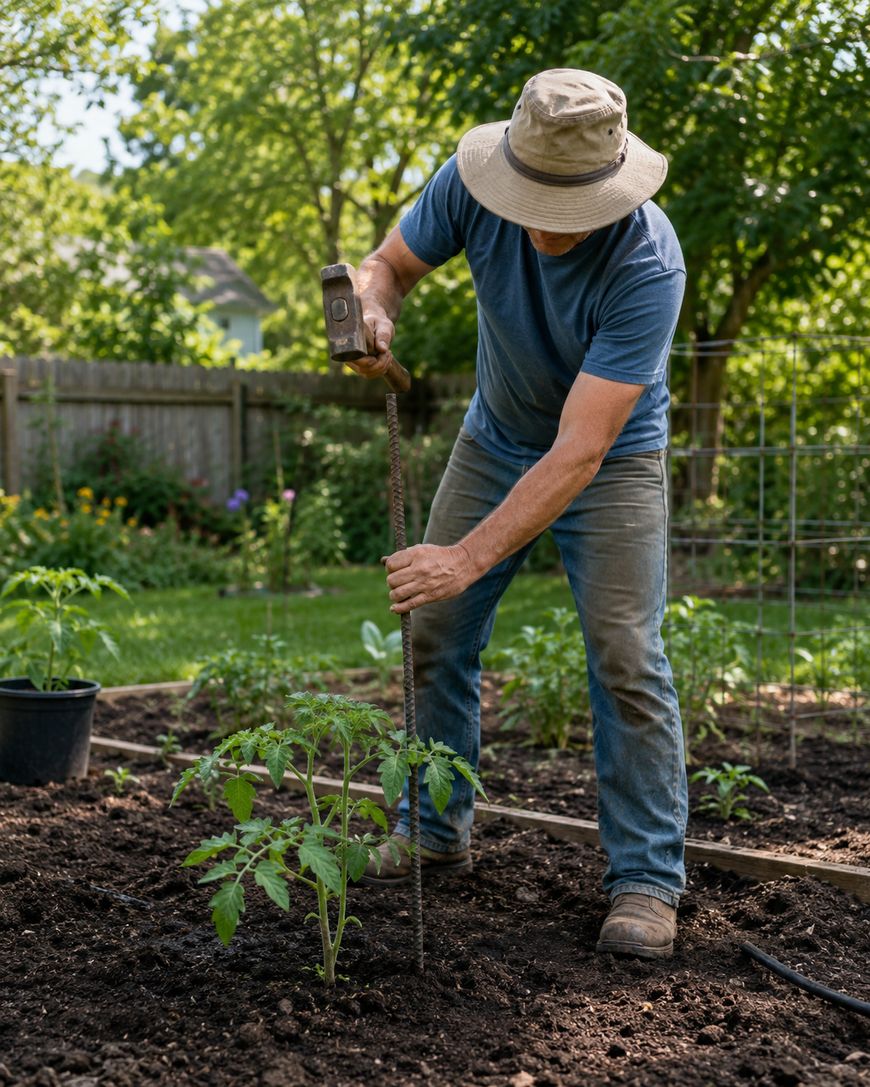
Wooden stakes are inexpensive and easy to find, but they can rot after a few seasons, especially in wet climates. Bamboo is lightweight and attractive, but it’s best suited to smaller plants. Rebar and conduit are nearly indestructible and can be reused indefinitely, making them a smart long-term investment for serious tomato growers.
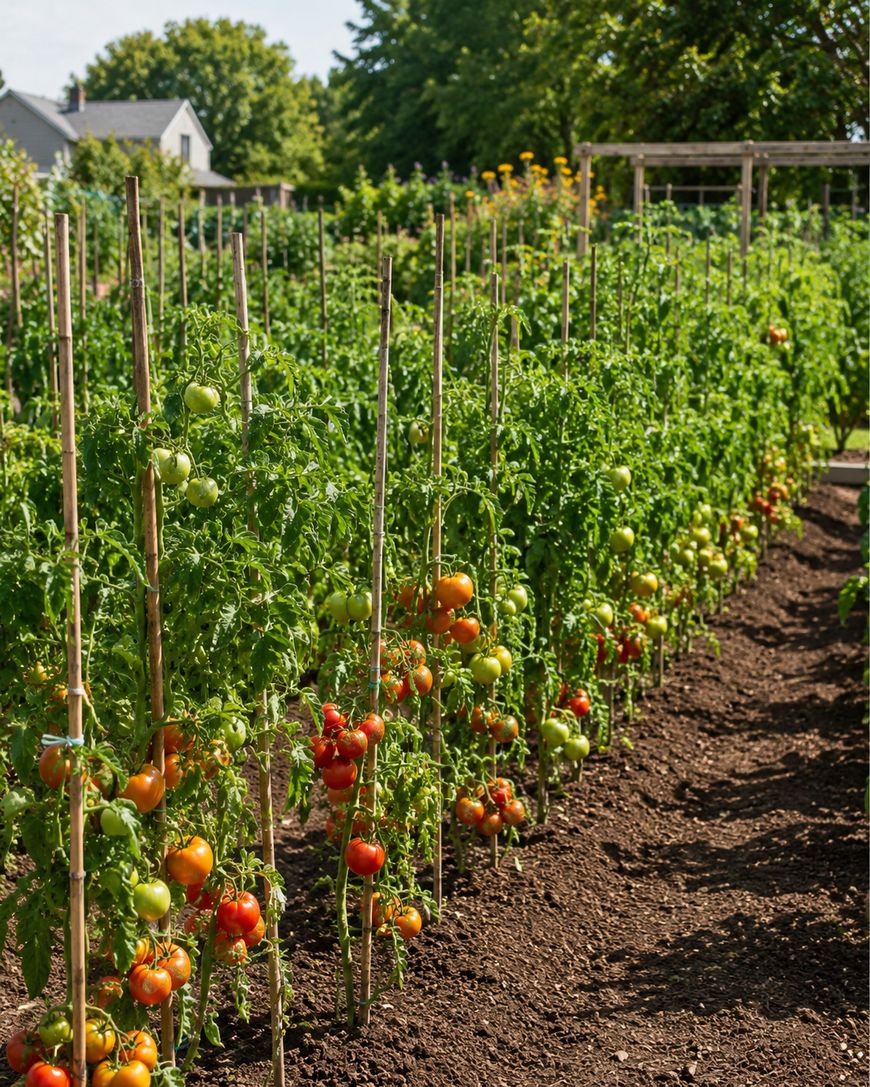
The key to successful staking is choosing a stake that’s at least as tall as your mature plant will be, and driving it at least 12 inches into the ground so it won’t tip over when the plant gets heavy. You’ll also need to tie the main stem to the stake at regular intervals as the plant grows, using soft ties, strips of old t-shirt, or specialized tomato clips.
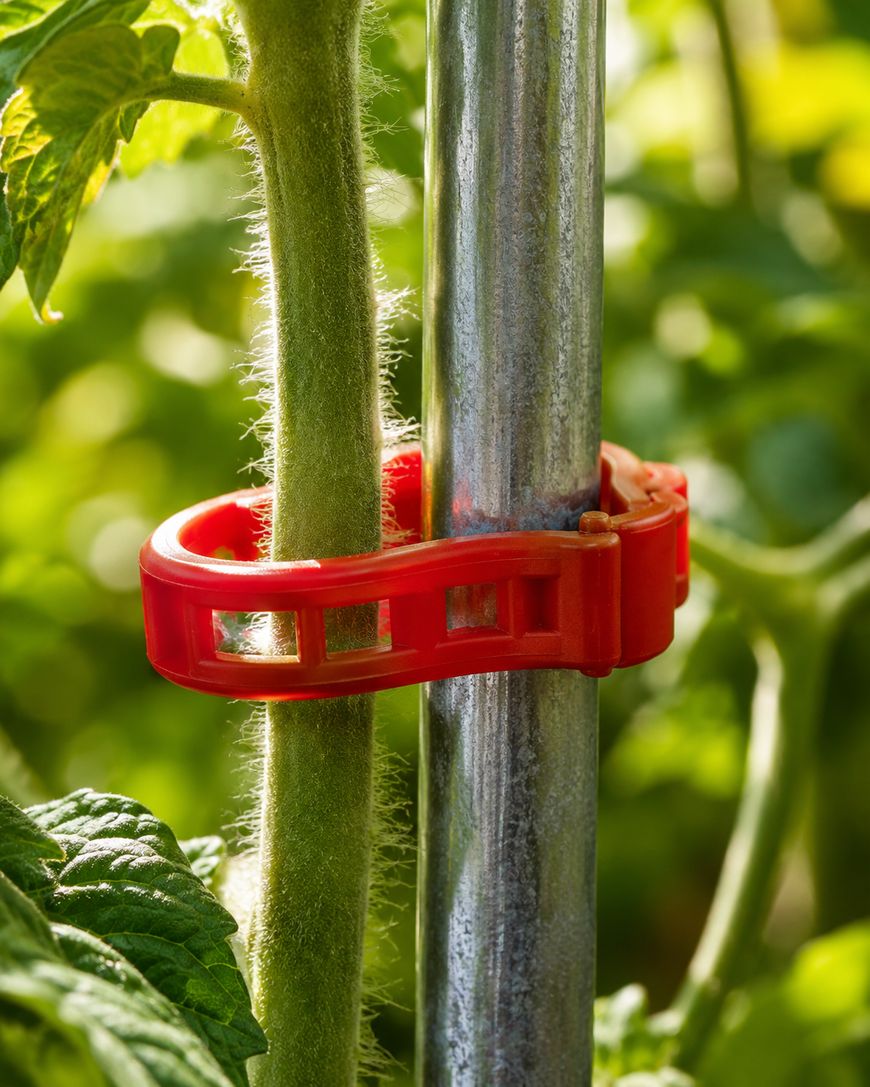
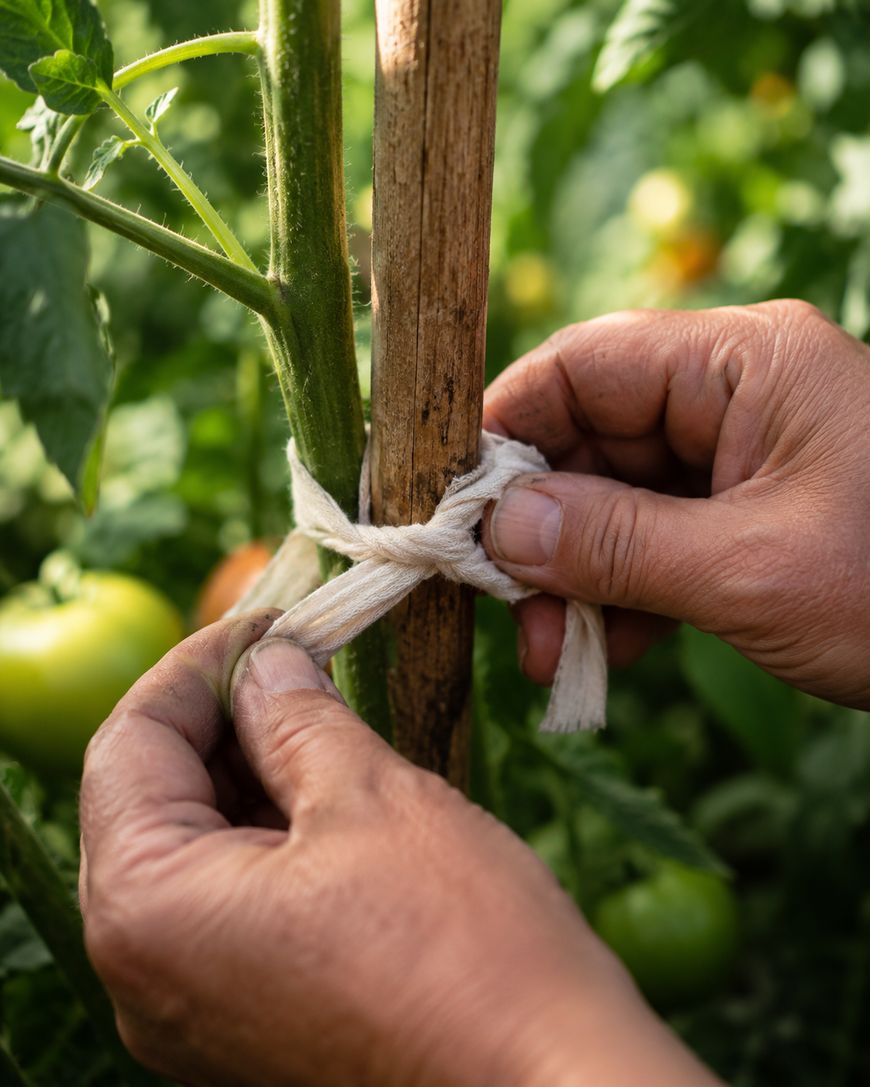
Ties should be firm enough to support the stem but never so tight that they cut into the plant. A figure-eight tie—looping the material around the stem and then around the stake before knotting—gives the stem room to thicken without being strangled. Check your ties every couple of weeks during the growing season and loosen any that are starting to dig in.
Trellises and Fencing: Tomato Support Ideas for Row Planting
If you’re growing multiple tomato plants in a row, a trellis system can be far more efficient than individual cages or stakes for each plant. A simple T-post fence with horizontal wires or twine strung between posts gives you a long, sturdy support structure that multiple plants can share.
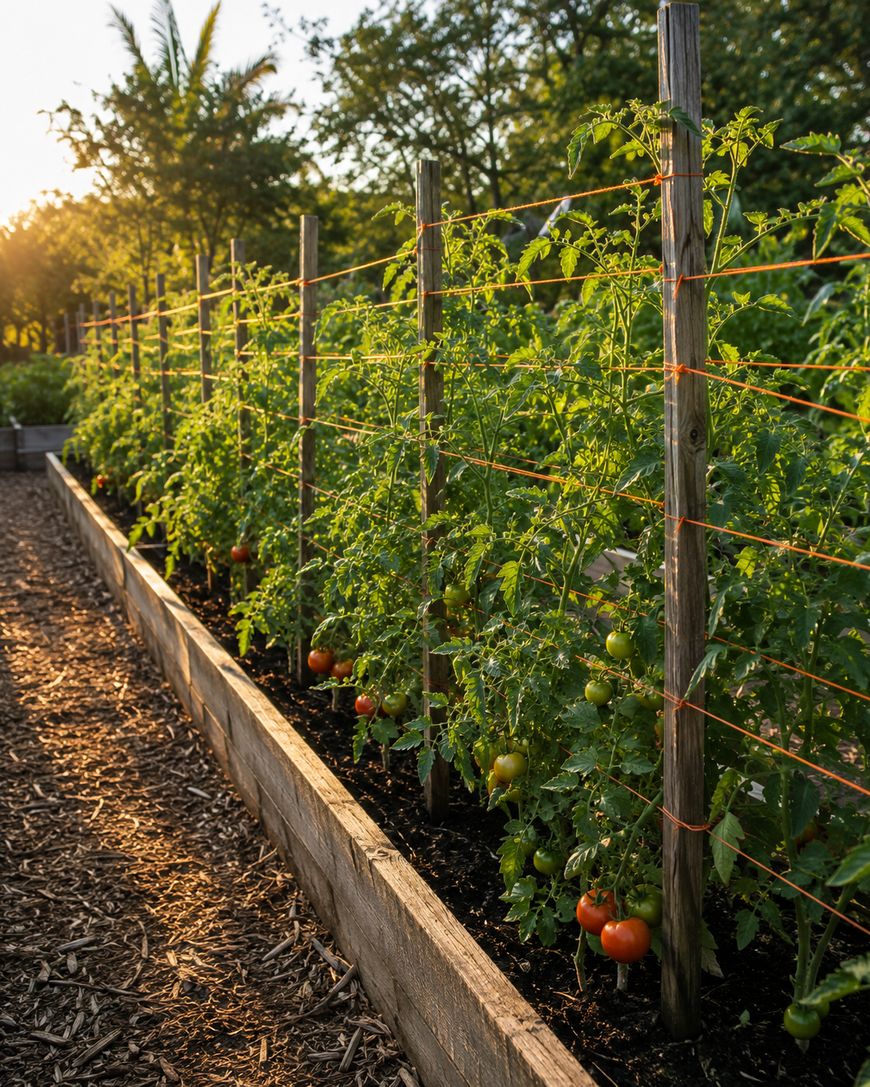
The Florida weave—also called the basket weave method—is a popular trellis technique used by commercial growers and home gardeners alike. You run a length of sturdy twine down one side of a row of plants, loop it around a stake, then run it back down the other side, weaving it around each plant as you go. As the plants grow, you add another tier of twine above the previous one, effectively sandwiching the stems between two horizontal runs.
This approach is particularly efficient because it requires minimal materials and can be done quickly once you get the hang of the pattern. It works best for indeterminate varieties planted in a straight row with stakes every few feet. The plants support each other as much as the twine does, which makes the whole system surprisingly strong.
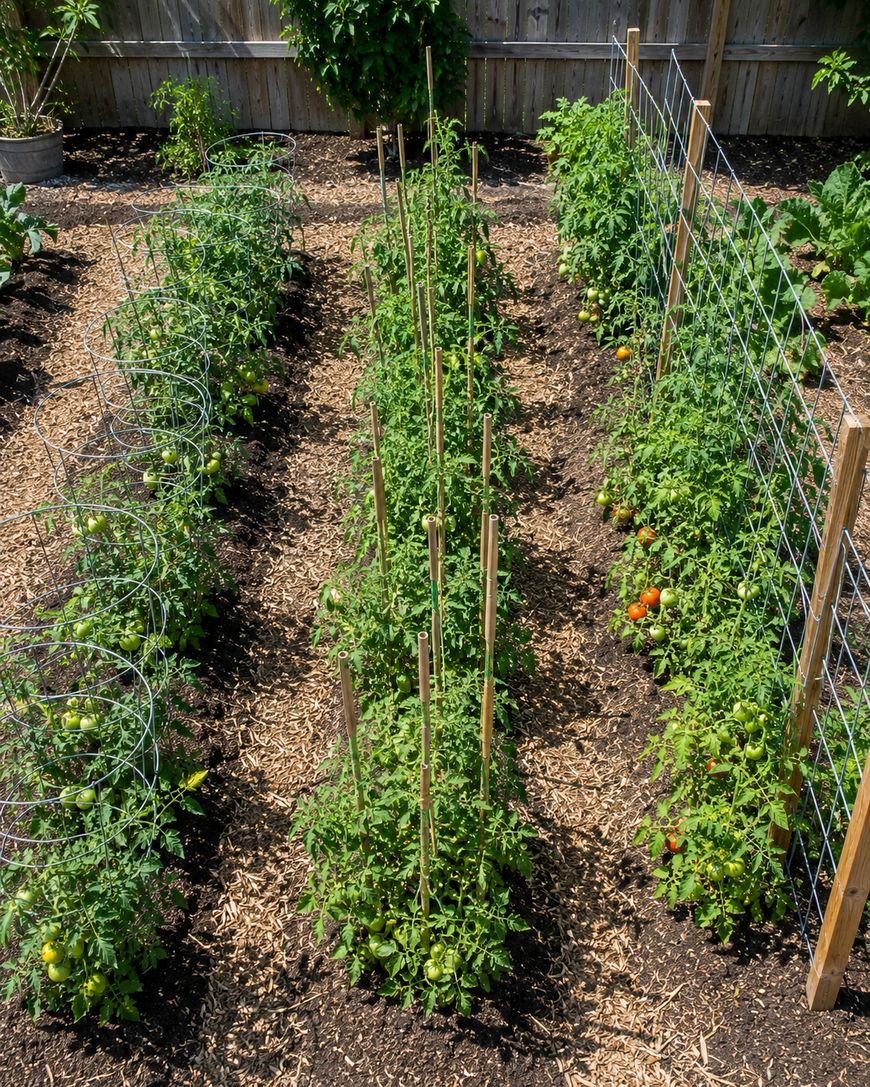
Cattle panels and livestock fencing panels are another excellent option for trellis-style support. These heavy-gauge welded wire panels are rigid enough to stand on their own when properly anchored, and a single 16-foot panel can support an entire row of plants. They’re an upfront investment but will last for many years with minimal care.
DIY and Creative Tomato Support Ideas Worth Trying
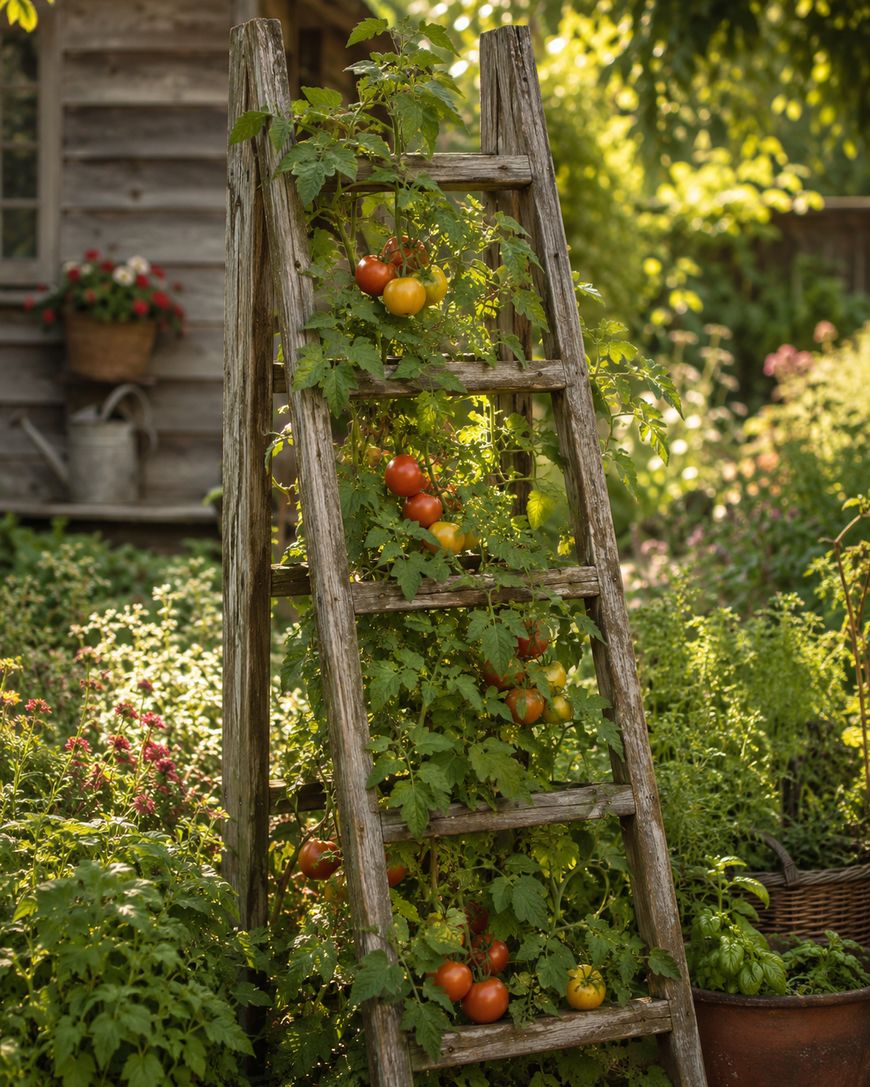
Not every gardener wants to buy a commercial product, and the good news is that some of the most effective tomato support ideas cost almost nothing if you’re willing to repurpose materials you already have. Old wooden ladders propped upright make surprisingly elegant trellises for climbing tomatoes, and the rungs provide natural tie-off points at several heights.
Lengths of sturdy rope or twine strung between fence posts or between hooks screwed into a wooden fence can create a simple but effective training system for plants along a border. You can also use the “string training” method popular in commercial greenhouses, where a length of twine is tied to a wire overhead and then wound loosely around the plant’s main stem as it grows, providing constant support without any additional ties.
Repurposed materials like old metal bed frames, wooden pallets stood upright, or sections of chain-link fencing can all be adapted into functional tomato supports. The key is making sure whatever you use is firmly anchored so it doesn’t tip over once the plants are full and heavy.
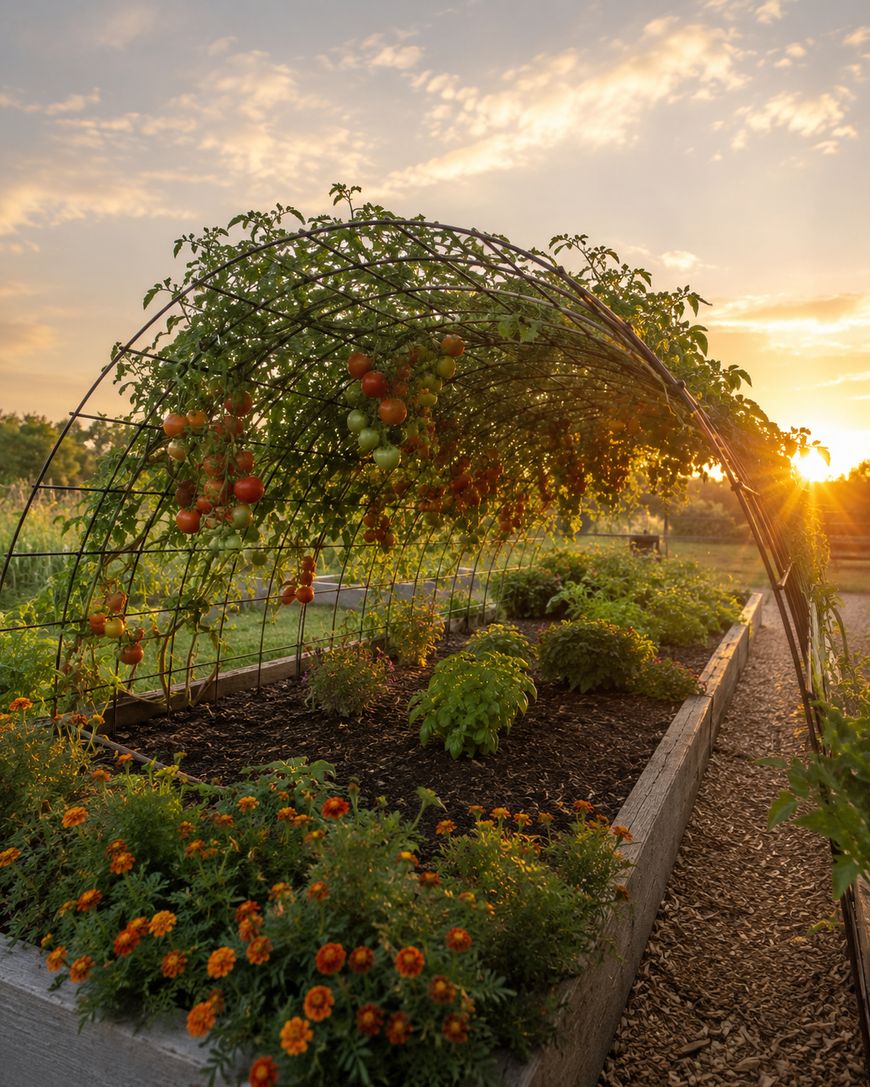
PVC pipe is another underrated option. A simple A-frame built from PVC pipe and fittings can be assembled without any special tools, and it can be broken down and stored flat at the end of the season. You can string wire or twine between the two sides to create a sturdy trellis that works for a small group of plants.
Choosing the Right Tomato Support for Your Variety
Determinate tomatoes, which grow to a fixed height and set all their fruit at once, generally need less support than indeterminate types. A standard cage or a single stake is usually sufficient for varieties like Roma, Celebrity, or Rutgers.
Indeterminate varieties—which include most heirloom types, many cherries, and popular picks like Sungold and Cherokee Purple—will keep growing and producing until frost kills them. These plants need taller, sturdier support than most store-bought cages can provide. Plan for at least five to six feet of vertical support and a structure sturdy enough to handle a plant that could eventually weigh 20 pounds or more.
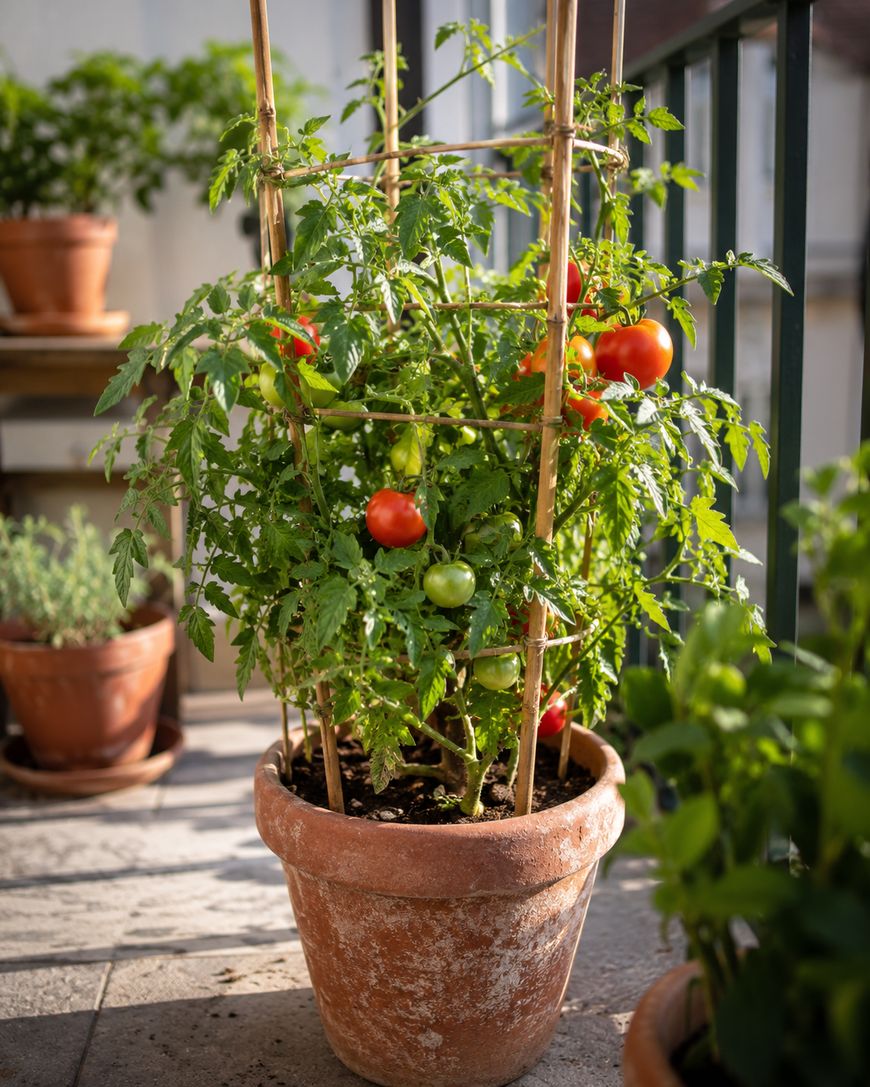
Container-grown tomatoes have their own unique support needs. A pot that can be tipped over by a top-heavy plant is a real problem, so you’ll want to choose dwarf or compact varieties when possible, and use stakes or a small cage that attaches directly to the pot rather than to the surrounding ground.
When to Put Tomato Support in Place
The best time to install your tomato support is at planting time, before the plant gets large enough to make the work awkward. Driving stakes or placing cages around newly transplanted seedlings is far easier than trying to wrestle a support structure around a two-foot plant with sprawling branches.
Installing support early also reduces the risk of damaging roots, which spread quickly once a plant is in the ground. A stake driven through an established root system can set a plant back significantly, and that’s a setback that costs you weeks of growing time.
If you’ve already got plants in the ground without support, don’t panic—just work carefully. Use a stake placed slightly away from the main stem to avoid the deepest roots, and guide the stem gently toward it with soft ties. Most plants recover quickly once they have something to lean on.
Why Tomato Support Matters More Than You Think
Tomato plants are climbers by nature, and without something to lean on, even compact varieties will sprawl across the ground. When stems and fruit touch the soil, the risk of rot, fungal disease, and pest damage climbs dramatically.
Supporting your plants also improves air circulation around the foliage, which is one of the most effective ways to prevent common issues like blight and powdery mildew. Better airflow means drier leaves, and drier leaves are much less hospitable to the pathogens that can wipe out an entire crop.
Beyond disease prevention, proper support makes harvesting easier and keeps fruit cleaner. You’ll spend less time hunting for ripe tomatoes hidden under sprawling vines, and you’ll find far fewer fruits sitting in mud after a summer rainstorm.
Supported plants also tend to produce more consistently. When energy isn’t going into dragging stems across the ground or recovering from breakage, it goes into producing the fruit you actually want. Most experienced gardeners consider reliable tomato support ideas an essential part of their planting plan from day one.
Questions and Answers About Tomato Support Ideas
What is the best support for tomato plants?
The best support depends on the variety you’re growing. Heavy-gauge wire cages or sturdy stake-and-tie systems work well for most home gardeners, while trellis setups are ideal for long rows. The key is matching the support height and strength to the mature size of your specific tomato type.
Do all tomato plants need support?
Most tomato varieties benefit from some form of support, though dwarf and patio types can sometimes get by with a small cage. Indeterminate varieties absolutely need staking or caging to thrive, since they’ll keep growing and producing until frost and can become very large and heavy.
Can I use bamboo stakes for tomatoes?
Bamboo stakes work well for smaller or determinate varieties, but they may not be sturdy enough for large indeterminate plants. If you use bamboo, choose the thickest diameter you can find, drive it deep into the ground, and consider using two stakes in a crossed pattern for extra stability.
How do I keep tomato cages from falling over?
Most store-bought cages fall over because they’re too lightweight for large plants. You can anchor them more securely by driving a separate stake through the cage legs and into the ground, or by wiring adjacent cages together in a row so they support each other. Switching to heavier-gauge DIY cages made from concrete reinforcing wire solves the problem permanently.
What is the Florida weave method for tomatoes?
The Florida weave is a trellis technique where you run twine along both sides of a row of staked tomato plants, weaving between each plant and looping around the stakes to hold everything together. You add new tiers of twine every 8 to 10 inches as the plants grow, creating a horizontal support system that’s efficient and low-cost.
When should I stake my tomato plants?
You should stake or cage your tomato plants at the time of transplanting, or as early in the growing season as possible. Installing support before the plant is large reduces root damage, makes the work easier, and ensures the plant has guidance from the start rather than having to be corrected after it’s already sprawling.
Conclusion: Start with the Right Tomato Support Ideas and Grow with Confidence
Choosing the right support structure is one of the most impactful decisions you’ll make in your tomato garden. The best tomato support ideas are the ones that match your variety, your space, and your budget—and the good news is that there are excellent options at every price point.
Whether you build your own heavy-duty cages from hardware store wire, stake your plants with rebar, or string up a simple Florida weave trellis, the important thing is getting support in place early and checking on it regularly as the season progresses. Your plants will reward you with stronger stems, healthier foliage, and a more productive harvest.
Start planning your support setup before you even put your transplants in the ground, and you’ll spend the rest of the summer enjoying your tomatoes instead of rescuing them.
This post contains affiliate links. A full disclosure is available from the main menu.