Last updated: May 15, 2026
Fresh herbs make every meal better, and growing your own costs pennies compared to grocery store bunches. These herb garden ideas cover every situation, from a single sunny windowsill to a full raised-bed kitchen garden, so you can start growing today no matter your space.
The Best Herb Garden Ideas for Beginners
The most effective herb garden ideas for beginners focus on the herbs that are nearly impossible to kill and the setups that require the least maintenance. Start here and build confidence before expanding.
Grow a Three-Herb Windowsill Garden
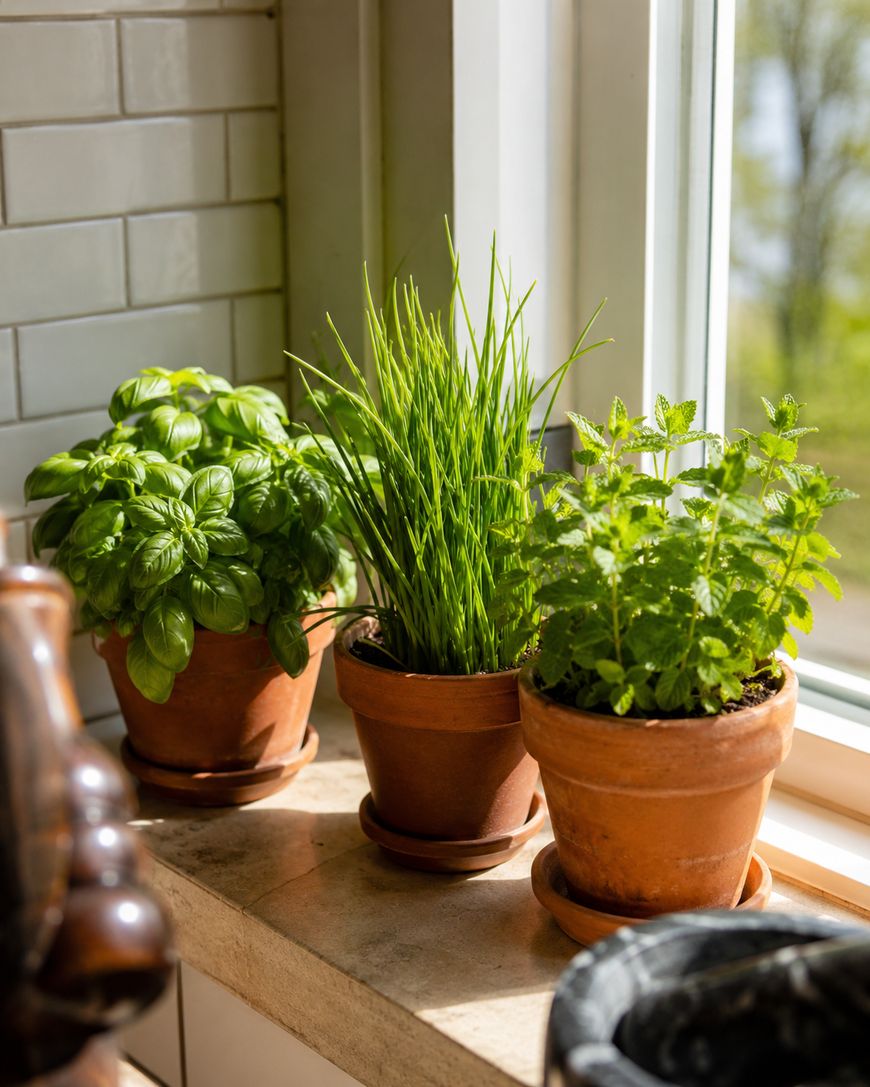
The easiest starting point for any herb garden is a row of three pots on a south-facing windowsill: basil, chives, and mint. These three herbs tolerate indoor conditions better than most, grow quickly, and are used constantly in cooking.
Use 4-inch terracotta pots with drainage holes, a basic potting mix, and water when the top inch of soil is dry. A south-facing window provides the 6 hours of indirect light most herbs need to thrive indoors.
Plant a Patio Herb Garden in a Long Planter Box
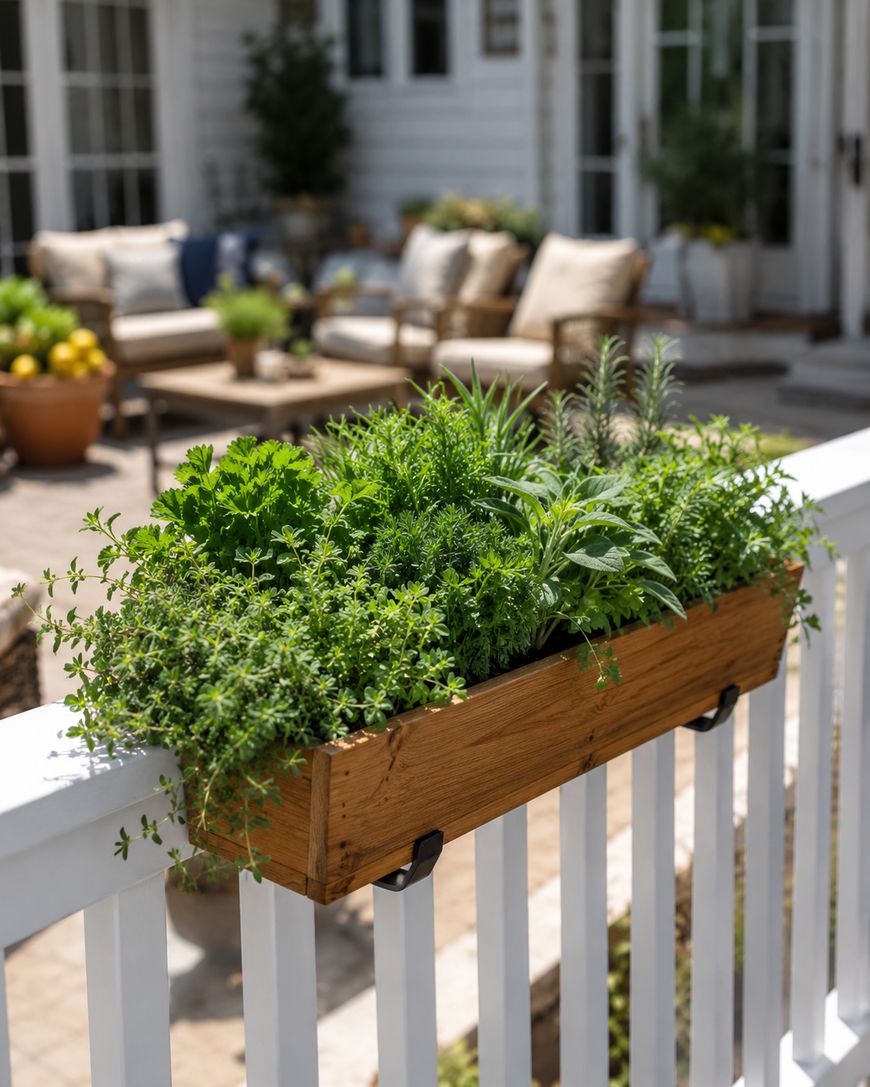
A long cedar or terracotta planter box, like the Lechuza Balconera or the Campania International Long Tom planter, holds five to six herbs in a single container and looks beautiful on a patio railing or step. Fill it with a mix of thyme, rosemary, oregano, flat-leaf parsley, and sage.
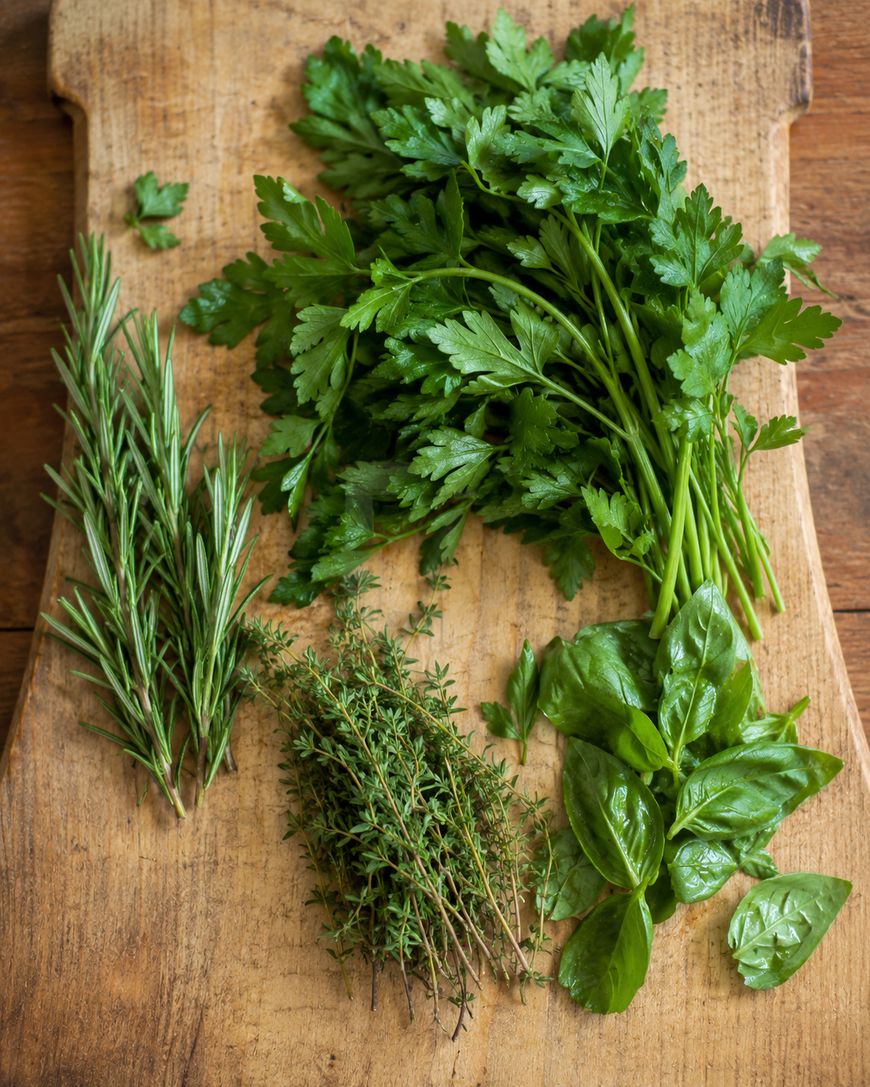
This combination works because all five herbs prefer similar well-draining conditions and moderate watering. They also represent the core flavors of Mediterranean cooking, which means this single planter can supply an entire dinner.
Start With Transplants, Not Seeds
Buying small herb transplants from a nursery rather than starting from seed is the most reliable approach for beginners. Transplants from Bonnie Plants, Territorial Seed Company, or a local garden center are already established and much harder to kill than seedlings.
Seeds are satisfying once you have some experience, but a transplant goes from purchase to first harvest in as little as two weeks. For basil, dill, and cilantro specifically, seeds are easy enough that they are worth trying from the start.
Choose Terra Cotta Over Plastic
Terra cotta pots are the ideal material for herb gardening because they are porous, which allows air and moisture to move through the soil and prevents the root rot that kills most indoor herbs. Plastic pots hold too much moisture and are a common cause of herb failure.
Pair terra cotta pots with a fast-draining potting mix like Fox Farm Ocean Forest or Espoma Potting Mix, which both contain perlite for drainage. This combination keeps roots healthy even when watering is inconsistent.
Herb Garden Ideas for Small Spaces and Apartments
Limited space is no obstacle to a productive herb garden. These herb garden ideas are designed specifically for apartments, small kitchens, and compact outdoor areas.
Build a Vertical Herb Garden on a Wall
A vertical wall-mounted herb garden uses wall space rather than counter or floor space, making it perfect for small kitchens and apartments. The IKEA FINTORP system, the Umbra Trigg floating shelf system, and dedicated vertical garden planters like the Wooly Pocket all mount to walls and hold multiple herb pots at eye level.
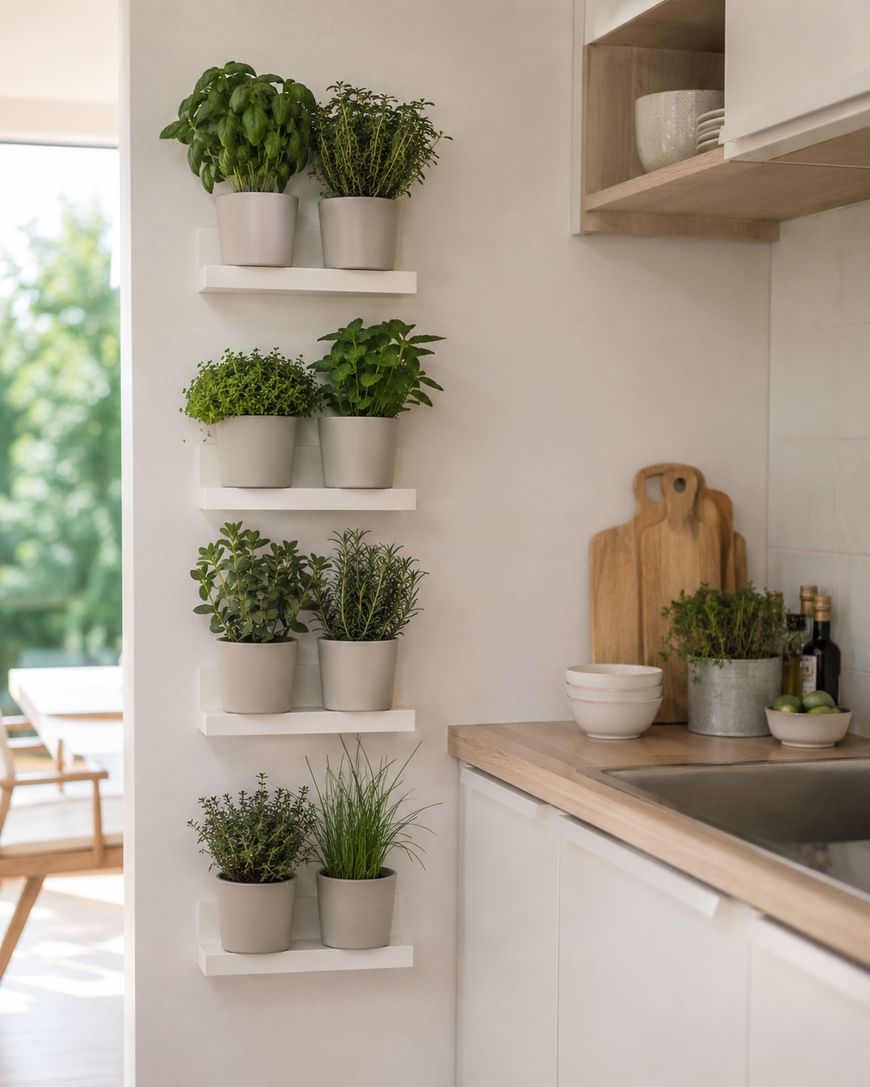
A vertical herb garden also keeps herbs at harvest height, making it easy to snip what you need while cooking without bending or searching. Aim for 4 to 6 varieties and position the most-used herbs at the most accessible spots.
Repurpose a Hanging Shoe Organizer
A clear plastic over-the-door shoe organizer, cut to fit and mounted on a sunny wall or fence, makes an excellent low-cost herb planter. Fill each pocket with a small herb plant in potting mix and cut small drainage slits in the bottom of each pocket.
This system holds up to 24 herbs in the space of a single door panel. It works particularly well on an outdoor fence or balcony railing facing south, where it receives maximum sunlight.
Use a Tiered Plant Stand
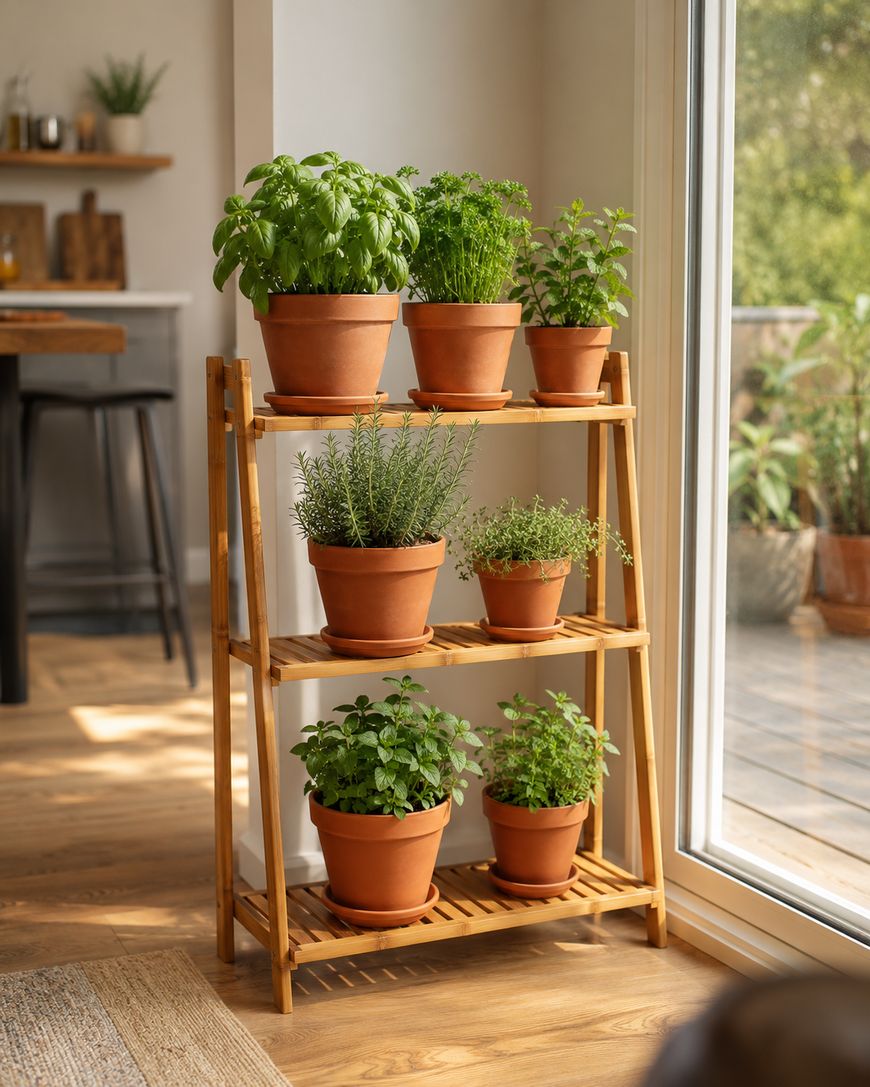
A three-tier plant stand, like the Mkono 3-Tier Bamboo Plant Stand or the Giantex Corner Plant Stand, holds 9 to 12 herb pots in a compact footprint without requiring wall mounting. Position it in front of a sunny window or near a sliding glass door.
Rotate the pots weekly so every plant receives even light exposure. Herbs on lower tiers will grow more slowly due to reduced light, so position the most shade-tolerant herbs like mint and parsley at the bottom.
Install a Magnetic Herb Garden on Your Refrigerator
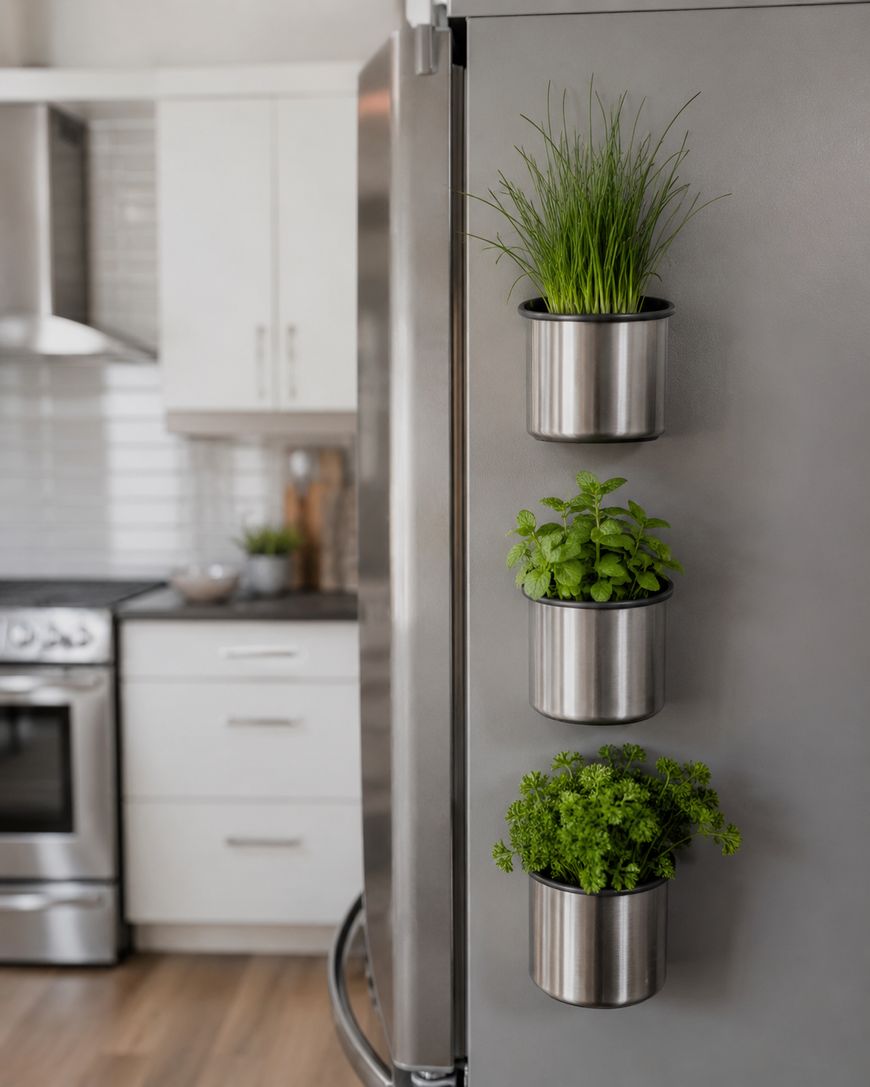
Magnetic stainless steel planters, like the Mkono Magnetic Spice Rack with Planter or the Yamazaki Magnetic Planter Set, attach directly to the refrigerator and hold small herb plants. These work best for herbs like chives, mint, and parsley that tolerate lower light conditions.
This system places herbs at arm’s reach while cooking and requires no counter or wall space. Keep the plants small by regular harvesting and replace them every few months as they naturally decline indoors.
Outdoor Herb Garden Ideas
An outdoor herb garden produces far more abundantly than an indoor one because of direct sunlight, natural air circulation, and rain. These herb garden ideas make the most of outdoor growing conditions.
Create a Raised Bed Herb Garden
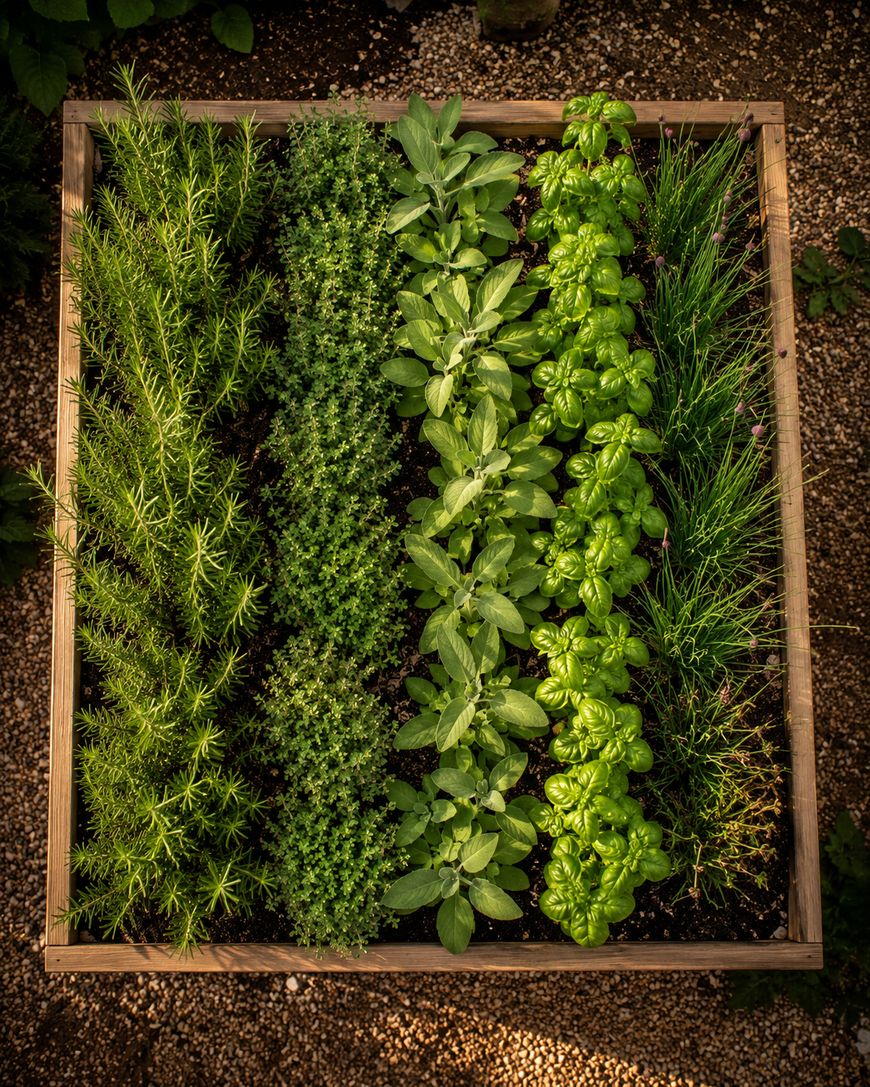
A 4-by-4-foot raised bed dedicated entirely to culinary herbs is one of the most productive and beautiful herb garden setups possible. Fill it with a mix of Mel’s Mix (one part peat moss, one part perlite, one part compost) or a quality raised bed soil like Espoma Raised Bed Mix.
Plant perennial herbs like thyme, oregano, rosemary, sage, and chives in permanent positions, and fill the remaining space with annuals like basil, dill, and cilantro that you replant each season. A raised bed warms faster than ground soil, extends the growing season, and drains perfectly.
Plant a Cottage-Style Herb Border
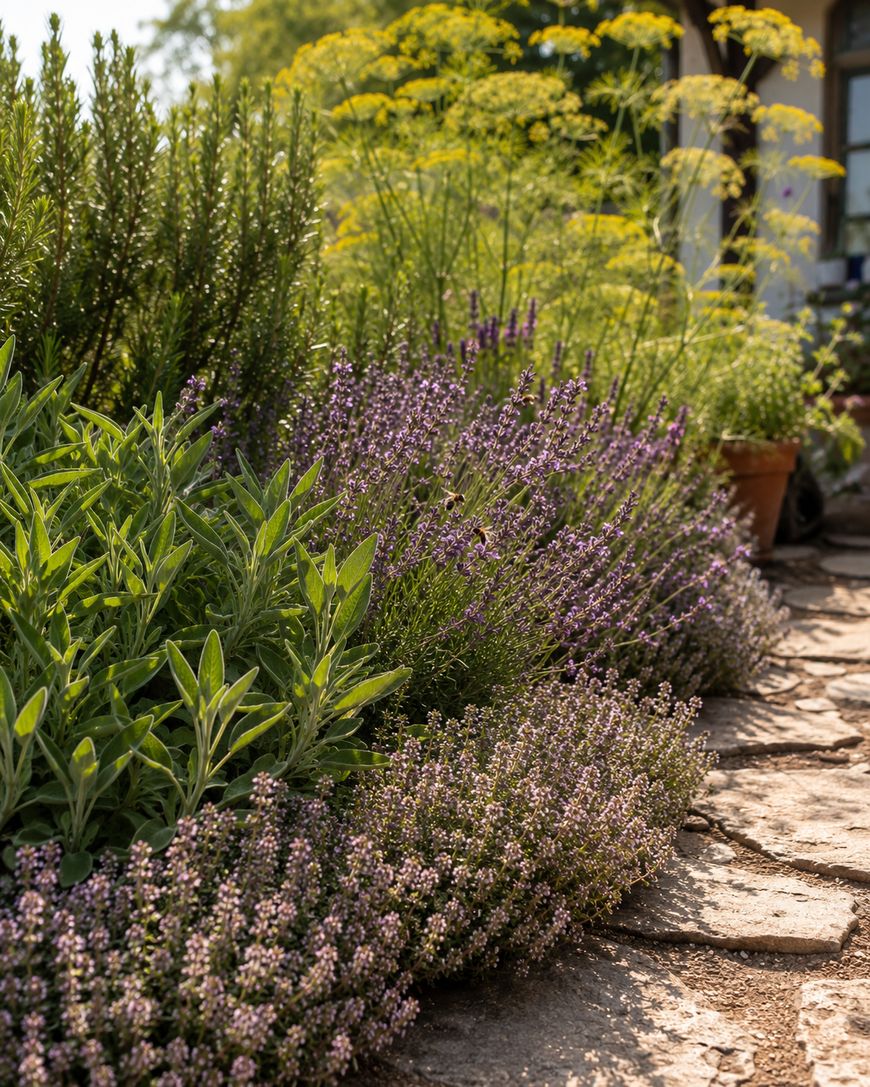
A cottage-style herb border planted along a garden path or the edge of a deck blends structure with beauty. Use taller herbs like rosemary, bronze fennel, and angelica at the back, mid-height herbs like sage, lavender, and lemon verbena in the middle, and low growers like thyme and creeping marjoram at the front.
This planting style was used in traditional English kitchen gardens and remains both functional and extraordinarily beautiful when herbs flower in summer. Lavender and bronze fennel in particular attract pollinators that benefit the entire garden.
Dedicate One Area to Invasive Herbs
Mint, lemon balm, and tarragon are notoriously invasive and will spread aggressively through any garden bed or lawn if planted directly in the ground. Contain them in sunken pots (terra cotta or plastic pots buried rim-deep in the soil), raised beds with solid bases, or dedicated containers placed away from other plantings.
Keeping invasive herbs contained is not a limitation — it is the strategy that keeps the rest of your garden intact. A large galvanized tub or half wine barrel is perfect for a dedicated mint garden that includes several varieties like spearmint, peppermint, and mojito mint side by side.
Grow a Spiral Herb Garden
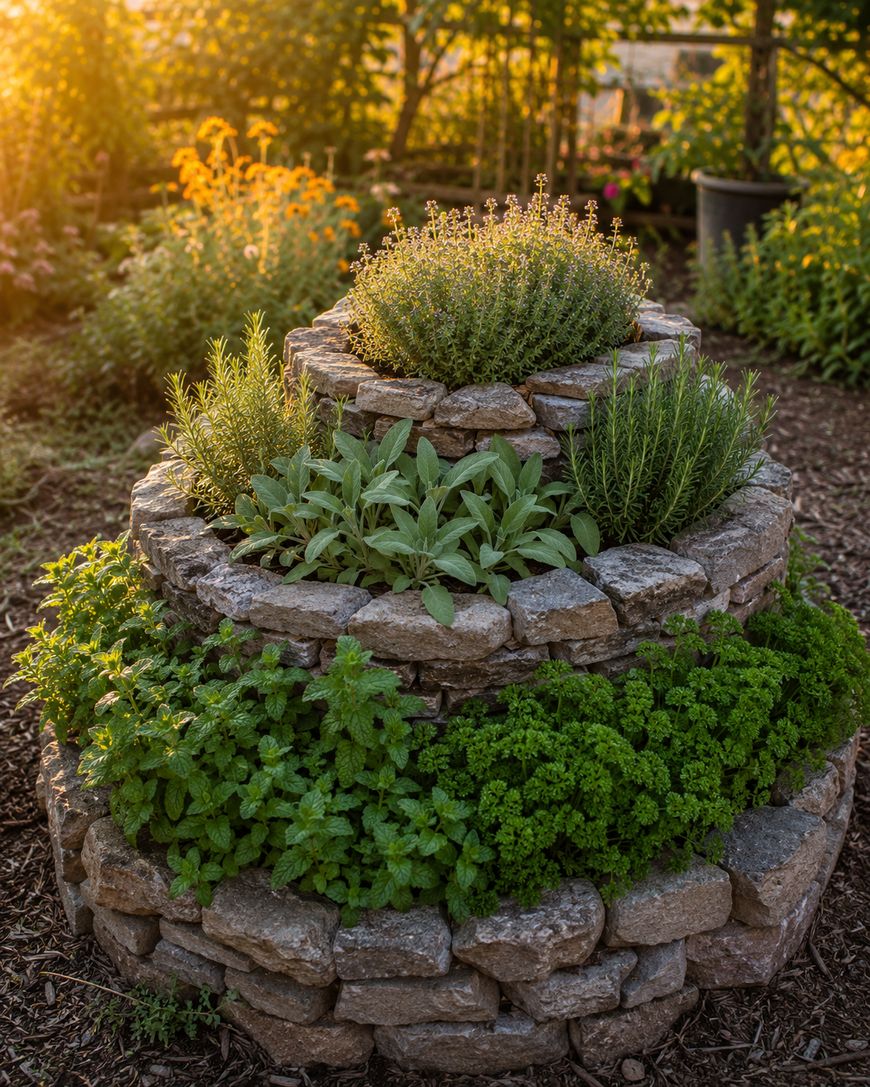
A herb spiral is a traditional permaculture design that creates multiple microclimates in a single raised structure. Built as a conical spiral rising about 3 feet high with stone, brick, or timber, it provides dry, sunny conditions at the top for Mediterranean herbs like thyme and rosemary, and moist, shadier conditions at the base for moisture-loving herbs like mint and parsley.
A herb spiral typically measures about 5 feet in diameter and can be built in a single afternoon using stacked field stones and quality raised bed soil. It is one of the most space-efficient and visually striking herb garden designs available.
Indoor Herb Garden Ideas That Work Year-Round
Indoor herb gardens allow year-round fresh herb access regardless of climate. These herb garden ideas are specifically optimized for indoor growing conditions.
Invest in a Countertop Hydroponic Herb Garden
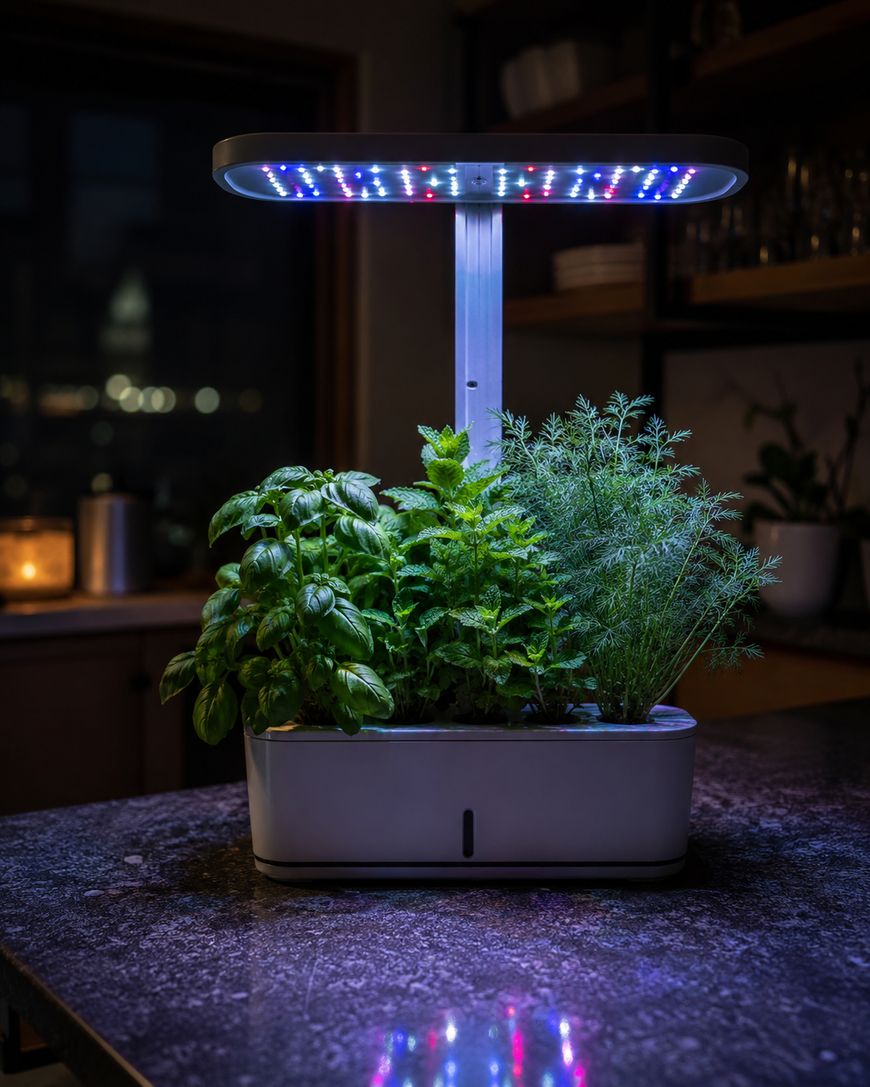
Hydroponic herb garden systems like the AeroGarden Harvest, the Click and Grow Smart Garden 9, and the Rise Gardens Single Family Unit grow herbs indoors without soil using water and built-in LED grow lights. These systems produce basil, mint, dill, parsley, and other herbs three to four times faster than soil-grown counterparts.
The AeroGarden Harvest is the most widely used beginner system and grows six plants simultaneously in a countertop unit that takes up less than one square foot of counter space. It requires almost no maintenance beyond refilling the water reservoir weekly and adding liquid plant food monthly.
Set Up a Dedicated Herb Grow Light
For a window-free kitchen or a north-facing apartment, a dedicated grow light setup turns any shelf into a productive herb garden. Full-spectrum LED grow lights, like the Barrina T5 LED Grow Lights or the MARS HYDRO TS-1000, provide the 16 hours of equivalent sunlight that indoor herbs need to thrive without any natural light.
Mount a grow light on an adjustable shelf bracket 6 to 8 inches above the herb pots and set it on a timer for 16 hours on, 8 hours off. This produces results that match or exceed a sunny south-facing window.
Use Mason Jars as Herb Planters
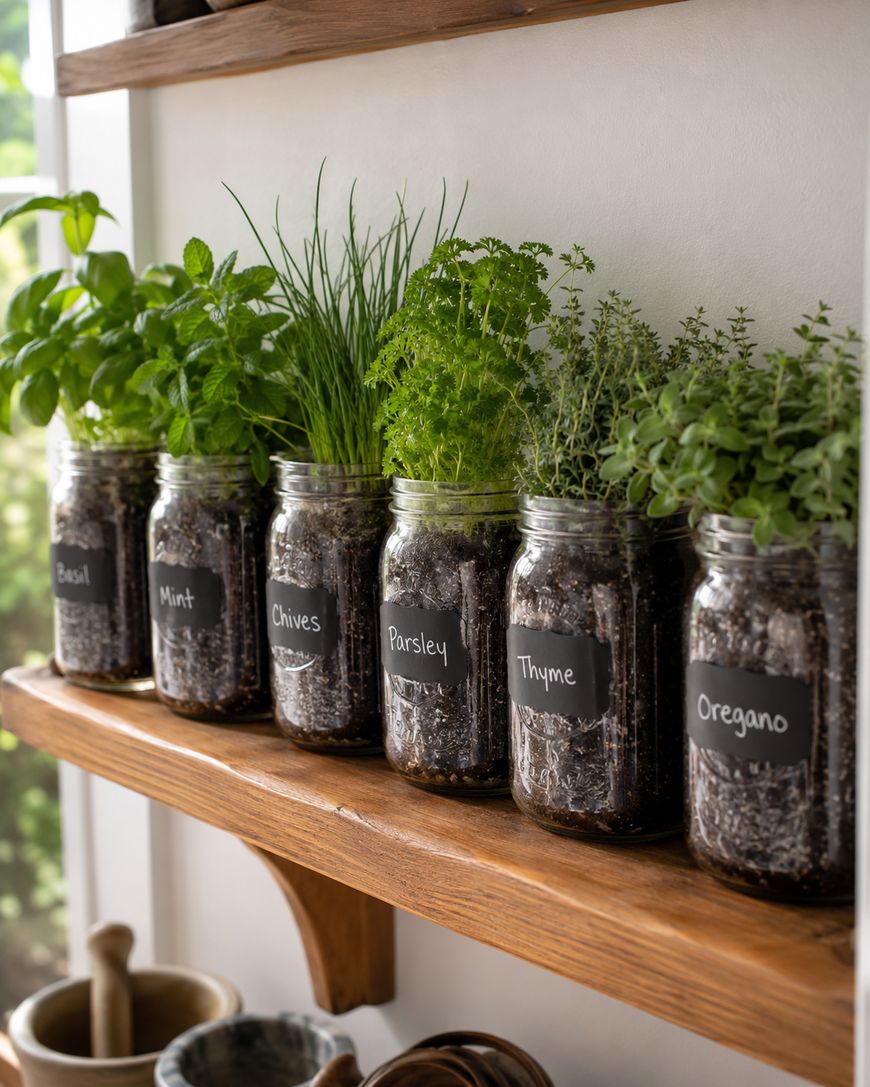
Wide-mouth quart Mason jars are an inexpensive and visually appealing herb planter for windowsills and kitchen counters. Fill them with a perlite-heavy potting mix, plant one herb per jar, and use a chopstick or skewer to check moisture before watering.
The transparent glass lets you see the soil moisture level and root development, which is genuinely useful for beginners. A row of Mason jar herb gardens on a kitchen shelf with small printed labels is also one of the most popular kitchen decor looks on Pinterest.
Questions People Ask About Herb Garden Ideas
What are the easiest herbs to grow indoors?
The easiest herbs to grow indoors are chives, mint, parsley, and basil. Chives require very little light and almost no maintenance. Mint thrives in almost any condition and can become invasive. Basil needs the most light of the four but grows extremely fast and rewards regular harvesting with bushier growth.
How much sun does an indoor herb garden need?
Most culinary herbs need 6 to 8 hours of direct or bright indirect sunlight daily. A south-facing windowsill provides the most light in the northern hemisphere. For any window that receives less than 6 hours, a full-spectrum LED grow light set to run 14 to 16 hours daily will compensate effectively.
What herbs grow well together in the same pot?
Mediterranean herbs like thyme, rosemary, oregano, and sage grow very well together because they share the same preference for well-draining soil, full sun, and infrequent watering. Basil pairs well with parsley in terms of care, though basil needs more water than most Mediterranean herbs. Mint should always be grown alone or with other invasive herbs because it will crowd out anything else.
When should I harvest herbs to encourage growth?
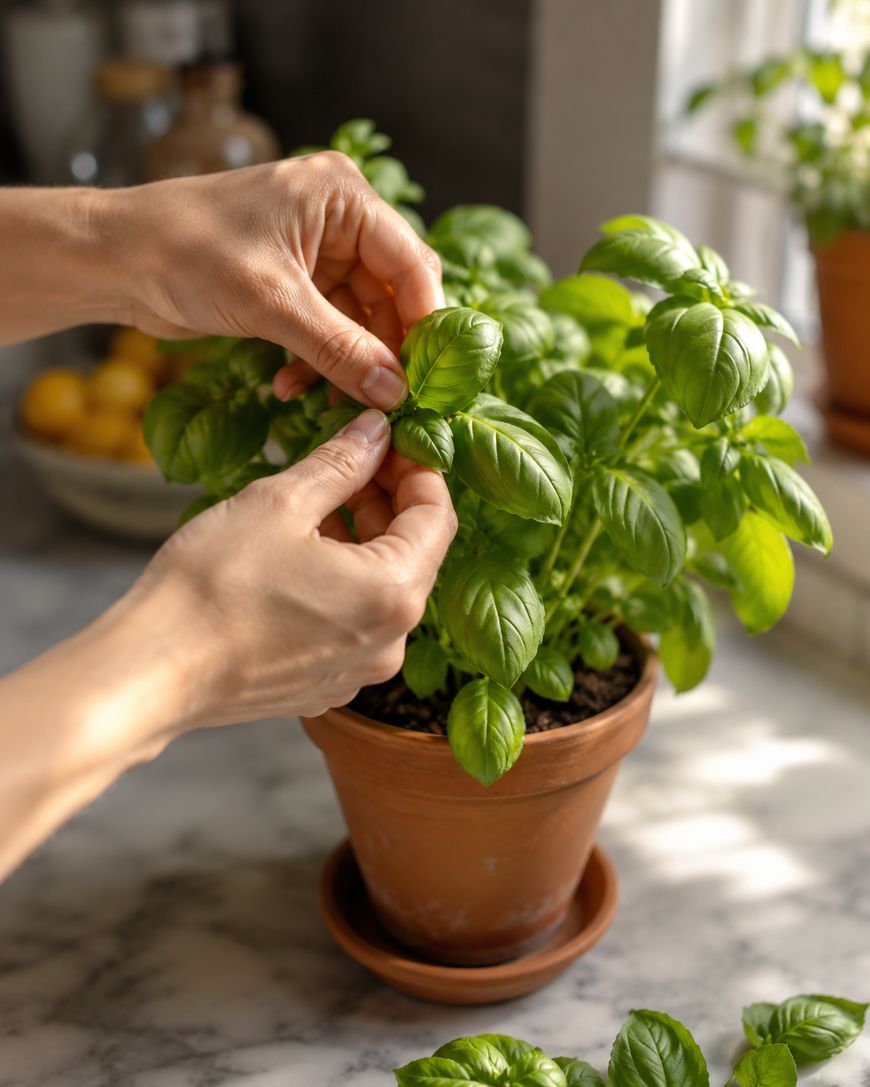
Harvest herbs early and often rather than waiting for large harvests. Cut no more than one-third of a plant at once, and always cut just above a leaf node rather than from the tips alone. Regular harvesting signals the plant to produce more foliage rather than go to seed, which significantly extends its productive life.
What is the best soil for a herb garden?
The best soil for herbs is a well-draining potting mix with added perlite. A standard ratio is 2 parts quality potting mix to 1 part perlite. Espoma Organic Potting Mix and Fox Farm Ocean Forest are both excellent bases. Garden soil is too dense for containers and causes drainage problems that kill most herbs. Raised bed soil like Mel’s Mix is ideal for outdoor raised bed herb gardens.
How do I keep indoor herbs alive through winter?
Keep indoor herbs alive through winter by ensuring they receive at least 6 hours of light daily (supplement with a grow light if needed), maintain temperatures above 60 degrees Fahrenheit, reduce watering frequency compared to summer, and stop fertilizing from October to February. Cold drafts from windows are the most common killer of indoor herbs in winter, so insulate pots with a cloth wrap or move them slightly back from the window glass.
Start Your Herb Garden This Week
The best herb garden ideas are the ones you actually start, not the ones you save to a Pinterest board and forget. Pick one format from this list, whether it is a three-pot windowsill garden, a single raised bed, or a hydroponic countertop system, and get one plant in soil this week.
Fresh herbs change the way you cook. The first time you reach into your own garden for a handful of basil rather than opening a plastic clamshell from the grocery store, you will wonder why you waited so long.