Last updated: August 11, 2026
A house is judged from the curb long before anyone steps inside, and it is protected from the outside in. Every part of the exterior has a job, and the ones that do their job quietly are the ones people forget about until something fails.
Weather works on a home constantly, year after year, in ways that are easy to miss from the driveway. Understanding how the outer shell holds up, and knowing which parts wear out first, saves owners from the sort of repair that arrives without warning and costs far more than it should have.
Planning the Work Before the Weather Decides
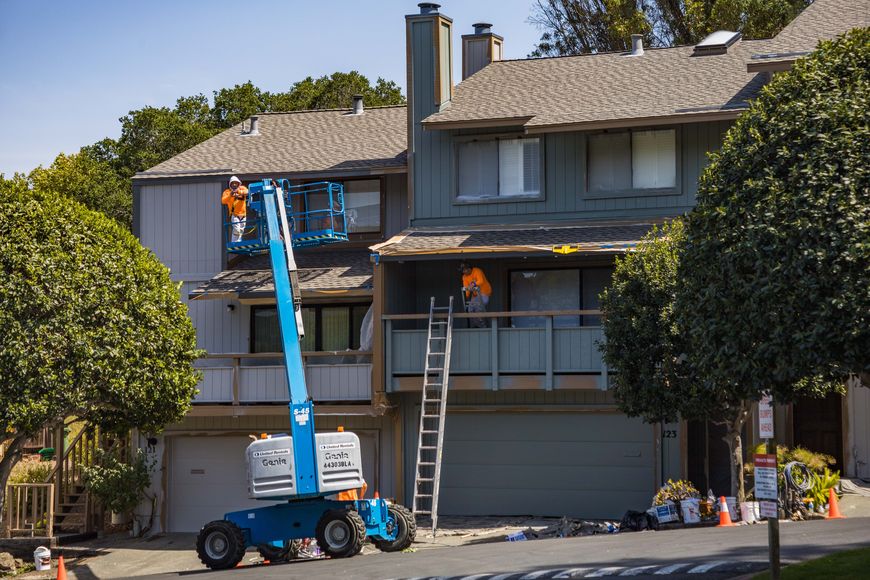
The outer walls of a house take weather from every direction and are expected to hold that line for decades. Most owners only look closely at them when something starts to look wrong, and by then the material has usually been failing for a while. Older siding gives itself away in small ways first, with loose seams, faded color, and soft spots that let moisture slip behind the panels. Once water gets past that layer of siding, it reaches sheathing and framing, and the repair stops being cosmetic and starts being structural. Booking a professional siding installation while the weather still cooperates keeps the project on a normal schedule instead of an emergency one, with material and color choices settled before any panel goes up. A good crew also walks the budget through with the homeowner first, so there are no surprises once the work begins.
Roofing Carries the Heaviest Load
Nothing on a house takes more abuse than the roof. It faces sun, rain, ice, and wind with no break, and the materials up there are expected to hold a seal for decades while everything expands and contracts underneath them. Most owners never look closely at a roof until a ceiling stain appears, by which point water has already been traveling somewhere it should not.
The warning signs are visible from the ground with a little attention. Shingles that curl at the edges, granules collecting where downspouts empty, and a roofline that no longer looks straight all point to a surface nearing the end of its service. Inside, a musty smell in an upstairs closet or a faint discoloration along a ceiling seam deserves a look. Catching these early usually means a targeted repair rather than a full replacement.
Gutters Do More Than People Think
Water has to go somewhere once it leaves the roof, and gutters decide where. A properly pitched system carries runoff away from the foundation and keeps it from sheeting down the walls. A clogged or sagging one dumps it directly against the house, where it soaks the ground, finds its way into the basement, and works on everything it touches.
Cleaning matters, but so does design. Downspouts that end too close to the foundation move the problem a few feet instead of solving it. Extensions and proper grading finish the job. Gutter guards reduce how often anyone has to be on a ladder, which is worth something on a two-story home with mature trees overhead. Anyone seeing overflow at the same corner every heavy rain has a capacity or pitch problem, not a cleaning problem.
Windows and Doors Are Where Comfort Leaks Away
Openings in a wall are the weak points by definition. Every window and door is a break in the barrier, sealed with materials that shrink, harden, and eventually give up. Drafts near a sash on a windy day, condensation between panes, and a door that has to be pulled hard to latch are all telling the same story.
Replacing tired units does more than stop drafts. Modern glass packages cut heat transfer in both directions, which shows up on utility bills throughout the whole year rather than one season of it. Doors that seal properly also block noise and keep out the fine dust that otherwise settles on sills. The look changes too, since an entry door sets the tone for the entire front of a house.
Storm Damage Deserves a Fast Response
Severe weather rarely leaves a tidy record of what it did. Wind lifts and reseats materials without breaking them, hail bruises surfaces that look fine from a distance, and a falling branch can crack something that only reveals itself weeks later during the next long rain. The damage that gets missed is usually the damage that costs the most.
After a serious storm, a walk around the property is worth the half hour. Look for debris in the yard that came from the house itself, dents on metal surfaces, and anything hanging loose along the roofline. Photograph what you find while it is fresh, since documentation makes an insurance conversation far simpler. A contractor experienced with wind and hail claims can tell the difference between old wear and new damage, and that distinction decides how a claim is handled.
Energy Efficiency Starts at the Shell
Heating and cooling costs are largely determined by how well the outside of a house holds a line against the outside air. Insulation in the attic, sealed penetrations where pipes and wires pass through, and weatherstripping around every opening all contribute. None of it is glamorous, and all of it pays back steadily.
The attic is usually the biggest opportunity in an older home. Heat rises, escapes through an underinsulated ceiling, and takes money with it every winter. Air sealing before adding insulation makes the insulation work as intended rather than filtering warm air through it. Small gaps around recessed lights, attic hatches, and chimney chases add up to a surprising total when measured together.
Choosing Who Does the Work
The contractor matters as much as the materials. Manufacturer warranties often depend on the work being done to specification, which means an installation shortcut can quietly void coverage the owner thinks they have. Licensing, insurance, and a long local track record are the baseline, not the selling points.
Good questions sort candidates quickly. Ask who is actually on the crew and whether the work is subcontracted. Ask how change orders are handled if something unexpected turns up behind the existing surface, because on older homes something usually does. Ask what cleanup looks like at the end of each day. Ask for recent addresses nearby and look at the finished result in person. A company confident in its work will not hesitate on any of it, and a written estimate that spells out materials, timeline, and payment terms tells you a great deal about how the project will run.