Last updated: September 11, 2026
Did you know you can freeze fresh zucchini so you can use it later without wasting it? It’s so easy: you blanch zucchini pieces for 1–2 minutes, chill them fast, dry well, and freeze in flat bags so they don’t clump.
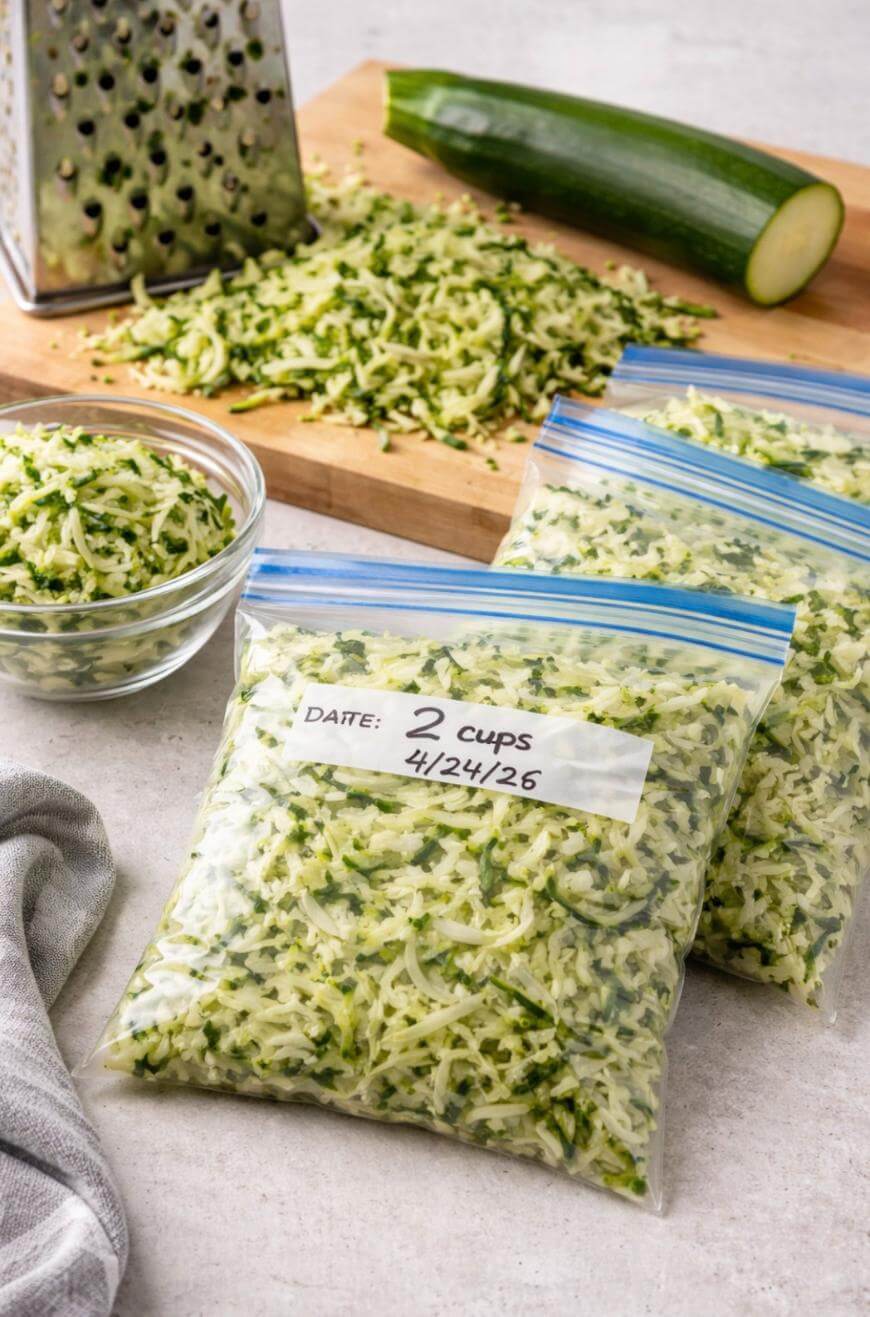
If you’re freezing zucchini for baking (like muffins or bread), the easiest approach is shredding it, squeezing out moisture, and freezing it in measured portions so you can grab exactly what you need.
How To Freeze Zucchini The Best Way For Your Uses
1. Choose Your End Use First
Freezing method depends on how you’ll use it later: sautéing and soups do best with blanched slices or chunks, while baking does best with shredded zucchini.
A simple rule: if you want “piece shape,” blanch first; if you want “hidden in batter,” shred and portion.
2. Pick Firm, Medium Zucchini
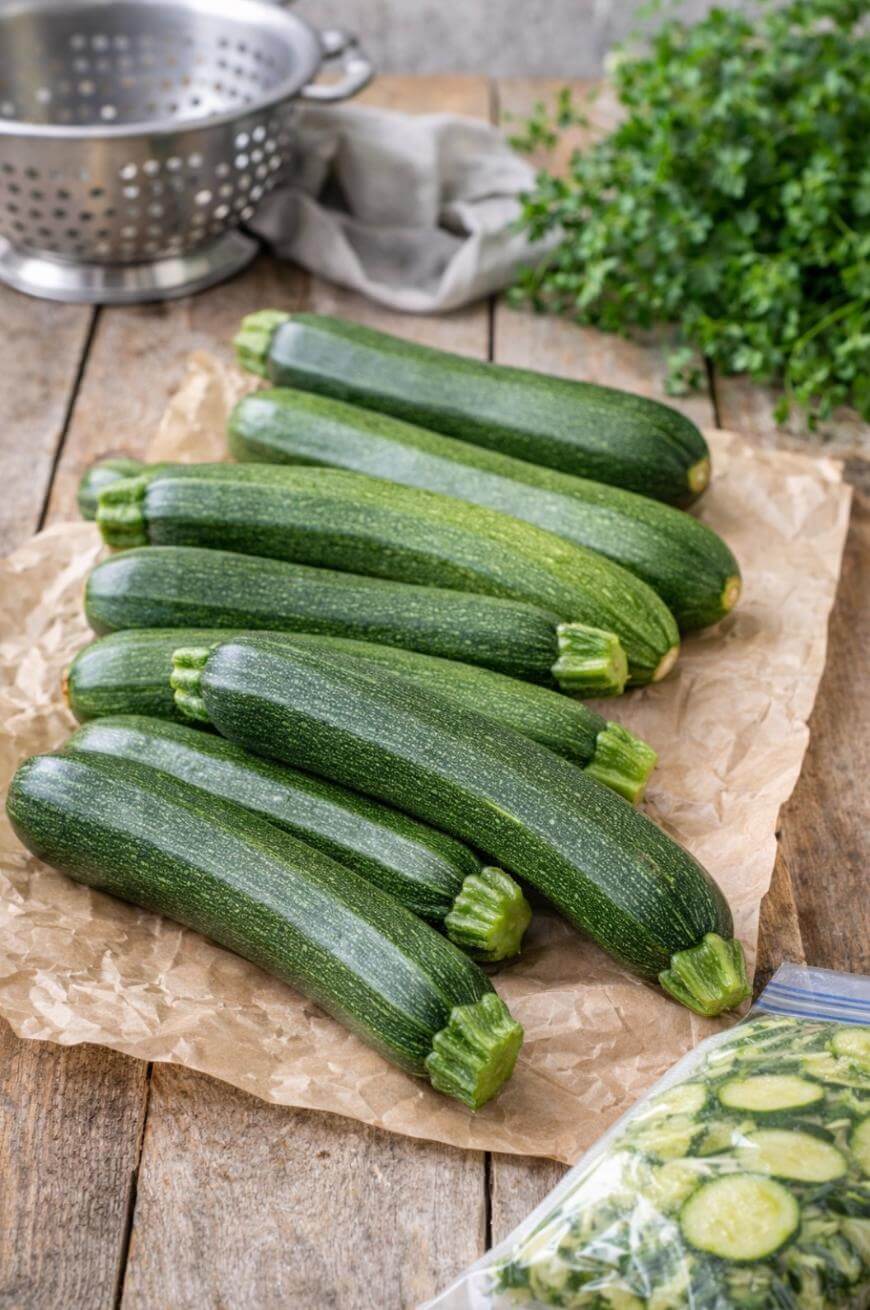
Medium zucchini (not giant, seedy ones) freeze better because they have a tighter texture and less watery center.
If yours are overgrown, scoop out the seedy core before freezing to avoid mushiness later.
3. Wash And Dry Thoroughly
Rinse well, then dry the outside so you don’t add extra ice and freezer burn to the bag.
Extra surface water is one of the biggest reasons frozen zucchini turns into a soggy block.
4. Decide Whether To Peel
Most people do not peel zucchini because the skin helps it hold together and adds color.
If you’re freezing for picky eaters or very smooth baking, peeling is fine, but texture won’t improve by peeling.
Freezing Zucchini In Slices Or Chunks (Best For Soups, Stir-Fries, Roasting)
5. Cut Even Pieces
Slice into 1/4-inch rounds for quick cooking, or cut 1/2-inch chunks for soups and stews.
Keeping pieces uniform helps them blanch evenly so you don’t get half-soft, half-crunchy results.
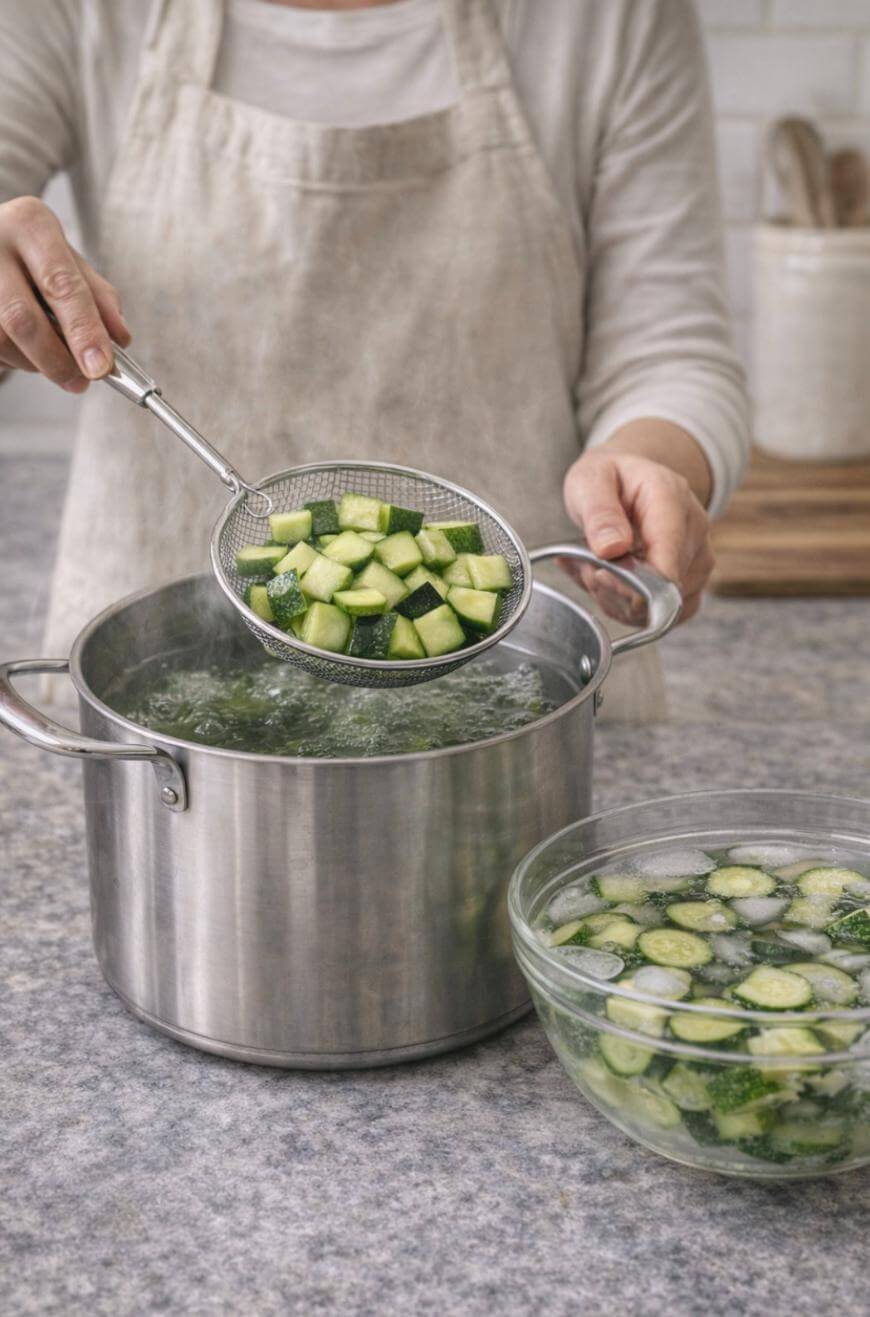
6. Set Up A Blanching Station
You need 1 pot of boiling water and 1 big bowl of ice water right next to it.
This fast switch is what stops cooking quickly and helps preserve color and texture.
7. Blanch For The Right Time
Blanch slices for 1 minute and chunks for 2 minutes.
Start timing only after the water returns to a boil, and don’t overcrowd the pot or the temperature drops too much.
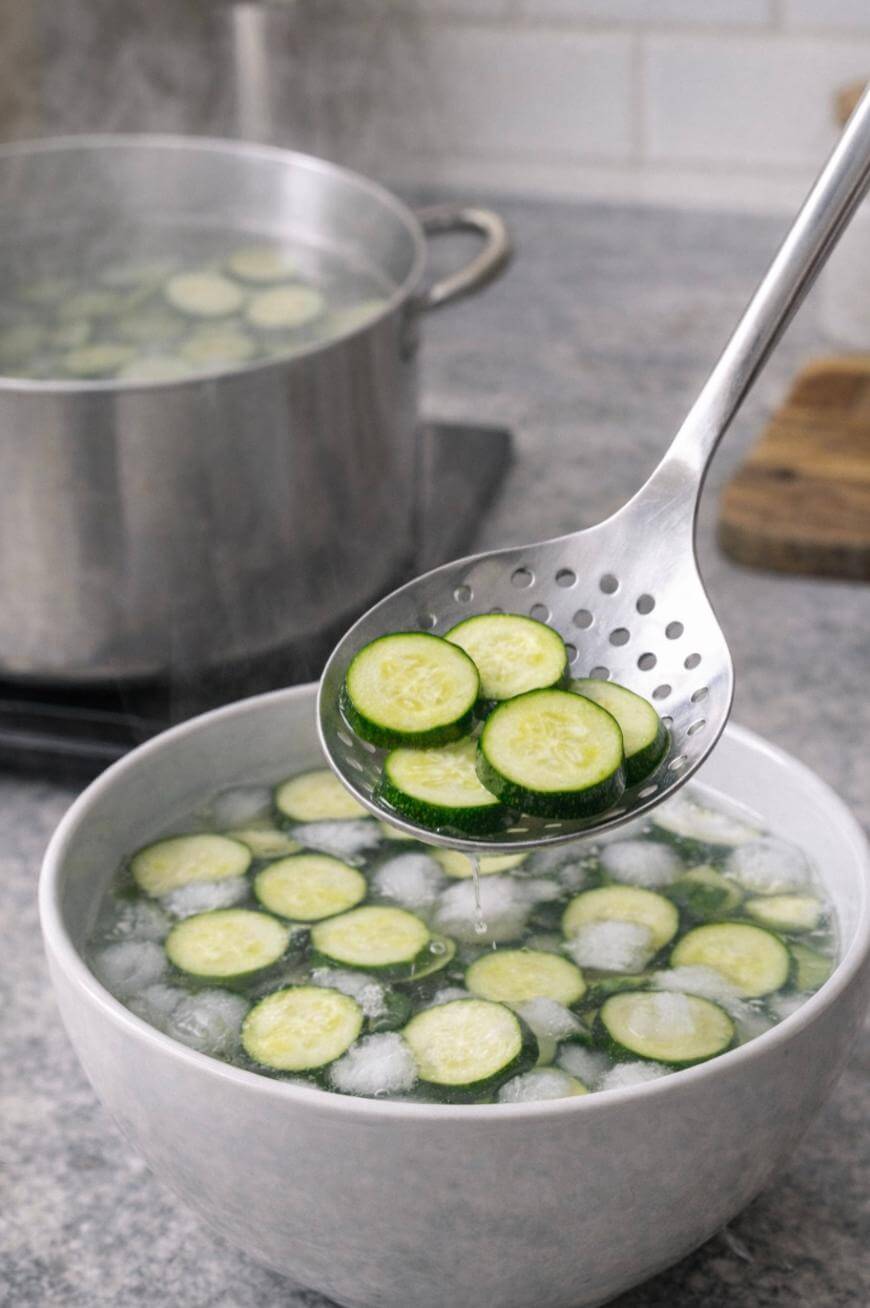
8. Shock In Ice Water Immediately
Move zucchini straight from boiling water into ice water for the same amount of time you blanched it.
This step prevents “carryover cooking,” which is a major cause of mushy thawed zucchini.
9. Drain And Dry Very Well
Drain in a colander, then pat dry with clean towels or paper towels.
If you skip drying, you’ll freeze extra water into ice crystals and end up with a watery puddle when thawed.
10. Pre-Freeze On A Tray To Prevent Clumps
Spread pieces in a single layer on a parchment-lined baking sheet and freeze for 1–2 hours.
This “flash freeze” keeps pieces separate so you can pour out only what you need later.
11. Bag And Label Smartly
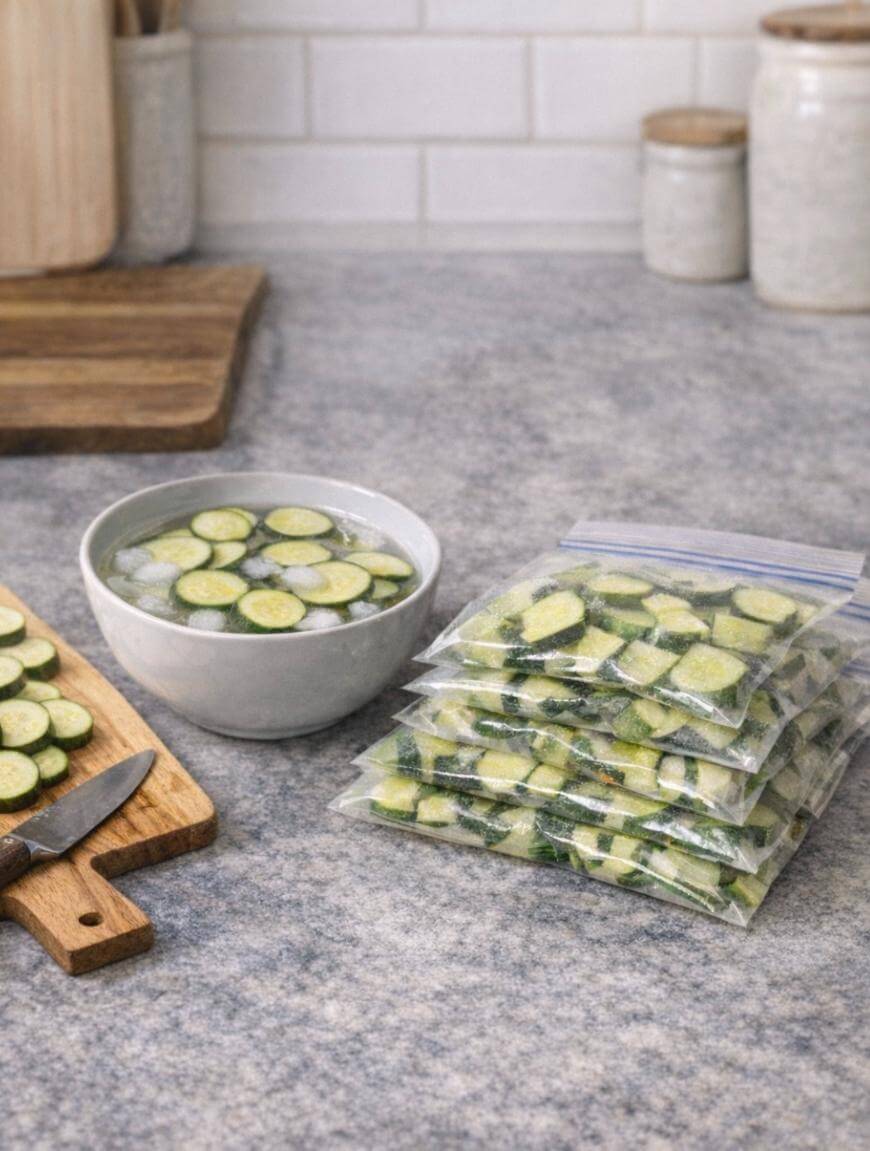
Transfer to freezer bags or containers, press out as much air as possible, and label with the date and cut size.
A practical portion is 2 cups per bag for soups or meal prep, because it’s easy to dump into a pot.
12. Freeze Flat For Easy Storage
Lay bags flat until frozen solid, then stack them like folders.
Flat bags freeze faster, take up less space, and thaw more evenly.
Get the exact measurements and step-by-step instructions in the recipe card below.
How to Freeze Zucchini
A simple step-by-step method for freezing fresh zucchini by blanching, shocking, and flash-freezing so it stays flavorful and freezer-burn free for up to 3 months.
Ingredients
- 2 pounds zucchini, medium and firm
- Water, for blanching
- Ice, for the ice bath
Instructions
- Wash and dry the zucchini, then decide whether to peel (optional).
- Slice into 1/4-inch rounds or cut into 1/2-inch chunks, keeping pieces uniform.
- Bring a pot of water to a boil and set up a large bowl of ice water alongside it.
- Blanch slices for 1 minute or chunks for 2 minutes, timing from when the water returns to a boil.
- Immediately transfer to the ice water for the same amount of time to stop the cooking.
- Drain in a colander, then pat very dry with clean towels or paper towels.
- Spread in a single layer on a parchment-lined baking sheet and freeze for 1 to 2 hours.
- Transfer to freezer bags, press out excess air, label with the date, and lay flat until frozen solid.
Notes
Dry the zucchini thoroughly before freezing to prevent ice crystals and a watery texture when thawed. Use within about 3 months for best quality.
Nutrition Information:
Yield:
6Serving Size:
1 cupAmount Per Serving: Calories: 20Total Fat: 0gSaturated Fat: 0gSodium: 5mgCarbohydrates: 4gFiber: 1gSugar: 2gProtein: 1g
This site provides estimated nutritional information. This information comes from online calculators. Although we try to provide accurate nutritional information, these figures are only estimates.
Freezing Shredded Zucchini (Best For Muffins, Bread, Pancakes)
13. Shred And Measure First
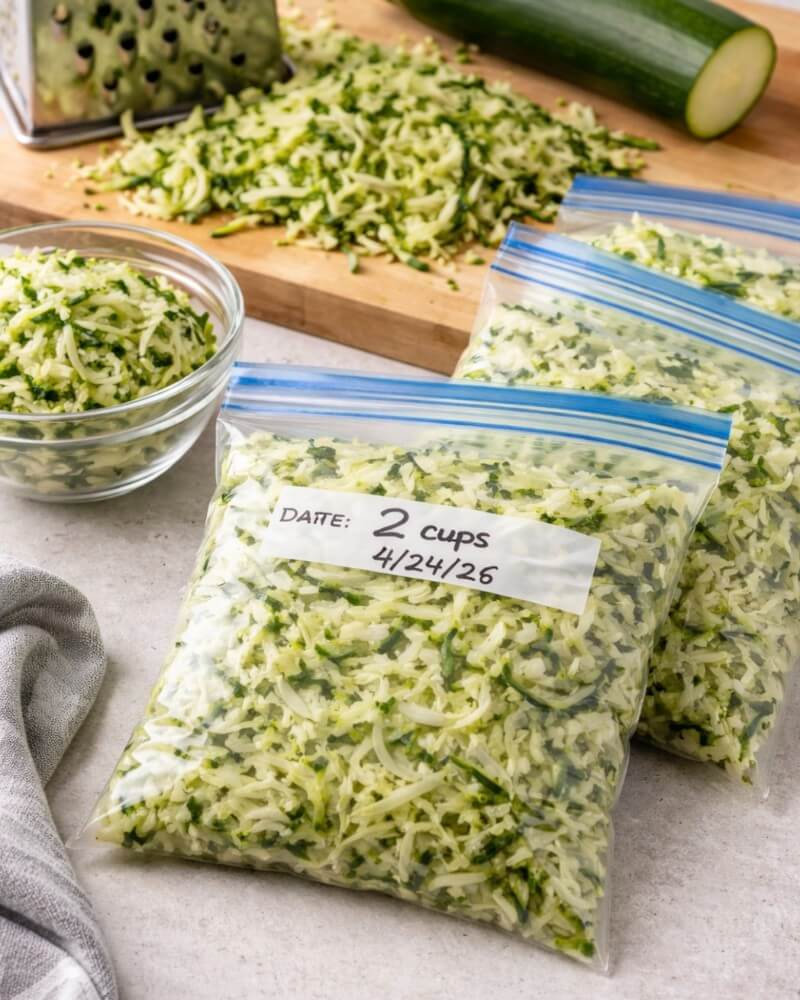
Shred zucchini using the large holes on a box grater, then measure into 1-cup or 2-cup portions.
Portioning now saves you from thawing too much later and dealing with extra water.
14. Decide Whether To Squeeze Moisture
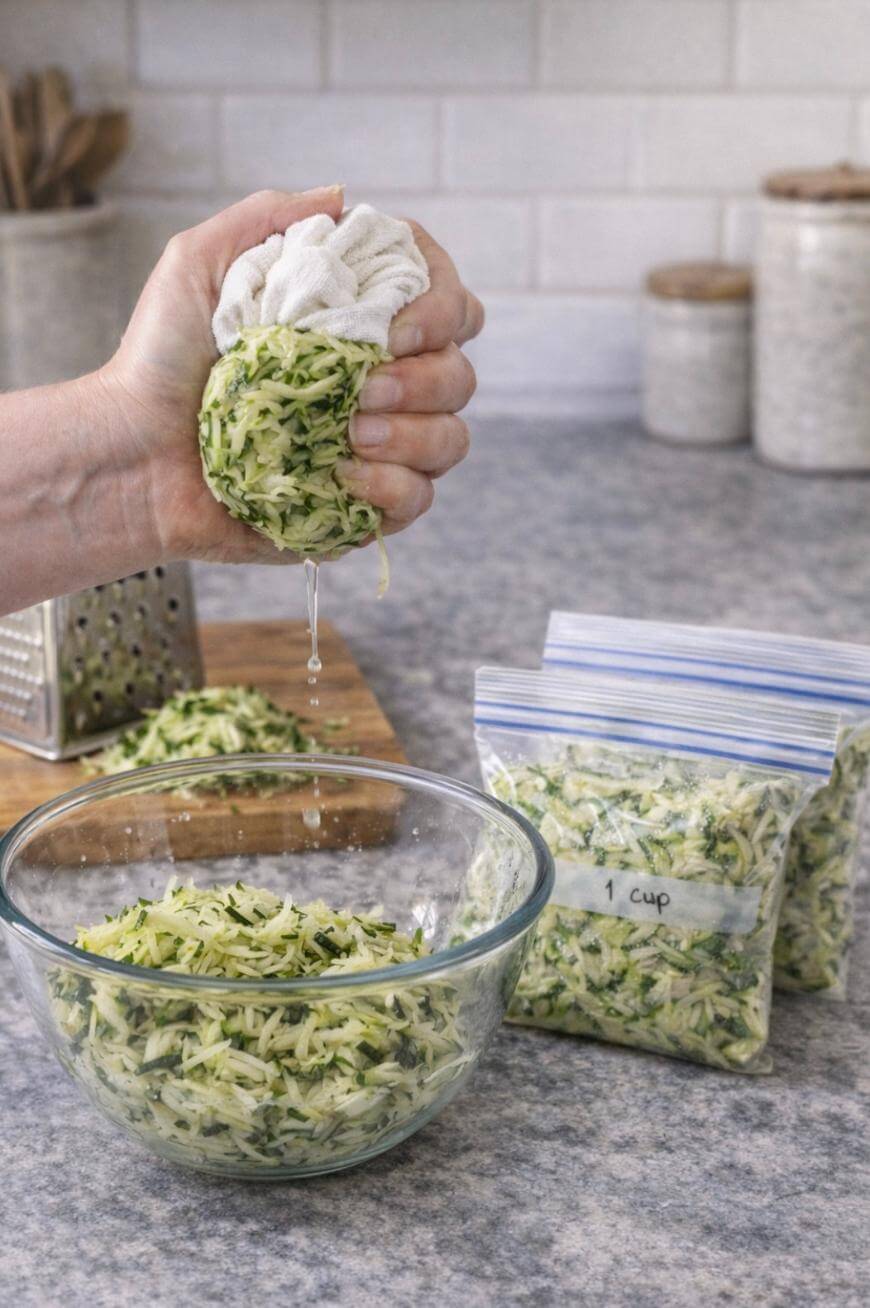
For baking, squeeze out moisture using a clean towel so your batter doesn’t turn watery.
For soups or sauces, you can skip squeezing because that liquid can blend right in.
15. Freeze In “Recipe-Ready” Packs
Put each portion into a freezer bag, flatten it, and write the amount on the front.
If you bake often, freezing in 1-cup packs is the most convenient “grab and dump” setup.
16. Consider Muffin Tins For Mini Portions
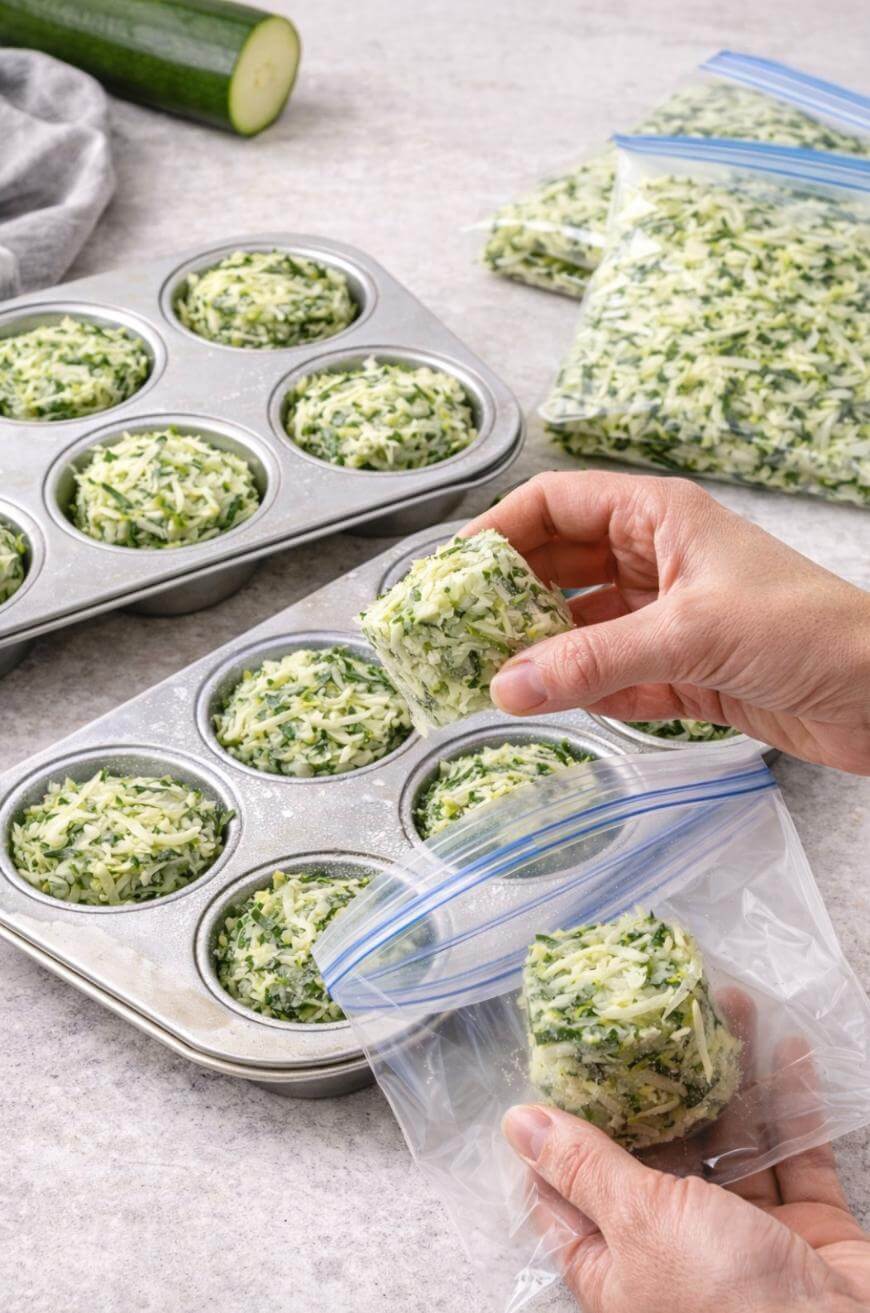
If you want small amounts (like for smoothies or oatmeal bakes), pack shredded zucchini into muffin cups, freeze, then pop out and bag.
This gives you quick portion control without repeatedly opening and closing a big bag.
Freezing Zucchini Noodles And Spear Cuts (Tricky, But Doable)
17. Freeze Zoodles Only If You’ll Cook Them Into Something
Zucchini noodles get soft after freezing, so they’re best for casseroles, soups, or sautés where texture isn’t the star.
If you want “al dente” zoodles, fresh is better, but frozen zoodles still work well in saucy dishes.
18. Salt And Drain Zoodles Before Freezing
Toss zoodles with a small pinch of salt, let sit 10–15 minutes, then squeeze dry.
Removing water before freezing reduces the mush factor and makes them more usable later.
19. Freeze Spears For Grilling-Style Meals
Cut zucchini into spears, blanch for about 2 minutes, dry well, and freeze flat.
When you cook, treat them like a quick sauté or sheet-pan roast, not a crisp grilled veggie.
How To Thaw And Use Frozen Zucchini Without The Soggy Mess
20. Cook From Frozen When You Can
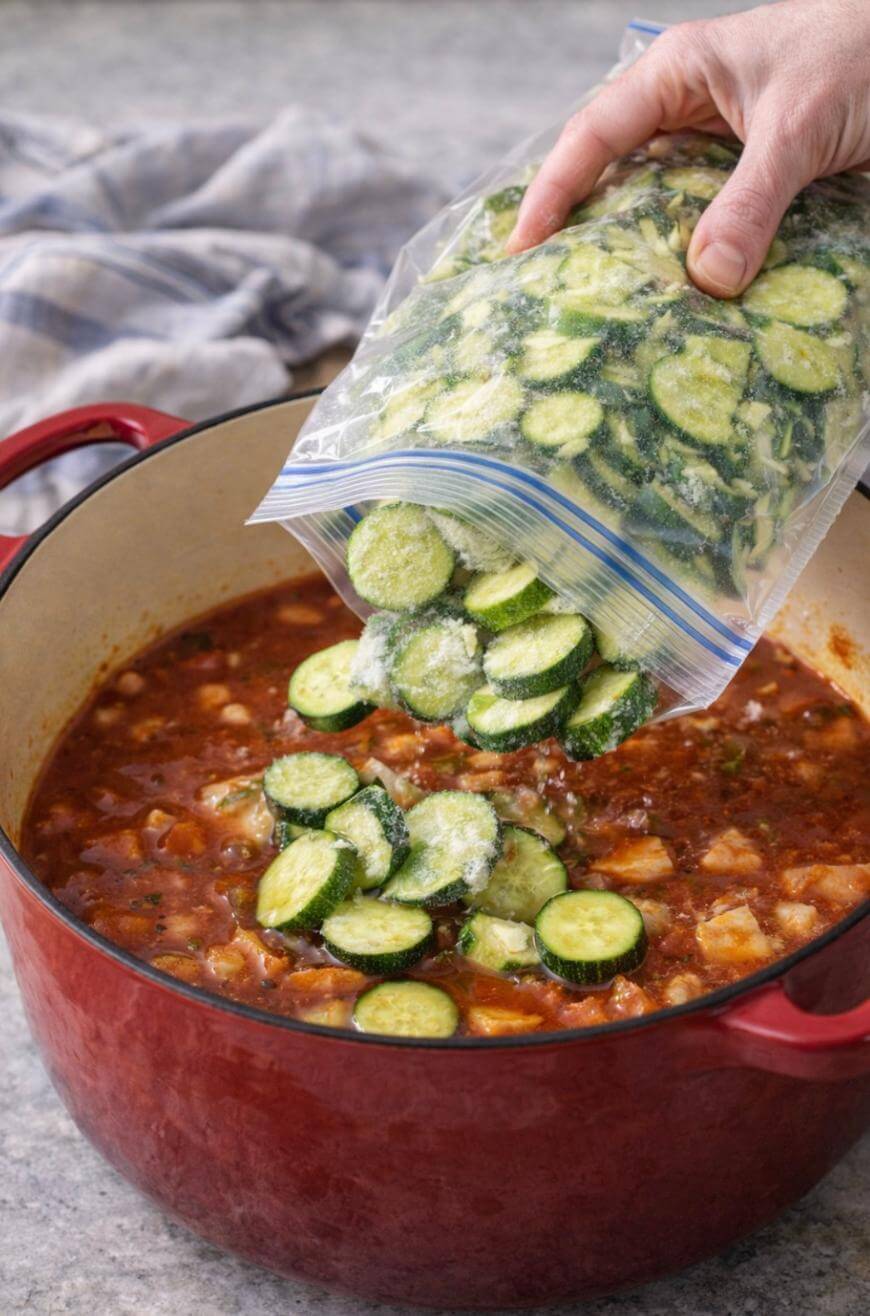
For soups, sauces, casseroles, and stir-fries, you can usually add frozen zucchini straight to the pan or pot.
Skipping thawing reduces water release and helps you keep better texture.
21. Thaw In The Fridge For Baking Portions
Move a portion to the fridge overnight, then squeeze again if you see extra liquid.
A good baking trick is to drain thawed shredded zucchini in a fine mesh strainer for 5 minutes before using.
22. Manage The Extra Water On Purpose
Zucchini releases water after freezing, so plan for it by reducing other liquids in your recipe.
If your soup calls for 4 cups broth, try starting with 3 cups and adding more only if you need it.
23. Use High Heat To Improve Texture
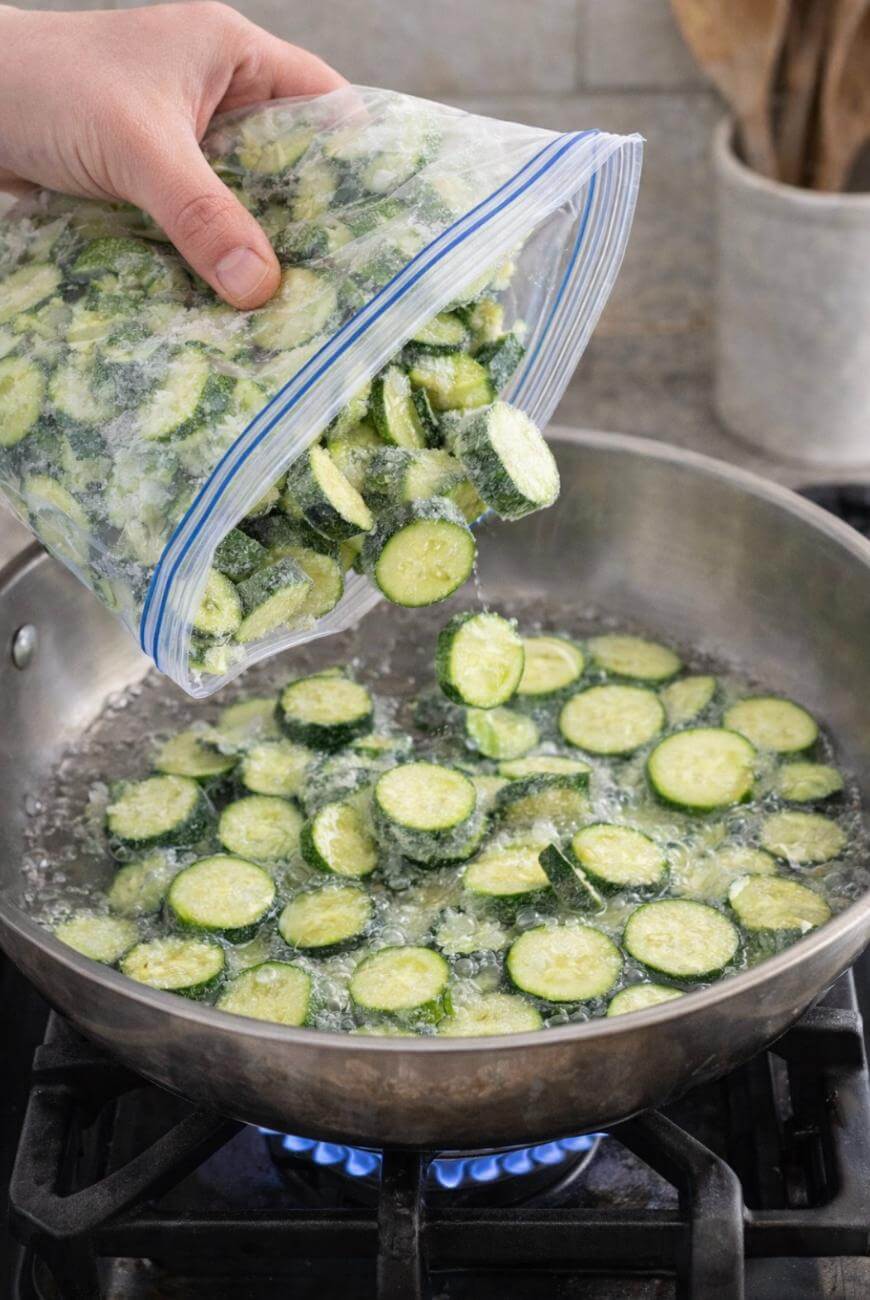
When sautéing frozen zucchini, use medium-high to high heat and don’t crowd the pan.
Crowding steams it, while high heat helps moisture evaporate faster.
Storage, Safety, And Quality Tips
24. Follow A Simple Freezer Timeline
For best quality, use frozen zucchini within 3 months, though it can stay safe longer if kept consistently frozen.
Labeling with the date is the easiest way to avoid mystery bags that get ignored.
25. Prevent Freezer Burn
Remove as much air as possible from bags, and keep zucchini in the back of the freezer where temperature is most stable.
If you freeze often, consider a vacuum sealer for the best texture and longest quality.
Key Takeaways
Blanch sliced or chunked zucchini for 1–2 minutes before freezing for the best texture.
Shred, squeeze, and freeze in 1-cup or 2-cup portions for baking.
Dry zucchini well before freezing to reduce ice crystals and watery thawing.
Freeze flat bags for faster freezing, easier stacking, and quicker thawing.
Cook from frozen for soups and sautés to avoid extra sogginess.
Use within about 3 months for best flavor and texture.
FAQ
Can You Freeze Zucchini Without Blanching?
Yes, you can freeze zucchini without blanching, but it will usually be softer and release more water when thawed. It works best for soups, sauces, and baking where texture matters less.
Why Is My Frozen Zucchini Mushy?
Frozen zucchini turns mushy mainly because of its high water content and because it wasn’t blanched, dried, or frozen quickly enough. Blanching briefly and drying well before freezing helps a lot.
How Do You Freeze Zucchini For Zucchini Bread?
Freeze shredded zucchini in measured portions, squeeze out moisture before freezing, and flatten bags for quick thawing. When you thaw it, squeeze again if it looks watery before adding to batter.
Can You Refreeze Zucchini After Thawing?
It’s best not to refreeze thawed zucchini because texture and quality drop fast and it can become very watery. If you thawed it in the fridge and cooked it, you can freeze the cooked dish instead.