Last updated: August 4, 2026
How to make popping boba is basically how you make little juice-filled spheres that “pop” when you bite them, using a process called spherification (a food-safe reaction between alginate and calcium).
Basic ingredients:
Most people should start with basic “direct spherification”: you mix sodium alginate into your flavored liquid, then drop it into a calcium lactate bath to form the skins.

How To Make Popping Boba At Home
1. Choose Your Liquid Base
Pick a flavorful liquid that’s smooth and not pulpy, because chunks can clog droppers and make misshapen spheres.
Good options include fruit juice, sweetened tea, sports drinks, or flavored syrups mixed with water.
2. Hit The Sweet Spot For Thickness
Your liquid needs to be thin enough to drop cleanly, but thick enough to form round spheres instead of wispy blobs.
A simple target is about the thickness of juice; if it’s very watery, you can slightly thicken it with a tiny amount of sugar syrup (or a pinch of xanthan gum if you already own it).
3. Avoid High-Calcium Liquids (Or Adjust)
Milk and calcium-fortified juices can react too fast with alginate and cause clumping.
If you want a creamy flavor, make the popping boba with a water-based flavor first and add the creamy element to the drink later.
4. Blend Sodium Alginate Into Your Flavored Liquid
Use sodium alginate to create the gelling ability in your juice base.
A reliable starting point is 0.5% to 1.0% alginate by weight, which is about 0.5–1.0 grams per 100 grams of liquid.
5. Blend Thoroughly Without Foaming It Up
Alginate needs strong blending to dissolve, but lots of bubbles can create floating boba and weird skins.
Blend for 30–60 seconds, then let it rest so bubbles rise and pop.
6. Let The Alginate Mixture Rest
Resting helps the mixture fully hydrate and gives you smoother spheres.
A practical rest time is 15–30 minutes in the fridge, or until most bubbles disappear.
7. Mix Your Calcium Bath
Your calcium bath is what “sets” the outside of each sphere when your alginate liquid hits it.
Use calcium lactate (milder taste than calcium chloride) at 2% to 5% by weight, which is 2–5 grams per 100 grams of water.
8. Use Cold Water For A Cleaner Set
Cold water slows things down slightly, which helps shape consistency.
Aim for cool tap water or lightly chilled water, especially if you’re new to the technique.
9. Pick A Tool That Makes Even Drops
A squeeze bottle, syringe, small measuring spoon, or dropper all work, but you’ll get the most uniform spheres with a squeeze bottle or syringe.
If you want classic boba-size pops, choose a tip opening that makes spheres around 8–10 mm.

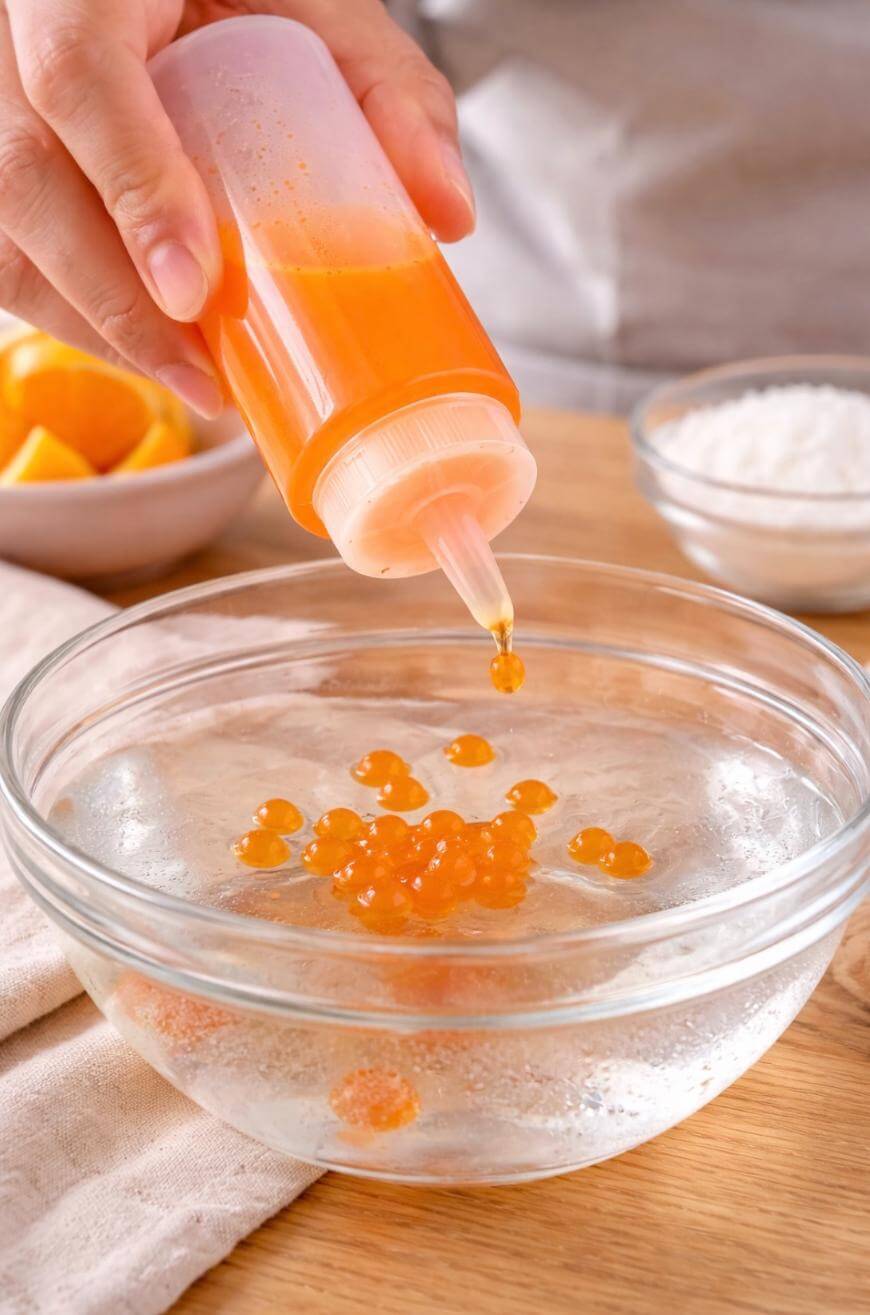
10. Drop The Alginate Liquid Into The Calcium Bath
Hold the tool close to the surface so the drops don’t splatter and deform.
Drop steadily and give each sphere a bit of space so they don’t stick together.
11. Gently Stir The Bath While Dropping
Light movement keeps spheres from settling and sticking to the bottom.
Stir slowly with a spoon in one direction, and avoid creating a whirlpool.
12. Time The Set For A “Pop” Center
This is the key to popping boba: you want a thin membrane, not a fully gelled ball.
A great starting timing is 45–90 seconds in the calcium bath, then adjust based on your size and how “poppy” you want them.

13. Scoop Out The Spheres Carefully
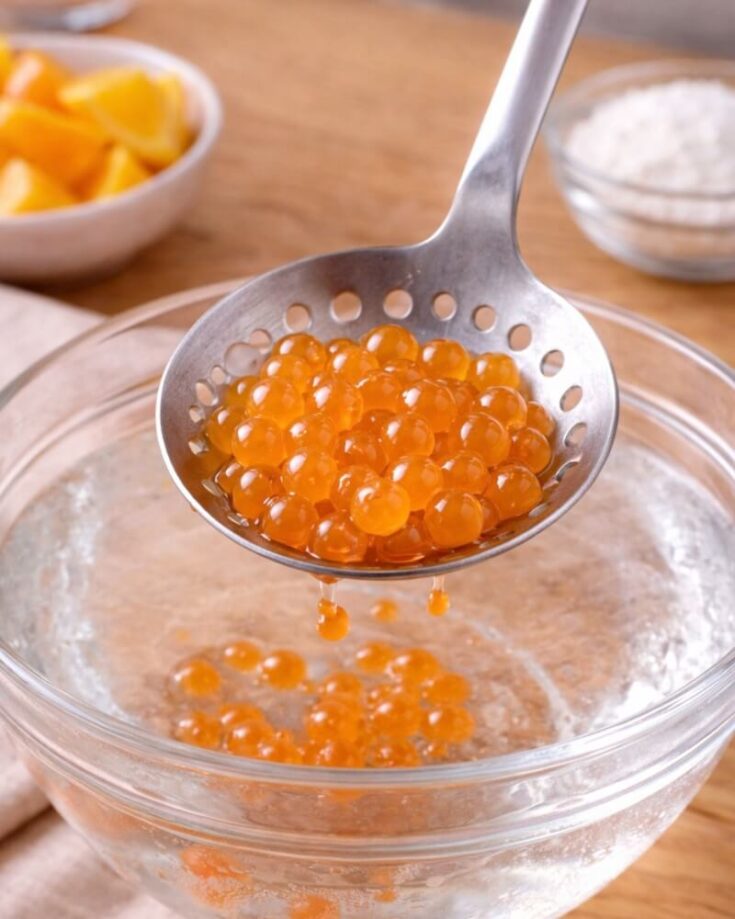
Use a slotted spoon or small strainer to lift them out without tearing the skins.
Avoid dumping the bath because the force can break delicate membranes.
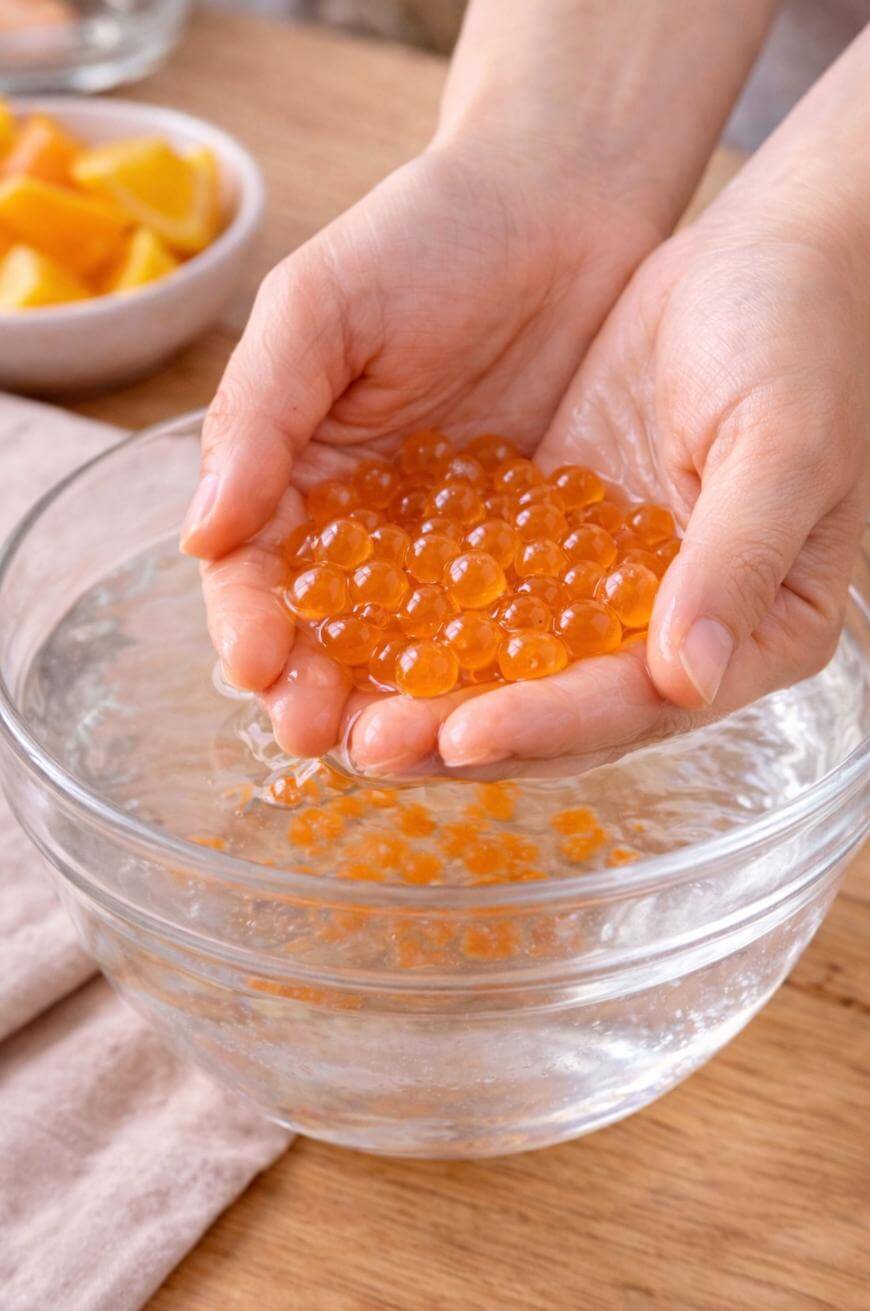
14. Rinse In Clean Water Immediately
Rinsing stops the reaction and washes off any calcium taste.
Swirl the boba in a bowl of clean water for 30–60 seconds, then strain.
15. Taste-Test And Adjust The Next Batch
If they’re too soft and rupture easily, increase bath time by 15 seconds.
If they’re too firm all the way through, reduce bath time or slightly lower alginate concentration.

How To Keep Them From Turning Into Gel Balls
16. Serve Them Soon For The Best “Pop”
Direct spherification keeps gelling over time, so the centers slowly firm up.
For the most dramatic burst, serve within 30–60 minutes.
17. Store Them In A Matching Flavored Syrup
If you must store them, keep them submerged in a liquid that matches the flavor (like sweetened juice) so they don’t dry out or dilute.
Still, expect them to get less “poppy” the longer they sit.
18. Avoid Storing Them In Plain Water
Plain water pulls flavor out of the spheres and makes them taste weak fast.
If you need a holding liquid, use sweetened juice or simple syrup diluted with water.

Common Problems And Quick Fixes
19. If Your Mixture Won’t Gel
This usually means your alginate didn’t dissolve, your bath is too weak, or your liquid is too acidic.
Try blending longer, increasing calcium lactate slightly, or adding a tiny pinch of baking soda to raise pH if you’re working with very tart citrus juice.
20. If You Get Weird “Tails” Or Comet Shapes
Drops falling from too high can stretch into tails before they set.
Hold the dropper closer to the surface and slow your squeeze slightly.
21. If They Stick Together
This happens when spheres touch before the skins are strong enough.
Drop in smaller batches and gently stir, or increase bath time by a small amount so the membranes firm up faster.
22. If They Float And Set Wrong
Too many bubbles in the alginate liquid can make the drops float and deform.
Rest longer, skim foam, or tap the container to release bubbles before dropping.
Budget And Shopping Notes
23. Basic Ingredient Cost Range
A beginner setup typically costs $15–$35 total for the additives, depending on brand and size.
Once you have alginate and calcium lactate, each batch is very inexpensive because you use grams at a time.
24. Tools You Probably Already Have
You can make popping boba with a blender, a bowl, a strainer, and a squeeze bottle.
If you don’t have a squeeze bottle, a plastic condiment bottle is a cheap upgrade that makes spheres far more consistent.
Best Ways To Use Popping Boba
25. Add It To Drinks Without Crushing It
Pour your drink first, then spoon the spheres in last so ice and aggressive stirring don’t break them.
If you’re making multiple servings, portion the boba into cups before adding fizzy liquids to reduce bursting.
26. Pair Flavors With A Simple Rule
A reliable pairing is one bright fruit + one creamy or floral note, like mango + coconut or strawberry + vanilla.
This keeps the drink tasting “finished” instead of like random sweetness.
Homemade Popping Boba
Learn how to make popping boba at home using basic spherification: flavored liquid mixed with sodium alginate, dropped into a calcium lactate bath to form juice-filled spheres that pop in your mouth.
Ingredients
- 1 cup flavored liquid (fruit juice, sweetened tea, or flavored syrup mixed with water), smooth and not pulpy
- 0.5-1 gram sodium alginate per 100 grams liquid (about 1/2 to 1 teaspoon per cup)
- 2-5 grams calcium lactate per 100 grams cold water (about 1-2 teaspoons per cup)
- 2 cups cold water, for the calcium bath
- 1 cup plain water, for rinsing
Instructions
- Blend the sodium alginate into the flavored liquid for 30-60 seconds until fully dissolved, then let it rest until the bubbles settle.
- Mix the calcium lactate into the cold water to make the calcium bath.
- Using a squeeze bottle or syringe, drop the alginate liquid into the calcium bath one drop at a time, gently stirring the bath while you work.
- Let the spheres set in the bath for 45-90 seconds for a thin membrane and liquid center.
- Scoop the popping boba out with a slotted spoon and rinse gently in plain water.
- Serve right away in drinks or desserts, or store in a light syrup in the fridge for up to a day.
Notes
Sodium alginate and calcium lactate are widely available online or at specialty baking/molecular gastronomy shops. Popping boba is best used within 1-2 days for the freshest pop.
Nutrition Information:
Yield:
8Serving Size:
2 tablespoonsAmount Per Serving: Calories: 20Total Fat: 0gCarbohydrates: 5gSugar: 4g
This site provides estimated nutritional information. This information comes from online calculators. Although we try to provide accurate nutritional information, these figures are only estimates.
Key Takeaways
Popping boba is made by dropping an alginate-flavored liquid into a calcium bath.
Start with 0.5%–1.0% sodium alginate in your juice base.
Use 2%–5% calcium lactate in water for the setting bath.
Set for about 45–90 seconds for a thin skin and liquid center.
Rinse for 30–60 seconds to stop the reaction and remove calcium taste.
Serve within 30–60 minutes for the best “pop.”
FAQ
Can You Make Popping Boba Without Sodium Alginate?
No, not the classic popping boba texture. Sodium alginate (or a similar hydrocolloid system) is what creates the membrane and liquid center.
Why Did My Popping Boba Turn Solid Inside?
It sat too long after making it or stayed too long in the calcium bath. Serve sooner and shorten the bath time by 15–30 seconds.
Can You Use Calcium Chloride Instead Of Calcium Lactate?
Yes, but it can taste bitter if you don’t rinse well. Calcium lactate is usually easier for beginners because the flavor is milder.
How Long Can You Store Homemade Popping Boba?
You can store it for a few hours, but it won’t stay as “poppy.” For best results, keep it in sweetened juice and use it the same day.