Last updated: September 16, 2026
You can have a bowl of true Hungarian goulash on the table tonight, even though it tastes like it took a village to make. This recipe card below walks you through every step, and the notes here explain exactly why each one matters.

What Makes This Hungarian Goulash Different
Hungarian goulash is not the same dish as the thin, ground beef “goulash” many American kitchens grew up with.
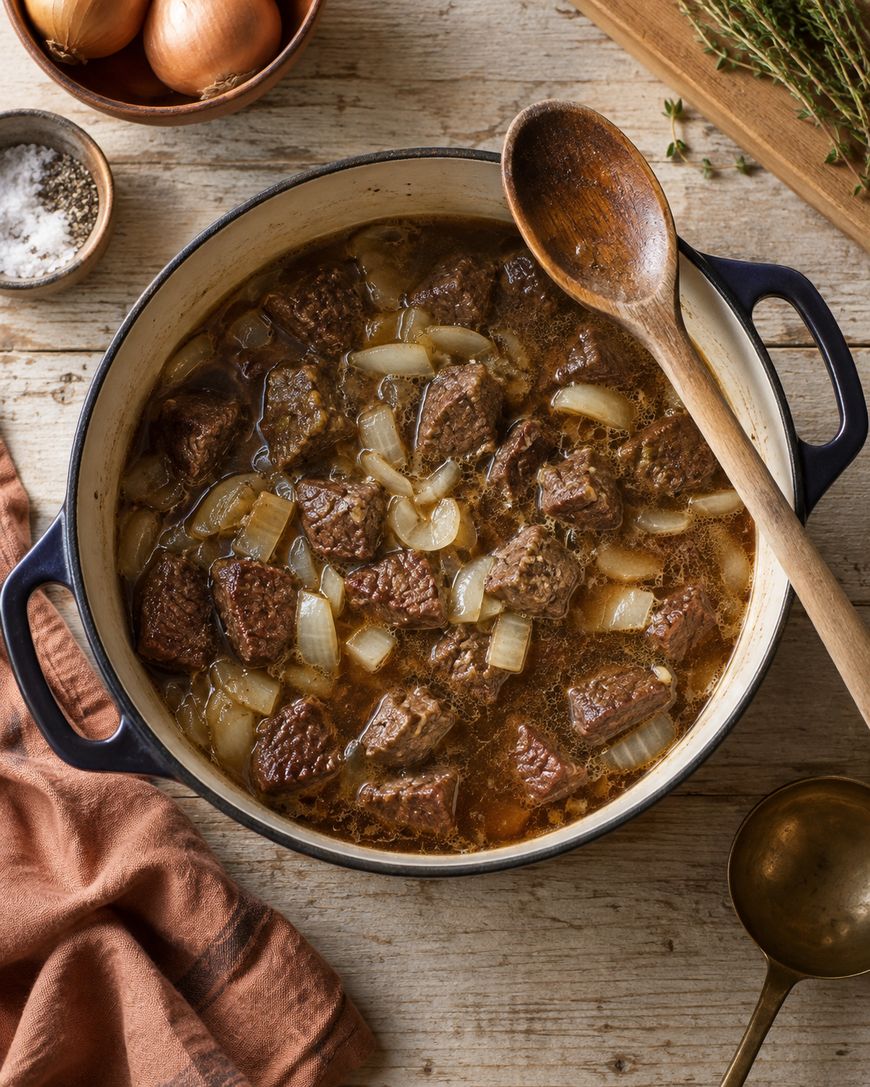
The real version is a slow braised beef stew built on sweet paprika, caramelized onions, and a handful of root vegetables. You want the onions cooked down until they nearly melt into the broth, since they are what gives this stew its body rather than a flour based thickener.

Chuck roast is the right cut here. It has enough connective tissue to turn silky and tender over a long simmer, while leaner cuts like sirloin would just turn tough and dry.
The Paprika Makes or Breaks This Dish
Sweet Hungarian paprika is the backbone of this goulash, so reach for a fresh tin rather than whatever has been sitting in the back of your spice cabinet for years.
Stale paprika turns dusty and bitter instead of sweet and deep red, and you will taste the difference immediately. Look for paprika labeled “Hungarian sweet” rather than smoked or hot paprika, since the flavor profile of this stew depends on that particular sweetness.

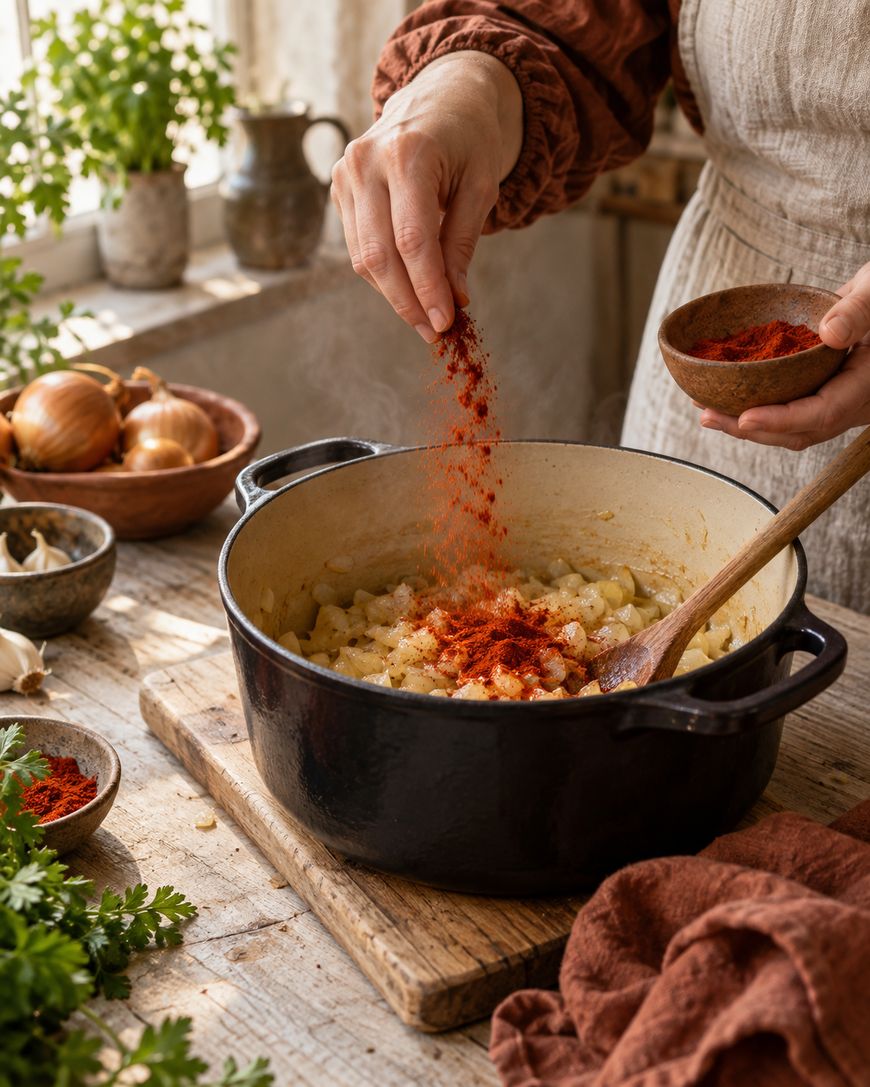
You add the paprika off the heat, right after the onions and garlic finish cooking. Paprika scorches fast in a hot pan, and scorched paprika turns bitter in a way you cannot cook out later.

Building the Stew Step by Step
Start by browning the beef cubes in batches so the pot stays hot enough to develop a real crust on the meat.
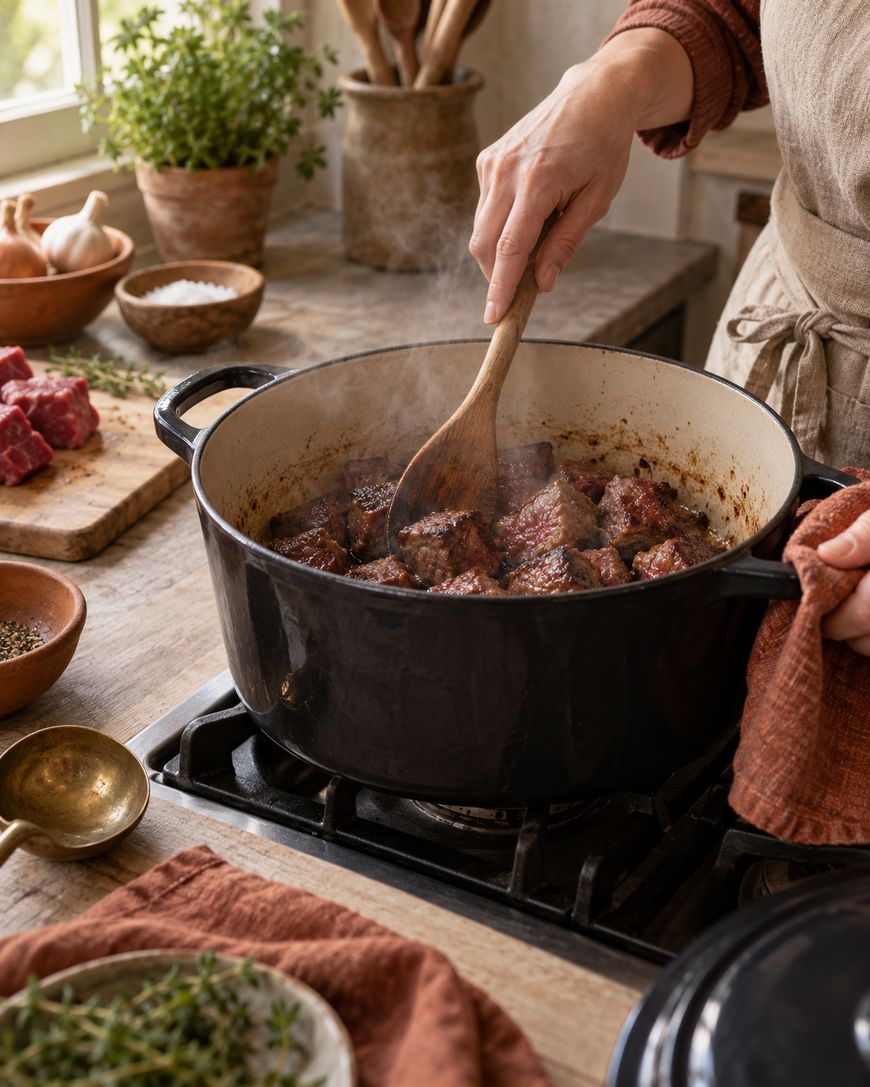
Crowding the pot steams the beef instead of searing it, so work in two or three batches and resist the urge to rush this part. Once the beef is browned and set aside, the onions go into the same pot to soak up all those browned bits left behind.
After the onions soften and the garlic turns fragrant, pull the pot off the heat before stirring in the paprika, caraway seeds, and tomato paste. This keeps the spices from burning against the hot pan.
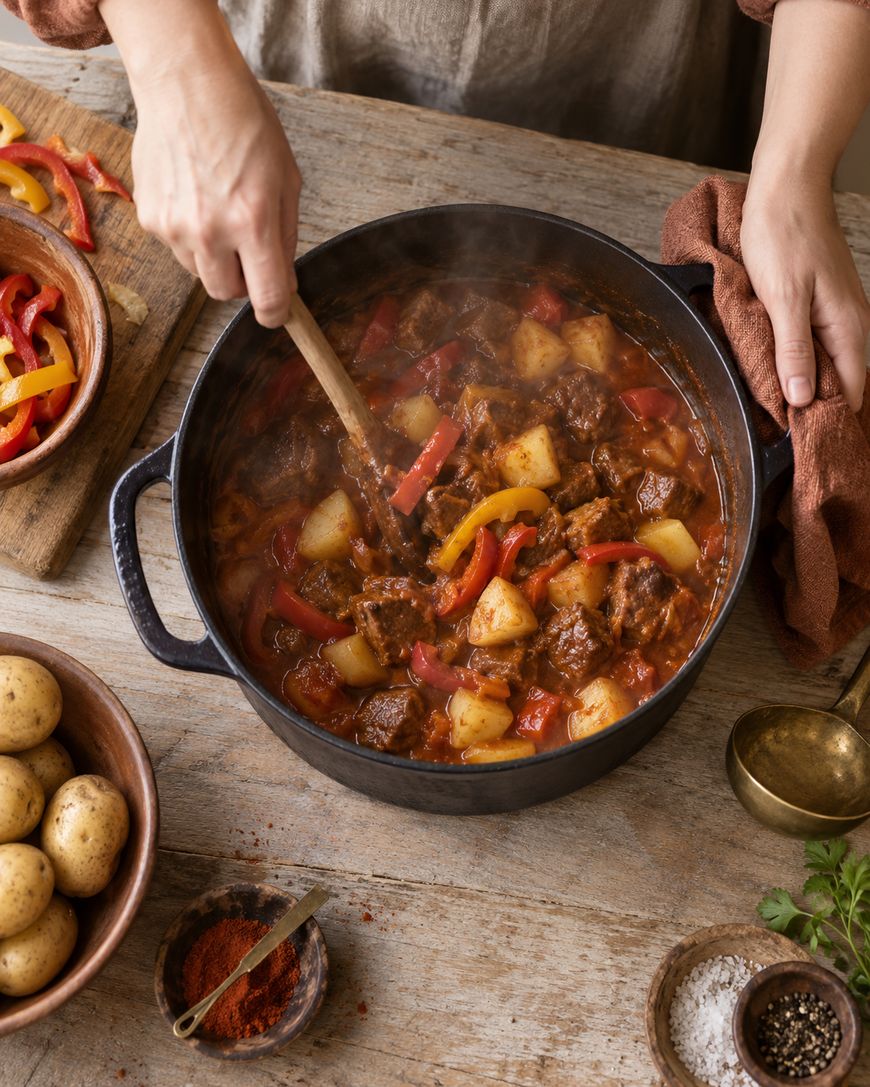
Return the beef to the pot, pour in the broth, and let everything simmer low and slow for about ninety minutes before the vegetables go in. Carrots and potatoes cook much faster than the beef does, so adding them too early leaves you with mushy vegetables by the time the meat is finally tender.
Ingredient Notes and Substitutions
Bell peppers add sweetness and a bit of texture, and a mix of red and yellow keeps the color as vibrant as the paprika itself.

Yukon Gold potatoes hold their shape better than a starchier russet, which matters since you want distinct chunks of potato rather than a stew that thickens into mush. Caraway seeds are traditional and add a subtle anise note, though you can leave them out if you do not have them on hand.
If you want a lower carb version, swap the potatoes for a diced turnip or extra carrots, and the stew still holds together beautifully. Beef broth gives the deepest flavor, though a good quality beef bone broth works well too if that is what your pantry has.

Storage, Make Ahead, and Freezing
This Hungarian goulash keeps beautifully in the refrigerator for up to four days in an airtight container.

The flavor actually improves overnight as the paprika and onions continue to meld into the broth, so leftovers the next day may taste even better than the first bowl. Reheat gently on the stovetop over medium low heat, adding a splash of broth or water if the stew has thickened more than you like.
You can freeze this goulash for up to three months in a freezer safe container. Thaw it overnight in the refrigerator before reheating, since the potatoes hold their texture better with a slow thaw rather than a quick one in the microwave.
Ready to Cook This Hungarian Goulash
Use the recipe card below for the exact measurements and step by step instructions, from browning the beef to the final simmer.

Classic Hungarian Goulash
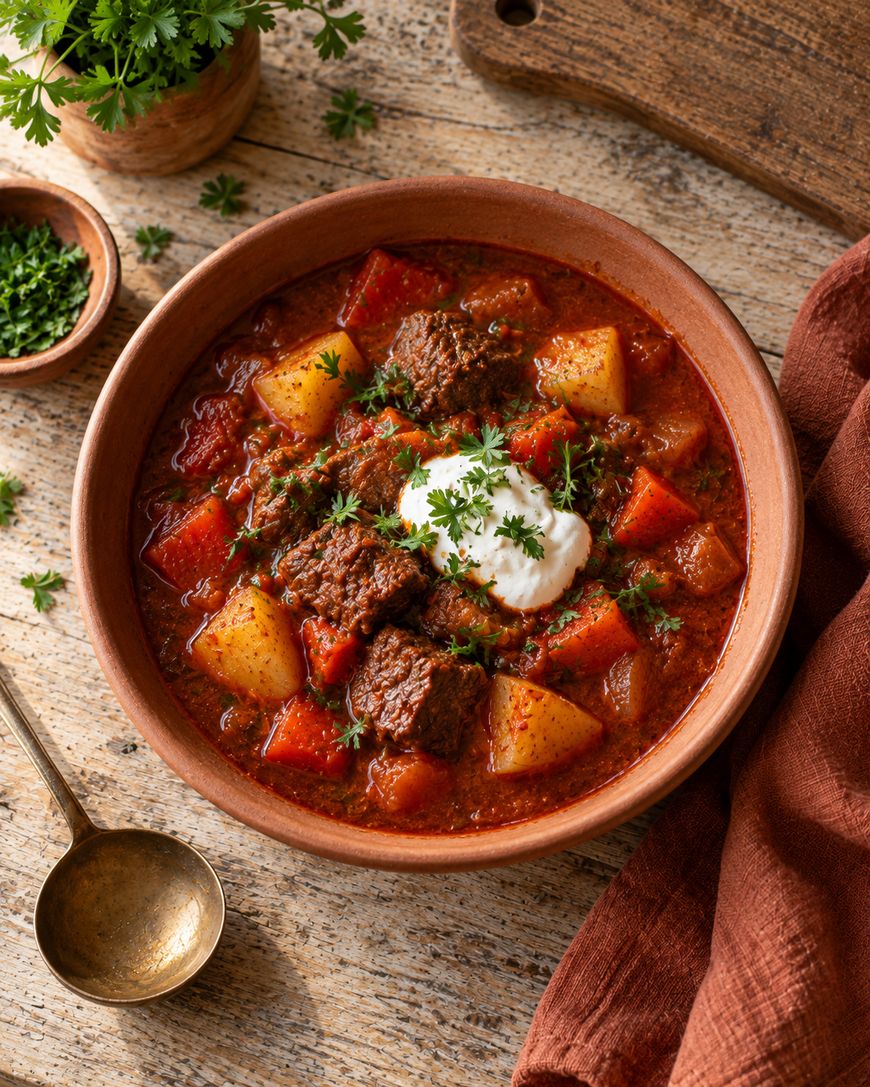
A rich, paprika-spiced Hungarian beef stew simmered low and slow with peppers, carrots, and potatoes until the beef turns fork-tender.
Ingredients
- 2 pounds beef chuck roast, cut into 1-inch cubes
- 2 tablespoons vegetable oil
- 2 large yellow onions, diced
- 4 cloves garlic, minced
- 3 tablespoons Hungarian sweet paprika
- 1 teaspoon caraway seeds
- 1 tablespoon tomato paste
- 1 red bell pepper, diced
- 1 yellow bell pepper, diced
- 2 medium carrots, sliced
- 2 medium Yukon Gold potatoes, cubed
- 4 cups beef broth
- 1 bay leaf
- 1 teaspoon salt, plus more to taste
- 1/2 teaspoon black pepper
- 2 tablespoons fresh parsley, chopped, for serving
- Sour cream, for serving (optional)
Instructions
- Pat the beef cubes dry and season generously with salt and pepper.
- Heat the vegetable oil in a large Dutch oven over medium-high heat and brown the beef in batches, about 3 minutes per side, then set aside.
- Reduce heat to medium and add the onions to the pot, cooking until softened, about 5 minutes.
- Stir in the garlic and cook for 30 seconds until fragrant.
- Remove the pot from the heat and stir in the paprika, caraway seeds, and tomato paste until the onions are fully coated.
- Return the pot to the heat, add the browned beef back in, and pour in the beef broth.
- Add the bay leaf, bring to a simmer, then cover and cook on low heat for 1 hour 30 minutes.
- Stir in the bell peppers, carrots, and potatoes, and continue simmering uncovered for 45 minutes to 1 hour, until the beef and vegetables are tender.
- Remove the bay leaf and season with additional salt and pepper to taste.
- Ladle into bowls and top with fresh parsley and a dollop of sour cream before serving.
Notes
Store leftovers in an airtight container in the refrigerator for up to 4 days, or freeze for up to 3 months. Reheat gently on the stovetop, adding a splash of broth if the stew has thickened.
Nutrition Information:
Yield:
6Serving Size:
1.5 cupsAmount Per Serving: Calories: 420Total Fat: 18gSaturated Fat: 5gSodium: 780mgCarbohydrates: 28gFiber: 4gSugar: 6gProtein: 34g
Frequently Asked Questions
What is the difference between goulash and Hungarian goulash?
American goulash usually means ground beef simmered with tomatoes and macaroni, while Hungarian goulash is a paprika forward beef stew built on slow braised chuck roast. The two dishes share a name but little else in technique or flavor.
Can you make Hungarian goulash in a slow cooker?
Yes, brown the beef and cook the onions and spices on the stovetop first, then transfer everything to a slow cooker with the broth. Cook on low for six to seven hours, adding the potatoes and peppers during the last two hours so they do not turn to mush.
Why is my goulash broth thin instead of thick?
This goulash gets its body from well cooked onions and a long simmer rather than a flour or cornstarch thickener. If you want it thicker, mash a few of the cooked potato chunks against the side of the pot and stir them back in.
What should you serve with Hungarian goulash?
Egg noodles, boiled potatoes, or a thick slice of crusty bread all work well for soaking up the paprika rich broth. A simple cucumber salad on the side balances the richness of the stew nicely.
Can you use pork instead of beef?
Yes, pork shoulder makes a good substitute and is actually closer to some regional Hungarian versions of this stew. Follow the same method, though pork shoulder may need slightly less simmering time than beef chuck.
Is Hungarian goulash spicy?
Not typically, since sweet paprika carries warmth and depth rather than heat. If you want more kick, add a small amount of hot paprika or a pinch of cayenne along with the sweet paprika.
Why This Recipe Works
The long, low simmer is what turns tough chuck roast into fork tender bites without drying out the meat, and it gives the sweet paprika time to bloom fully into the broth rather than sitting on the surface as raw spice.
Cooking the onions down slowly before adding any liquid means they break apart and dissolve into the stew, building a naturally thick, silky broth without any flour or cornstarch. Removing the pot from the heat before adding the paprika protects its color and sweetness, since paprika burns easily and turns bitter the moment it scorches against hot metal.
Adding the potatoes and peppers partway through rather than at the very start keeps every vegetable distinct and properly cooked by the time the beef finally turns tender. Each step here exists to protect either the texture of the beef or the flavor of the paprika, which are the two things that make this Hungarian goulash worth the wait.
Bring This Hungarian Goulash to Your Table
This Hungarian goulash rewards patience with a bowl of rich, paprika laced comfort that tastes like it has been simmering in a Hungarian kitchen for generations.
Gather your chuck roast, a fresh tin of sweet paprika, and a few root vegetables, and let the pot do the rest of the work for you.
Try our American Goulash for a quicker weeknight take
Love hearty Eastern European flavors? Our Unstuffed Cabbage Rolls are a must