Last updated: September 15, 2026
You pour one batter into a pie dish and this impossible coconut pie separates itself into a crust, a custard center, and a toasted coconut top while it bakes.
The recipe card below has the exact measurements and steps, so you can follow along there while you read.
What Makes This Pie “Impossible”
The name comes from the way a single blended batter settles into three distinct layers as it bakes.
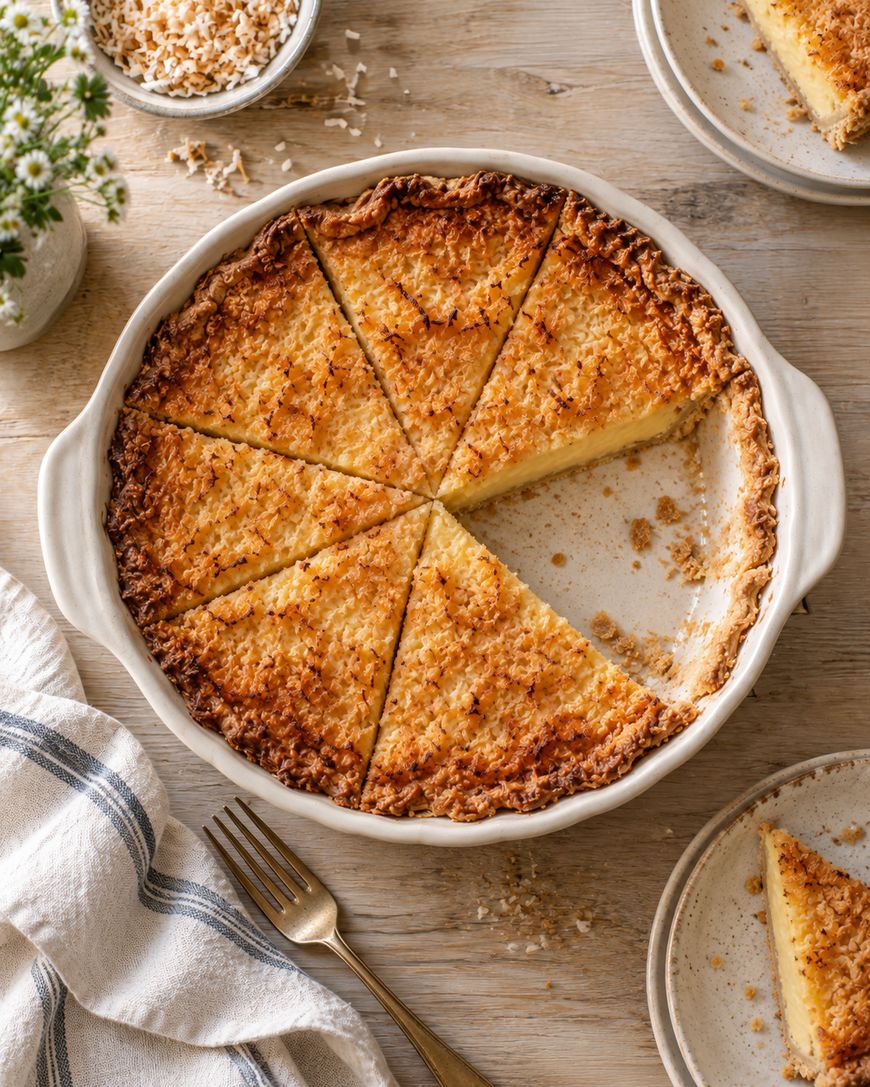
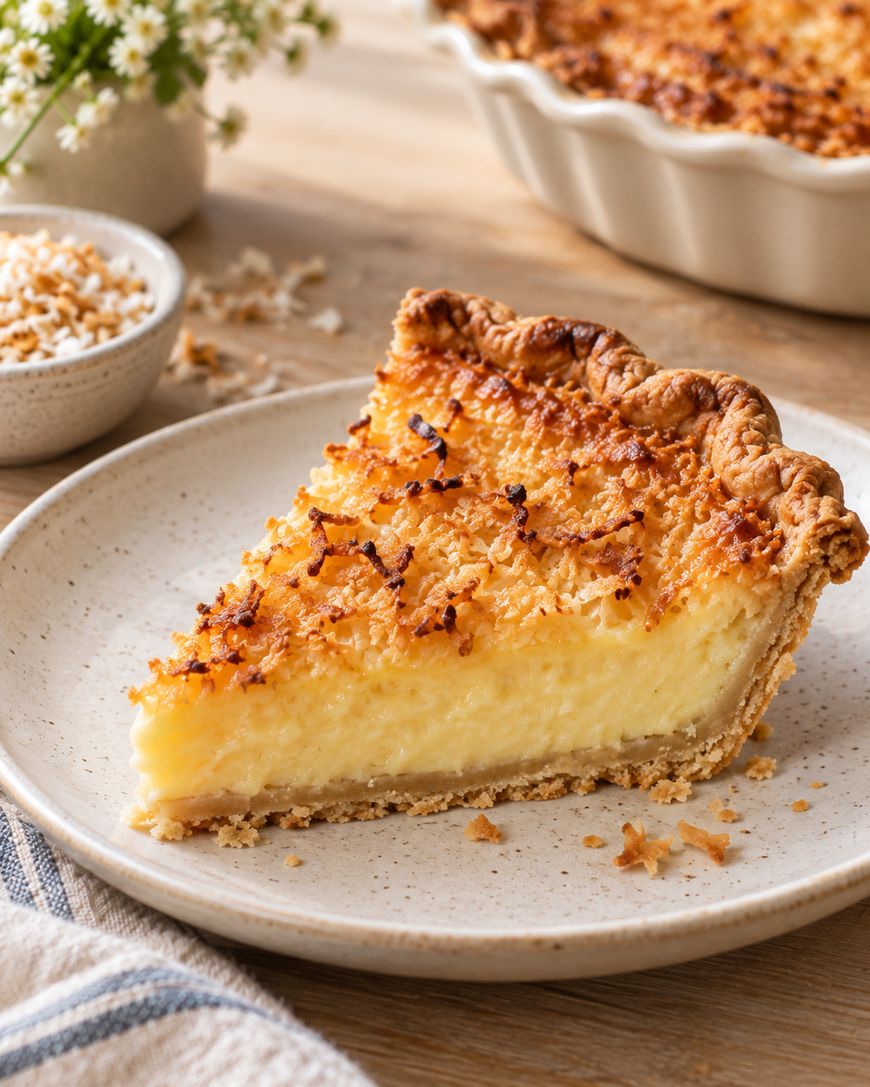
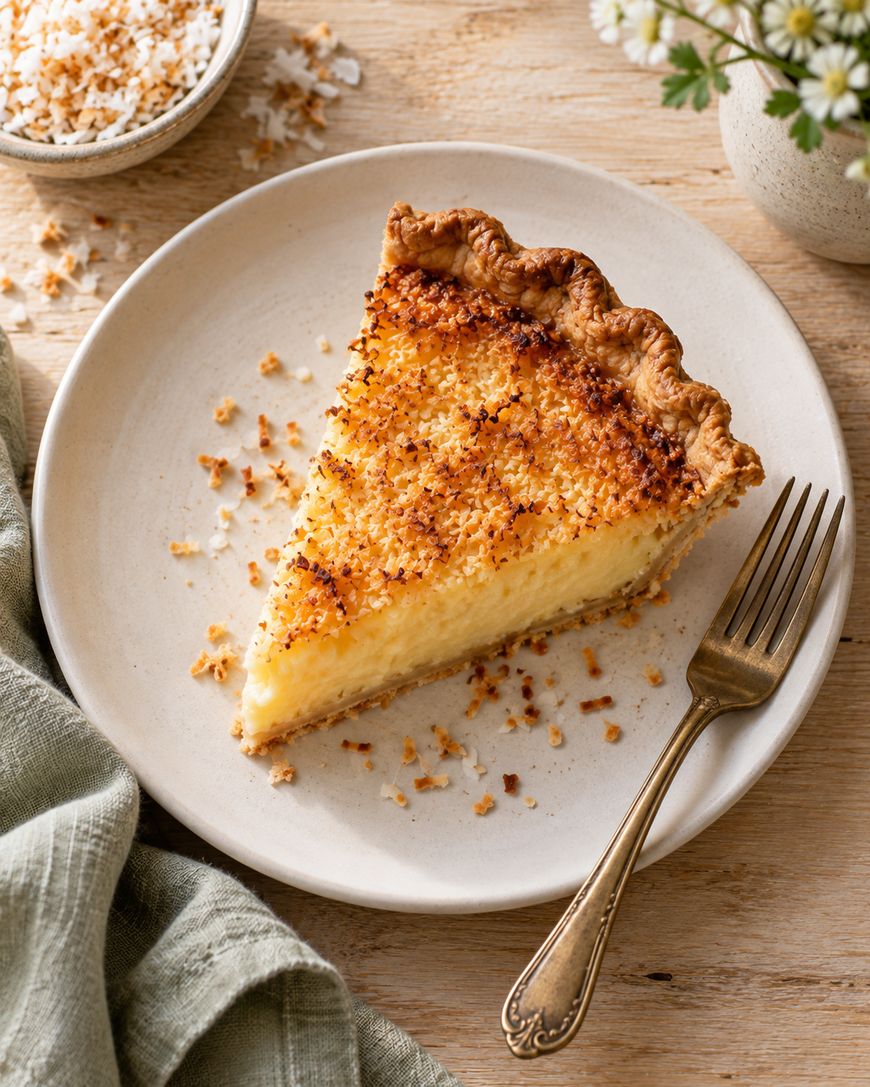
Flour sinks to the bottom and forms a soft crust, eggs and milk set into a custard in the middle, and shredded coconut floats to the top and turns golden.
You never touch a rolling pin or a pie weight for this impossible coconut pie, which is exactly why home cooks have leaned on it for decades when a normal pie crust feels like too much work.
The batter looks thin and almost soupy going into the oven, and that is normal.
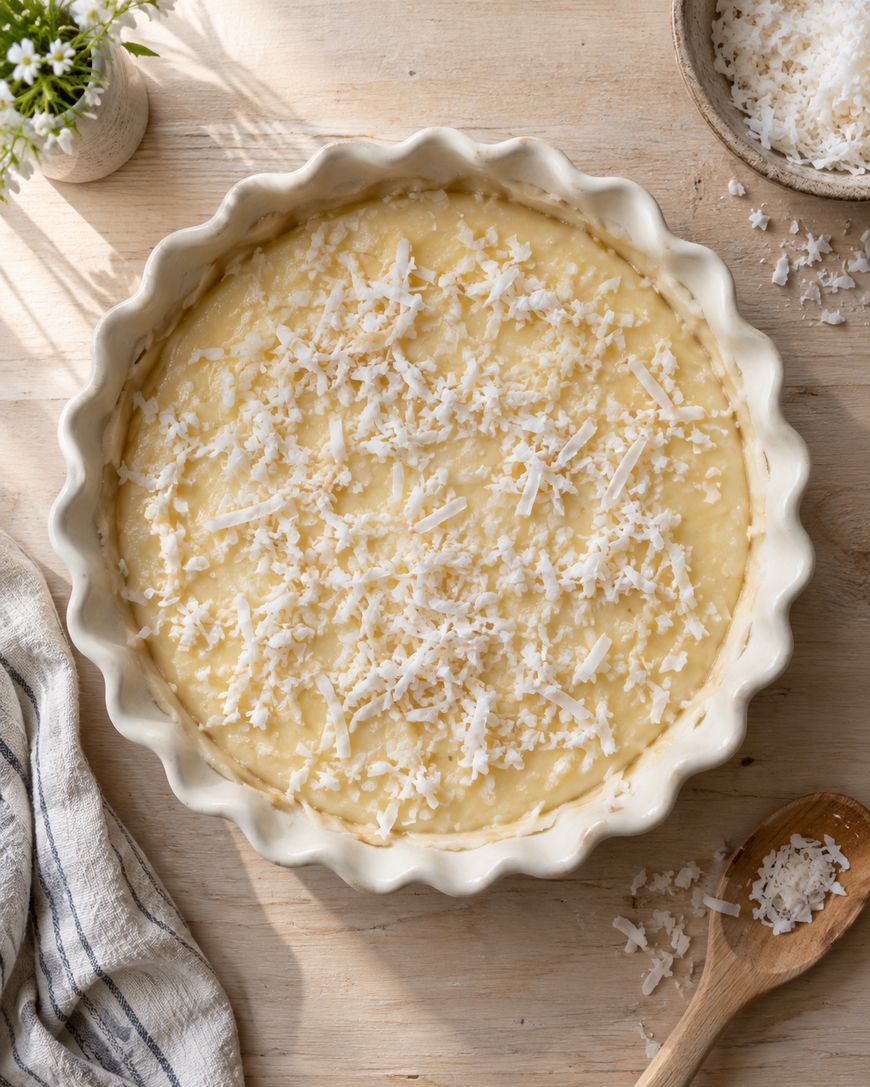
Trust the process here, because the transformation only happens once the heat gets to work on the eggs and flour.
The Ingredients You Need
This pie uses pantry staples you likely already have on hand.
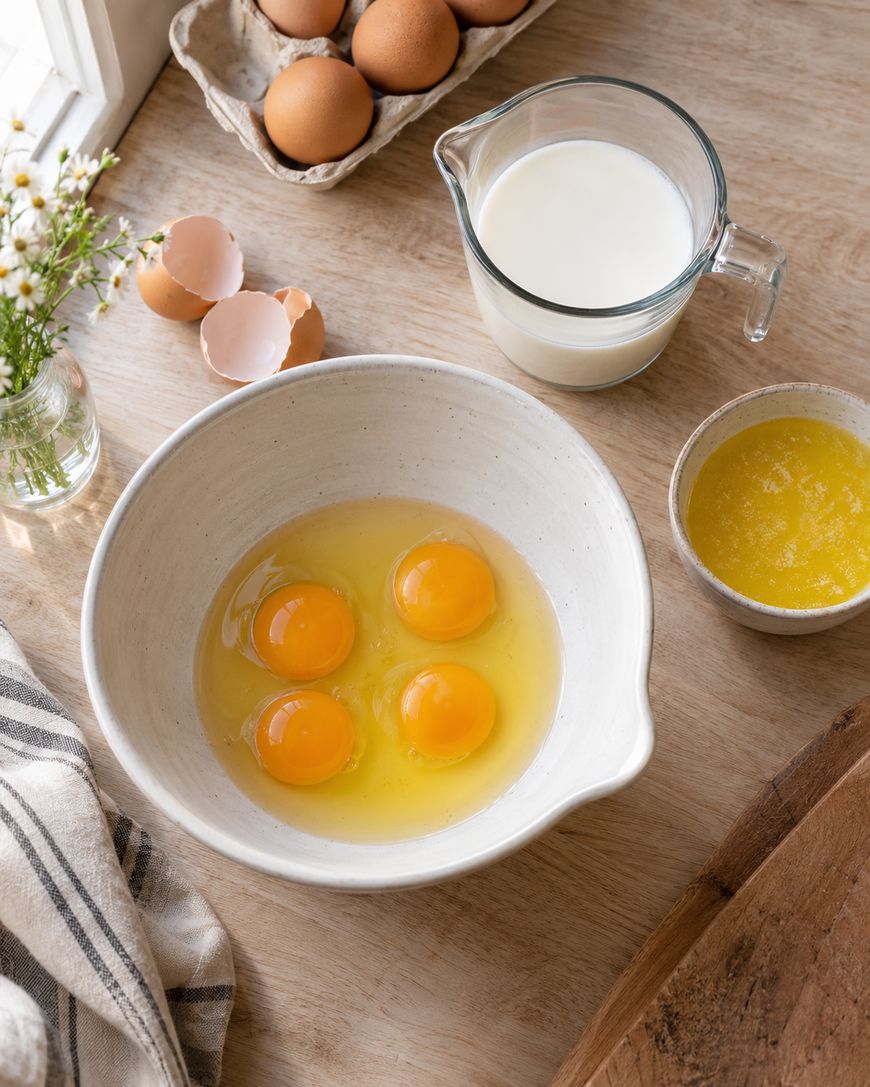
Eggs and milk build the custard layer, melted butter adds richness, and a baking mix or self-rising flour is what forms the bottom crust.
Sugar and vanilla extract round out the flavor, and sweetened shredded coconut is what gives the top its texture and toasted flavor.
Because the ingredient list is short, the quality of your coconut and vanilla matters more than it would in a recipe with a dozen components.
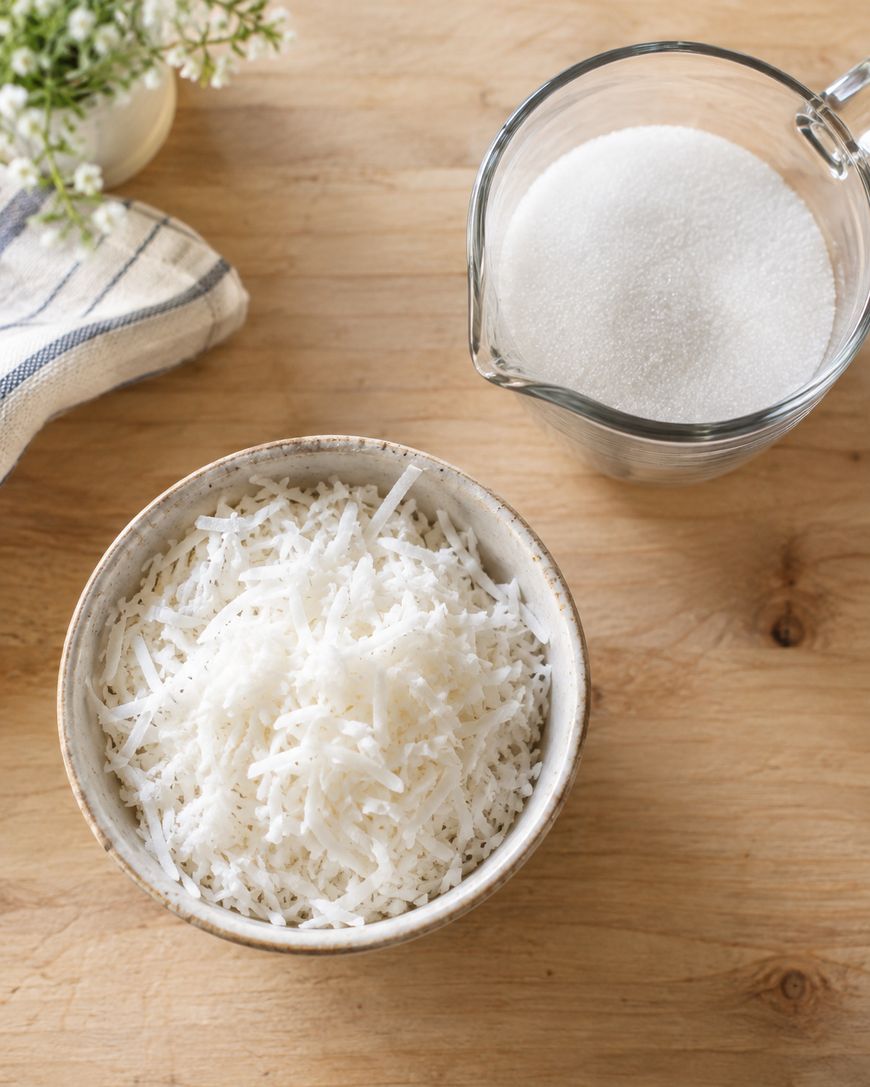
Reach for real vanilla extract rather than imitation, and use sweetened shredded coconut rather than unsweetened flakes, since the sugar content affects how well the top browns.
How to Mix and Bake It
Everything for this impossible coconut pie goes into a blender at once, which is part of what makes it so approachable on a busy day.
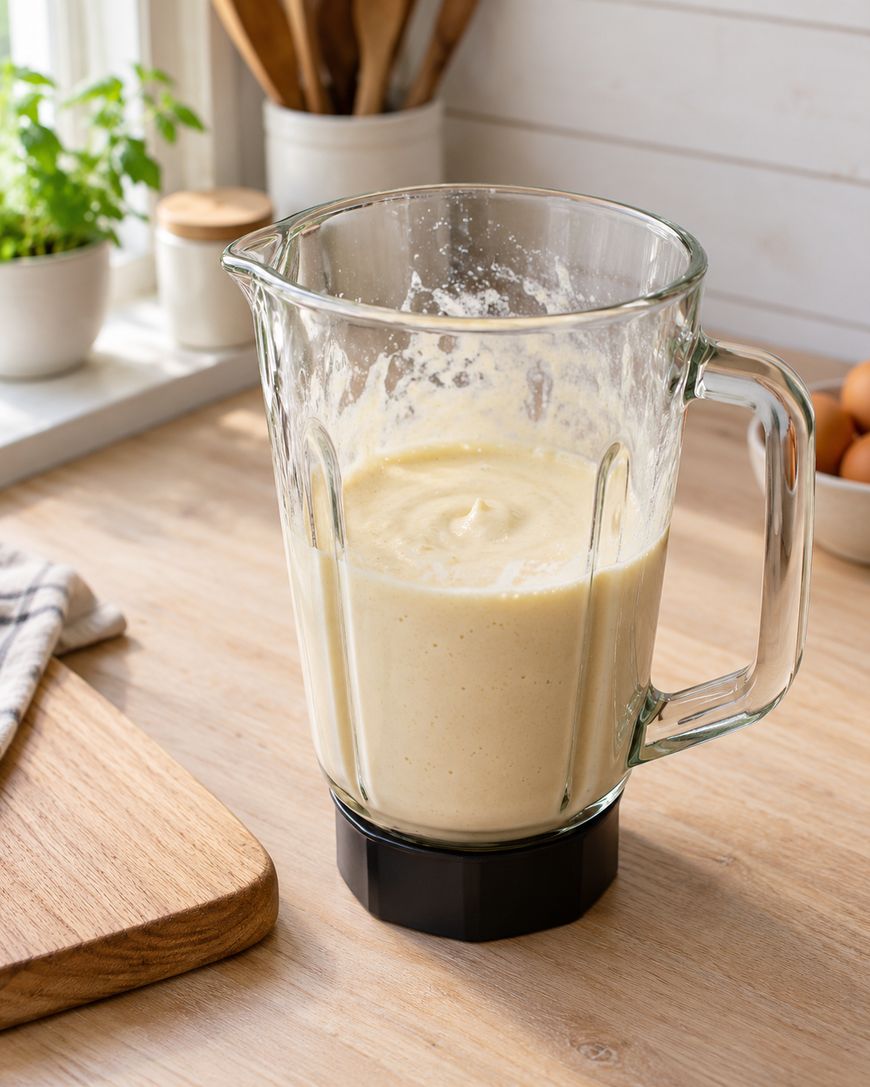
You blend the eggs, milk, melted butter, sugar, baking mix, and vanilla until the batter is completely smooth, then pour it straight into a greased pie dish.
Shredded coconut gets sprinkled over the top rather than blended in, so it stays on the surface and toasts properly instead of disappearing into the custard.
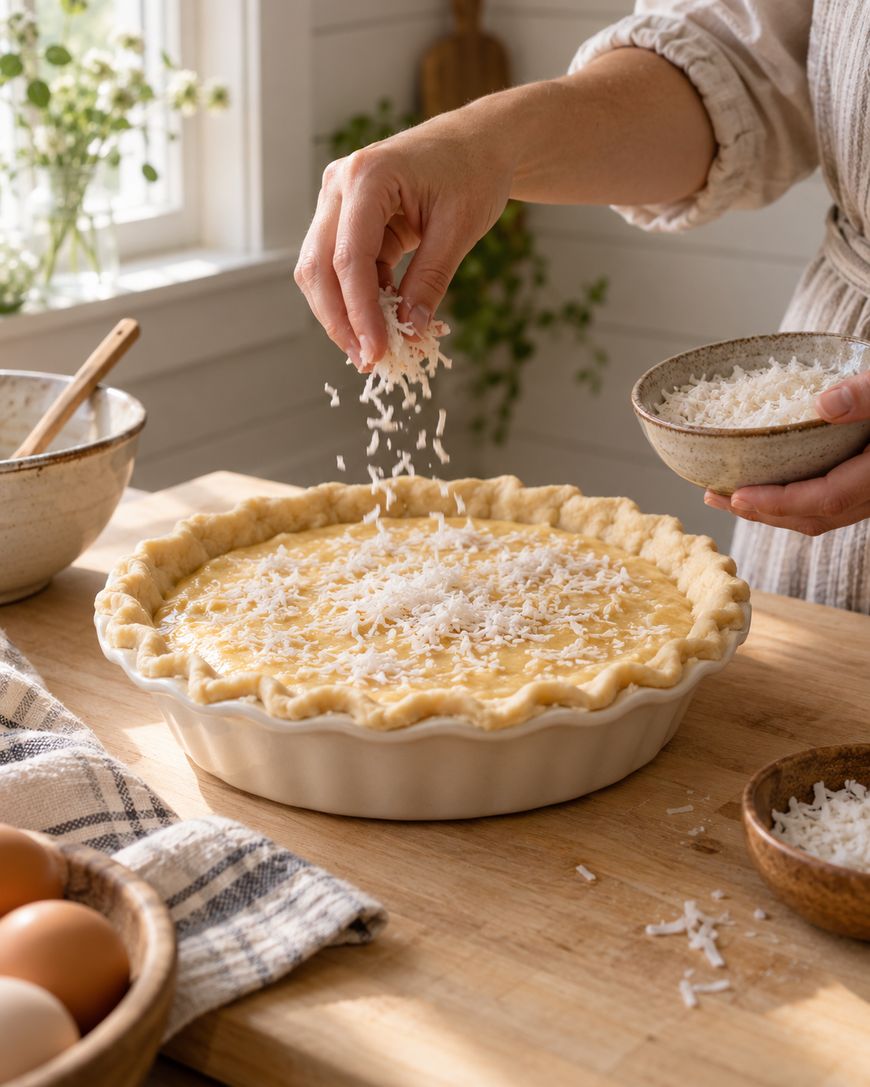
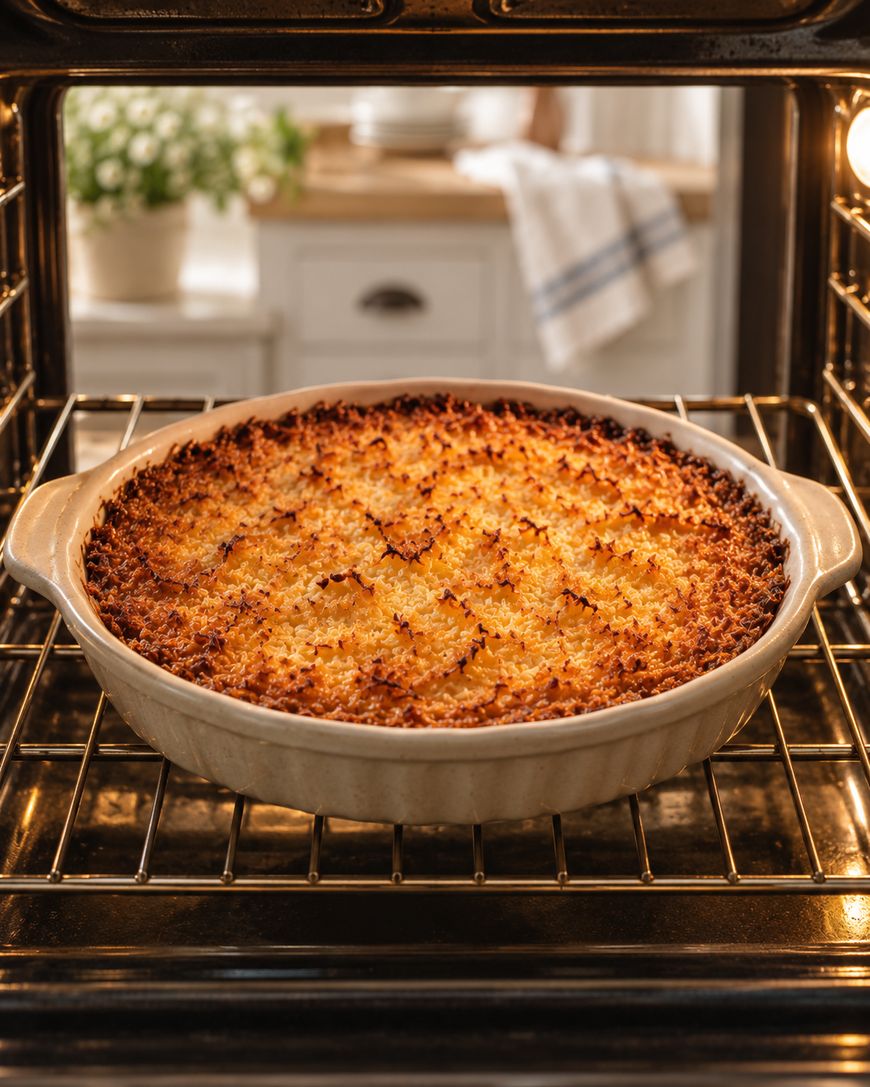
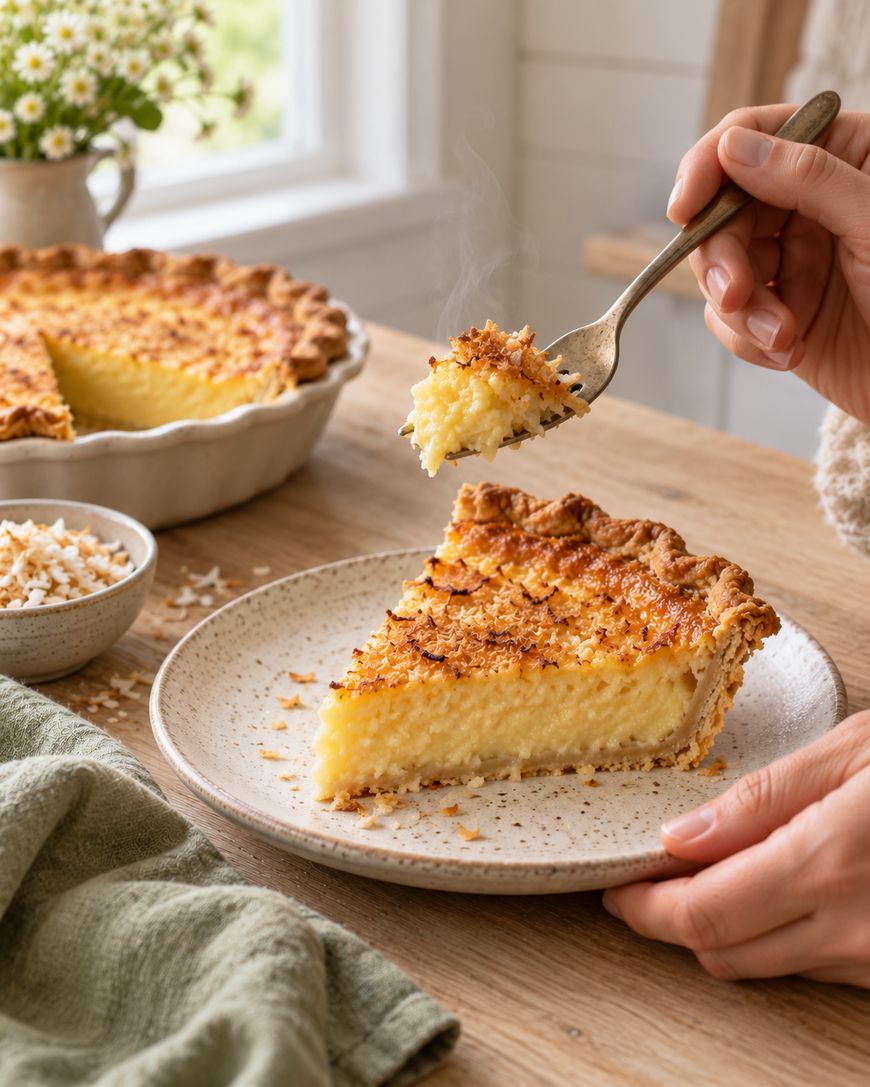
The pie bakes until the top turns a deep golden brown and the center only jiggles slightly when you nudge the dish.
Pulling it too early leaves the custard layer loose, so watch for that golden coconut color as your visual cue that it is ready.
Cooling and Slicing
Cooling matters just as much as baking with this style of pie.
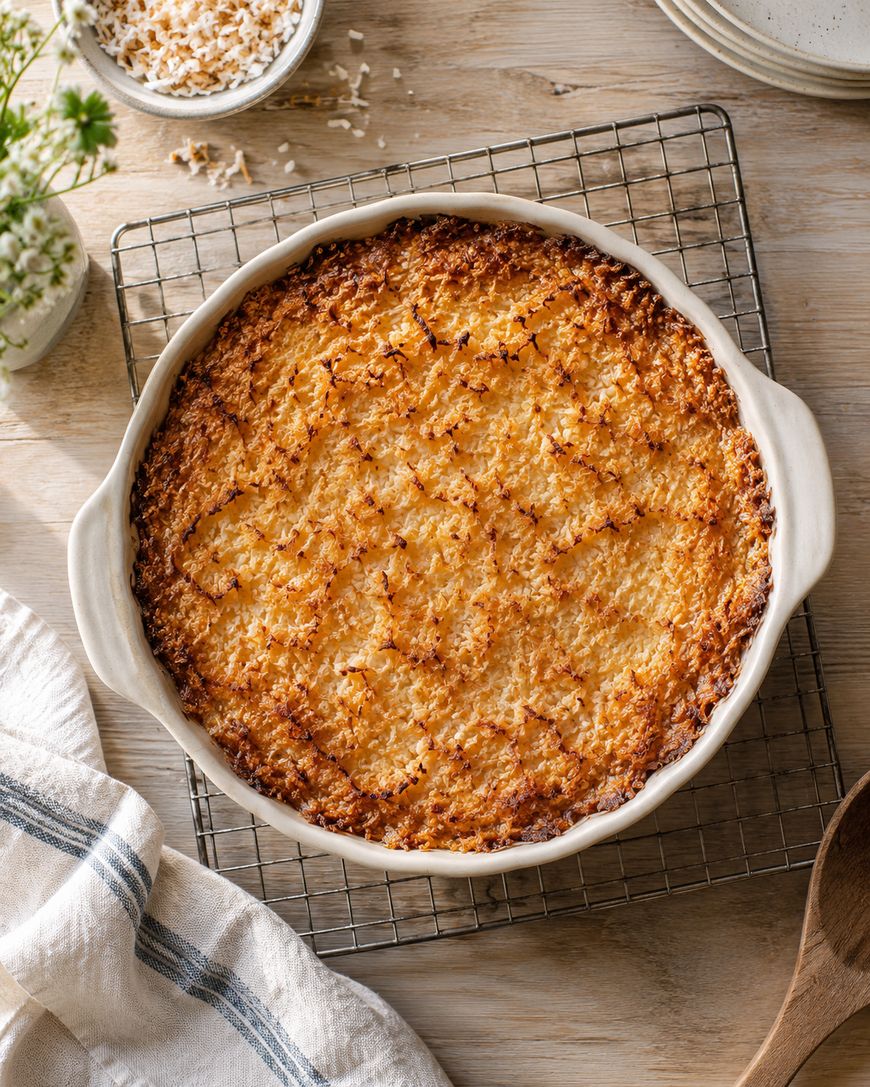
The custard layer needs time on a wire rack to firm up completely, so resist the urge to slice into it right out of the oven.
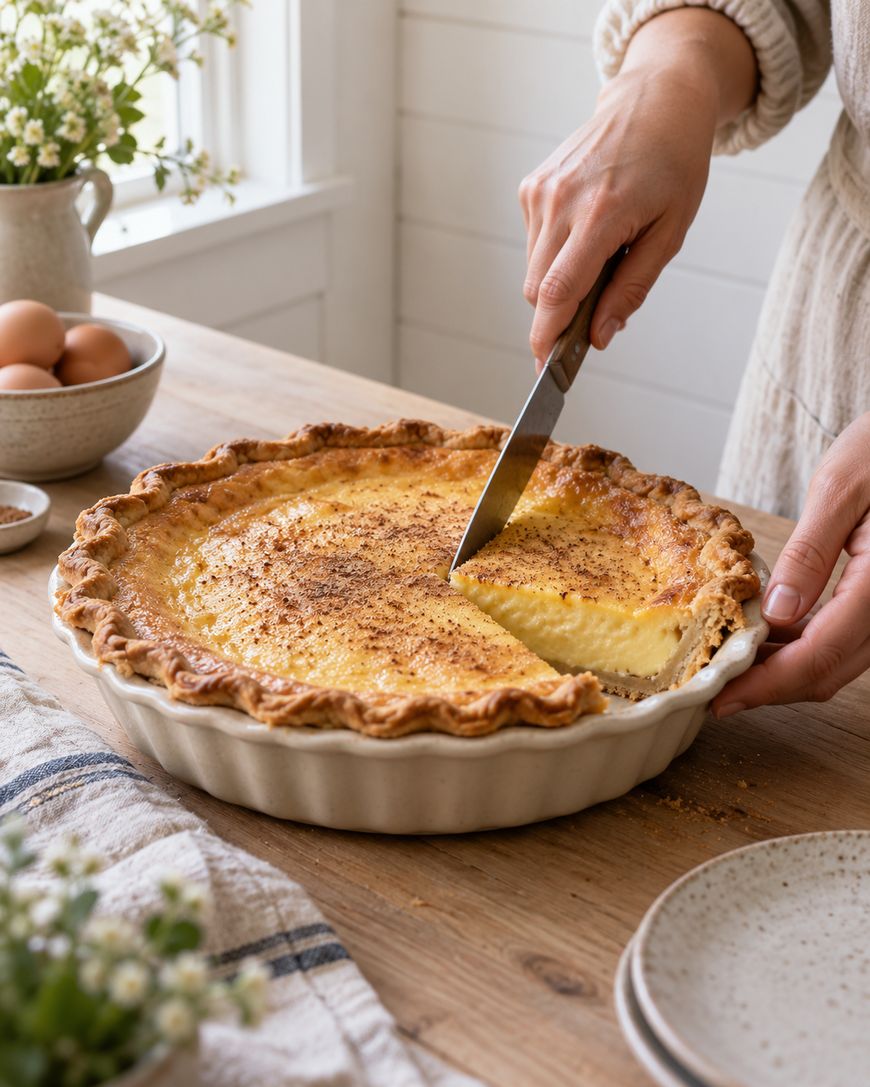
Once it has cooled, you can serve the pie at room temperature or chill it first for cleaner, firmer slices.
A thin knife dipped in warm water between cuts keeps the layers looking neat on the plate.
Variations and Substitutions
This impossible coconut pie is easy to adjust once you have made the base version a time or two.
Swap part of the whole milk for coconut milk if you want a deeper coconut flavor throughout the custard, not just on top.
You can toast the shredded coconut lightly in a dry skillet before sprinkling it on the batter for a nuttier flavor once it bakes again in the oven.
A half teaspoon of coconut extract alongside the vanilla pushes the coconut flavor even further without changing the texture of the pie.
For a citrus twist, a teaspoon of lime zest blended into the batter pairs nicely with the coconut and gives the pie a brighter finish.
Dairy-free cooks can substitute a plain unsweetened plant milk and a dairy-free butter alternative, though the crust layer will be slightly softer as a result.
Storage and Make-Ahead Tips
Leftover pie keeps well, which makes it a good option for gatherings where you want dessert ready in advance.
Store the cooled pie covered in the refrigerator for up to 4 days.
You can bake it a full day ahead of when you plan to serve it, then chill it overnight so the layers set firmly before slicing.
Freezing is not recommended for this pie, since the custard layer tends to separate and turn watery once thawed.
The Story Behind Impossible Pie
Impossible pies became popular in home kitchens because they promised a homemade dessert without the intimidation of pastry work.
The trick relies on a self-rising or biscuit-style baking mix, which contains flour, a leavening agent, and salt already combined in the right proportions.
That mix is what allows the batter to separate into layers instead of baking into one uniform custard, since the leavening lifts some of the flour toward the bottom while the eggs set around it.
Coconut versions of the impossible pie became especially popular because the topping toasts beautifully and gives the finished pie a texture contrast that a plain custard pie does not have.
Ready to try it for yourself? Use the recipe card below to bake your own impossible coconut pie today.
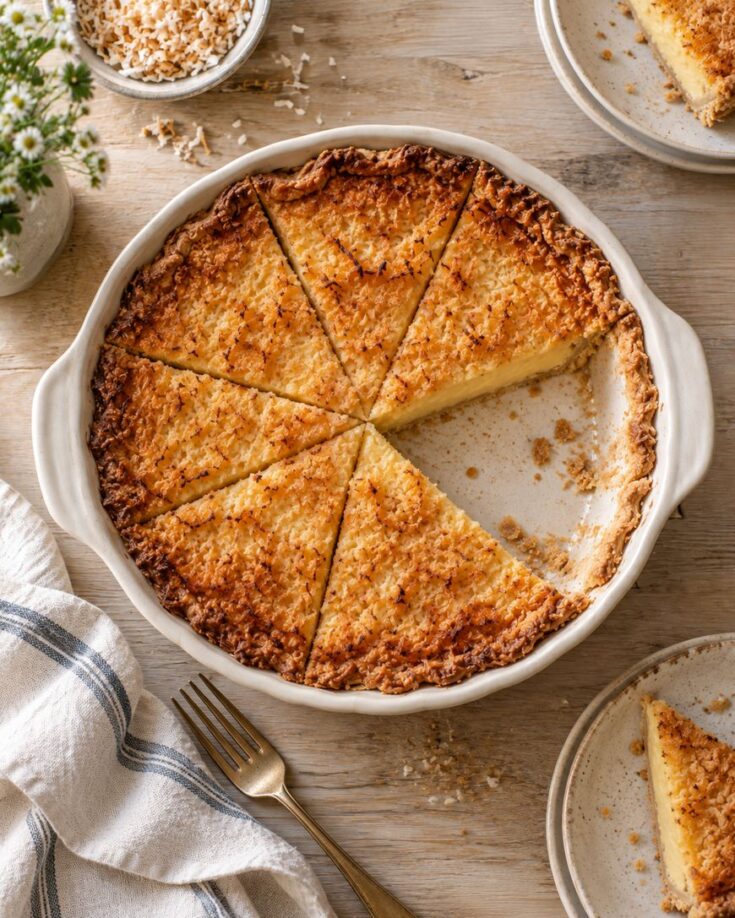
Impossible Coconut Pie
A simple custard-style pie mixed in one blender that separates into its own crust, creamy filling, and toasted coconut topping as it bakes.
Ingredients
- 4 large eggs
- 1 3/4 cups whole milk
- 1/2 cup unsalted butter, melted
- 3/4 cup granulated sugar
- 1/2 cup all-purpose baking mix (such as Bisquick) or self-rising flour
- 1 teaspoon vanilla extract
- 1 1/3 cups sweetened shredded coconut
Instructions
- Preheat the oven to 350 degrees Fahrenheit and grease a 9-inch pie dish.
- In a blender, combine the eggs, whole milk, melted butter, sugar, baking mix, and vanilla extract.
- Blend on low speed for about 20 seconds, until smooth and no lumps remain.
- Pour the mixture into the prepared pie dish.
- Sprinkle the shredded coconut evenly over the top of the batter.
- Bake for 45 to 50 minutes, until the top is golden brown and the center only slightly jiggles.
- Remove the pie from the oven and cool on a wire rack for at least 2 hours before slicing.
- Slice and serve at room temperature or chilled.
Notes
Store covered in the refrigerator for up to 4 days. The pie can be baked a day ahead and chilled overnight before serving. Freezing is not recommended.
Nutrition Information:
Yield:
8Serving Size:
1 sliceAmount Per Serving: Calories: 290Total Fat: 18gSaturated Fat: 11gSodium: 190mgCarbohydrates: 27gFiber: 1gSugar: 20gProtein: 6g
Impossible Coconut Pie Questions
Can I use unsweetened coconut instead of sweetened?
You can, but the top will not brown as deeply since sweetened coconut has more sugar to caramelize in the oven.
If you use unsweetened coconut, keep a close eye on the pie during the last ten minutes of baking.
Why did my pie not form a bottom crust?
This usually happens when the batter is not blended long enough, since the flour needs to be fully incorporated before it settles during baking.
Give the batter a full 20 seconds in the blender and make sure your baking mix is fresh, since older baking mixes lose some of their leavening power.
Can I make this pie without a blender?
Yes, a whisk works fine as long as you whisk vigorously until the batter is completely smooth with no lumps of flour remaining.
It takes a bit more effort by hand, but the result is the same three layers once it bakes.
Is this pie gluten free?
Traditional baking mixes contain wheat flour, so this version is not gluten free as written.
A gluten-free all-purpose baking mix with xanthan gum included can generally be substituted in equal amounts if you need this pie to be gluten free.
Why is my custard layer still loose after baking?
The center needs to bake until only a slight jiggle remains, and it firms up further as it cools on the counter.
If the center is still liquid after the full bake time, give it another five to ten minutes and check again rather than pulling it out too soon.
Can I add other mix-ins to the batter?
A small amount of chopped pecans or macadamia nuts sprinkled alongside the coconut works well and adds a bit of crunch.
Keep any additions light, since too many extras can weigh down the top layer and keep it from setting properly.
Why This Recipe Works
This impossible coconut pie works because the baking mix does two jobs at once, providing both the flour that forms the crust and the leavening that helps the layers separate as the batter heats.
Blending the batter fully before baking is what allows the ingredients to redistribute themselves cleanly, with the denser flour settling low and the lighter custard rising above it.
Sprinkling the coconut on top rather than mixing it in keeps it exposed to direct oven heat, which is exactly what lets it toast instead of turning soft and pale.
The extended cooling time on the rack is not just a formality, since the custard layer continues to firm up as it drops in temperature, giving you clean slices instead of a runny center.
Bring This Pie to Your Table
You now have everything you need to bake an impossible coconut pie that turns out perfectly layered every time.
Gather your ingredients, blend the batter, and let your oven do the rest of the work for you.