Last updated: November 14, 2026
Irish soda bread is the easiest loaf you can bake, with no yeast, no rising time, and only four ingredients.
Scroll down to the recipe card for the full recipe, or keep reading for every tip that helps this Irish soda bread bake up tender instead of dense.

What Is Irish Soda Bread?
Irish soda bread is a quick bread made from flour, baking soda, salt, and buttermilk, shaped into a round loaf and baked until the crust turns deep golden brown. The baking soda reacts with the acid in the buttermilk to lift the dough, so there is no yeast and no waiting for anything to rise.
The loaf bakes up with a crisp, crackly crust and a soft, slightly tangy crumb that is made for butter. From mixing bowl to oven takes about 10 minutes, and the whole process is done in under an hour.
How Soda Bread Differs From Yeast Bread
Yeast bread needs time to rise and relies on kneading to build structure. Soda bread works the opposite way, because the rise starts the moment the wet and dry ingredients meet and the dough needs only the lightest handling.
That speed makes Irish soda bread a great choice on busy nights. It comes together faster than a batch of cookies, and it fills the kitchen with the smell of fresh bread.
The Traditional Version We Are Making
This recipe follows the classic four-ingredient formula, with no sugar, eggs, or butter in the dough. Raisins, caraway seeds, and a little sugar are popular additions, and we cover them below as optional variations.
Irish Soda Bread Ingredients
You need just four ingredients for a traditional loaf, plus a little extra flour for dusting the counter. Because the list is so short, measuring each one carefully makes a real difference.
All-Purpose Flour
We use 4 cups of all-purpose flour, which is 480 grams. Spoon the flour into your measuring cup and level it off with a knife instead of scooping straight from the bag, since packed flour is the top cause of a dry, heavy loaf.
Brands like King Arthur and Gold Medal both work well here. A kitchen scale takes the guesswork out entirely.

- Everyday versatility: Organic all-purpose flour for bread, pizza dough, cookies and cakes
- Consistent structure: 11.7% protein content supports a range of baking recipes
- Organic wheat: Milled from organic hard red wheat grown on American farms
Baking Soda and Salt
One teaspoon of baking soda is the only leavener in this loaf, so check the date on the box. Old baking soda leads to a flat, dense loaf.
One teaspoon of fine salt seasons the whole bread. Whisk it in with the flour so it spreads evenly through the dough.
Buttermilk
We use 1 3/4 cups of cold buttermilk, plus up to 2 tablespoons more if the dough looks dry. The acid in the buttermilk activates the baking soda and gives the crumb its gentle tang.
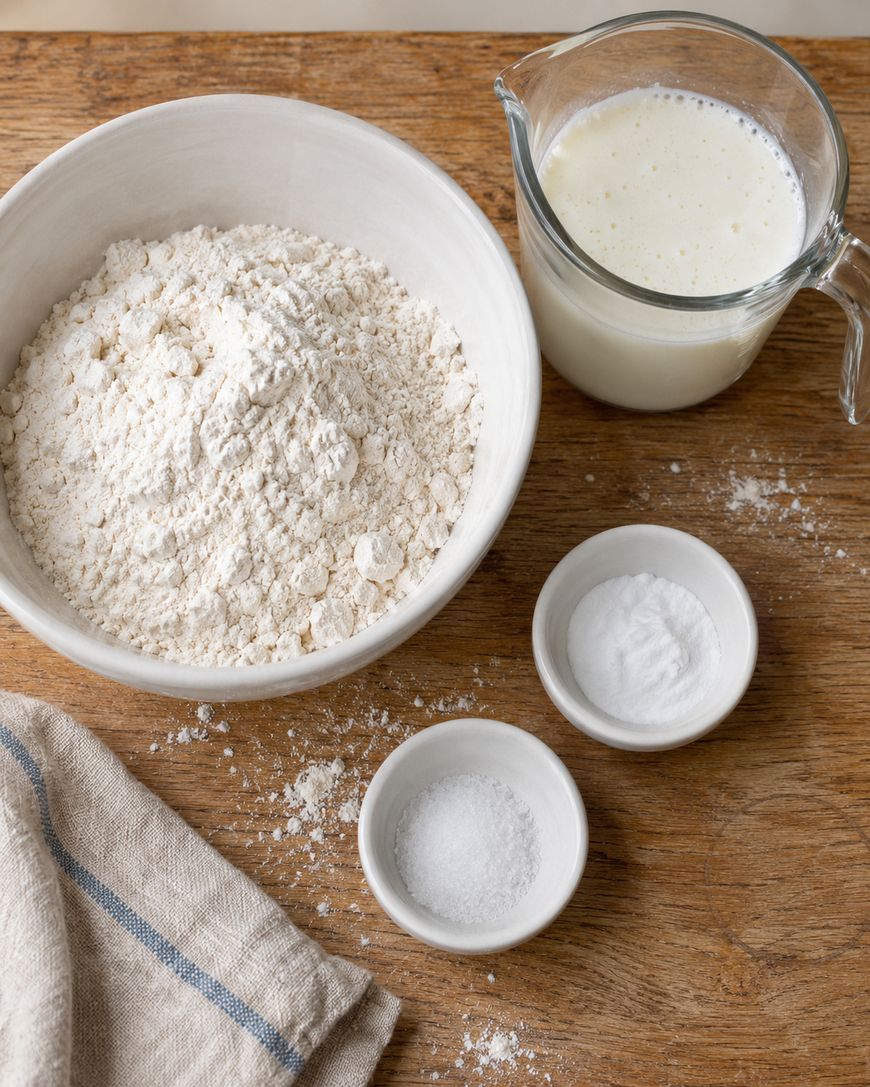
If you do not have buttermilk, stir 2 tablespoons of lemon juice or white vinegar into a liquid measuring cup, add whole milk until you reach 1 3/4 cups, and let it sit for 10 minutes. The milk will look slightly curdled, which is exactly what you want.
How to Make Irish Soda Bread
This Irish soda bread takes about 10 minutes of hands-on time, followed by 40 to 45 minutes in the oven. The main rule is to mix and shape quickly, because the baking soda starts working the moment it meets the buttermilk.
Heat the Oven and Prepare the Pan
Heat your oven to 425°F and line a rimmed baking sheet with parchment paper. Place the rack in the center of the oven so the bottom of the loaf browns without burning.

- Naturals bakeware is made of pure aluminum for superior heat conductivity and produces consistently evenly browned baked goods every time.
- These premium pans are built for lifetime durability, ensuring they will never rust, providing you with long-lasting use.
- Encapsulated galvanized steel rims stand strong against warping, preserving the shape and quality of your pans through numerous uses.

Mix the Dry Ingredients
Whisk the 4 cups of flour, 1 teaspoon of baking soda, and 1 teaspoon of salt together in a large bowl. Whisking spreads the baking soda evenly, which prevents bitter pockets and an uneven rise.

Add the Buttermilk
Make a well in the center, pour in the 1 3/4 cups of buttermilk, and stir with a fork until a shaggy dough forms. If dry flour remains at the bottom of the bowl, stir in up to 2 tablespoons more buttermilk, 1 tablespoon at a time.

Shape the Dough
Turn the dough out onto a lightly floured counter and knead it gently for about 30 seconds, just until it holds together. Pat it into a round about 7 inches wide and 2 inches tall, then move it to the prepared baking sheet.

Cut the Cross
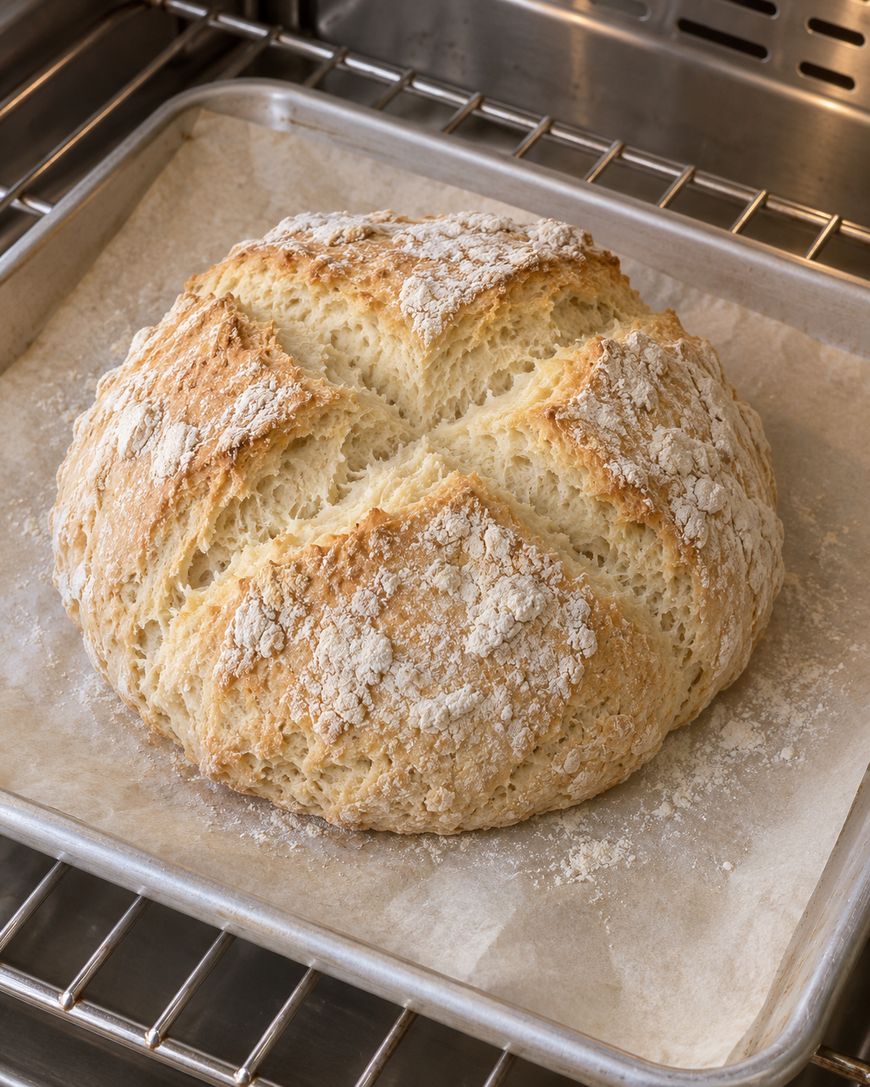
Use a sharp knife to cut a deep X across the top of the loaf, about 1/2 inch deep and nearly edge to edge. The cut lets heat reach the center of the thick dough so the middle bakes through.

Bake the Bread
Bake the loaf at 425°F for 15 minutes, then reduce the oven temperature to 400°F and bake for 25 to 30 minutes more. The bread is done when the crust is deep golden brown and the bottom sounds hollow when you tap it.
Cool and Slice
Transfer the loaf to a wire rack and let it cool for 20 minutes before slicing. Cutting too early can leave a gummy center, so a short wait pays off.

Tips for the Best Irish Soda Bread
Handle the Dough Gently
Overworking the dough develops gluten, which turns a tender loaf tough. Stop kneading as soon as the dough comes together, even if the surface still looks a little rough.
Work Quickly After Adding the Buttermilk
The baking soda starts producing bubbles right away, so get the loaf into the oven within a few minutes of mixing. This is also why the dough cannot be made ahead of time.

Use a Sharp Knife for the Cross
A dull knife drags and squashes the dough instead of slicing it cleanly. A sharp serrated or chef’s knife gives you a deep, clean cut that opens up nicely in the oven.
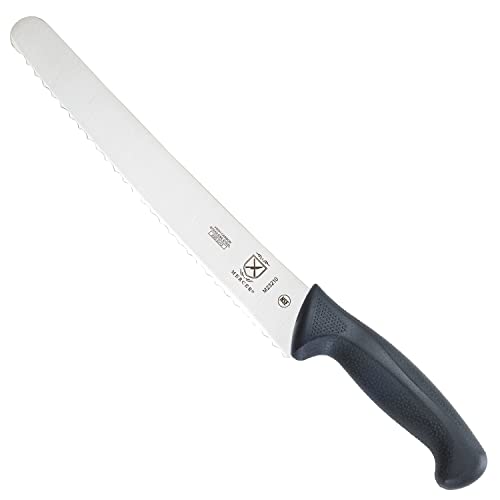
- QUALITY CONSTRUCTION: Knife is crafted with one-piece high-carbon Japanese steel for easy edge maintenance and long-lasting sharpness
- SUPERIOR DESIGN: Built to last ergonomic handle with textured finger points offers a non-slip grip with added comfort, durability, and safety
- BEST USE: The teeth on the wavy edge of the knife’s blade easily slice through foods’ crust or skin without tearing the soft inside. Ideal for slicing bread, angel food cake, meatloaf, fruits, and tomatoes
Check for Doneness Carefully
Tap the bottom of the loaf, and listen for a hollow sound. If it sounds dull or dense, return the bread to the oven for a few more minutes and check again.
Irish Soda Bread Variations
Every variation below is optional, and the recipe card leaves them out so it stays true to the traditional loaf. Use them as starting points once you have made the basic bread.
Raisin and Caraway Irish Soda Bread
For a sweeter, more American-style loaf, whisk 1 cup of raisins and 2 tablespoons of granulated sugar into the dry ingredients before adding the buttermilk. Add 1 tablespoon of caraway seeds as well for a subtle, savory warmth.
Whole Wheat Irish Soda Bread
Replace 1 cup of the all-purpose flour with 1 cup of whole wheat flour for a nuttier, heartier loaf. Whole wheat flour absorbs more liquid, so the dough may need the extra 2 tablespoons of buttermilk.
Butter-Brushed Irish Soda Bread
For a softer, richer crust, brush the warm loaf with 1 tablespoon of melted butter as soon as it comes out of the oven. The butter soaks into the crust and gives it a gentle sheen.
How to Serve Irish Soda Bread
Irish soda bread is at its best warm from the oven, sliced thick and served with something creamy or savory. It works as a side, a snack, or a breakfast.
With Butter and Jam
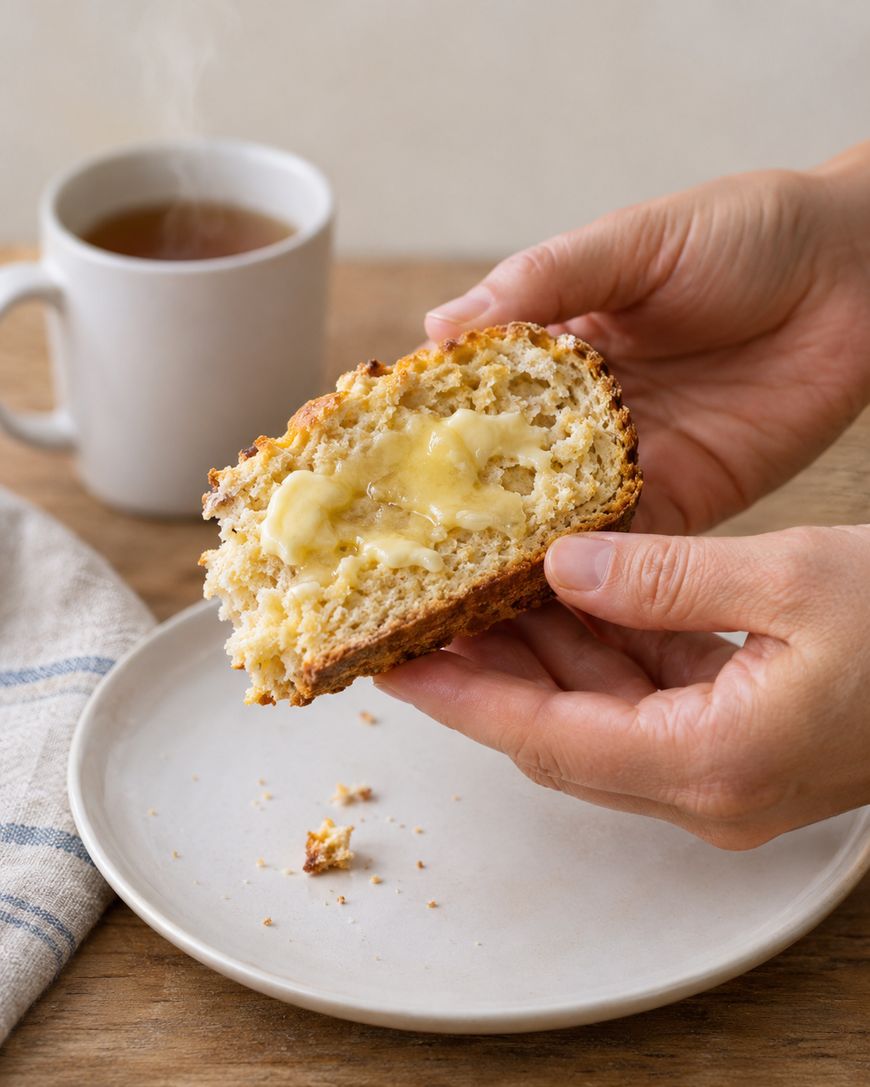
The classic way to serve Irish soda bread is with a thick spread of Irish butter such as Kerrygold. Add a spoonful of strawberry jam or orange marmalade for a simple afternoon treat with tea.

With Soups and Stews
The sturdy crumb is perfect for dunking into Irish stew, potato leek soup, or a bowl of vegetable soup. It also pairs well with corned beef and cabbage on St. Patrick’s Day.

For Breakfast
Toast a thick slice and top it with butter, or serve it alongside fried eggs, sausages, and roasted tomatoes for an Irish-style breakfast. Leftover slices make excellent toast the next morning.
As a Snack or Appetizer
Cut the loaf into small wedges and serve them with sharp cheddar, smoked salmon, or a bowl of warm soup on the side. A simple board like this works well for a St. Patrick’s Day gathering.
How to Store and Freeze Irish Soda Bread
Irish soda bread tastes best the day it is baked, but leftovers keep well with a little care. Soda bread dries out faster than yeast bread, so wrap it as soon as it has cooled completely.
Room Temperature Storage
Wrap the cooled loaf in a clean tea towel or place it in a bread box, and keep it at room temperature for up to 2 days. Wrapping it in plastic will soften the crust, which some people prefer.
Freezing Irish Soda Bread
Slice the cooled loaf, wrap the slices tightly in plastic wrap, and place them in a freezer bag. Freeze the slices for up to 3 months, then toast them straight from the freezer or thaw them at room temperature.
Using Day-Old Soda Bread
Day-old slices are best toasted, which brings back the crisp edges and warms the crumb. Dry leftovers also make wonderful croutons or a base for bread pudding.
The History of Irish Soda Bread
Irish soda bread developed in the early to mid 1800s, shortly after bicarbonate of soda became available as a leavener. Ireland grew softer, lower-gluten wheat that suited quick breads better than yeast breads, so baking soda was a perfect fit.
According to the Society for the Preservation of Irish Soda Bread, the oldest known reference to a soda bread recipe dates to 1836. Many households baked their loaves on the hearth in a covered pot, and the bread became an everyday staple.
The Meaning Behind the Cross
Folklore says the cross on top blesses the loaf or lets the fairies out, depending on who tells the story. The practical reason is simpler, because the deep cuts help the thick dough bake evenly.
Traditional Versus American Soda Bread
The Society holds that traditional soda bread contains only flour, baking soda, salt, and buttermilk. The sweeter versions with raisins and sugar that are popular in the United States are closer to a cake, and in Ireland a raisin loaf is often called spotted dog.
In the United States, soda bread is mostly a St. Patrick’s Day treat. In Ireland, it is baked and eaten all year long.
Ready to bake? Use the recipe card below to print or save everything you need.
Irish Soda Bread
A traditional Irish soda bread made with just flour, baking soda, salt, and buttermilk. It bakes up with a crackly golden crust and a soft, tender crumb in under an hour, with no yeast and no rising time.
Ingredients
- 4 cups all-purpose flour (480 g), plus more for dusting
- 1 teaspoon baking soda
- 1 teaspoon fine salt
- 1 3/4 cups cold buttermilk, plus up to 2 tablespoons more if needed
Instructions
- Heat the oven to 425°F and line a rimmed baking sheet with parchment paper.
- Whisk the flour, baking soda, and salt together in a large bowl.
- Make a well in the center, pour in the buttermilk, and stir with a fork until a shaggy dough forms. If dry flour remains at the bottom of the bowl, stir in up to 2 tablespoons more buttermilk, 1 tablespoon at a time.
- Turn the dough out onto a lightly floured counter and knead gently for about 30 seconds, just until it holds together.
- Pat the dough into a round about 7 inches wide and 2 inches tall, and place it on the prepared baking sheet.
- Use a sharp knife to cut a deep X across the top, about 1/2 inch deep and nearly edge to edge.
- Bake at 425°F for 15 minutes, then reduce the oven temperature to 400°F and bake for 25 to 30 minutes more, until the crust is deep golden brown and the bottom sounds hollow when tapped.
- Transfer the loaf to a wire rack and cool for 20 minutes before slicing.
Notes
Spoon and level the flour, or weigh it, for a tender loaf.
No buttermilk? Stir 2 tablespoons lemon juice or white vinegar into a liquid measuring cup, add whole milk to reach 1 3/4 cups, and let it rest for 10 minutes.
Bake right after mixing, because the dough cannot be made ahead.
Store the cooled loaf wrapped at room temperature for up to 2 days. Freeze sliced bread for up to 3 months.
Nutrition Information:
Yield:
8Serving Size:
1 slice (1/8 loaf)Amount Per Serving: Calories: 240Total Fat: 1gSaturated Fat: 0gSodium: 500mgCarbohydrates: 48gFiber: 2gSugar: 3gProtein: 8g
Irish Soda Bread FAQs
These quick answers cover the questions we hear most about Irish soda bread.
Why is there a cross cut on top of Irish soda bread?
Irish folklore says the cross blesses the bread or lets the fairies out. In practice, the deep cut helps heat reach the center of the thick dough so the middle bakes through.
Can you make Irish soda bread without buttermilk?
Yes, you can stir 2 tablespoons of lemon juice or white vinegar into a liquid measuring cup, add whole milk to reach 1 3/4 cups, and let it rest for 10 minutes. The acid in the soured milk activates the baking soda just like buttermilk does.
Why is my Irish soda bread dense or dry?
Dense soda bread usually comes from overkneading, old baking soda, or too much flour, and dry loaves are often overbaked. Spoon and level your flour, knead for only about 30 seconds, and start checking the bread at the 40 minute mark.
Can you make Irish soda bread dough ahead of time?
No, because the baking soda starts reacting with the buttermilk right away, so the dough needs to go into the oven within a few minutes of mixing. You can measure the dry ingredients ahead and keep the buttermilk cold until you are ready to bake.
Can you freeze Irish soda bread?
Yes, slice the cooled loaf, wrap the slices tightly, and freeze them for up to 3 months. Toast the slices straight from the freezer or thaw them at room temperature.
Why This Irish Soda Bread Recipe Works
This Irish soda bread relies on a simple chemical reaction. Baking soda is a base and buttermilk is acidic, so the two react as soon as they meet and release the gas that lifts the loaf.
Minimal handling keeps the crumb tender. Stirring the dough with a fork and kneading for only about 30 seconds means very little gluten develops, which is why the bread slices soft and tender instead of chewy, even though it has no butter or eggs.
The two-stage bake builds the crust. Starting at 425°F sets the outside quickly and gives the loaf its lift, and dropping to 400°F lets the center finish baking without scorching the crust.
The deep cross on top gives heat a path into the thick middle so it cooks through. Together, these details are why such a short ingredient list produces a loaf with real bakery character.
Bake Your Irish Soda Bread Today
Irish soda bread proves that a handful of pantry staples can make a bakery-worthy loaf in under an hour. With four ingredients, one bowl, and no yeast, it is easy enough for a first-time baker and special enough for a St. Patrick’s Day table.
Grab a bag of flour and a carton of buttermilk, then bake a loaf today using the recipe card above. Slice it warm, spread it with butter, and leave a comment to let us know how your Irish soda bread turned out.
Once you have the basic loaf down, try the raisin, caraway, or whole wheat variations to make it your own. Serve it with soup on a chilly night, toast it for breakfast, or wrap a fresh loaf as a thoughtful gift for a neighbor.
Save this recipe to your Pinterest board so it is easy to find the next time you need a quick loaf. Irish soda bread this simple deserves a spot in your regular baking rotation.
Buttermilk Biscuits That Bake Up Tall, Flaky, and Buttery Every Time
Easy Drop Biscuits That Bake Up Tall and Fluffy With No Rolling or Cutting
This post contains affiliate links. A full disclosure is available from the main menu.