Last updated: October 25, 2026
Buttermilk biscuits are tall, flaky, and buttery, and this recipe shows you exactly how to make them with a handful of pantry staples.
Follow the walkthrough below for a foolproof batch, then use the recipe card for the quick version.

How to Make Buttermilk Biscuits at Home
Buttermilk biscuits come together in a few simple moves: freeze the butter, whisk the dry ingredients, grate in the butter, stir in cold buttermilk, and fold the dough twice before cutting.
Everything bakes in a very hot oven in about 15 minutes, so you can have warm biscuits on the table in about 30 minutes from start to finish.
What You Need
You need 2 1/2 cups (300 grams) of all-purpose flour, 1 tablespoon of baking powder, 1/2 teaspoon of baking soda, 1 teaspoon of fine salt, and 1 tablespoon of granulated sugar.

The sugar helps the tops brown and balances the tang, so it will not make the biscuits taste sweet.
For the wet side, grab 1/2 cup (1 stick, or 113 grams) of unsalted butter and 1 cup (240 milliliters) of cold buttermilk.
Keep 2 tablespoons of melted butter ready for brushing the tops, plus a little extra flour for dusting your counter.
A Southern soft-wheat flour like White Lily makes especially tender biscuits, though standard all-purpose flour from King Arthur or Gold Medal works beautifully and is what the card uses.
Shake the buttermilk carton well before measuring, because the thicker part settles at the bottom.
Heat the Oven and Freeze the Butter
Set a rack in the center of the oven and heat it to 450°F. Line a rimmed baking sheet with parchment paper.
Place the stick of butter in the freezer while the oven heats, which takes about 15 minutes.
Frozen butter grates into tiny shards that stay solid until they hit the oven, and that is the secret to flaky layers.
Whisk the Dry Ingredients
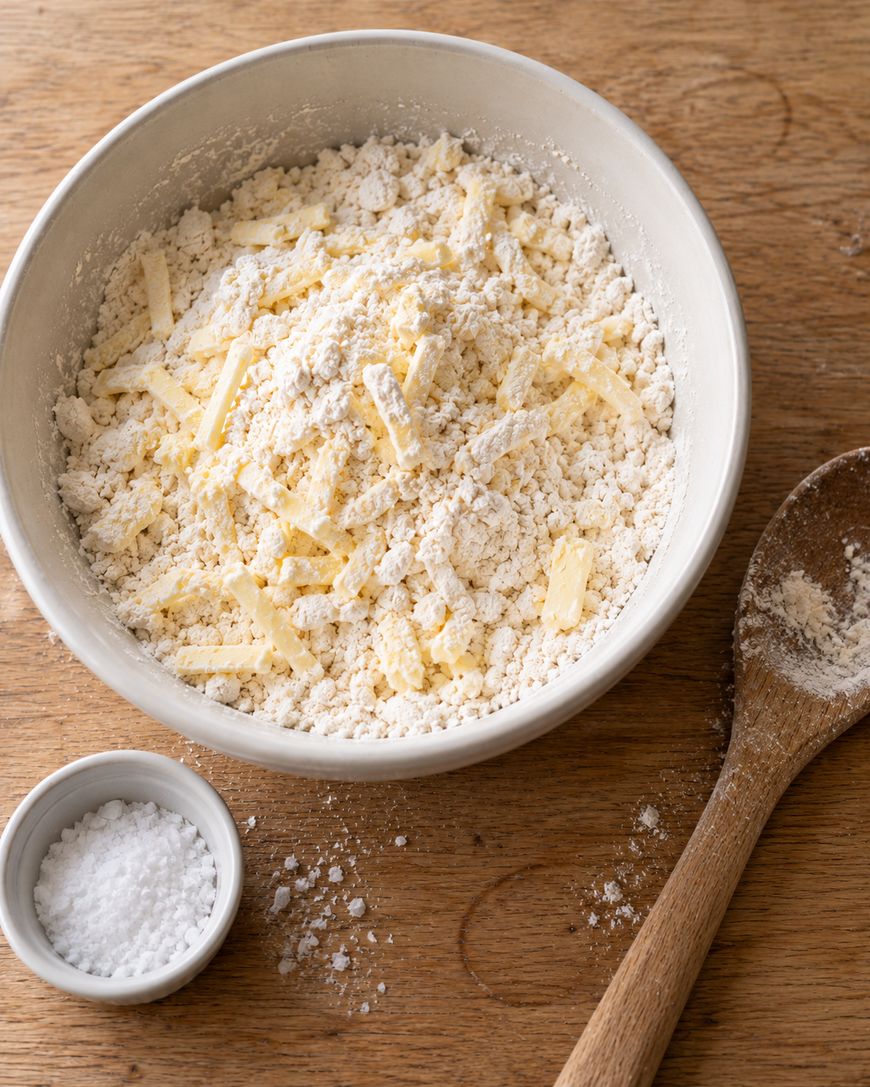
Whisk the flour, baking powder, baking soda, sugar, and salt together in a large bowl until fully combined.
Whisking now spreads the leaveners evenly, so every biscuit rises the same way.
Grate in the Butter
Grate the frozen butter on the large holes of a box grater directly over the flour. Toss gently with your fingertips until every shard is coated in flour.
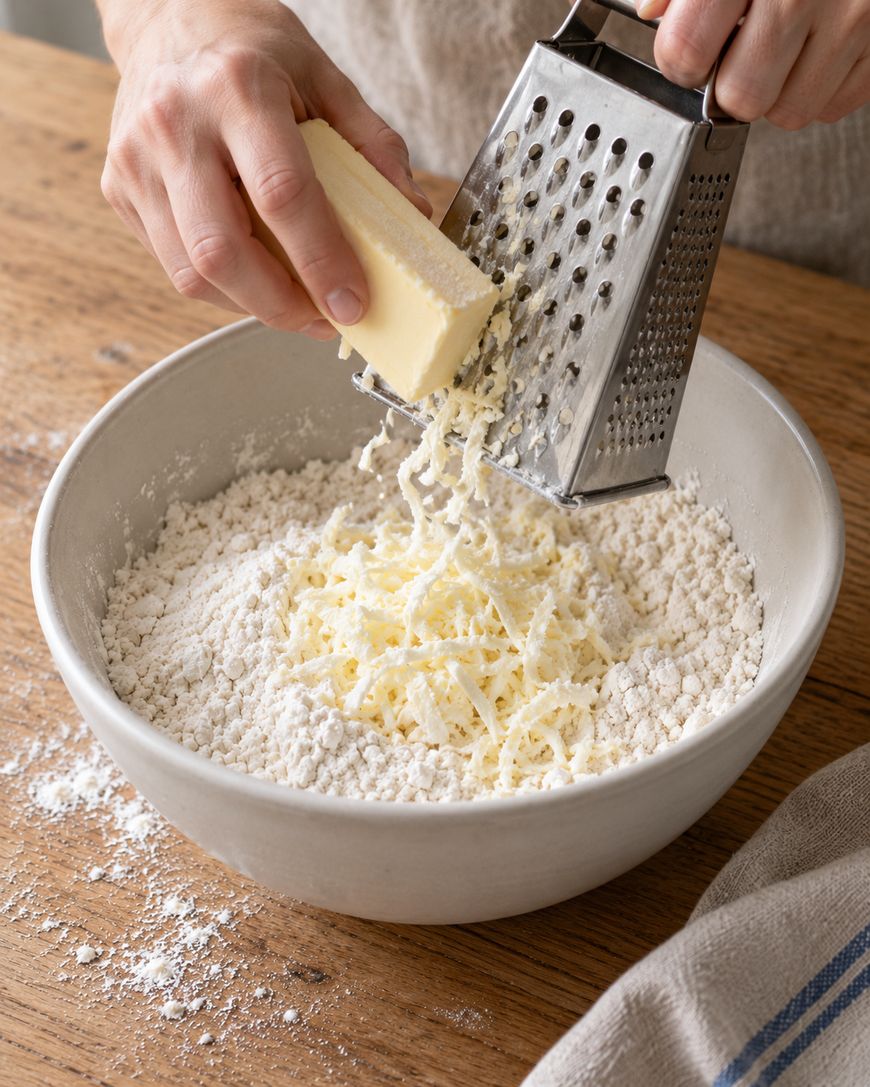
Work quickly so the butter stays cold.
If the pieces start to feel soft, slide the bowl into the freezer for a few minutes before you continue.
Stir in the Buttermilk
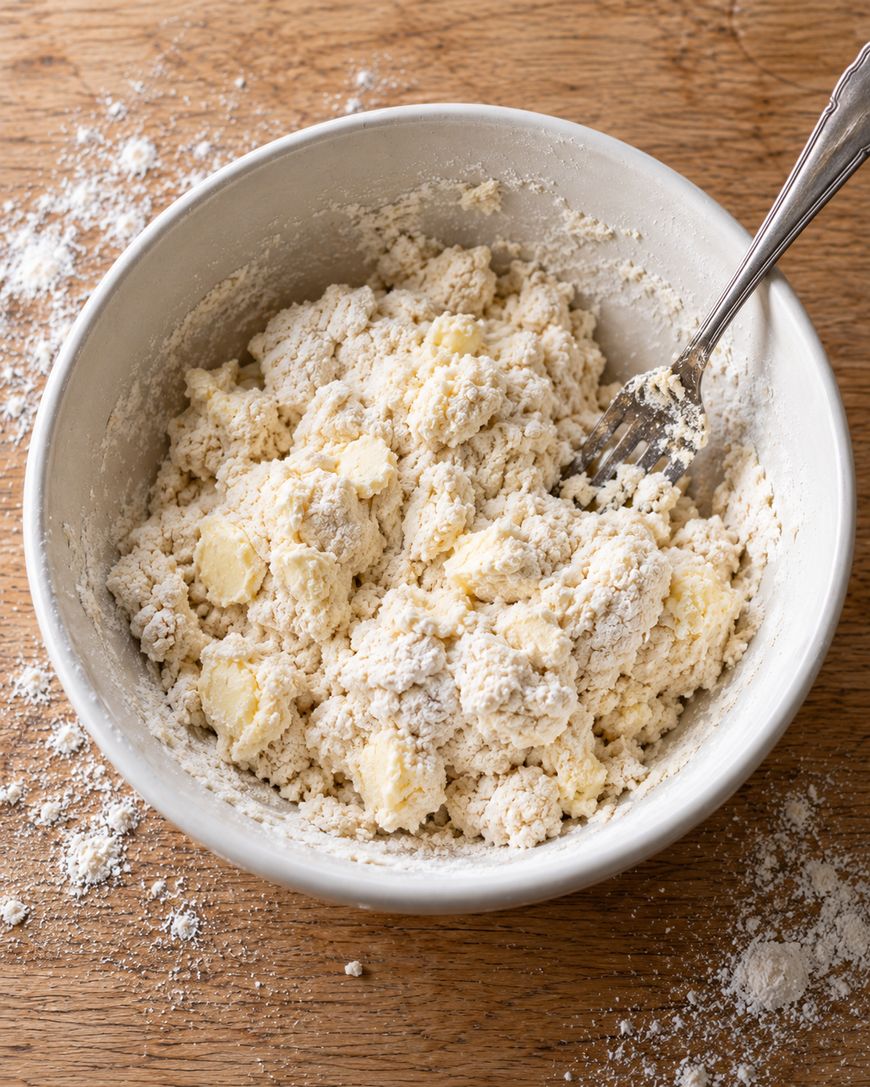
Pour in the cold buttermilk all at once and stir with a fork about 20 times, just until a shaggy dough forms.
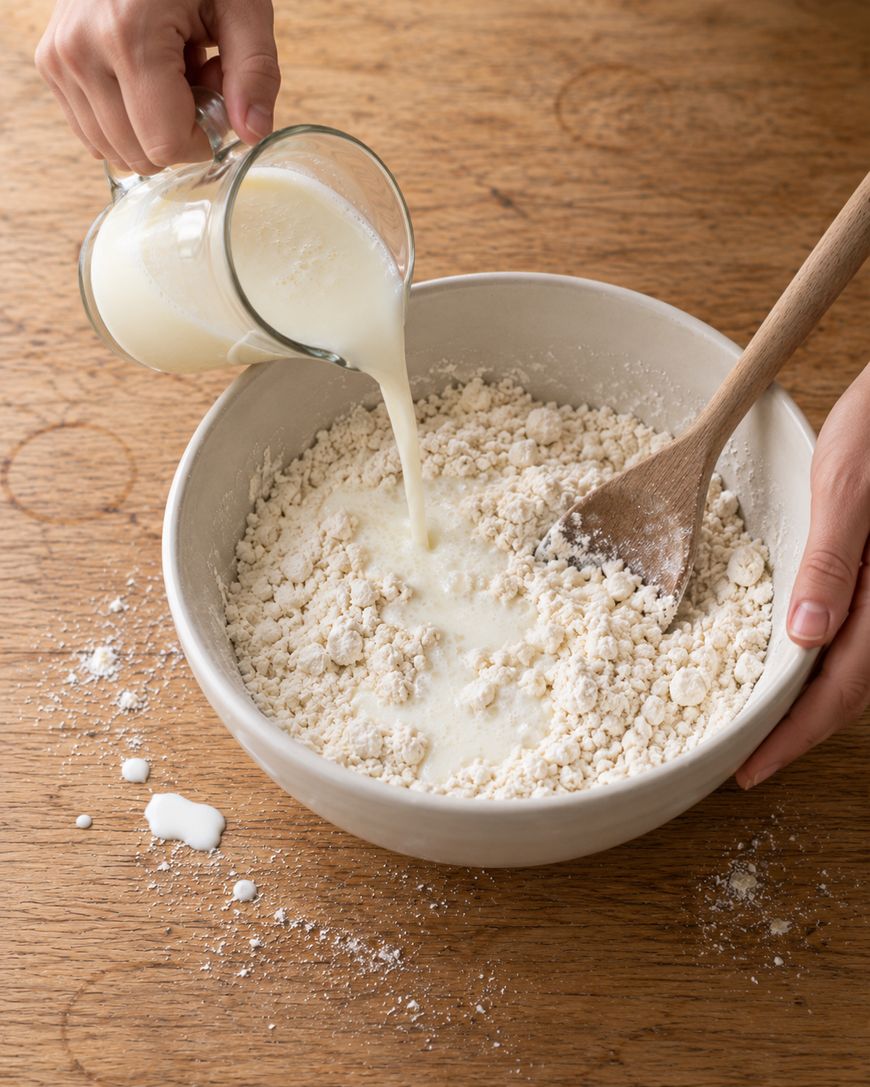
A few dry spots are fine because the folding step brings everything together.
Overmixing is the number one cause of tough biscuits, so stop as soon as no large patches of dry flour remain.
Fold the Dough for Flaky Layers
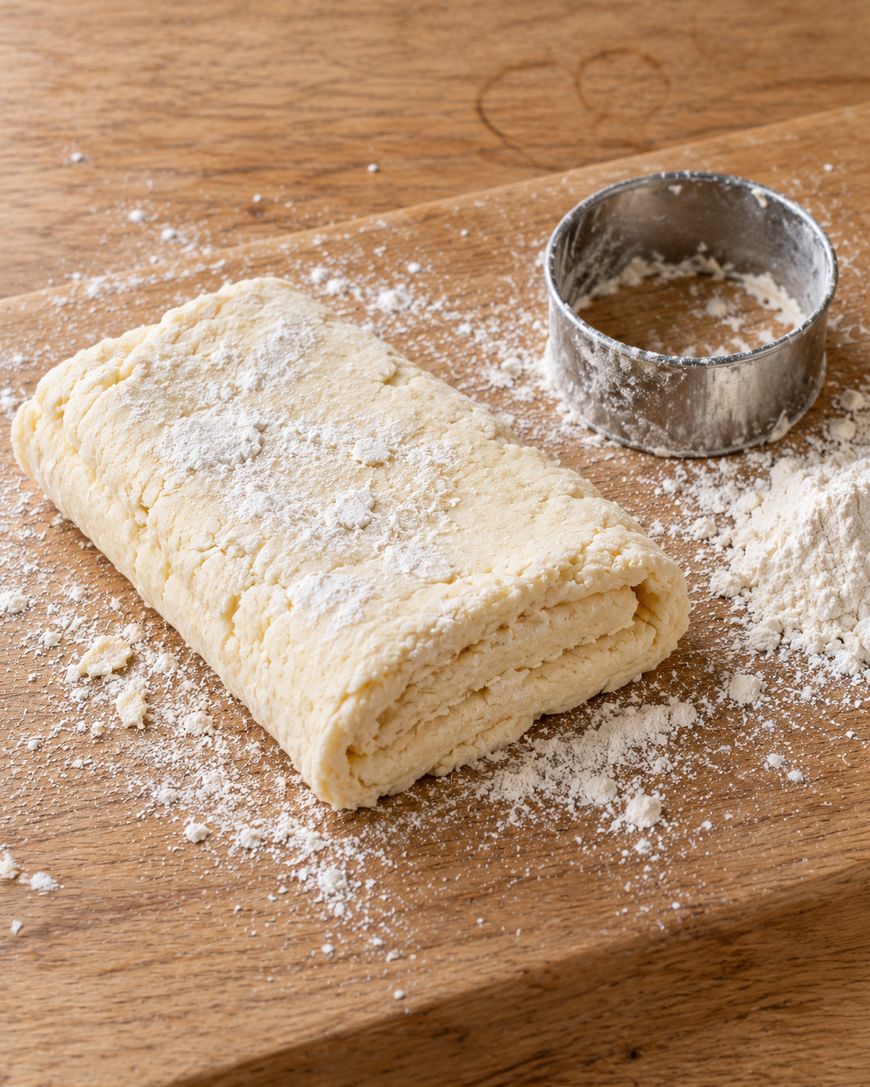
Turn the dough out onto a lightly floured counter and pat it into a rough rectangle about 1 inch thick. Fold it into thirds like a letter, then pat it back down to about 1 inch.

Repeat that fold one more time, so the dough has been folded twice in total, and finish with a rectangle about 1 inch thick.
Each fold stacks butter and dough into thin layers that puff apart in the oven.
Cut and Arrange the Biscuits
Dip a 2 1/2 inch round cutter in flour and press it straight down through the dough without twisting. Twisting seals the cut edges and keeps the biscuits from rising as tall.
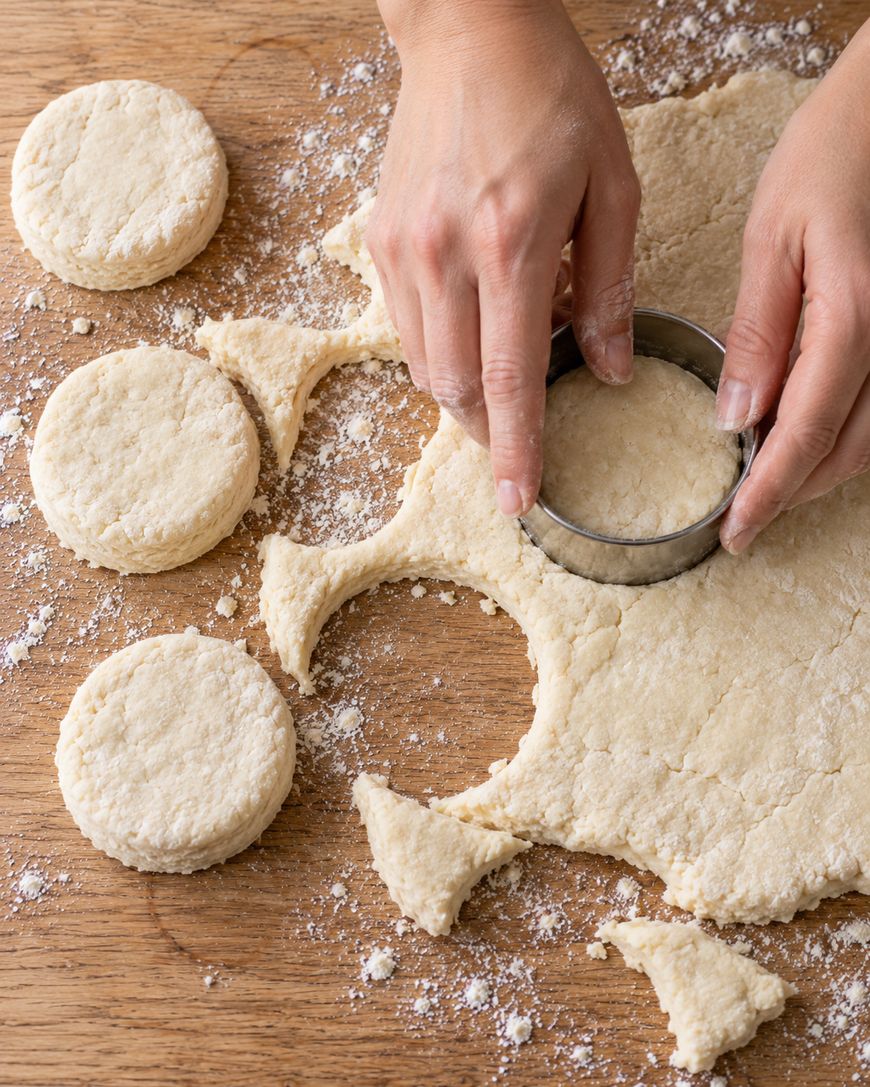
Gather the scraps, pat them together once, and cut the remaining biscuits.
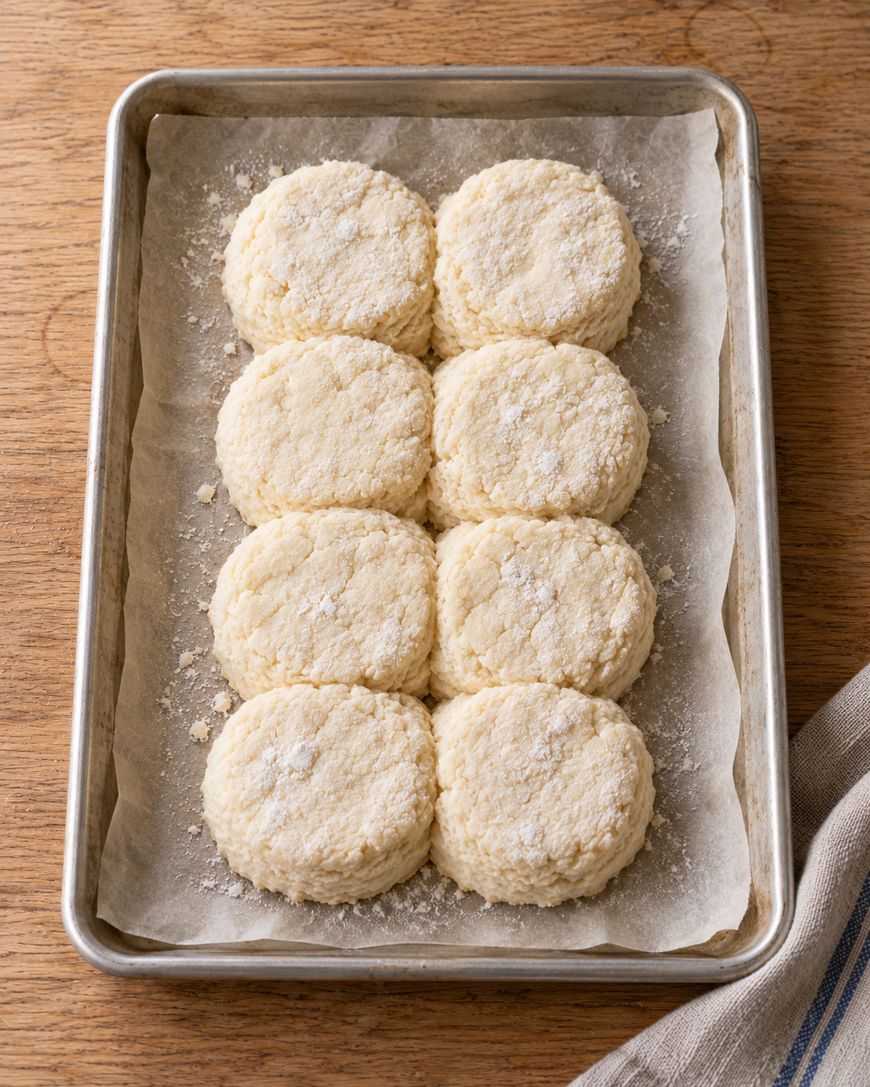
Place all 8 biscuits on the prepared baking sheet with their sides touching, which helps them climb upward instead of spreading out.
Bake and Brush with Butter
Bake the biscuits for 12 to 15 minutes, until they are tall and deep golden brown on top. Brush the hot tops with the 2 tablespoons of melted butter right away.
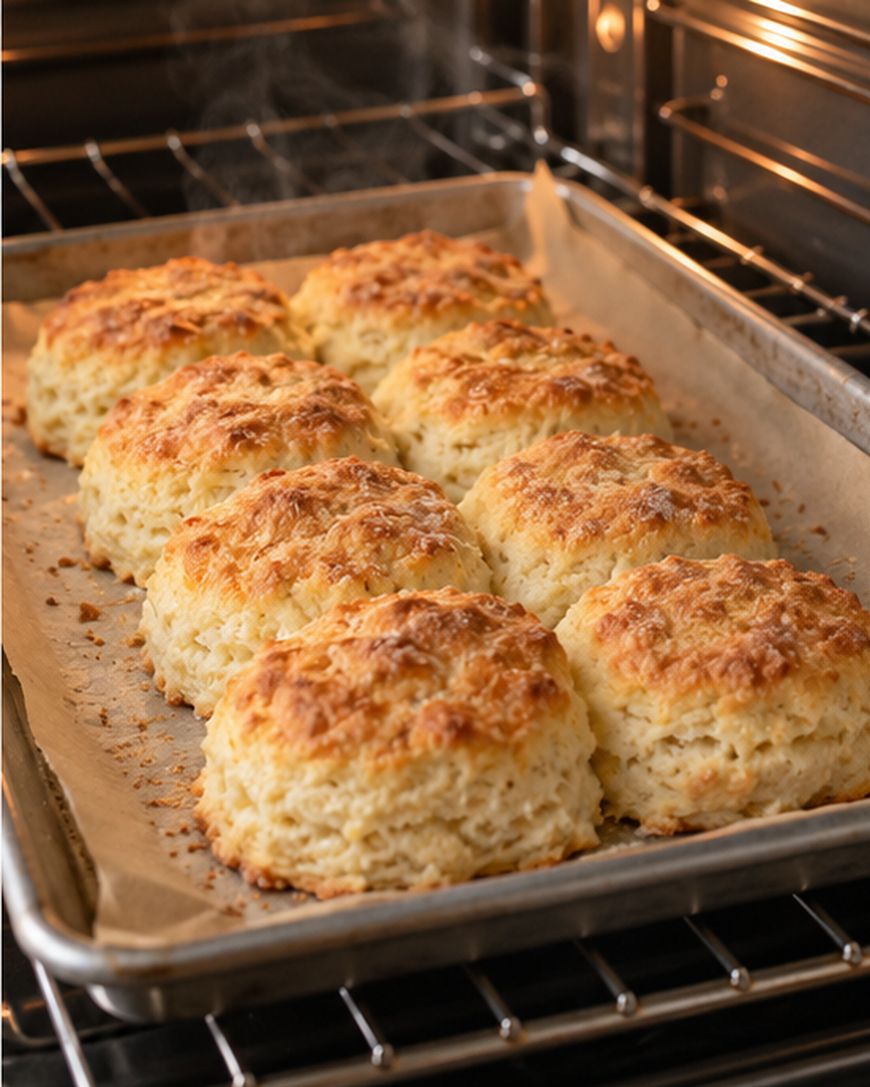
Let them cool on the pan for about 5 minutes before serving.
They are best warm, when the layers pull apart in soft, steamy sheets.
Tips for Perfect Buttermilk Biscuits
The best tips for tall buttermilk biscuits are to keep everything cold, handle the dough as little as possible, and bake in a very hot oven.
Small habits make a big difference with a dough this simple.
Keep Everything Cold
Cold butter and cold buttermilk are non-negotiable, because melted butter cannot create steam pockets. If your kitchen is warm, set the bowl of dry ingredients in the refrigerator for a few minutes before you grate in the butter.
Handle the Dough Gently
Warm hands melt butter and overworked dough turns tough. Use a light touch and stop the moment the dough holds together.
Measure the Flour Carefully
Spoon the flour into your measuring cup and level it off with a knife instead of scooping straight from the bag. Scooping packs in extra flour and makes biscuits dry.
A kitchen scale makes this foolproof, and 300 grams is the target for this recipe.
Check Your Leaveners
Baking powder and baking soda lose strength over time, which leaves biscuits flat. Replace them every six months or so, or test the baking powder by stirring a little into hot water and watching for fizz.
Buttermilk Biscuits Variations and Substitutions
You can dress up these buttermilk biscuits with cheese, herbs, or honey, and you can swap the buttermilk if you run out.
Every variation below is optional and is not part of the recipe card, which keeps the classic version.
Make a Buttermilk Substitute
Stir 1 tablespoon of lemon juice or white vinegar into 1 cup of whole milk and let it sit for 5 minutes. The mixture curdles slightly and works in the same amount as buttermilk.
The biscuits will be a touch less tangy, but they still rise well because the acid still activates the baking soda.
Cheddar and Chive Biscuits
Fold 1 cup of shredded sharp cheddar and 2 tablespoons of chopped chives into the dough right after the buttermilk goes in. The extra ingredients make the dough a little heavier.
The biscuits may need about a minute longer in the oven, so bake them until they are deep golden.
Honey Butter Biscuits
Stir 2 tablespoons of honey into the melted butter before you brush it over the baked biscuits. The honey adds a glossy, sweet finish that is lovely at breakfast.
How to Store, Freeze, and Reheat Buttermilk Biscuits
Store cooled buttermilk biscuits in an airtight container at room temperature for up to 2 days.
For longer storage, the freezer is your best friend, and you can freeze them either baked or unbaked.
Freeze Baked Biscuits
Freeze completely cooled biscuits in a zip-top freezer bag for up to 3 months. Reheat them straight from the freezer on a baking sheet at 350°F for 8 to 10 minutes.
Freeze Unbaked Biscuits
Place the cut, unbaked biscuits on a parchment-lined sheet and freeze until solid, then move them to a freezer bag for up to 3 months. Bake them straight from the freezer at 450°F for 15 to 18 minutes, with no thawing needed.
Reheat Leftovers
Wrap room temperature biscuits in foil and warm them at 350°F for 8 to 10 minutes. Skip the microwave if you can, since it turns the crust soft and chewy.
What to Serve With Buttermilk Biscuits
Buttermilk biscuits go with almost everything, from a cozy breakfast spread to a big Sunday supper.
Their tender crumb and salty, tangy flavor make them the perfect side for both sweet and savory dishes.
Breakfast and Brunch
Split warm biscuits and fill them with scrambled eggs, crisp bacon, and a slice of sharp cheddar for a handheld breakfast sandwich. They are also wonderful smothered in peppery sausage gravy.
For something sweeter, spread them with salted Cabot butter and strawberry jam or drizzle them with Tupelo honey.
Dinner Sides
Serve buttermilk biscuits alongside fried chicken, chicken noodle soup, beef stew, or a big pot of chili. They soak up broth and sauce beautifully.
A plate of collard greens and a warm biscuit makes a simple, comforting meal on a chilly fall evening.
The Story Behind Buttermilk Biscuits
Buttermilk biscuits are a cornerstone of Southern cooking, and their story is tied closely to the farmhouse kitchen.
Buttermilk was originally the tangy liquid left over after churning cream into butter, so cooks used it generously instead of letting it go to waste.
When baking soda and baking powder became common in American kitchens in the 1800s, cooks discovered that the acid in buttermilk reacted with soda to create a quick, reliable lift without any yeast.
Southern mills such as White Lily, which has milled soft winter wheat since the late 1800s, helped shape the light, tender biscuit the region is known for today.
Ready to bake? Use the recipe card below for the full ingredient list and step-by-step instructions.
Buttermilk Biscuits
Tall, flaky buttermilk biscuits made with grated frozen butter and two simple folds. They bake up golden and tender in about 15 minutes.
Ingredients
- 2 1/2 cups (300 g) all-purpose flour, plus more for dusting
- 1 tablespoon baking powder
- 1/2 teaspoon baking soda
- 1 teaspoon fine salt
- 1 tablespoon granulated sugar
- 1/2 cup (1 stick, 113 g) unsalted butter, frozen
- 1 cup (240 ml) cold buttermilk
- 2 tablespoons unsalted butter, melted, for brushing
Instructions
- Place the stick of butter in the freezer. Heat the oven to 450°F with a rack in the center and line a rimmed baking sheet with parchment paper.
- In a large bowl, whisk the flour, baking powder, baking soda, sugar, and salt until combined.
- Grate the frozen butter on the large holes of a box grater over the flour mixture. Toss gently with your fingertips to coat the butter in flour.
- Pour in the cold buttermilk and stir with a fork about 20 times, just until a shaggy dough forms.
- Turn the dough out onto a lightly floured counter and pat it into a rough rectangle about 1 inch thick. Fold it into thirds like a letter and pat it back down to about 1 inch thick.
- Repeat the fold one more time, then finish with a rectangle about 1 inch thick.
- Press a floured 2 1/2 inch round cutter straight down through the dough without twisting. Gather the scraps, pat them together once, and cut the remaining biscuits.
- Place the 8 biscuits on the prepared baking sheet with their sides touching.
- Bake for 12 to 15 minutes, until tall and deep golden brown. Brush the hot tops with the melted butter and cool on the pan for 5 minutes before serving.
Notes
Keep the butter frozen and the buttermilk cold for the flakiest biscuits. To substitute for buttermilk, stir 1 tablespoon of lemon juice or white vinegar into 1 cup of whole milk and let it sit for 5 minutes. Store cooled biscuits in an airtight container at room temperature for up to 2 days. Freeze baked biscuits for up to 3 months and reheat at 350°F for 8 to 10 minutes. Freeze cut, unbaked biscuits for up to 3 months and bake from frozen at 450°F for 15 to 18 minutes.
Nutrition Information:
Yield:
8Serving Size:
1 biscuitAmount Per Serving: Calories: 282Total Fat: 15gSaturated Fat: 9gSodium: 560mgCarbohydrates: 32gFiber: 1gSugar: 3gProtein: 5g
Buttermilk Biscuits FAQ
Why Are Buttermilk Biscuits Dense?
Dense biscuits usually come from overmixing, warm butter, or old baking powder. Stir only until the dough looks shaggy, keep the butter frozen, and check that your leaveners are fresh.
Can You Make Buttermilk Biscuits Without Buttermilk?
Yes, you can stir 1 tablespoon of lemon juice or white vinegar into 1 cup of whole milk and let it sit for 5 minutes. Use it in the same amount as buttermilk.
Why Should You Not Twist the Biscuit Cutter?
Twisting presses the cut edges together and seals the layers shut. Pressing straight down and lifting straight up lets the layers separate and rise as tall as possible.
How Do You Store Leftover Buttermilk Biscuits?
Keep cooled biscuits in an airtight container at room temperature for up to 2 days. For longer storage, freeze them in a freezer bag for up to 3 months and reheat at 350°F for 8 to 10 minutes.
Can You Make Buttermilk Biscuits Ahead of Time?
Yes, cut the biscuits, freeze them on a tray until solid, and store them in a freezer bag for up to 3 months. Bake them straight from the freezer at 450°F for 15 to 18 minutes.
Why This Buttermilk Biscuits Recipe Works
This recipe works because the frozen, grated butter stays in tiny solid pieces until the biscuits hit the oven. As the butter melts, it releases steam that pushes the dough upward into flaky layers.
Both baking powder and baking soda are used for reliable lift. The baking soda reacts with the acid in the buttermilk right away, while the baking powder keeps working in the heat of the oven.
Folding the dough twice builds layers without the work of laminated pastry, and cutting straight down keeps those layers open. Baking the biscuits with their sides touching and starting at 450°F gives them the support and the blast of heat they need to rise tall.
Final Thoughts on Buttermilk Biscuits
Homemade buttermilk biscuits are one of the most rewarding things you can bake, and this version proves you do not need fancy skills or ingredients to get tall, flaky results.
Pop a stick of butter in the freezer, preheat the oven, and bake a batch tonight. When you do, save the recipe to your favorite Pinterest board and leave a comment to tell us how yours turned out.
Easy Drop Biscuits That Bake Up Tall and Fluffy With No Rolling or Cutting
Cheddar Bay Biscuits That Taste Just Like the Restaurant Favorite