Last updated: November 7, 2026
Gingerbread scones are tender, buttery, and full of molasses, ginger, and cinnamon, and they bake in about 20 minutes once the dough is shaped.
Scroll down to the recipe card for the full ingredient list and steps, or keep reading for every tip you need to get flaky layers the first time.
How to Make Gingerbread Scones From Start to Finish
Gingerbread scones start with a cold butter dough flavored with dark brown sugar, molasses, and warm spices, then bake at 400°F until tall and golden. The process takes about 20 minutes of hands-on work, plus a short chill in the freezer.
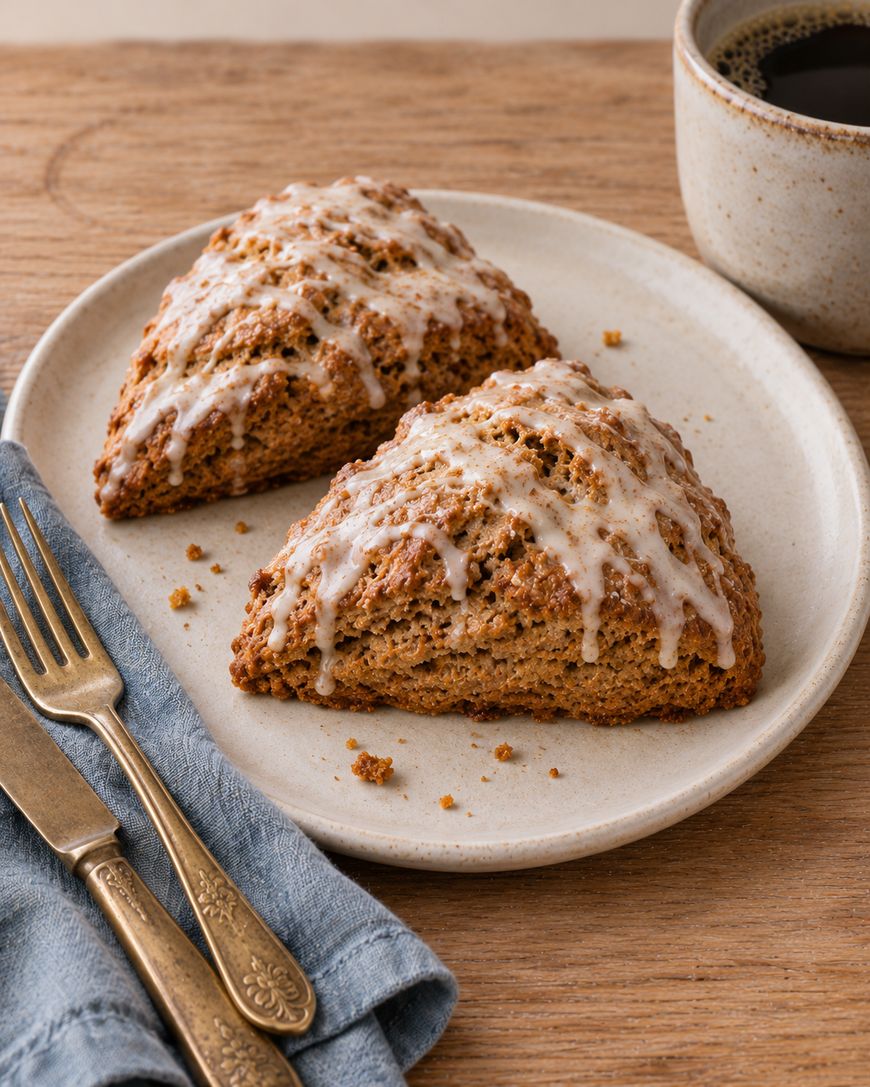
We walk through every stage below so you know exactly what the dough should look like along the way.
Gather the Ingredients
For the dry mixture you need 2 cups (250 g) of all-purpose flour, 1/4 cup (50 g) of packed dark brown sugar, and 1 tablespoon of baking powder. The spices are 1 1/2 teaspoons of ground ginger, 1 teaspoon of ground cinnamon, 1/4 teaspoon of ground cloves, 1/4 teaspoon of ground nutmeg, and 1/2 teaspoon of salt.

The richness comes from 1/2 cup (113 g) of cold unsalted butter, cut into small cubes. The wet mixture is 1/2 cup (120 ml) of cold heavy cream, 3 tablespoons of unsulphured molasses, 1 large egg, and 1 teaspoon of vanilla extract, plus 1 extra tablespoon of heavy cream for brushing the tops.
The glaze is 1 cup (120 g) of powdered sugar, 2 tablespoons of milk, 1/2 teaspoon of vanilla extract, and 1/4 teaspoon of ground ginger. Keep the butter and cream in the fridge until the moment you use them, because cold fat is what makes scones flaky.
Line the Pan and Whisk the Dry Ingredients
Line a rimmed baking sheet with parchment paper and set it aside. In a large white mixing bowl, whisk the flour, brown sugar, baking powder, salt, ginger, cinnamon, cloves, and nutmeg until the color looks even.

Press out any lumps of brown sugar with your fingertips as you whisk. That way every bite tastes evenly sweet and evenly spiced.
Cut In the Cold Butter
Add the cubed butter to the dry ingredients and cut it in with a pastry cutter or your fingertips. Work until the pieces are about the size of small peas, with a few slightly larger flakes left in the mix.
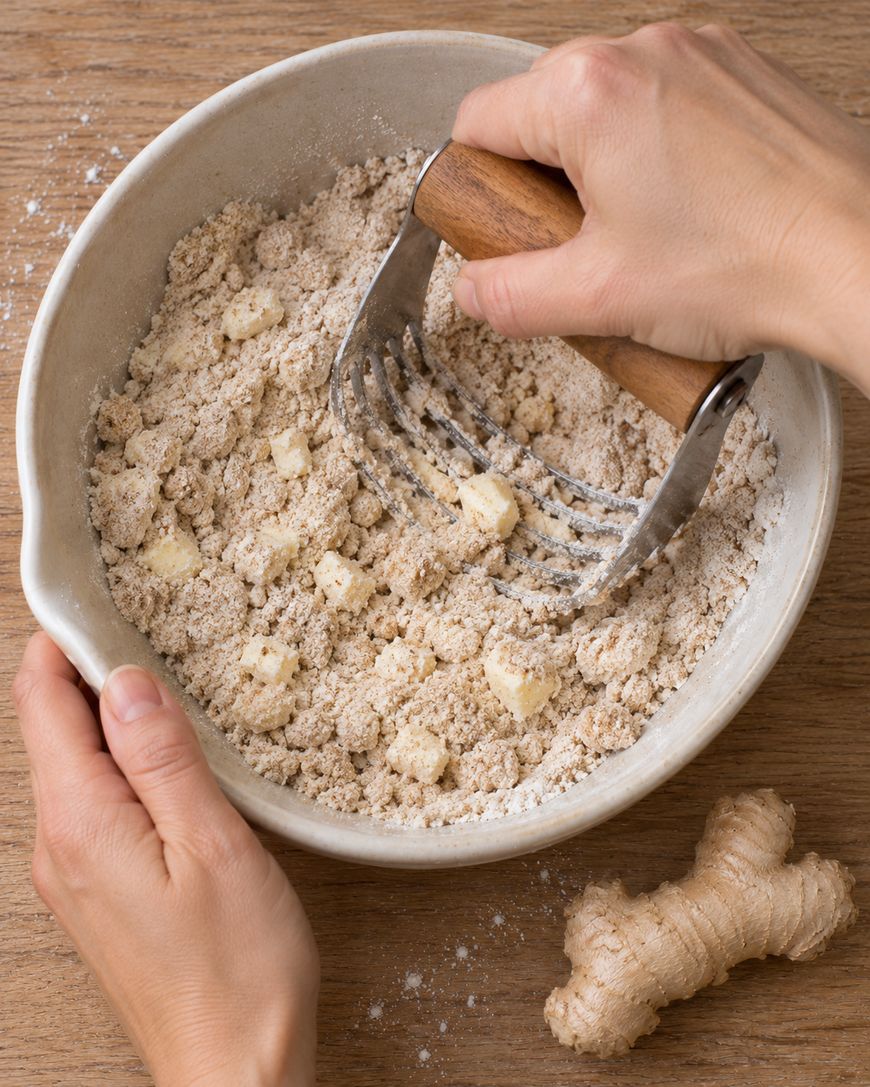
Those butter pieces melt in the oven and release steam, which creates the flaky layers. If the butter starts to feel soft or greasy, set the bowl in the fridge for 5 minutes before you continue.
Mix the Wet Ingredients and Form the Dough
In a small bowl or jug, whisk the cold heavy cream, molasses, egg, and vanilla until smooth and evenly brown. Make a well in the center of the flour mixture, pour in the liquid, and stir with a fork just until a shaggy dough forms.

The dough should look a little rough, with a few dry patches. Press it together gently with your hands instead of mixing any further.
Shape and Cut the Scones
Turn the dough out onto a lightly floured worktop and pat it into a round about 7 inches across and 1 inch thick. Cut the round into 8 wedges with a sharp knife, pressing straight down instead of dragging the blade.
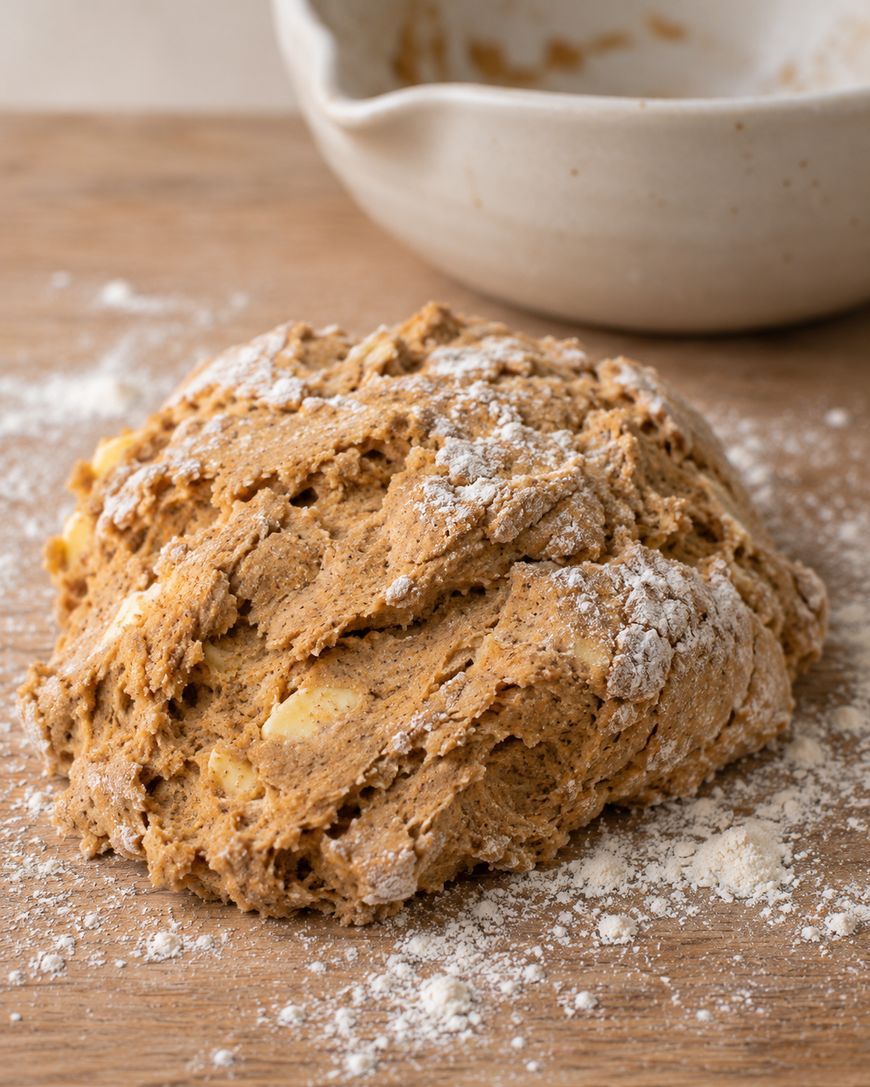
Place the wedges on the lined baking sheet about 2 inches apart. Do not reshape or reroll the dough, since extra handling makes scones tough.

Chill, Brush, and Bake
Freeze the cut scones on the baking sheet for 15 minutes while the oven heats to 400°F. Chilled butter keeps the scones from spreading and gives them a taller rise.
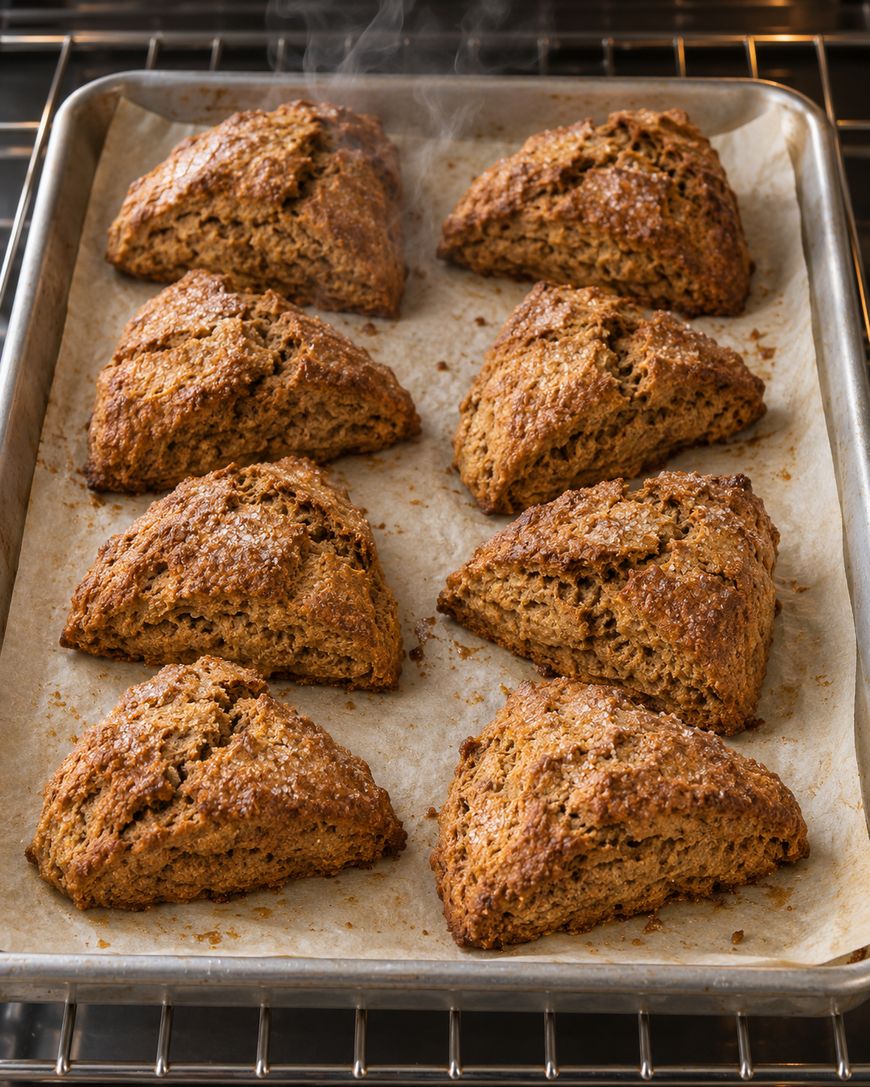
Brush the tops with the extra tablespoon of heavy cream, then bake on the center rack for 18 to 22 minutes. The scones are ready when the tops look dry and set and the bottom edges are deep golden brown.
Cool and Glaze the Scones
Move the scones to a wire rack and let them cool for 15 minutes, because glaze slides right off a hot scone. Whisk the powdered sugar, milk, vanilla, and ground ginger until smooth.

Drizzle the glaze over the scones with a spoon and let it set for about 10 minutes. If the glaze looks too thick to drizzle, whisk in more milk 1 teaspoon at a time.

Tips for the Best Gingerbread Scones
The best gingerbread scones come from cold ingredients, a light hand, and a hot oven. A few small habits make the difference between a tall, flaky scone and a dense one.
Keep Everything Cold
Cold butter and cold cream are the backbone of a flaky scone. Take them out of the fridge only when you are ready to use them.
On a warm day, chill the bowl of flour and spices for a few minutes before you add the butter. The cooler the dough stays, the more steam the butter makes in the oven.
Handle the Dough Gently
Overworking the dough develops gluten, and that turns scones tough and bready. Stir only until the dough holds together, then stop.
A shaggy dough with a few dry spots is exactly right. The cream and molasses will finish hydrating the flour while the scones chill and bake.
Use Unsulphured Molasses
Unsulphured molasses has a clean, sweet, mellow flavor that tastes like classic gingerbread. Blackstrap molasses is far more bitter and can overwhelm the spices.
Dark brown sugar adds a little extra molasses depth and keeps the crumb moist. Together they give the scones their deep amber color.
Cut Straight Down
When you cut the wedges, press the knife straight down and lift it straight up. Twisting or dragging the blade seals the edges and keeps the scones from rising evenly.
A sharp knife or a bench scraper gives the cleanest edges. Wipe the blade between cuts if the sticky dough clings to it.
Check Your Baking Powder
Baking powder loses strength over time, and weak baking powder means flat scones. Stir 1/2 teaspoon into a little hot water, and if it fizzes right away, it is still good to use.
Gingerbread Scone Variations and Substitutions
You can change gingerbread scones in a few simple ways without throwing off the dough. The base recipe stays the same, and only the small add-ins change.
Add Crystallized Ginger
Stir 1/4 cup (40 g) of finely chopped crystallized ginger into the dry ingredients right after you cut in the butter. It adds chewy, spicy bursts in every bite.
The ingredient list on the recipe card leaves this out, so treat it as an optional extra. You do not need to change any other amounts.
Add Orange Zest
Whisk 1 teaspoon of finely grated orange zest into the cream mixture. Orange brightens the molasses and pairs well with the ginger and cloves.
The recipe card leaves this out too, so it is also optional. A little goes a long way, so stick to 1 teaspoon.
Swap the Heavy Cream
Cold half-and-half can replace the heavy cream in equal amounts. The scones will bake up slightly less rich and a touch less tender.
Cold whole milk will also work in a pinch, but the dough will be a little drier. Keep the liquid very cold either way.
How to Store, Freeze, and Reheat Gingerbread Scones
Store glazed gingerbread scones in an airtight container at room temperature for up to 2 days. Layer parchment paper between them so the glaze does not stick.

For longer storage, freeze unbaked scones. Freeze the cut wedges on the baking sheet until solid, then move them to a freezer bag for up to 3 months.
Bake frozen scones straight from the freezer at 400°F, brushing with cream first and adding 3 to 5 minutes to the baking time. You can also freeze baked, unglazed scones wrapped individually for up to 3 months, then thaw at room temperature and glaze them.
To reheat baked scones, warm them on a baking sheet at 350°F for 5 to 8 minutes. That brings back the crisp edges and soft middle.
What to Serve With Gingerbread Scones
Gingerbread scones are best served slightly warm with a mug of coffee, black tea, or hot cocoa. A spoonful of softened butter or lightly sweetened whipped cream melts into the crumb beautifully.
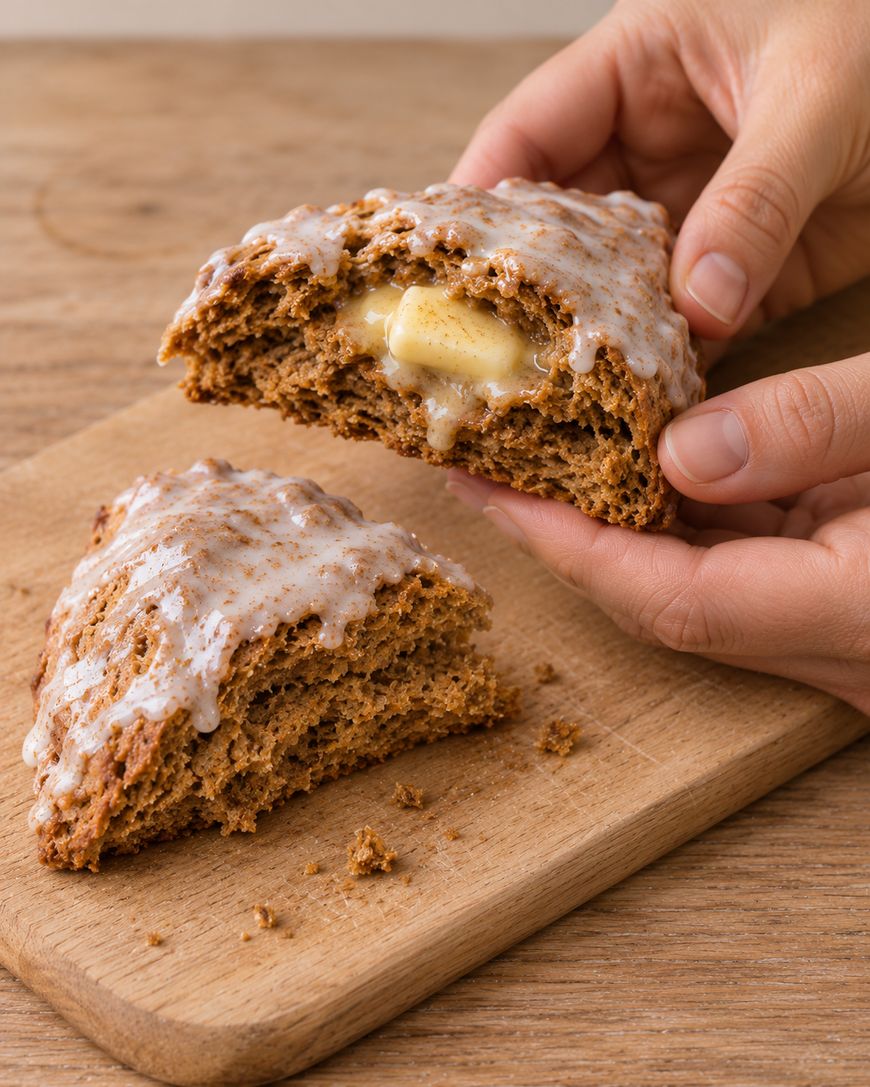
For a holiday brunch, serve them alongside fresh fruit, scrambled eggs, and a pot of strong tea. Mascarpone or cream cheese also makes a lovely spread for the warm spiced crumb.
They also make a thoughtful homemade gift. Stack a few glazed scones in a parchment-lined box, and tuck in a cinnamon stick for a cozy touch.
The Story Behind Gingerbread Scones
Gingerbread is one of the oldest spiced baked goods in Europe, built on ginger and warm spices that traveled westward along trade routes. Bakers later added molasses and brown sugar, which gave gingerbread its dark color and its signature chew.
Scones come from the British Isles, where early versions were cooked on a griddle before ovens became common in homes. Today a scone usually means a lightly sweet, butter-rich quick bread that bakes up tall with a tender crumb.
Gingerbread scones bring those two traditions together. You get the cozy spice of a holiday cookie in the shape of a bakery-style scone.
Ready to bake? Use the recipe card below for the full ingredient list, steps, and nutrition details.

Gingerbread Scones
These gingerbread scones are tender and flaky, spiced with ginger, cinnamon, and cloves and sweetened with molasses and dark brown sugar. A spiced vanilla glaze finishes them off.
Ingredients
- 2 cups (250 g) all-purpose flour, plus more for dusting
- 1/4 cup (50 g) packed dark brown sugar
- 1 tablespoon baking powder
- 1 1/2 teaspoons ground ginger
- 1 teaspoon ground cinnamon
- 1/4 teaspoon ground cloves
- 1/4 teaspoon ground nutmeg
- 1/2 teaspoon salt
- 1/2 cup (113 g) cold unsalted butter, cut into small cubes
- 1/2 cup (120 ml) cold heavy cream
- 3 tablespoons unsulphured molasses
- 1 large egg
- 1 teaspoon vanilla extract
- 1 tablespoon heavy cream, for brushing
- 1 cup (120 g) powdered sugar
- 2 tablespoons milk
- 1/2 teaspoon vanilla extract
- 1/4 teaspoon ground ginger
Instructions
- Line a rimmed baking sheet with parchment paper.
- In a large bowl, whisk the flour, dark brown sugar, baking powder, salt, ginger, cinnamon, cloves, and nutmeg until evenly combined.
- Add the cold butter and cut it in with a pastry cutter or your fingertips until the pieces are about the size of small peas.
- In a small bowl, whisk the cold heavy cream, molasses, egg, and vanilla until smooth.
- Make a well in the flour mixture, pour in the cream mixture, and stir with a fork just until a shaggy dough forms. Press the dough together gently with your hands.
- Turn the dough out onto a lightly floured surface and pat it into a round about 7 inches across and 1 inch thick. Cut into 8 wedges, pressing the knife straight down, and place the wedges 2 inches apart on the lined baking sheet.
- Freeze the scones on the baking sheet for 15 minutes while the oven heats to 400°F with a rack in the center.
- Brush the tops with the 1 tablespoon of heavy cream and bake for 18 to 22 minutes, until the tops look dry and set and the bottom edges are deep golden brown.
- Cool the scones on a wire rack for 15 minutes.
- Whisk the powdered sugar, milk, vanilla, and ground ginger until smooth, adding more milk 1 teaspoon at a time if needed. Drizzle over the cooled scones and let the glaze set for about 10 minutes.
Notes
Use unsulphured molasses, not blackstrap. Store glazed scones in an airtight container at room temperature for up to 2 days. Freeze unbaked cut scones for up to 3 months and bake from frozen at 400°F for 3 to 5 minutes longer, or freeze baked, unglazed scones wrapped individually for up to 3 months and glaze after thawing. Reheat baked scones at 350°F for 5 to 8 minutes. Optional additions not in the ingredient list: 1/4 cup (40 g) finely chopped crystallized ginger stirred into the dry ingredients, or 1 teaspoon finely grated orange zest whisked into the cream mixture. Cold half-and-half can replace the heavy cream in equal amounts for a slightly less rich scone.
Nutrition Information:
Yield:
8Serving Size:
1 sconeAmount Per Serving: Calories: 385Total Fat: 18gSaturated Fat: 11gSodium: 280mgCarbohydrates: 50gFiber: 1gSugar: 25gProtein: 5g
Gingerbread Scones FAQ
Why do gingerbread scones spread instead of rising?
Warm butter or dough is the most common cause. Make sure the butter and cream are cold, and do not skip the 15-minute freezer chill before baking.
Check that your baking powder is fresh as well.
Can gingerbread scones be made ahead of time?
Yes, you can shape and cut the scones, then freeze them unbaked for up to 3 months. Bake them straight from the freezer and add 3 to 5 minutes to the time.
Glaze them after they cool.
Is a pastry cutter needed to make gingerbread scones?
No, your fingertips work well as long as you work quickly so the butter stays cold. You can also freeze the butter and grate it into the flour on a box grater.
Either way, aim for pea-sized pieces.
Can blackstrap molasses be used in gingerbread scones?
We recommend unsulphured molasses instead. Blackstrap molasses has a strong, bitter flavor that can overpower the ginger and cinnamon.
Unsulphured gives the classic sweet gingerbread taste.
How can you tell when gingerbread scones are done?
Look for set, dry-looking tops and deep golden bottom edges after 18 to 22 minutes. Because the dough is dark from the molasses, rely on the firm look of the tops and the bottom color instead of the overall shade.
They firm up more as they cool.
Why This Gingerbread Scone Recipe Works
This recipe works because it uses cold butter cut into the flour in pea-sized pieces. In the hot 400°F oven those pieces turn to steam and push the dough upward, which creates flaky layers instead of a dense crumb.
Molasses and dark brown sugar keep the scones moist and give them real gingerbread flavor, while the heavy cream adds richness. The baking powder gives lift, and a short stir keeps the dough tender.
Freezing the cut scones for 15 minutes before baking keeps the butter solid so the wedges hold their shape. A simple spiced vanilla glaze finishes them with a little sweetness, and the ginger in the glaze echoes the spice inside.
Bake Your Gingerbread Scones Today
Gingerbread scones are an easy way to bring bakery-style spice into your kitchen, and the dough comes together in about 20 minutes. Keep the butter cold, stir gently, and let the oven do the rest.
Print the recipe card, bake a batch this weekend, and leave a star rating and a comment to tell us how they turned out.
Buttermilk Biscuits That Bake Up Tall, Flaky, and Buttery Every Time
Easy Drop Biscuits That Bake Up Tall and Fluffy With No Rolling or Cutting