Last updated: October 10, 2026
These lemon cookies are soft, chewy, and packed with fresh lemon zest, and you can have them on the cooling rack in about an hour.
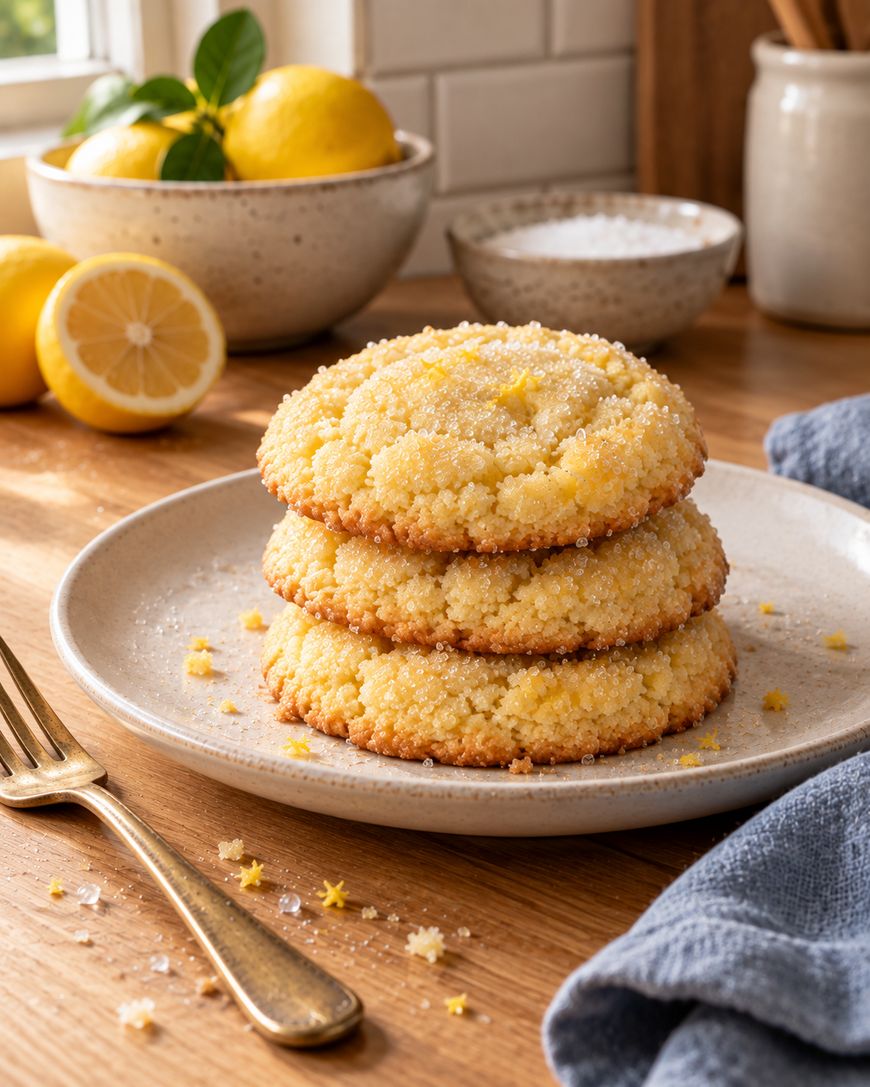
Scroll down for the walkthrough and tips, then use the recipe card below when you are ready to bake.
What You Need to Make Lemon Cookies
You need ordinary pantry staples plus two large lemons, and every ingredient has a clear job in the dough.

The goal is a cookie that tastes like real lemon instead of candy, so fresh zest and juice matter more than anything else on the list.
Flour and Leaveners
Plain all-purpose flour gives these cookies a tender bite without turning them cakey.
Two and a quarter cups is the right amount, and you should spoon it into the measuring cup and level it off so the dough does not turn dry.
A teaspoon of baking powder and half a teaspoon of baking soda work together here, because the soda reacts with the acid in the lemon juice while the powder adds a little lift.
Half a teaspoon of fine salt keeps the sweetness from tasting flat.
Butter, Sugar, and Eggs
Three-quarters of a cup of unsalted butter, softened until a finger leaves a dent without sinking in, builds the rich base.
One cup of granulated sugar goes into the dough, and another quarter cup is saved for rolling the cookie balls.
One whole egg plus one extra yolk adds fat and structure, which is what keeps the centers chewy instead of crumbly.
A teaspoon of pure vanilla extract rounds out the flavor and softens the sharp edge of the citrus.
Lemon Zest and Lemon Juice
Two tablespoons of finely grated zest, which is about two large lemons, carries most of the lemon flavor because the oils live in the peel.
A Microplane zester gives you fine, fluffy zest that disappears into the dough, so you never bite into a bitter strip of peel.
Two tablespoons of fresh lemon juice add the tang, and bottled juice will taste noticeably flatter.
Meyer lemons work beautifully if you can find them, and they give the cookies a softer, slightly floral flavor.
How to Make Lemon Cookies Step by Step
Lemon cookies come together in one bowl in about fifteen minutes of hands-on work, followed by a short chill and two quick batches in the oven.
Follow the order below and you will get the same tender cookie every time.
Rub the Zest Into the Sugar
Start by working the lemon zest into one cup of the sugar with your fingertips until the sugar looks damp and smells strongly of lemon.

This small step pushes the zest oils into every sugar crystal, and it is the reason the flavor tastes bright instead of faint.
Cream the Butter and Mix the Dough
Add the softened butter to the lemon sugar and beat it with an electric mixer for two to three minutes until pale and fluffy.

Beat in the egg, the extra yolk, the lemon juice, and the vanilla until everything looks smooth.
In a separate bowl, whisk the flour, baking powder, baking soda, and salt, then stir it into the butter mixture until just combined.

Stop mixing as soon as no dry flour shows, because overworked dough bakes up tough.

Chill, Scoop, and Roll
Cover the bowl and chill the dough for 30 minutes so the butter firms up and the cookies hold their shape in the oven.
While it rests, preheat the oven to 350°F and line two baking sheets with parchment paper.
Scoop the dough into 1 1/2 tablespoon portions, roll each one into a ball, and coat it in the remaining quarter cup of sugar.
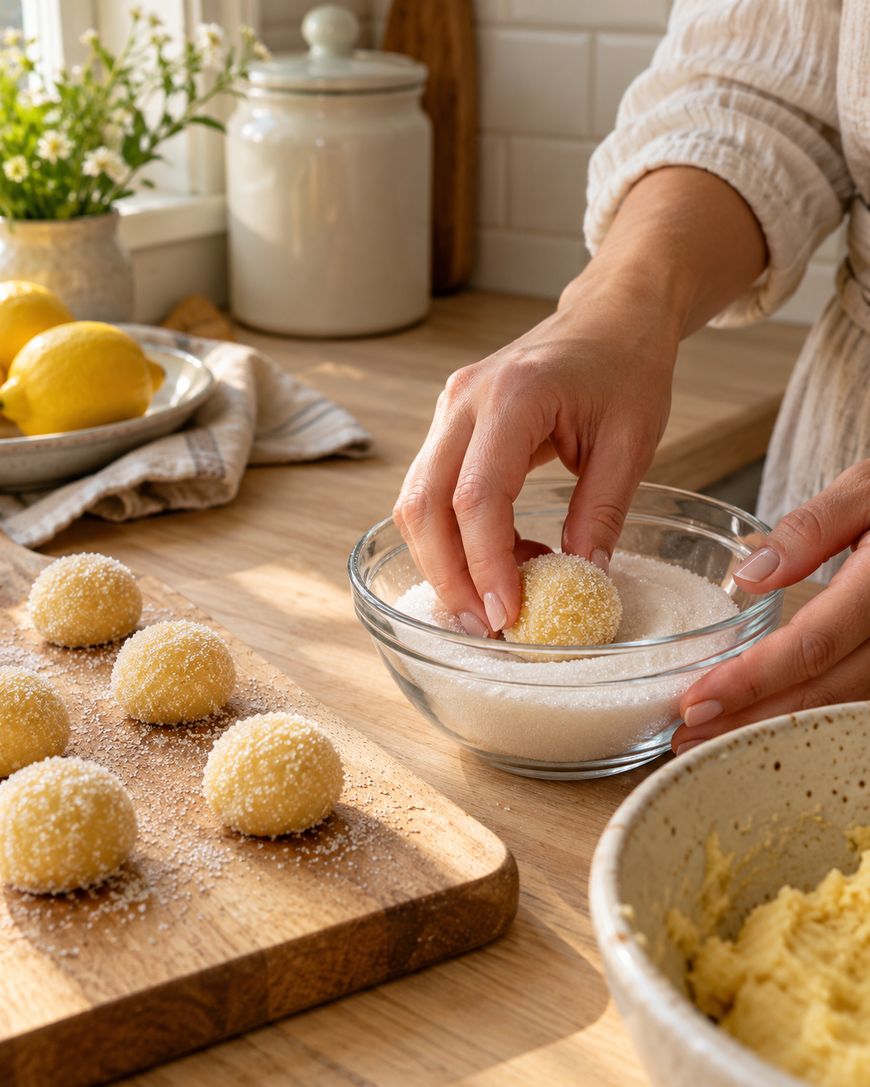
Place the balls two inches apart on one sheet and keep the second sheet’s worth of dough in the refrigerator until the first batch is done.

Bake and Cool
Bake one sheet at a time for 10 to 11 minutes, until the edges look set and barely golden while the centers still look soft.
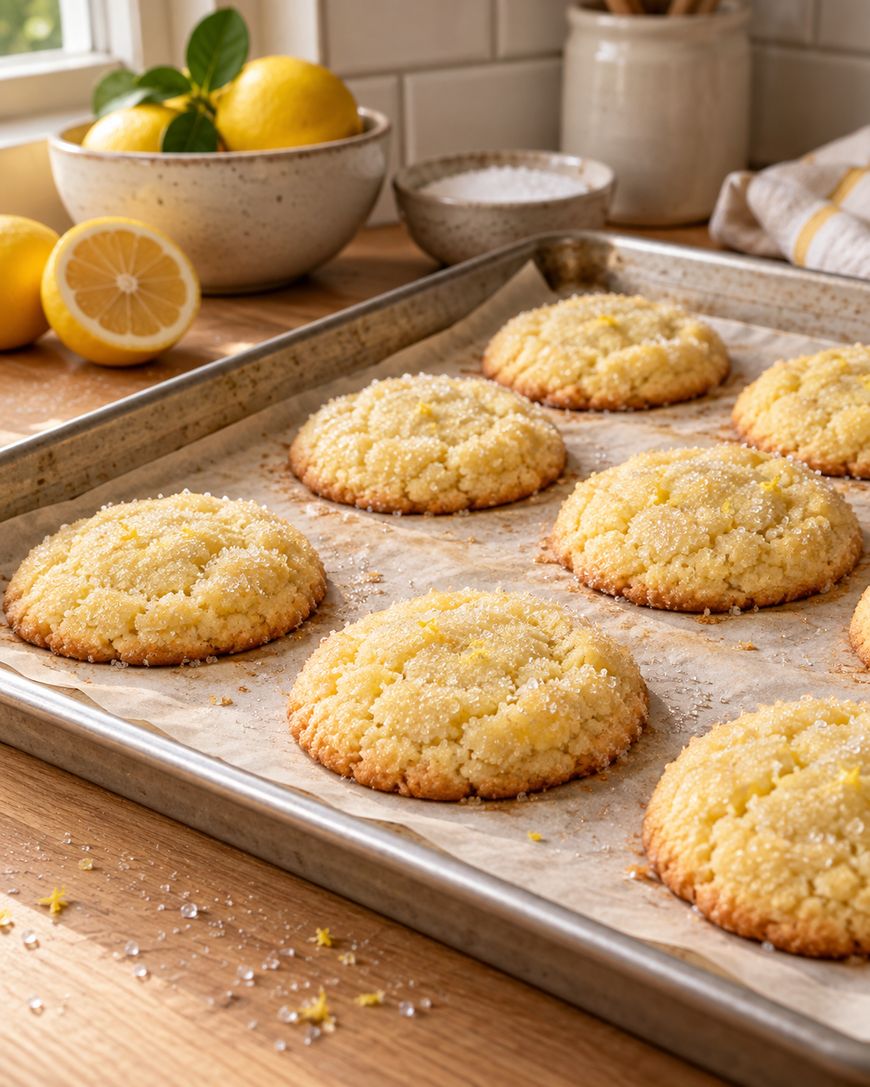
Let the cookies rest on the hot sheet for five minutes, then move them to a wire rack.

They finish setting as they cool, so resist the urge to bake them until they look fully done in the oven.
Tips for the Best Lemon Cookies
The difference between a good lemon cookie and a great one comes down to a few small habits that cost you nothing.
Each of these tips solves a specific problem people run into with citrus cookies.
Use Room Temperature Butter
Butter that is too warm makes the dough greasy and the cookies spread into thin, crispy discs.
If your kitchen is warm, check the dough after mixing and add an extra ten minutes of chill time if it feels sticky.
Zest Before You Juice
Zest the lemons first, because a juiced lemon is nearly impossible to grate cleanly.
Avoid the white pith under the yellow skin, since it tastes bitter and will show up in the finished cookie.
Pull Them Out Early
Underbaking by a minute is the secret to a chewy middle, because cookies keep cooking on the hot baking sheet.
When the edges are set and the tops look puffy and slightly dull, they are ready.
Keep the Dough Cold Between Batches
Warm dough on a warm sheet spreads faster than chilled dough on a cool one.
Cool the baking sheet under cold running water and dry it between batches, or rotate between two sheets.
Lemon Cookie Variations and Substitutions
This dough is forgiving, so you can change the flavor or the finish without changing the method.
Treat the ideas below as optional extras, because the recipe card keeps the base recipe simple.
Add a Lemon Glaze
A quick glaze turns these into bakery-style lemon cookies with a sweet, tangy shell.
Our easy lemon glaze icing recipe sets in about 15 minutes, and the card leaves the glaze out, so treat it as an optional topping.
Fold in White Chocolate
Half a cup of white chocolate chips stirred in at the end adds creamy sweetness that plays well with the tart lemon.
The card does not include them, so add them only if you want that richer, dessert-style cookie.
Swap the Citrus
Lime or orange zest and juice can replace the lemon in equal amounts if you want a different citrus cookie.
Orange makes a milder cookie, while lime gives you a sharper, more tropical flavor.
Make Them Dairy Free
Plant-based butter sticks designed for baking, such as Miyoko’s or Earth Balance, can replace the butter one for one.
The cookies will spread a little more, so give the dough the full 30 minutes in the refrigerator.
How to Store and Freeze Lemon Cookies
Lemon cookies stay soft for up to 5 days when you store them in an airtight container at room temperature.
Slip a slice of sandwich bread into the container if your kitchen is dry, because the cookies will soak up some of its moisture and stay tender.
You can freeze baked cookies in a freezer bag for up to 3 months and thaw them on the counter for about 30 minutes.
For fresh-baked cookies on demand, freeze the sugar-rolled dough balls on a tray, then move them to a bag for up to 3 months.
Bake the frozen dough balls straight from the freezer and add one to two minutes to the baking time.
The dough also keeps in the refrigerator for up to 2 days if you want to mix it ahead and bake when guests arrive.
Always cool the cookies completely before sealing them in a container, because trapped steam makes the tops sticky.
If you stack layers, separate them with parchment paper so the sugar crust stays intact.
Serving Ideas for Lemon Cookies
Lemon cookies are easy to dress up for almost any occasion, from a quiet weeknight to a full spring brunch.

They pair especially well with drinks that echo their brightness or soften their tang.
A cup of Earl Grey tea is a classic match, because the bergamot in the tea complements the lemon without competing.
Iced lemonade or sparkling water with fresh mint makes them feel like a summer picnic dessert.
For parties, stack them on a cake stand next to fresh raspberries and blueberries, which give the plate a pop of color.
You can also sandwich two cookies around whipped cream cheese frosting or a spoonful of raspberry jam for an easy lemon cookie sandwich.
Wrapped in parchment and tied with twine, a half dozen make a thoughtful homemade gift for a neighbor or teacher.
They also travel well, so a tin of lemon cookies is an easy contribution to a potluck or a cookie exchange.
The Story Behind Lemon Cookies
Lemon cookies have roots in the European tradition of flavoring butter cookies with citrus peel, long before modern lemons were sold year round in American grocery stores.
Italian lemon ricotta cookies, German Zitronenplätzchen, and British lemon shortbread all grew from the same idea that bright citrus cuts through rich butter.
American home bakers adapted that idea into drop cookies and sugar cookies once lemons became affordable and easy to find in the twentieth century.
Today the soft, sugar-crusted version is a staple at bake sales, bridal showers, and holiday cookie swaps.
The version here keeps that old-fashioned spirit but uses one bowl and a short chill, so it fits into a normal evening.
Whether you grew up with a grandmother’s lemon cookies or are baking them for the first time, the combination of butter, sugar, and citrus feels instantly familiar.
That comfort is a big part of why lemon cookies keep showing up in spring and summer baking lists year after year.
Ready to bake? Use the recipe card below for the exact amounts, times, and nutrition details.

Soft Lemon Cookies
Soft, chewy lemon cookies made with fresh zest and juice, then rolled in sugar for a sparkly edge. They bake in about 11 minutes per tray.
Ingredients
- 2 1/4 cups all-purpose flour
- 1 teaspoon baking powder
- 1/2 teaspoon baking soda
- 1/2 teaspoon fine salt
- 3/4 cup unsalted butter, softened
- 1 cup granulated sugar
- 2 tablespoons finely grated lemon zest (about 2 large lemons)
- 1 large egg
- 1 large egg yolk
- 2 tablespoons fresh lemon juice
- 1 teaspoon pure vanilla extract
- 1/4 cup granulated sugar, for rolling
Instructions
- Preheat the oven to 350°F and line two baking sheets with parchment paper.
- In a large bowl, rub the lemon zest into 1 cup of the sugar with your fingertips until the sugar looks damp and smells strongly of lemon.
- Add the softened butter and beat with an electric mixer for 2 to 3 minutes until pale and fluffy.
- Beat in the egg, egg yolk, lemon juice, and vanilla until smooth.
- In a separate bowl, whisk the flour, baking powder, baking soda, and salt, then stir into the butter mixture until just combined.
- Cover and chill the dough for 30 minutes.
- Scoop the dough into 1 1/2 tablespoon portions, roll into balls, coat in the remaining 1/4 cup sugar, and place 2 inches apart on one prepared sheet. Keep the rest of the dough in the refrigerator.
- Bake one sheet at a time for 10 to 11 minutes, until the edges are set and barely golden and the centers still look soft.
- Cool on the baking sheet for 5 minutes, then transfer to a wire rack. Repeat with the remaining dough.
Notes
Store in an airtight container at room temperature for up to 5 days. Freeze baked cookies for up to 3 months. Freeze the sugar-rolled dough balls for up to 3 months and bake from frozen, adding 1 to 2 minutes. The dough keeps in the refrigerator for up to 2 days. Glaze and white chocolate chips are optional extras that are not part of the base recipe.
Nutrition Information:
Yield:
24Serving Size:
1 cookieAmount Per Serving: Calories: 142Total Fat: 6gSaturated Fat: 4gSodium: 95mgCarbohydrates: 20gFiber: 0gSugar: 11gProtein: 2g
Lemon Cookie FAQs
These are the questions we hear most often about baking lemon cookies at home.
Why Are My Lemon Cookies Flat?
Flat cookies usually come from butter that was too soft or dough that skipped the chill.
Chill the dough for the full 30 minutes and bake on a cool sheet lined with parchment.
Can You Use Bottled Lemon Juice?
Bottled juice works in a pinch, but the flavor is flatter and a little bitter compared with fresh juice.
The zest does most of the heavy lifting, so always use fresh lemons for that part.
How Do You Know When Lemon Cookies Are Done?
Look for set edges and a barely golden color at the rim, with centers that still look soft and slightly puffy.
That usually happens at 10 to 11 minutes, and the cookies finish setting on the baking sheet.
Can You Make the Dough Ahead of Time?
Yes, the dough keeps in the refrigerator for up to 2 days, and the shaped balls freeze for up to 3 months.
Roll the balls in sugar just before baking if the dough has been in the refrigerator for a full day.
Why Do My Lemon Cookies Taste Bitter?
Bitterness almost always comes from grating into the white pith beneath the yellow zest.
Grate lightly and stop as soon as you see white.
Why This Lemon Cookie Recipe Works
Rubbing the zest into the sugar releases the lemon oils before the butter ever goes in, so the flavor spreads through the whole cookie.
Creaming that lemon sugar with softened butter for two to three minutes traps tiny air pockets, which gives the cookies a tender crumb.
The extra egg yolk adds richness and moisture, and the 30 minute chill keeps the butter firm so the cookies puff instead of spreading thin.
Baking soda reacts with the acid in the lemon juice for gentle lift, and the small amount of baking powder backs it up so the cookies stay soft in the center.
Pulling them from the oven while the centers still look soft gives you that bakery-style chew that lasts for days.
Rolling the dough balls in sugar before baking creates the crackly, sparkly crust that makes these lemon cookies look as good as they taste.
Each step is small, but together they add up to a dependable cookie you can bake from memory after a batch or two.
Final Thoughts on Lemon Cookies
These lemon cookies prove that a simple dough and fresh citrus are all you need for a cookie that feels special.
Bake a batch this weekend, share a few with someone you love, and freeze the rest of the dough balls so you always have lemon cookies ready to go.
Remember the three habits that matter most: use fresh zest, chill the dough for 30 minutes, and pull the cookies while the centers still look soft.
Try the recipe card above, and let us know how your lemon cookies turned out.
For more cookie ideas, browse the related recipes below.