Last updated: October 5, 2026
Lemon glaze icing is the quick, bright topping you make by whisking powdered sugar with fresh lemon juice and zest in about 5 minutes. The full recipe card is below, and the tips in between help you get the thickness exactly right.
Lemon Glaze Icing Ingredients and What Each One Does
Lemon glaze icing needs only four ingredients, and each one has a clear job. Once you know why it is there, adjusting the glaze to suit your cake or cookies gets easy.
The Powdered Sugar
This recipe uses 2 cups of powdered sugar, which is about 240 grams. Powdered sugar dissolves instantly in lemon juice, so the glaze turns smooth without any heat.

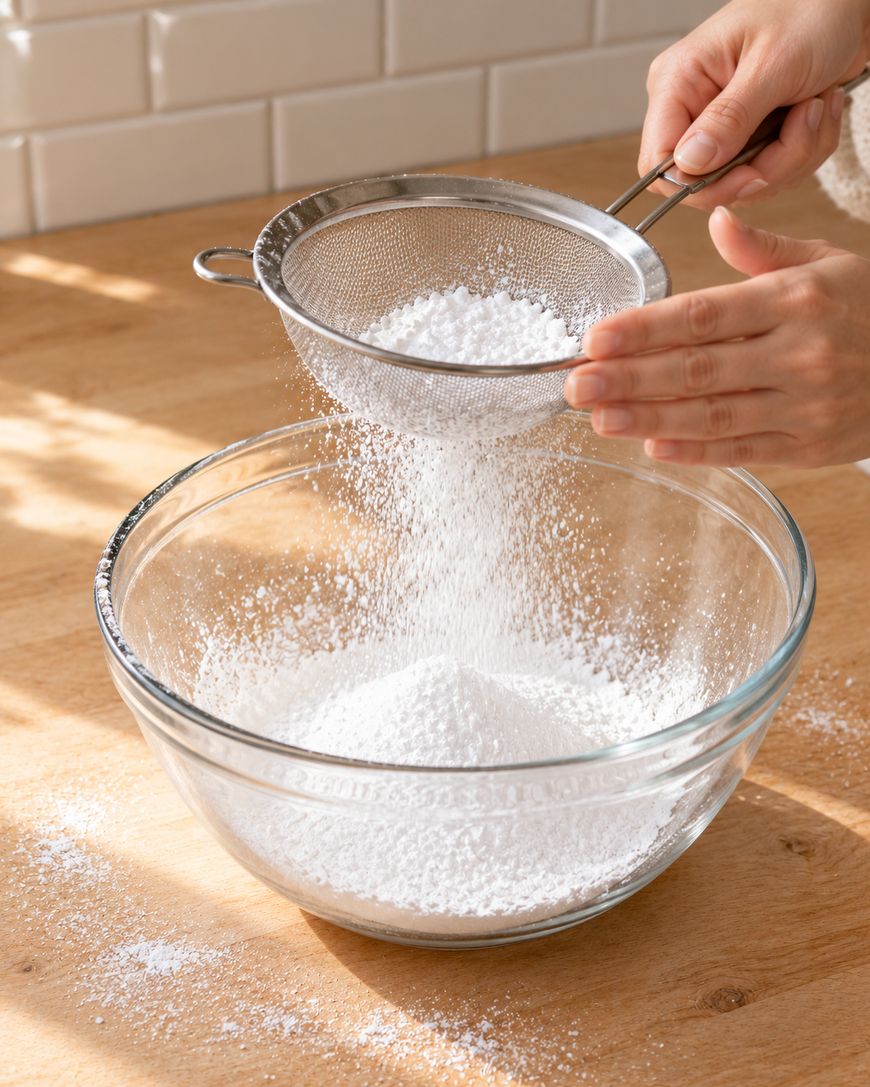
Sift it through a fine mesh strainer before you start, since even a few small lumps will stay in the finished glaze. Brands like Domino and C&H both work well.
The Lemon Juice
You need 3 tablespoons of fresh lemon juice to start, plus up to 1 more tablespoon on hand to thin the glaze. One large lemon usually gives you 3 to 4 tablespoons of juice, so a single lemon covers the juice and the zest.

Fresh juice tastes brighter and cleaner than the bottled kind. Meyer lemons make a softer, slightly floral glaze, while regular Eureka or Lisbon lemons give you the classic sharp flavor.
The Lemon Zest and Salt
One teaspoon of finely grated lemon zest adds the aroma and deep lemon flavor that juice alone cannot give you, because the oils live in the peel. A small pinch of fine salt keeps the sweetness from tasting flat.

Zest the lemon before you juice it, since a squeezed lemon is nearly impossible to grate. Use a Microplane and take only the yellow layer, because the white pith underneath tastes bitter.
How to Make Lemon Glaze Icing Step by Step
You make lemon glaze icing by sifting the sugar, whisking in the zest, salt, and juice, and then adjusting the thickness one teaspoon at a time. The whole process takes about 5 minutes and uses a single bowl.
Sift and Combine
Sift the powdered sugar into a medium bowl, then stir in the zest and a pinch of salt. Adding the zest to the dry sugar first spreads it evenly through the glaze.
Whisk in the Juice
Pour in 3 tablespoons of lemon juice and whisk for about 30 seconds, until the glaze is completely smooth. It will look very thick at first, almost like a paste, and that is normal.

Adjust the Consistency
Add more lemon juice 1 teaspoon at a time, whisking after each addition, until the glaze falls from the whisk in a thick ribbon that holds for a few seconds before melting back into the bowl. The most you should need is 1 extra tablespoon.

Stop adding liquid sooner than you think you should, because the glaze thins out quickly. If you go too far, whisk in a tablespoon of sifted powdered sugar to bring it back.
Glaze and Let It Set
Spoon or drizzle the glaze over fully cooled cake, cookies, scones, or muffins. Let it set at room temperature for 15 to 20 minutes, until the surface feels dry to a light touch.
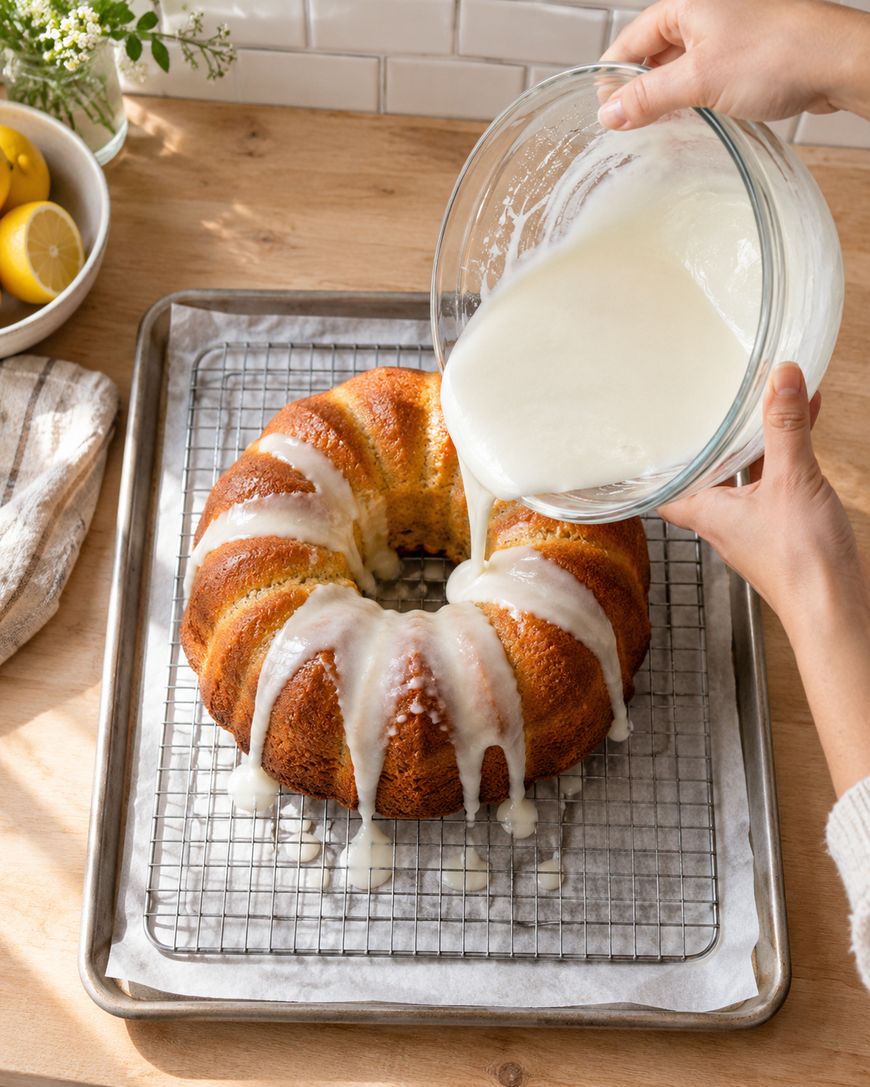
Slide a sheet of parchment or a baking sheet under your cooling rack first, so the drips land somewhere easy to clean up.
What to Glaze With Lemon Glaze Icing
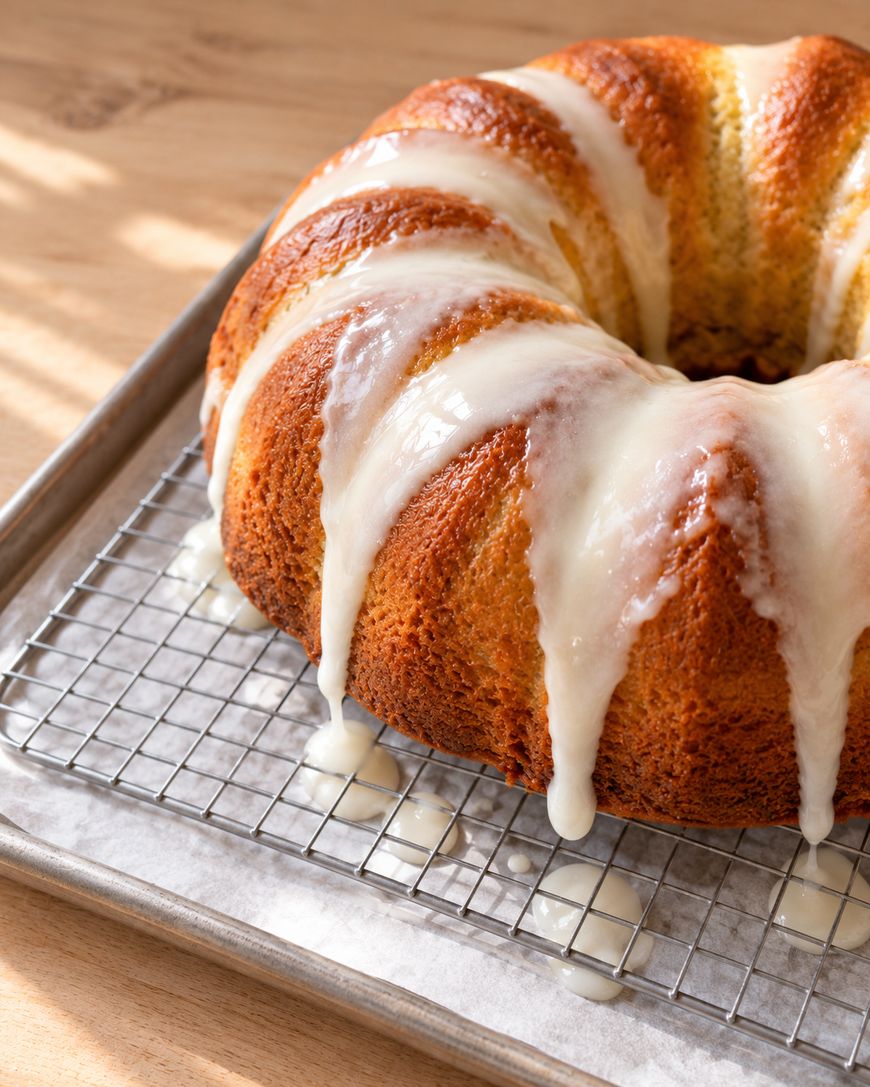
Lemon glaze icing works best on baked goods that are tender, buttery, or lightly sweet, because the tart glaze balances them. One batch covers a Bundt cake, a 9×13 inch sheet cake as a drizzle, 12 muffins, 12 scones, or about 24 cookies.
Cakes and Loaves
Pound cake, Bundt cake, and lemon loaf are the classic choices, and the glaze pools beautifully in the grooves of a Bundt pan. A simple vanilla or butter cake takes it well too, since the lemon cuts through the richness.

Scones, Muffins, and Quick Breads
Scones, blueberry muffins, and banana bread all get a bakery-style finish from a quick drizzle. Plan on about 1 tablespoon of glaze per muffin or scone.
Cookies and Sweet Rolls
Dip the tops of cooled sugar cookies or shortbread into the glaze, then let the excess drip off before setting them on a rack. Cinnamon rolls work too, and you can drizzle them while they are still slightly warm, although the card keeps things simple with fully cooled bakes.

Variations and Substitutions
You can change the flavor and finish of lemon glaze icing without changing the basic ratio. Each swap below keeps the glaze easy to pour and quick to set.
Make It Creamy and Opaque
Replace 1 tablespoon of the lemon juice with whole milk or heavy cream for a softer, whiter glaze that looks more like a bakery coating. The card below leaves this out, so treat it as optional.
Try Other Citrus
Swap the lemon juice and zest for orange, lime, or grapefruit in equal amounts. The card uses lemon only, so these swaps are optional too.
Thicker or Thinner Glaze
For a thick glaze that stays put on cookies, use only the 3 tablespoons of juice. For a thin drizzle that runs into the grooves of a cake, use the full 4 tablespoons.
Storing Lemon Glaze Icing
Store leftover lemon glaze icing in an airtight container in the refrigerator for up to 5 days. Whisk it well before using, and add a few drops of lemon juice if it has thickened.

Store glazed baked goods the same way you would store the unglazed version. A fully set glaze will not smear, so you can stack cookies with parchment between the layers.
The Story Behind Lemon Glaze Icing
Simple sugar glazes have finished baked goods for generations, from British lemon drizzle cake to American Bundt cakes and Southern scones. The idea is the same everywhere, which is to dissolve sugar in a tart liquid and let it set into a thin, slightly crisp shell.
Fine powdered sugar turned the technique into a weeknight shortcut, because it needs no cooking, no thermometer, and no cooling time. That is why lemon glaze icing is still a favorite for home bakers who want a polished finish with almost no effort.
Lemon suits the job better than most flavors. Its sharp acidity balances the sweetness of the sugar, so the glaze tastes bright instead of cloying.
Ready to make it? Use the recipe card below for the exact measurements and quick steps.

Lemon Glaze Icing
A bright, easy lemon glaze icing made with powdered sugar, fresh lemon juice, and zest. It whisks together in 5 minutes and sets in about 15 to 20 minutes.
Ingredients
- 2 cups (240 g) powdered sugar, sifted
- 3 tablespoons fresh lemon juice, plus up to 1 tablespoon more as needed
- 1 teaspoon finely grated lemon zest
- 1 pinch fine salt
Instructions
- Sift the powdered sugar into a medium bowl and stir in the lemon zest and salt.
- Add 3 tablespoons of lemon juice and whisk for about 30 seconds, until completely smooth.
- Add more lemon juice 1 teaspoon at a time, up to 1 extra tablespoon, until the glaze falls from the whisk in a thick ribbon that holds for a few seconds.
- Spoon or drizzle the glaze over fully cooled cake, cookies, scones, or muffins.
- Let the glaze set at room temperature for 15 to 20 minutes.
Notes
Makes about 3/4 cup, enough for a Bundt cake, 12 muffins, 12 scones, or about 24 cookies. Store leftover glaze in an airtight container in the refrigerator for up to 5 days and whisk before using, adding a few drops of lemon juice if it thickens. Optional extras not included in the card: replace 1 tablespoon of lemon juice with milk or heavy cream for an opaque glaze, or swap in orange or lime juice and zest.
Nutrition Information:
Yield:
12Serving Size:
1 tablespoonAmount Per Serving: Calories: 78Total Fat: 0gSaturated Fat: 0gSodium: 3mgCarbohydrates: 20gFiber: 0gSugar: 19gProtein: 0g
Lemon Glaze Icing FAQs
Why is my lemon glaze icing too runny?
You most likely added too much juice at once. Whisk in sifted powdered sugar 1 tablespoon at a time until the glaze falls from the whisk in a thick ribbon again.
Can you use bottled lemon juice?
Yes, it works, but the flavor is flatter and a little harsher. Fresh juice and zest give this glaze its bright, true lemon taste, so use them when you can.
How long does lemon glaze icing take to set?
At room temperature it sets in about 15 to 20 minutes. A thicker coat can take a little longer, and humid days slow it down.
How do you keep the glaze from soaking in?
Let the baked good cool completely before glazing, and keep the glaze on the thicker side. A warm cake melts the sugar and pulls the glaze into the crumb.
How long does it keep?
Refrigerate the glaze in an airtight container for up to 5 days. Whisk it before using, and add a few drops of lemon juice if it thickens.
Can you skip the zest?
Yes, the glaze still tastes good without it, but the flavor is milder. The zest adds the strongest lemon aroma.
Why This Lemon Glaze Icing Recipe Works
The ratio of 2 cups of powdered sugar to 3 tablespoons of lemon juice makes a glaze that is thick enough to cling and loose enough to drizzle. Starting with the smaller amount of juice means you only ever fix the consistency by adding, which is far easier than rescuing a runny glaze.
Sifting the sugar removes lumps before they can form, and whisking the zest into the dry sugar spreads the lemon flavor evenly. The pinch of salt rounds out the sweetness so the lemon tastes bright instead of sharp.
Fresh juice and zest both matter, since the juice brings the tartness and the peel oils bring the aroma. Together they give you a glaze that tastes like real lemon rather than candy.
Make Lemon Glaze Icing Your Go-To Finish
Lemon glaze icing takes 5 minutes, one bowl, and four ingredients, and it lifts nearly any cake, scone, or cookie. Grab a lemon, whisk up a batch with the card above, and glaze something you baked this week.