Last updated: June 7, 2026
You are looking for a lemon cream cheese frosting recipe, and you have absolutely come to the right place. Scroll down to the recipe card if you want to jump straight to the details, or keep reading for everything you need to make it perfectly.
Why This Lemon Cream Cheese Frosting Is Worth Making
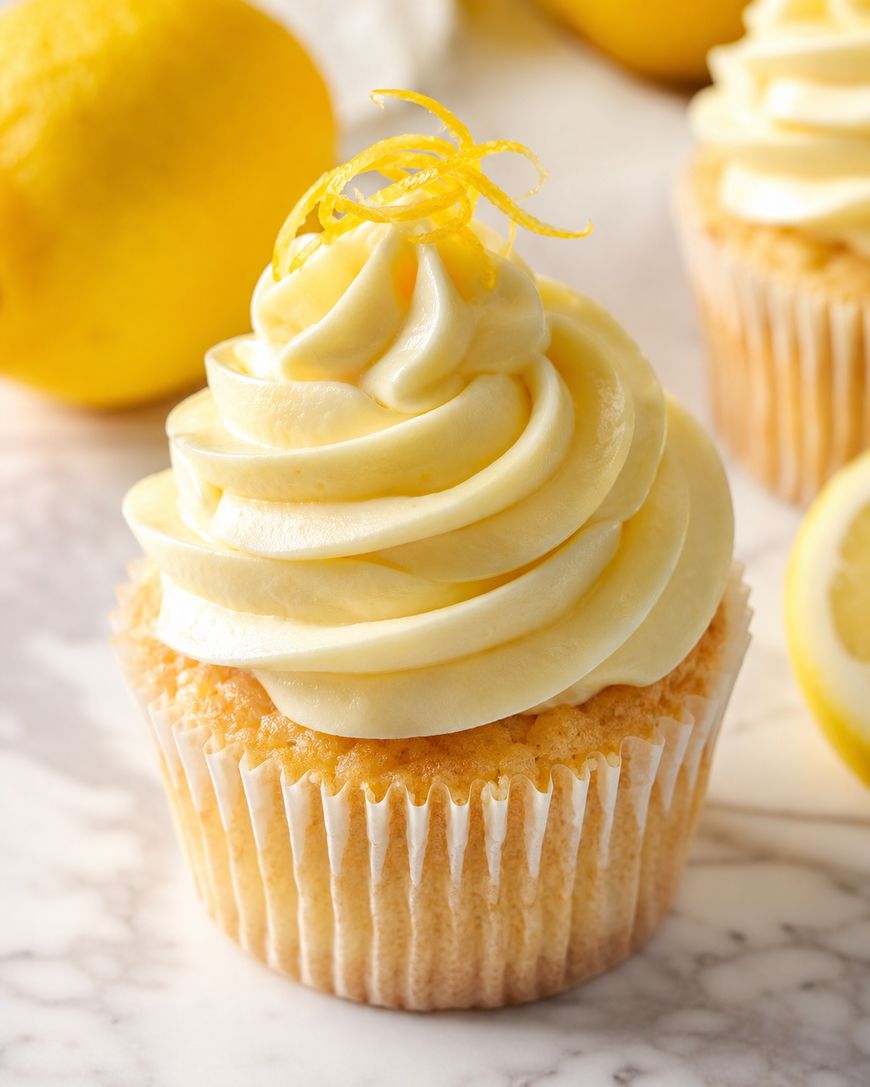
This frosting delivers something special: the bright, citrusy punch of fresh lemon combined with the rich, tangy depth of cream cheese. It is the kind of frosting that turns a simple cake into something people ask about long after the plates are cleared.
It is versatile enough to work on everything from carrot cake to lemon cupcakes to sugar cookies. Once you understand how it comes together, you will reach for it again and again.
What Makes It Different From Regular Cream Cheese Frosting
Standard cream cheese frosting relies on vanilla to carry its flavor profile. This version swaps that vanilla-forward warmth for the sharp brightness of fresh lemon zest and lemon juice, creating a frosting that feels lighter and more vibrant on the palate.
The lemon does not just add flavor. It also slightly cuts through the richness of the cream cheese, making the frosting taste less heavy even though the ingredients are similar.
The Key Ingredients and Why They Matter
Every ingredient in this frosting plays a specific role in achieving the right texture and flavor. Understanding what each one does helps you troubleshoot if something goes wrong and make smart substitutions when needed.
Cream Cheese
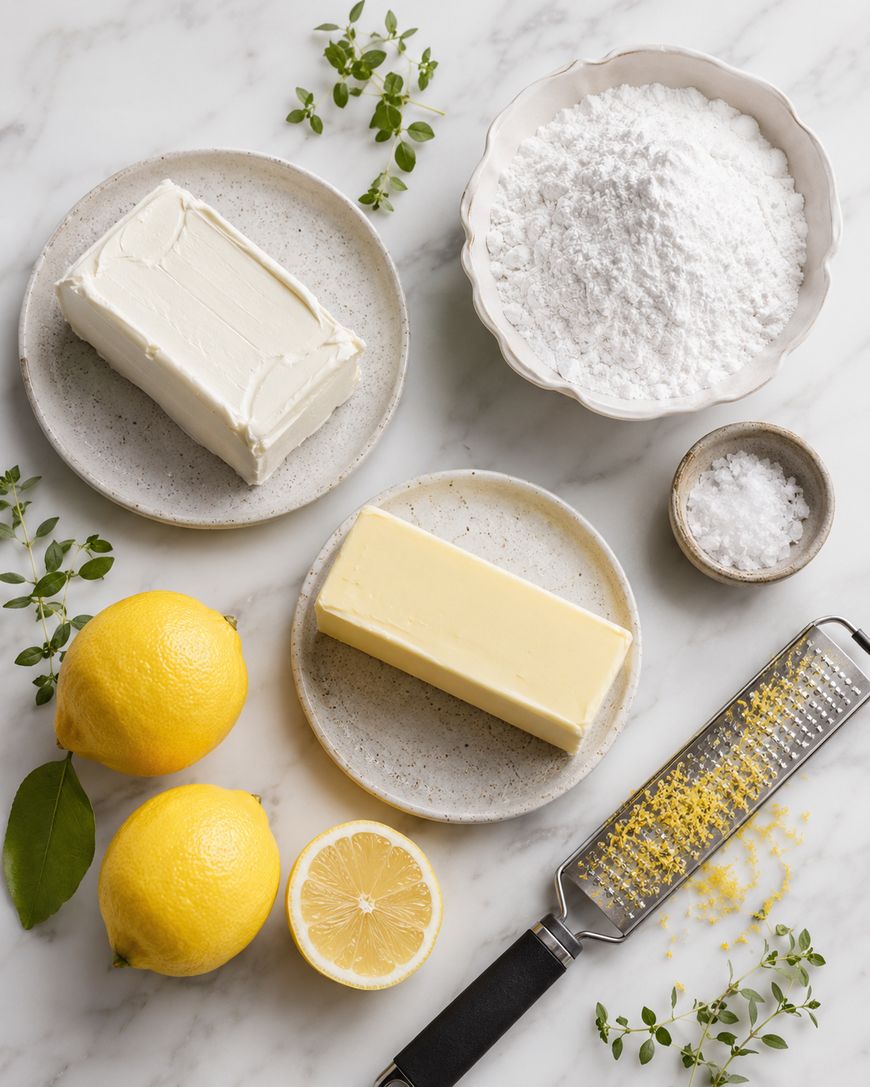
Full-fat brick-style cream cheese is the non-negotiable foundation of this recipe. Do not use spreadable cream cheese from a tub because the higher moisture content will make your frosting runny and difficult to pipe.
The cream cheese must be fully softened to room temperature before you start. Cold cream cheese will leave lumps that no amount of mixing can smooth out.
Butter
Unsalted butter adds richness and helps the frosting hold its shape after piping. Like the cream cheese, it needs to be at room temperature before you begin.
Using softened butter rather than melted butter keeps the frosting stable and gives it the fluffy, whipped texture you are looking for. Cold butter will not cream properly and can create a gritty or separated result.
Powdered Sugar
Also known as confectioners sugar, powdered sugar dissolves completely into the frosting, giving it a smooth, silky texture. Granulated sugar cannot be substituted here because it will not incorporate properly and will leave the frosting gritty.
Sifting the powdered sugar before adding it is a step worth taking. It prevents small lumps from forming and makes the final texture noticeably smoother.
Fresh Lemon Zest
Lemon zest is where most of the flavor lives in this recipe. The zest contains the essential oils from the lemon skin, which are far more concentrated and aromatic than the juice alone.
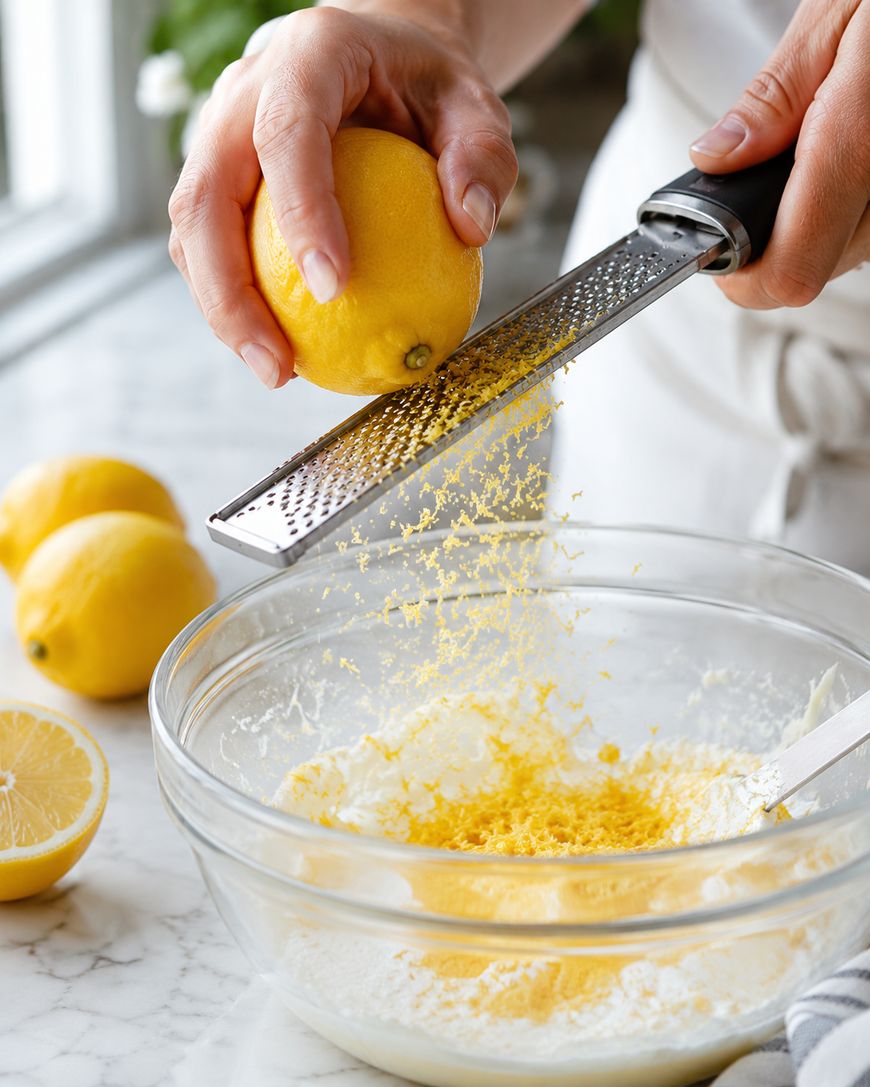
Use a microplane or fine grater to zest the lemon, and take care to grate only the yellow part of the skin. The white pith underneath is bitter and will affect the flavor negatively if it ends up in your frosting.
Fresh Lemon Juice
A small amount of fresh lemon juice brightens the overall flavor and adds a light tartness that balances the sweetness of the powdered sugar. Bottled lemon juice can be used in a pinch, but fresh juice produces a noticeably cleaner and more vibrant flavor.
Start with less than you think you need. You can always add more, but you cannot take it back out once it is in the bowl.
A Pinch of Salt
A small amount of salt is essential for balance. It enhances the lemon flavor and prevents the frosting from tasting one-dimensionally sweet.
Do not skip this step even though the amount is tiny. Salt is one of those ingredients that you only notice when it is missing.
How to Make Lemon Cream Cheese Frosting: Step by Step
The method for this frosting is straightforward, but a few key technique points will determine whether you end up with a smooth, fluffy result or a dense, lumpy one. Follow each stage carefully for the best outcome.
Beat the Cream Cheese First
Start by beating the softened cream cheese on its own for about 2 minutes until it is completely smooth and slightly fluffy. This step is important because it ensures there are no remaining lumps before you add anything else.
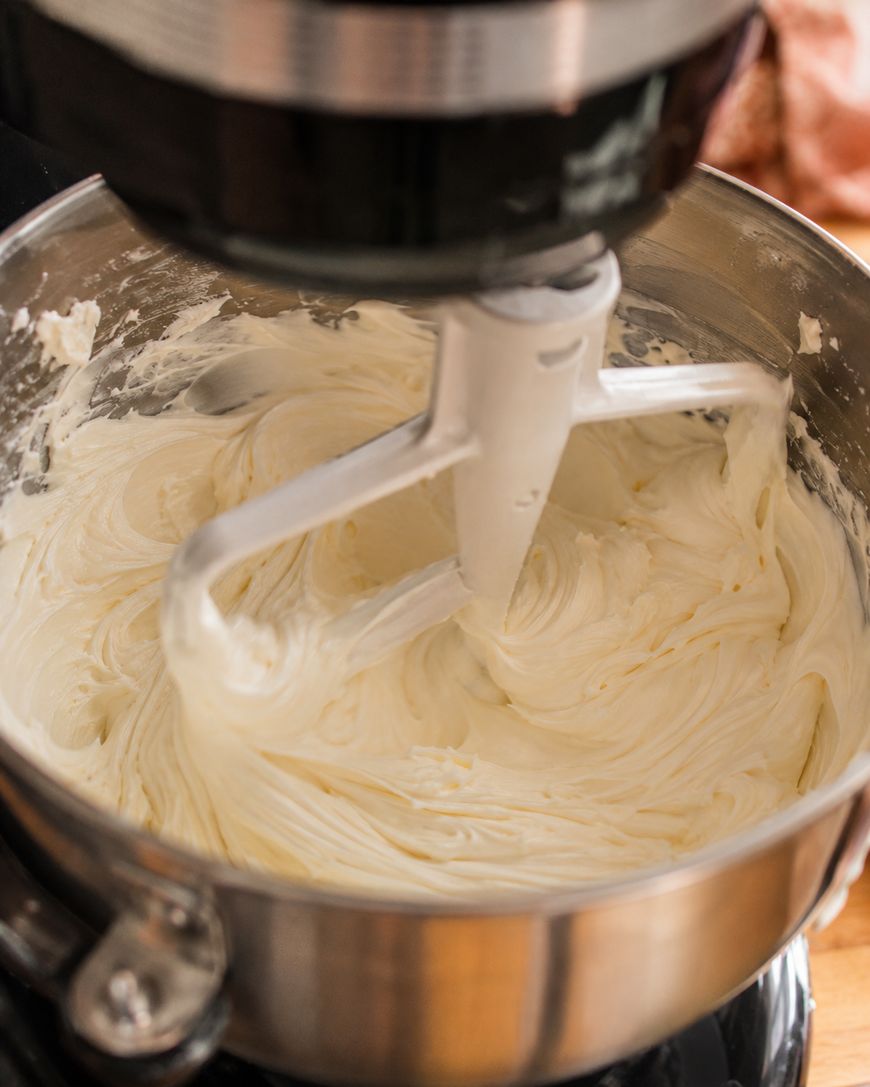
Scrape down the sides and bottom of the bowl at least once during this stage. Cream cheese has a tendency to stick to the sides and the bottom of the bowl without fully incorporating.
Add the Butter
Add the softened butter to the cream cheese and beat again for another 2 to 3 minutes. You are looking for a pale, fluffy mixture with no visible streaks of either ingredient.
At this stage the mixture may look a little curdled or uneven. Keep beating and it will come together into a smooth, cohesive base.
Add the Lemon
Add the lemon zest and start with 1 tablespoon of fresh lemon juice. Mix briefly just to combine before moving on to the sugar.
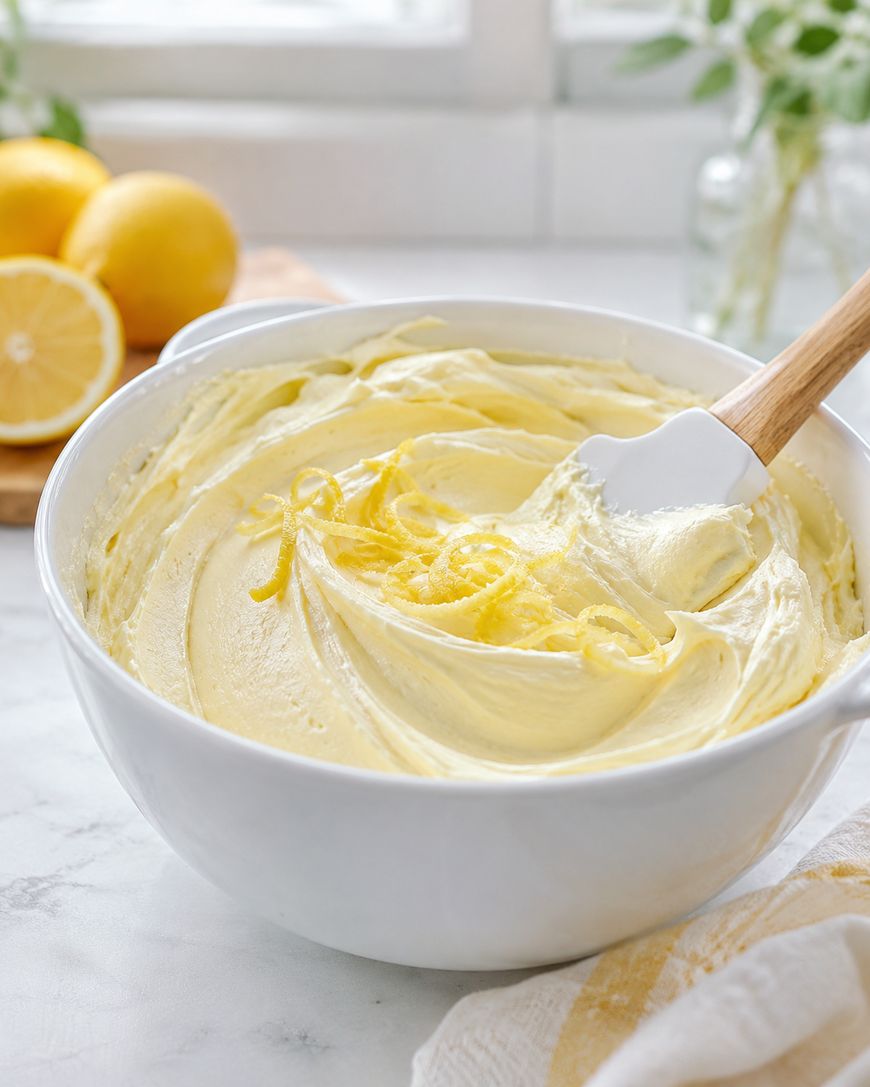
Adding the lemon at this stage, before the sugar, helps the citrus flavors distribute more evenly throughout the frosting. The zest in particular needs time to get worked into the fat before the sugar is added.
Add the Powdered Sugar Gradually
Add the sifted powdered sugar one cup at a time, beating on low speed after each addition to prevent a cloud of sugar from erupting out of the bowl. Once all the sugar is in, increase the speed and beat for 2 to 3 minutes until the frosting is light and fluffy.
Taste the frosting at this point and adjust. Add more lemon juice if you want a stronger citrus flavor, or add a pinch more salt if it tastes too sweet.
Final Texture Check
The finished frosting should be smooth, fluffy, and hold a soft peak when you lift the beater. If it feels too stiff, add a teaspoon of heavy cream or milk and mix again.
If it feels too soft or loose, refrigerate it for 15 to 20 minutes before using. Chilling firms it up quickly without affecting the flavor.
Tips for Piping and Spreading
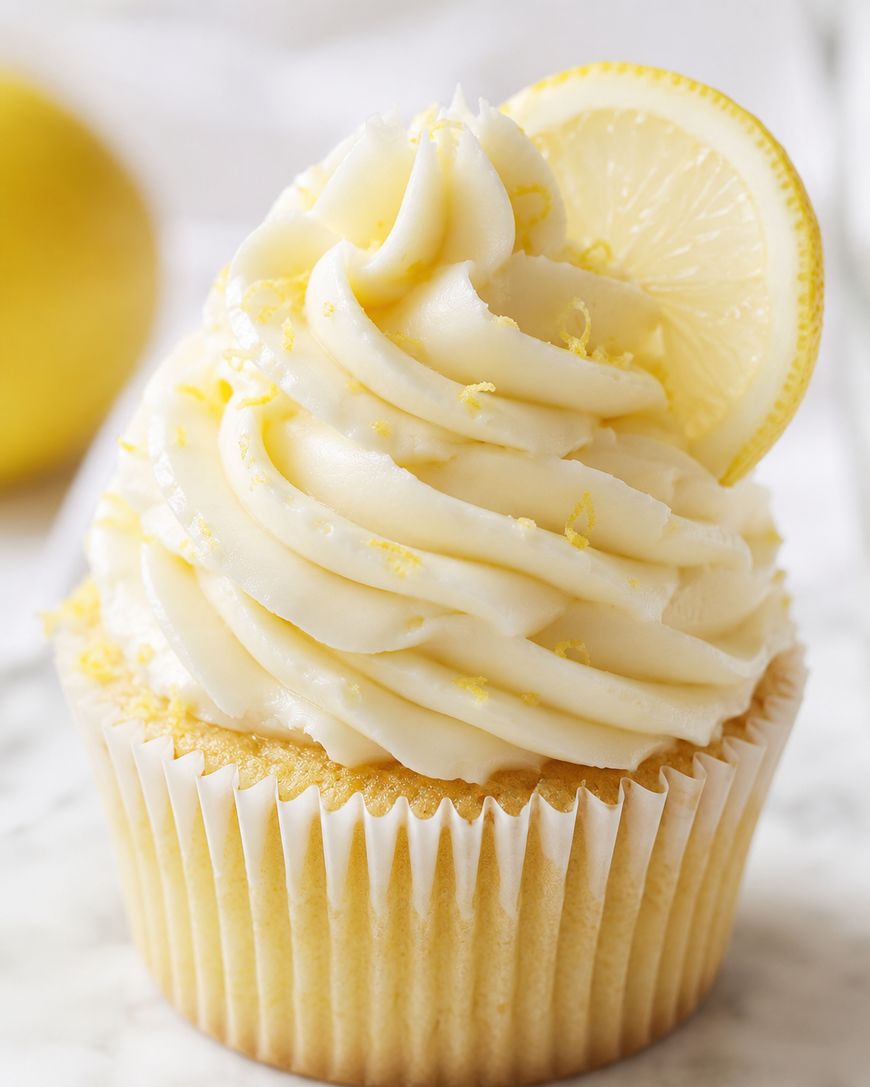
This frosting pipes beautifully when it is at the right temperature. If it is too warm, it will slide off your cupcakes. If it is too cold, it will be difficult to push through a piping tip.
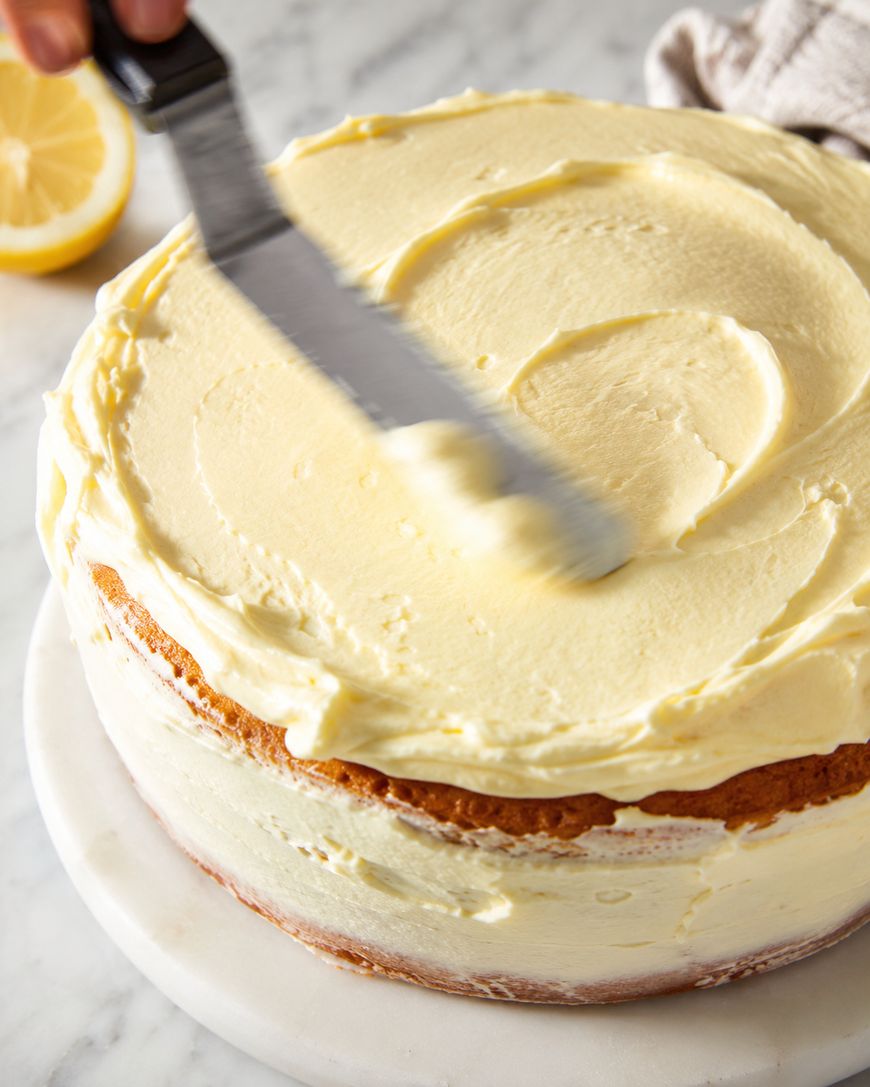
The ideal temperature for piping is somewhere between cool room temperature and lightly chilled. If your kitchen is warm, chill the frosting for 20 minutes before filling your piping bag.
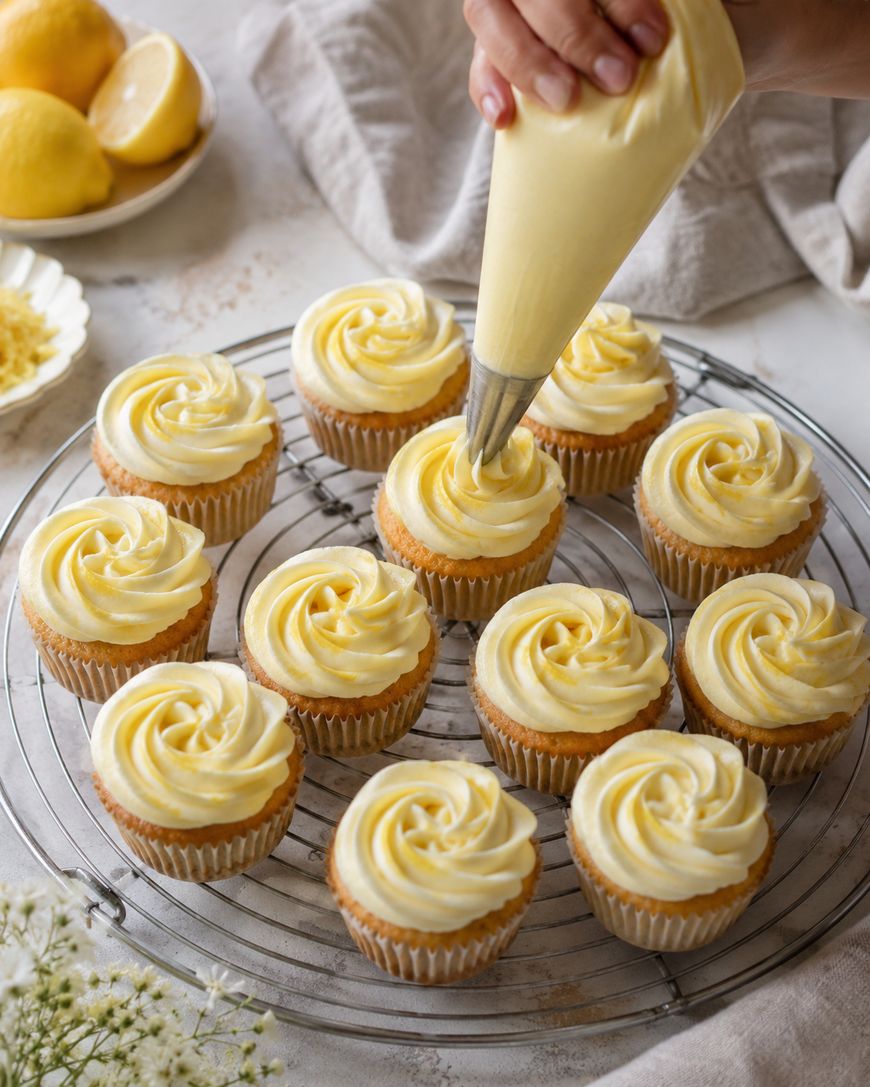
Choosing the Right Piping Tip
A large round tip or a classic 1M star tip works beautifully with this frosting. The creamy, slightly dense texture of cream cheese frosting holds its shape well with these tips and produces clean, defined swirls.
For spreading on layer cakes, an offset spatula is your best tool. It gives you control over the thickness of the frosting and makes it easy to create clean edges and a smooth finish.
Variations on Lemon Cream Cheese Frosting
The base recipe is a starting point that you can adapt in several directions depending on what you are frosting and who you are baking for. Each variation keeps the core texture and method the same but shifts the flavor profile in a different direction.
Lemon Blueberry Cream Cheese Frosting
Add 2 tablespoons of blueberry jam or blueberry compote to the finished frosting and fold it in gently. The result is a beautifully marbled frosting with a fruity sweetness that pairs brilliantly with lemon cake or vanilla cupcakes.
Do not over-mix after adding the jam or you will lose the marbled effect and end up with a uniformly purple frosting.
Lemon Lavender Cream Cheese Frosting
Add half a teaspoon of culinary-grade dried lavender along with the lemon zest. The floral note from the lavender adds an elegant, fragrant quality that works especially well on wedding cakes, afternoon tea cakes, or any occasion where you want something a little more sophisticated.
Make sure you are using culinary lavender, not decorative or fragrant lavender, which may have been treated with chemicals not suitable for eating.
Meyer Lemon Cream Cheese Frosting
Swap regular lemon for Meyer lemon if you can find them. Meyer lemons are sweeter, less tart, and have a slight floral quality that makes the frosting taste more complex without being aggressively sour.
They are worth seeking out if you want a frosting that feels a little more refined and nuanced.
Substitutions
Even with a recipe as straightforward as this one, you may need to swap an ingredient based on what you have available or specific dietary requirements. Here is what works and what does not.
Dairy-Free Option
Vegan cream cheese and vegan butter can both be used in this recipe with good results. Look for brands specifically designed for baking rather than spreading, as they will have a lower moisture content and behave more like the dairy versions.
The flavor will be slightly different but the texture and consistency should be similar to the original.
Reducing the Sugar
The amount of powdered sugar can be reduced slightly if you prefer a less sweet frosting. Going below 2.5 cups will make the frosting noticeably less stable and harder to pipe, so it is worth keeping that in mind before you make the adjustment.
If sweetness is a concern, balancing with extra lemon juice and a slightly more generous pinch of salt can create a more complex flavor without adding more sugar.
Storage and Make-Ahead Instructions
Lemon cream cheese frosting stores well, which makes it a great candidate for making ahead. Knowing how to store it correctly will help you plan your baking schedule with confidence.
Refrigerator Storage
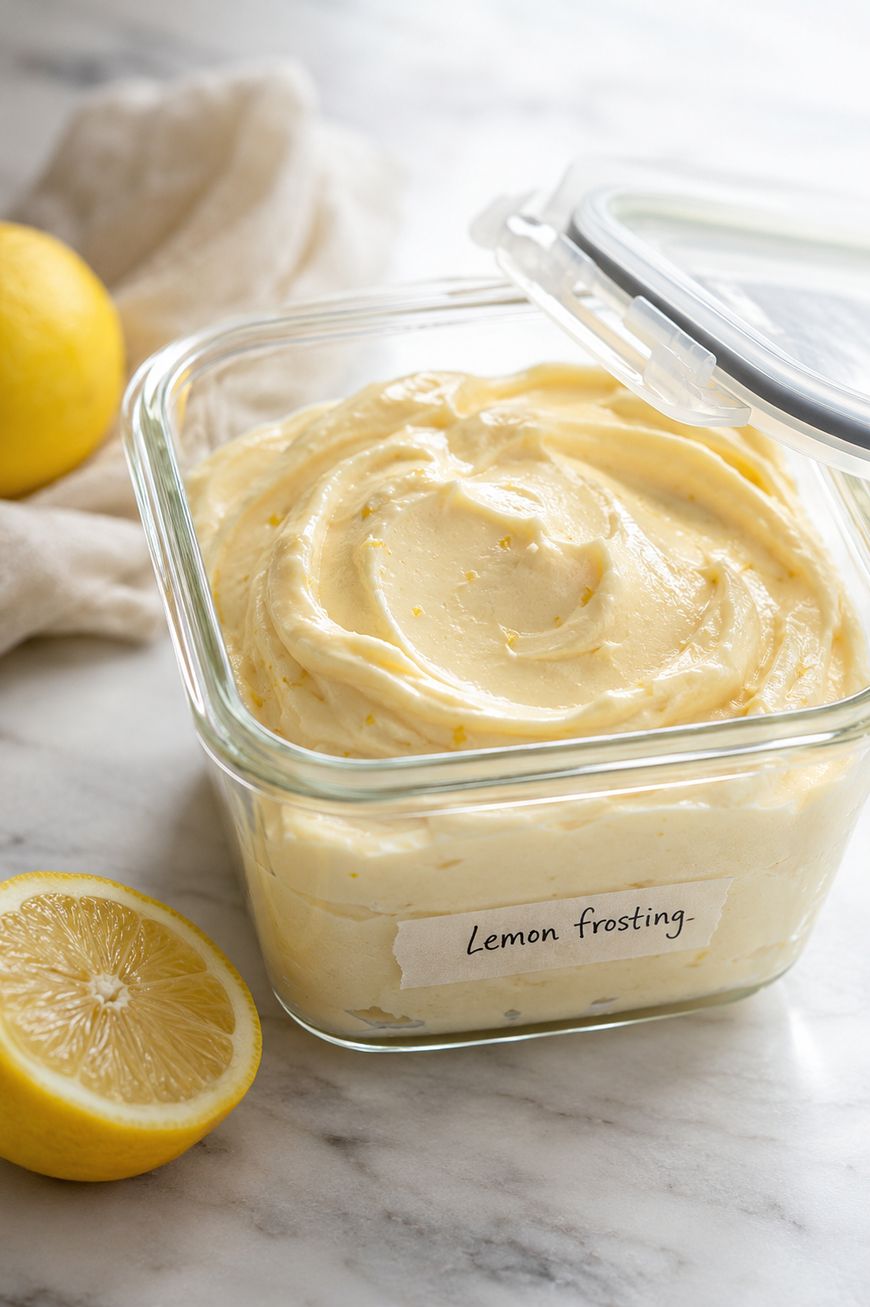
Store the frosting in an airtight container in the refrigerator for up to 5 days. Before using, allow it to come to room temperature for 20 to 30 minutes and then re-whip it briefly to restore its fluffy texture.
Cakes and cupcakes that have already been frosted with this frosting should also be refrigerated and are best consumed within 3 to 4 days.
Freezer Storage
This frosting can be frozen for up to 3 months. Transfer it to a freezer-safe airtight container and thaw it overnight in the refrigerator before bringing it to room temperature and re-whipping.
The texture after freezing and thawing is generally very good, though it may need a slightly longer beat to come back to its original fluffiness.
What to Serve With Lemon Cream Cheese Frosting
This frosting was practically made for certain baked goods. The bright, tangy lemon notes complement a wide range of cakes and cookies, making it one of the most flexible frostings in your repertoire.
Classic Pairings
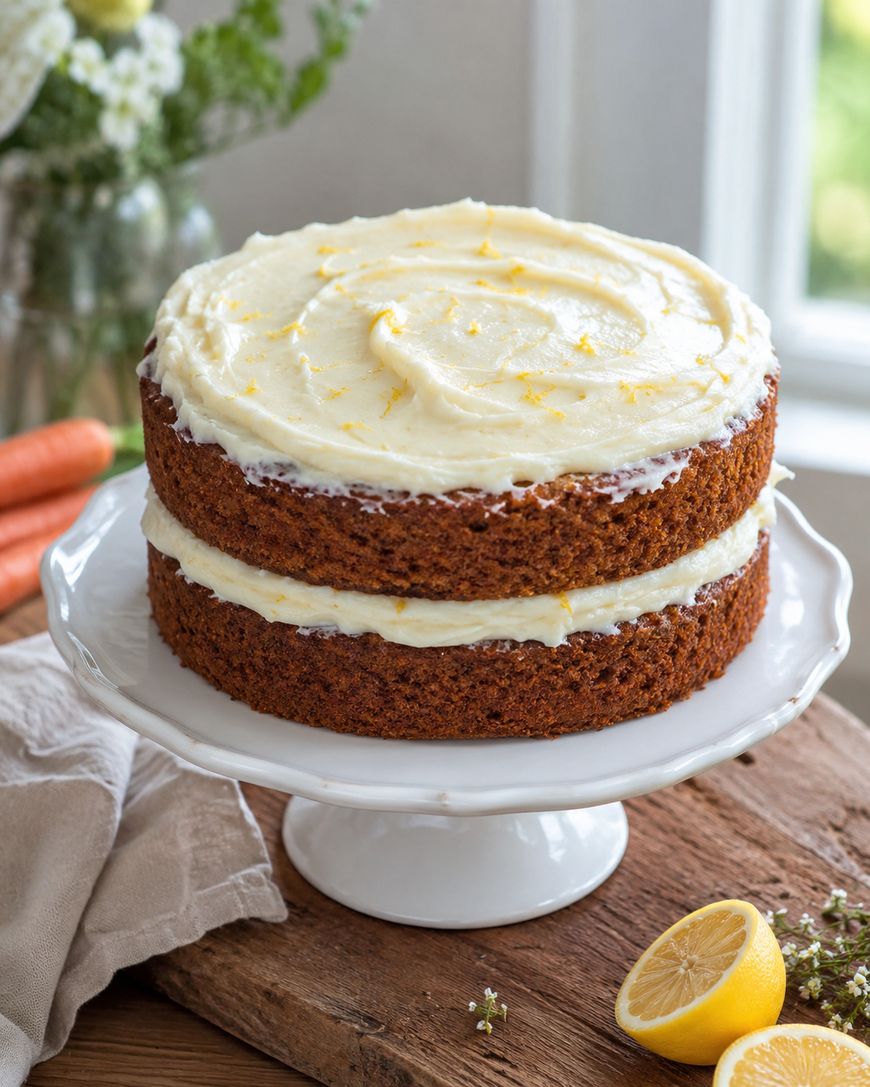
Carrot cake and lemon cream cheese frosting are a classic pairing for good reason. The warm spice of the carrot cake plays beautifully against the bright citrus of the frosting, creating a contrast that makes each bite interesting.
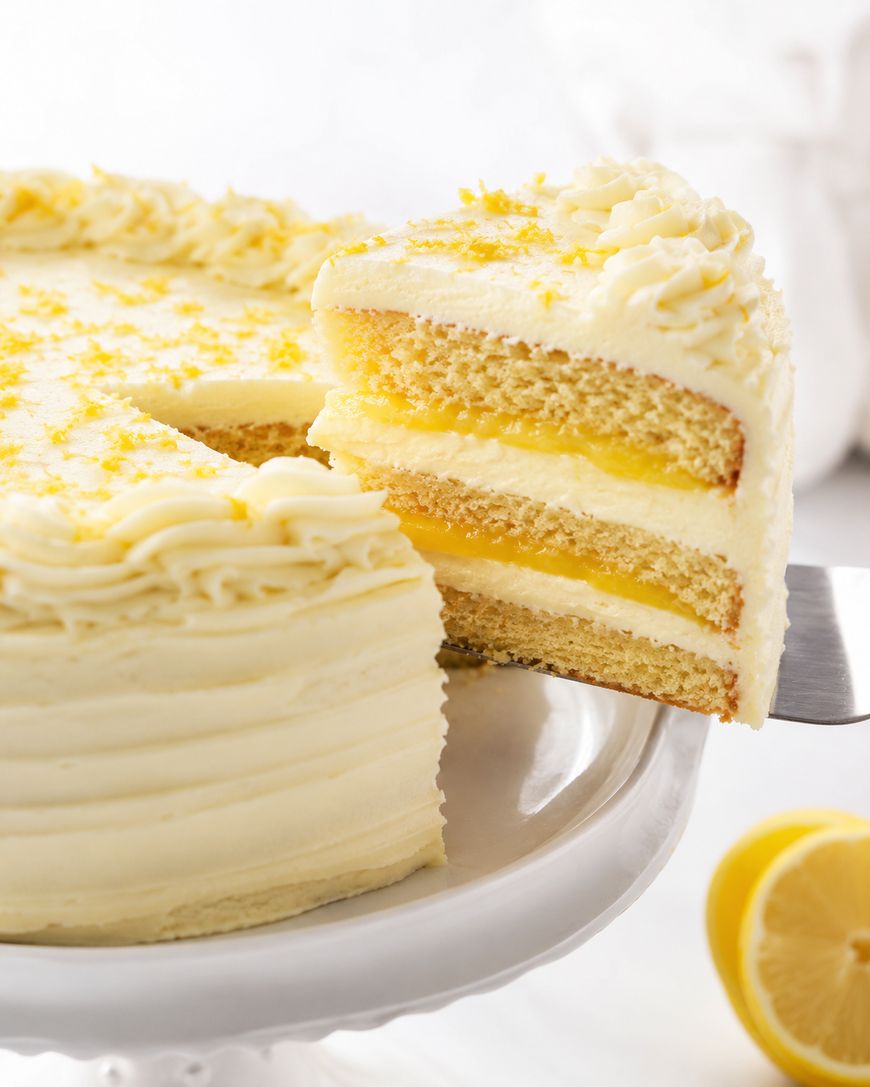
Lemon layer cake with lemon cream cheese frosting is an intensely citrusy combination that lemon lovers adore. The frosting amplifies rather than distracts from the cake’s flavors, resulting in a cohesive, vibrant dessert.
Less Obvious but Delicious Pairings
Banana cake is an underrated vehicle for lemon cream cheese frosting. The sweet, tropical warmth of the banana pairs wonderfully with the tart brightness of the lemon.
Spice cake, zucchini cake, and even a simple vanilla sponge all benefit from this frosting. The lemon lifts the flavors and keeps the overall impression feeling light rather than heavy.
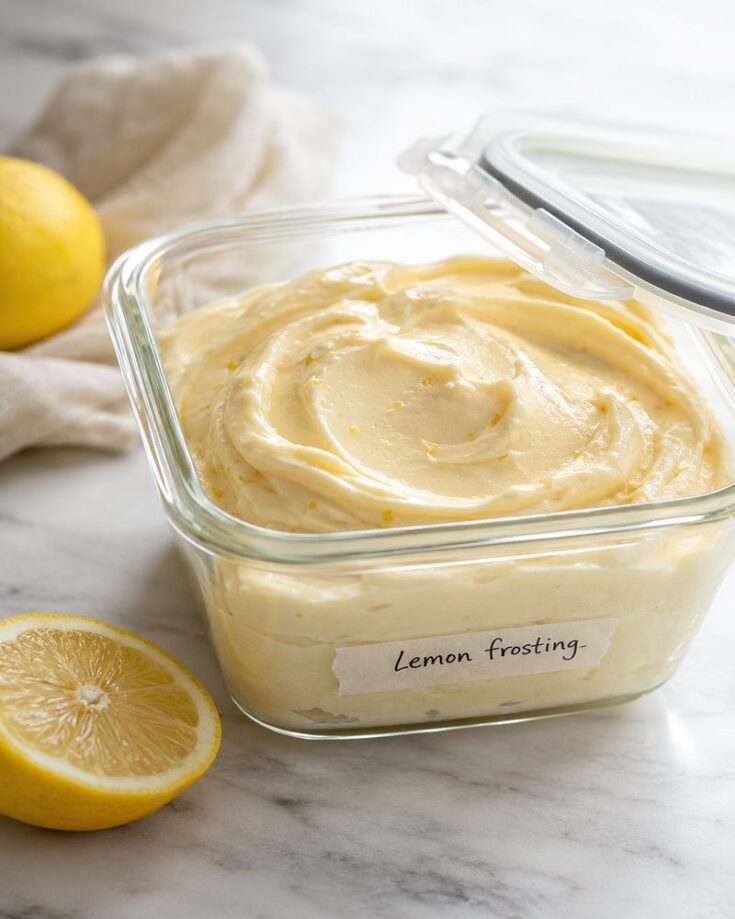
Lemon Cream Cheese Frosting
- A silky, tangy lemon cream cheese frosting made with fresh lemon zest and juice. Perfect for piping on cupcakes, spreading on layer cakes, or dolloping on cookies.
Ingredients
- 8 oz (226g) full-fat brick-style cream cheese, softened to room temperature
- 1/2 cup (113g) unsalted butter, softened to room temperature
- 3 cups (360g) powdered sugar, sifted
- 1 tablespoon fresh lemon juice (plus more to taste)
- 1 tablespoon fresh lemon zest (from approximately 1 large lemon)
- 1/4 teaspoon fine sea salt
Instructions
- In a large mixing bowl, beat the softened cream cheese with an electric hand mixer or stand mixer fitted with the paddle attachment on medium-high speed for 2 minutes, until completely smooth and slightly fluffy. Scrape down the sides and bottom of the bowl.
- Add the softened butter to the cream cheese and beat on medium-high speed for a further 2 to 3 minutes, until the mixture is pale, light, and well combined. Scrape down the bowl as needed.
- Add the lemon zest, lemon juice, and salt. Mix on low speed briefly just until combined.
- Add the sifted powdered sugar one cup at a time, beating on low speed after each addition. Once all the sugar has been added, increase the speed to medium-high and beat for 2 to 3 minutes until the frosting is light and fluffy.
- Taste the frosting and adjust as needed. Add more lemon juice for a brighter citrus flavor, or add an extra pinch of salt to balance sweetness.
- If the frosting is too stiff, add heavy cream or milk 1 teaspoon at a time and mix until you reach your desired consistency. If it is too soft, refrigerate for 15 to 20 minutes before using.
Notes
Ingredient temperature is critical: both the cream cheese and butter must be fully softened to room temperature before you begin. Cold ingredients will result in a lumpy frosting.
Use brick-style cream cheese only. Spreadable cream cheese from a tub contains significantly more moisture and will make the frosting too runny to pipe or spread properly.
Sifting the powdered sugar prevents lumps and produces a noticeably smoother texture. It takes less than a minute and is worth doing.
Make ahead: Store in an airtight container in the refrigerator for up to 5 days, or freeze for up to 3 months. Thaw overnight in the refrigerator and re-whip before using to restore its fluffy texture.
Storage: Cakes and cupcakes frosted with this frosting should be refrigerated. Remove from the refrigerator about 30 minutes before serving so the frosting softens to its best texture.
Dairy-free: Substitute vegan brick-style cream cheese and vegan butter for a dairy-free version. Results will be similar in texture and consistency.
Nutrition Information:
Yield:
12Amount Per Serving: Calories: 235Total Fat: 13gSaturated Fat: 8gTrans Fat: 0gUnsaturated Fat: 5gCholesterol: 0mgSodium: 105mgCarbohydrates: 30gNet Carbohydrates: 30gFiber: 0gSugar: 29gProtein: 1g
This site provides estimated nutritional information. This information comes from online calculators. Although we try to provide accurate nutritional information, these figures are only estimates.
Questions About Lemon Cream Cheese Frosting
Can you make lemon cream cheese frosting ahead of time?
Yes, this frosting can be made up to 5 days ahead and stored in the refrigerator in an airtight container. When you are ready to use it, bring it to room temperature for 20 to 30 minutes and re-whip it briefly to restore its fluffy texture. It can also be frozen for up to 3 months.
Why is my lemon cream cheese frosting runny?
The most common cause is cream cheese or butter that was not fully at room temperature, or cream cheese that was the spreadable tub variety rather than brick-style. Adding too much lemon juice can also make the frosting loose. If your frosting is runny, refrigerate it for 20 to 30 minutes and try re-whipping it before adding more powdered sugar.
Can you use lemon extract instead of fresh lemon?
You can use lemon extract as a substitute, starting with half a teaspoon and tasting as you go. Extract is more concentrated than juice, so a small amount goes a long way. However, fresh lemon zest delivers a more complex, natural lemon flavor that extract cannot fully replicate, so use the zest whenever possible.
How much frosting does this recipe make?
This recipe makes enough frosting to generously frost 12 cupcakes or fill and frost a standard 2-layer 8-inch cake. If you are frosting a 3-layer cake or prefer very generous amounts of frosting on your cupcakes, consider making one and a half times the recipe.
Does lemon cream cheese frosting need to be refrigerated?
Yes. Because cream cheese is a dairy product, any cake or cupcake frosted with this frosting should be kept refrigerated when not being served. Allow the frosted baked goods to sit at room temperature for about 30 minutes before serving so the frosting softens to its ideal texture.
Can this frosting be used for piping decorations?
This frosting pipes beautifully for swirls and rosettes. It is slightly softer than a pure buttercream, so very intricate or sharp-edged piping work may not hold as crisply. For best piping results, chill the frosting briefly before loading it into your piping bag, and work quickly in a cool kitchen.
A Little Background on Cream Cheese Frosting
Cream cheese frosting has been a staple of American baking since at least the early twentieth century, when cream cheese itself became widely available as a commercial product. Its rise to fame came largely on the back of carrot cake and red velvet cake, two American classics that practically demand a tangy, creamy frosting to balance their bold flavors.
The lemon variation is a more modern evolution, reflecting a broader trend toward bright, citrus-forward desserts that feel less heavy than traditional all-butter frostings. Food writers and bakers began publishing lemon cream cheese frosting recipes in earnest from the 1990s onward, as home bakers became more adventurous with layered flavors and fresh ingredients.
Today it is a beloved choice for spring and summer baking in particular, where its light, refreshing quality feels perfectly in season. The combination of lemon and cream cheese also happens to be supported by food science: the acidity of the lemon interacts with the proteins in the cream cheese in a way that makes the overall flavor more complex and interesting than either ingredient would achieve alone.
Why This Recipe Works
The ratio of cream cheese to butter in this recipe is calibrated to give you a frosting that is tangy and flavorful without being so rich that it overwhelms the baked good it is sitting on. More cream cheese than butter means more tang and a softer, creamier texture. More butter would push it toward a firmer, sweeter frosting closer to a regular buttercream.
The lemon zest is the secret weapon. Zest delivers a concentrated, aromatic citrus flavor that you simply cannot get from juice alone. Using both zest and juice gives you depth of flavor and brightness simultaneously, which is what makes this frosting taste so alive and vibrant rather than flat or one-note.
The Best Lemon Cream Cheese Frosting You Will Ever Make
Lemon cream cheese frosting rewards you for paying attention to the details: softened ingredients, gradual sugar addition, and a taste-as-you-go approach to the lemon. Get those fundamentals right and the result is a frosting that is silky, bright, and absolutely irresistible.
Whether you are spreading it on a rustic carrot cake or piping perfect rosettes onto a batch of spring cupcakes, this frosting will deliver every time. Give it a try and discover why lemon cream cheese frosting has become one of the most-requested frostings in home baking.