Last updated: October 1, 2026
You can have a batch of thumbprint cookies cooling on the counter in under an hour, and the recipe card below walks you through every measurement.
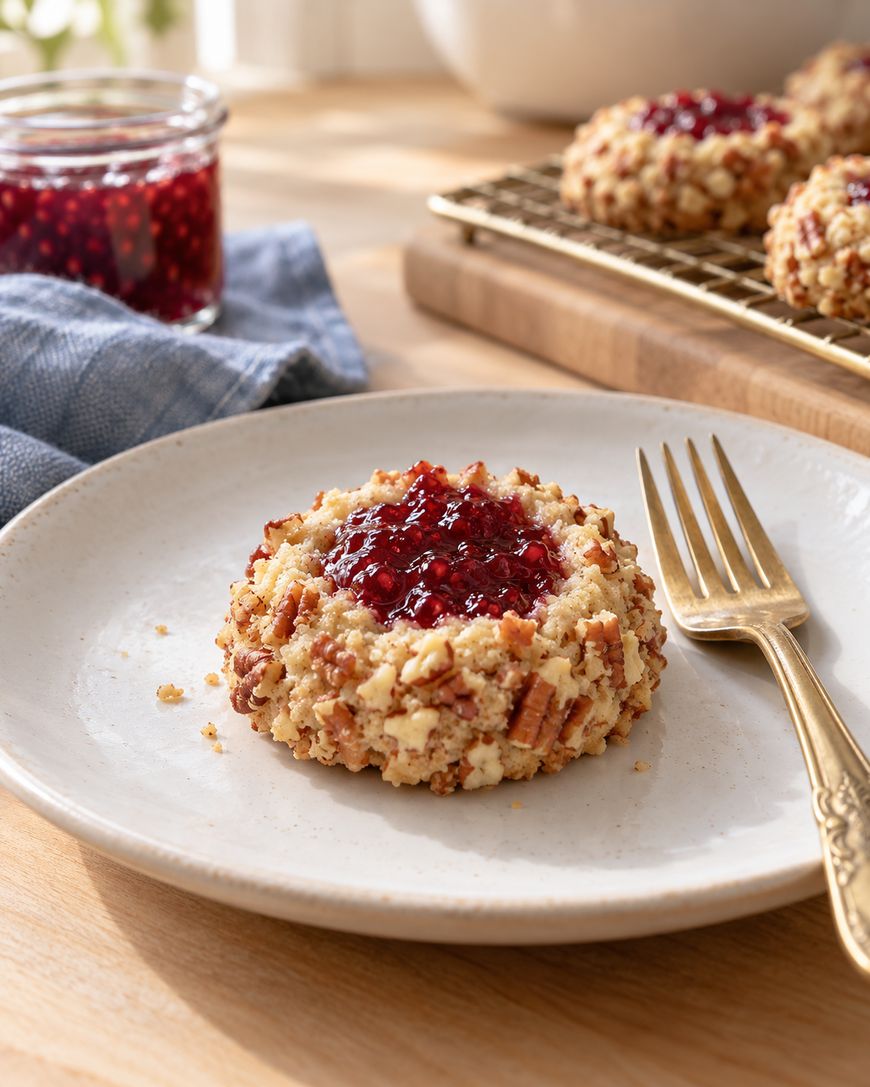
These cookies start with a rich, buttery dough that bakes into a tender shortbread base, then get filled with a spoonful of jam that sets into a glossy, jewel-toned center.
The Dough You Need for Thumbprint Cookies
Thumbprint cookies rely on a simple creamed butter dough, and getting that base right is what keeps the rest of the recipe easy.

You cream softened butter with granulated sugar until the mixture turns pale and fluffy, which usually takes about two full minutes with a hand or stand mixer.
An egg yolk goes in next instead of a whole egg, and that extra fat is what gives thumbprint cookies their signature tender, almost sandy crumb.
Vanilla extract rounds out the flavor, and you mix it in along with the yolk so it distributes evenly before the flour arrives.
All-purpose flour and a pinch of salt get folded in last, just until the dough comes together, since overmixing at this stage makes the cookies tough instead of tender.
The finished dough should feel soft but not sticky, similar to a shortbread dough, and it should hold a ball shape without cracking when you roll it between your palms.
Rolling and Coating the Cookies
Rolling the dough into evenly sized balls is what gives your finished cookies a uniform bake, so a small cookie scoop is worth using here.
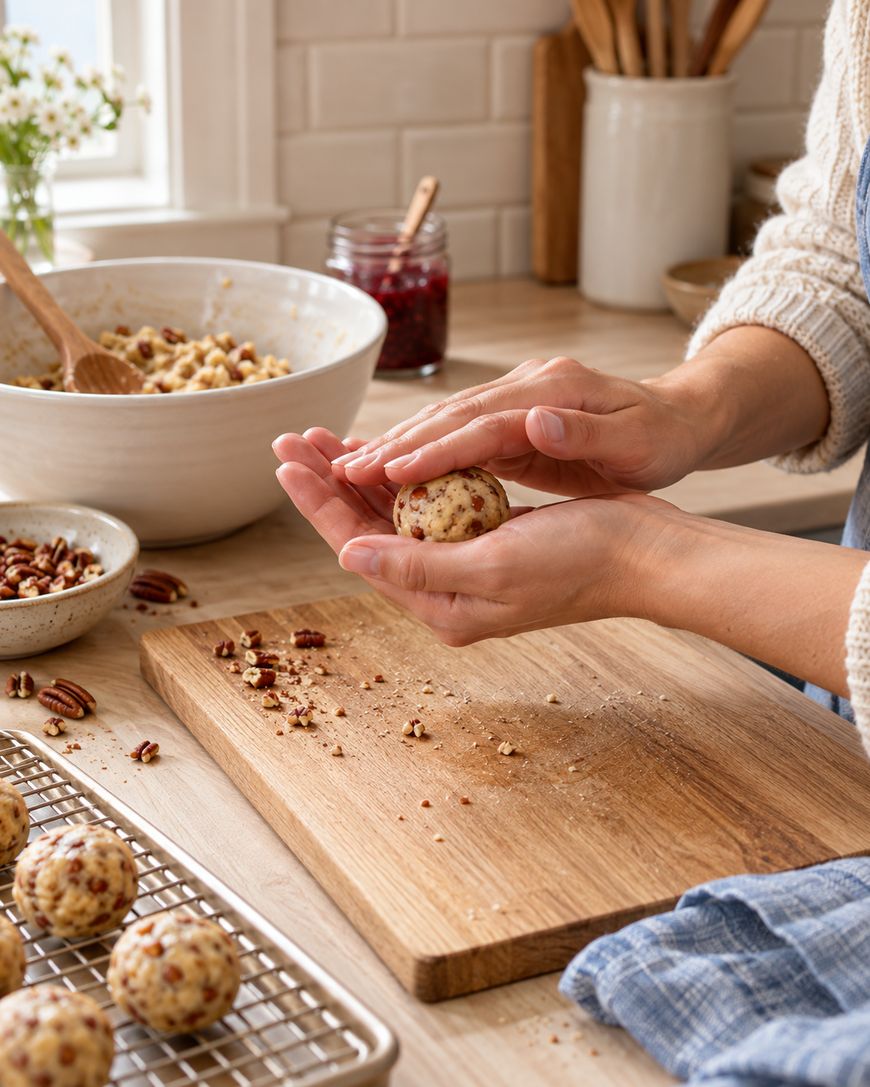
Once each ball is shaped, you roll it in finely chopped nuts or turbinado sugar, which adds a light crunch that contrasts nicely with the soft jam center.
Chopped pecans or almonds work particularly well for thumbprint cookies, since their flavor holds up against sweet jam without overpowering the buttery base.

If you prefer a simpler finish, rolling the balls in plain granulated sugar still gives you a lightly crisp shell once baked.

Making the Thumbprint and Adding the Jam
The thumbprint itself is what gives this cookie its name, and the timing of when you make it matters more than most bakers expect.
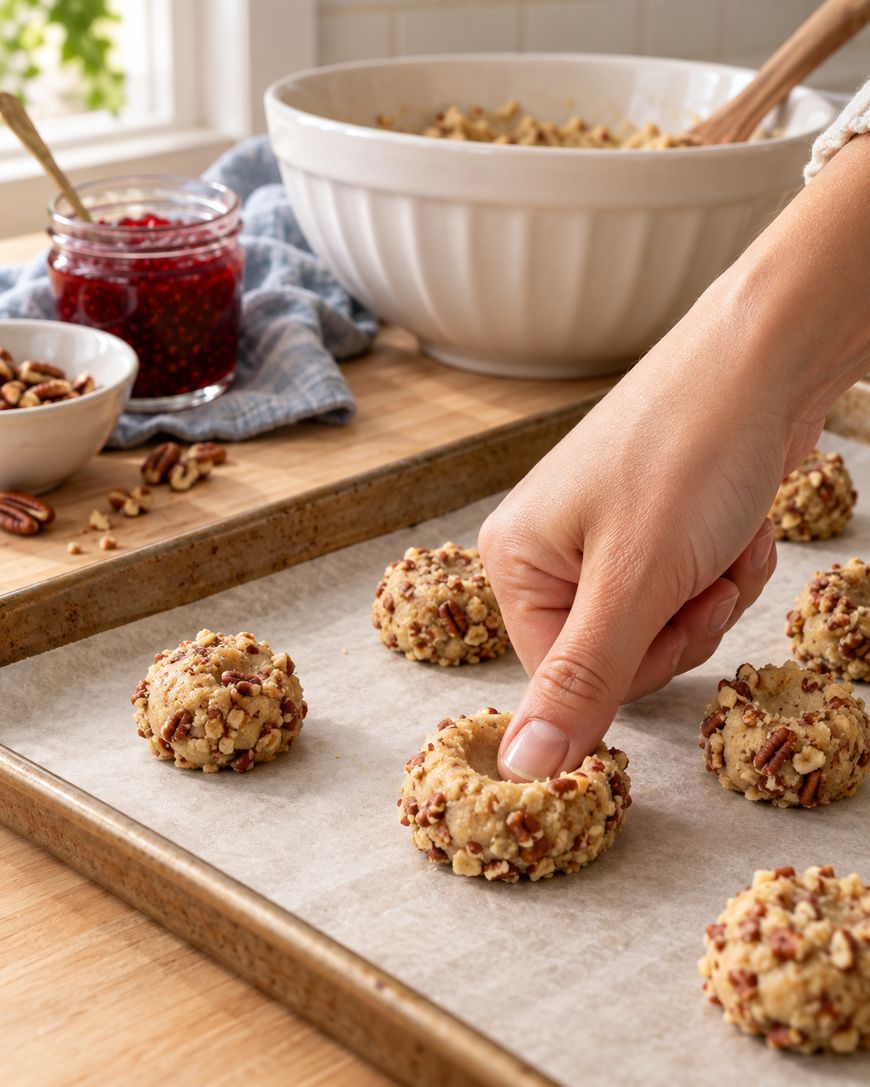
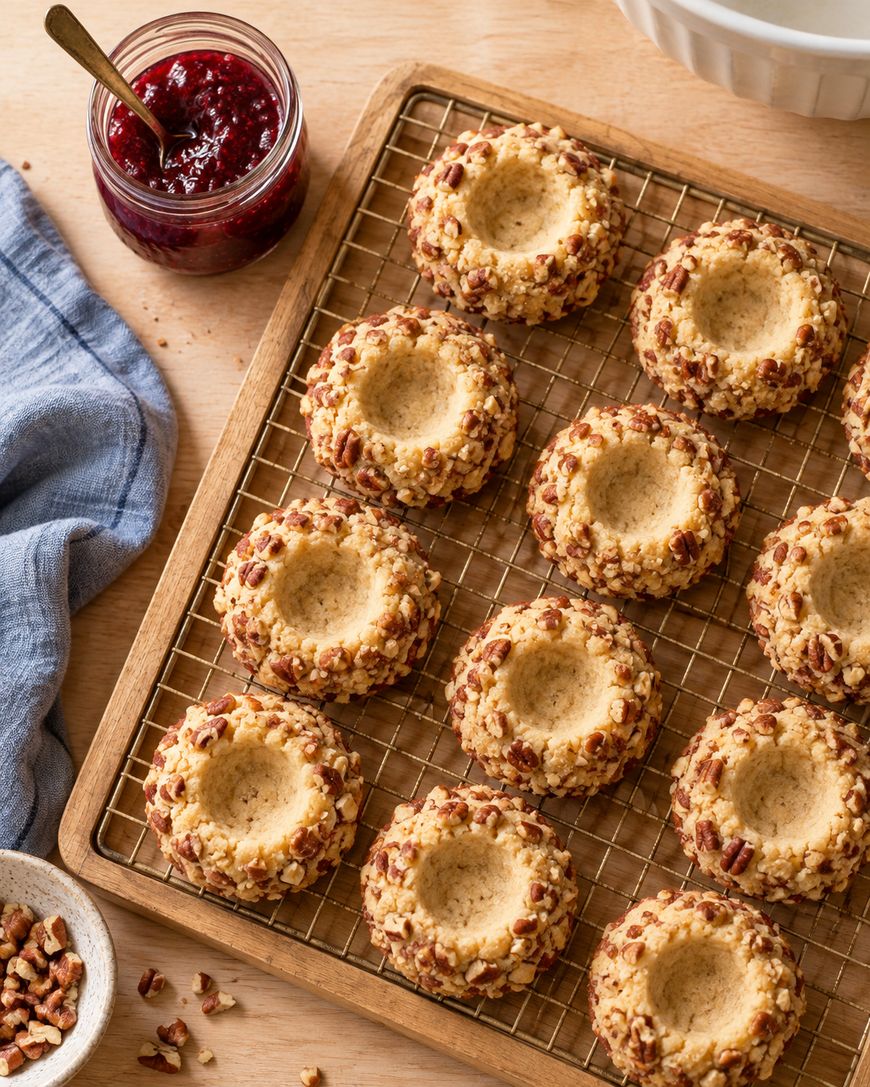
You press an indentation into each ball of dough with your thumb or the back of a rounded teaspoon right before the first bake, not after.
Baking the indentation in first is what keeps the jam from spilling over the edges, since the dough sets around the well before any filling goes in.
A short first bake of about eight minutes firms up the shells enough to hold the jam, and you fill the wells right when the cookies come out of the oven.
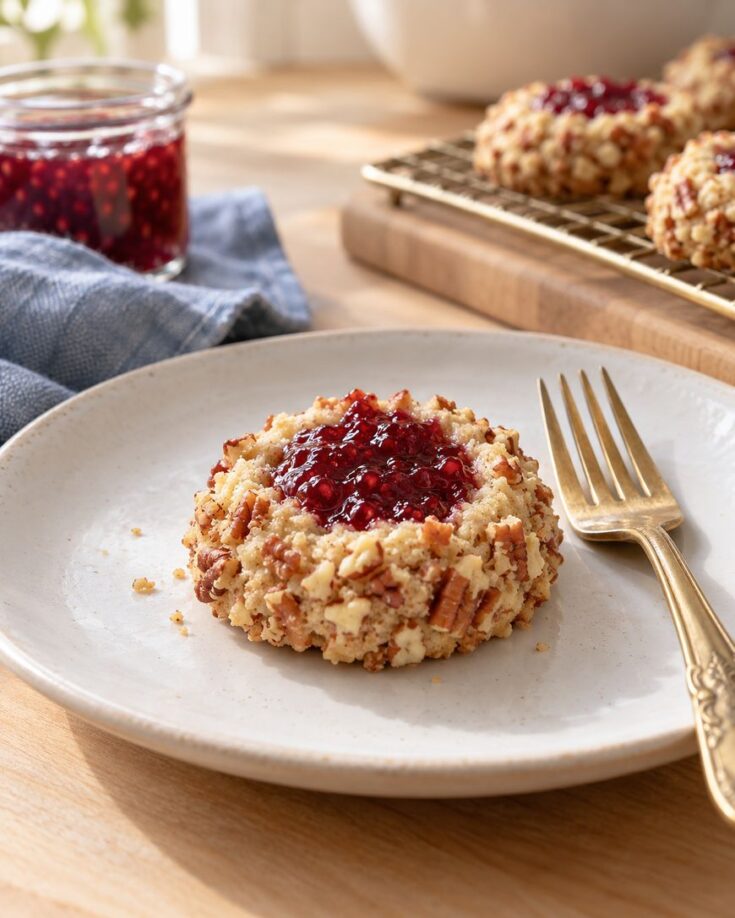
Seedless raspberry, apricot, and strawberry jam all work well in thumbprint cookies, since a smooth jam sets into a clean, glossy dome as it cools.
A second short bake after filling helps the jam set into the dough slightly rather than sitting as a raw dollop on top, giving you that classic glazed appearance.

Getting the Jam Center to Set Properly
A jam center that stays put through cooling and storage comes down to using a jam with enough pectin, since thin or runny preserves can seep into the dough.
If your jam looks especially loose straight from the jar, warming it slightly in the microwave and stirring in a small amount extra thickens it just enough for a clean set.
You want to fill each thumbprint just to the rim, since overfilling causes the jam to pool over the sides of the cookie during the second bake.

Letting the cookies cool completely on the baking sheet before moving them gives the jam time to firm back up, so it holds its shape instead of running.
Variations on Classic Thumbprint Cookies
Thumbprint cookies are easy to adapt once you have the basic buttery dough down, so you can rotate flavors throughout the year without changing your technique.

Swapping the jam for a soft caramel, melted chocolate ganache, or lemon curd turns the same base cookie into a completely different flavor profile.
A drizzle of melted white or dark chocolate over the cooled cookies adds visual contrast and a bit of extra sweetness if you want something more indulgent.
For a nuttier version, you can replace up to a quarter of the flour with finely ground almond flour, which deepens the shortbread flavor of the base.
Holiday bakers often color the dough lightly or use different jam flavors side by side on the same tray, since thumbprint cookies present well as an assortment.
Substitutions for Dietary Needs
If you need a dairy-free version, a stick-style plant butter substitutes for the butter at a one-to-one ratio and still creams up well.
Gluten-free all-purpose flour blends that include xanthan gum work as a straight swap for the all-purpose flour in this recipe.
For a lower-sugar coating, finely chopped nuts alone, without any sugar rolled in, still give the cookies a nice textural edge.
Storing and Freezing Thumbprint Cookies
Thumbprint cookies keep well at room temperature, which makes them a practical make-ahead option for gatherings and holiday cookie trays.

Store the cooled cookies in an airtight container, and they stay fresh for up to five days, according to general guidance on jam-filled shortbread cookies from baking authorities.
Layer them with parchment or wax paper between rows so the jam centers do not stick to the cookies stacked above them.
To freeze, you can freeze the baked and cooled cookies for up to two months, and let them thaw at room temperature for about thirty minutes before serving.
You can also freeze the shaped, unbaked dough balls on a tray, then transfer them to a freezer bag, and bake straight from frozen with a few extra minutes added to the first bake.
The History Behind Thumbprint Cookies
Thumbprint cookies trace back to Scandinavian baking traditions, where jam-filled shortbread cookies have long been a staple of holiday cookie tables.
Swedish hallongrottor, which translates to “raspberry caves,” is considered a close ancestor of the thumbprint cookie now common in American baking.
The cookie made its way into wider American home baking through community and church cookbooks throughout the twentieth century, where the format proved easy to scale for large cookie exchanges.

Its lasting popularity comes down to how little equipment it requires and how well it lends itself to variation, since one dough recipe supports endless jam and topping combinations.
Now, with the full method covered, you have everything you need to make your own batch using the recipe card below.
Thumbprint Cookies
Buttery shortbread cookies rolled in chopped nuts or sugar, with a thumbprint well baked in and filled with glossy jam.
Ingredients
- 1 cup unsalted butter, softened
- 2/3 cup granulated sugar
- 1 large egg yolk
- 1 teaspoon vanilla extract
- 2 1/4 cups all-purpose flour
- 1/4 teaspoon salt
- 1 cup finely chopped pecans or almonds (or turbinado sugar)
- 1/2 cup seedless raspberry, apricot, or strawberry jam
Instructions
- Preheat the oven to 350 degrees Fahrenheit and line two baking sheets with parchment paper.
- Cream the softened butter and granulated sugar together in a large bowl until pale and fluffy, about 2 minutes.
- Beat in the egg yolk and vanilla extract until fully combined.
- Add the flour and salt, and mix on low speed just until a soft dough forms.
- Scoop the dough into 1-tablespoon balls and roll each one between your palms until smooth.
- Roll each ball in the chopped nuts or turbinado sugar, pressing gently so the coating sticks.
- Place the balls 2 inches apart on the prepared baking sheets and press a thumbprint into the center of each one.
- Bake for 8 minutes, then remove from the oven and gently re-press the indentations if they have puffed up.
- Spoon about 1/2 teaspoon of jam into each well.
- Return the cookies to the oven and bake for another 8 minutes, until the edges are lightly golden.
- Let the cookies cool completely on the baking sheet before moving them to a wire rack.
Notes
Store in an airtight container at room temperature for up to 5 days, layering parchment between rows. Freeze baked cookies for up to 2 months, or freeze shaped unbaked dough balls and bake from frozen with a few extra minutes.
Nutrition Information:
Yield:
24Serving Size:
1 cookieAmount Per Serving: Calories: 130Total Fat: 8gSaturated Fat: 3.5gSodium: 25mgCarbohydrates: 14gFiber: 0.5gSugar: 7gProtein: 1.5g
Thumbprint Cookies Questions You May Have
Why did my thumbprint cookies crack around the edges?
Cracking usually happens when the dough is too dry or the indentation is pressed too deep for the size of the ball.
Adding a teaspoon of milk to the dough if it feels crumbly, and pressing gently rather than pushing all the way to the baking sheet, both help prevent this.
Can you make thumbprint cookie dough ahead of time?
Yes, the raw dough keeps well in the refrigerator for up to three days when wrapped tightly in plastic.
Let it sit at room temperature for about ten minutes before rolling, since cold dough can crack more easily when shaped into balls.
What is the best jam to use for thumbprint cookies?
Thicker, seedless jams and preserves hold their shape best, with raspberry, apricot, and strawberry being the most popular choices.
Avoid very runny jams or fruit spreads with a lot of added liquid, since they are more likely to seep into the dough during baking.
Why did the jam disappear into the cookie while baking?
This typically means the first bake was too short, so the dough had not set firmly enough around the indentation before the jam went in.
Baking the shells for the full time specified in the recipe card, until the edges are just barely set, gives the jam somewhere stable to sit.
Can thumbprint cookies be made without nuts?
Yes, you can skip the nut coating entirely and roll the dough balls in plain or turbinado sugar instead for a nut-free version.
The cookies will taste just as buttery, though you will lose the light crunch that chopped nuts add to the outside.
How many thumbprint cookies does this recipe make?
This recipe yields about twenty-four cookies, depending on how large you scoop each dough ball.
You can double the batch easily if you are baking for a cookie exchange or a larger gathering.
Why This Recipe Works
This thumbprint cookie recipe works because the dough is built the same way classic shortbread is, with creamed butter and sugar giving it a tender, sturdy crumb that holds its shape.
Using an egg yolk instead of a whole egg keeps the dough rich without adding extra moisture that could make the cookies spread too much in the oven.
Baking the indentation before adding jam is the detail that keeps the filling contained, since it lets the dough set into a stable well rather than trying to hold liquid jam from the start.
Rolling the dough in nuts or sugar before baking also protects the outside of the cookie, giving it a light crunch that keeps the whole bite from feeling one-note against the soft jam center.
Bring Thumbprint Cookies to Your Next Cookie Tray
Thumbprint cookies are a reliable addition to any cookie plate, combining a buttery shortbread base with a bright, jam-filled center in one simple bake.
Follow the recipe card above, and you will have a batch of classic thumbprint cookies ready to share in under an hour.