Last updated: September 16, 2026
This loaded cauliflower casserole takes everything you love about a loaded baked potato and turns it into a warm, cheesy bake you can pull together on a weeknight. You will find the full recipe card below with exact amounts and timing.

What Makes This Loaded Cauliflower Casserole So Good
Loaded cauliflower casserole works because it borrows its flavor from a loaded baked potato while keeping the texture lighter.

Tender steamed cauliflower stands in for the potato, and it soaks up the smoky bacon fat and tangy sour cream just as well.
Sharp cheddar melts through every bite, and a scatter of green onions on top adds a fresh, slightly peppery finish.
The result tastes indulgent but comes together with far less effort than a full baked potato bar.
The Cauliflower
Start with two medium heads of cauliflower, cut into bite-sized florets.
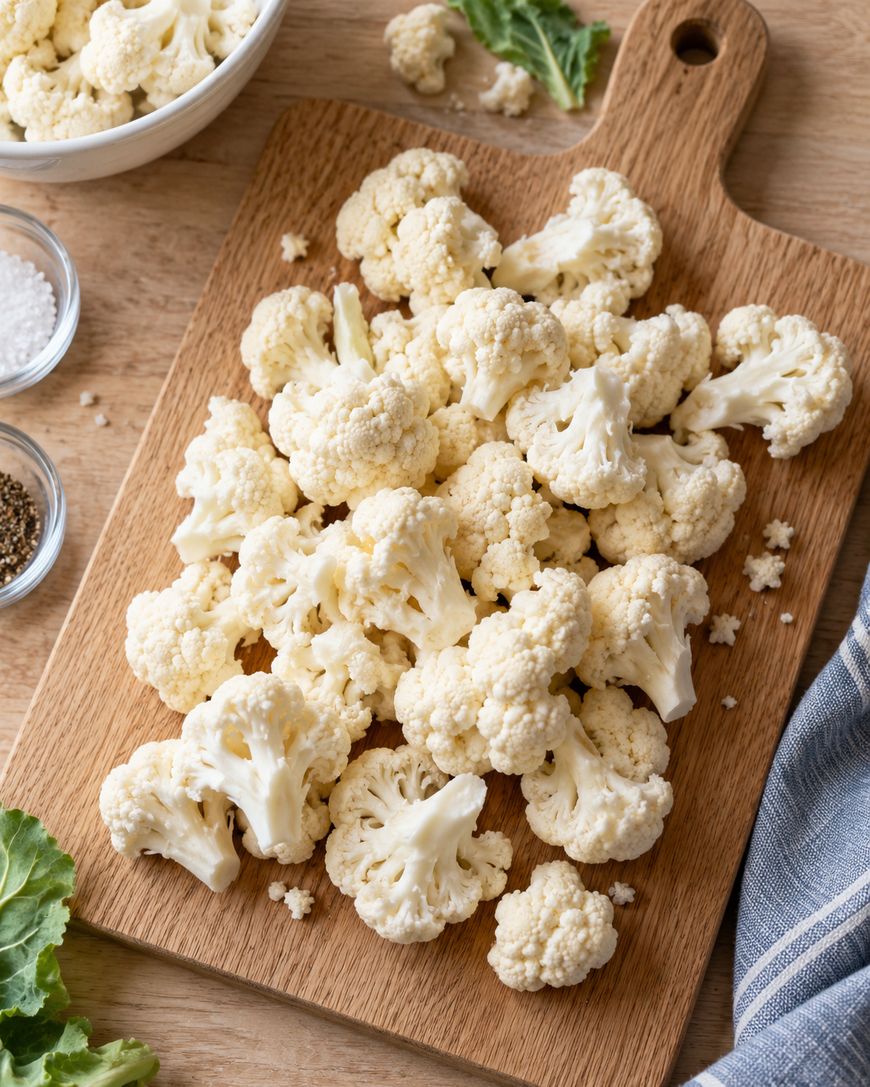
Steam or boil the florets until just fork-tender, about six to eight minutes, then drain them well.
Cauliflower holds onto water, so pat the florets dry with a clean towel or let them sit in a colander for a few minutes.
Extra moisture is the most common reason this casserole turns watery instead of creamy, so do not skip this step.
The Bacon
Cook eight slices of bacon in a skillet over medium heat until crisp, about eight to ten minutes, then transfer it to a paper towel-lined plate.
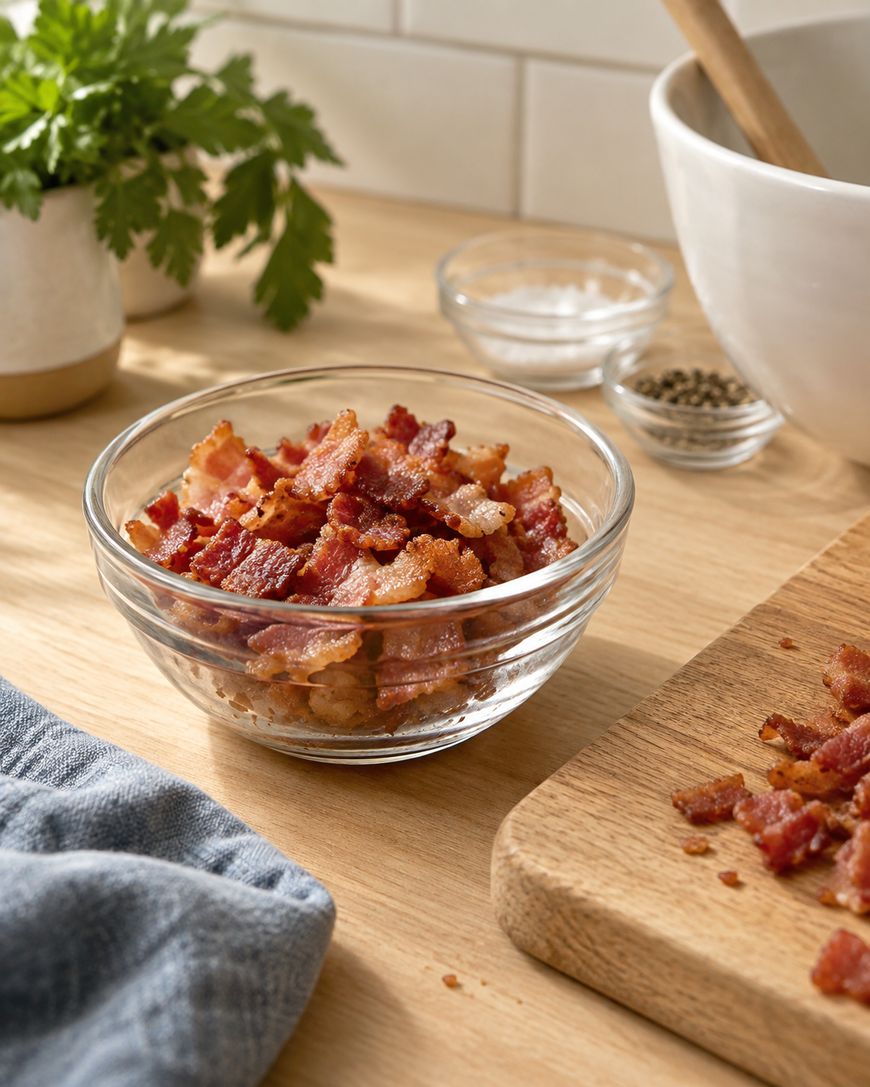
Once cool, chop the bacon into small pieces and reserve two tablespoons of the rendered fat if you want extra richness in the sauce.
Thick-cut bacon holds its texture better here than thin bacon, since it stays chewy instead of turning brittle in the oven.
You can cook the bacon a day ahead and keep it in the refrigerator until you are ready to assemble the casserole.
The Creamy Base
Whisk together one cup of sour cream, one cup of mayonnaise, and two cloves of minced garlic in a large bowl.
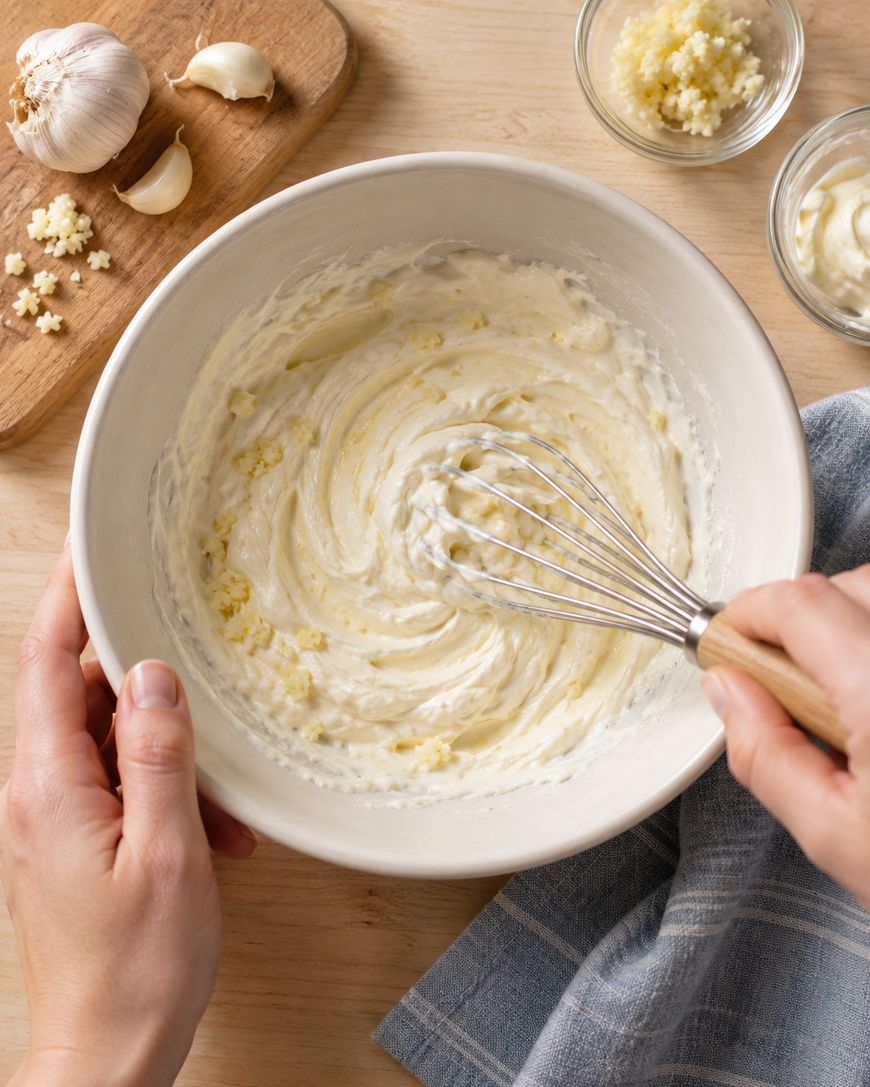
Stir in half of the shredded cheddar, half of the cooked bacon, and a good pinch of salt and black pepper.
Fold the drained cauliflower into this mixture until every floret is coated in the creamy base.
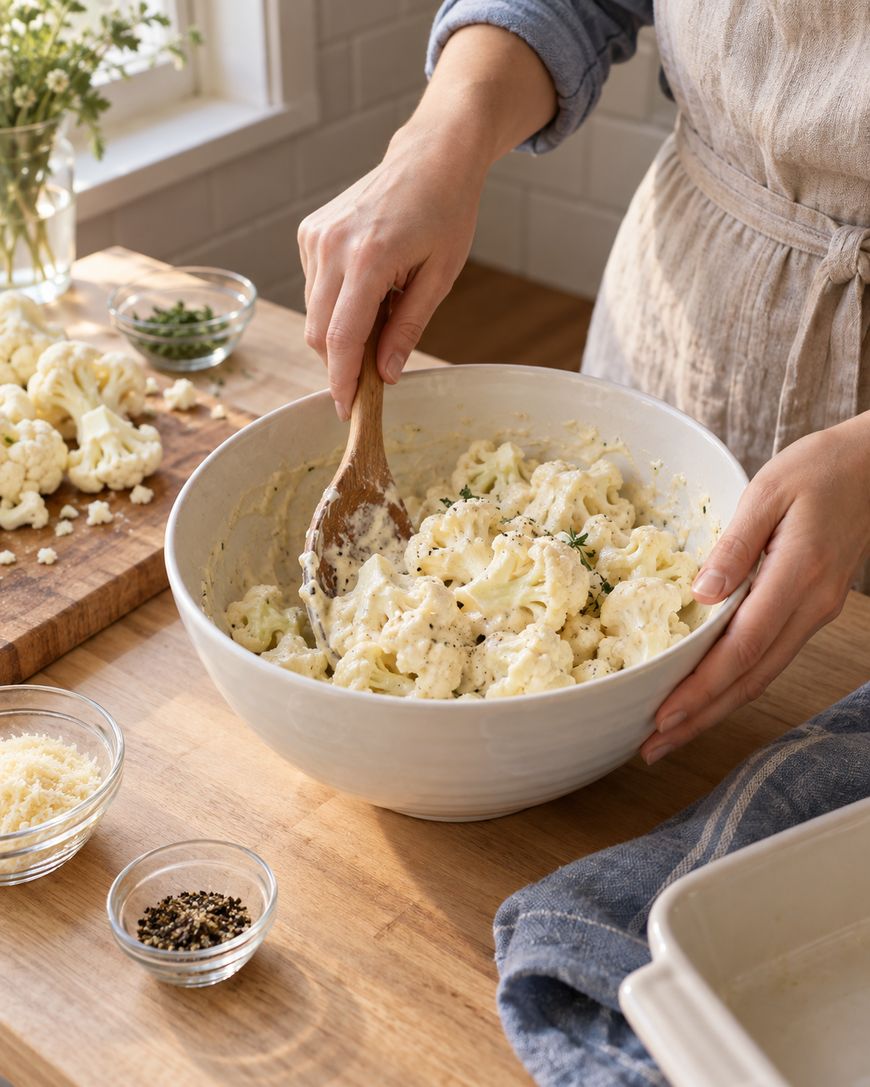
This step is where the flavor actually happens, so taste the mixture before it goes into the dish and adjust the salt if needed.
Assembling And Baking
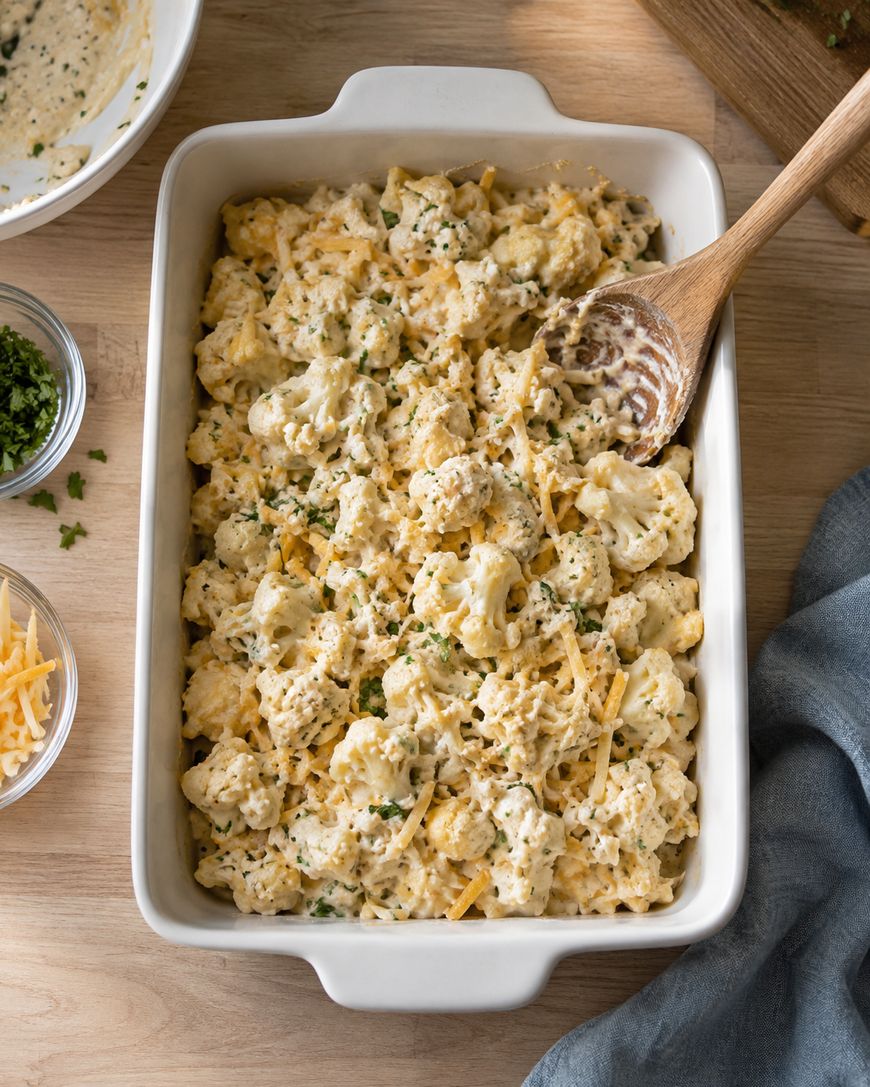
Spread the coated cauliflower into a greased nine-by-thirteen-inch baking dish in an even layer.
Top the casserole with the remaining shredded cheddar and the remaining bacon, then bake uncovered at 375°F for 20 to 25 minutes.

The casserole is ready once the cheese is fully melted and lightly golden at the edges.
Let it rest for five minutes before scattering the sliced green onions over the top, since the flavor settles as it cools slightly.

Variations And Substitutions
Swap the cheddar for a Colby-Jack blend or pepper jack if you want a milder or spicier finish.
Turkey bacon works as a lighter substitute for regular bacon, though it will not render as much fat for the sauce.
Stir in a half cup of cooked, crumbled sausage for a heartier, main-dish version of this casserole.
For a tangier base, replace half of the mayonnaise with plain Greek yogurt.
Storage And Make-Ahead Tips
Store leftover loaded cauliflower casserole in an airtight container in the refrigerator for up to four days.

Reheat individual portions in the microwave for one to two minutes, or warm the whole dish in a 350°F oven for about 15 minutes.
You can assemble the casserole up to a day ahead, cover it tightly, and refrigerate it unbaked until you are ready to bake.
This casserole does not freeze well, since the cauliflower turns mushy and the sour cream base can separate once thawed.
Serving Suggestions
Loaded cauliflower casserole works well alongside grilled chicken, seared steak, or a simple green salad.

It also holds up nicely as a potluck side, since it travels well and reheats easily in a low oven.
For a heartier meal, serve it over a bed of greens or alongside garlic bread to round things out.

A few extra green onions and a dollop of sour cream on top make a nice finishing touch at the table.
Ready to see the exact measurements and step-by-step timing? The full recipe card below has everything you need to get this on the table tonight.
Loaded Cauliflower Casserole
A creamy, cheesy loaded cauliflower casserole with crisp bacon and sharp cheddar, baked until golden and finished with fresh green onions.
Ingredients
- 2 medium heads cauliflower, cut into florets
- 8 slices bacon
- 1 cup sour cream
- 1 cup mayonnaise
- 2 cloves garlic, minced
- 2 cups shredded cheddar cheese, divided
- 1/2 teaspoon salt, plus more to taste
- 1/4 teaspoon black pepper
- 3 green onions, thinly sliced
Instructions
- Steam or boil the cauliflower florets until fork-tender, about 6 to 8 minutes, then drain well and pat dry.
- Cook the bacon in a skillet over medium heat until crisp, about 8 to 10 minutes, then chop into small pieces once cooled.
- Preheat the oven to 375°F and grease a 9x13-inch baking dish.
- In a large bowl, whisk together the sour cream, mayonnaise, and minced garlic.
- Stir in 1 cup of the shredded cheddar, half of the chopped bacon, the salt, and the pepper.
- Fold the drained cauliflower into the sour cream mixture until evenly coated.
- Spread the mixture into the prepared baking dish in an even layer.
- Top with the remaining 1 cup of cheddar and the remaining bacon.
- Bake uncovered for 20 to 25 minutes, until the cheese is melted and lightly golden.
- Let the casserole rest for 5 minutes, then top with sliced green onions before serving.
Notes
Store leftovers in an airtight container in the refrigerator for up to 4 days. This casserole does not freeze well. Casserole can be assembled up to a day ahead and refrigerated unbaked before baking.
Nutrition Information:
Yield:
6Serving Size:
1 cupAmount Per Serving: Calories: 410Total Fat: 34gSaturated Fat: 12gSodium: 620mgCarbohydrates: 10gFiber: 3gSugar: 4gProtein: 15g
Loaded Cauliflower Casserole Questions
Can I use frozen cauliflower instead of fresh?
You can use frozen cauliflower, but thaw it fully and pat it very dry before mixing it into the sauce.
Frozen cauliflower holds extra water, so skipping this step usually leads to a watery casserole.
Why did my casserole turn out watery?
A watery casserole almost always comes down to cauliflower that was not drained or dried well enough after cooking.
Let the florets sit in a colander for a few extra minutes, or press them gently with a towel before mixing.
Can I make this casserole ahead of time?
Yes, you can assemble the full casserole up to a day ahead, cover it tightly, and refrigerate it unbaked.
Add a few extra minutes to the bake time if you are putting it in the oven cold from the refrigerator.
What can I use instead of mayonnaise?
Plain Greek yogurt or additional sour cream both work well in place of mayonnaise in this recipe.
The texture stays creamy either way, though yogurt will add a slightly tangier flavor.
Is this casserole keto-friendly?
This loaded cauliflower casserole fits a low-carb approach thanks to the cauliflower base and full-fat dairy.
As always, check the specific ingredients you use if you are tracking carbs closely for a particular plan.
Can I add other vegetables to this casserole?
Broccoli florets mix in well with the cauliflower if you want to stretch the dish or add more vegetables.
Keep the total vegetable volume similar so the sauce-to-vegetable ratio stays the same.
Why This Recipe Works
This loaded cauliflower casserole works because every component is treated the way it needs to be before it goes into the dish.
The cauliflower is cooked just until tender and dried thoroughly, so it holds its shape instead of turning to mush in the oven.
The sour cream and mayonnaise base is seasoned and tasted on its own before mixing, which means the final casserole is properly seasoned all the way through rather than relying on the cheese for flavor.
Splitting the bacon and cheddar between the mixture and the topping gives the casserole richness inside and a golden, savory crust on top.
Loaded cauliflower casserole earns its place at the table because it delivers the comfort of a loaded baked potato in a lighter, faster form.
It travels well, reheats easily, and works equally as a side dish or a light main course.
Once you have made it with the drying and seasoning steps above, you will see why this version turns out creamy every time instead of watery.
Keep this one in your regular rotation for busy weeknights and casual gatherings alike.
Gather your ingredients, follow the steps above, and let the recipe card guide you through the exact timing for a loaded cauliflower casserole that turns out right the first time.