Last updated: June 15, 2026
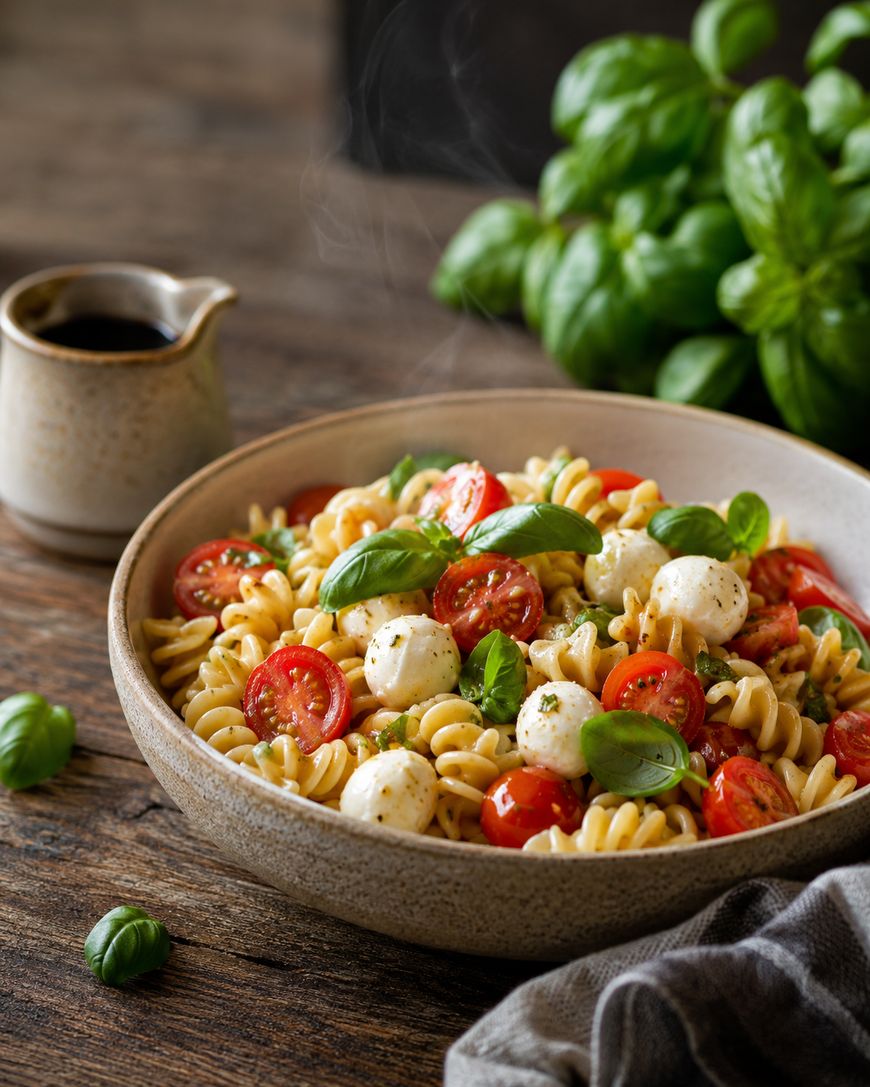
Caprese pasta salad brings together the sun-warmed flavors of a classic Italian insalata caprese and tosses them with tender pasta for a dish that works as a weeknight dinner, a potluck contribution, or a meal-prep staple. See the recipe card below for exact quantities and a printable version.
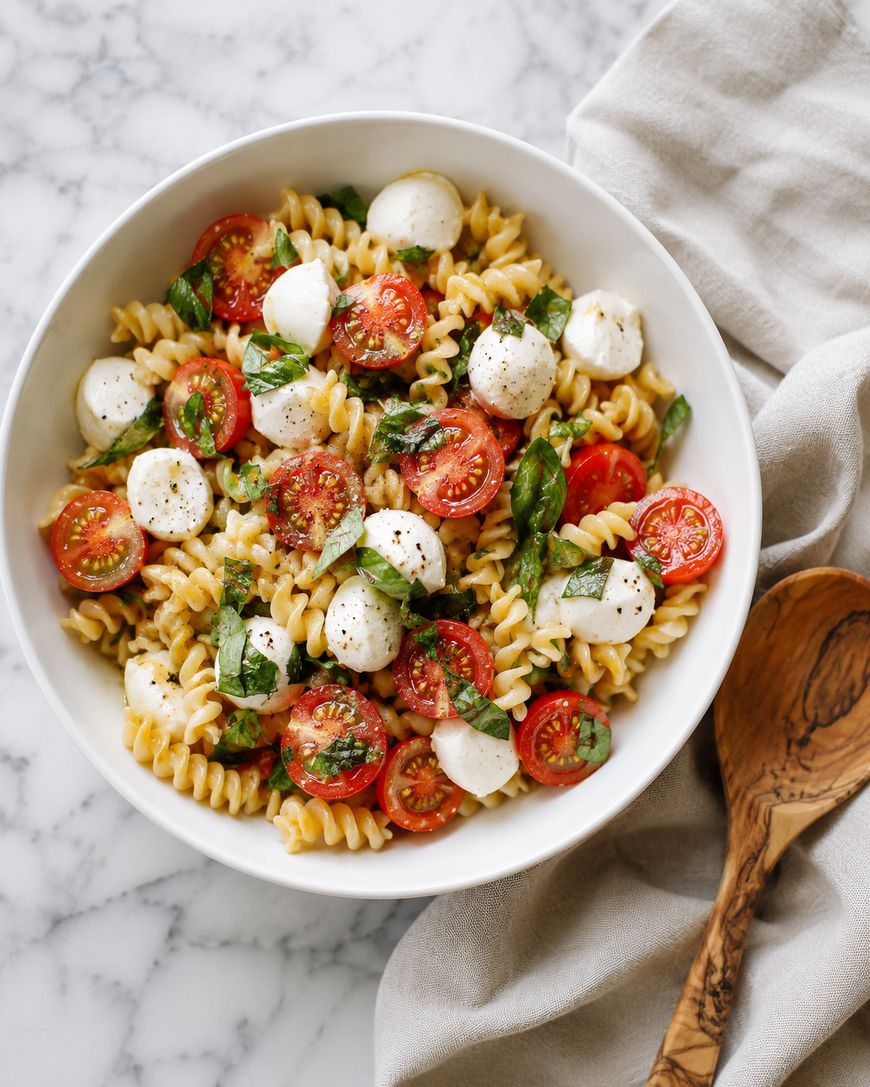
What You Need to Make Caprese Pasta Salad
The Pasta
Short, sturdy shapes hold up best here. Fusilli, rotini, farfalle, and penne all trap the dressing in their curves and ridges, giving you flavor in every bite.
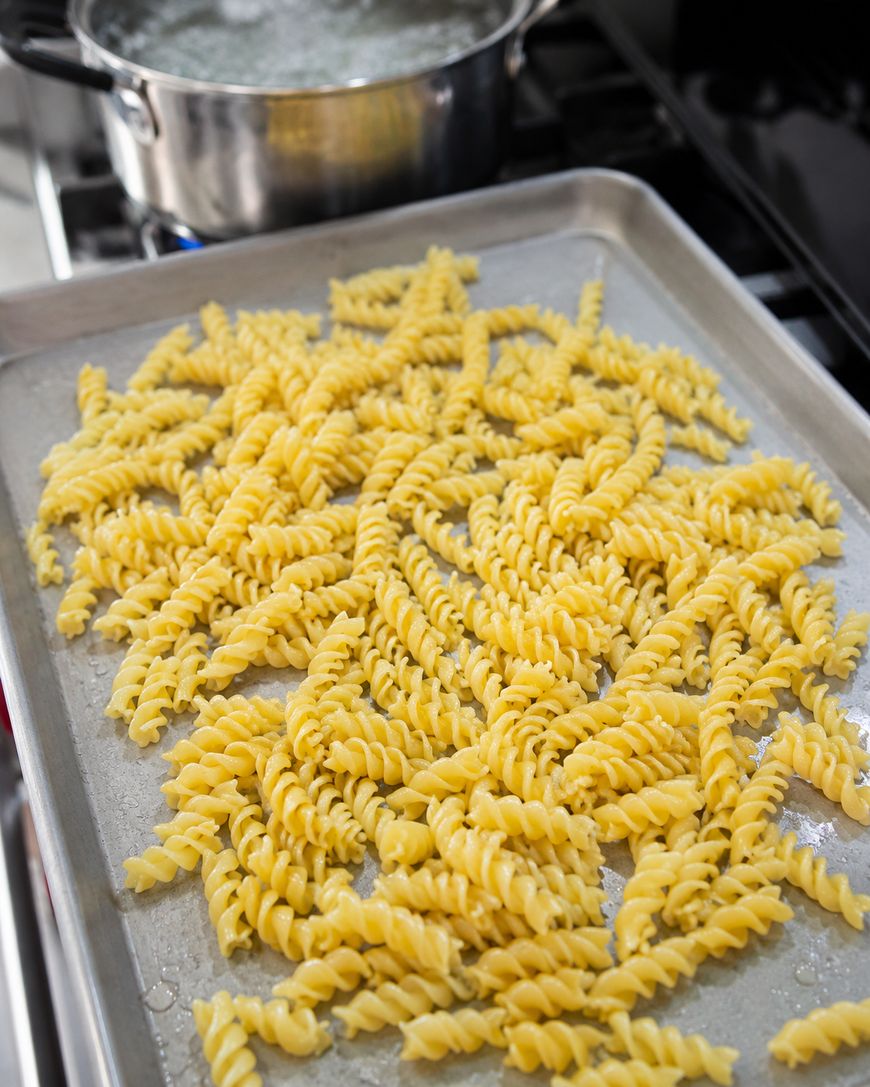
Cook the pasta in heavily salted water — the standard is one tablespoon of kosher salt per four quarts — until it reaches al dente, which means it still has a slight resistance at the center when bitten. Rinse it briefly under cold water to stop the cooking, then spread it on a sheet tray to dry. Wet pasta dilutes dressing and makes the salad watery.
Fresh Mozzarella
Fresh mozzarella di bufala from Campania, or its cow’s-milk counterpart fior di latte, is the correct choice. Both are sold packed in water or whey and have a clean, milky flavor that aged mozzarella cannot replicate.
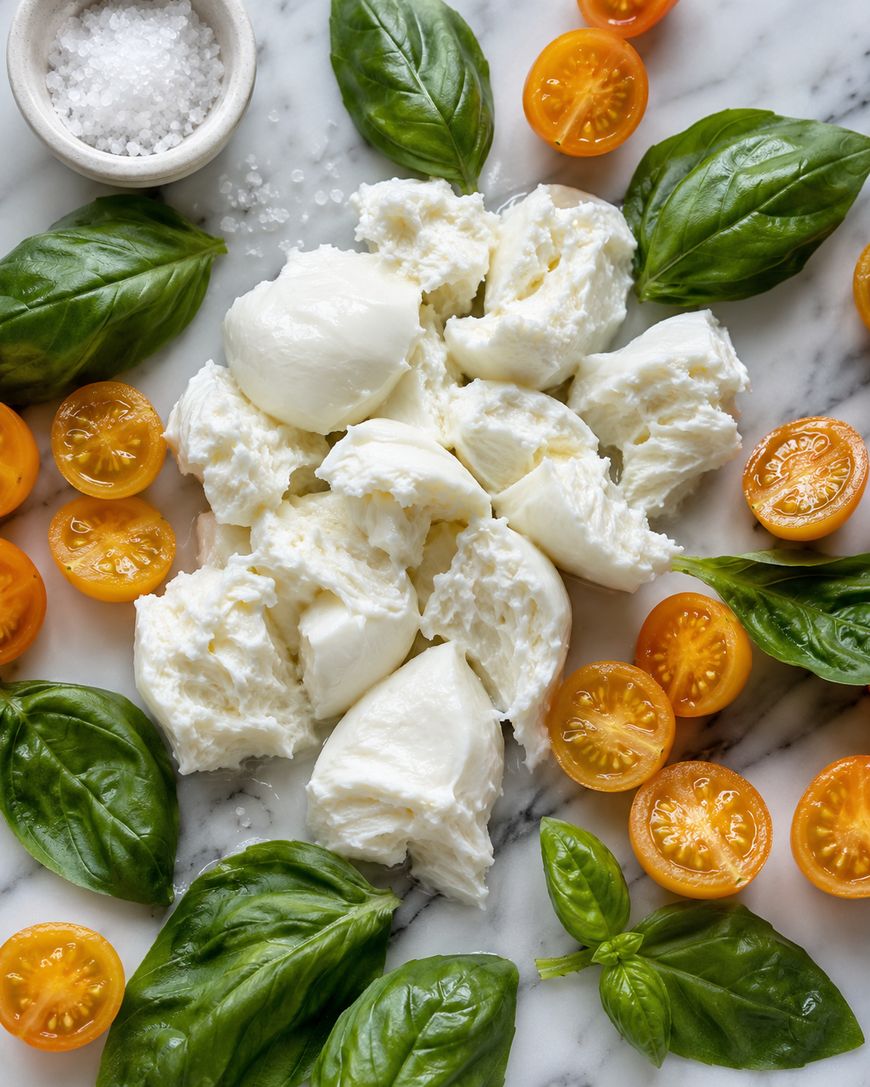
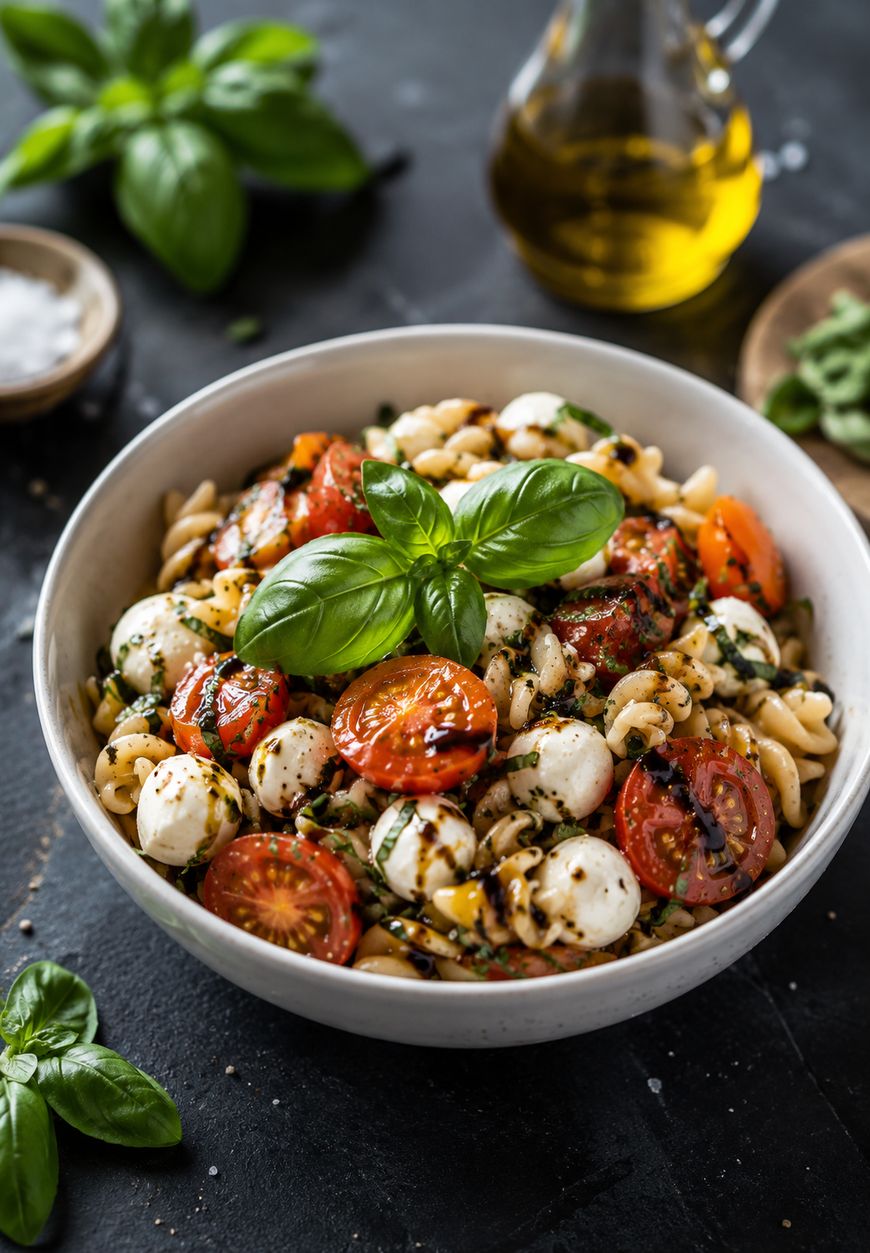
Ciliegine (cherry-sized balls) are ideal because they can go straight into the bowl without cutting. If you have larger balls, tear them by hand into rough, uneven pieces. The ragged edges hold onto the dressing better than clean knife cuts.
Tomatoes
Use the ripest tomatoes available. Cherry tomatoes from brands like Backyard Farms or Sun Gold varieties sold at farmers markets are reliable year-round. Halve them through the equator so the cut face absorbs the dressing.
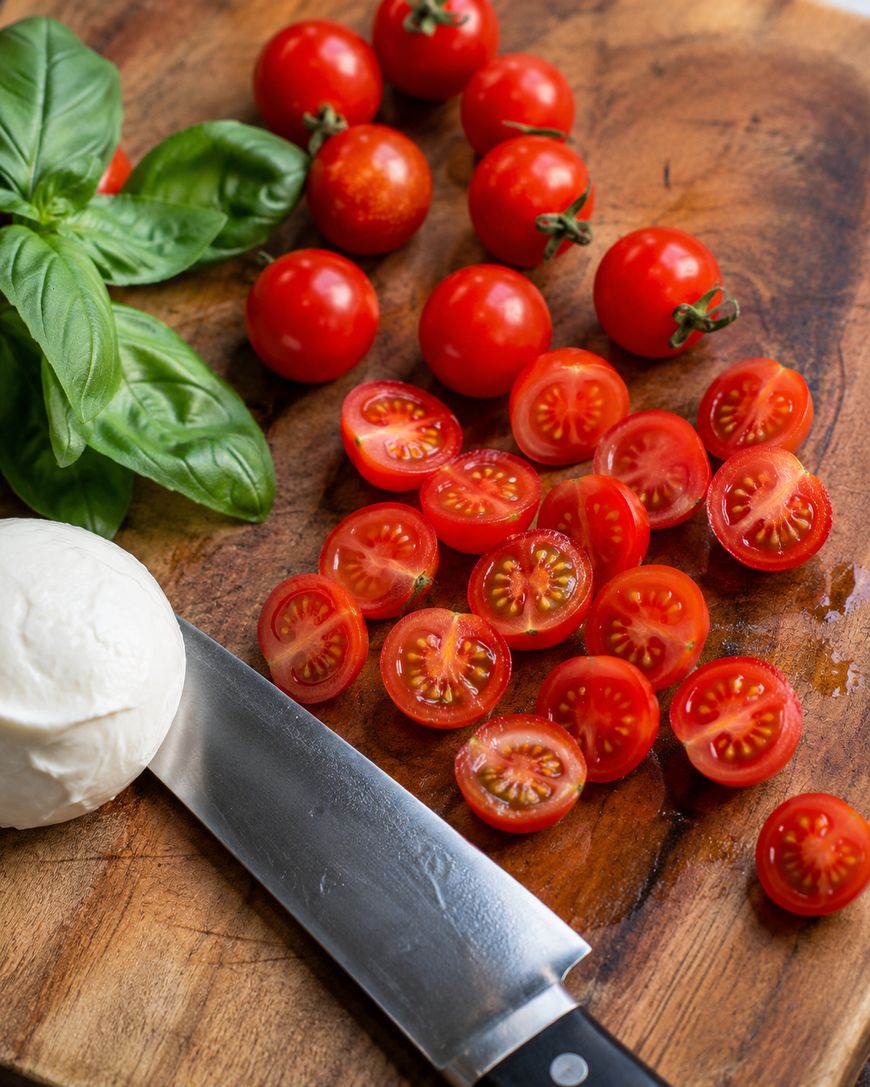
In peak summer, a mix of heirloom varieties such as Cherokee Purple, Green Zebra, and Brandywine adds visual contrast and complexity of flavor. Avoid refrigerating tomatoes at any stage — cold breaks down the cell walls and turns them mealy.
Fresh Basil
Genovese basil, the broad-leafed variety most common in US grocery stores, is the standard. Tear the leaves just before serving rather than cutting them with a knife. A knife blade bruises the cell walls and causes the leaves to blacken within minutes.
If basil is unavailable or expensive, fresh flat-leaf parsley adds a similar brightness, and a small amount of fresh oregano can approximate the herbal quality of the original.
The Dressing
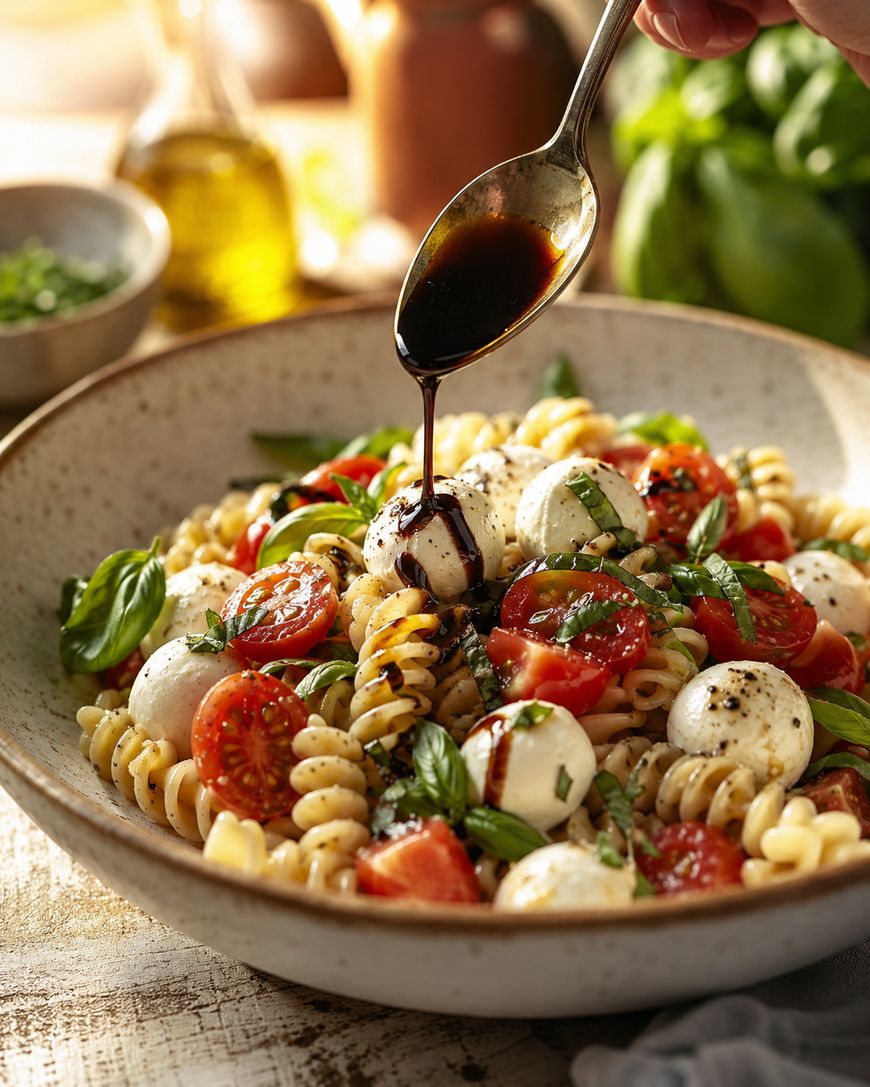
The dressing is an emulsion of extra virgin olive oil, balsamic glaze, garlic, Dijon mustard, salt, and black pepper. Use a good quality olive oil — California Olive Ranch Everyday is widely available and reliable.
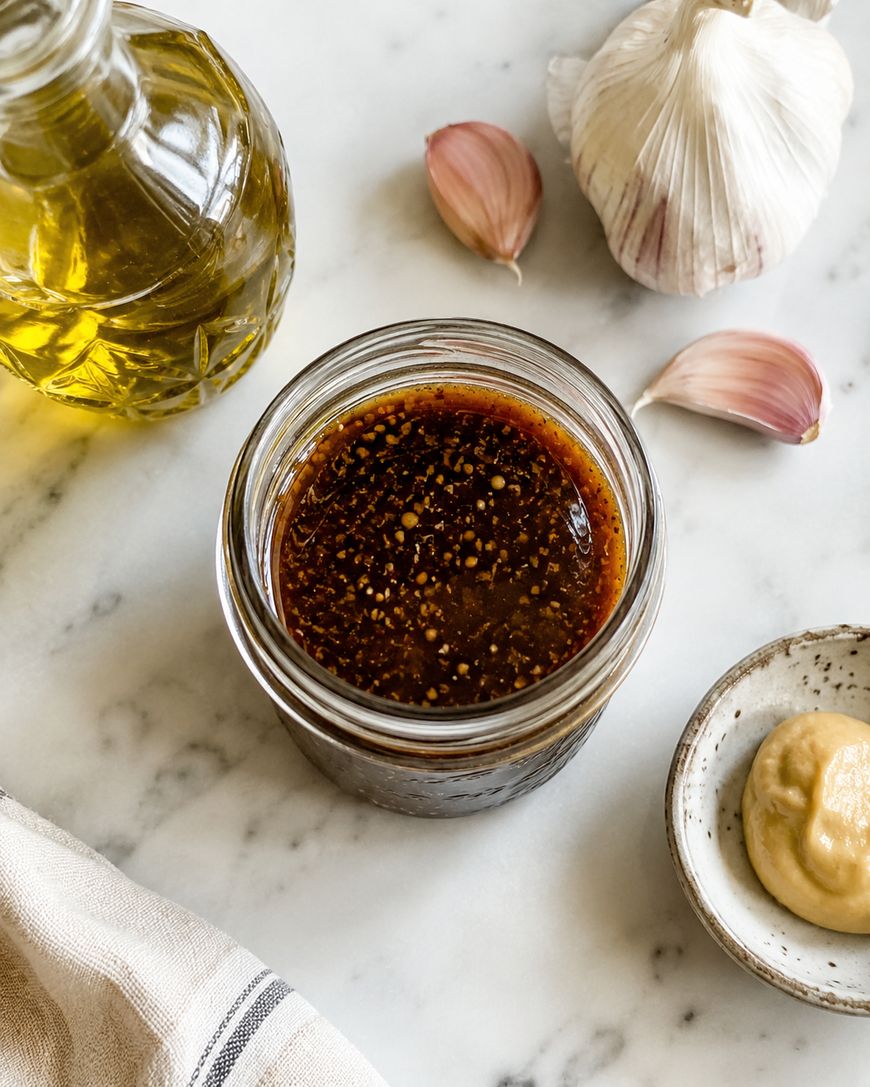
For the balsamic, a commercial glaze such as Alessi or Massimo Gusto works perfectly; the thick, sweet reduction clings to the pasta far better than plain balsamic vinegar.
Whisk the mustard and garlic into the vinegar first, then stream in the olive oil while whisking to form a stable emulsion. Taste and adjust seasoning before tossing.
How to Assemble Caprese Pasta Salad
Tossing and Dressing
Combine the cooled, dry pasta, halved tomatoes, and mozzarella in a large bowl. Pour about two-thirds of the dressing over the top and fold gently using a rubber spatula, not tongs, to avoid breaking the mozzarella.
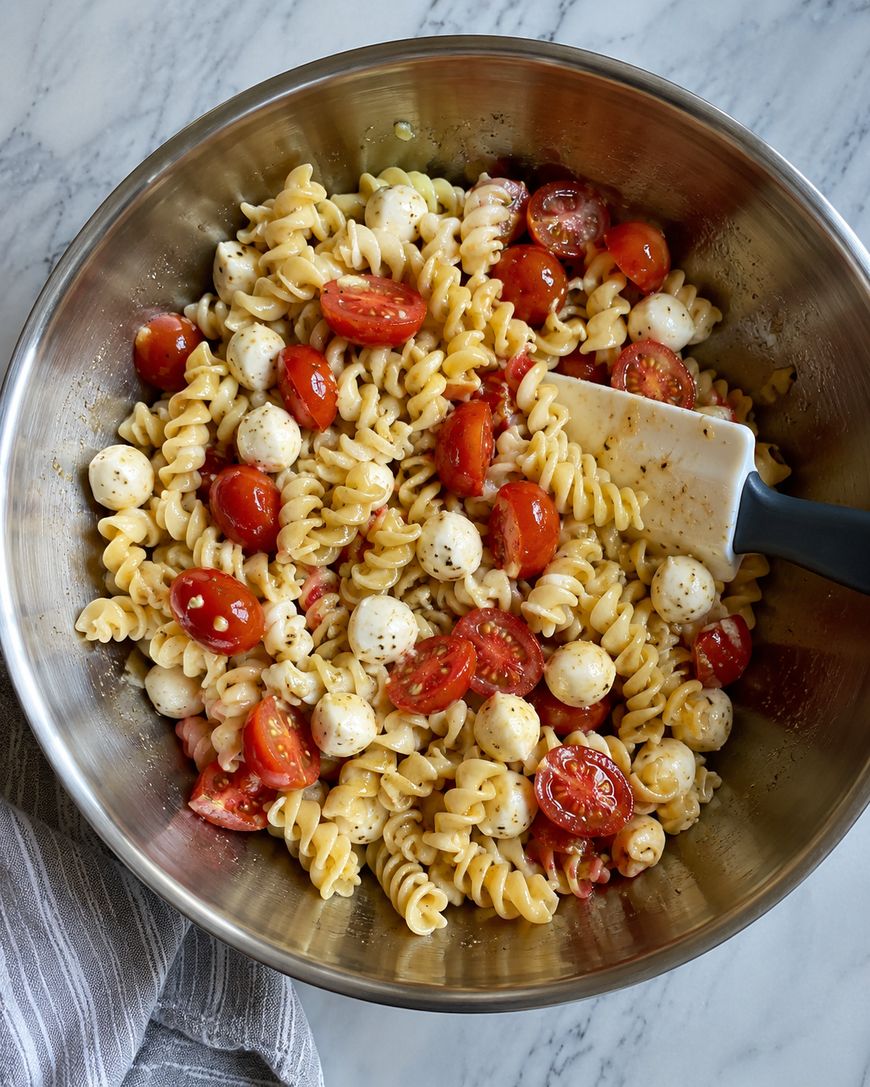
Let the salad rest for ten minutes before serving. During that window the pasta absorbs the dressing and the flavors knit together. Add the remaining dressing just before it goes to the table.
Finishing Touches
Scatter the torn basil over the top at the last possible moment. A light drizzle of finishing olive oil — something grassy and peppery like Mani Organic or Frantoia — lifts the whole dish.

A few flakes of Maldon sea salt and a turn of coarse black pepper are the only additional seasonings needed. Some cooks add a small handful of toasted pine nuts for texture; that is optional but worthwhile.
Variations and Substitutions
Make It Vegan
Replace the fresh mozzarella with a plant-based alternative. Violife Mozzarella Block, grated or torn, mimics the mild dairy flavor reasonably well. Omit the Parmesan if you are using it as a finish.
Add Protein
Grilled chicken breast sliced thin, a can of drained Genova Tonno tuna packed in olive oil, or a cup of rinsed chickpeas all integrate cleanly without disrupting the core flavor profile.
Gluten-Free Version
Substitute a gluten-free pasta made from brown rice or chickpea flour. Banza rotini holds its shape particularly well in cold salads and has enough protein to make the dish more filling.

Pesto Variation
Swap the balsamic glaze dressing for two tablespoons of store-bought basil pesto (Rao’s Homemade is the best widely available option) thinned with a splash of reserved pasta water and a squeeze of lemon juice. This creates a richer, more herb-forward version that travels especially well.
Storage and Make-Ahead Tips
Storing Leftovers
Store the dressed salad in an airtight container in the refrigerator for up to three days. The pasta will continue to absorb liquid as it sits, so stir in a tablespoon of olive oil and a small splash of balsamic before serving again to revive the texture.
Keep the basil separate if making ahead — add it only at serving time to prevent blackening.
Meal Prep Strategy
Cook and dry the pasta up to two days ahead. Store it tossed lightly in olive oil to prevent clumping. Store the halved tomatoes and mozzarella in separate containers. Combine everything and dress within an hour of serving for the freshest result.
Serving Suggestions
Caprese pasta salad pairs naturally with grilled proteins. Serve it alongside grilled Italian sausages, cedar-plank salmon, or a simple herb-marinated chicken thigh for a complete meal.
As part of a buffet spread, it holds at room temperature for up to two hours, making it a practical choice for outdoor gatherings. Place the bowl over a shallow tray of ice if the ambient temperature is above 75 degrees Fahrenheit.

For a formal starter course, portion the salad into small glasses or wide-rimmed soup bowls, garnish with a single basil leaf and a few drops of aged balsamic vinegar, and serve immediately.
The History Behind the Dish
The original insalata caprese, from which this pasta salad draws its identity, originates on the island of Capri in the Campania region of southern Italy. Food historians generally trace its modern form to the early twentieth century, though claims of a precise origin moment vary. The colors of the dish — red tomato, white mozzarella, green basil — mirror the Italian flag, a detail that made it a natural centerpiece at patriotic gatherings.
The version with pasta emerged as Italian-American home cooks began extending the salad into a more substantial side dish suitable for the cookouts and potlucks that define summer eating in the United States. It became a fixture in American food media during the early 2000s when fresh mozzarella became widely available in mainstream supermarkets outside specialty Italian grocers.
Today the combination appears on menus from New York trattorias to California farm-to-table restaurants, and its simplicity makes it one of the most searched pasta salad recipes in American home cooking.
Use the recipe card below to get the exact measurements and step-by-step instructions in a printable format.
Caprese Pasta Salad
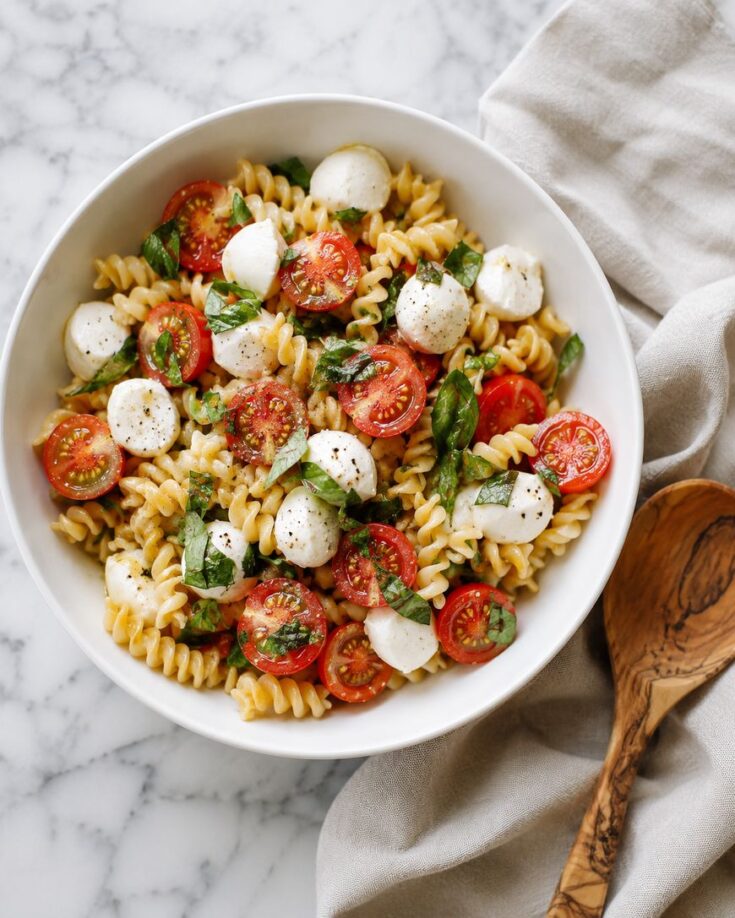
A fresh and easy caprese pasta salad with al dente pasta, fresh mozzarella, ripe cherry tomatoes, basil, and a balsamic glaze dressing. Ready in 20 minutes and perfect for potlucks, meal prep, or a simple summer dinner.
Ingredients
- 12 oz fusilli or rotini pasta
- 1 lb cherry tomatoes, halved
- 8 oz fresh mozzarella ciliegine (small balls), patted dry
- 1 cup fresh basil leaves, torn
- 3 tablespoons extra virgin olive oil
- 2 tablespoons balsamic glaze
- 1 teaspoon Dijon mustard
- 1 clove garlic, finely minced
- 1/2 teaspoon kosher salt
- 1/4 teaspoon freshly ground black pepper
- Flaky sea salt and extra olive oil for finishing (optional)
Instructions
- Bring a large pot of water to a boil. Add one tablespoon of kosher salt, then cook the pasta according to package directions until al dente. Drain, rinse briefly under cold water, and spread on a sheet tray to dry for 5 minutes.
- While the pasta dries, halve the cherry tomatoes. Lightly salt them and let them drain in a colander for 10 minutes, then discard the collected liquid.
- Make the dressing: whisk together the balsamic glaze, Dijon mustard, and minced garlic in a small bowl. Stream in the olive oil while whisking constantly until emulsified. Season with salt and pepper.
- Combine the cooled pasta, drained tomatoes, and mozzarella in a large bowl. Pour two-thirds of the dressing over the top and fold gently with a rubber spatula.
- Let the salad rest for 10 minutes to allow the flavors to meld. Add the remaining dressing and toss again.
- Scatter the torn basil over the top, finish with flaky sea salt and a drizzle of olive oil if desired, and serve immediately.
Notes
Add the basil just before serving to prevent blackening. Store leftovers in the refrigerator for up to 3 days; stir in a splash of olive oil and balsamic before re-serving to refresh the dressing. For a pesto variation, replace the balsamic dressing with 2 tablespoons of basil pesto thinned with a little pasta water and lemon juice.
Nutrition Information:
Yield:
6Serving Size:
approximately 1.5 cupsAmount Per Serving: Calories: 420Total Fat: 16gSaturated Fat: 6gSodium: 380mgCarbohydrates: 52gFiber: 3gSugar: 6gProtein: 16g
This site provides estimated nutritional information. This information comes from online calculators. Although we try to provide accurate nutritional information, these figures are only estimates.
Frequently Asked Questions
Can caprese pasta salad be made the night before?
Yes, with one important adjustment. Dress the pasta and tomatoes the night before, but hold the mozzarella and basil in separate containers in the refrigerator. Fresh mozzarella releases water as it sits, which thins the dressing and makes the salad soggy overnight. Fold in the cheese and torn basil within thirty minutes of serving, and add a fresh drizzle of olive oil and balsamic glaze to re-season.
What pasta shape works best for caprese pasta salad?
Fusilli and rotini are the top choices because their spiral grooves trap the balsamic dressing and small pools of olive oil, delivering more flavor in every forkful. Farfalle is a close second and adds visual appeal at a buffet. Avoid long noodles like spaghetti or linguine — they tangle and are awkward to serve from a communal bowl.
How do you prevent the salad from getting watery?
Two factors cause a watery caprese pasta salad: insufficiently drained pasta and salt-drawn liquid from the tomatoes and mozzarella. After cooking, rinse the pasta briefly and spread it on a sheet tray to air-dry for five to ten minutes. Salt the tomatoes lightly and let them drain in a colander for fifteen minutes before adding them, discarding the collected liquid. Use ciliegine mozzarella straight from its packaging, patted dry with paper towels.
Can you use sun-dried tomatoes instead of fresh?
Sun-dried tomatoes work well in a winter version when fresh tomatoes are flavorless. Use the oil-packed variety, drain them, and slice them thin. They contribute an intense, concentrated sweetness and slightly chewy texture that is quite different from the bright, juicy quality of fresh tomatoes, but the combination with mozzarella and basil remains harmonious. Reduce or omit the balsamic glaze slightly since sun-dried tomatoes are already very sweet.
Is this recipe suitable for a crowd?
Caprese pasta salad scales with no difficulty. A standard batch using one pound of pasta feeds six to eight people as a side dish. For a gathering of twenty, cook three pounds of pasta and triple the remaining ingredients. Make the dressing in a jar and shake it — scaling by eye is sufficient since the ratio of oil to acid is forgiving. Transport the components separately in lidded containers and combine on-site for the freshest result.
What wine pairs well with caprese pasta salad?
The acidity of the tomatoes and balsamic glaze calls for a crisp, unoaked white wine. Falanghina from Campania — the home region of mozzarella di bufala — is the textbook pairing and easy to find at Total Wine and specialty retailers for under twenty dollars. Vermentino from Sardinia or a dry Pinot Grigio from Alto Adige are equally good alternatives. If serving at a summer cookout where wine logistics are complicated, a lightly sparkling Lambrusco Grasparossa di Castelvetro, served cold, bridges the acidity and the richness of the cheese with equal success.
A Simple Dish Worth Making Right
Caprese pasta salad rewards attention to detail at every step — from choosing ripe tomatoes and genuine mozzarella di bufala to drying the pasta properly and tearing the basil at the last second. Follow each step and the result is a dish that tastes unmistakably of summer, whether served at a backyard barbecue in July or a dinner table in the middle of winter when the nostalgia for warm weather is strongest.