Last updated: October 29, 2026
Mashed butternut squash is the easiest way to bring a silky, lightly sweet fall side dish to the table, and it needs just one squash, a few pantry staples, and about an hour.
Roast the squash, mash it with butter, warm cream, and a little maple syrup, and use the recipe card below for the exact measurements.
How to Make Mashed Butternut Squash That Is Never Watery
The short answer is to roast the squash instead of boiling it. Roasting the halves cut side down at 400°F for 45 to 50 minutes steams the flesh in its own moisture while the edges caramelize, so the finished mash is thick, sweet, and full of flavor.
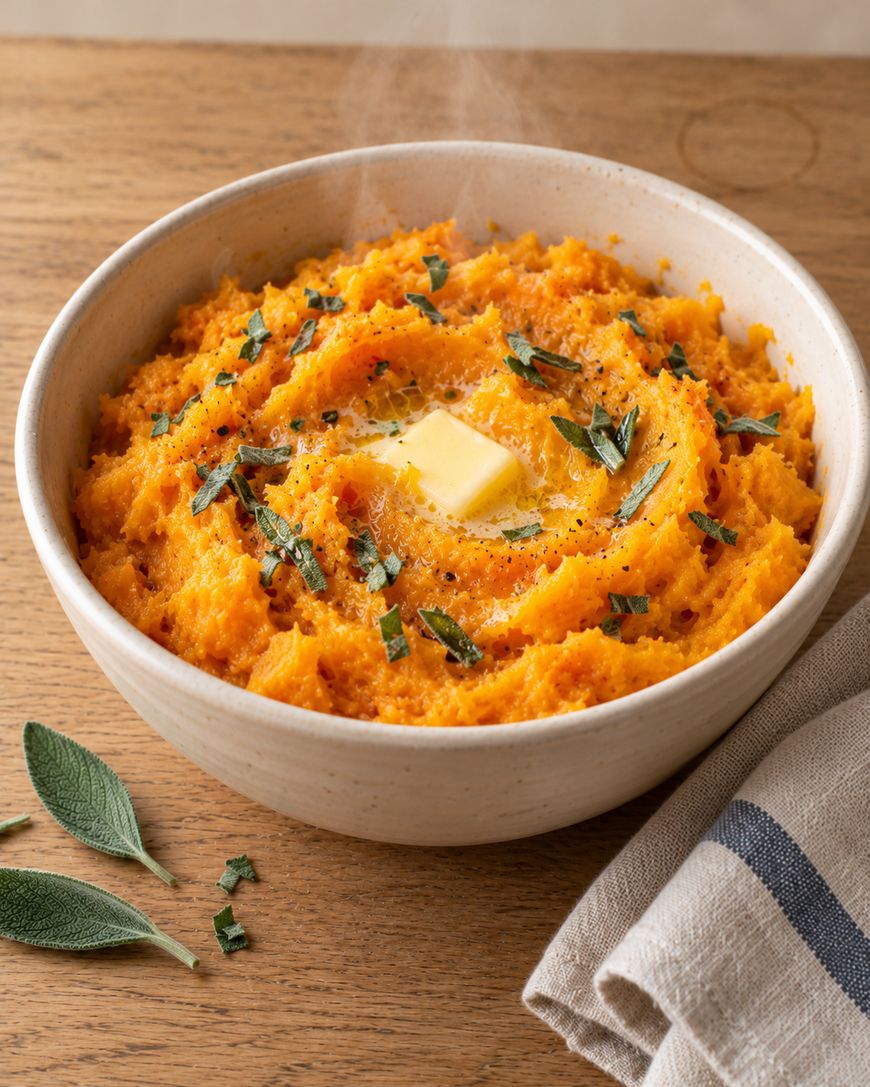
From there the work is easy. Scoop the tender flesh into a bowl, add butter, warm cream, maple syrup, nutmeg, salt, and pepper, and mash until the texture is as smooth or as rustic as you like.
Boiled squash soaks up water and tastes flat, which is why so many versions of this side dish turn out loose and bland. Skipping the pot also means one less pan to wash, and most of the cooking time is hands-off while the oven does the work.
Why Roasting Beats Boiling
Roasting drives off surface moisture and browns the natural sugars in the squash, which gives the mash a deeper, nuttier flavor than a pot of boiling water ever could.
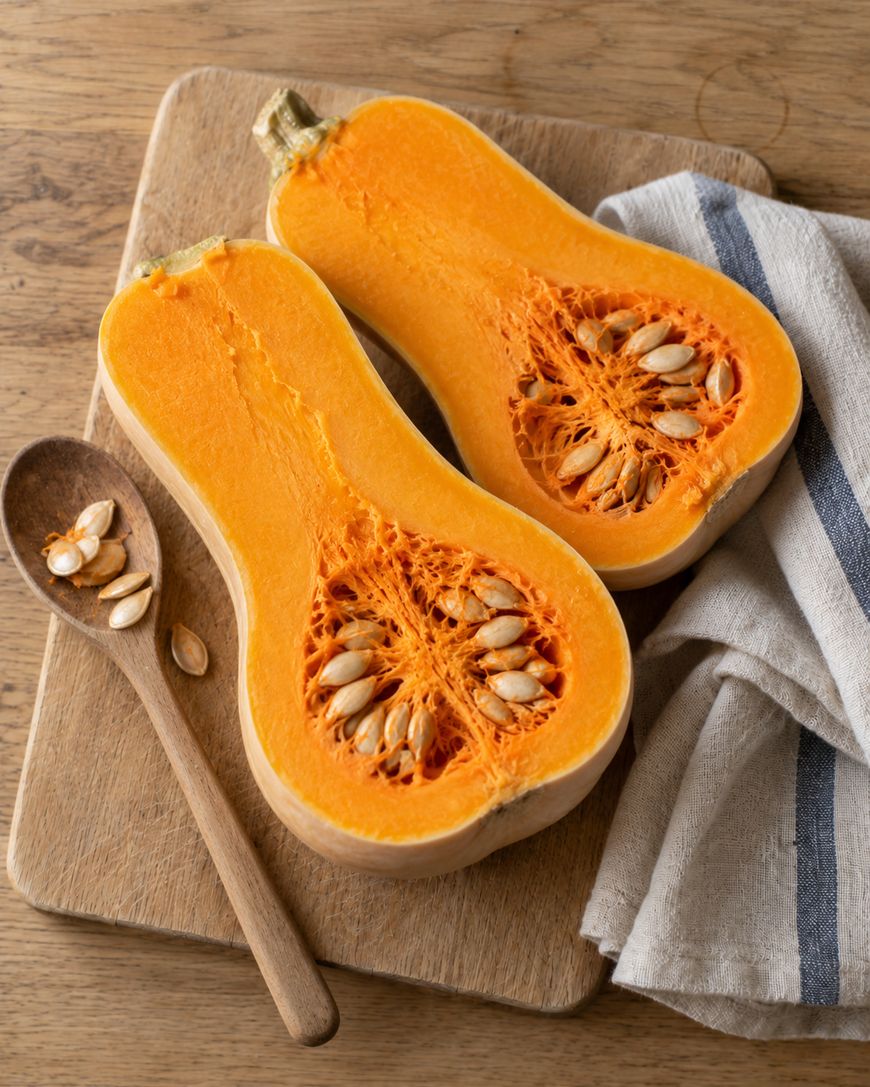
It also keeps the flesh dry enough to absorb butter and cream properly. That is what gives the finished dish a silky, spoonable texture instead of a soupy one.
Mashed Butternut Squash Ingredients and What Each One Does
You need one large butternut squash of about 3 pounds, 1 tablespoon of olive oil, and 1 teaspoon of kosher salt, which is split between roasting and mashing. For the mash itself you also need 4 tablespoons of unsalted butter, 1/4 cup of warmed heavy cream, 1 tablespoon of pure maple syrup, 1/4 teaspoon of ground nutmeg, and 1/4 teaspoon of black pepper.
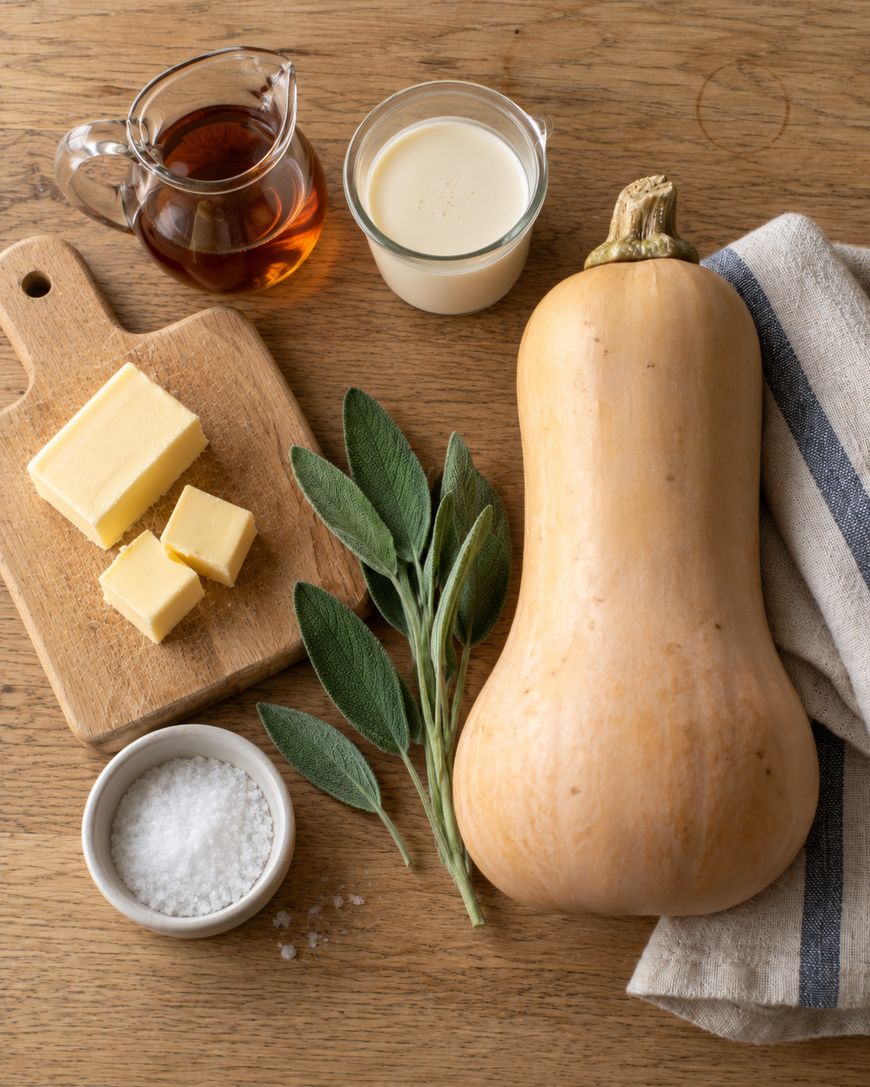
Chopped fresh sage is an optional garnish for serving. It adds a savory, slightly peppery note that plays well against the sweet squash.
Picking the Squash
Look for a squash that feels heavy for its size, with matte tan skin and no soft spots, cracks, or shiny patches. A long, thick neck is a good sign because that part is solid flesh, while the round bulb holds the seeds and a little less meat.
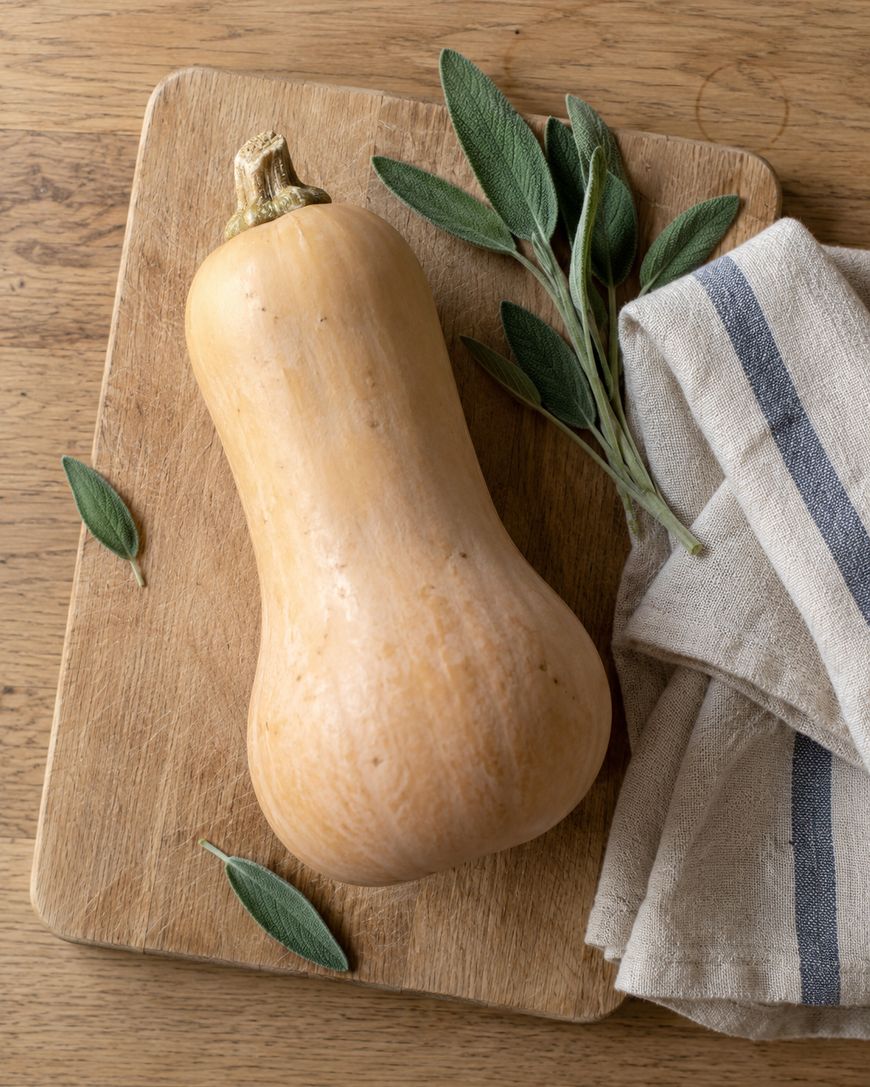
A 3 pound squash yields about 3 cups of cooked flesh, which is enough for four generous side servings of about 3/4 cup each.
Butter, Cream, and Maple
Unsalted butter lets you control the seasoning, and 4 tablespoons gives the mash a rich, glossy finish. Heavy cream adds body, and warming it first keeps the squash hot so everything blends together without turning gummy.
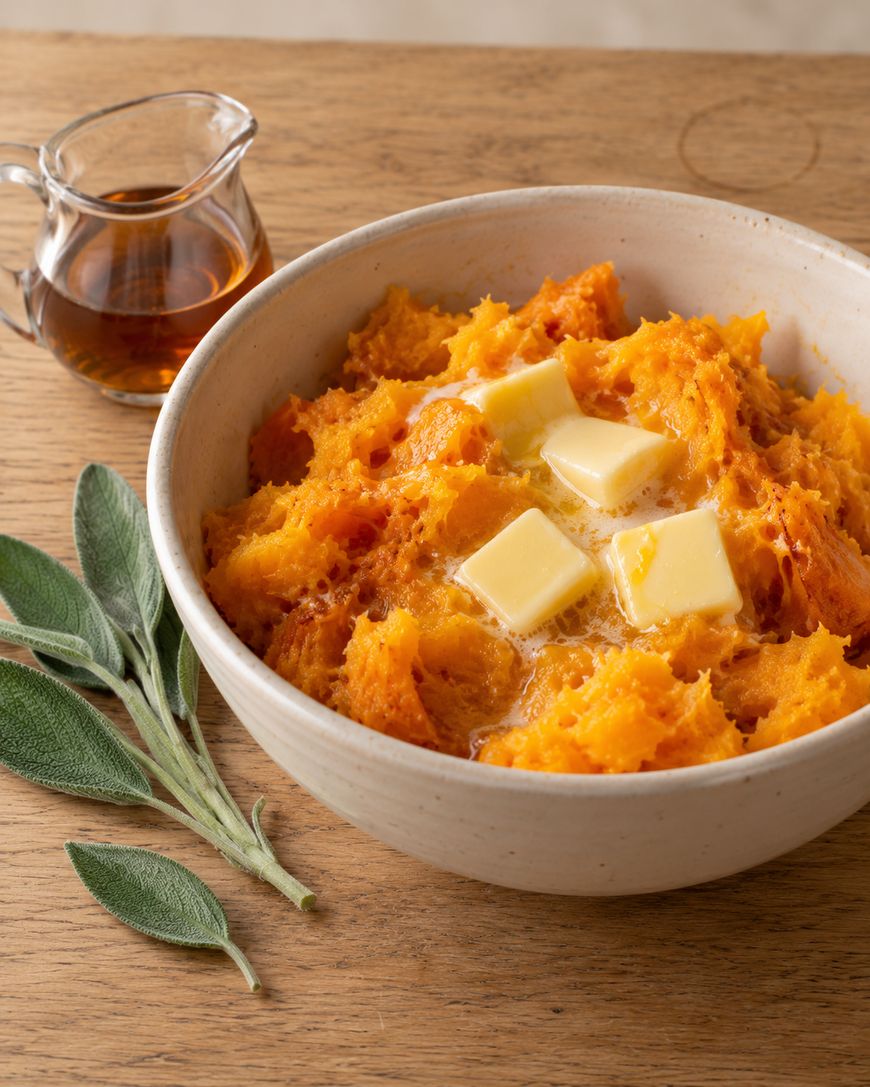
One tablespoon of pure maple syrup nudges the natural sweetness along without making the dish taste like dessert. The nutmeg and black pepper round it out, and a final taste for salt is what makes every flavor pop.
How to Roast Squash for Mashed Butternut Squash
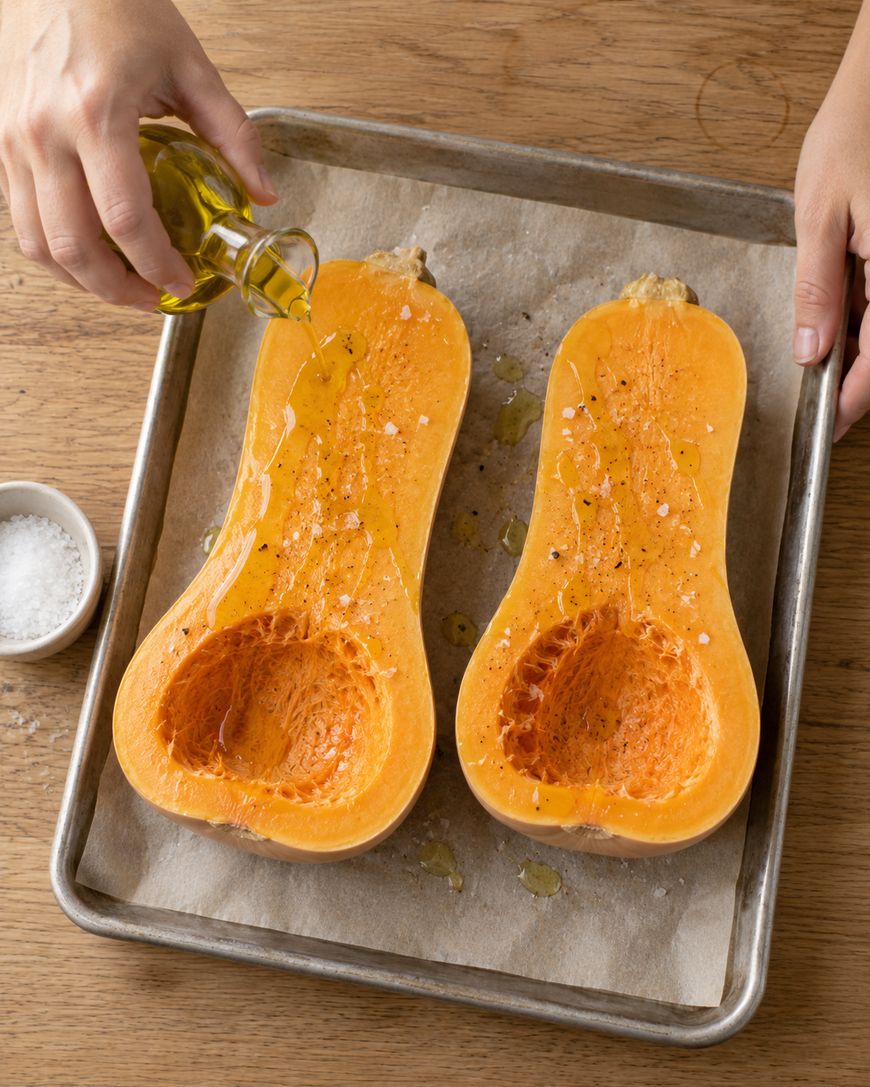
Heat the oven to 400°F and line a rimmed baking sheet with parchment. Set a folded towel under your cutting board so it cannot slip, then cut the squash in half lengthwise and scoop out the seeds with a spoon.
Brush the cut sides with the olive oil and sprinkle them with 1/2 teaspoon of the salt. Skip the peeler entirely, because the skin stays on during roasting and the flesh scoops away easily once it is tender.
Roasting Time and Doneness
Place the halves cut side down on the baking sheet and roast for 45 to 50 minutes. The squash is ready when a fork slides into the thickest part with no resistance and the cut edges look deeply golden.
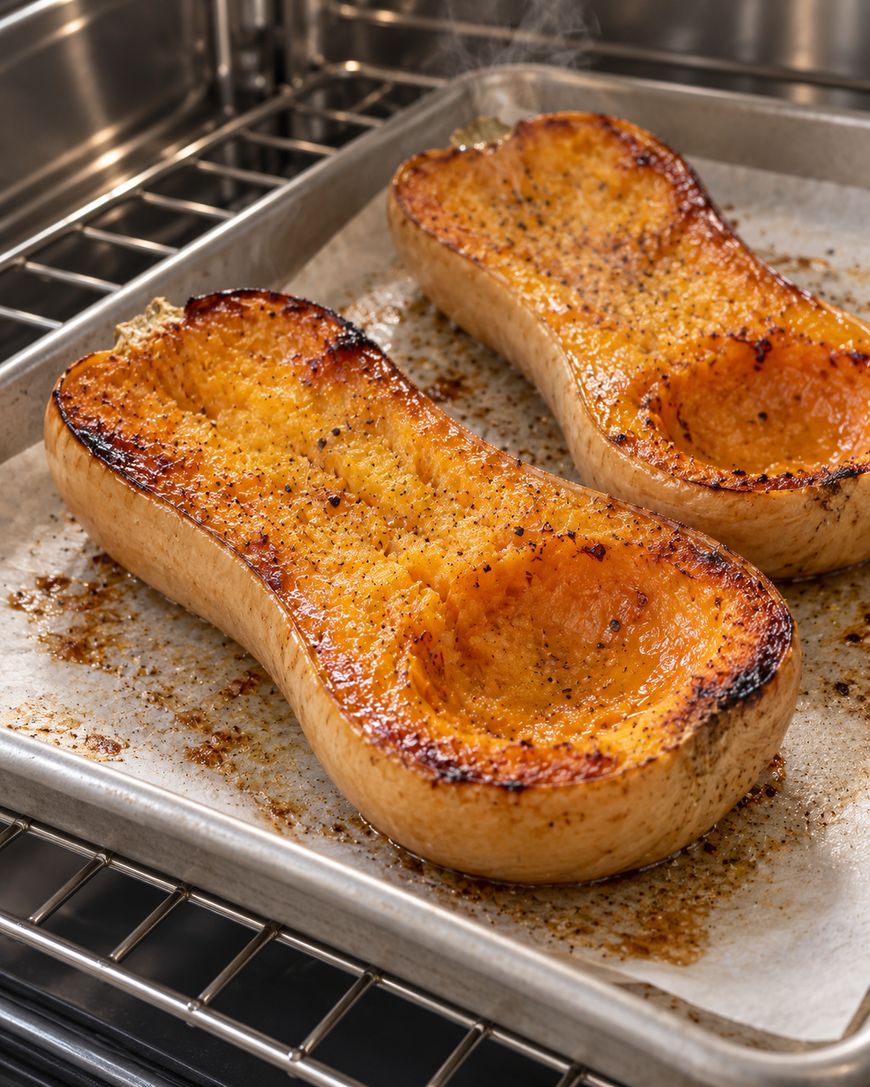
Larger squash may need a few extra minutes, while smaller ones finish sooner, so test early instead of trusting the clock. Let the halves rest for about 5 minutes so you can handle them, and warm the cream while you wait.
Scooping the Flesh
Use a large spoon to scoop the soft flesh straight into a big bowl. It should lift away from the skin in one easy pass, leaving the empty shells behind to discard.
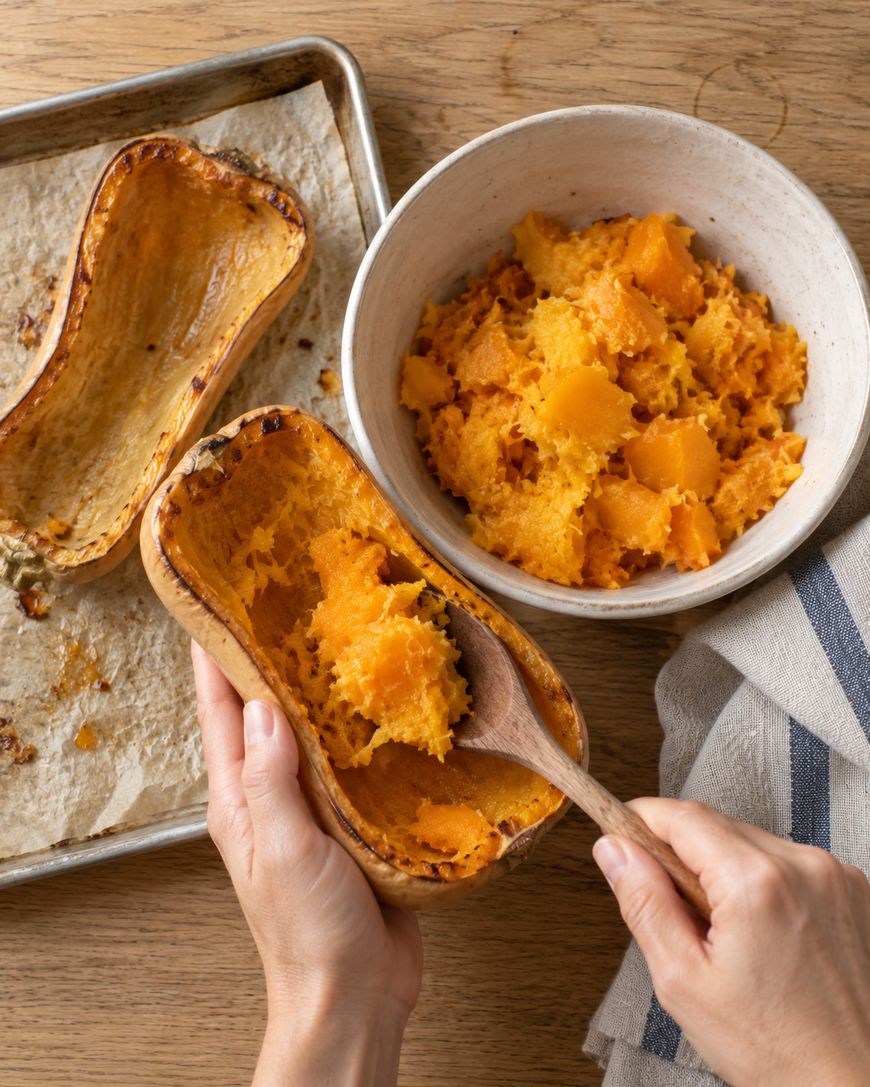
How to Mash Butternut Squash for the Silkiest Texture
Add the butter, warm cream, maple syrup, the remaining 1/2 teaspoon of salt, nutmeg, and pepper to the hot squash. Mash with a potato masher until the mixture is mostly smooth.
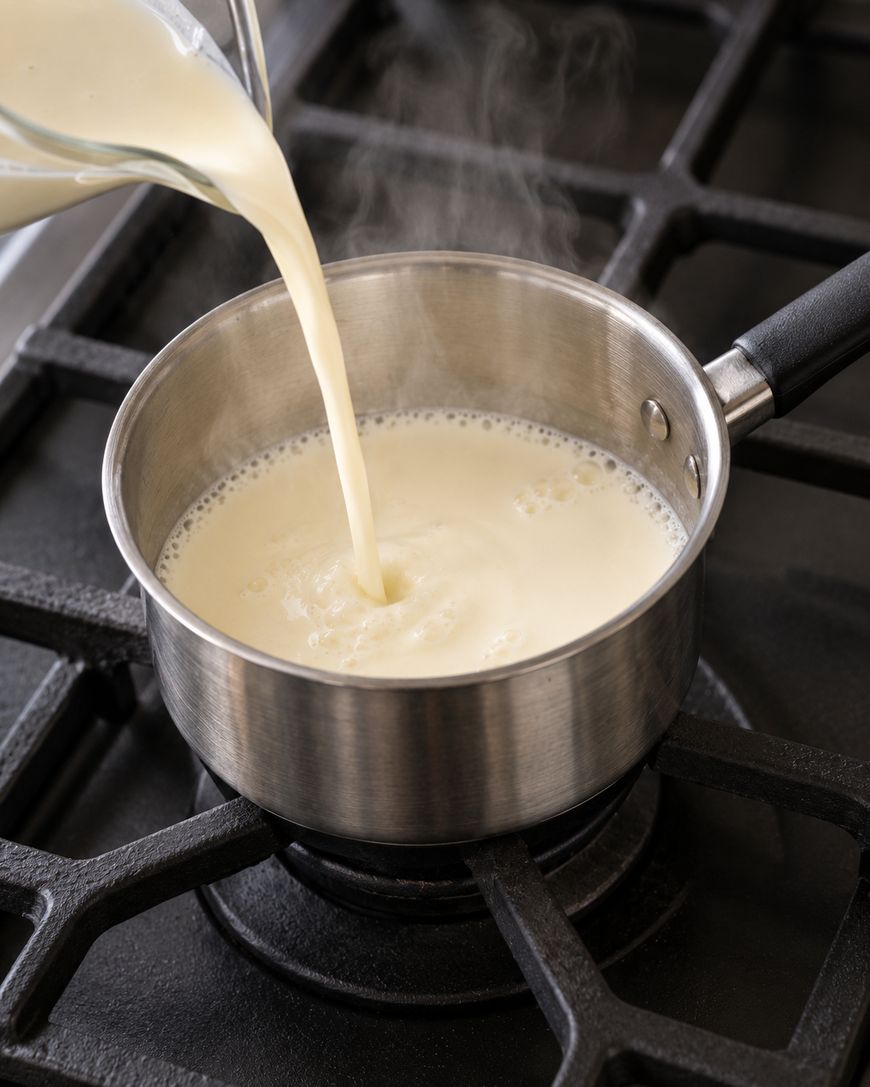
Mashing while the squash is still hot melts the butter completely and keeps the texture creamy. Cold squash resists the butter and turns pasty, so work quickly once the flesh is in the bowl.
By Hand or With a Food Processor
A potato masher leaves a pleasantly rustic texture with a few soft strands, which many people prefer next to turkey or roast chicken. For a velvety, restaurant-style result you can pulse the seasoned squash in a food processor until smooth, though the card uses the simple masher method.

Fixing the Texture
If the mash feels too thick, stir in an extra splash of warm cream one spoonful at a time. If it tastes flat, a pinch more salt almost always fixes it before anything else does.
Easy Variations for Mashed Butternut Squash
This recipe is a flexible base, so adjust it to fit the meal. Each of these swaps is optional, and the card leaves them out so the base recipe stays simple.
Savory Garlic and Sage
Fold in 1 tablespoon of chopped fresh sage and 1/4 teaspoon of garlic powder for a savory version that suits roast chicken and pork. The card does not list these two ingredients, so treat them as optional extras.
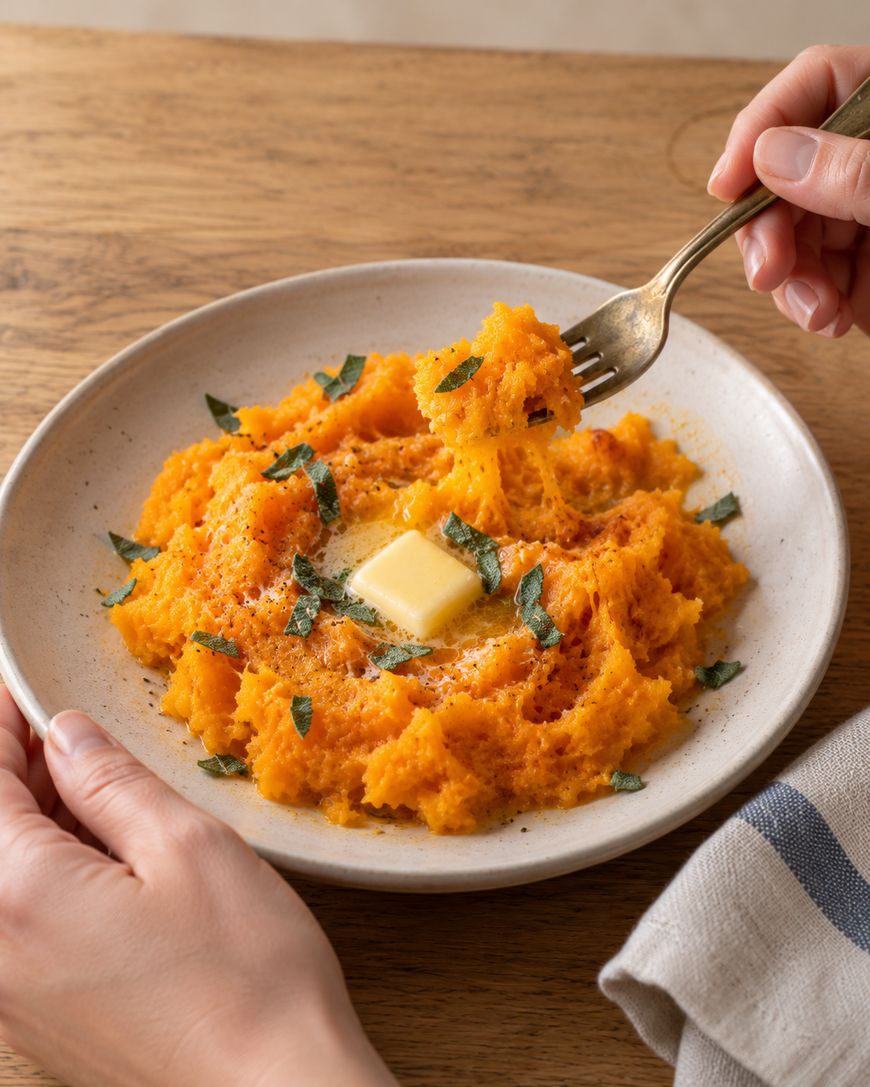
Dairy-Free Mashed Butternut Squash
Swap the butter for the same amount of dairy-free butter and the cream for 1/4 cup of full-fat canned coconut milk. The coconut flavor turns mild once the nutmeg and maple get involved.
Brown Butter
Melt the 4 tablespoons of butter in a small saucepan over medium heat until it smells nutty and turns golden brown, then stir it in with the cream. Browning adds a toasty depth that suits fall flavors beautifully.
A Sweeter Finish
Replace the maple syrup with 1 tablespoon of packed brown sugar, or add a pinch of cinnamon for a mash that leans closer to dessert. Both are optional, and the card sticks with maple.
Storing, Freezing, and Reheating Mashed Butternut Squash
Refrigerate leftovers in an airtight container within 2 hours of cooking, where they keep for 3 to 4 days, which matches the USDA guidance for cooked leftovers. You can also make the mash up to 3 days ahead and keep it in the refrigerator until dinner.
For freezing, spoon the cooled mash into a freezer-safe container and freeze for up to 3 months for the best texture. The USDA notes that frozen food stays safe indefinitely, though the quality slowly declines.
Thaw frozen mash overnight in the refrigerator before reheating. Warm it in a saucepan over low heat or in the microwave, stirring often, until it reaches 165°F as the USDA recommends for leftovers.
Add a splash of cream or milk if the mash has thickened in the refrigerator. A small pat of butter on top brings back the glossy finish.
Avoid reheating the mash more than once, since repeated warming dulls the flavor and dries out the texture. Warm only the portion you plan to eat and keep the rest chilled.
What to Serve With Mashed Butternut Squash
Serve this anywhere you would serve mashed potatoes, starting with roast turkey and gravy on Thanksgiving. It also pairs well with herb roasted chicken, pork tenderloin, seared pork chops, and braised short ribs.
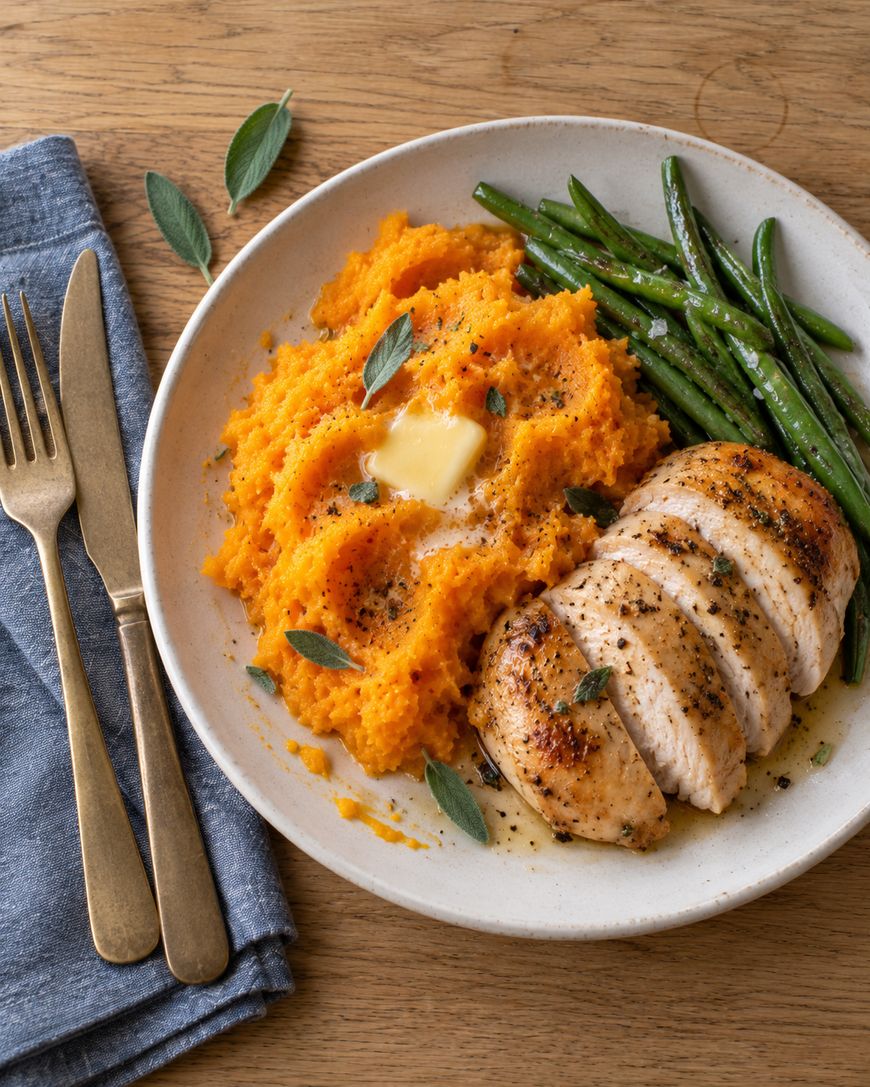
The sweetness balances salty, savory mains, and a spoonful of pan juices or gravy ties the plate together. For a vegetarian dinner, spoon it under roasted mushrooms or beside a kale salad with toasted pecans.
Leftover mash also stirs into warm broth for a quick, creamy soup. That makes the second night of leftovers feel like a brand new meal.
For a holiday spread, this mash also makes a lovely stand-in or companion for mashed potatoes. Set both in bowls side by side and guests will happily take a scoop of each.
It also fits easily into a weeknight plate, where a scoop beside a simple protein and a green vegetable turns an ordinary dinner into something cozy. The mash holds its heat well, so it stays warm while the rest of the meal comes together.
The Story Behind Mashed Butternut Squash
Squash is among the oldest cultivated crops in the Americas, grown by Indigenous farmers for thousands of years. Mashed squash with butter and a little maple syrup has long been a staple on New England holiday tables.
Butternut squash itself is a much newer variety, commonly credited to Charles Leggett of Stow, Massachusetts, who developed it in the 1940s. Its smooth, nutty flesh and long shelf life made it a favorite among home cooks almost immediately.
Today butternut is one of the most widely sold winter squashes in American grocery stores from early fall through winter. That availability is part of why mashed butternut squash has become a go-to alternative to mashed potatoes on modern holiday menus.
Cooks still love it because it asks so little in return. One squash, one baking sheet, and a handful of pantry staples are all it takes.
When you are ready to cook, the card below has every measurement, step, and note in one place.
Mashed Butternut Squash
Roasted butternut squash mashed with butter, warm cream, and a touch of maple syrup for a silky, sweet fall side dish that is never watery.
Ingredients
- 1 large butternut squash (about 3 pounds)
- 1 tablespoon olive oil
- 1 teaspoon kosher salt, divided
- 4 tablespoons unsalted butter
- 1/4 cup heavy cream, warmed
- 1 tablespoon pure maple syrup
- 1/4 teaspoon ground nutmeg
- 1/4 teaspoon black pepper
- Chopped fresh sage, for garnish (optional)
Instructions
- Heat the oven to 400°F and line a rimmed baking sheet with parchment.
- Cut the squash in half lengthwise and scoop out the seeds.
- Brush the cut sides with the olive oil and sprinkle with 1/2 teaspoon of the salt.
- Place the halves cut side down on the baking sheet and roast for 45 to 50 minutes, until a fork slides easily into the thickest part and the edges are golden.
- Let the squash rest for 5 minutes, and warm the cream while you wait.
- Scoop the flesh into a large bowl and discard the skins.
- Add the butter, warm cream, maple syrup, remaining 1/2 teaspoon salt, nutmeg, and pepper to the hot squash.
- Mash with a potato masher until mostly smooth, then taste and add more salt if needed.
- Serve warm, topped with chopped fresh sage if you like.
Notes
Refrigerate leftovers in an airtight container within 2 hours of cooking for 3 to 4 days. You can make the mash up to 3 days ahead.
Freeze in a freezer-safe container for up to 3 months for the best texture. Thaw overnight in the refrigerator.
Reheat in a saucepan over low heat or in the microwave, stirring often, until it reaches 165°F, adding a splash of cream if needed.
For a dairy-free version, use the same amount of dairy-free butter and swap the cream for 1/4 cup full-fat canned coconut milk.
Nutrition Information:
Yield:
4Serving Size:
3/4 cupAmount Per Serving: Calories: 290Total Fat: 20gSaturated Fat: 11gSodium: 480mgCarbohydrates: 30gFiber: 5gSugar: 8gProtein: 3g
Mashed Butternut Squash FAQ
Can you make mashed butternut squash ahead of time?
Yes, you can make it up to 3 days ahead and keep it refrigerated in an airtight container.
Reheat it gently with a splash of cream until it reaches 165°F.
Do you have to peel butternut squash before mashing it?
No, because the squash roasts with the skin on and the soft flesh scoops away easily afterward. Skipping the peeler saves time and avoids the trickiest part of prepping this squash.
Why is my mashed butternut squash watery?
Water usually comes from boiling or steaming the squash, which soaks the flesh with liquid. Roasting it cut side down and mashing it while hot keeps the texture thick.
If a batch is already loose, stir it in a saucepan over low heat for a few minutes to cook off the extra moisture.
Can you freeze mashed butternut squash?
Yes, cool it completely and freeze it in a freezer-safe container for up to 3 months for the best texture.
Thaw it overnight in the refrigerator and reheat it to 165°F, adding a splash of cream if needed.
Can you make mashed butternut squash dairy-free?
Yes, use the same amount of dairy-free butter and swap the cream for 1/4 cup of full-fat canned coconut milk. The nutmeg and maple syrup keep the flavor warm and balanced.
Why This Mashed Butternut Squash Recipe Works
Roasting the halves cut side down at 400°F traps steam against the flesh so it cooks through, while the edges touching the parchment brown and develop sweetness. That one step builds more flavor than any amount of seasoning added later.
Mashing the squash while it is still hot lets 4 tablespoons of butter melt completely into the flesh. Warming the 1/4 cup of cream first keeps the mash hot, so nothing seizes or turns gummy.
Just 1 tablespoon of maple syrup and 1/4 teaspoon of nutmeg are enough to highlight the natural sweetness of the squash instead of covering it. Splitting the salt, with half before roasting and half in the mash, seasons the squash all the way through.
Because there is no boiling water involved, the finished mash stays thick, spoonable, and full of flavor. The method works the same way whether you are cooking for a weeknight dinner or a holiday crowd.
Make Mashed Butternut Squash Tonight
Mashed butternut squash proves that a side dish can be simple and still taste special, with one squash, a hot oven, and about an hour. Roast it cut side down, mash it hot with butter, warm cream, and maple, and serve it right away.
Scroll up to the recipe card, save it for your next holiday menu, and leave a rating or comment if you try it.
Once you have made it once, it is easy to adjust the seasoning to your own taste. Keep mashed butternut squash on your short list of dependable side dishes for every cool-weather dinner.
It reheats well, it scales up easily by roasting a second squash, and it keeps everyone at the table happy. Make it once and it will earn a permanent spot in your fall rotation.
Creamy Garlic Mashed Potatoes You’ll Want at Every Dinner Table
Homemade Butternut Squash Ravioli With Sage Brown Butter That Tastes Like Restaurant Pasta