Last updated: October 29, 2026
Butternut squash ravioli sounds fancy, but it comes down to roasted squash, creamy ricotta, a simple egg dough, and a skillet of nutty brown butter, and the full recipe card is waiting below.
Here is exactly how we roll, fill, and cook 32 tender ravioli that hold together in the water and taste like a dinner out.
How to Make Butternut Squash Ravioli From Scratch
Butternut squash ravioli starts with roasting the squash until it is sweet and dry, folding it into a ricotta and Parmesan filling, and wrapping it in a tender egg pasta dough.
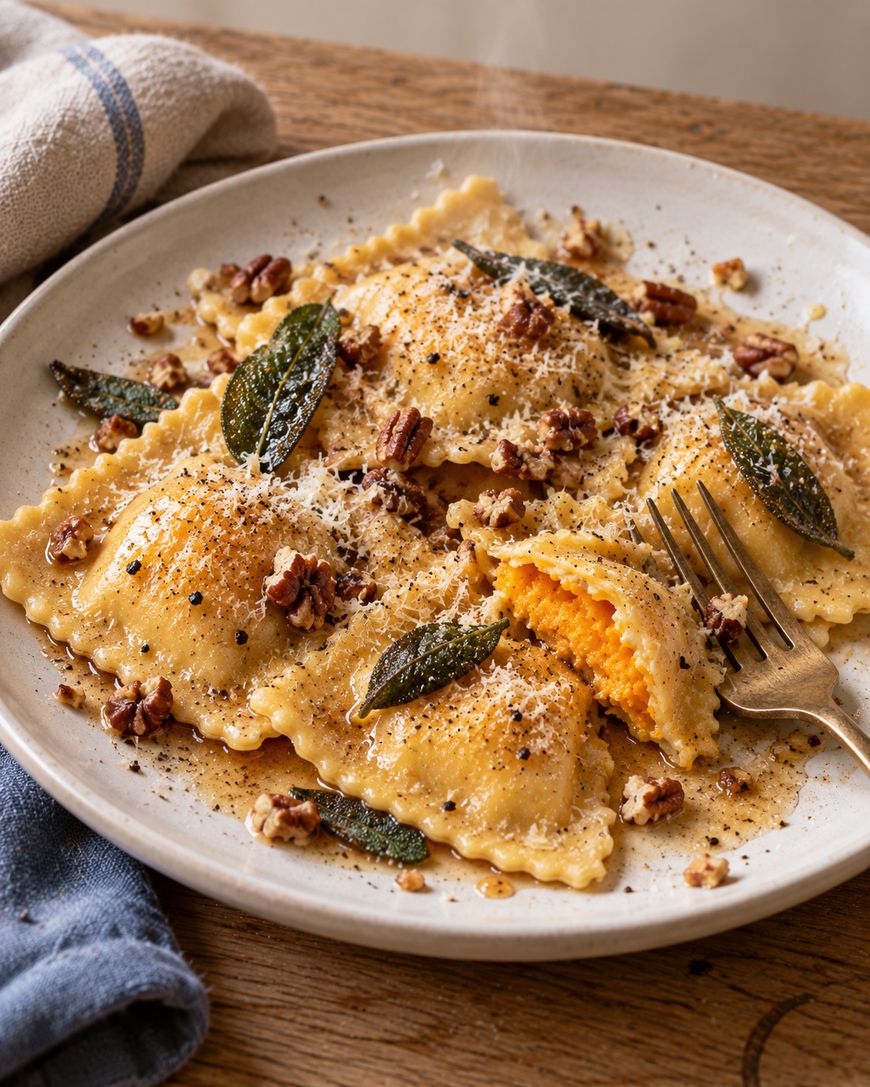
This version makes about 32 ravioli and serves 4, with 8 ravioli per person, and it takes roughly 2 hours and 10 minutes from start to table.
Most of that time is hands-off, since the squash roasts while the dough rests.
Gather Your Ingredients
For the filling, you need 1 medium butternut squash (about 2 pounds), 1 tablespoon of olive oil, 1/3 cup of whole milk ricotta, 3 tablespoons of grated Parmesan, and 1 tablespoon of plain breadcrumbs.

Season it with 1/4 teaspoon of ground nutmeg, 1/2 teaspoon of kosher salt, and 1/4 teaspoon of black pepper.
For the dough, you need 2 cups (250 grams) of all-purpose flour, 3 large eggs, 1 tablespoon of olive oil, and 1/2 teaspoon of kosher salt, plus a little extra flour for dusting.
For the sauce, gather 6 tablespoons of unsalted butter and 12 fresh sage leaves, and keep 1/4 cup of grated Parmesan and 1/4 cup of toasted chopped pecans nearby for serving.
You also need 1 tablespoon of kosher salt for the cooking water.
Roast the Butternut Squash
Cut the squash in half lengthwise, scoop out the seeds, and brush the cut sides with the 1 tablespoon of olive oil.

Place the halves cut side down on a parchment-lined sheet pan and roast at 400°F for 40 to 45 minutes, until a knife slides through the thickest part with no resistance.
Roasting cut side down steams the flesh while the edges caramelize, which gives you sweet squash that is soft but not soggy.
Make a Filling That Does Not Leak
Scoop the warm flesh out of the skin, measure 1 cup, and mash it until smooth.

Spread the mash over a double layer of paper towels or press it in a fine mesh sieve for about 10 minutes to pull out extra moisture.
Drain the ricotta in a sieve for the same 10 minutes, then stir it into the squash with the Parmesan, breadcrumbs, nutmeg, salt, and pepper.
Let the filling cool completely before you use it, because warm filling softens the dough and makes it tear.
Any leftover roasted squash is delicious stirred into soup or spread on toast.
Mix and Rest the Pasta Dough
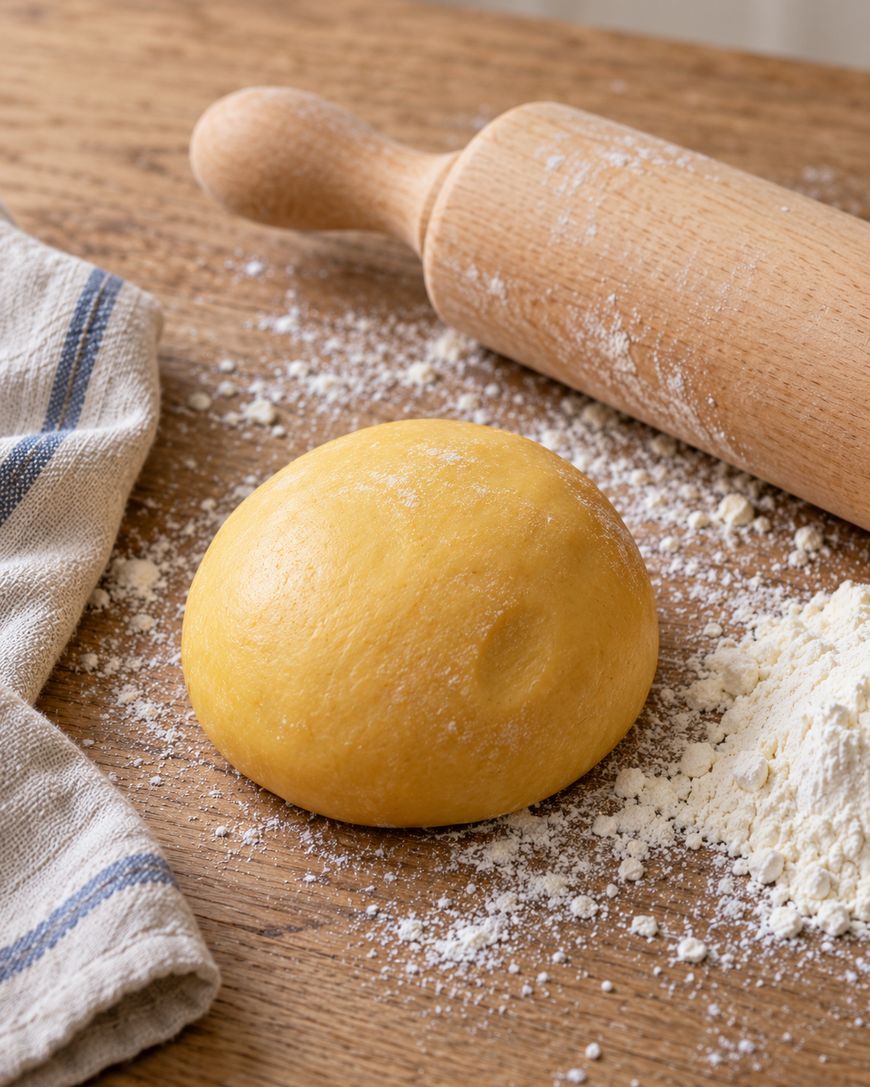
Pile the flour and 1/2 teaspoon of salt on a clean counter, make a well in the center, and add the eggs and olive oil.

Whisk the eggs with a fork, slowly pulling in flour from the edges, until a shaggy dough forms.
Knead for about 8 minutes, until the dough is smooth and springy, adding water 1 teaspoon at a time only if it feels crumbly.
Wrap it tightly and let it rest for 30 minutes so the gluten relaxes and the dough rolls out without snapping back.
Because the dough contains raw eggs, wash your hands and the counter well after handling it.
Roll, Fill, and Cut the Ravioli
Cut the rested dough into 4 pieces and keep the ones you are not using covered.
Roll each piece into a long sheet about 1/16 inch thick, either with a pasta machine on one of its thinnest settings or with a rolling pin and some patience.

Set a sheet on a lightly floured counter and place heaping 2-teaspoon mounds of filling about 2 inches apart, then brush lightly with water around each mound.
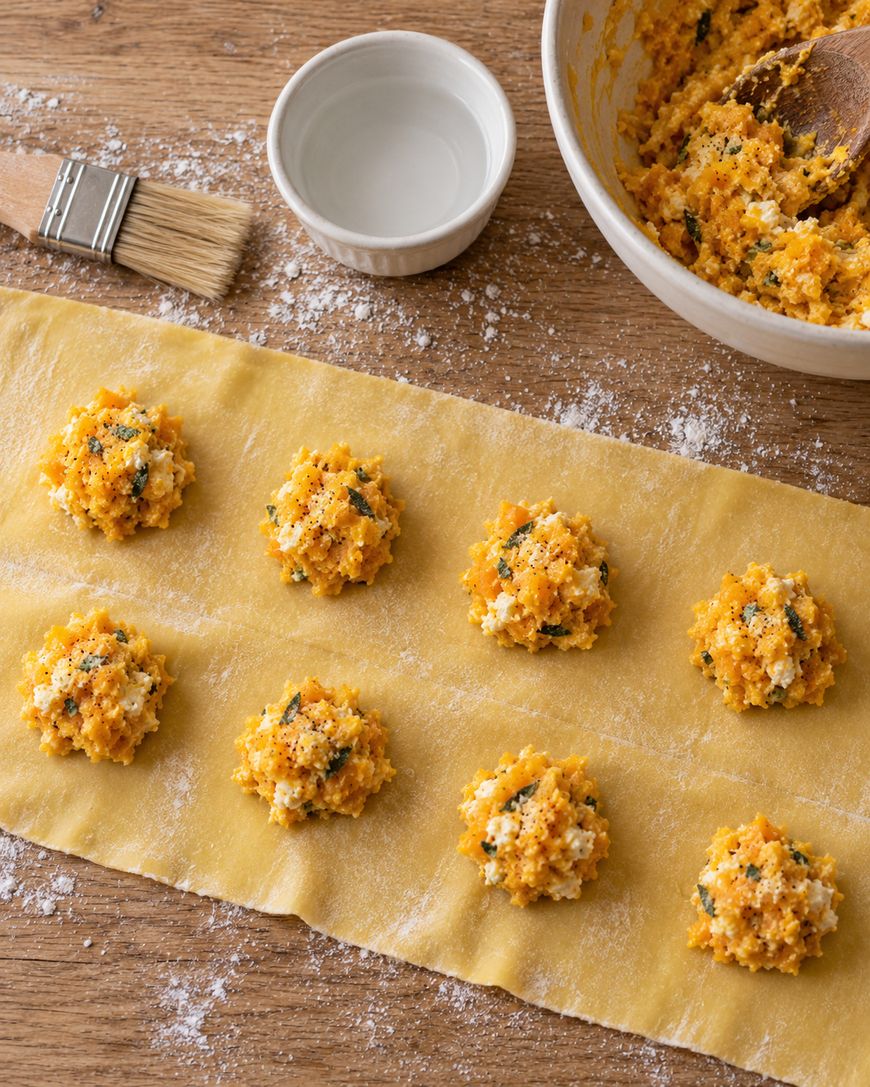
Lay a second sheet over the top and press firmly around every mound to push out the air, since trapped air is the main reason ravioli burst in the pot.
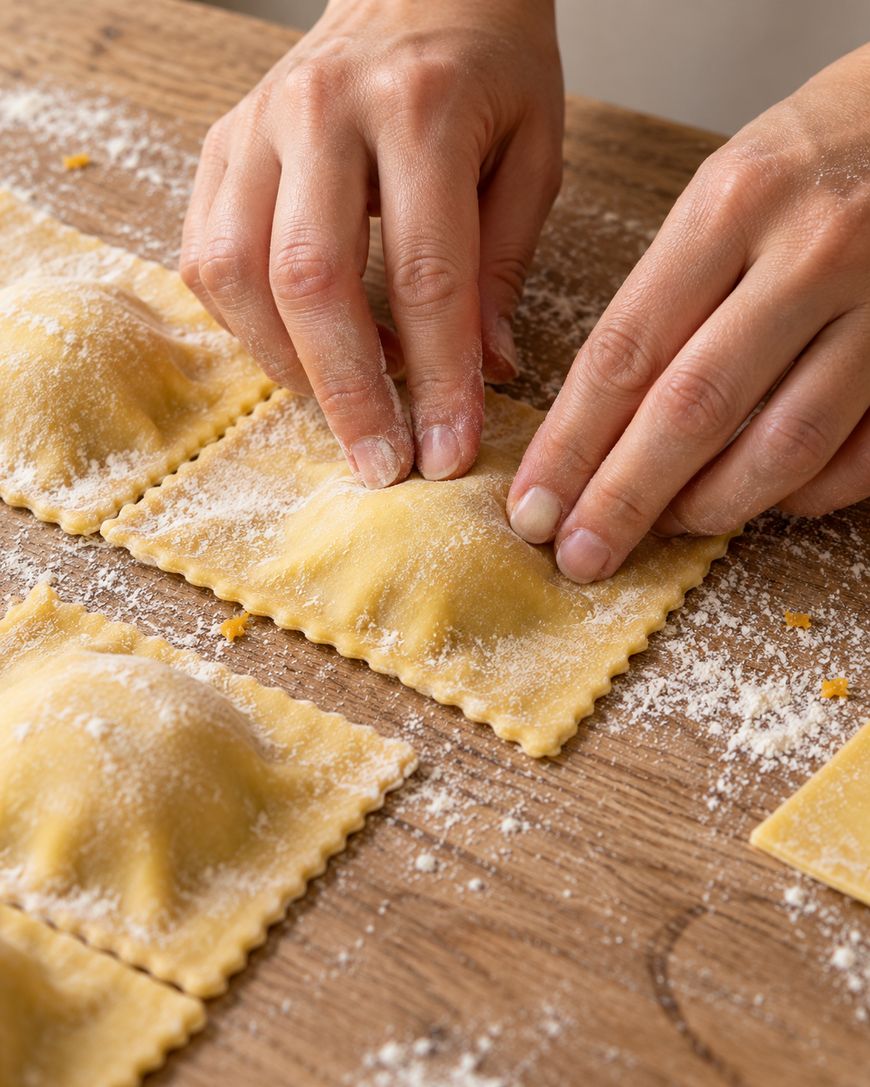
Cut the sheets into 2-inch squares with a sharp knife or a fluted pastry wheel and press the edges once more with a fork.
Set the ravioli in a single layer on a floured sheet pan, covered with a clean kitchen towel, while you finish the rest.

You should end up with about 32 ravioli and possibly a few spoonfuls of extra filling.
Cook the Ravioli
Bring 4 quarts of water to a gentle rolling boil in a large stockpot and stir in the 1 tablespoon of kosher salt.

Cook the ravioli in two batches for 3 to 4 minutes, until they float and the edges feel tender, then lift them out with a slotted spoon and save 1/4 cup of the pasta water.
A hard, violent boil can tear the delicate seams, so keep the water at a steady, gentle boil.
Brown the Butter With Sage
While the second batch cooks, melt the 6 tablespoons of butter in a large skillet over medium heat and add the sage leaves.

Cook for 4 to 5 minutes, swirling often, until the foam settles, the butter smells nutty and turns golden brown, and the sage leaves turn crisp.
Slide the ravioli into the skillet with 2 tablespoons of the reserved pasta water, toss gently for about 30 seconds, and finish with the Parmesan, pecans, and a few turns of black pepper.
Butternut Squash Ravioli Variations and Substitutions
The best butternut squash ravioli recipe is the one you will actually make on a busy night, so there are several easy ways to adjust this one.
The card below leaves out every variation here, so treat each one as an optional change.
Use Wonton Wrappers as a Shortcut
Round or square wonton wrappers make a fast stand-in for homemade dough, and they cook in about 3 minutes.
Place about 1 teaspoon of filling in the center of a wrapper, wet the edges with a fingertip, top it with a second wrapper, and press out the air before sealing.
The texture is a little thinner and chewier than fresh pasta, but it is a great way to get butternut squash ravioli on the table in under an hour.
Swap the Squash
Frozen cubed butternut squash works well when you want to skip the peeling and halving, as long as you roast the cubes until tender and dry at the edges before mashing.
Canned pumpkin puree can also stand in, but drain it well and expect a slightly earthier flavor than butternut.
Change the Cheese and the Seasoning
Mascarpone makes the filling richer and silkier, while goat cheese adds a pleasant tang that plays well with sweet squash.
A pinch of cinnamon, a spoonful of crushed amaretti cookies, or a little finely chopped sage in the filling all nod to traditional Italian versions.
Try a Different Sauce
Brown butter with sage is the classic partner because its nutty flavor flatters the sweetness of the squash.
A light cream sauce, a drizzle of good olive oil with lemon zest, or a spoonful of our butternut squash pasta sauce also works beautifully.
Storing, Freezing, and Making Butternut Squash Ravioli Ahead
Butternut squash ravioli is one of the friendliest pasta dishes to prepare ahead, because the uncooked ravioli refrigerate and freeze very well.
Plan the work in stages and the actual dinner takes about 10 minutes.
Refrigerate Uncooked Ravioli
Arrange the filled ravioli in a single layer on a floured sheet pan, cover them loosely, and refrigerate for up to 24 hours.
Do not stack them or seal them in a container while fresh, because the moist dough will stick together and tear.
Freeze Uncooked Ravioli
Freeze the sheet pan of ravioli for about 1 hour, until firm, then move them to a freezer bag and freeze for up to 2 months.
Cook them straight from the freezer without thawing and add 1 to 2 minutes to the boiling time.
Store Cooked Leftovers Safely
The USDA advises refrigerating cooked leftovers within 2 hours of cooking and eating them within 3 to 4 days, and we plan on 3 days for the best texture.
Reheat leftovers in a skillet with a splash of water or broth until steaming hot, to an internal temperature of 165°F, which is the temperature recommended by USDA Food Safety and Inspection Service.
What to Serve With Butternut Squash Ravioli
Butternut squash ravioli is rich and a little sweet, so the best side dishes are fresh, bitter, or crisp.
A big bowl of arugula with lemon vinaigrette and shaved Parmesan cuts through the butter beautifully.
Roasted Brussels sprouts, garlic green beans, or a simple shaved fennel salad also balance the sweetness of the squash.
Warm crusty bread helps you mop up every bit of brown butter from the plate.
For a drink, pour a chilled Pinot Grigio, an unoaked Chardonnay, or a sparkling water with lemon.
If you are building a cozy fall dinner party menu, start with a bowl of soup and finish with an apple dessert so the ravioli can be the star of the main course.
A small cup of our butternut squash soup makes a lovely starter, though with two squash dishes on the table we would keep the ravioli portion at 8 per person and the soup small.
For dessert, something tart and light such as baked apples or a lemon sorbet keeps the meal from feeling heavy.
The Story Behind Butternut Squash Ravioli
Filled pasta has a long history in Italy, and ravioli appear in written records there as early as the 1300s.
Sweet squash fillings are especially tied to northern Italy, where Mantua in Lombardy is famous for tortelli di zucca, a filled pasta stuffed with squash and often amaretti cookies and mostarda.
Butternut squash itself is a relatively modern variety, developed in Massachusetts in the 1940s, and its smooth, sweet, low-moisture flesh makes it a favorite for fillings today.
American restaurants helped turn butternut squash ravioli into a fall menu staple, usually paired with brown butter and sage.
Making it at home lets you control the seasoning, the thickness of the pasta, and the generous amount of filling in every bite.
Once you try the fresh pasta version, it is hard to go back to the boxed kind.
Use the recipe card below for the ingredient list, step-by-step directions, and nutrition information.
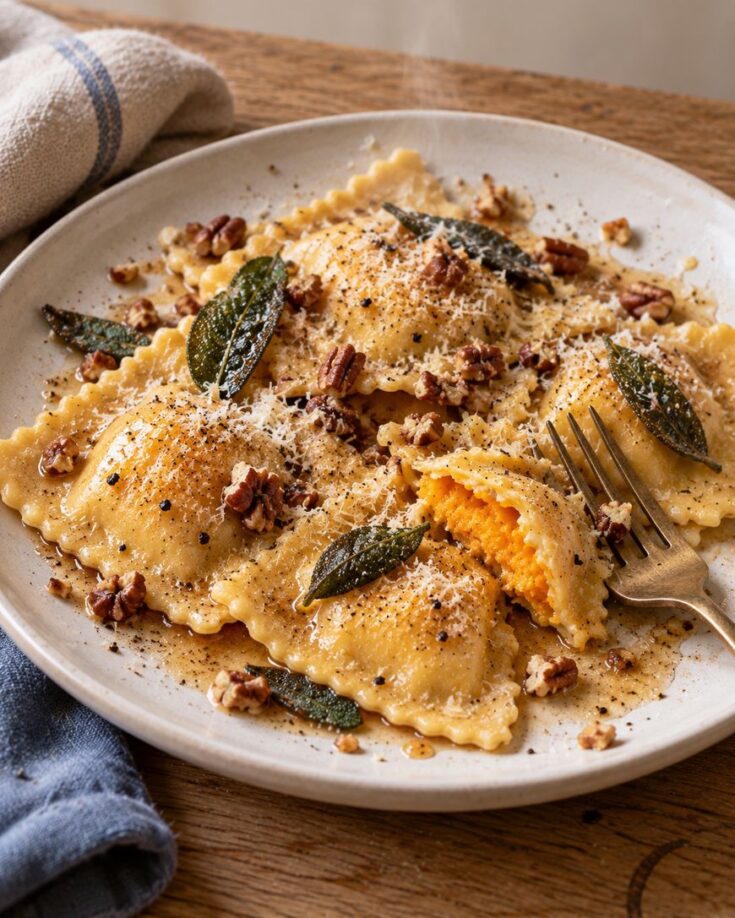
Homemade Butternut Squash Ravioli with Sage Brown Butter
Tender homemade ravioli filled with roasted butternut squash, ricotta, and Parmesan, tossed in nutty sage brown butter for a cozy restaurant-style dinner.
Ingredients
- 1 medium butternut squash (about 2 pounds)
- 1 tablespoon olive oil, for roasting
- 1/3 cup whole milk ricotta, drained
- 3 tablespoons grated Parmesan cheese, for the filling
- 1 tablespoon plain breadcrumbs
- 1/4 teaspoon ground nutmeg
- 1/2 teaspoon kosher salt, for the filling
- 1/4 teaspoon black pepper
- 2 cups (250 g) all-purpose flour, plus more for dusting
- 3 large eggs
- 1 tablespoon olive oil, for the dough
- 1/2 teaspoon kosher salt, for the dough
- 1 tablespoon kosher salt, for the cooking water
- 6 tablespoons unsalted butter
- 12 fresh sage leaves
- 1/4 cup grated Parmesan cheese, for serving
- 1/4 cup toasted chopped pecans, optional
Instructions
- Heat the oven to 400°F and line a sheet pan with parchment.
- Halve the squash lengthwise, scoop out the seeds, brush the cut sides with 1 tablespoon olive oil, and place cut side down on the pan.
- Roast the squash for 40 to 45 minutes, until very tender.
- Pile the flour and 1/2 teaspoon salt on a clean counter, make a well, and add the eggs and 1 tablespoon olive oil.
- Whisk the eggs with a fork, gradually pulling in flour, until a shaggy dough forms.
- Knead for about 8 minutes until smooth and springy, adding water 1 teaspoon at a time only if the dough is crumbly, then wrap and rest for 30 minutes.
- Scoop the roasted squash from its skin, mash 1 cup, and drain it on paper towels or in a fine mesh sieve for about 10 minutes.
- Stir the drained squash with the drained ricotta, 3 tablespoons Parmesan, breadcrumbs, nutmeg, 1/2 teaspoon salt, and pepper, then cool completely.
- Cut the dough into 4 pieces and roll each one into a long sheet about 1/16 inch thick, keeping the other pieces covered.
- Place heaping 2-teaspoon mounds of filling about 2 inches apart on one sheet and brush lightly with water around each mound.
- Top with a second sheet, press out all the air around each mound, and cut into 2-inch squares, then press the edges with a fork.
- Set the ravioli in a single layer on a floured sheet pan and cover with a clean towel.
- Bring 4 quarts of water to a gentle rolling boil, stir in 1 tablespoon salt, and cook the ravioli in two batches for 3 to 4 minutes, until they float and the edges are tender.
- Lift the ravioli out with a slotted spoon and save 1/4 cup of the pasta water.
- Melt the butter with the sage in a large skillet over medium heat and cook for 4 to 5 minutes, swirling, until golden brown and nutty and the sage is crisp.
- Add the ravioli and 2 tablespoons pasta water to the skillet, toss gently for 30 seconds, then top with the Parmesan, pecans if using, and black pepper and serve immediately.
Notes
Uncooked ravioli can be refrigerated on a floured tray, loosely covered, for up to 24 hours, or frozen on a tray for 1 hour, then bagged for up to 2 months and cooked from frozen with 1 to 2 extra minutes. Refrigerate cooked leftovers within 2 hours and eat within 3 days. Reheat until steaming hot, to 165°F. Wonton wrappers can be used as a shortcut.
Nutrition Information:
Yield:
4Serving Size:
8 ravioli with sauceAmount Per Serving: Calories: 590Total Fat: 29gSaturated Fat: 15gSodium: 720mgCarbohydrates: 62gFiber: 5gSugar: 6gProtein: 19g
Butternut Squash Ravioli FAQ
Can you use store-bought pasta dough?
Yes, a package of fresh pasta sheets works well and saves about 45 minutes.
Wonton wrappers also work for a quick version, and we explain how in the variations section above.
How do you keep butternut squash ravioli from bursting?
Press all the air out around each mound of filling before you seal the edges, and do not overfill beyond about 2 teaspoons.
Cook the ravioli in gently boiling water rather than a hard rolling boil.
Can you make butternut squash ravioli ahead of time?
Yes, uncooked ravioli keep in the refrigerator for up to 24 hours and in the freezer for up to 2 months.
Cook frozen ravioli straight from the freezer and add 1 to 2 minutes to the cooking time.
How long do leftovers last?
Cooked ravioli keeps in an airtight container in the refrigerator for up to 3 days.
Reheat it in a skillet with a splash of water until it reaches 165°F.
What sauce goes best with butternut squash ravioli?
Brown butter with crispy sage is the classic choice because its nutty flavor balances the sweet squash.
A light cream sauce or olive oil with lemon zest also works if you want something different.
Why This Recipe Works
Roasting the squash cut side down concentrates its sweetness and drives off water, so the filling stays thick and does not make the dough soggy.
Draining the mashed squash and the ricotta, then adding Parmesan and breadcrumbs, gives a creamy filling that holds its shape inside the pasta.
Kneading the egg dough for about 8 minutes and resting it for 30 minutes makes it silky and easy to roll thin without tearing.
Pressing out air around each mound and cooking the ravioli at a steady boil for 3 to 4 minutes keeps the seams intact, and finishing them in the skillet with brown butter coats every square in nutty sauce.
The sage leaves fry in the butter as it browns, so the sauce is flavored and the garnish is crisp at the same time, with no extra pan to wash.
A splash of the starchy pasta water helps the butter cling to the ravioli instead of pooling on the plate, which is why the 2 tablespoons in the skillet matter.
Make Butternut Squash Ravioli This Weekend
Butternut squash ravioli is a project worth saving for a slow Sunday, and it rewards you with a freezer full of future dinners.
Roast the squash, follow the recipe card above, and plan to leave a rating once your first batch is gone.
Freeze half of the ravioli on a tray as you go, and a future weeknight dinner is already waiting for you.