Last updated: October 1, 2026
You are about to learn how simple meringue cookies really are once you know the tricks that keep them crisp all the way through.
This recipe walks you through every step, and the full recipe card below has the exact measurements and timing ready to go.
Why You’ll Love These Meringue Cookies
These meringue cookies turn just a handful of ingredients into something that feels fancy without any real effort.
You whip egg whites and sugar into stiff, glossy peaks, pipe or spoon them onto a tray, and let a low oven do the rest of the work.
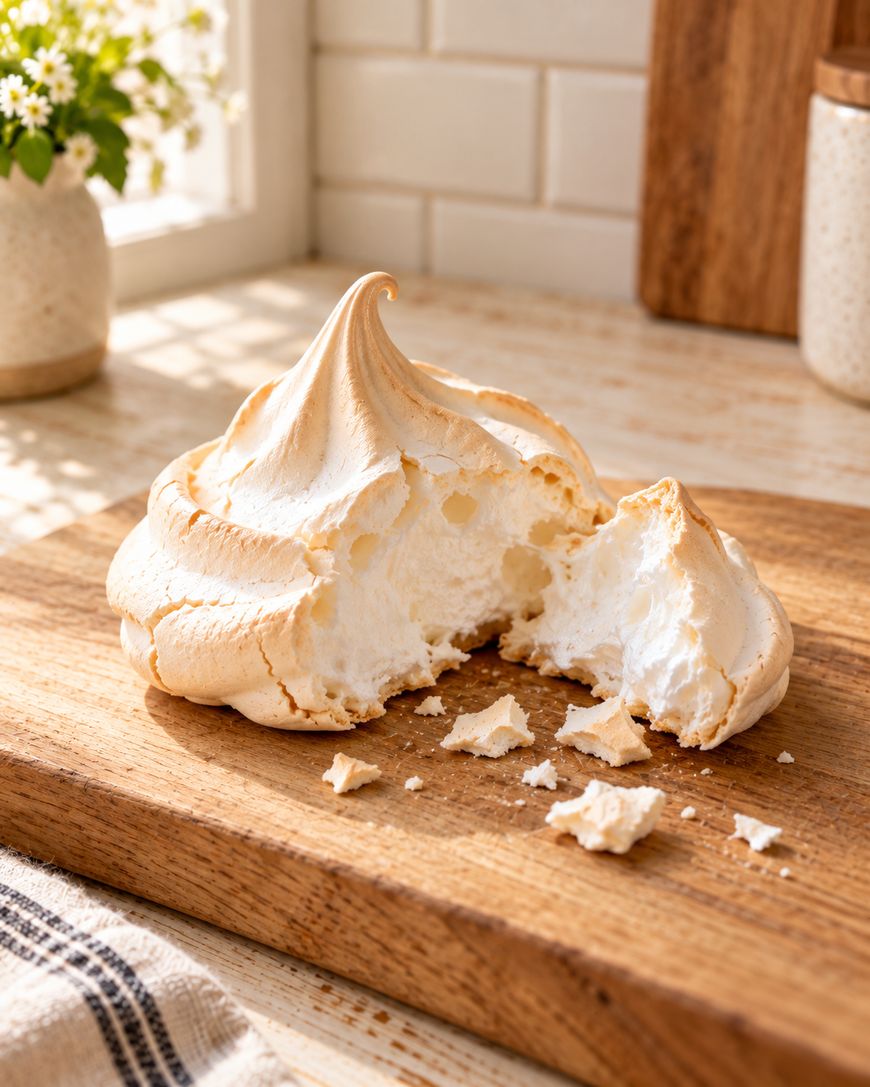
The outside turns delicately crisp while the inside stays light and slightly chewy, almost like a sweet little cloud.
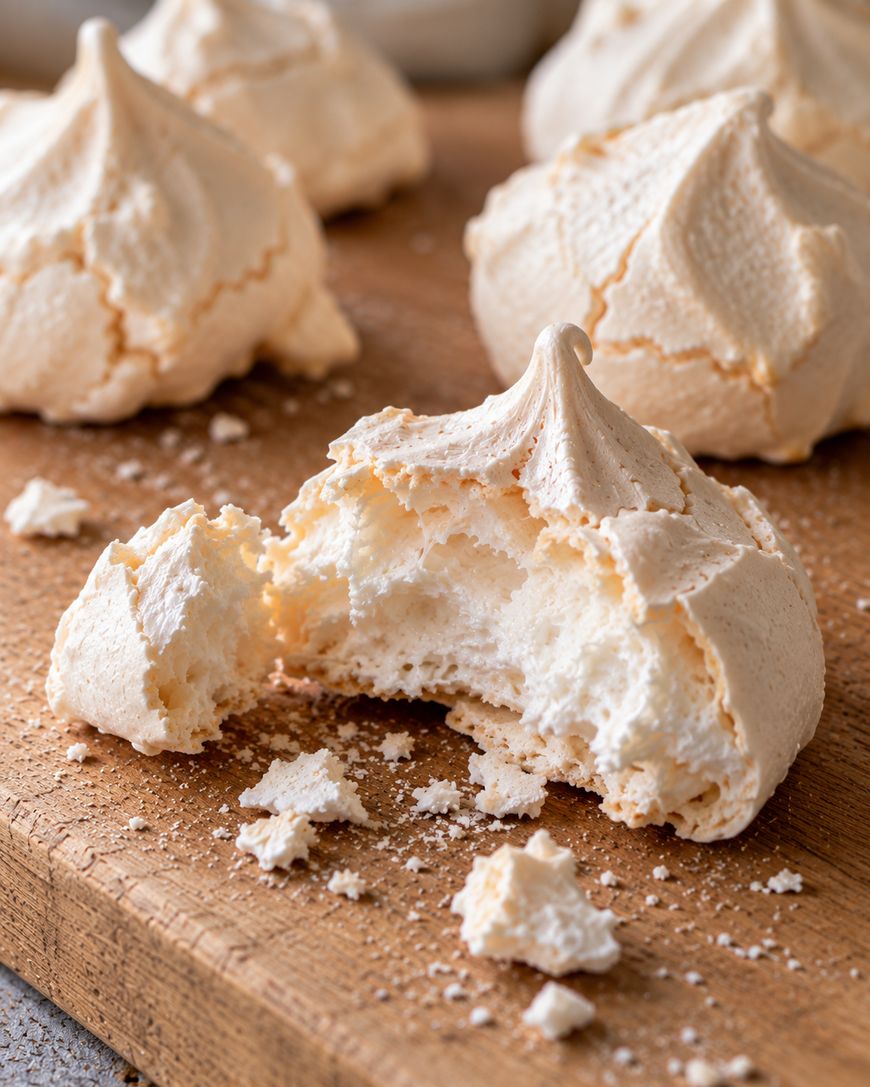
We love that this recipe uses pantry staples you probably already have, and it is naturally gluten free and fat free.
Ingredients You’ll Need for Meringue Cookies
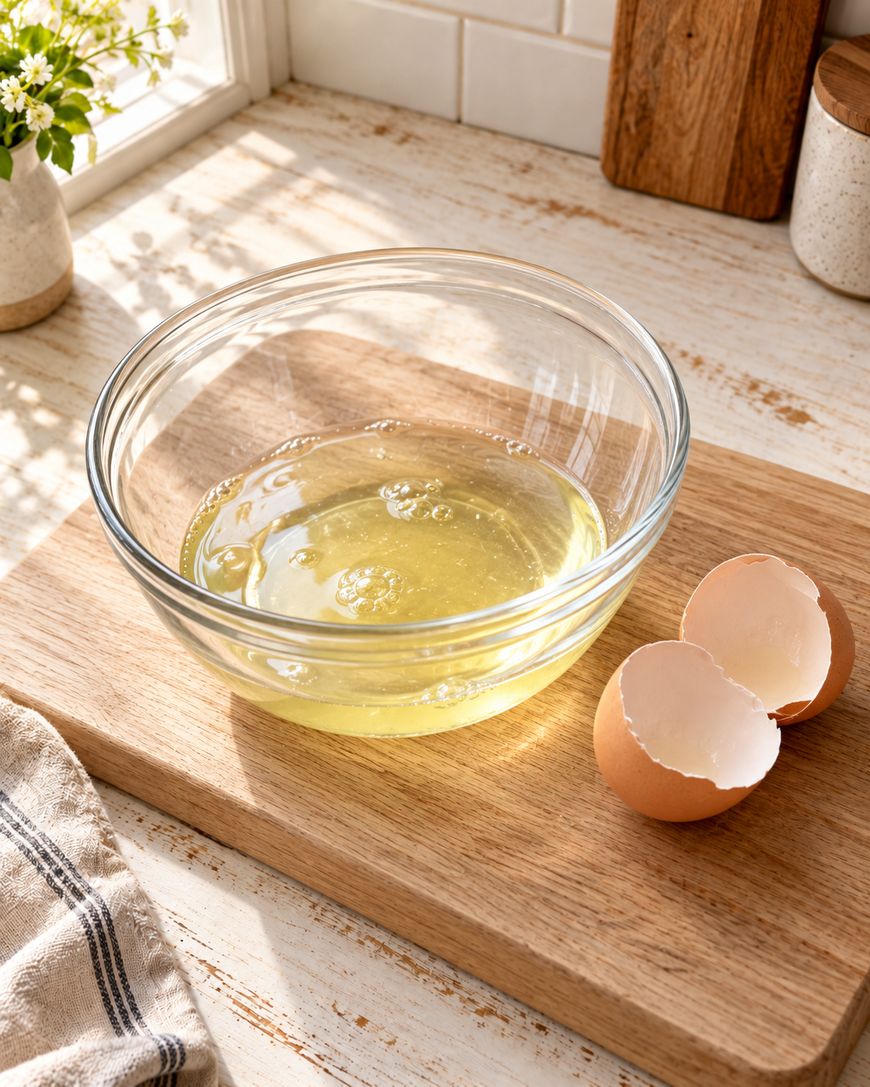
Egg whites form the base of every meringue, and room temperature whites whip up taller and more stable than cold ones straight from the fridge.
Granulated sugar dissolves into the whites to build the structure, while a small amount of cream of tartar stabilizes the foam so it holds its shape in the oven.
A splash of vanilla extract adds warmth and rounds out the sweetness, and a pinch of salt sharpens all the other flavors.
Some bakers like to fold in a few drops of gel food coloring for a swirled, pastel effect, and that is entirely optional here.
Choosing the Right Sugar
Superfine sugar, sometimes labeled caster sugar, dissolves faster than standard granulated sugar and gives you a smoother meringue.
If you only have regular granulated sugar on hand, pulse it in a food processor for a few seconds to break down the crystals slightly.
Powdered sugar is not a substitute here, since the cornstarch it contains changes the texture and can prevent the meringue from setting properly.
How to Make Meringue Cookies Step by Step
Start with a completely clean, dry mixing bowl, since even a trace of grease or egg yolk will stop the whites from whipping up properly.
Beat the egg whites on medium speed until they turn foamy and opaque, then add the cream of tartar and salt.
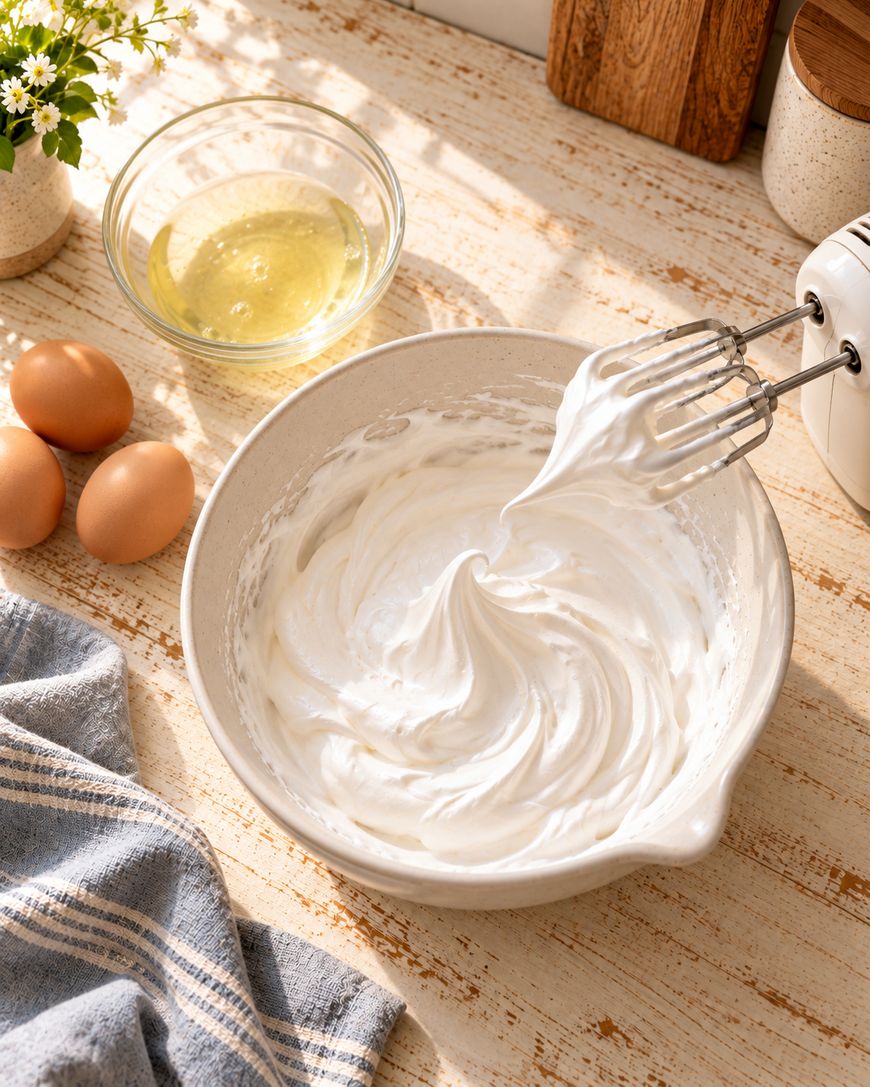
Increase the speed and add the sugar gradually, one spoonful at a time, so it has a chance to dissolve fully into the foam.
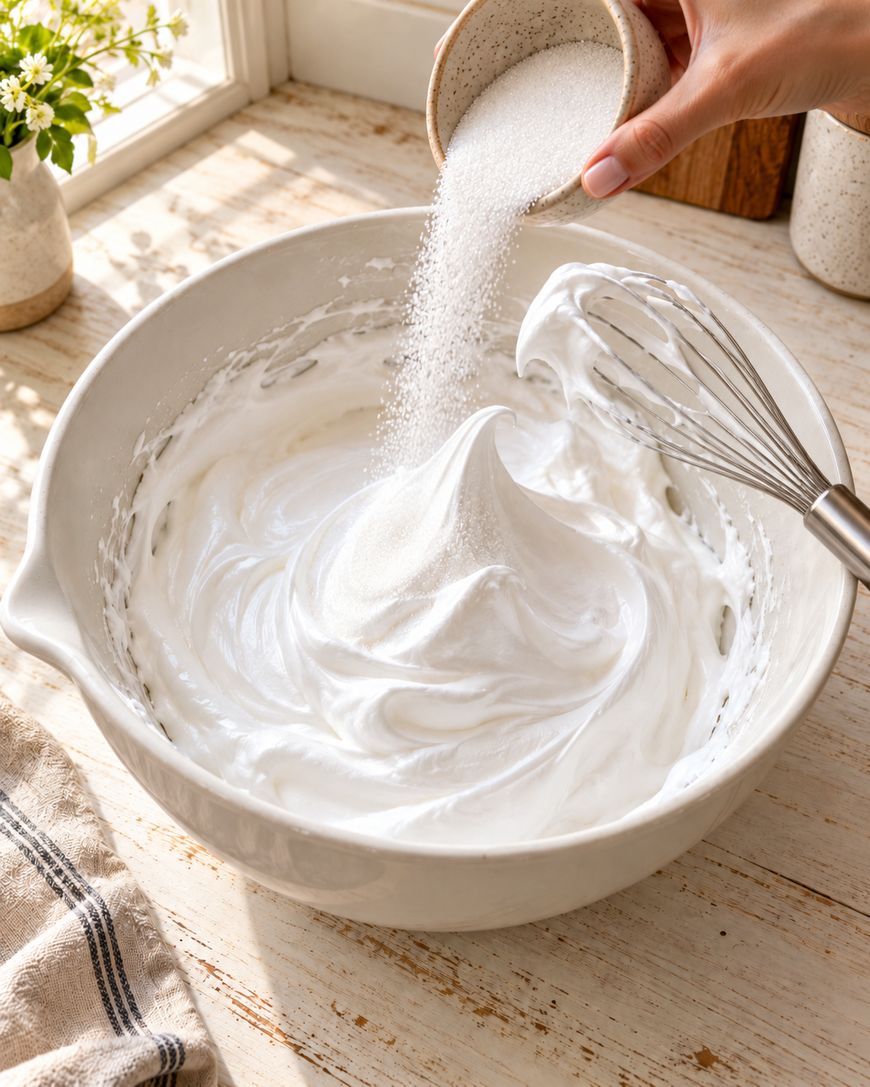
Keep beating until the mixture turns thick, glossy, and holds a stiff peak when you lift the beaters straight up.

A helpful test is to rub a small amount of the meringue between your fingers, and if you feel any grit, it needs a bit more mixing time.
Fold in the vanilla extract gently with a spatula so you keep as much air in the mixture as possible.
Piping or Spooning the Cookies
Fit a piping bag with a large star tip if you want classic swirled peaks, or simply use a spoon for a more rustic, kiss shaped cookie.
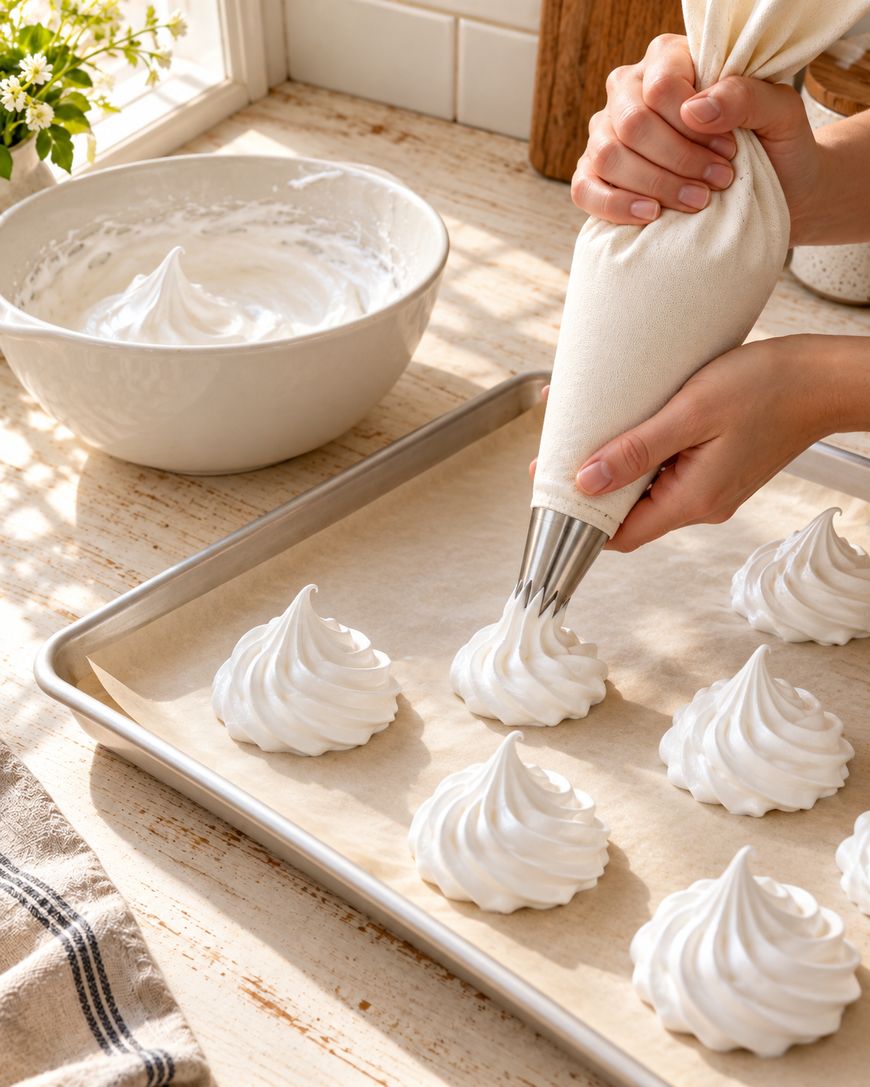
Line a baking sheet with parchment paper, since meringue sticks stubbornly to bare metal and even to some silicone mats.
Pipe or drop small mounds about one and a half inches wide, leaving a little space between each one since they barely spread.

Baking Low and Slow
Meringue cookies bake at a very low oven temperature because the goal is to dry them out rather than brown them.
Once they are done, turn off the oven and leave the cookies inside with the door closed for at least an hour, which helps them finish drying without cracking.

Resist the urge to open the oven early, since a sudden temperature change can cause the meringues to weep or collapse.
Tips for Perfect Meringue Cookies Every Time
Humidity is the biggest enemy of a good meringue, so try to bake these on a dry day if your kitchen tends to feel damp.
Separate your eggs while they are cold straight from the refrigerator, since the yolks hold together better, then let the whites come to room temperature before whipping.
Even a tiny speck of yolk in the whites will keep them from whipping to full volume, so separate each egg over a small bowl before adding it to the mixing bowl.
Use a metal or glass bowl rather than plastic, since plastic can hold onto invisible traces of oil from previous use.
Flavor Variations to Try
Swap the vanilla extract for almond, peppermint, or lemon extract to change the flavor profile entirely.

Fold in mini chocolate chips or crushed freeze dried fruit at the very end for pops of flavor and color throughout the cookie.
For a swirled look, paint two or three stripes of gel food coloring up the inside of your piping bag before adding the meringue.
Storing Meringue Cookies
These cookies are sensitive to moisture, so store them in an airtight container at room temperature rather than in the refrigerator.
Kept airtight, meringue cookies stay crisp for up to two weeks, and adding a food safe silica packet or a piece of bread to absorb moisture can help them last even longer.

Avoid stacking them without parchment between the layers, since the delicate shells can chip or stick together.
A Brief History of the Meringue
Meringue has roots that trace back centuries in European baking, with some historians pointing to Switzerland and others to France and Italy.
The technique of whipping egg whites with sugar became especially popular in French patisserie, where meringues are still piped into elaborate shapes for special occasions.
Today, meringue cookies are the simplest expression of that same technique, and they show up everywhere from holiday cookie trays to elegant dessert tables.
Ready to see exactly how much of each ingredient you need and follow along step by step? Use the recipe card below to get started.
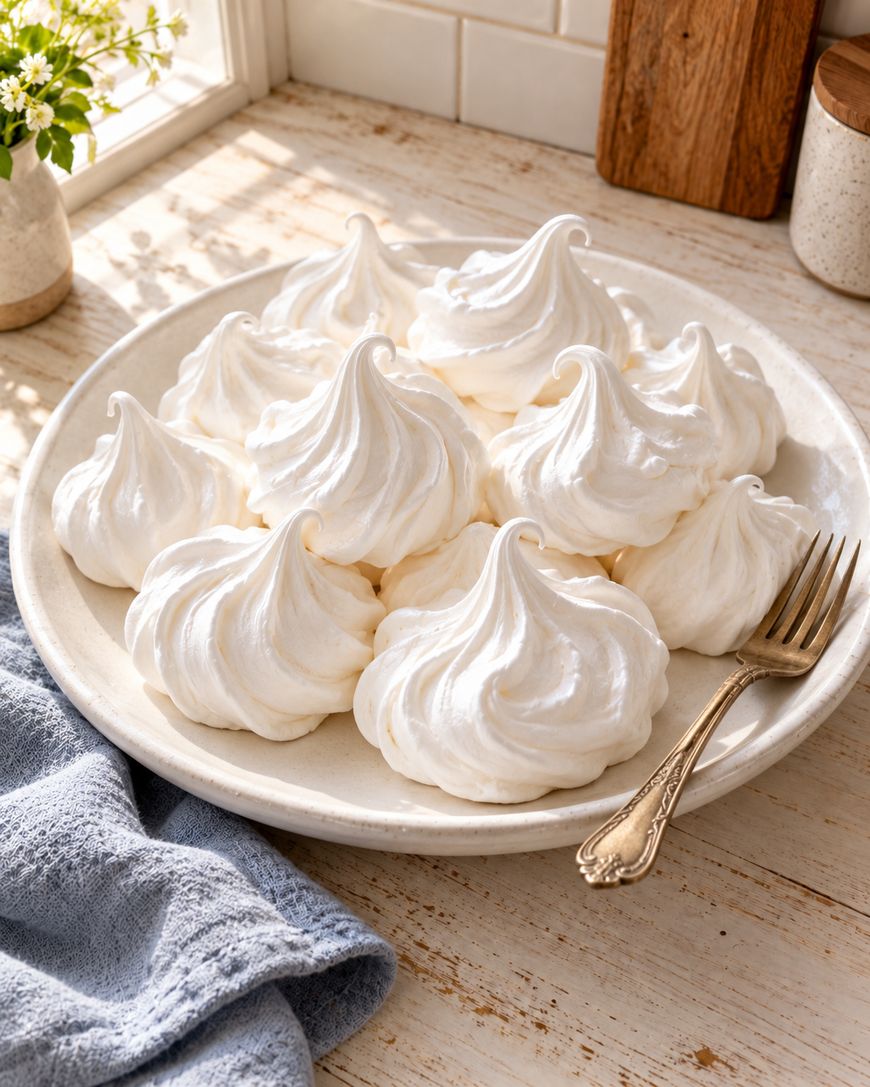
Meringue Cookies
Crisp, cloud-light meringue cookies made with just egg whites, sugar, and vanilla, baked low and slow until delicately crunchy outside and lightly chewy within.
Ingredients
- 4 large egg whites, room temperature
- 1/4 teaspoon cream of tartar
- 1/8 teaspoon salt
- 1 cup granulated sugar (superfine if possible)
- 1 teaspoon vanilla extract
Instructions
- Preheat the oven to 200 degrees Fahrenheit and line two baking sheets with parchment paper.
- In a completely clean, dry mixing bowl, beat the egg whites on medium speed until foamy and opaque.
- Add the cream of tartar and salt, then increase the mixer speed to medium-high.
- Add the sugar one tablespoon at a time, beating well after each addition, until fully incorporated.
- Continue beating until the meringue is thick, glossy, and holds stiff peaks, about 5 to 7 minutes total.
- Gently fold in the vanilla extract with a spatula.
- Transfer the meringue to a piping bag fitted with a large star tip, or use a spoon.
- Pipe or spoon 1 1/2-inch mounds onto the prepared baking sheets, spacing them about 1 inch apart.
- Bake for 90 minutes, without opening the oven door.
- Turn off the oven and leave the cookies inside with the door closed for 1 hour to finish drying.
- Remove from the oven and let cool completely on the baking sheet before storing.
Notes
Store in an airtight container at room temperature for up to 2 weeks. Avoid storing in the refrigerator, since condensation will make the cookies sticky. Do not attempt this recipe in very humid weather, as moisture prevents the meringue from crisping properly.
Nutrition Information:
Yield:
36Serving Size:
1 cookieAmount Per Serving: Calories: 20Total Fat: 0gSaturated Fat: 0gSodium: 8mgCarbohydrates: 5gFiber: 0gSugar: 5gProtein: 0g
Meringue Cookies Q&A
Why did my meringue cookies turn out chewy instead of crisp?
Chewy centers usually mean the cookies came out of the oven too soon or were baked in a kitchen with high humidity.
Try extending both the bake time and the resting time in the turned off oven, and check that your oven temperature is accurate with an oven thermometer.
Can I make meringue cookies without cream of tartar?
Yes, you can substitute a few drops of white vinegar or lemon juice for the same stabilizing effect.
The cookies will still whip up nicely, though cream of tartar does give slightly more consistent results if you have it on hand.
Why did my meringue weep or turn watery?
Weeping happens when the sugar has not fully dissolved into the egg whites before baking, leaving undissolved sugar to draw out moisture.
Beating the mixture longer and adding the sugar more gradually usually solves this problem the next time around.
Can I use a hand mixer instead of a stand mixer?
A hand mixer works perfectly well, though it will take a few extra minutes of beating to reach the same stiff, glossy peaks.
Just keep the bowl steady and move the beaters around the bowl so the whole mixture gets even attention.
Why are my meringue cookies sticky after cooling?
Stickiness after cooling almost always points back to humidity or an underbaked center that never fully dried out.
Store cooled cookies in a truly airtight container right away, since even a few minutes of open air on a humid day can soften them.
Can I add cocoa powder to make chocolate meringue cookies?
You can gently fold in a tablespoon or two of sifted cocoa powder after the meringue reaches stiff peaks.
Sift it well beforehand and fold gently, since cocoa powder can deflate the mixture if you stir too vigorously.
Why This Recipe Works
This recipe relies on the French meringue method, which means the sugar is added directly to raw egg whites as they whip rather than being cooked into a syrup first.
Adding the sugar gradually gives it time to dissolve fully into the foam, which is what creates that glossy, stable structure instead of a grainy one.
Cream of tartar adds just enough acidity to strengthen the protein bonds in the egg whites, helping the meringue hold its shape as it bakes.
Baking low and slow, then resting in the cooling oven, dries the cookies evenly from the outside in so they turn crisp all the way through instead of staying soft in the middle.
Bring These Meringue Cookies to Your Next Gathering
Meringue cookies are proof that a short ingredient list can still deliver something that looks and tastes special.
Once you get the hang of whipping the egg whites to the right stage, this recipe becomes one you will want to make again and again for holidays, bake sales, or just because.
Give these meringue cookies a try this week, and use the card above to keep the exact measurements handy in your kitchen.