Last updated: September 11, 2026
Mulled wine turns an ordinary bottle of red into the coziest drink you can serve this winter, and the recipe card below has every measurement mapped out for you.
Once you have simmered a batch, you will understand why mulled wine shows up at every European Christmas market from Germany to France.
What Is Mulled Wine
Mulled wine is red wine that has been warmed gently on the stove with citrus, whole spices, and a touch of sweetener until the flavors meld into something rich and fragrant.
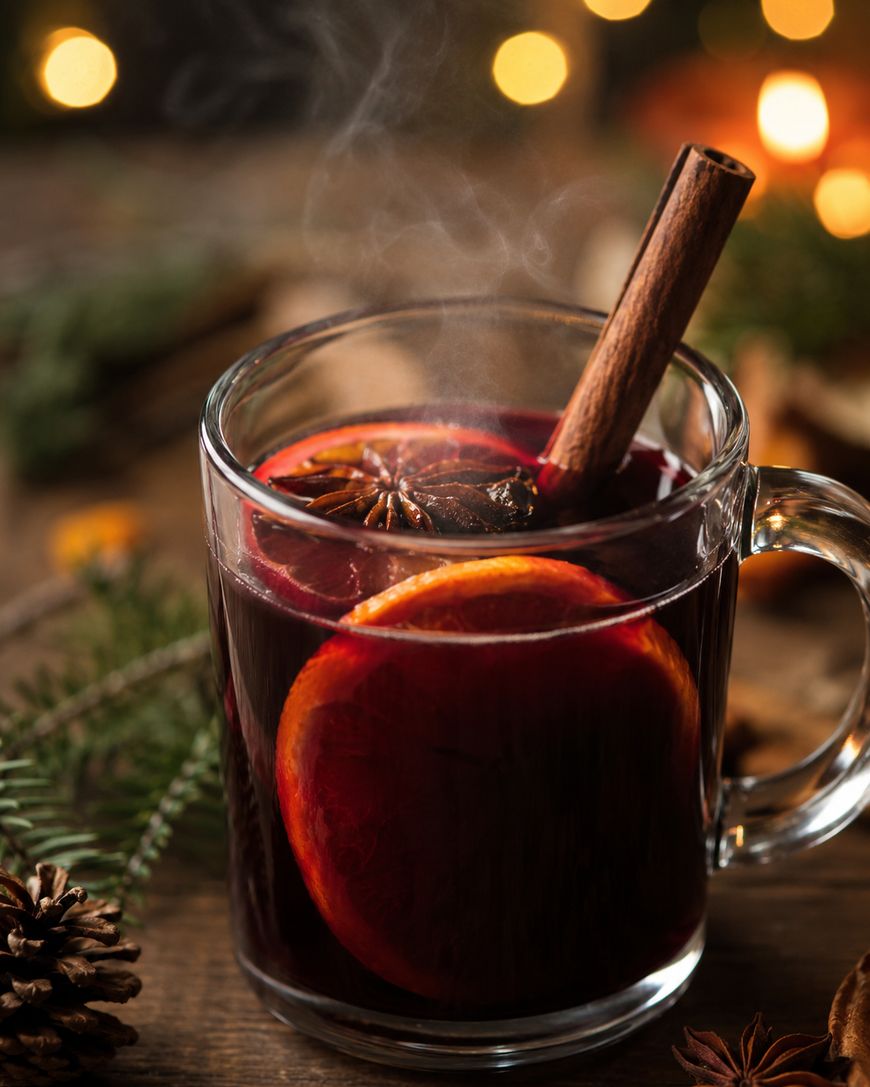
The term “mulled” simply means warmed and spiced, and you will find versions of this drink under different names depending on where you are.
Glühwein, Vin Chaud, and Other Names You Might See
In Germany and Austria it is called Glühwein, in France it goes by vin chaud, and in Scandinavia you will find a version called glögg that often includes almonds and raisins.
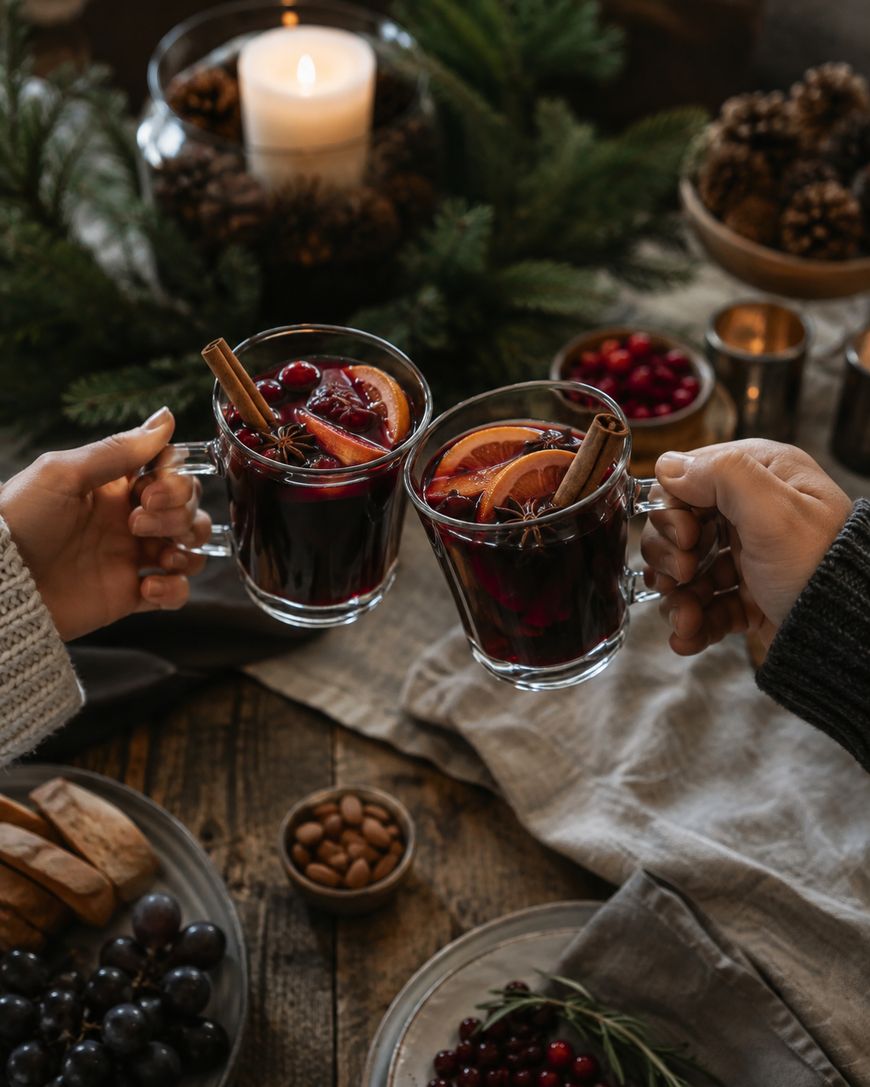
All of these drinks share the same backbone of red wine, citrus, and warming spices, even though each region adds its own twist.
Choosing the Right Wine for Mulled Wine
You want a dry, medium-bodied red wine for mulled wine, since the spices and sweetener will add plenty of flavor on their own.
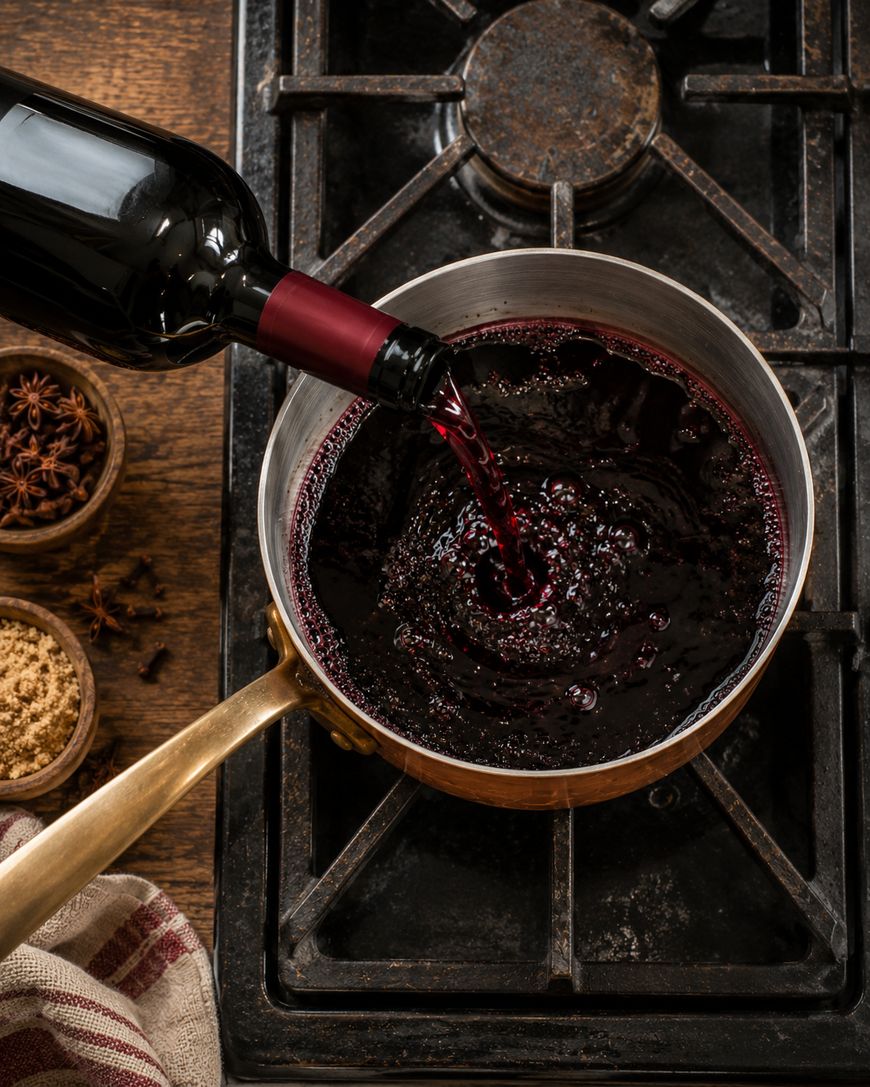
A Cabernet Sauvignon, Merlot, or a Spanish Garnacha all work beautifully, and you do not need to spend a lot of money since the wine will be doctored with spices anyway.
Wines to Avoid
Skip anything oaky or overly tannic, since heat can make those flavors turn bitter and harsh once the wine has been simmering for a while.
Sweet wines like Port can also throw off the balance, so stick to a dry table wine and control sweetness yourself with sugar or honey.
Ingredients You Will Need
The full ingredient list with exact measurements lives in the recipe card below, but broadly you will be working with a bottle of dry red wine, a whole orange, brown sugar or honey, and whole warming spices like cinnamon sticks, cloves, and star anise.
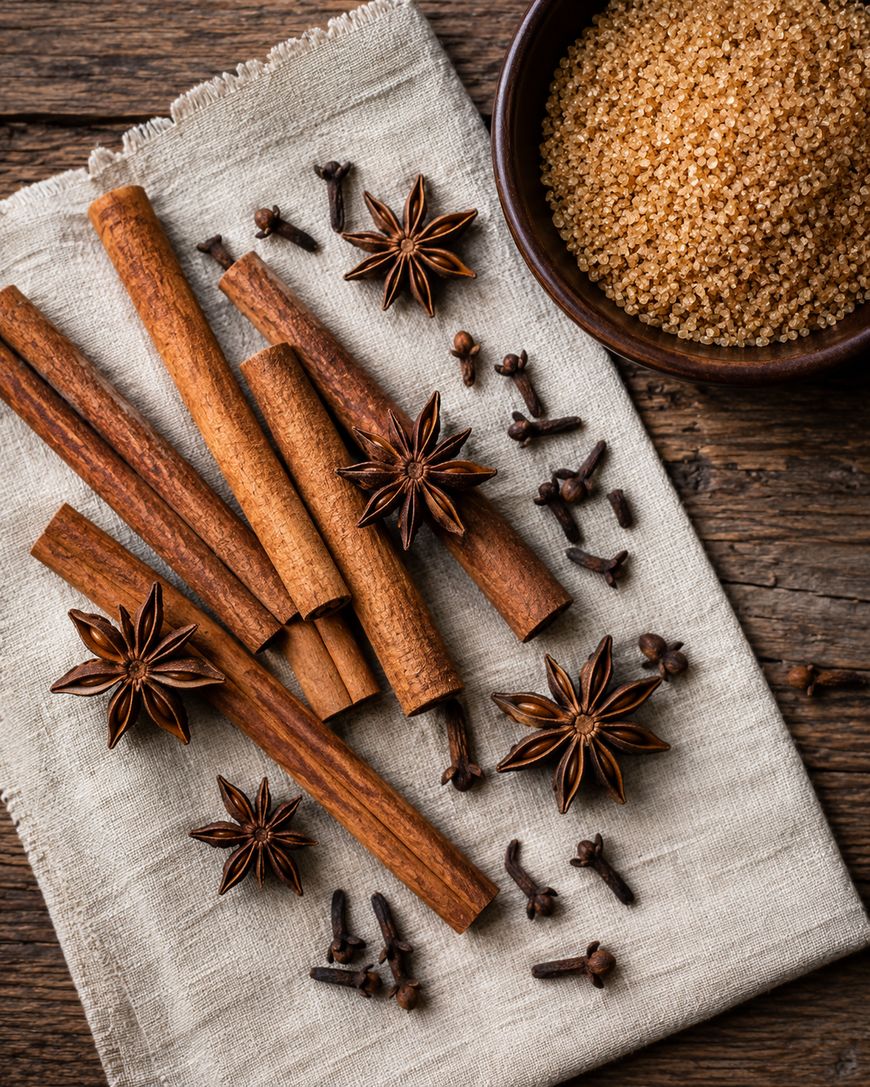
A splash of brandy or orange liqueur is optional but traditional, and it adds a nice depth that plain wine alone cannot achieve.
Substitutions and Variations
If you want a lower-alcohol version, you can swap half the wine for unsweetened cranberry or pomegranate juice and simmer it the same way.
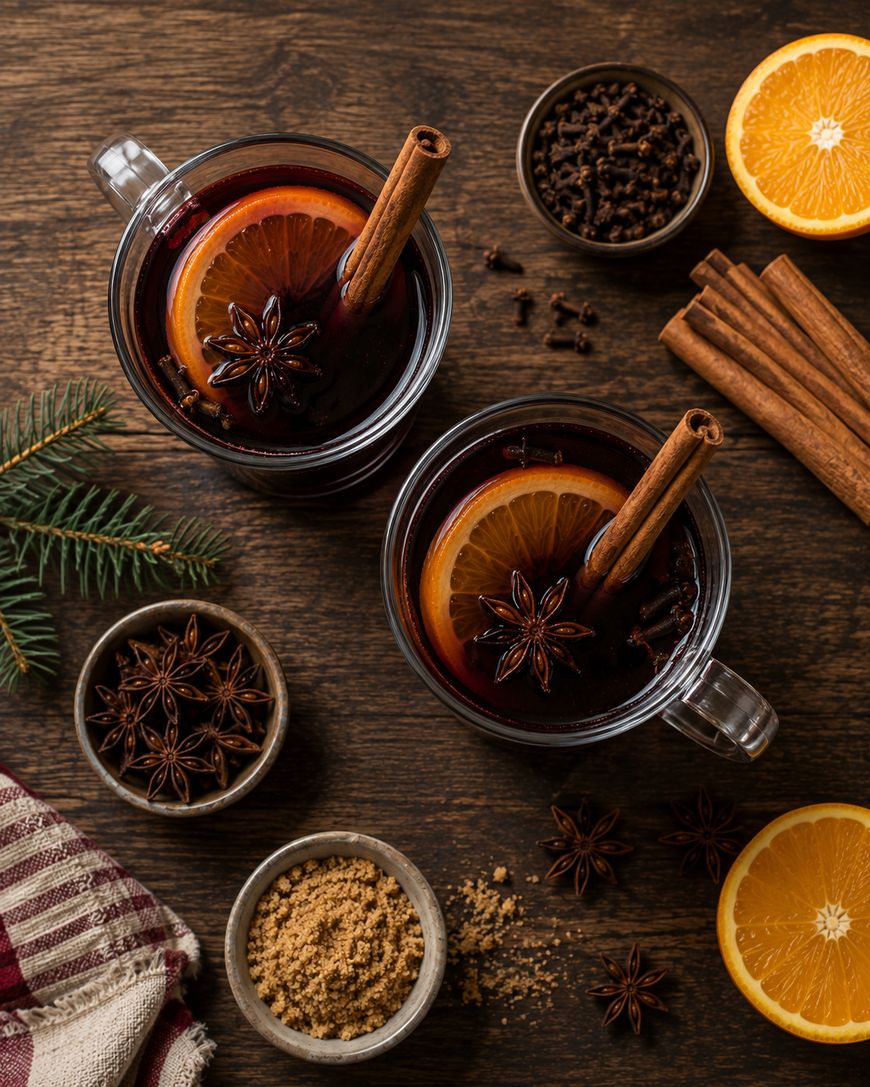
For a white mulled wine, follow the same method with a dry Riesling or Pinot Grigio and swap the cinnamon for a lighter touch of cardamom, and for a spicier finish, add a few slices of fresh ginger or a pinch of black peppercorns to the pot.
How to Make Mulled Wine Step by Step
Start by studding the orange with whole cloves, which looks lovely and also makes the cloves easy to fish out later.
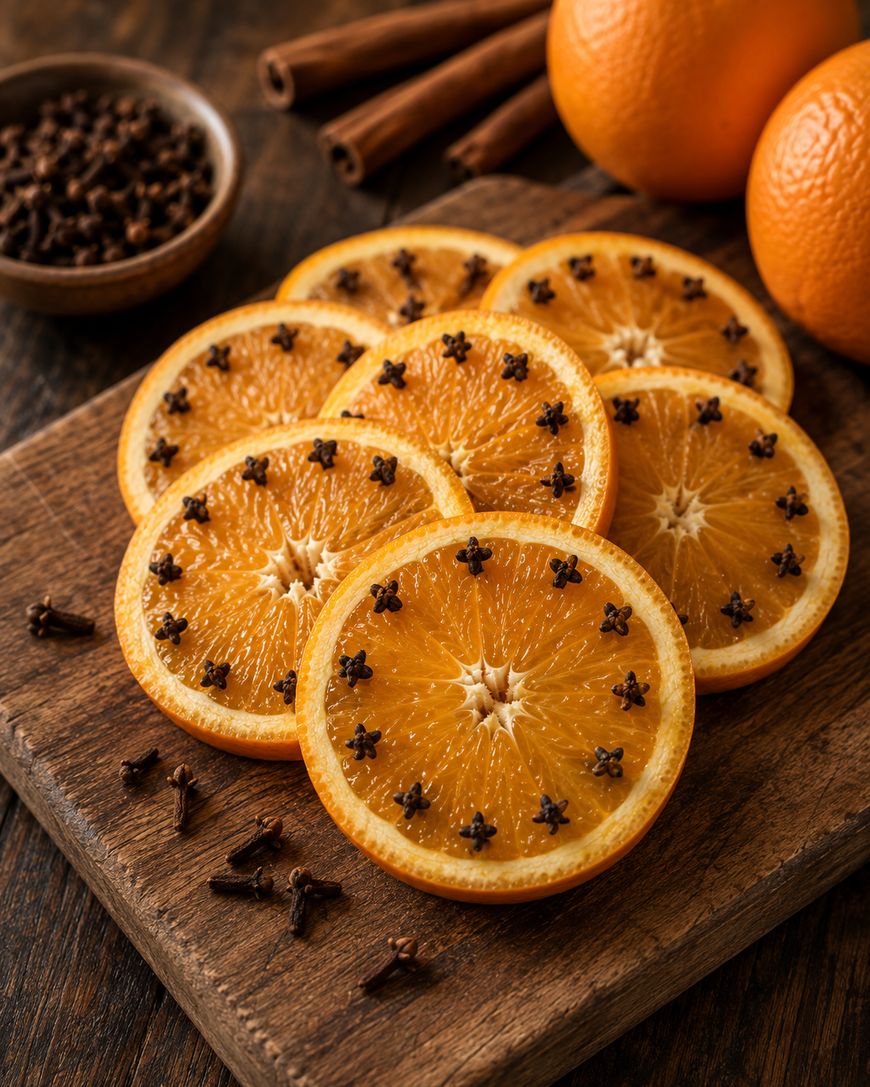
Combine the wine, studded orange, cinnamon sticks, star anise, and brown sugar in a saucepan or a slow cooker, then warm everything gently over low heat.
Getting the Temperature Right
Heat the wine slowly and never let it come to a boil, since boiling drives off the alcohol and can make the wine taste flat and cooked.
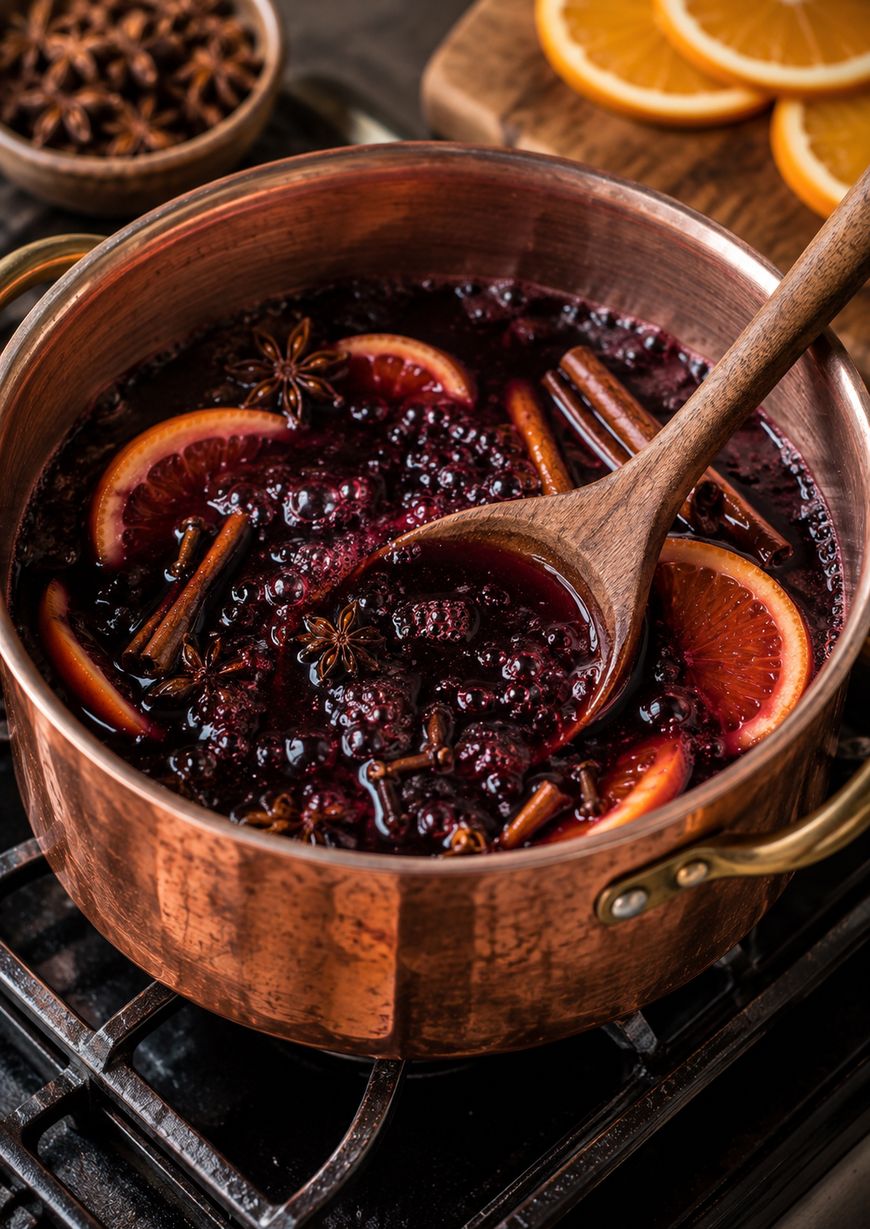
You are looking for small bubbles just beginning to form around the edge of the pot, usually around 160 to 180 degrees Fahrenheit, which is warm enough to release the spice flavors without scorching anything.
Simmering and Steeping
Once the wine is warm, reduce the heat to the lowest setting and let it steep for 15 to 20 minutes so the spices have time to infuse.
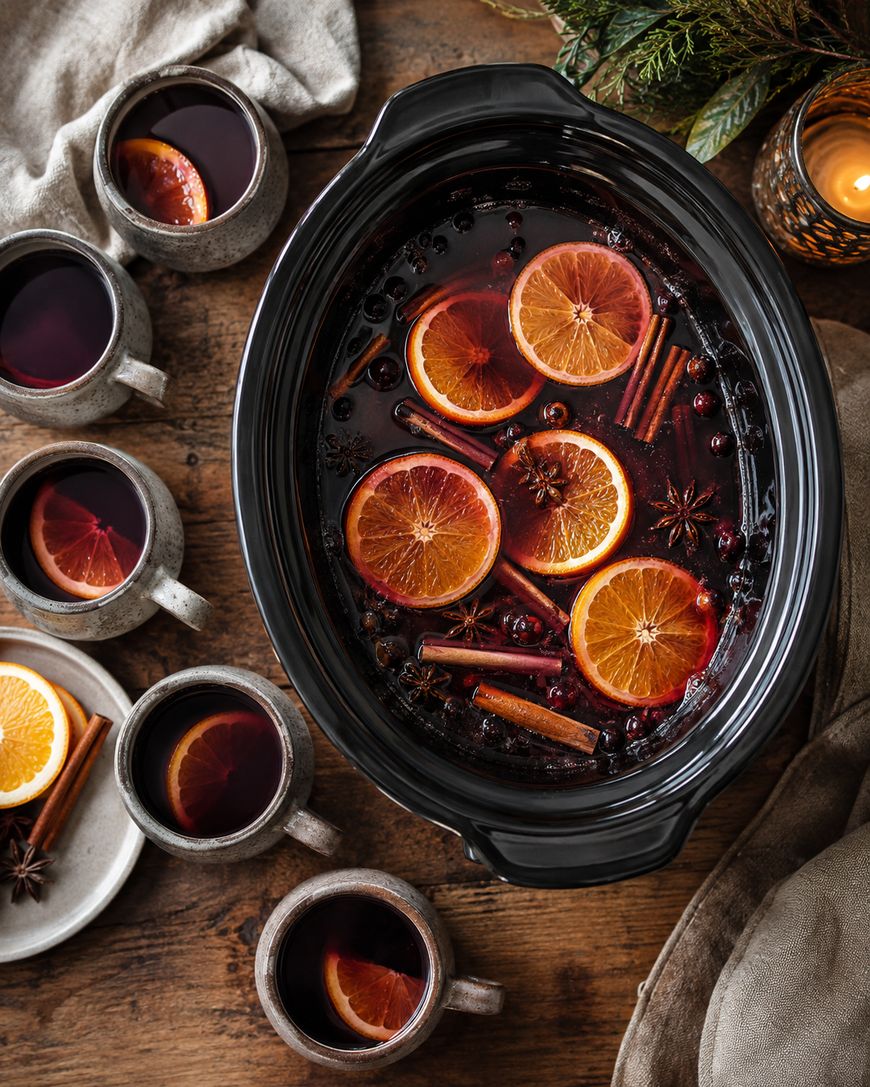
Taste partway through and adjust the sweetness, since different wines and brands of brown sugar can shift the balance quite a bit.
Straining and Serving
Strain out the whole spices and orange before serving, then ladle the wine into heatproof mugs or glasses.
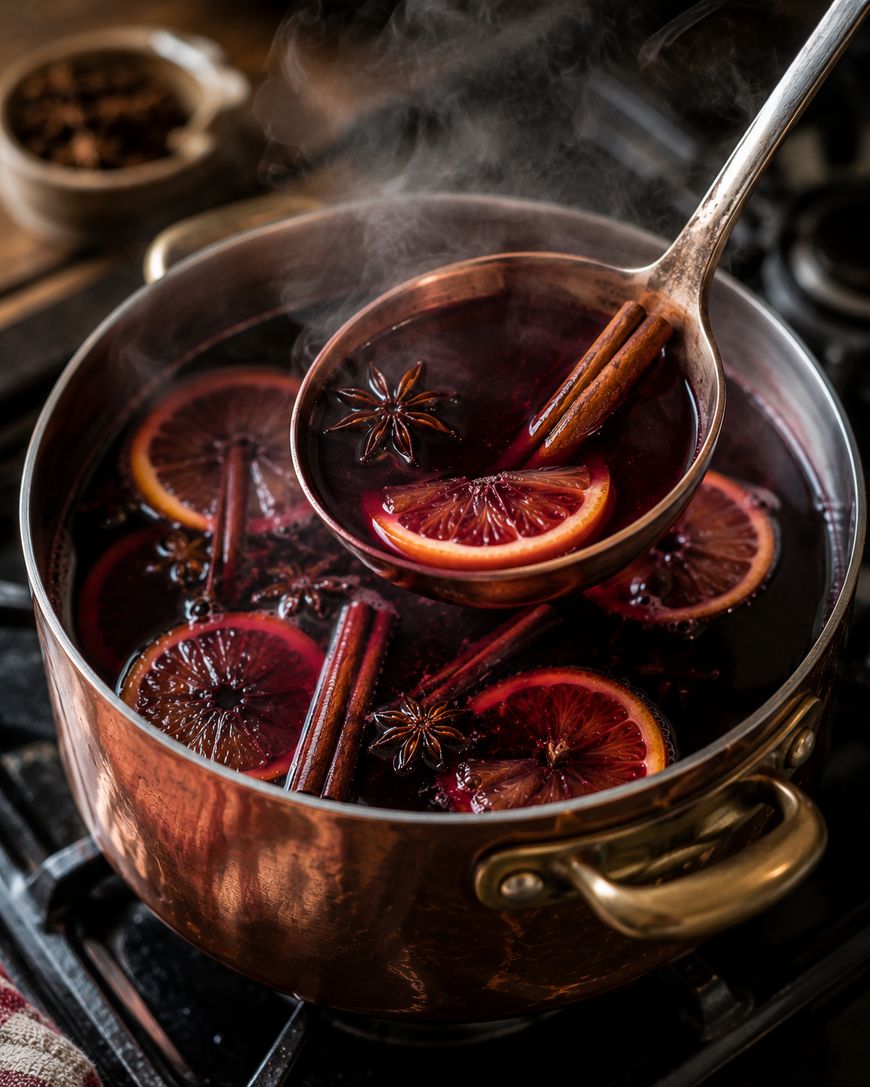
Garnish each glass with a fresh cinnamon stick, a star anise pod, or a thin orange slice for a festive finishing touch.
Make-Ahead and Storage Tips
Mulled wine actually improves with a little time, so you can make the spiced wine base a day ahead and store it covered in the refrigerator.
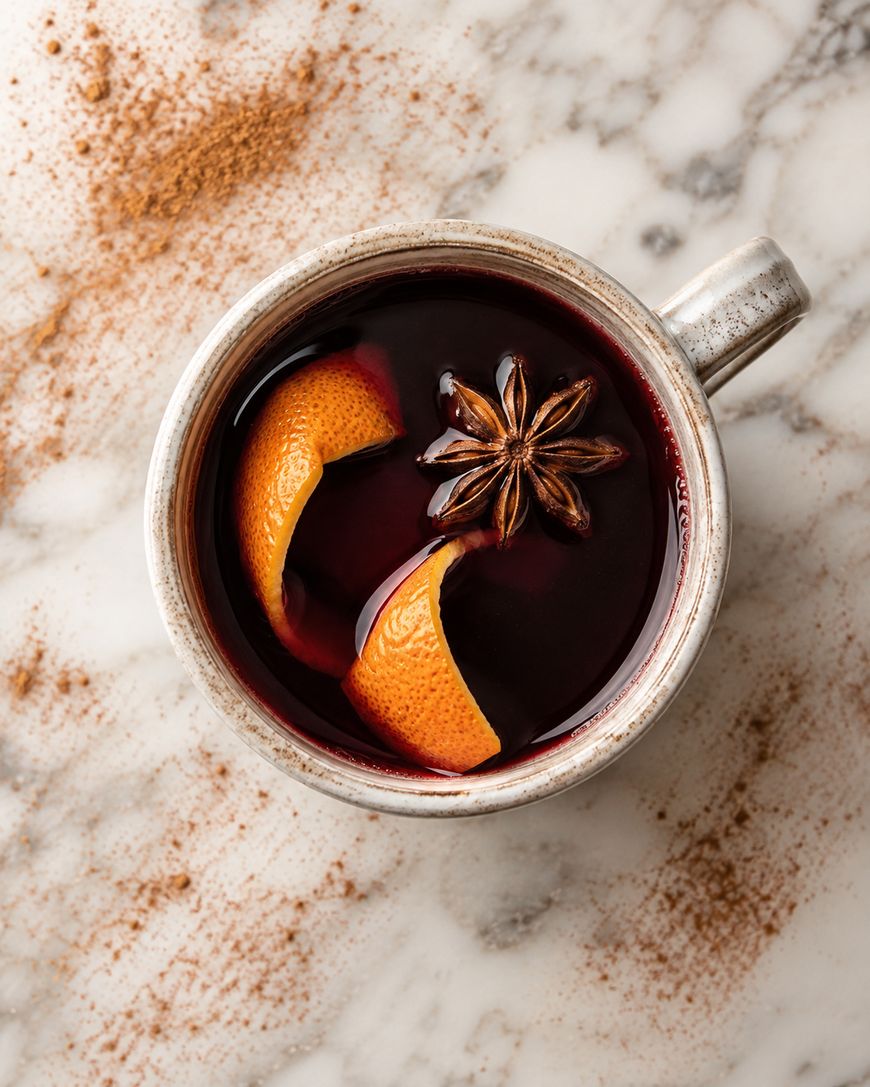
Reheat it gently on the stove over low heat when you are ready to serve, and avoid microwaving it in a metal mug or with metal spice bags still inside.
How Long Mulled Wine Lasts
Leftover mulled wine keeps well in the refrigerator for up to 5 days in an airtight container.
You can also freeze it in a freezer-safe container for up to 2 months, then thaw it in the refrigerator overnight before reheating.
Serving Suggestions
Mulled wine pairs wonderfully with a holiday cheese board, roasted chestnuts, or a plate of spiced gingerbread cookies.
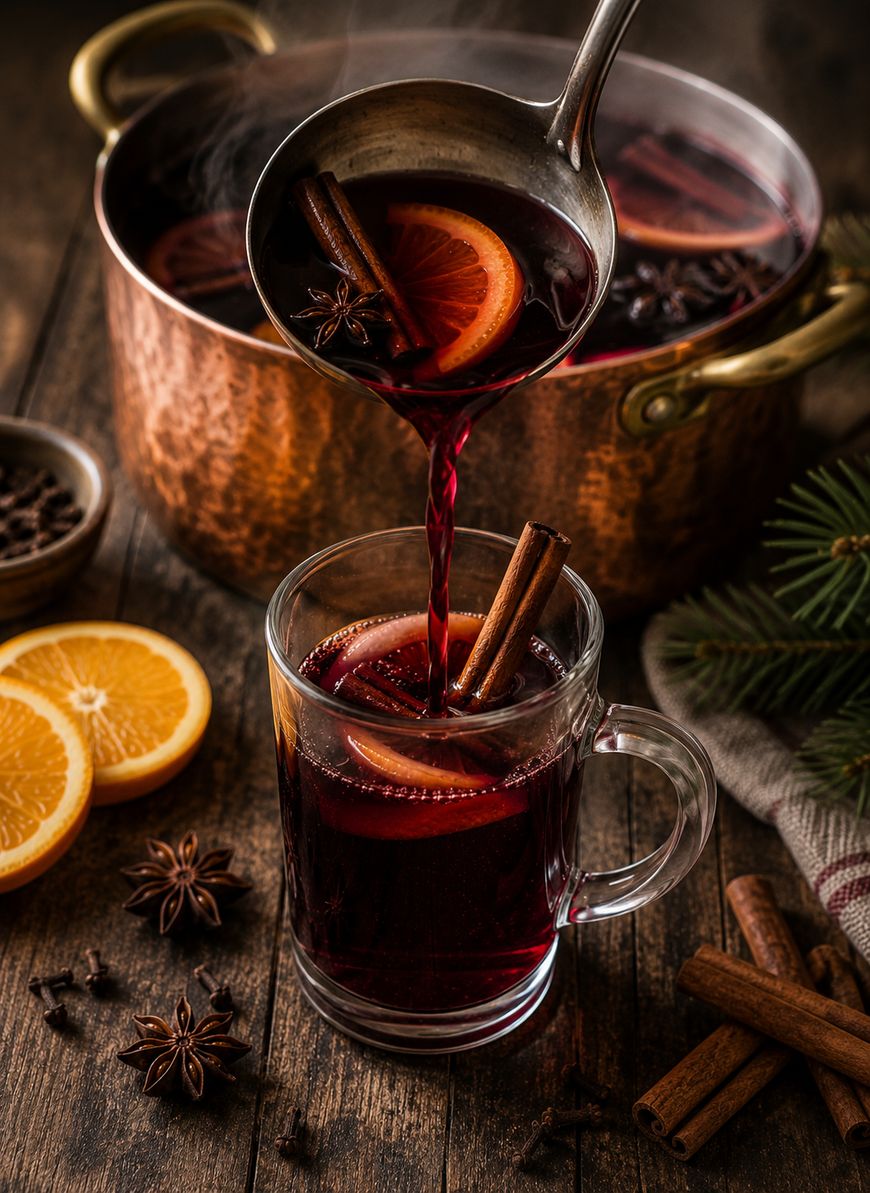
It also makes a lovely centerpiece for a cold-weather gathering when served from a slow cooker set on the warm setting so guests can help themselves throughout the evening.
The History and Origin of Mulled Wine
Mulled wine dates back to the Roman Empire, when spiced and heated wine was used both as a way to preserve wine that had started to turn and as a way to stay warm during cold months.
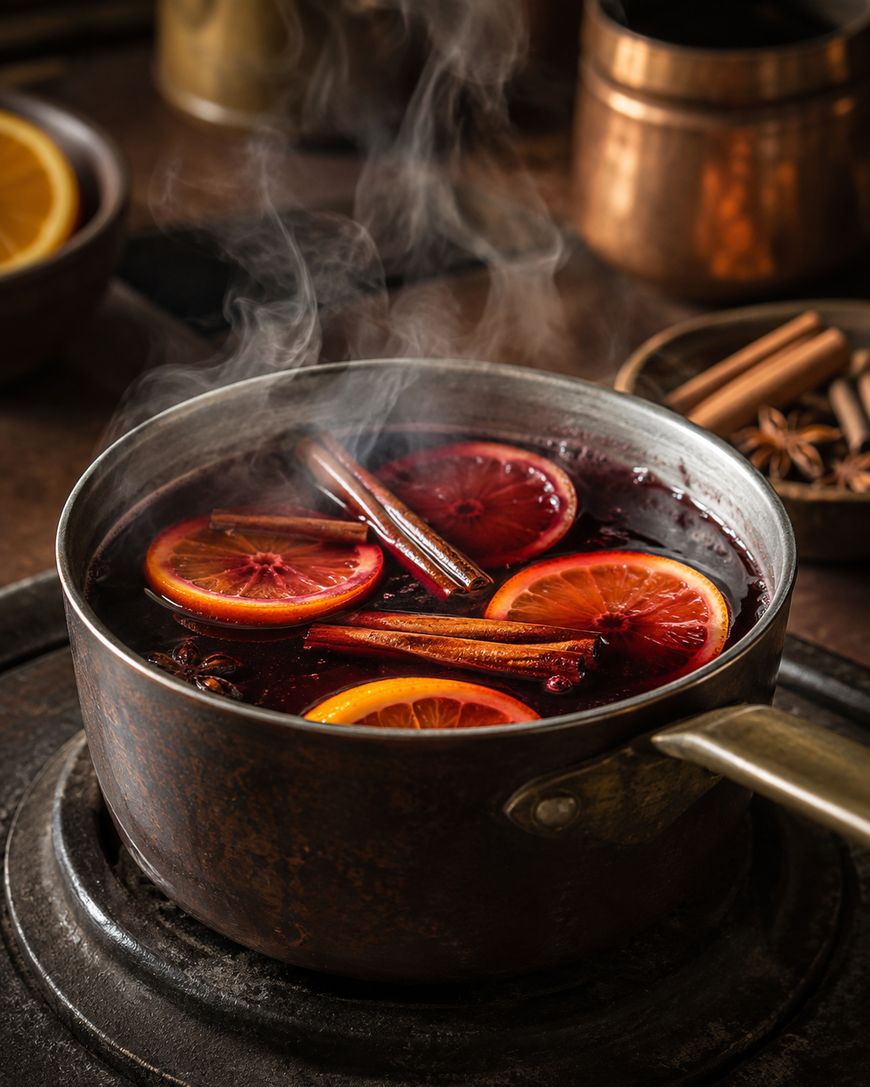
The tradition spread across Europe over the centuries, and by the Middle Ages spiced wine had become closely associated with winter festivals and Christmas markets, a tradition that continues strongly across Germany and Austria today.
Ready to bring this tradition into your own kitchen? Use the recipe card below for the exact ingredient amounts and step-by-step instructions.
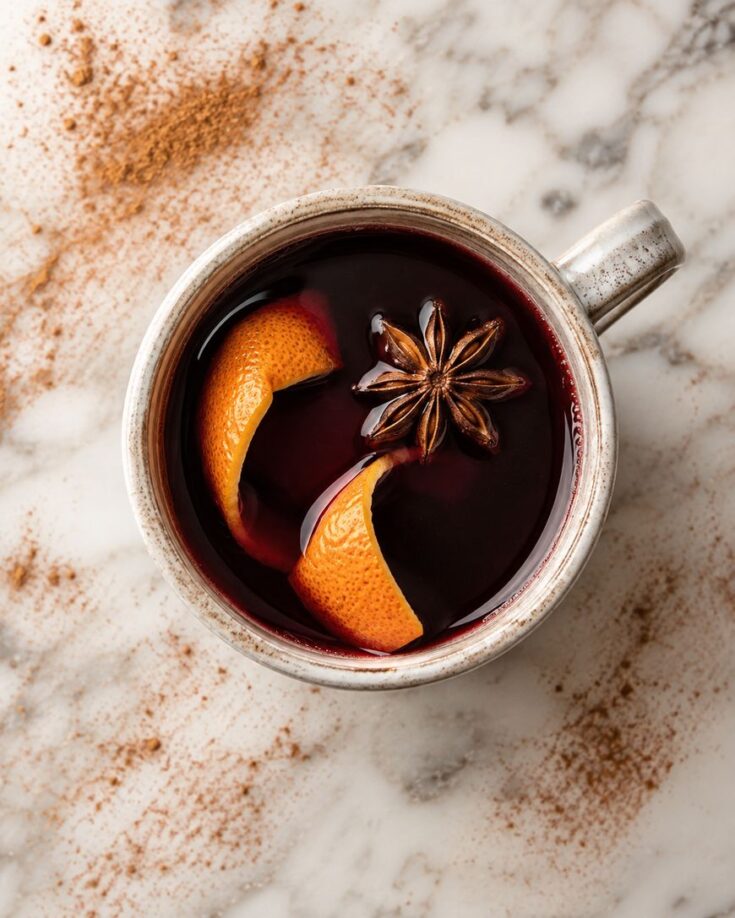
Mulled Wine
Mulled wine is red wine gently simmered with orange, cinnamon, cloves, and star anise for a warm, fragrant drink that is perfect for holiday gatherings.
Ingredients
- 1 bottle (750 ml) dry red wine, such as Cabernet Sauvignon or Merlot
- 1 orange, sliced, plus extra for garnish
- 8 whole cloves
- 2 cinnamon sticks, plus extra for garnish
- 2 star anise pods
- 1/4 cup brown sugar, plus more to taste
- 1/4 cup brandy or orange liqueur (optional)
Instructions
- Stud several orange slices with the whole cloves by pressing them into the peel.
- Combine the red wine, studded orange slices, cinnamon sticks, star anise, and brown sugar in a large saucepan.
- Warm the mixture over low heat, stirring occasionally, until steam rises and small bubbles form around the edges, about 10 minutes. Do not let it boil.
- Reduce the heat to the lowest setting and let the wine steep for 15 to 20 minutes so the spices infuse.
- Stir in the brandy or orange liqueur, if using, during the last 2 minutes of steeping.
- Taste and add more brown sugar if you prefer a sweeter drink.
- Strain out the orange slices and whole spices.
- Ladle the warm wine into heatproof mugs and garnish with a fresh cinnamon stick and an orange slice.
Notes
Keep the heat low throughout to avoid boiling off the alcohol and flattening the flavor. Leftover mulled wine keeps in the refrigerator for up to 5 days and can be gently reheated on the stove.
Nutrition Information:
Yield:
6Serving Size:
1 cupAmount Per Serving: Calories: 165Total Fat: 0gSaturated Fat: 0gSodium: 8mgCarbohydrates: 15gFiber: 1gSugar: 11gProtein: 0g
This site provides estimated nutritional information. This information comes from online calculators. Although we try to provide accurate nutritional information, these figures are only estimates.
Mulled Wine Questions and Answers
Can I make mulled wine without alcohol?
Yes, you can make a non-alcoholic version by substituting the wine with an equal amount of grape juice or a blend of cranberry and pomegranate juice.
Simmer it the same way with the citrus and spices, though you may want to reduce the added sugar since juice is naturally sweeter than wine.
What is the best wine for mulled wine?
A dry, medium-bodied red like Cabernet Sauvignon, Merlot, or Garnacha works best, since these wines have enough structure to stand up to the spices without becoming overly sweet or bitter.
There is no need to use an expensive bottle, since the spices and sweetener will change the flavor profile significantly.
Can I make mulled wine in a slow cooker?
Yes, a slow cooker is one of the easiest ways to make mulled wine, especially for a party.
Combine all the ingredients in the slow cooker, heat on low for about 2 hours, then switch it to the warm setting so guests can serve themselves throughout the evening.
Why should mulled wine not be boiled?
Boiling mulled wine cooks off much of the alcohol and can give the wine a flat, overcooked taste.
Keeping the temperature gentle, around 160 to 180 degrees Fahrenheit, preserves the wine’s flavor while still allowing the spices to infuse properly.
How long does mulled wine keep in the fridge?
Mulled wine keeps for up to 5 days in the refrigerator when stored in an airtight container.
Reheat gently on the stove over low heat rather than bringing it back to a boil.
Can I add fruit besides orange to mulled wine?
Yes, apple slices, cranberries, and even a few slices of fresh ginger all work well alongside the traditional orange.
Add them to the pot along with the other aromatics so they have time to infuse as the wine warms.
Final Thoughts on Mulled Wine
Mulled wine is a simple, forgiving recipe that rewards you with a warm, fragrant drink perfect for holiday parties, cozy nights in, or any gathering where you want the kitchen to smell like Christmas.
Once you have the recipe card measurements down, you can easily double the batch for a crowd or adjust the spices to match your own taste.