Last updated: June 12, 2026
Packing doesn’t have to feel like a puzzle you never quite solve. These packing hacks will show you exactly how to fit more into less space, stay organized from departure to return, and actually enjoy the process of getting ready for a trip.
Whether you’re heading out for a weekend getaway or a month-long adventure, these tips work for every type of traveler and every type of bag.

Roll, Don’t Fold: The Packing Hack That Saves the Most Space
If you’ve been folding your clothes flat your whole life, switching to rolling will feel like a revelation. Rolling your clothes compresses them slightly and eliminates the large air pockets that flat folding creates, which means you can fit significantly more into the same amount of space.
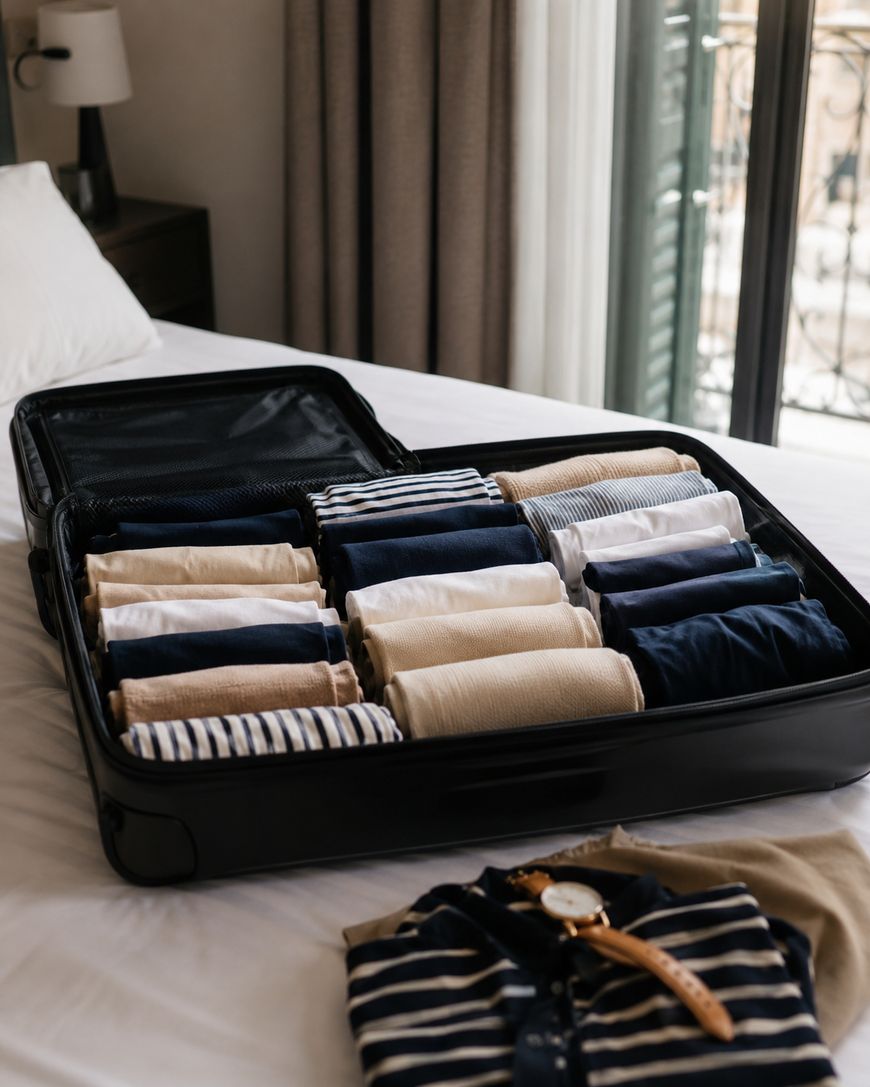
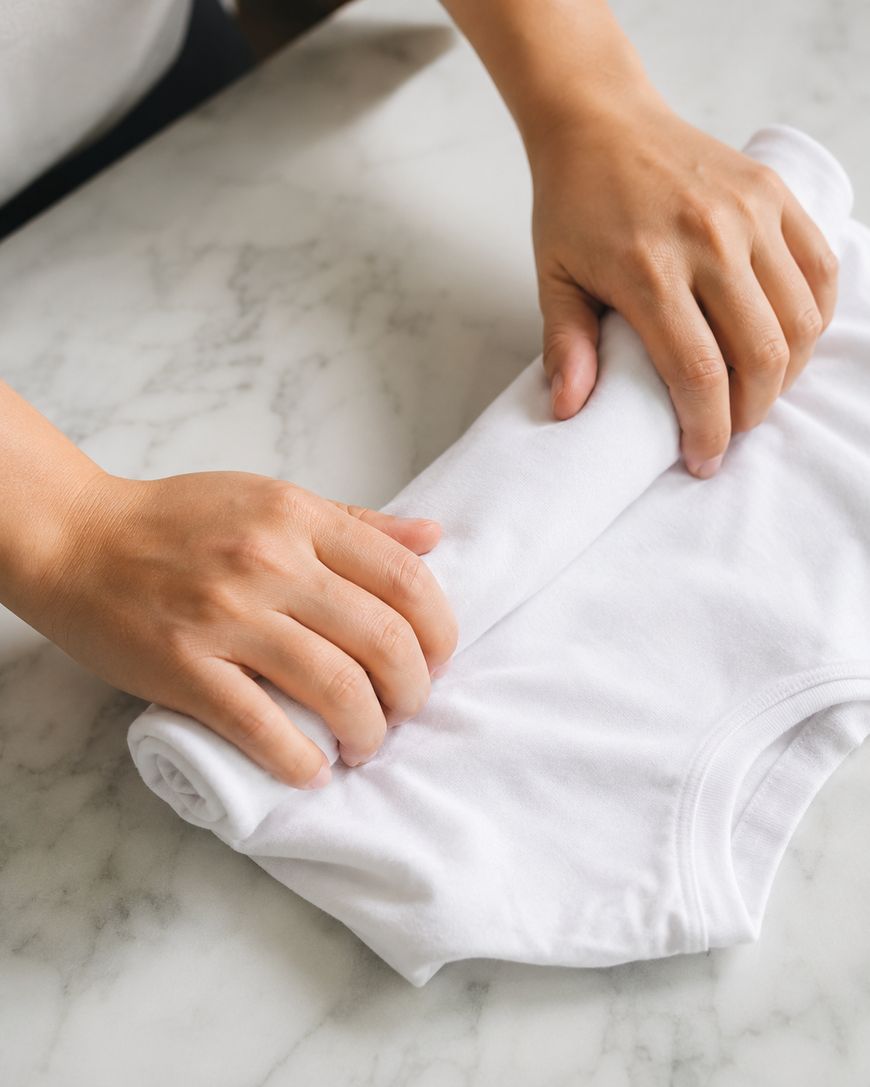
The technique works especially well with t-shirts, jeans, casual pants, and lightweight layers. Start by laying the item flat, fold in any sleeves or edges, then roll tightly from the bottom up until you have a compact cylinder.
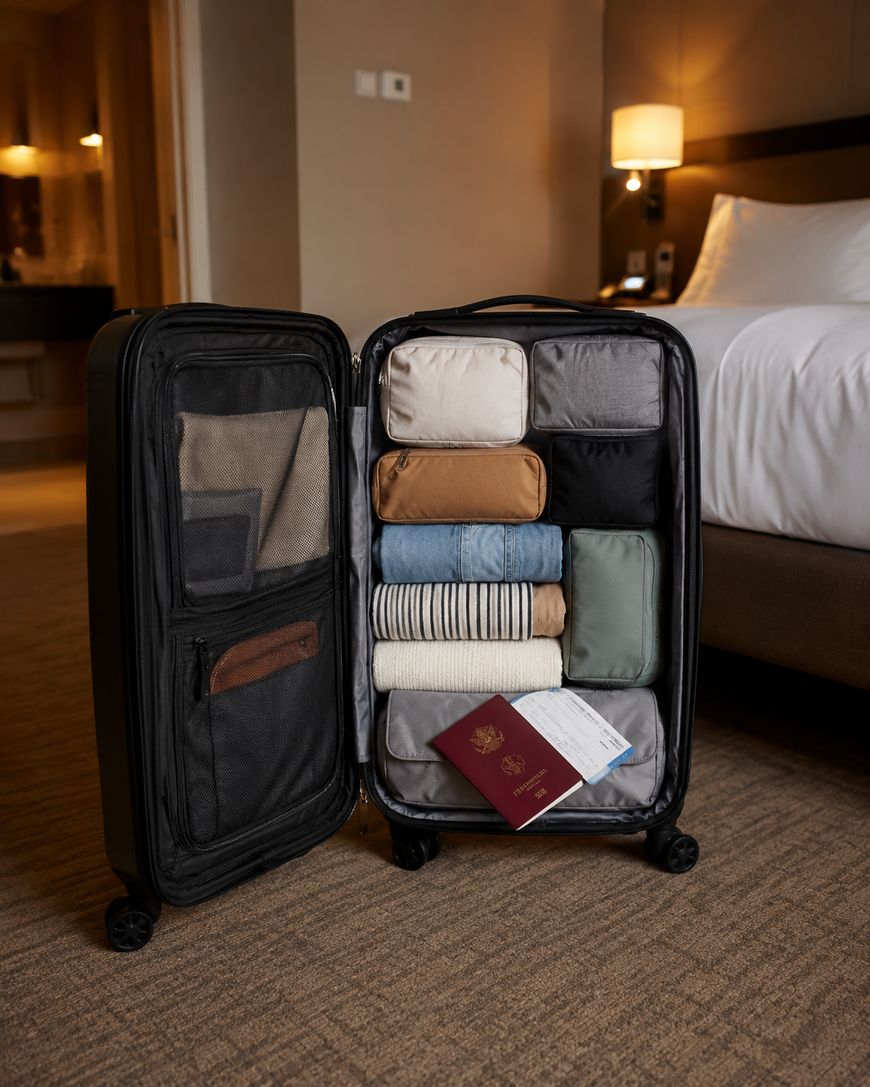
Stand your rolled clothes upright in your suitcase like files in a drawer rather than stacking them horizontally. This method, sometimes called the ranger roll, also has a bonus benefit: you can see everything you packed at a glance, so you’re not digging through layers to find that one shirt at the bottom.
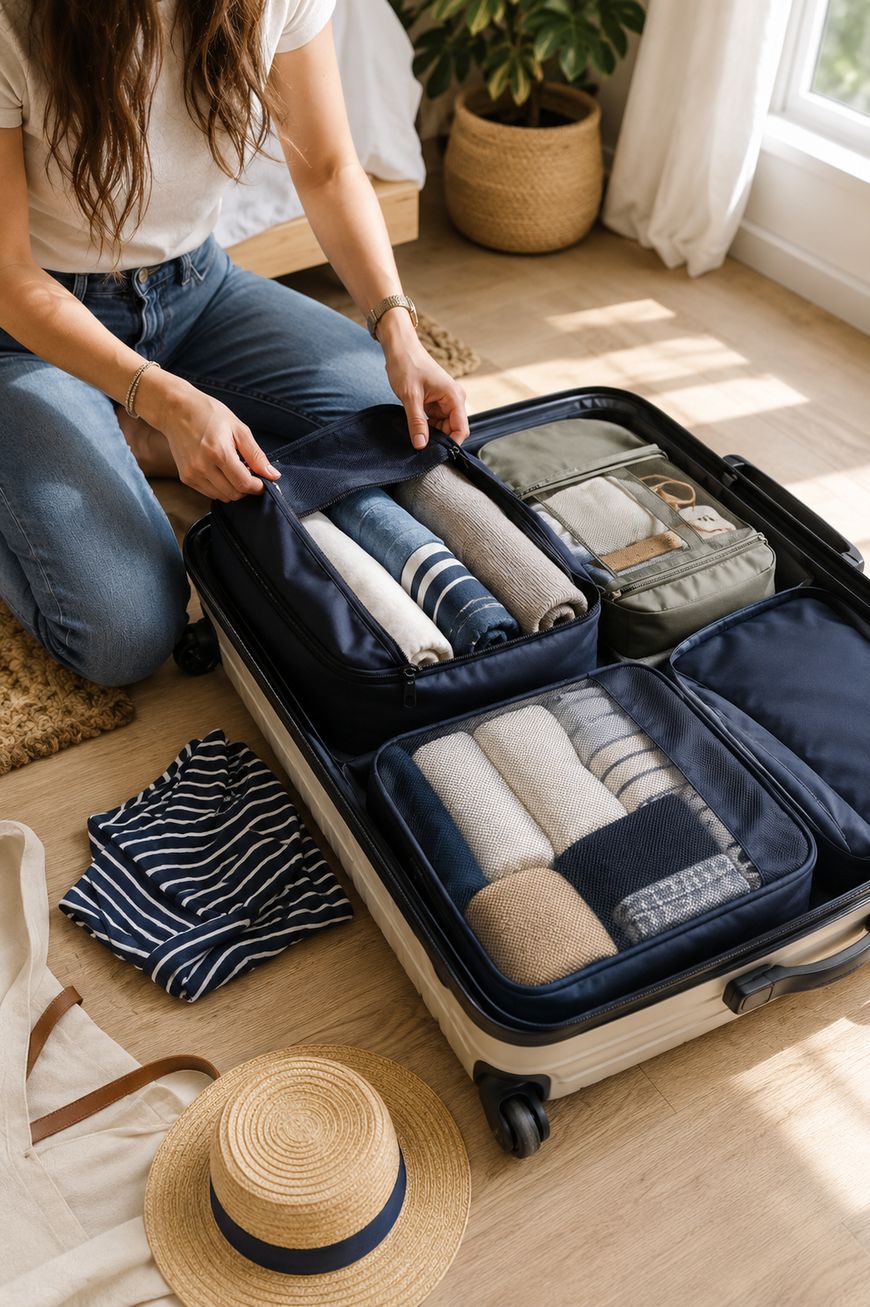
Thicker items like sweaters or structured blazers are better folded and placed on top, since they don’t roll as tightly. Mix your techniques based on fabric weight and you’ll be surprised by how much space you reclaim in every bag you pack.
Use Packing Cubes to Stay Organized for the Whole Trip
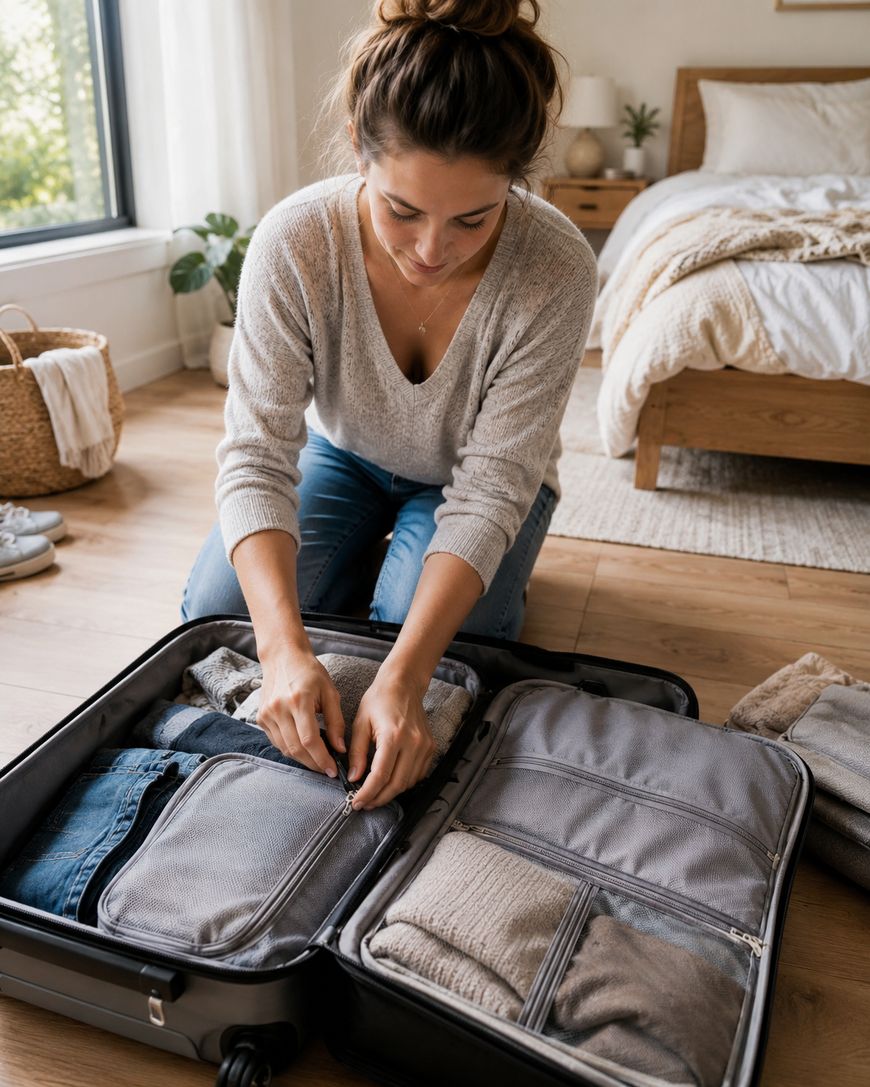
Packing cubes are one of the single most useful travel investments you can make, and once you start using them you won’t understand how you ever managed without them. They’re lightweight fabric organizers that zip closed and slot neatly into your suitcase, keeping everything grouped by category rather than jumbled together.
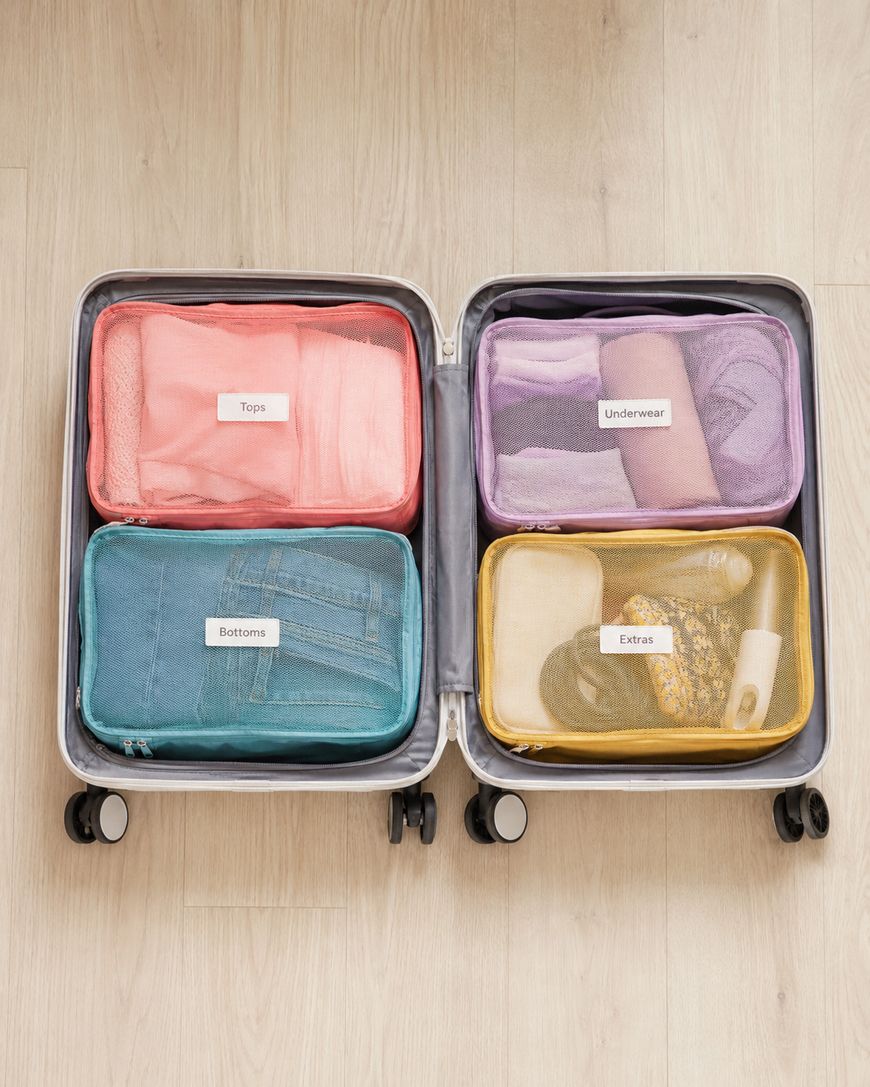
You can organize by clothing type—one cube for tops, one for bottoms, one for underwear and socks—or by outfit, packing each day’s look together so you can grab and go without thinking. Either system works, and you’ll quickly find the approach that matches how your brain works when you travel.
The real magic of packing cubes shows up when you check into a hotel or rental. Instead of unpacking your entire suitcase, you can pull out just the cubes you need and slide them into a drawer or shelf in seconds. Your bag also repacks faster at the end of each stay since everything already has a designated home.
Compression packing cubes are an upgraded version worth considering if you’re trying to fit a week’s worth of clothes into a carry-on. They have a double-zip system that squeezes out extra air once you close them, shrinking the cube down by a noticeable amount. For lightweight fabrics like activewear and t-shirts, the difference is significant.
Pack Shoes Smarter to Protect Space and Your Clothes
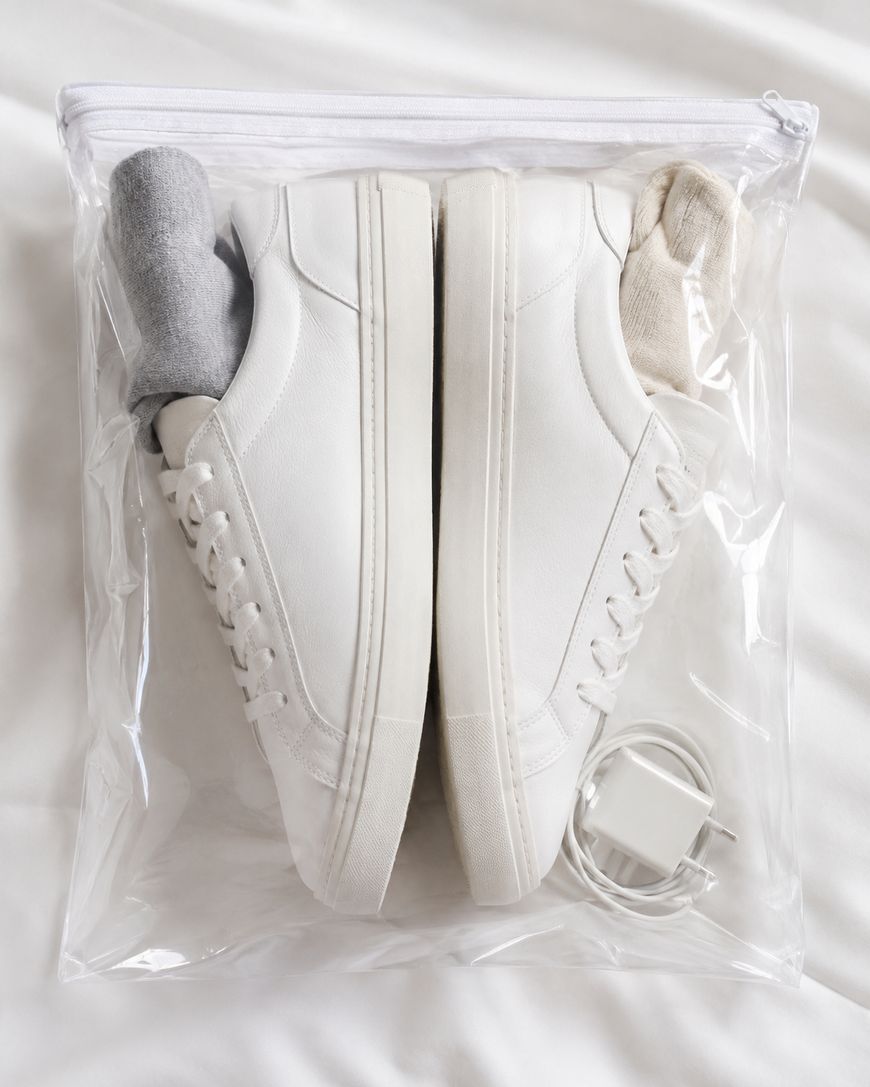
Shoes are the biggest space challenge in any bag because they’re bulky, oddly shaped, and need to be protected from your clean clothes. The smartest way to pack them is to stuff them with smaller items—socks, underwear, phone chargers, or small accessories—so the interior space isn’t wasted.
Place shoes sole-to-sole in a reusable shoe bag or a clean shower cap before putting them in your luggage. This keeps any dirt or residue from transferring to your clothing, which is a problem that’s easy to avoid and frustrating when you don’t.
Pack your shoes at the bottom of a rolling suitcase, near the wheels, so the heaviest items sit at the base and keep your bag balanced when you’re moving through airports. For a backpack or duffel, place shoes at the back panel closest to your body for the same weight distribution benefit.
Try to limit yourself to three pairs of shoes per trip: one comfortable walking shoe, one versatile option that can dress up or down, and one pair of sandals or flats if the destination calls for it. Each pair should work with multiple outfits so you’re not carrying footwear that only matches one look.
Use the Bundle Packing Method for Wrinkle-Free Clothes
The bundle method is a lesser-known packing hack that keeps clothes remarkably wrinkle-free. The idea is to wrap all your clothes around a central core object, like a packing cube stuffed with small items, so nothing folds sharply enough to crease.
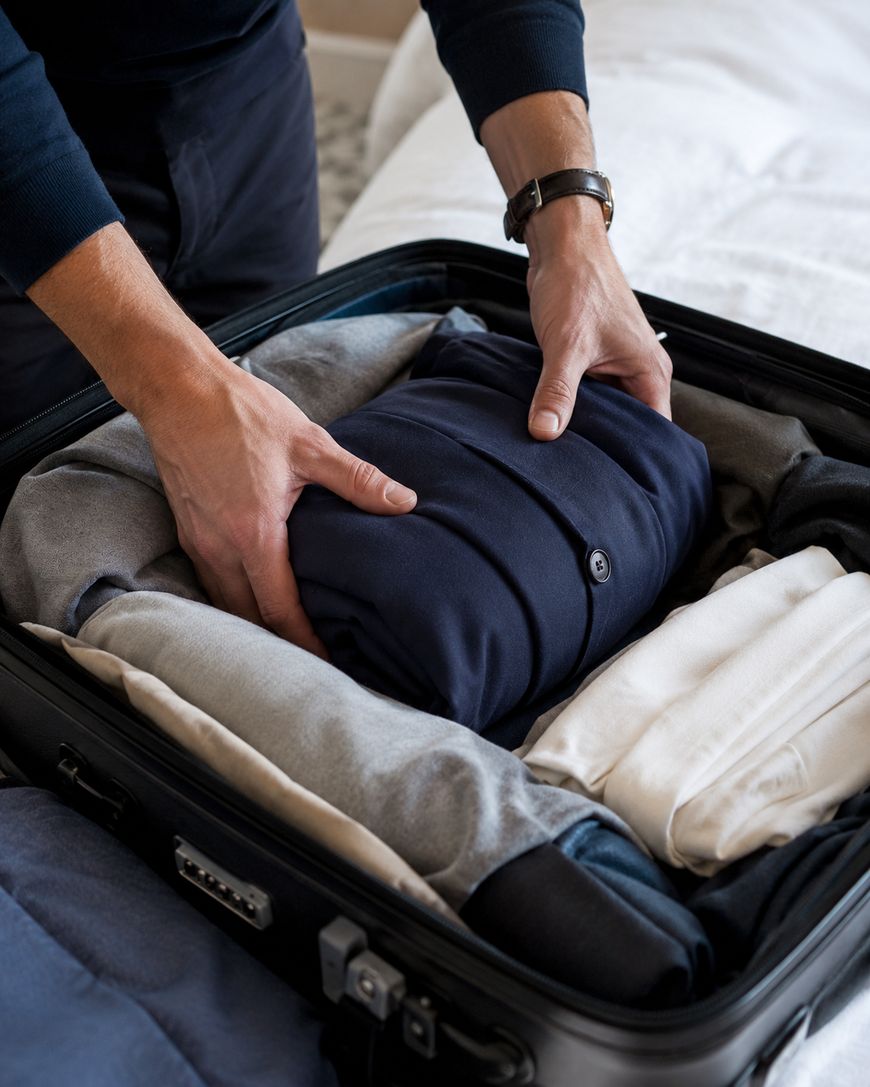
Start with the most wrinkle-prone items first—a blazer, dress pants, or a button-down shirt—laying them flat with the collar hanging over the edge of your suitcase. Layer less wrinkle-prone items on top, alternating sides as you go, then fold everything back over the core, wrapping each layer tightly.
The result is a single large bundle that sits inside your suitcase without sliding around. When you arrive, unwrap carefully and hang everything immediately, and you’ll find your clothes look far better than they would have with any other packing method.
This technique takes a bit more time upfront than rolling or folding, but if your destination involves meetings, events, or dinners where appearance matters, the extra five minutes is completely worth it.
Master Your Carry-On with a Packing Strategy That Keeps You Prepared
Traveling with just a carry-on is one of the most liberating things you can do as a traveler, but it requires a real strategy to pull off for anything longer than a quick weekend trip. The key is choosing versatile pieces that mix and match across multiple outfits rather than packing for every possible scenario.
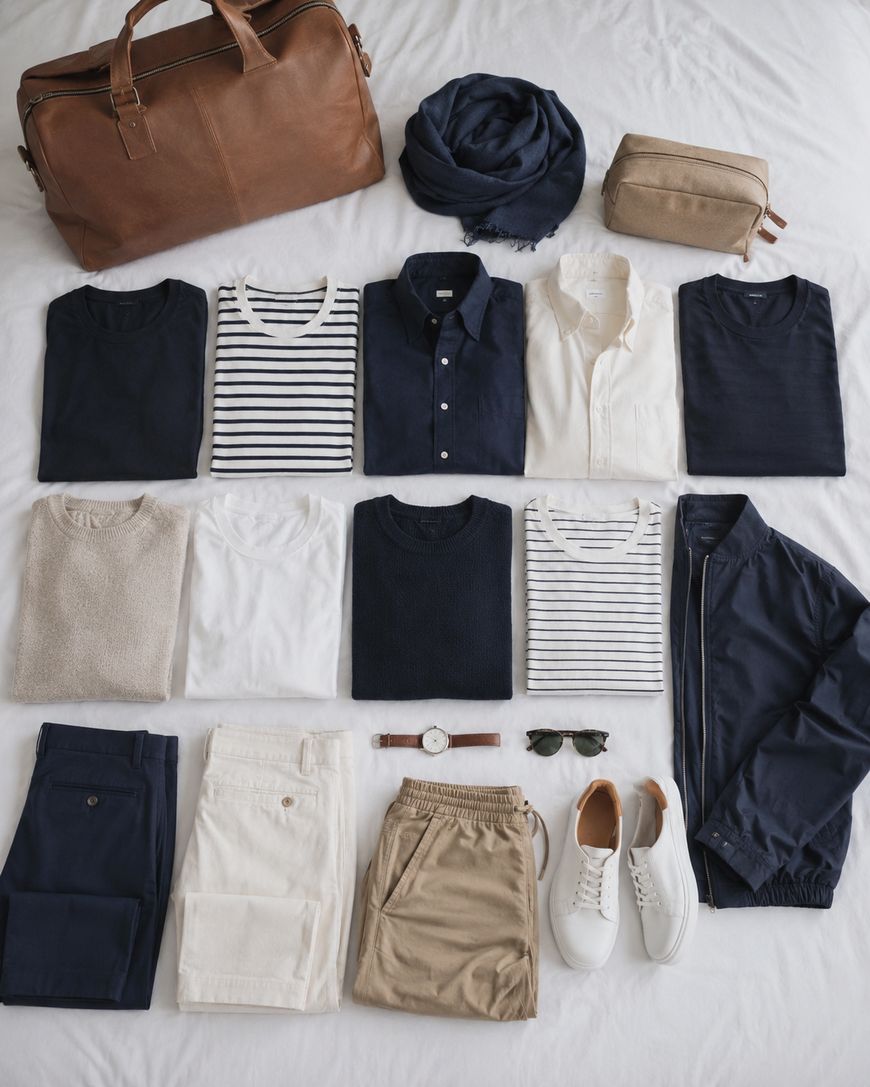
Stick to a tight color palette—two or three base colors plus one accent—so that everything you pack goes together without effort. A navy, white, and tan palette lets you create dozens of outfit combinations with far fewer individual pieces than you’d think.
Liquids are often the biggest carry-on challenge because of TSA’s 3-1-1 rule. Decant your products into small reusable travel bottles and skip anything you can buy at your destination, since most hotels provide shampoo and conditioner. A solid shampoo bar and a small tube of concentrated face wash can replace half your liquid bag.
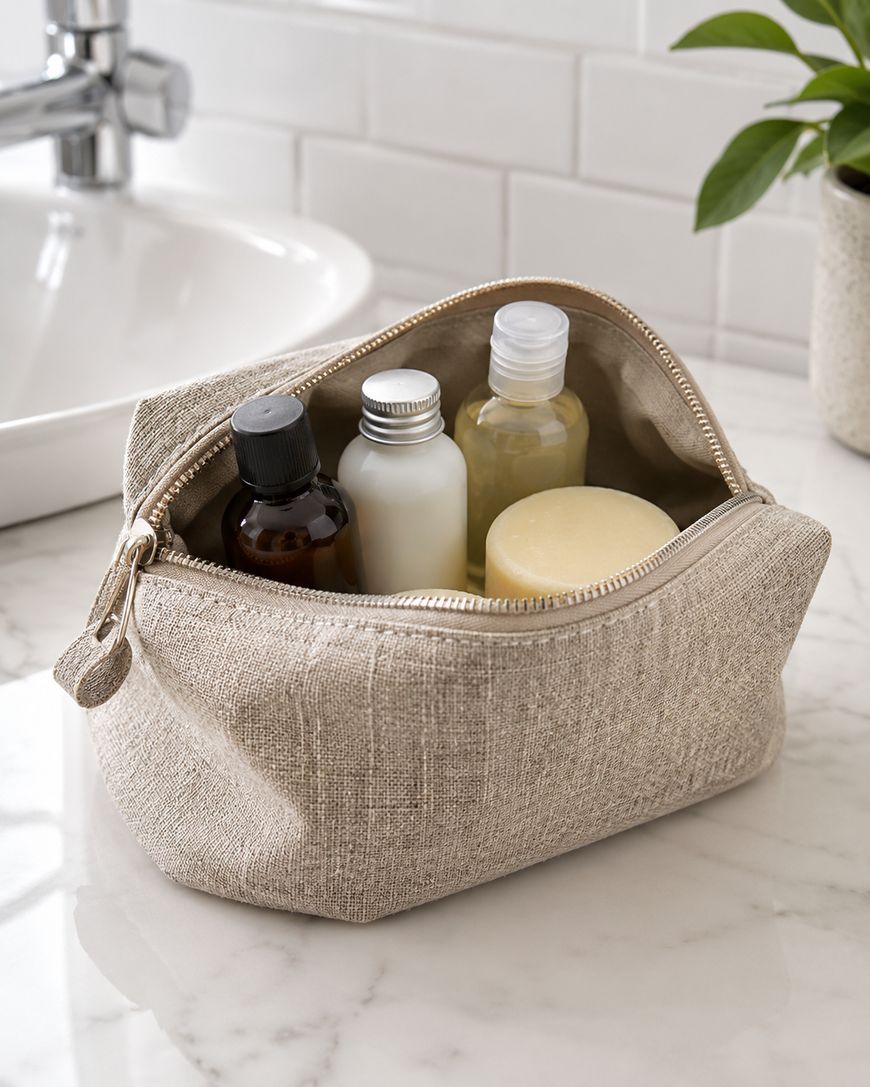
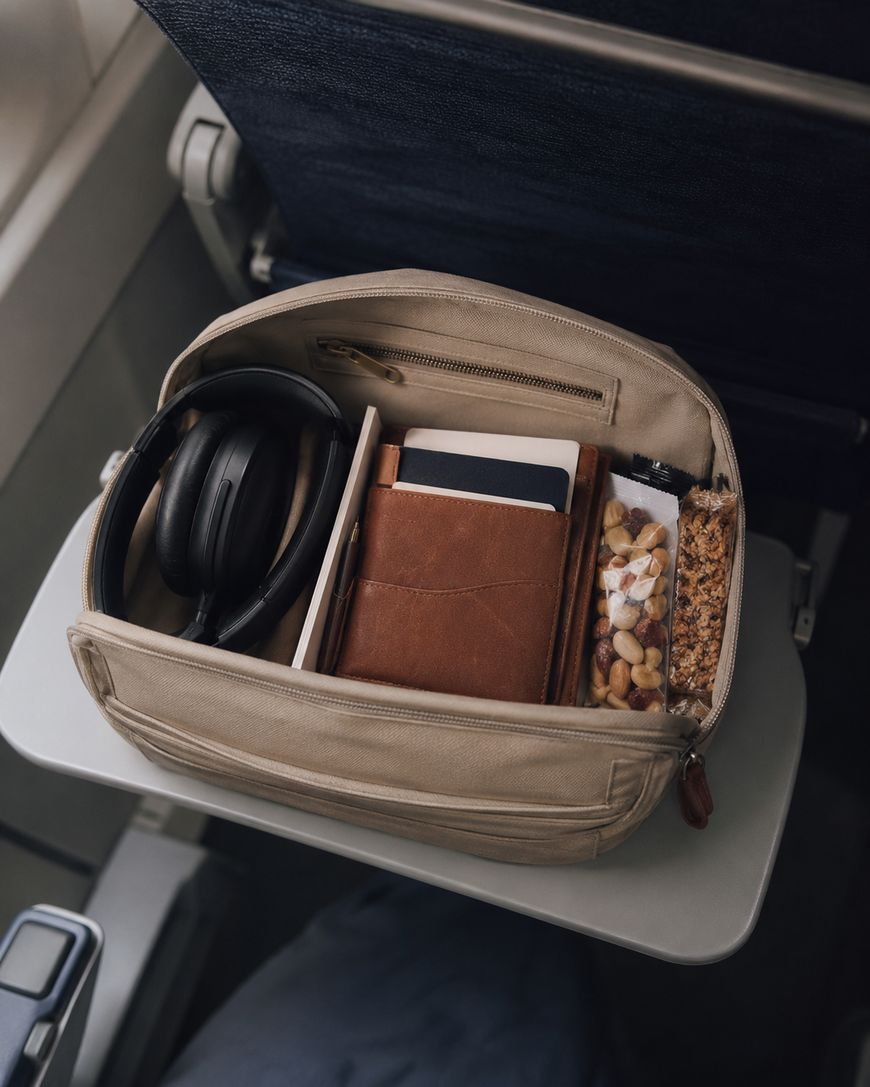
Your personal item—the bag that goes under the seat—is valuable real estate that most travelers underuse. Pack your most-needed items there: headphones, snacks, travel documents, and your first day’s essentials in case your checked bag is ever delayed.
How to Pack for Different Climates Without Overpacking
Packing for variable weather is where even experienced travelers get tripped up, often resulting in bags stuffed with contingency outfits that never get worn. The solution is layering rather than adding, focusing on versatile midlayers and packable outer layers that compress down to almost nothing.
A lightweight down jacket or a packable rain shell takes up almost no space when compressed but handles a dramatic shift in weather with ease. Pair it with a merino wool base layer, which regulates temperature naturally and resists odor well enough to wear multiple days in a row without washing.
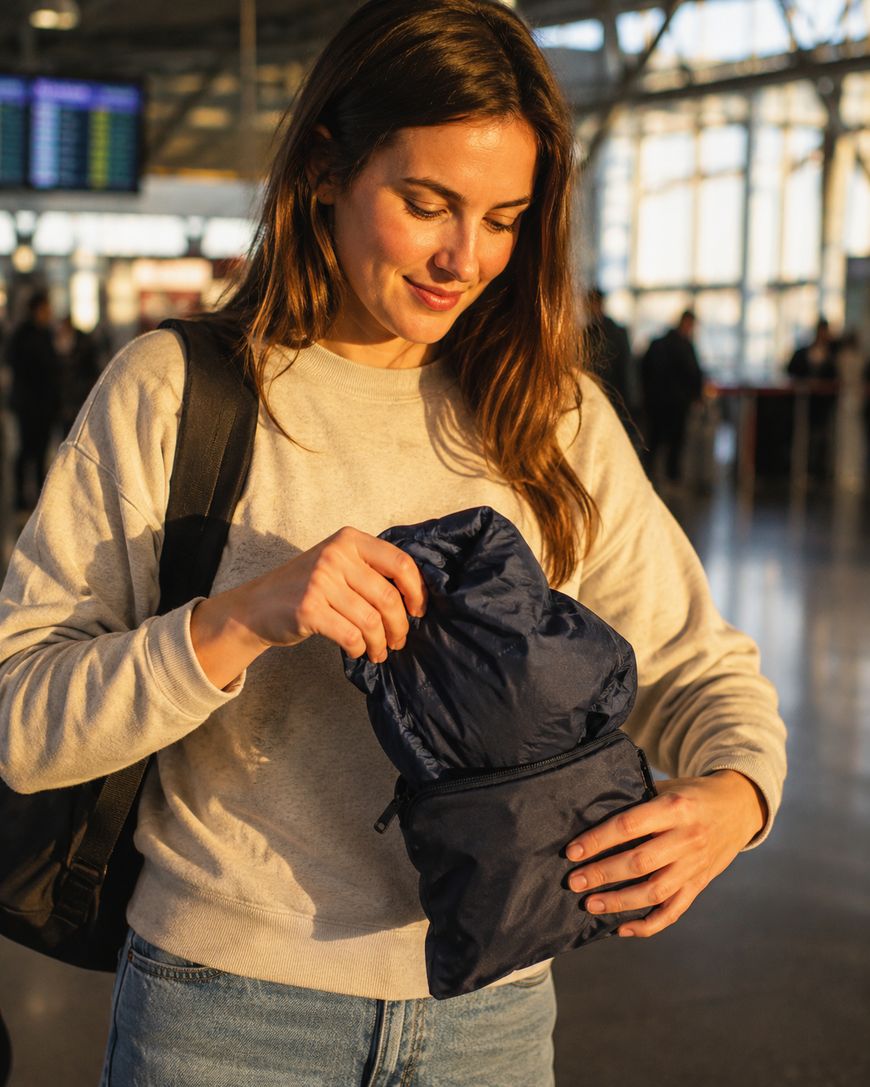
For destinations that span both warm and cool conditions, think about the time of day you’ll experience each. Mornings and evenings in many destinations run cooler than afternoons, so a simple cardigan or light jacket is often all you need to bridge the gap without packing separate cold-weather outfits.
Frequently Asked Questions About Packing Hacks
What is the most effective way to save space when packing?
Rolling your clothes instead of folding them is consistently the most effective single technique for saving space. Combining rolling with packing cubes amplifies the benefit even further, keeping your bag organized and compact at the same time.
How do you keep clothes from wrinkling in a suitcase?
The bundle packing method minimizes wrinkles best, since clothes wrap around a core without sharp folds. Rolling works better than flat folding for individual items because it creates a curve rather than a crease, and natural fibers like merino wool wrinkle less than synthetic blends.
Can you really fit a week’s worth of clothes in a carry-on?
Yes, most travelers can fit five to seven days of clothing in a standard carry-on when they use rolling, packing cubes, and a versatile color palette. Limiting yourself to three pairs of shoes and decanting liquids into travel-size containers makes the biggest difference in a tight carry-on.
What should you always keep in your personal item?
Keep your travel documents, phone charger, headphones, any medications, snacks, and a change of clothes in your personal item. If your checked bag is delayed or lost, having a change of clothes and your essentials in your personal item means your trip continues without major disruption.
How many outfits should you pack per day of travel?
A good rule is one outfit per day plus one backup, but with mix-and-match pieces you can often pack fewer and still feel like you have plenty of options. For a seven-day trip, eight to ten individual clothing pieces typically covers you without overfilling your bag.
Are packing cubes actually worth it?
Packing cubes are worth it for anyone who travels more than once or twice a year. They don’t compress clothes the way vacuum bags do, but the organization they provide saves time at every stage of a trip—packing, unpacking, finding what you need, and repacking to come home.
Make Your Next Trip Your Best-Packed Trip Yet
The best packing hacks aren’t complicated—they’re just small shifts in technique that compound into a genuinely better travel experience. When you roll instead of fold, organize with cubes, pack your shoes smartly, and choose versatile pieces over quantity, everything about traveling becomes easier and more enjoyable.
Start with one or two of these packing hacks on your next trip and notice how much less stressful getting ready feels. You’ll arrive organized, find what you need quickly, and leave with enough energy to actually enjoy wherever it is you’re going.