Last updated: June 4, 2026
Road trip essentials are the must-have items, documents, and prep steps you pack and do before you leave so your drive is safer, more comfortable, and less stressful.
The simplest default approach is to pack a compact safety kit, keep your car basics topped off, bring offline navigation, and organize food, water, and chargers within arm’s reach.
Road Trip Essentials You Should Pack First
1. A Dedicated Road Trip “Grab Bag”
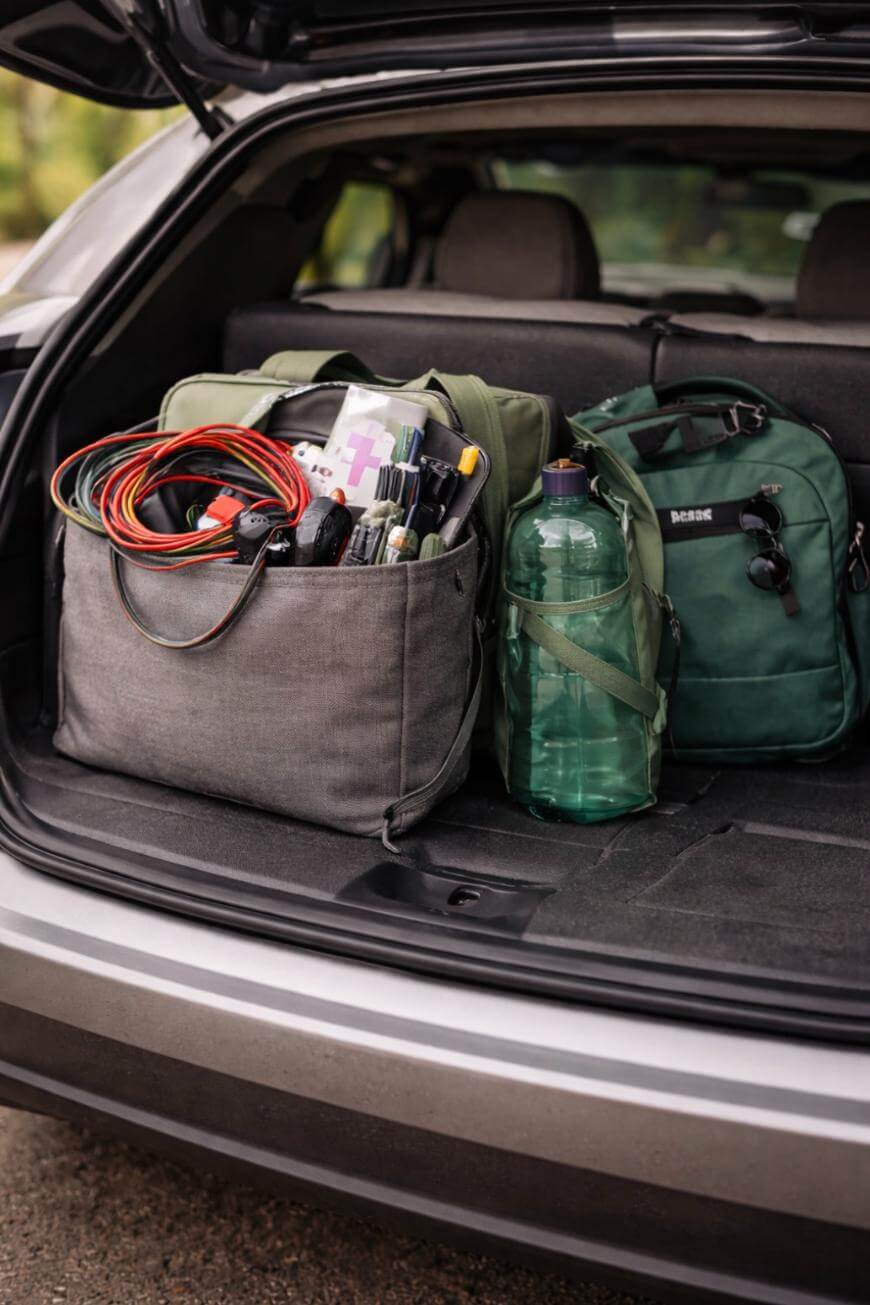
You’ll save time and stress when everything critical lives in one bag you can move from car to hotel in one trip.
A simple setup is one tote for safety and car items and one backpack for personal items, so you never mix sunscreen with jumper cables.
2. Your Driver’s License, Registration, And Insurance Proof
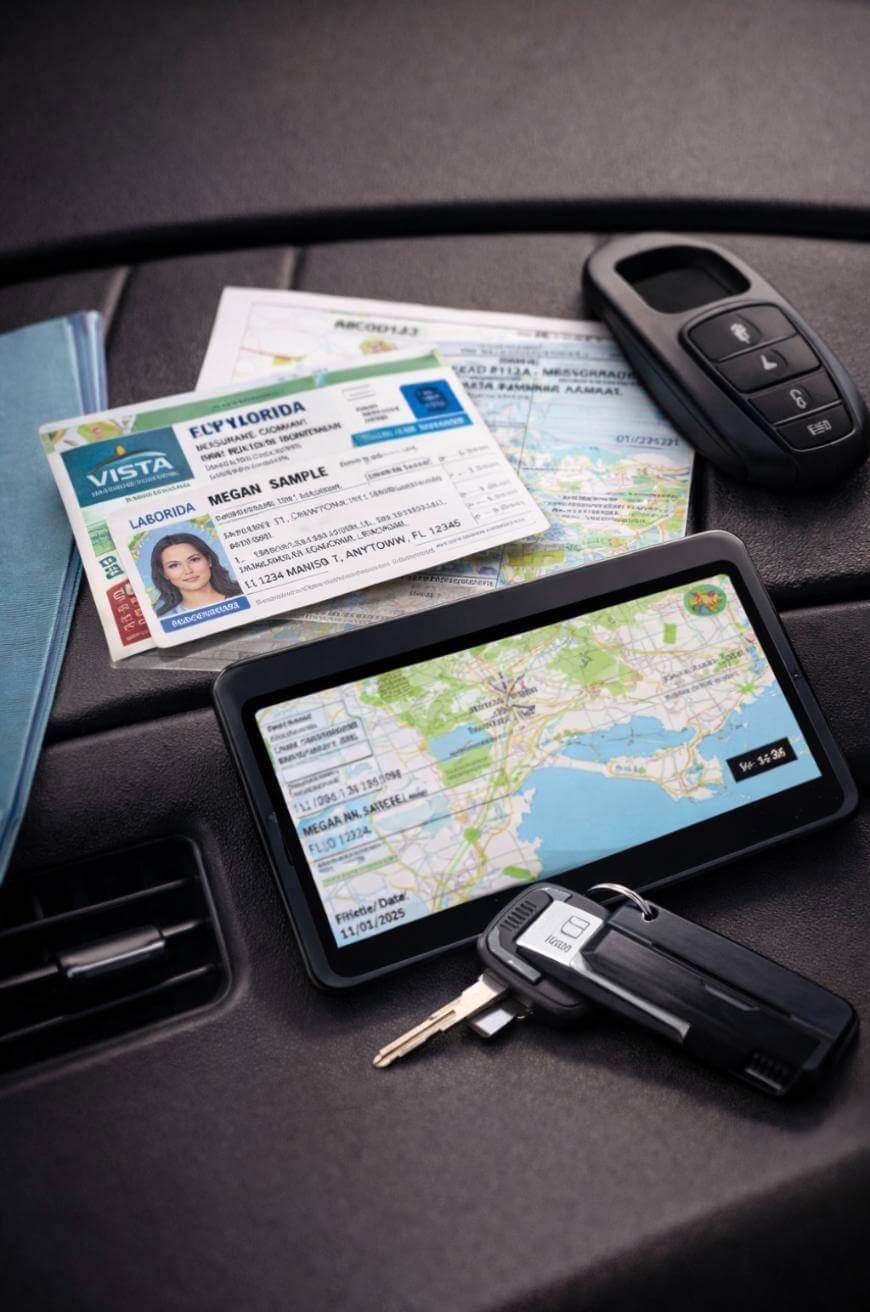
These are non-negotiable road trip essentials because you can’t replace them quickly in the middle of nowhere.
Take a photo of each and store it in a secure cloud folder, but still keep the originals in an easy-to-reach spot, not buried under luggage.
3. A Spare Key Strategy
Lockouts happen most when you’re tired, distracted, and stopping often.
Bring a spare key in a magnetic hide-a-key (only if you trust the hiding spot) or hand a spare to the other driver, but never store it in the same bag as your main key.
4. Offline Maps And A Backup Navigation Option
Cell service drops exactly when you need directions most, especially in national parks, deserts, and mountain routes.
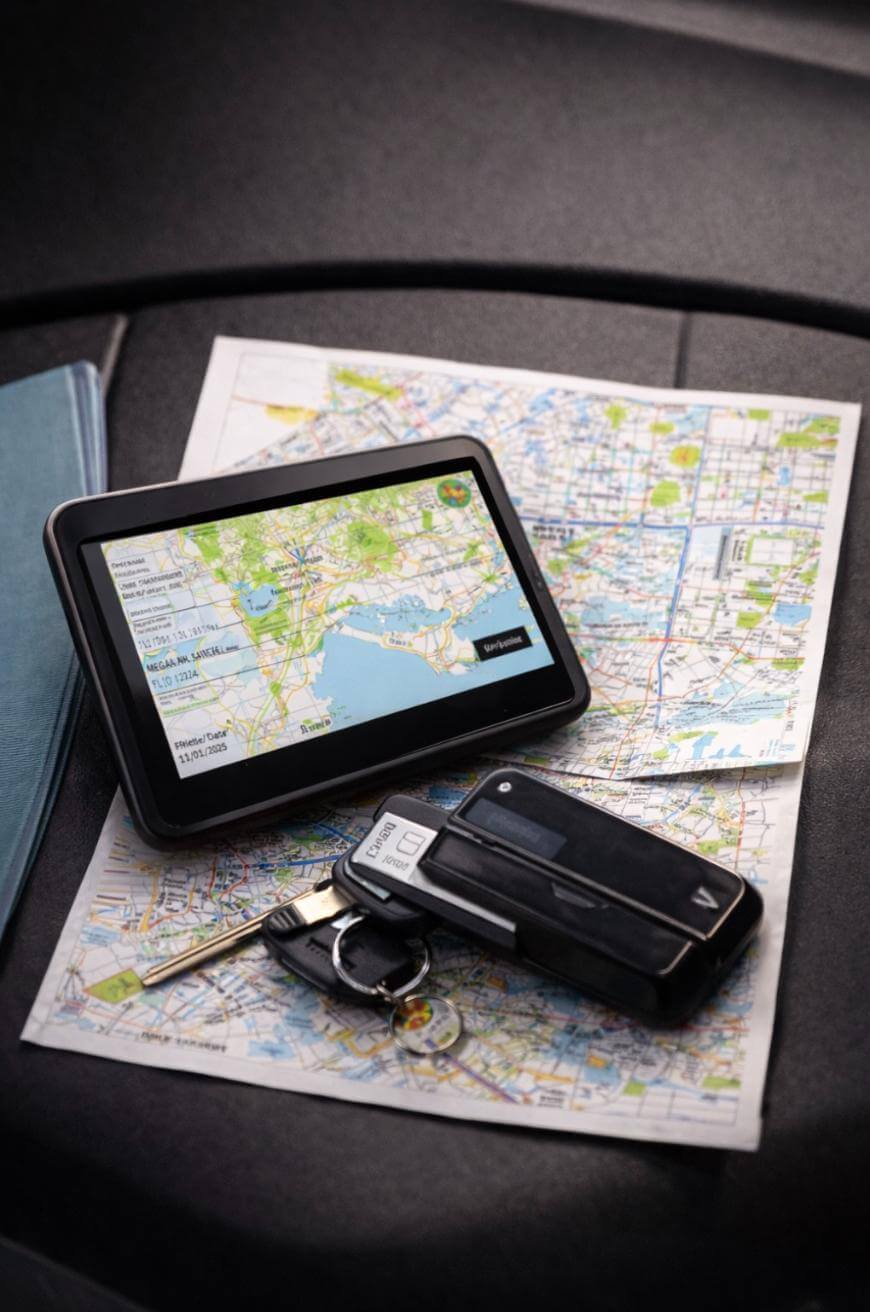
Download offline maps for your entire corridor, and keep a paper map or printed turn-by-turn summary for your “must make it” segments.
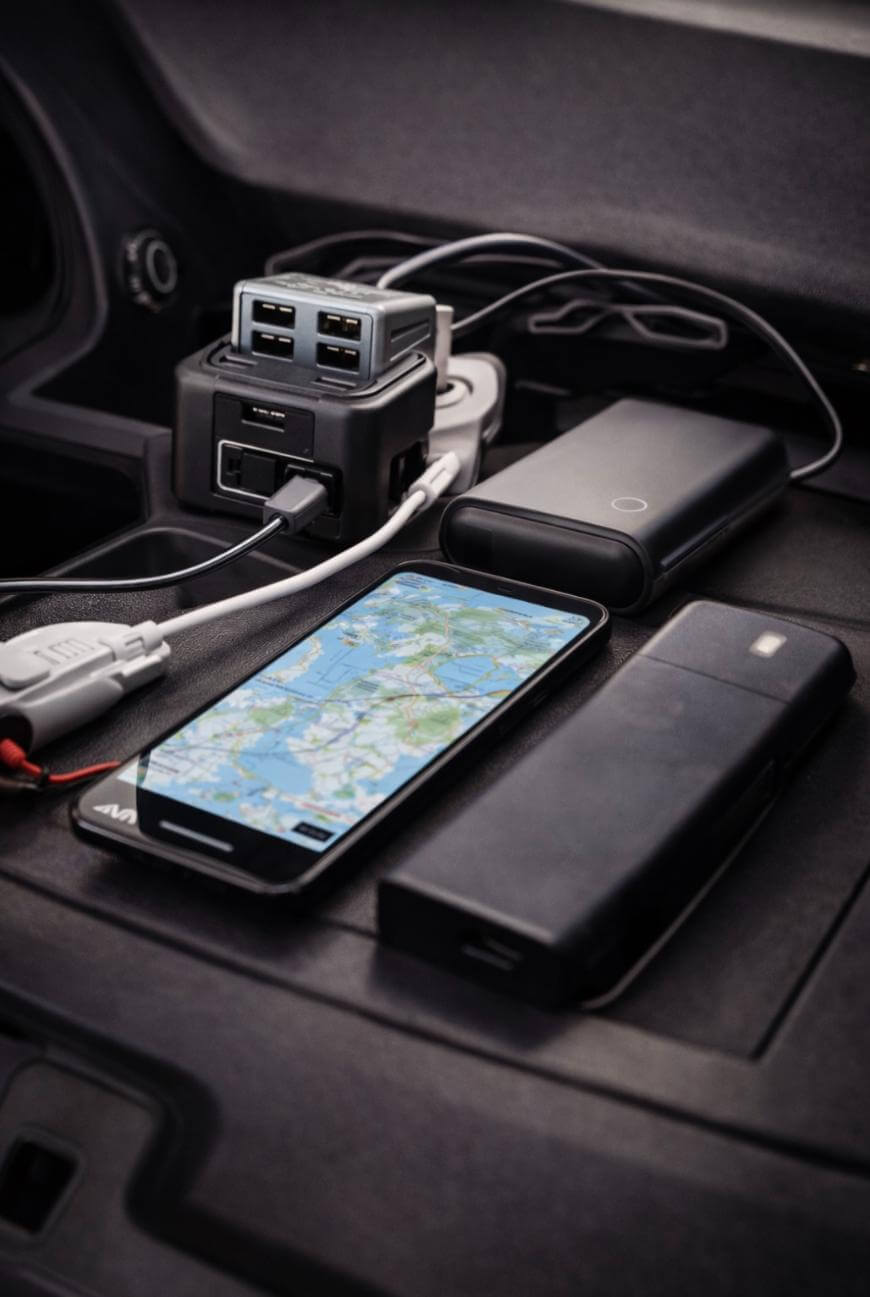
5. A Multi-Port Car Charger And A Backup Power Bank
Charging fights are real, and a single USB port will not cover two phones, a tablet, and a dash cam.
Bring at least one 30W+ multi-port charger and a power bank that can recharge your phone at least 2 full times for long scenic stops.
6. The Right Cables For Every Device
This sounds obvious until you realize you packed a USB-C cable and your friend’s phone uses Lightning.
A smart rule is 2 cables per device type, because cables break, disappear, and get left in hotel outlets.
7. A Phone Mount You Can Use With One Hand
If you’re constantly fumbling with navigation, you’re distracted driving.
Choose a mount that holds steady over bumps and lets you glance at directions without looking down at your lap.
8. Sunglasses That Reduce Fatigue
Glare makes you tense, and tension makes you tired faster.
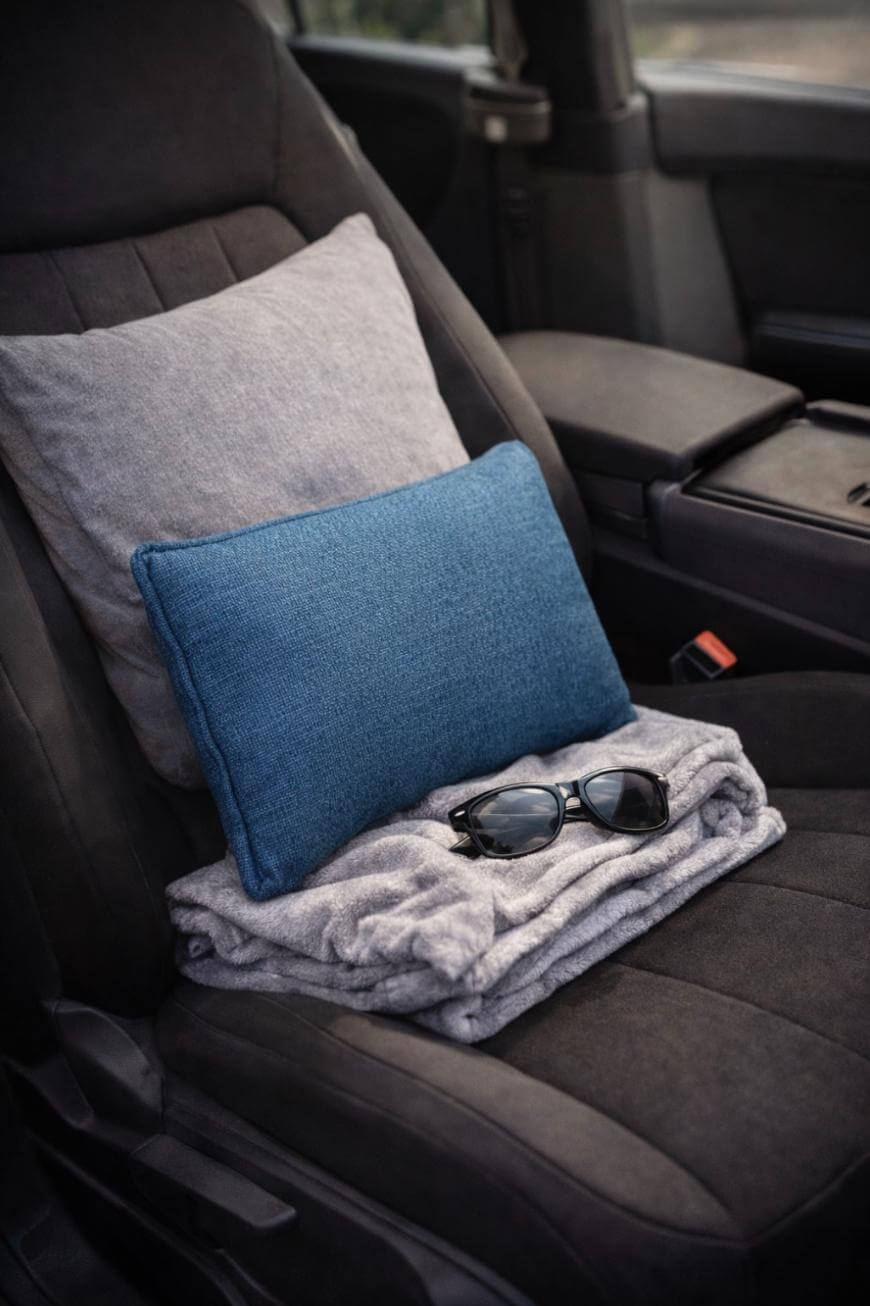
Polarized sunglasses help most during long midday stretches, and a cheap spare pair in the glove box is a lifesaver.
9. A Small First Aid Kit With The Stuff You Actually Use
A tiny kit is better than none, but a practical kit is what you’ll reach for.
Add blister bandages, pain relief, antihistamines, and a small pair of tweezers, because those are the things people always end up needing.
10. Roadside Safety Basics
If you break down at dusk, visibility becomes your biggest risk.
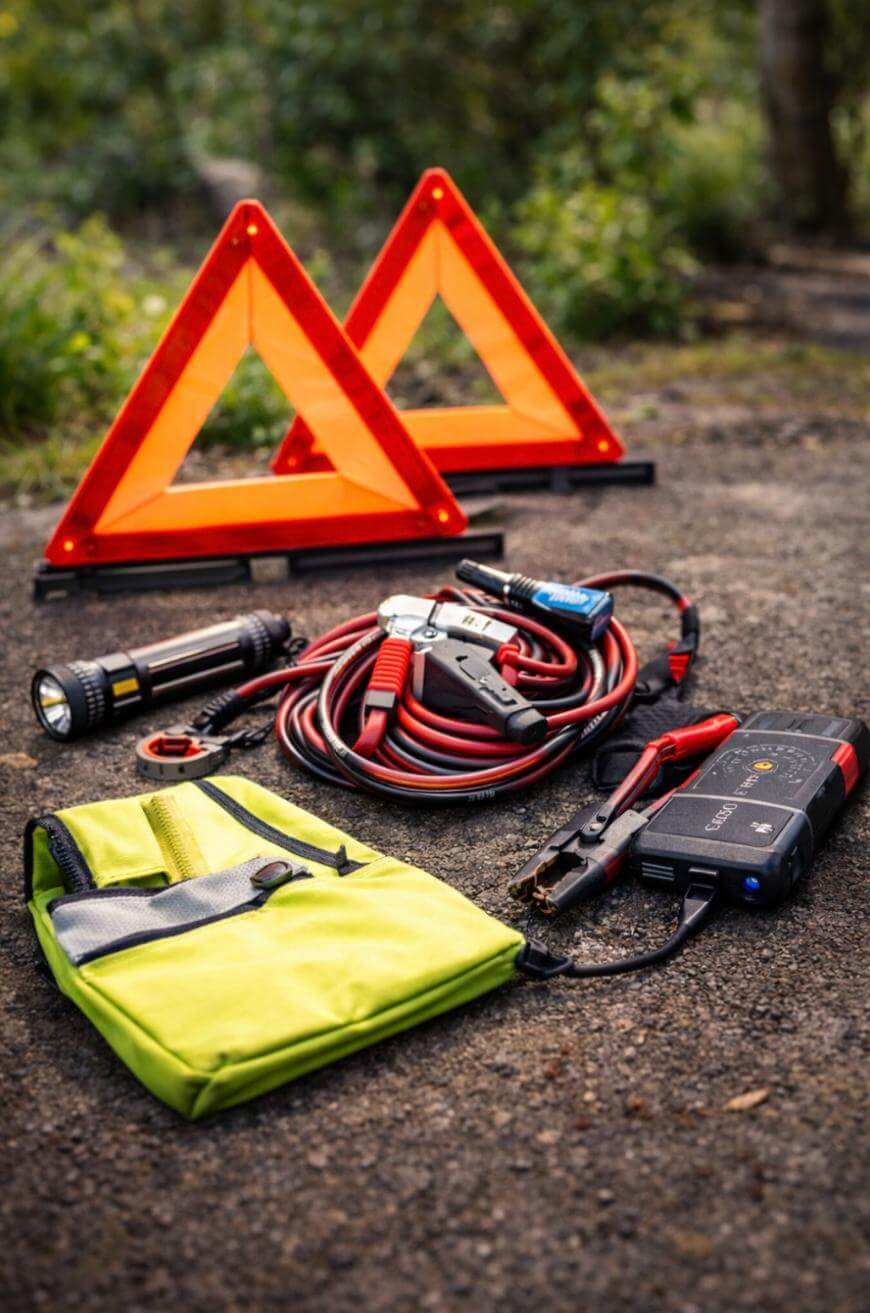
Pack reflective triangles or flares, a high-visibility vest, and a strong flashlight, then store them where you can grab them without unloading the trunk.
11. Jumper Cables Or A Portable Jump Starter
A dead battery is the classic trip-killer, especially after frequent stops with doors open and lights on.
A portable jump starter is easier than cables for beginners, and it also doubles as a backup charger in a pinch.
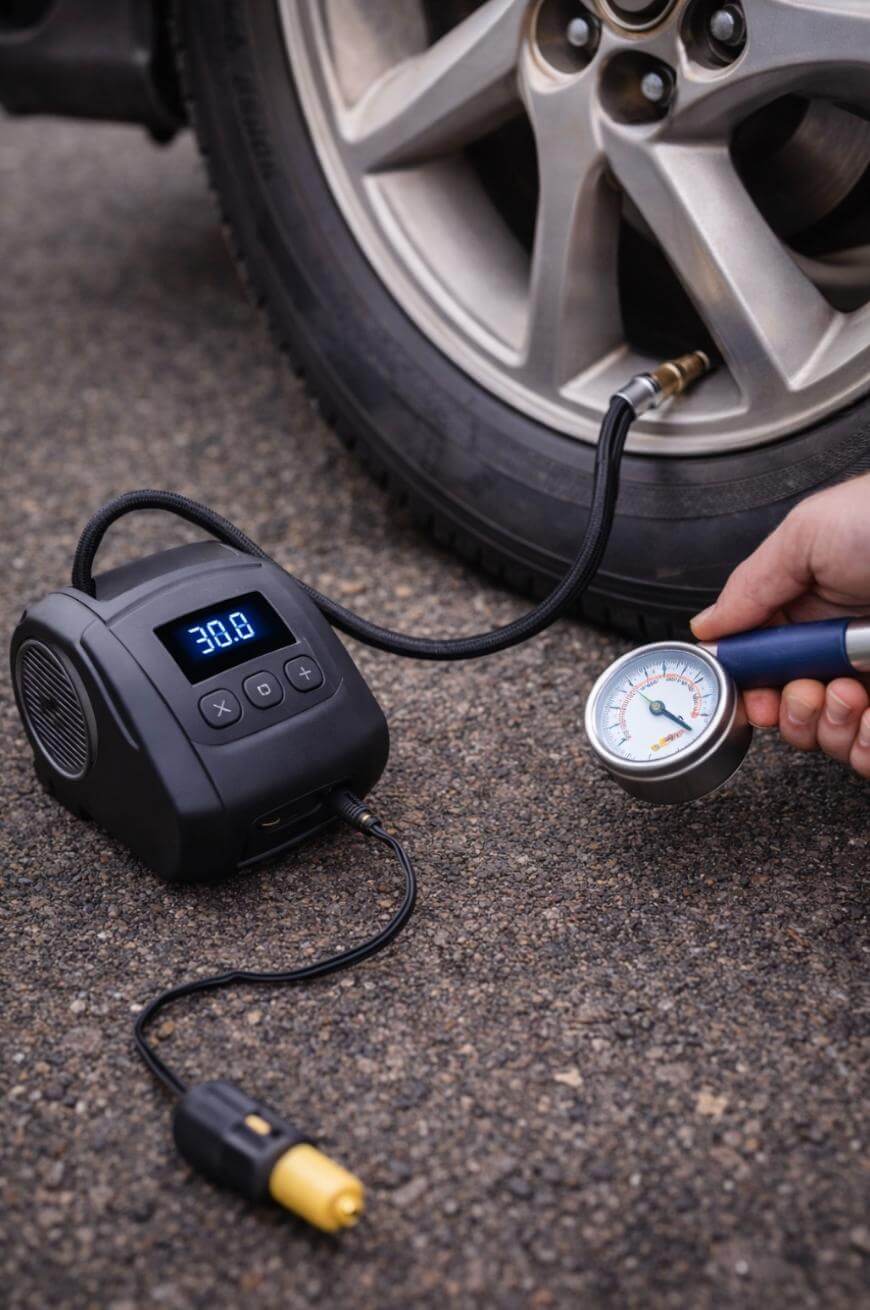
12. A Tire Pressure Gauge And A Compact Inflator
Underinflated tires reduce fuel efficiency and increase blowout risk, especially in heat.
Check tire pressure when tires are cold, and aim for your door-jamb PSI number, not the maximum listed on the tire.
13. A Full-Size Spare Or A Tire Repair Plan
Some cars come with a donut spare, and some come with a repair kit that won’t help with sidewall damage.
Confirm what you have before you leave, and if you’re relying on a repair kit, know where your nearest tire shop options are along your route.
14. Basic Fluids And A Funnel
Long drives expose small issues, like low windshield washer fluid or an oil level that’s a bit off.
Bring washer fluid, a small bottle of oil that matches your car, and a simple funnel so you don’t make a mess in a gas station parking lot.
15. Wet Wipes, Tissues, And Hand Sanitizer
These are road trip essentials because you will eat in the car, touch gas pumps, and regret sticky hands.
Keep them in the front console, not the back, because you won’t pull over just to find wipes.
16. Trash Bags And A “Car Clean” System
A messy car gets uncomfortable fast, and it’s harder to find what you need.
Use 1 small trash bag for the front seats and 1 bigger bag for the trunk, and empty both every time you refuel.
17. Reusable Water Bottles Plus A Water Backup
Hydration keeps you alert, and having water reduces expensive convenience-store stops.
A solid baseline is 16–32 oz per person accessible up front, plus at least 1 extra gallon stored in the trunk for unexpected delays.
18. Easy Road Snacks That Don’t Melt Or Crumble
Snacks keep you from making “hanger” decisions at overpriced exits.
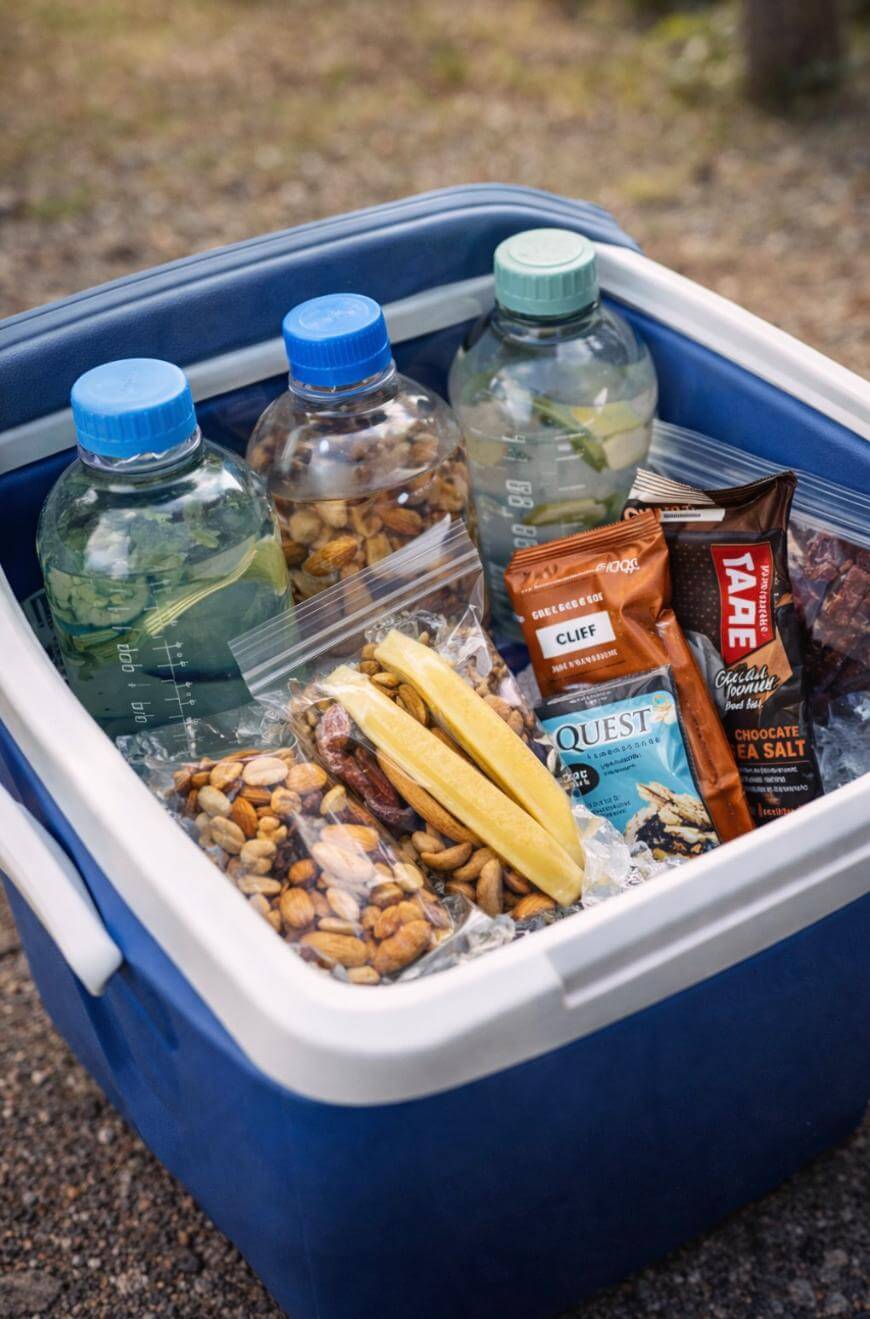
Go for protein-forward options like jerky, nuts, and protein bars, and avoid anything that turns into dust all over your seats.
19. A Cooler Strategy That Matches Your Route
A cooler is only worth it if you’re actually stopping and refilling it.
For a 1–2 day drive, a soft cooler works great for drinks and fruit, but for 3+ days, a small hard cooler holds temperature better.
20. Comfort Items That Reduce Driver Fatigue
Your comfort affects your focus, and focus affects safety.
Bring a lumbar support pillow, a light blanket for temperature swings, and a hat for sun when your windshield angle isn’t your friend.
21. Clothes Layers For Fast Weather Changes
Road trips can cross climates in one day, and your “destination outfit” won’t help at a windy rest stop.
Pack a light jacket or hoodie within reach, and keep a pair of socks handy if sandals start to feel like a mistake.
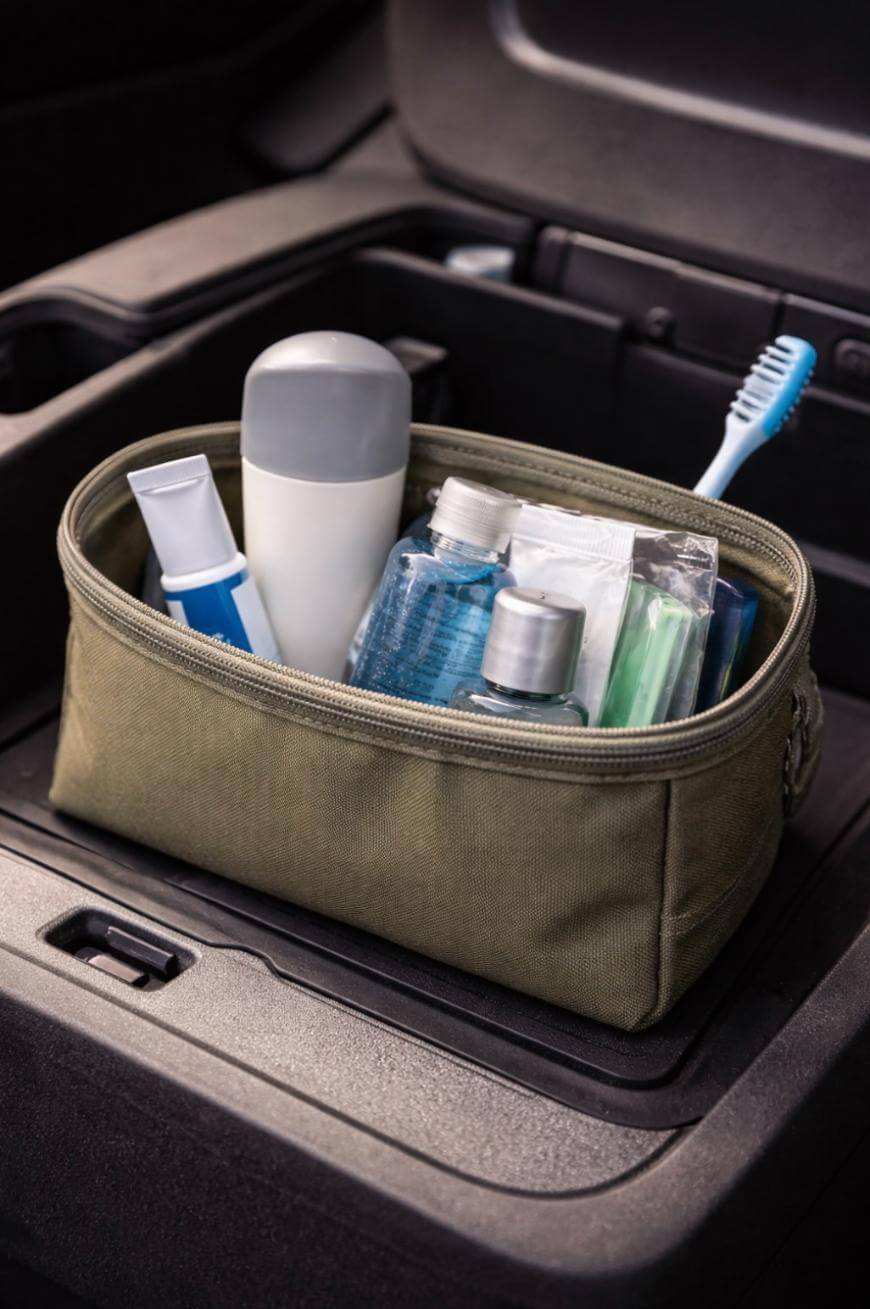
22. A Simple Toiletry Mini Kit
You don’t want to dig through luggage for deodorant when you’re five hours into a drive.
Create a small pouch with deodorant, toothpaste, a toothbrush, face wipes, and lip balm, and keep it in the cabin, not the trunk.
23. A Rest Stop Routine You Actually Follow
Random stops waste time and don’t fix the tired feeling.
Use a simple rhythm like every 2–3 hours: bathroom, refill water, quick stretch, and a 3-minute walk to reset your brain.
24. Entertainment That Doesn’t Depend On Signal
Even if you love music, you’ll hit dead zones and get bored of the same playlist.
Download podcasts, audiobooks, and playlists ahead of time, and pack 1 offline option like a trivia app, travel journal, or car-friendly card game for passengers.
25. A Small Cash Stash
Some rural tolls, small diners, and surprise situations still prefer cash.
Keep $20–$60 in small bills in a hidden spot, and don’t dip into it for snacks unless it’s an actual emergency.
26. A Simple Budget Buffer For “Unexpected But Normal” Costs
Road trips almost always come with surprise parking fees, tolls, and higher-than-expected gas prices.
A practical guideline is to add an extra 10%–15% on top of your estimated fuel and lodging total so you don’t stress over every detour.
How To Pack Road Trip Essentials So You Can Actually Find Them
27. Use The “Front Seat, Back Seat, Trunk” Rule
If you need it while driving, it goes in the front seat area, not the back.
A good setup is phone mount, wipes, snacks, water, and chargers up front, with personal bags behind you, and heavy gear in the trunk.
28. Label Two Emergency Zones
When something goes wrong, you don’t want to search.
Create one “roadside” zone for triangles, flashlight, and jump starter, and one “medical” zone for first aid, meds, and allergy support.
29. Pack One Outfit And One Toiletry Set In A Quick-Access Bag
If you arrive late, you’ll want to walk into your hotel with only one bag.
A small duffel with pajamas, a fresh outfit, and toiletries means you can leave everything else in the car and still feel human.
What To Check Before You Leave
30. Do A 10-Minute Car Check The Day Before
This is the easiest way to prevent a long, annoying delay.
Check tire pressure, oil level, washer fluid, and that all lights work, and you’ll catch the stuff that’s easy to fix at home.
31. Plan Your First Fuel Stop On Purpose
Starting with a plan reduces stress and keeps you from overpaying right away.
Pick a fuel stop about 60–90 minutes into the drive so you can settle in, grab coffee if you want it, and avoid panic fueling.
32. Set A Safety Rule For Driving Time
Most people overestimate how long they can drive comfortably without getting sloppy.
A solid guideline is 8 hours of driving max per day for most drivers, with breaks every 2–3 hours to stay alert.
Key Takeaways
Road trip essentials are the items and prep steps that keep your drive safe, comfortable, and organized.
Keep critical documents and chargers within arm’s reach, not packed in the trunk.
Plan offline navigation and download entertainment before you leave.
Build a simple safety kit with visibility gear, a jump option, and tire tools.
Use a basic stop rhythm every 2–3 hours to reduce fatigue.
Add a 10%–15% budget buffer for normal surprises.
FAQ
Do You Need A First Aid Kit For A Short Road Trip?
Yes, you should bring one even for a short drive. Minor cuts, headaches, and blisters happen on quick trips, and a small kit solves them fast.
How Much Water Should You Bring?
You should keep at least 16–32 oz per person accessible in the cabin. Add at least 1 extra gallon in the trunk if you’ll be in remote areas or driving in heat.
What If You Don’t Have Cell Service For Navigation?
You should download offline maps before you leave. A paper map or printed route notes can also save you if your phone dies or loses signal.
How Do You Keep Your Car From Getting Messy?
You should use a front-seat trash bag and empty it at every fuel stop. Wet wipes and a quick “reset” routine make a huge difference over multiple days.
Why Road Trip Essentials Matter
Road trip essentials matter because they remove the most common stress points: dead phones, hunger, mess, fatigue, and small car problems.
When you pack and organize the basics, you make the trip feel easier, safer, and more fun without overthinking it.
This post contains affiliate links. A full disclosure is available from the main menu.