Last updated: October 7, 2026
This pretzel bread turns everyday pantry staples into a chewy, deeply golden loaf with that unmistakable bakery pretzel flavor. You will find the full recipe card below with exact measurements and timing.
Why You Will Love This Pretzel Bread
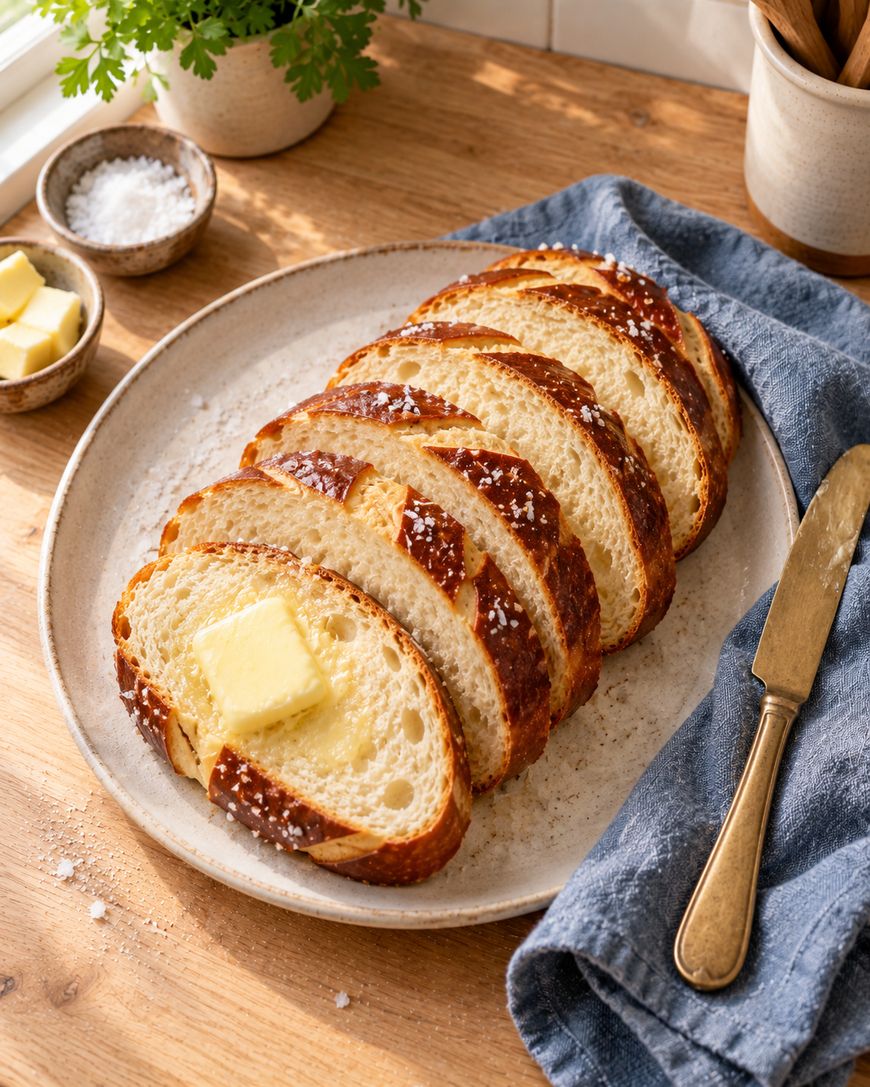
Pretzel bread earns its signature flavor and dark mahogany crust from a quick dip in a baking soda bath before baking. That simple step is what separates a soft pretzel from an ordinary dinner roll, and you can recreate it at home with ingredients already sitting in your kitchen.
This loaf works beautifully for sandwiches, for tearing apart next to a bowl of soup, or for slicing thick and serving warm with butter. The dough comes together with basic bread-baking staples, so you do not need any specialty flour or hard-to-find ingredients.
Once you understand the rhythm of mixing, rising, shaping, boiling and baking, this pretzel bread becomes a recipe you will want to keep in regular rotation.
What Makes the Crust So Distinctive
The alkaline bath is the heart of pretzel bread. Dipping shaped dough into a simmering baking soda and water solution for a short time changes the surface starches on the dough, which is what creates that deep brown color and slightly chewy, almost lacquered crust once it bakes.
Traditional pretzel bakeries use food-grade lye for this step, but a baking soda bath gives home bakers a safe and reliable way to get a similar effect without any special handling. You will notice the color forming almost immediately in the oven, well before the interior of the loaf has finished baking through.
The Dough Itself
The dough for this pretzel bread is a lean, yeasted dough enriched with just a touch of butter and brown sugar, which keeps the crumb tender while still allowing the crust to turn properly chewy.

Bread flour gives the dough enough structure to hold its shape through the boiling step, so all-purpose flour can work in a pinch but will produce a slightly softer loaf. Kneading develops the gluten network that traps gas from the yeast, giving you that classic open, chewy crumb once the loaf is sliced.
How to Make Pretzel Bread Step by Step
Making pretzel bread at home breaks down into five stages: mixing the dough, letting it rise, shaping it, giving it a quick baking soda bath, and baking it until deeply golden. Each stage is simple on its own, and none of them require special equipment beyond a large pot and a baking sheet.

Mixing and Kneading the Dough
Start by dissolving active dry yeast in warm water with a spoonful of brown sugar, then let it sit until it turns foamy on top. This tells you the yeast is active and ready to work, which matters more for pretzel bread than for many other loaves since the dough needs a strong rise to survive the boiling step later.
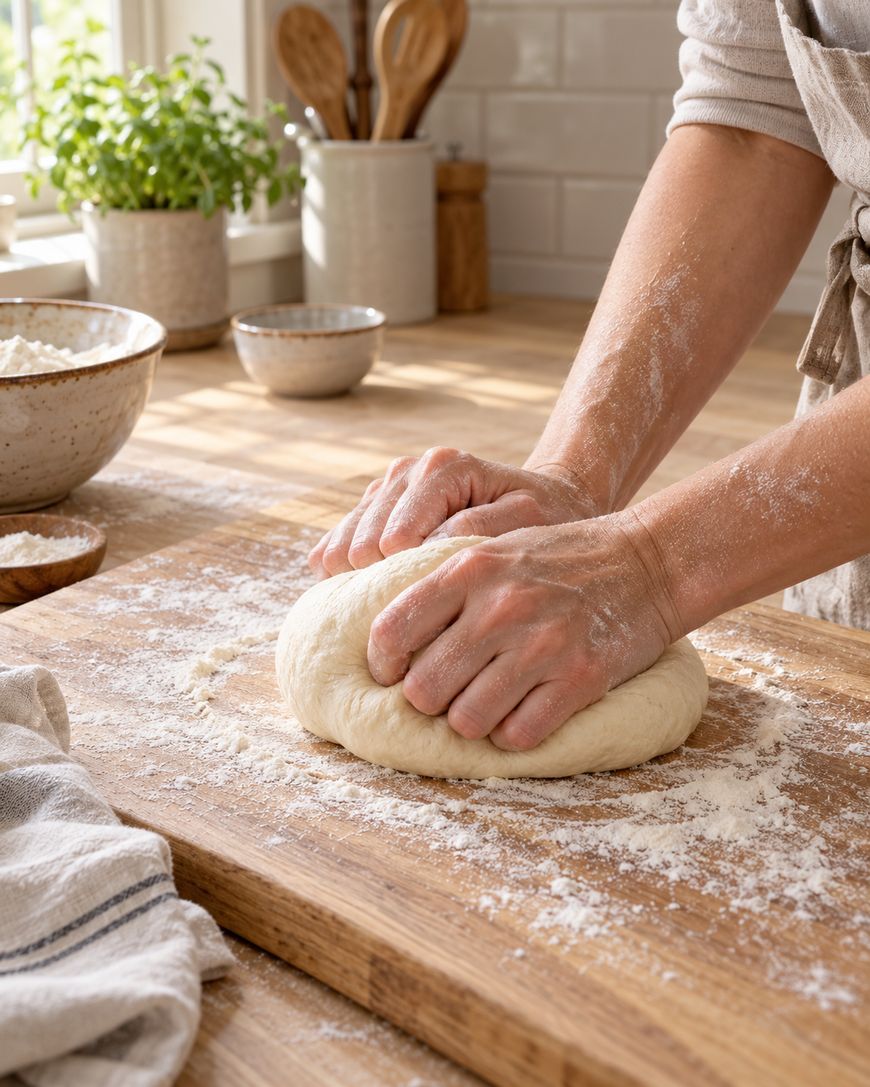
Stir in melted butter, salt and bread flour, then knead the dough on a floured surface until it turns smooth and elastic. The dough should feel slightly tacky but should not stick heavily to your hands once kneading is finished.
Letting the Dough Rise
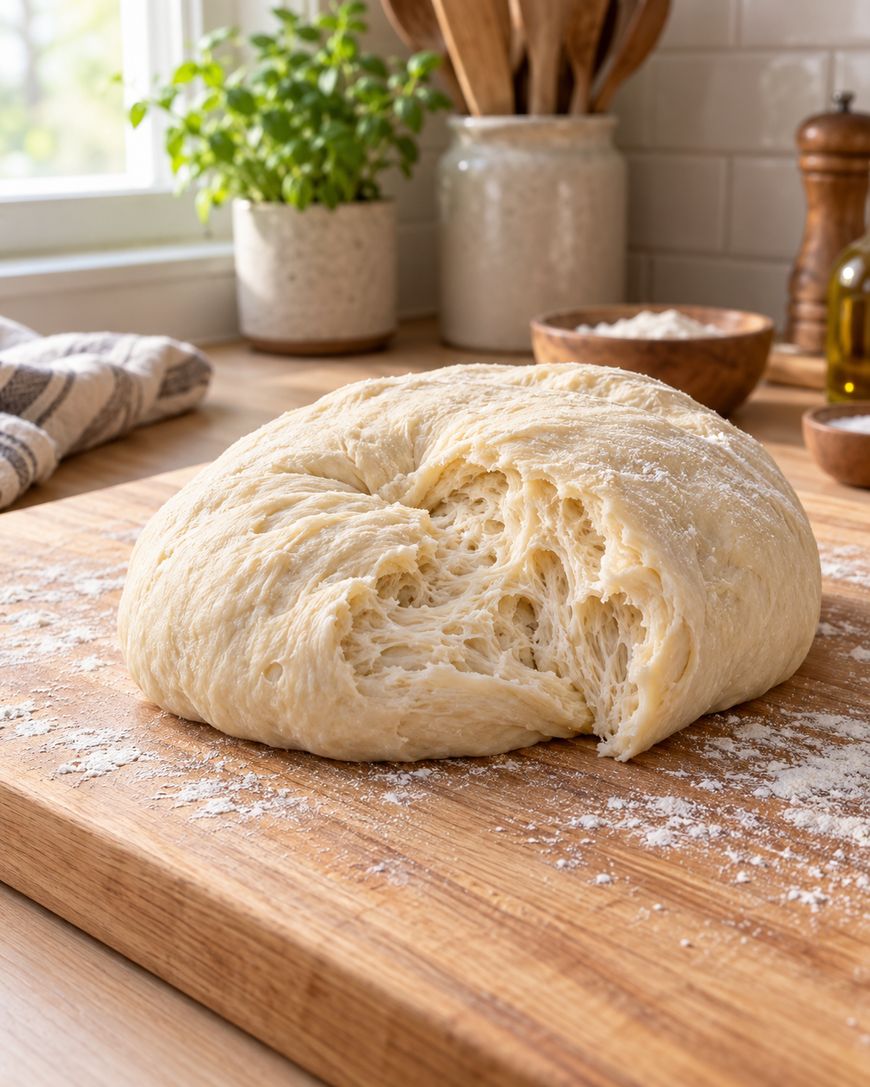
Place the kneaded dough in a lightly oiled bowl, cover it, and let it rise in a warm spot until it has roughly doubled in size. A warm kitchen corner or the inside of an unheated oven with the light on both work well for this.
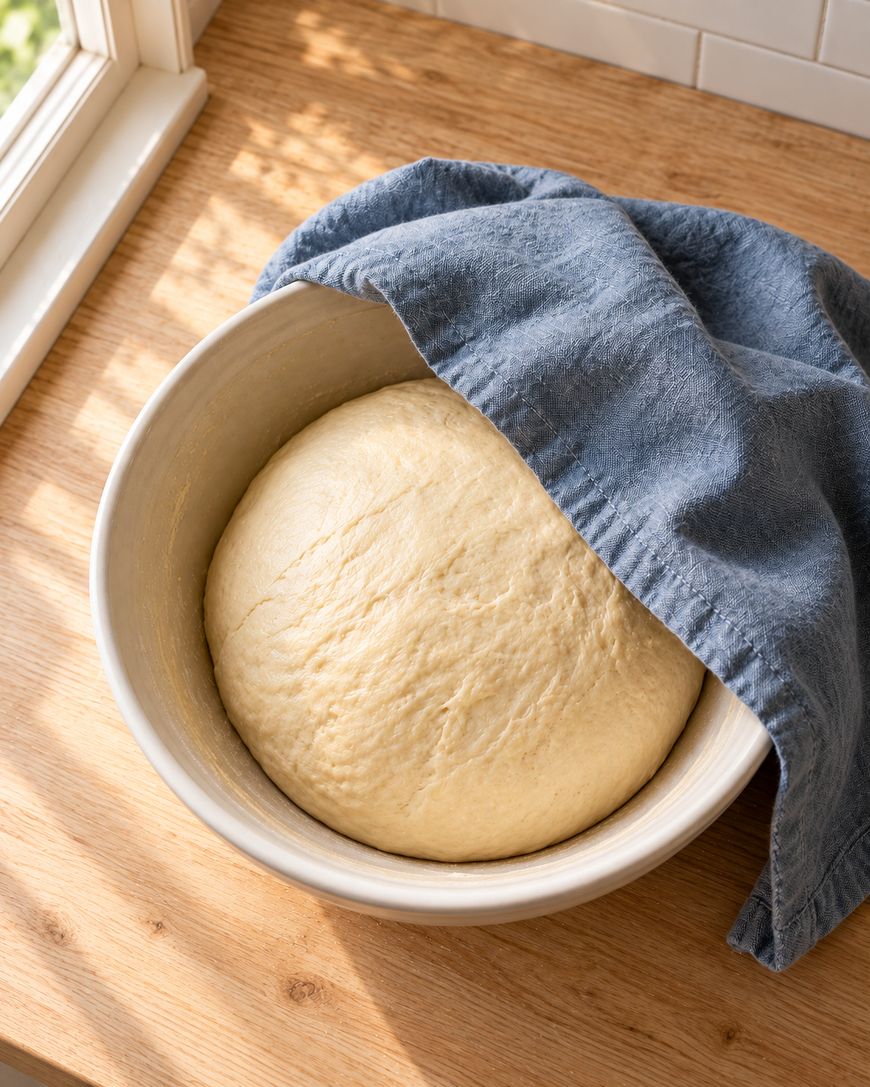
Resist the urge to rush this step, since a fully risen dough is what gives the finished pretzel bread its light, chewy interior rather than a dense one.
Shaping the Loaves
Once risen, punch down the dough gently and divide it into the number of loaves or rolls you want to bake. Shape each portion into a tight, smooth ball or an oval loaf by tucking the edges underneath, which builds surface tension and helps the bread hold its shape during boiling.
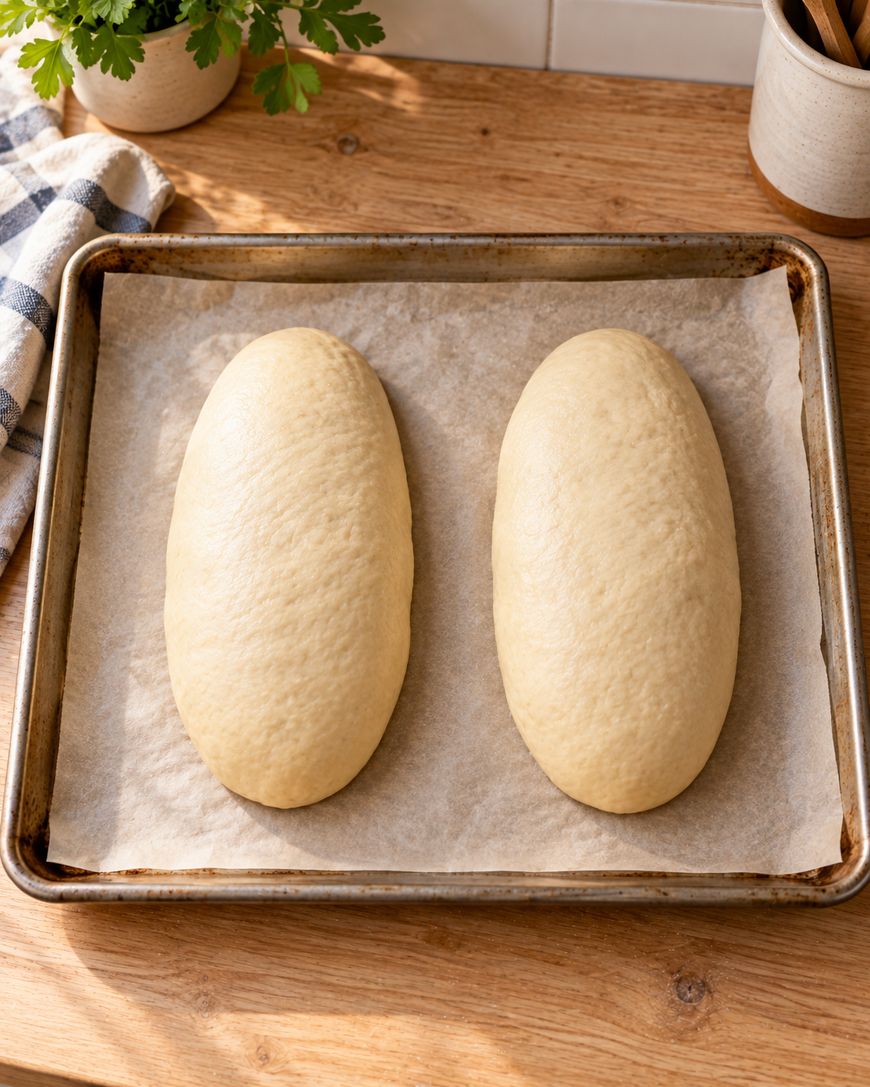
Let the shaped dough rest briefly on a floured surface while you bring the baking soda bath to a simmer.
The Baking Soda Bath
Bring a large pot of water to a gentle boil, then stir in baking soda until it dissolves. Lower each shaped loaf into the simmering water for about 30 seconds per side, then lift it out with a slotted spoon or spider and set it directly on a parchment-lined baking sheet.

Work in batches if your pot is small, since crowding the loaves in the water keeps them from dipping evenly.
Scoring and Baking
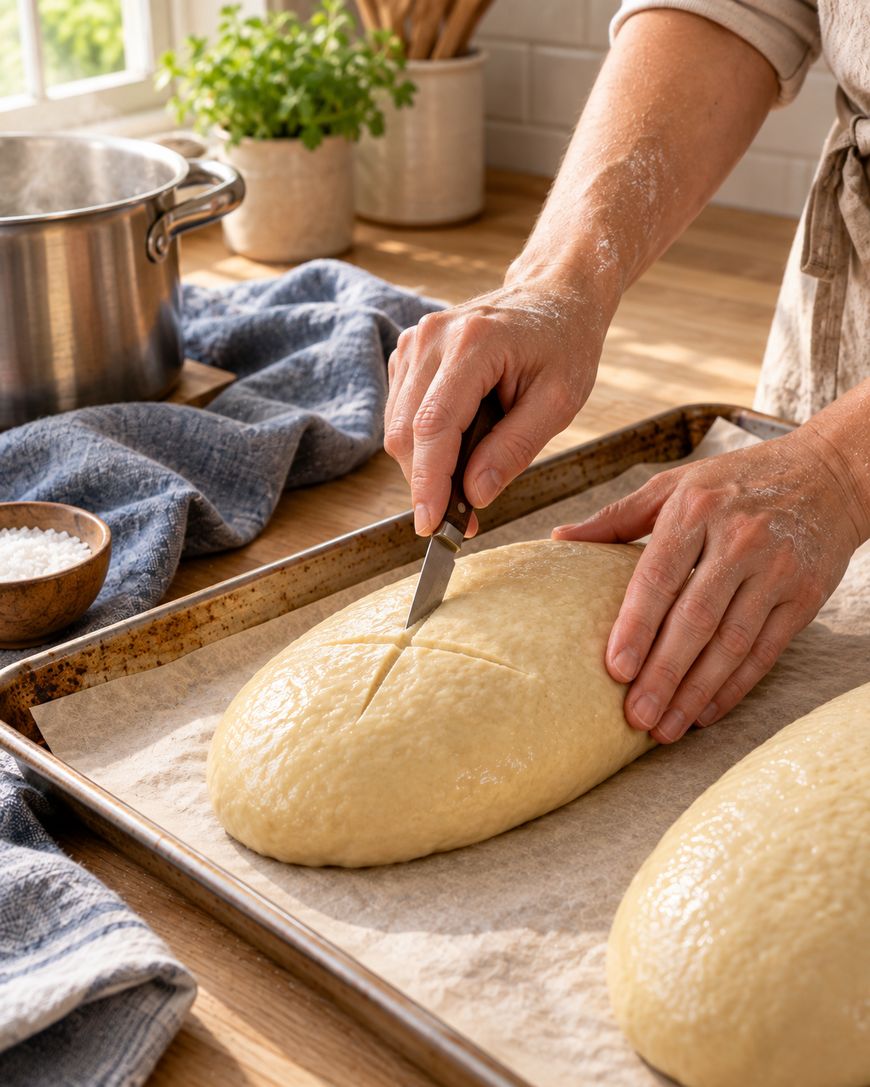
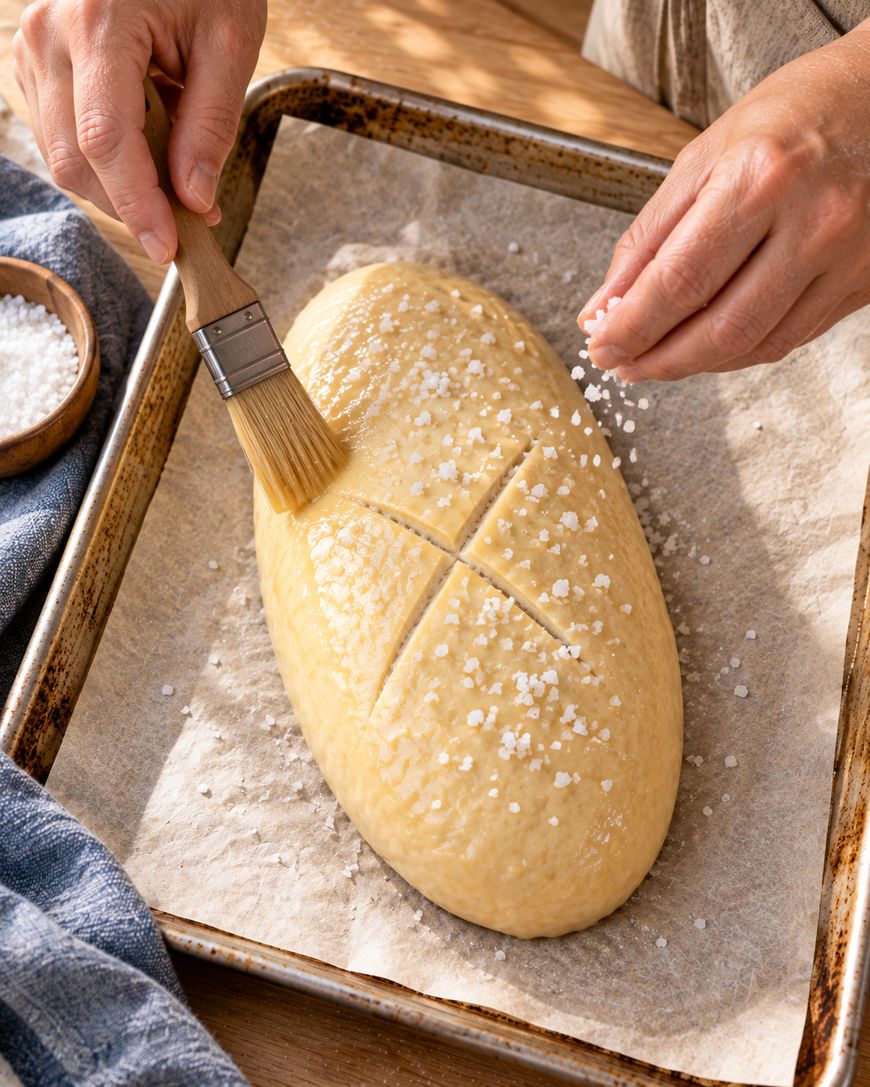
Once all the loaves have had their bath, use a sharp knife or a razor blade to score a shallow X or a few diagonal slashes across the top of each one. This scoring lets the bread expand predictably in the oven instead of splitting open along a random seam.
Brush each loaf with a beaten egg wash, then sprinkle the tops with coarse pretzel salt while the egg wash is still wet, since this is what helps the salt stick.
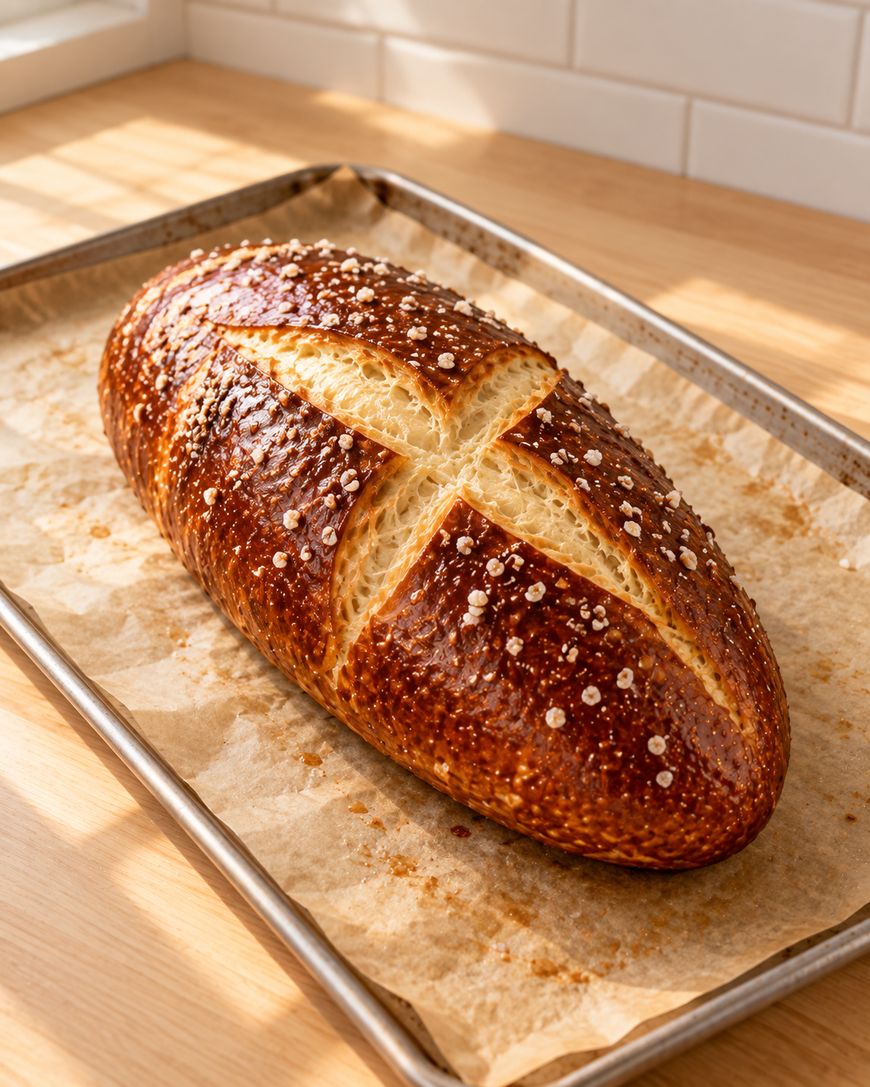
Bake in a hot oven until the loaves turn a deep golden brown and sound hollow when tapped on the bottom.
Variations and Substitutions
Pretzel bread welcomes plenty of variation once you have the base method down.
Shaping Options
You can shape this dough into a single large boule, several smaller sandwich-sized rolls, or classic pretzel knots for individual servings. Smaller shapes need less time in both the baking soda bath and the oven, so keep an eye on color rather than relying on the exact same timing across different shapes.
Flavor Add-Ins
Folding shredded cheddar or a handful of everything bagel seasoning into the dough before shaping gives this pretzel bread a different personality without changing the core technique. A light brush of melted butter right after baking adds shine and a touch of extra flavor to the finished crust.
Ingredient Swaps
Whole wheat flour can replace up to half of the bread flour for a heartier loaf, though the crumb will be slightly denser as a result. If you do not have active dry yeast on hand, instant yeast works as a direct substitute and can be mixed straight into the dry ingredients instead of being proofed in water first.
Storage and Make-Ahead Tips
Pretzel bread is best the day it is baked, but it keeps well for a few days when stored properly.
Once the loaves have cooled completely, store them in an airtight container or a resealable bag at room temperature for up to 3 days.
For longer storage, wrap cooled loaves tightly in plastic wrap and freeze for up to 2 months, then thaw at room temperature before reheating.
To refresh day-old pretzel bread, warm it in a low oven for a few minutes, which brings back a bit of the crisp crust without drying out the crumb.
You will find the recipe card below with the full ingredient list and step-by-step instructions.
Soft Pretzel Bread
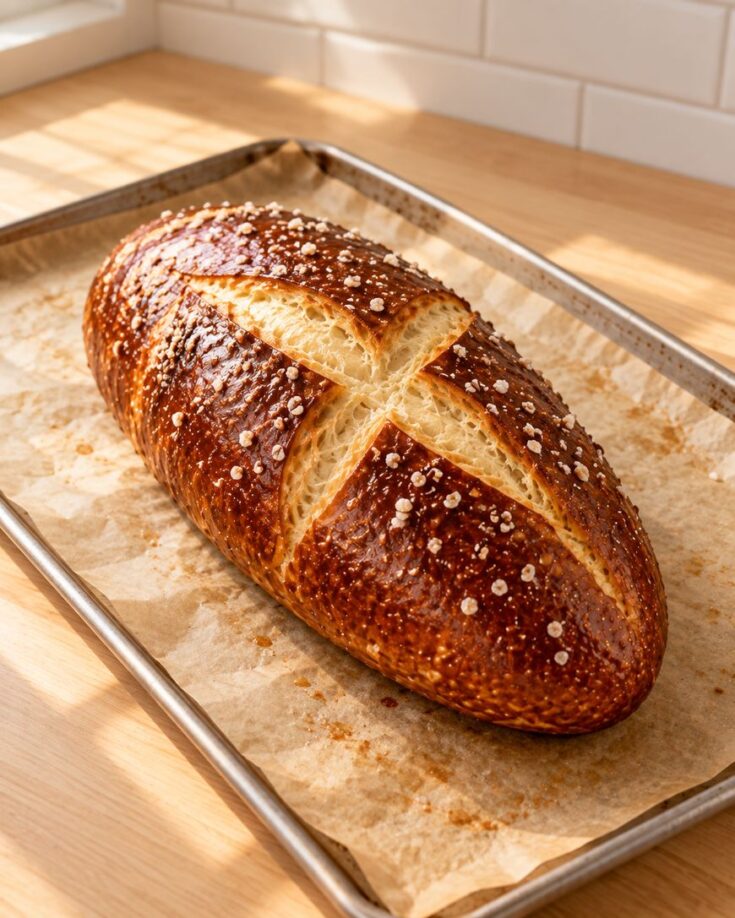
A chewy, deeply golden pretzel bread with a soft interior, made with a quick baking soda bath for that signature bakery pretzel flavor and color.
Ingredients
- 1 1/2 cups warm water (110 degrees F)
- 2 1/4 teaspoons active dry yeast (1 standard packet)
- 1 tablespoon brown sugar
- 3 3/4 cups bread flour
- 2 tablespoons unsalted butter, melted
- 2 teaspoons fine salt
- 10 cups water
- 2/3 cup baking soda
- 1 large egg, beaten, for egg wash
- Coarse pretzel salt, for topping
Instructions
- In a large bowl, dissolve the yeast and brown sugar in the warm water and let sit for 5 to 10 minutes, until foamy.
- Stir in the melted butter, fine salt and bread flour, then knead on a floured surface for about 8 minutes, until smooth and elastic.
- Place the dough in a lightly oiled bowl, cover, and let rise in a warm spot for 60 minutes, or until doubled in size.
- Punch down the dough and divide it into 2 equal portions, shaping each into a tight, smooth oval loaf.
- Let the shaped loaves rest for 10 minutes while you bring the 10 cups of water to a boil in a large pot.
- Preheat the oven to 425 degrees F and line a baking sheet with parchment paper.
- Stir the baking soda into the boiling water until dissolved, then lower the boil to a gentle simmer.
- Simmer each loaf in the baking soda bath for 30 seconds per side, then lift out with a slotted spoon and place on the prepared baking sheet.
- Score a shallow X across the top of each loaf with a sharp knife.
- Brush each loaf with the beaten egg wash and sprinkle generously with coarse pretzel salt.
- Bake for 22 to 25 minutes, until deeply golden brown and hollow-sounding when tapped on the bottom.
- Cool on a wire rack for at least 15 minutes before slicing.
Notes
Store cooled pretzel bread in an airtight container at room temperature for up to 3 days. For longer storage, wrap tightly and freeze for up to 2 months, then thaw at room temperature before reheating. Reheat in a low oven around 300 degrees F for 5 to 7 minutes to refresh the crust.
Nutrition Information:
Yield:
8Serving Size:
1 slice (1/8 of recipe)Amount Per Serving: Calories: 210Total Fat: 3gSaturated Fat: 1.5gSodium: 640mgCarbohydrates: 39gFiber: 1gSugar: 2gProtein: 6g
Pretzel Bread Questions Answered
Why is my pretzel bread not turning brown enough?
Your baking soda bath may not have been concentrated enough, or the loaves may not have spent enough time in the water. Make sure the water stays at a gentle boil and that each loaf gets a full 30 seconds per side before moving to the baking sheet.
Can you make pretzel bread without a baking soda bath?
You can skip the bath, but the loaf will taste and look more like a standard dinner roll rather than true pretzel bread. The bath is what creates the signature chewy crust and deep color, so it is worth the extra few minutes for an authentic result.
Why did my pretzel bread turn out dense?
A dense loaf usually means the dough did not rise fully before shaping, or the yeast was not fully active when you started. Give the first rise plenty of time in a warm spot and confirm your yeast foams properly before mixing it into the dough.
Can you make pretzel bread ahead of time?
You can shape the loaves a day ahead and keep them covered in the refrigerator overnight before boiling and baking the next day. Let the shaped dough come closer to room temperature before its baking soda bath so it bakes evenly.
What is the best way to reheat pretzel bread?
A low oven works better than a microwave, since it warms the bread through without turning the crust soft or chewy in the wrong way. Five to seven minutes at a low temperature is usually enough to refresh a day-old loaf.
Do you need special flour for pretzel bread?
Bread flour is recommended because its higher protein content helps the dough hold shape through the boiling step. All-purpose flour will still work if that is what you have, though the finished texture will be a touch softer.
Why This Recipe Works
The baking soda bath is doing real chemistry, not just tradition for tradition’s sake. Briefly simmering the shaped dough in an alkaline solution raises the pH of the surface, which changes how those starches brown in the oven and produces the deep color and distinctive chew that separate pretzel bread from an ordinary roll.
Using bread flour rather than all-purpose flour gives the dough enough gluten strength to survive that boiling step without deflating, which keeps the finished crumb open and chewy instead of dense.
Scoring the tops before baking controls exactly where the loaves expand, so you get a clean, attractive rise instead of an uneven split along the side.
Together, these small technique choices are what make this pretzel bread taste like it came from a proper bakery rather than a home kitchen experiment.
Bring Bakery-Style Pretzel Bread to Your Own Kitchen
This pretzel bread recipe gives you everything you need to recreate that chewy, golden bakery loaf at home with pantry staples and one simple extra step. Once you try the baking soda bath for yourself, you will see just how much it transforms a basic bread dough into something special.
Give this pretzel bread a try this week and use the recipe card above to keep every step and measurement handy while you bake.