Last updated: October 5, 2026
You are about to get 12 Puerto Rican recipes that bring bold sofrito flavor, comforting rice dishes, and crave-worthy desserts straight to your table.
Every recipe below uses ingredients you can find at any regular grocery store.
Let’s get cooking.
The 12 Puerto Rican Recipes
These are the dishes that show up again and again in Puerto Rican homes, from Sunday dinners to holiday tables.
We picked recipes that balance tradition with weeknight practicality, so you can make them even on a busy Tuesday.
- Arroz con Gandules (rice with pigeon peas)
- Pernil (slow roasted pork shoulder)
- Mofongo (mashed fried plantains)
- Pollo Guisado (Puerto Rican chicken stew)
- Alcapurrias (stuffed fritters)
- Tostones (twice fried plantains)
- Sofrito (the flavor base for almost everything)
- Pasteles (masa pockets wrapped in banana leaves)
- Habichuelas Guisadas (stewed beans)
- Bacalaitos (codfish fritters)
- Tembleque (coconut pudding)
- Coquito (coconut eggnog)
Each one leans on a shared set of building blocks, so once your pantry is stocked, you can rotate through this whole list with ease.
Building Your Puerto Rican Pantry
Sofrito is the flavor backbone of Puerto Rican cooking, and you will use it in nearly every savory recipe on this list.

It’s a blended mix of onion, garlic, bell pepper, cubanelle pepper, culantro, and cilantro.
You can make a big batch and freeze it in ice cube trays, so you always have some ready to drop into a pot.
Adobo seasoning, sazon with achiote, and bay leaves round out the flavor profile you will see repeated throughout these recipes.
Plantains, both green and ripe, show up constantly too, so keep a few of each on your counter at different stages of ripeness.
Arroz con Gandules
This rice and pigeon pea dish is often called the unofficial national dish of Puerto Rico.
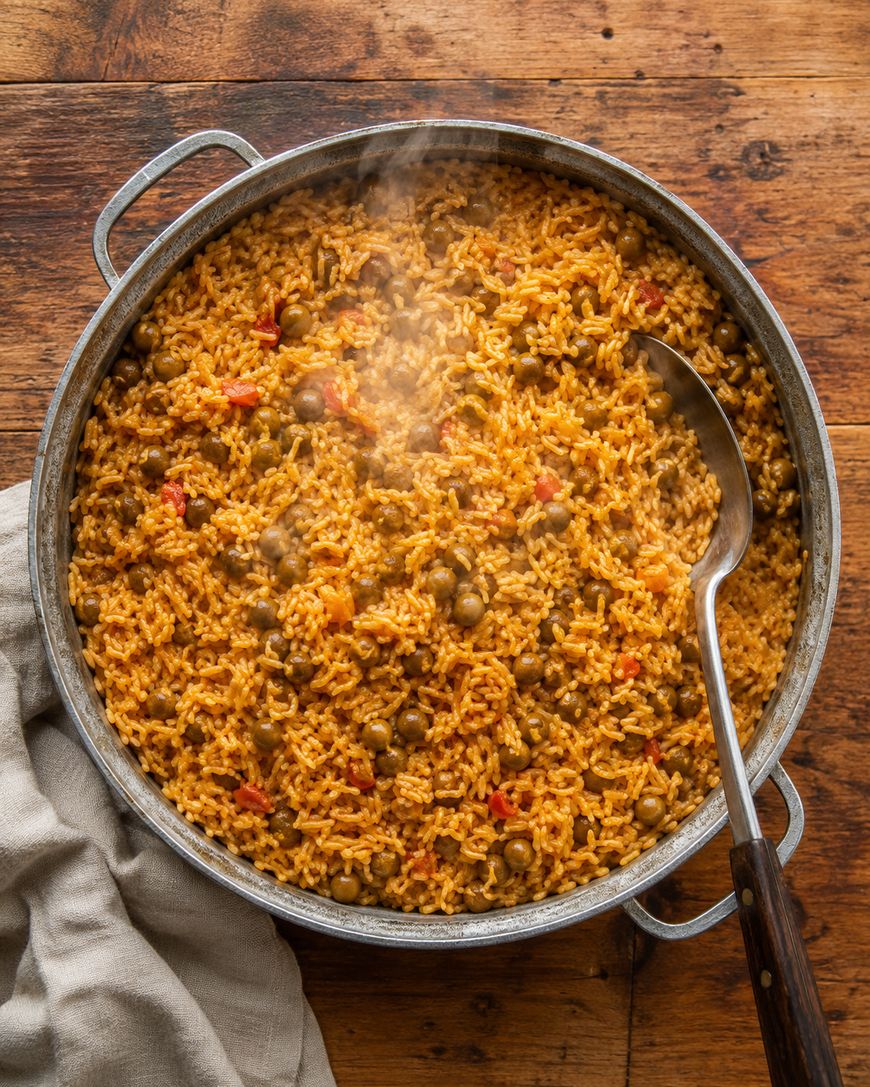
It shows up at nearly every holiday table, and once you taste it, you will understand why.
Ingredients:
- 2 cups medium grain rice
- 1 can pigeon peas, drained
- 3 tablespoons sofrito
- 2 tablespoons tomato sauce
- 1 packet sazon with achiote
- 3 cups chicken broth
- 2 tablespoons olive oil
- 1 cup diced ham or salt pork (optional)
Steps:
- Heat oil in a caldero or heavy pot over medium heat.
- Add sofrito and cook until fragrant, about 3 minutes.
- Stir in tomato sauce, sazon, and pigeon peas, cooking another 2 minutes.
- Add rice and stir to coat every grain.
- Pour in broth, bring to a boil, then reduce heat to low.
- Cover and cook 20 minutes without lifting the lid.
- Fluff and serve warm.
Pernil
Pernil is a slow roasted pork shoulder marinated overnight in garlic, oregano, and citrus.
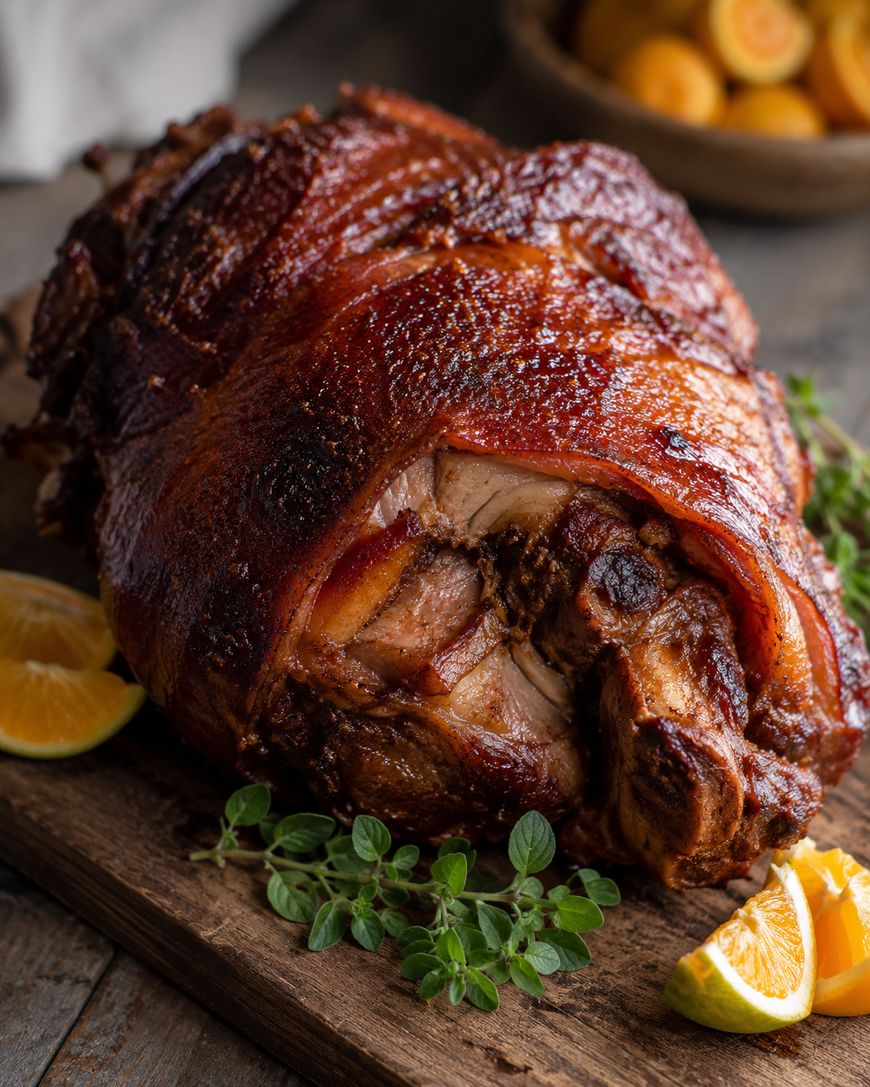
The skin crisps into a shattering crust while the meat underneath falls apart with a fork.
You will want to start marinating this the night before you plan to serve it.
Rub the pork generously with mashed garlic, adobo, oregano, and a splash of vinegar, then let it rest in the fridge overnight.
Roast low and slow, around 325 degrees, for several hours until the internal temperature hits 190 degrees.
Rest the meat before shredding, and save the crispy skin, known as cuerito, for anyone at the table who claims it first.
Mofongo
Mofongo is made from green plantains that are fried, then mashed with garlic, olive oil, and chicharron in a wooden pilon.
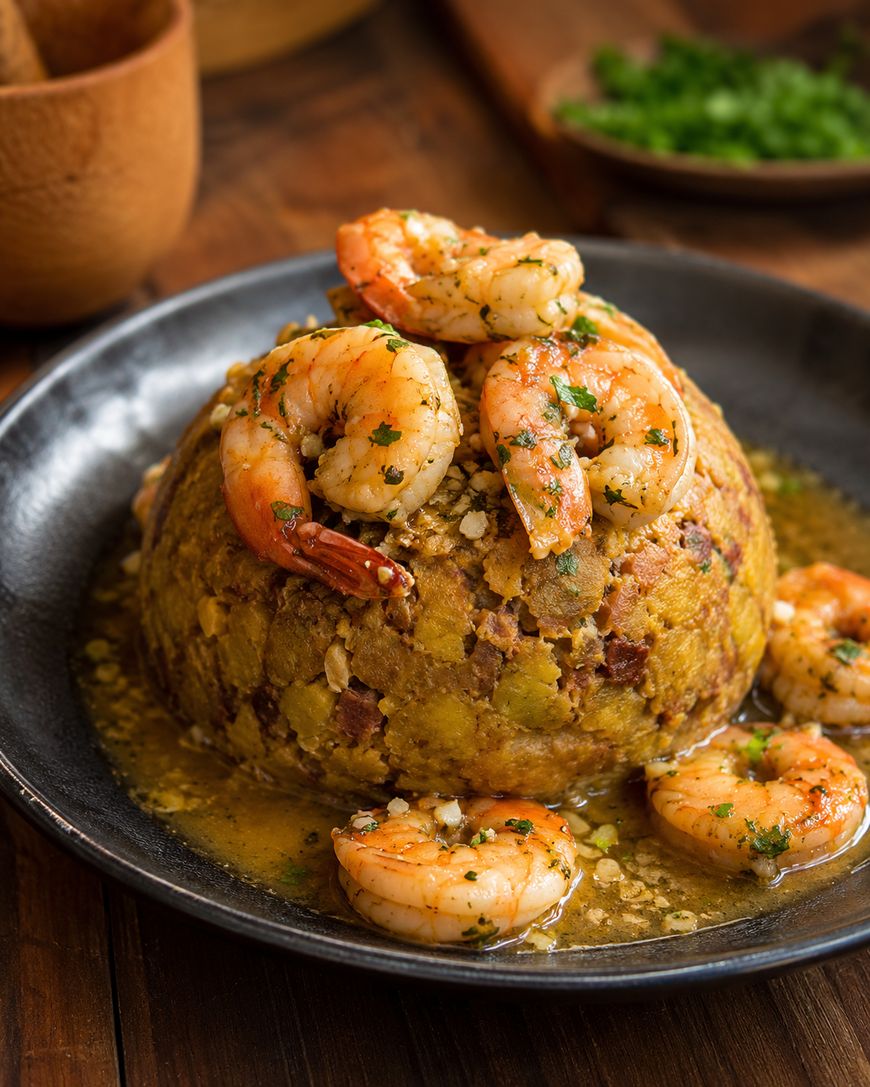
The result is a dense, savory mound that pairs beautifully with garlic shrimp or a rich broth poured over the top.
Fry sliced green plantains until golden, then mash them while still warm with garlic and oil so everything binds together.
Shape the mash into a dome, and serve it immediately while it still holds its heat.
Many families top mofongo with a chicken or shrimp broth called caldo, which softens the plantain as you eat.
Pollo Guisado
This chicken stew simmers in a tomato based sauce built on sofrito, olives, and potatoes.

It is the kind of dish that tastes even better the next day, once the flavors have had time to settle.
Brown seasoned chicken thighs, then set them aside while you build the sauce with sofrito, tomato sauce, and sazon.
Return the chicken to the pot along with potatoes, olives, and a bit of broth, then let everything simmer until the potatoes are tender.
Serve it over white rice so the sauce has somewhere to pool.
Tostones
Tostones are twice fried green plantain slices, smashed flat between fryings for maximum crunch.
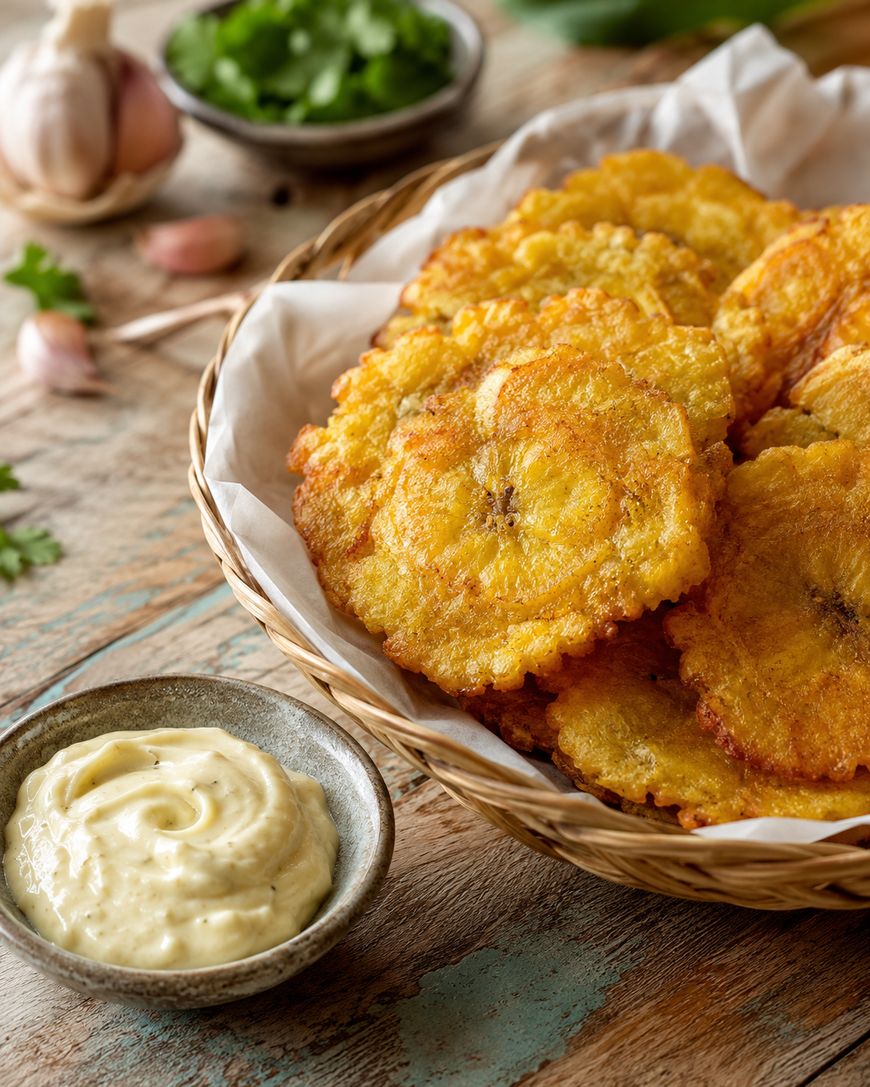
They work as a side dish, an appetizer, or a vehicle for garlic mayo dipping sauce.
Slice green plantains into one inch rounds and fry them briefly until just softened.
Smash each piece flat with the bottom of a cup or a tostonera, then fry again until golden and crisp.
Salt them the moment they come out of the oil so the seasoning sticks.
Alcapurrias
Alcapurrias are fritters made from a green banana and plantain dough, stuffed with seasoned ground beef and deep fried until dark golden brown.
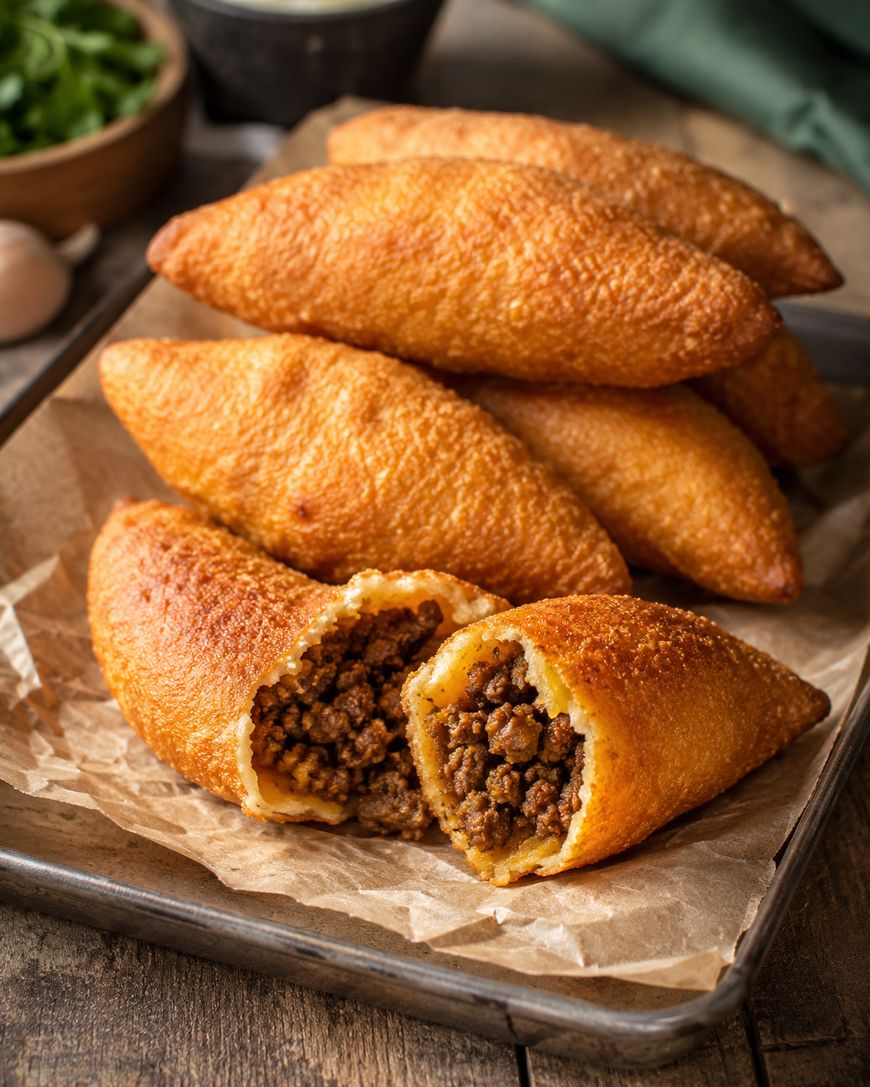
The dough gets its distinctive color from a bit of achiote oil mixed into the batter.
Grate green bananas and green plantains together, then season the mixture with a touch of salt and adobo.
Fill each portion with picadillo, a savory ground beef filling made with sofrito, olives, and raisins.
Shape the fritters into elongated ovals and fry them slowly so the inside cooks through before the outside darkens too much.
Sofrito, Revisited
We covered sofrito earlier, but it deserves its own spotlight since it touches nearly every dish on this list.
Blend onion, garlic, cubanelle peppers, culantro, cilantro, and a touch of tomato until you reach a chunky paste.
Cook a few tablespoons in oil at the start of almost any savory recipe, and you will instantly recognize the aroma as distinctly Puerto Rican.
Freezing sofrito in small portions means you always have a shortcut to authentic flavor, even on nights when cooking from scratch feels like too much.
Pasteles
Pasteles are savory masa pockets made from grated green banana, plantain, and squash, filled with seasoned pork, then wrapped in banana leaves and boiled.
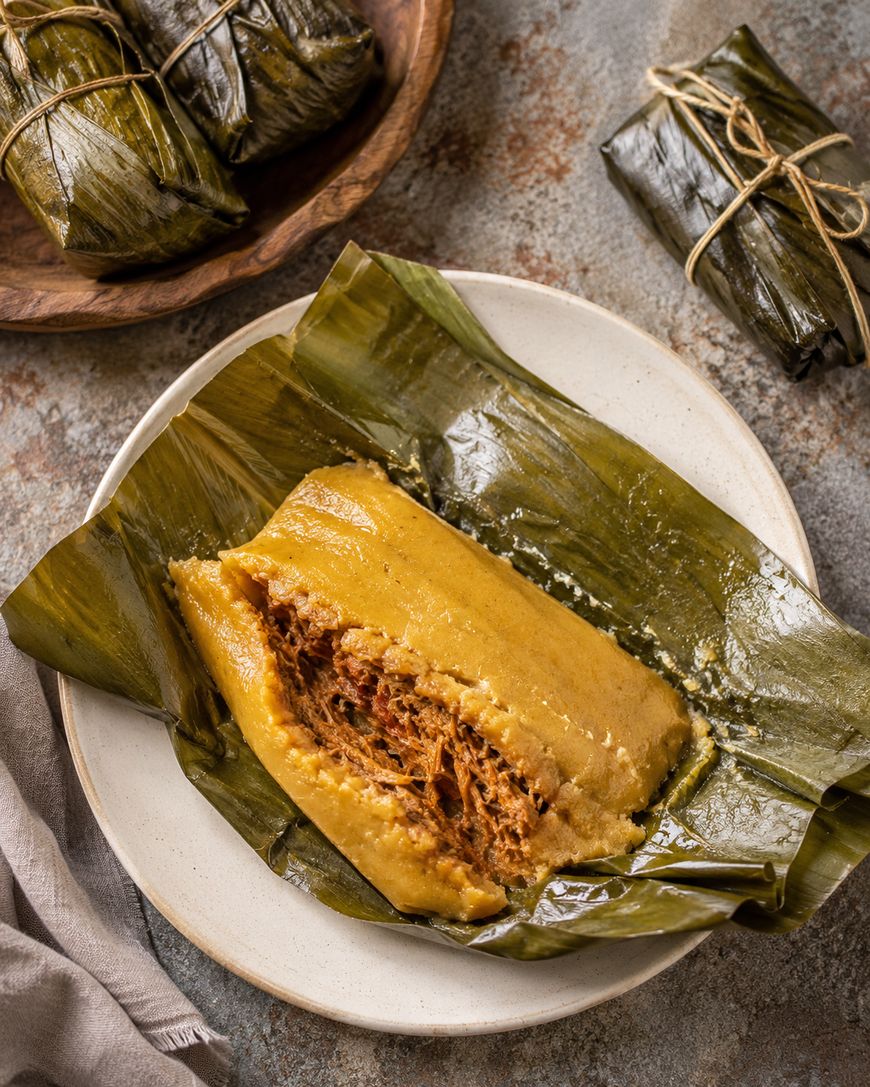
They take real effort to assemble, which is why families often make them together during the holiday season.
The masa gets its warm color from achiote oil, while the filling mirrors the same picadillo used in alcapurrias.
Each pastel is tied into a neat banana leaf package before it goes into a pot of simmering water for about an hour.
Unwrapping a pastel at the table is part of the tradition, so serve them still wrapped and let everyone open their own.
Habichuelas Guisadas
This stewed bean dish is the everyday companion to arroz con gandules, showing up on Puerto Rican tables far more often than any other side.
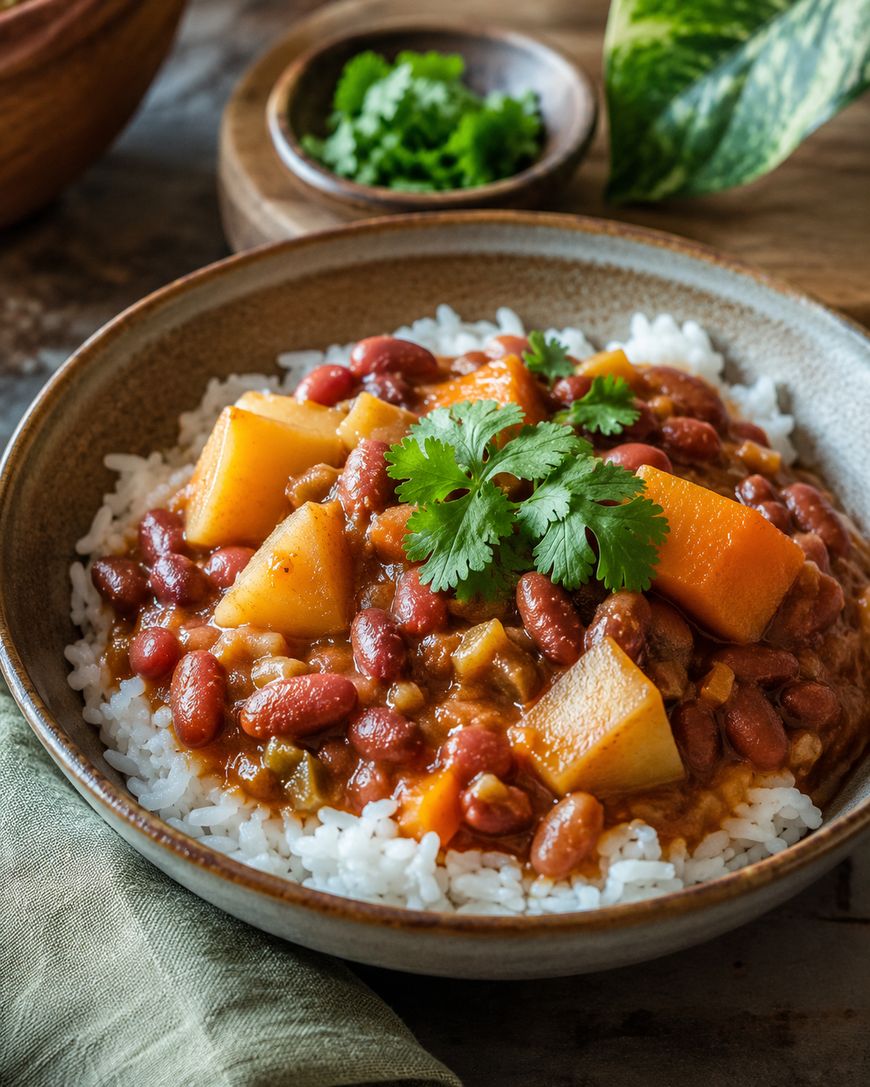
Pink beans simmer in a sofrito based sauce with potatoes, calabaza squash, and a bit of tomato sauce.
Saute your sofrito first, then add the beans along with their liquid, potatoes, and squash.
Let everything simmer until the potatoes soften and the sauce thickens slightly, which usually takes about 20 minutes.
Ladle the beans generously over white rice for a simple, satisfying weeknight dinner.
Bacalaitos
Bacalaitos are crispy codfish fritters made from a thin batter studded with flaked salt cod and fresh herbs.
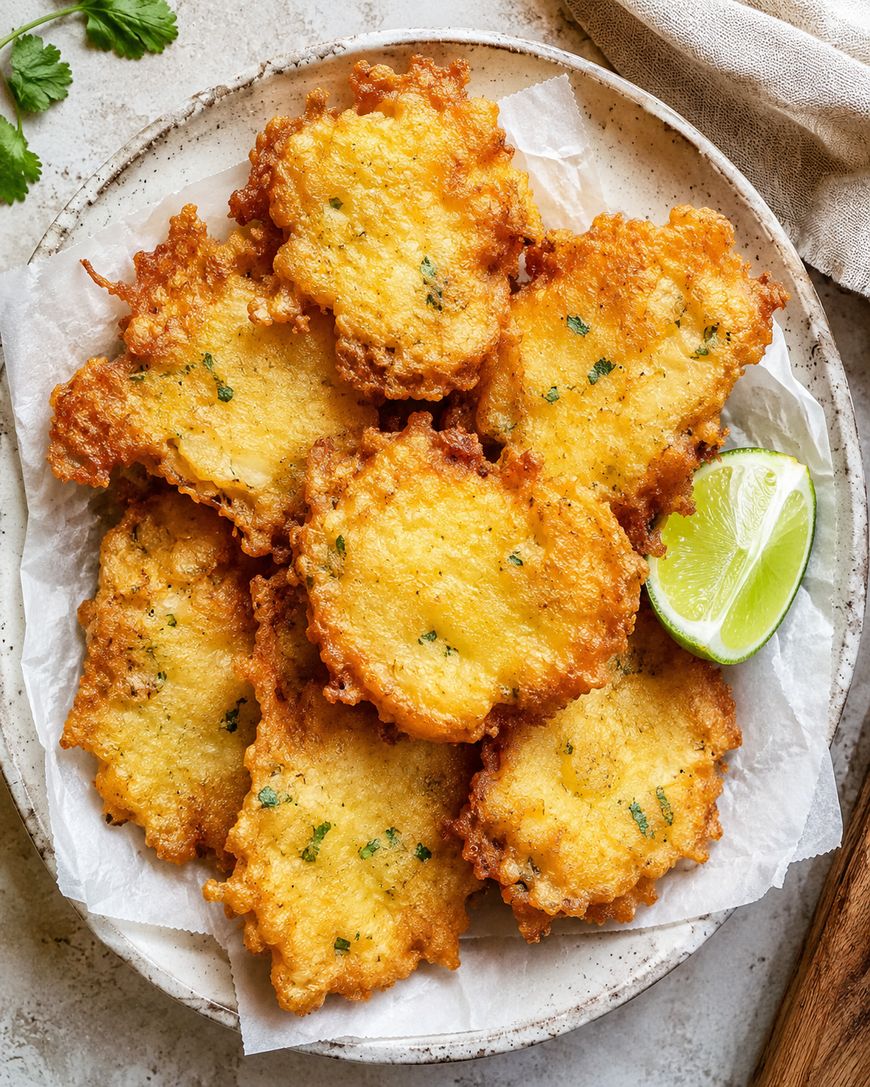
Street vendors across Puerto Rico serve these hot and fresh, often as a beachside snack.
Soak salt cod overnight to remove excess salt, then flake it finely once it has softened.
Mix the cod into a thin batter with flour, water, and sofrito, then ladle spoonfuls into hot oil.
Fry until the edges turn lacy and golden, then drain briefly before serving them piping hot.
Tembleque
Tembleque is a silky coconut pudding that gets its name from the gentle wobble it holds once it sets.
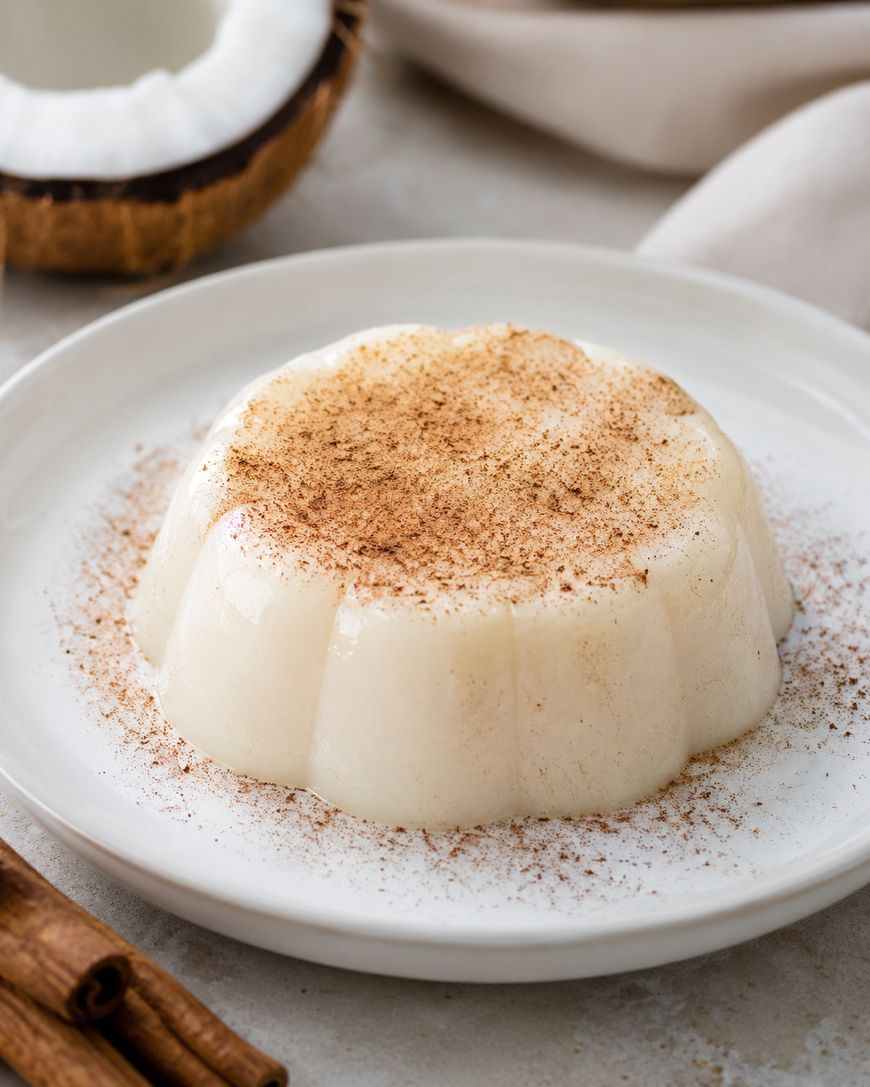
It is a popular dessert around the holidays, often dusted with a bit of cinnamon on top.
Whisk coconut milk, cornstarch, sugar, and a pinch of salt together over medium heat until the mixture thickens into a smooth custard.
Pour it into a mold and refrigerate for at least two hours until fully set.
Unmold onto a plate and dust with cinnamon right before serving for a cool, creamy finish to any meal.
Coquito
Coquito is Puerto Rico’s answer to eggnog, blending coconut milk, condensed milk, and rum into a rich, spiced holiday drink.

Families often have their own closely guarded recipe passed down for generations.
Blend coconut milk, coconut cream, condensed milk, and evaporated milk with cinnamon, cloves, and a generous pour of rum.
Chill the mixture for several hours so the flavors meld before serving.
Pour into small glasses and top with a sprinkle of cinnamon for a festive finishing touch.
Frequently Asked Questions
What is the most popular Puerto Rican dish?
Arroz con gandules is widely considered the most iconic Puerto Rican dish, especially around the holidays.
Pernil often shares the spotlight, since the two are traditionally served together at big family gatherings.
Is Puerto Rican food spicy?
Puerto Rican food generally leans savory and herbal rather than spicy, relying on sofrito, adobo, and sazon for flavor.
You can always add hot sauce on the side if you want extra heat.
What is the difference between mofongo and tostones?
Tostones are simple fried and smashed plantain rounds, while mofongo is mashed with garlic, oil, and chicharron into a dense mound.
Mofongo is typically served as a main dish component, while tostones function more like a side or appetizer.
Can I make these recipes without sofrito?
Sofrito is what gives these dishes their signature flavor, so we recommend making or buying a batch before you start.
Store bought sofrito works well in a pinch, though homemade tends to taste fresher and brighter.
How long does pernil take to cook?
A bone in pork shoulder typically needs 5 to 7 hours at a low oven temperature, depending on its size.
Plan for roughly 45 minutes per pound, and use a meat thermometer to confirm it has reached 190 degrees before resting.
What should I serve with these dishes?
Rice and beans are the classic pairing for almost anything on this list, especially arroz con gandules and habichuelas guisadas.
A simple avocado salad or fried plantains rounds out the meal nicely.
Bring These Recipes to Your Table
You now have 12 Puerto Rican recipes ready to bring bold, comforting flavor into your kitchen.
Start with sofrito and arroz con gandules, then work your way through pernil, mofongo, and tostones as your confidence grows.
Pick one recipe from this list and make it this week, then let us know which dish becomes your new favorite.