Last updated: November 5, 2026
Pumpkin custard is a baked, spoonable dessert that tastes like pumpkin pie filling without the crust, and you can have six ramekins in the oven after about 15 minutes of prep. Use the recipe card below for the full ingredient list and steps, or keep reading for every tip that makes the texture silky.

How to Make Pumpkin Custard Step by Step
You make pumpkin custard by warming cream and milk, whisking them into a spiced pumpkin and egg base, straining it into ramekins, and baking it in a hot water bath at 325°F for 40 to 45 minutes. After a chill of at least 4 hours, it spoons out smooth, creamy, and set.
Ingredients You Need
You need 1 cup of canned 100% pure pumpkin puree, 3 large eggs, 1 large egg yolk, 1/2 cup of packed light brown sugar, 1 cup of heavy cream, and 3/4 cup of whole milk. You also need 1 teaspoon of vanilla extract, 1 teaspoon of ground cinnamon, 1/2 teaspoon of ground ginger, 1/4 teaspoon of ground nutmeg, 1/8 teaspoon of ground cloves, and 1/4 teaspoon of fine salt.
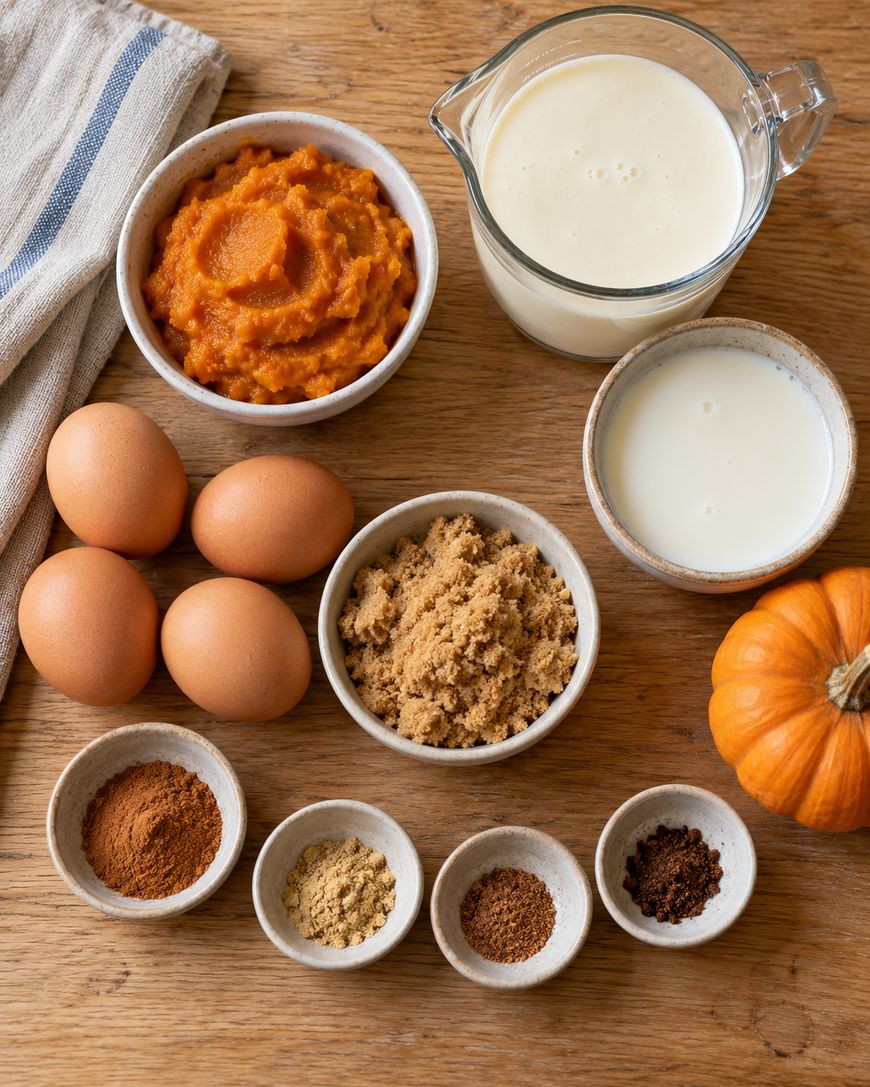
Choose plain pumpkin puree, such as Libby’s or Farmer’s Market organic, and never pumpkin pie filling. Pie filling already contains sugar and spices, which throws off the balance of the custard.
You also need six 6-ounce ceramic ramekins, a 9×13-inch baking dish, and a fine-mesh sieve. Boil about 4 cups of water in a kettle before you start so the water bath is ready when the custards are.
Warm the Cream and Milk
Pour the heavy cream and whole milk into a medium saucepan and warm it over medium-low heat for about 4 minutes. You want steam rising from the surface and tiny bubbles at the edge, but never a full boil.

Heating the dairy first helps the brown sugar dissolve once the two mixtures meet and gives the custard a head start, so it sets evenly in the oven. Heat the oven to 325°F while the pan warms, with a rack in the center position.
Mix the Pumpkin Base
In a large bowl, whisk the pumpkin puree, brown sugar, cinnamon, ginger, nutmeg, cloves, and salt until the mixture looks smooth and glossy. Add the 3 whole eggs and the extra yolk and whisk just until combined, without beating in a lot of air.
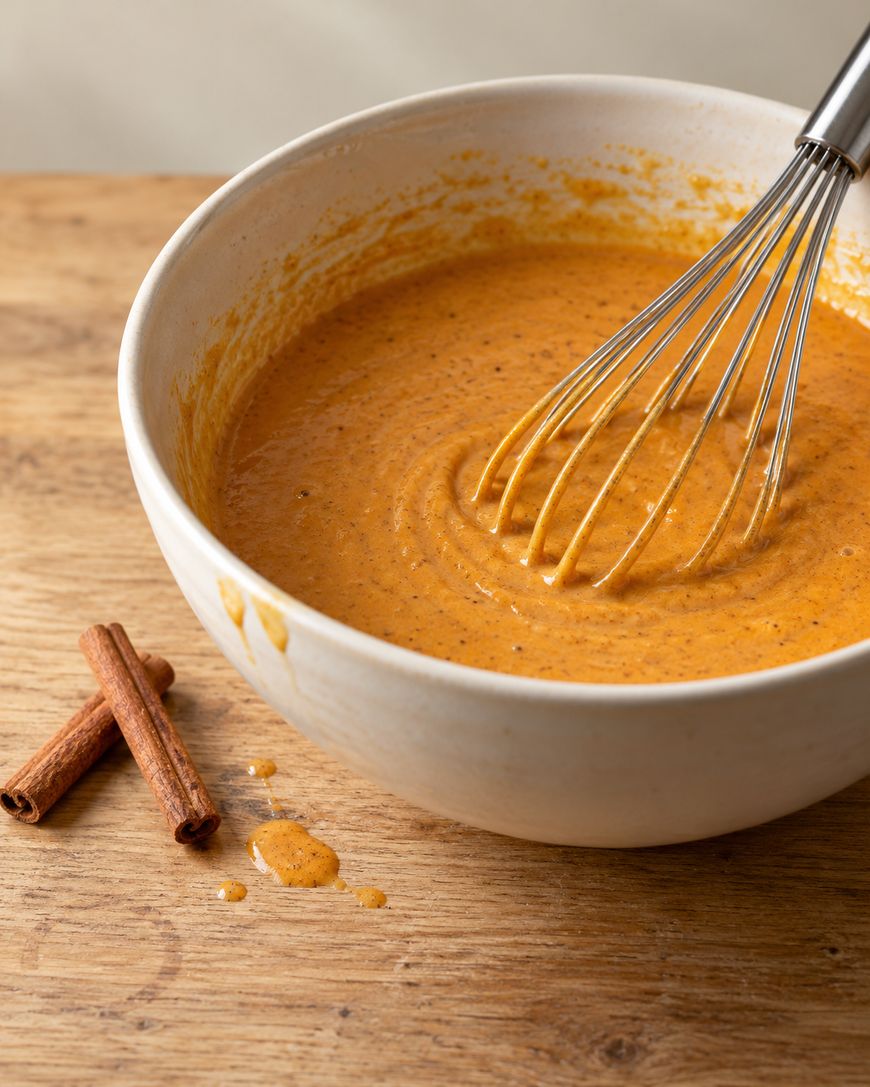
Air bubbles rise to the top during baking and leave a pitted, spongy surface. A gentle whisk keeps the finished custard smooth.
Temper, Strain, and Fill the Ramekins
Slowly pour the warm cream mixture into the pumpkin base in a thin stream while you whisk constantly, then stir in the vanilla. Pouring slowly warms the eggs gradually so they never scramble.

Pour the mixture through a fine-mesh sieve into a spouted measuring jug, and skim off any foam with a spoon. Place the six ramekins in the baking dish and divide the custard among them, filling each one to about 1/4 inch below the rim.

Set Up the Water Bath
Slide the baking dish onto the oven rack, then pour the hot water into the dish until it reaches halfway up the sides of the ramekins. Pouring the water after the dish is on the rack means you never have to carry a sloshing pan across the kitchen.
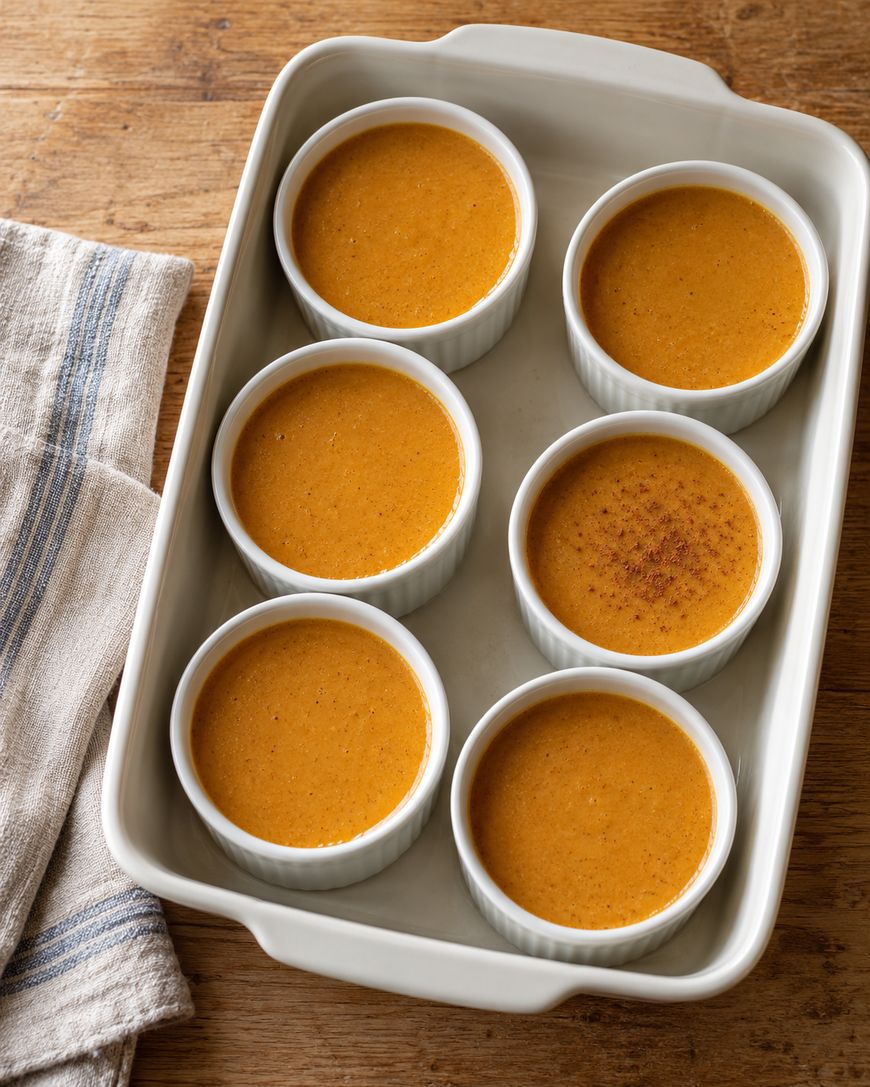
The water bath keeps the temperature around the custards gentle and even. It is the single biggest reason pumpkin custard turns out creamy instead of rubbery.

Bake Until Just Set
Bake for 40 to 45 minutes, until the edges are set and the centers jiggle slightly like gelatin when you nudge the dish. An instant-read thermometer in the center of a custard should read at least 160°F, which is the minimum the USDA Food Safety and Inspection Service (FSIS) lists for egg dishes.
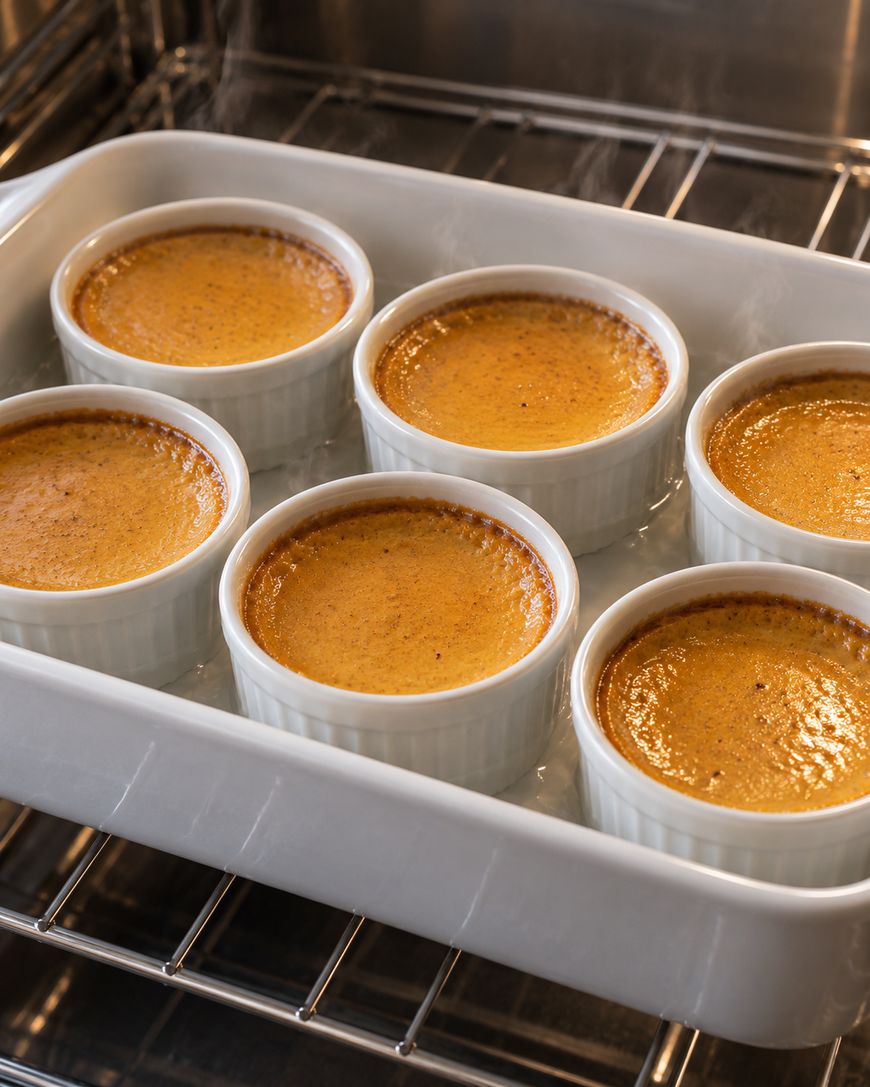
The centers will keep firming as they cool, so do not wait for them to stop moving completely. A custard that looks fully firm in the oven will be dry and grainy once it chills.
Cool and Chill
Lift each ramekin out of the water bath with tongs and set it on a wire rack for 30 minutes. Cover the ramekins with plastic wrap or foil, then refrigerate them for at least 4 hours before serving.
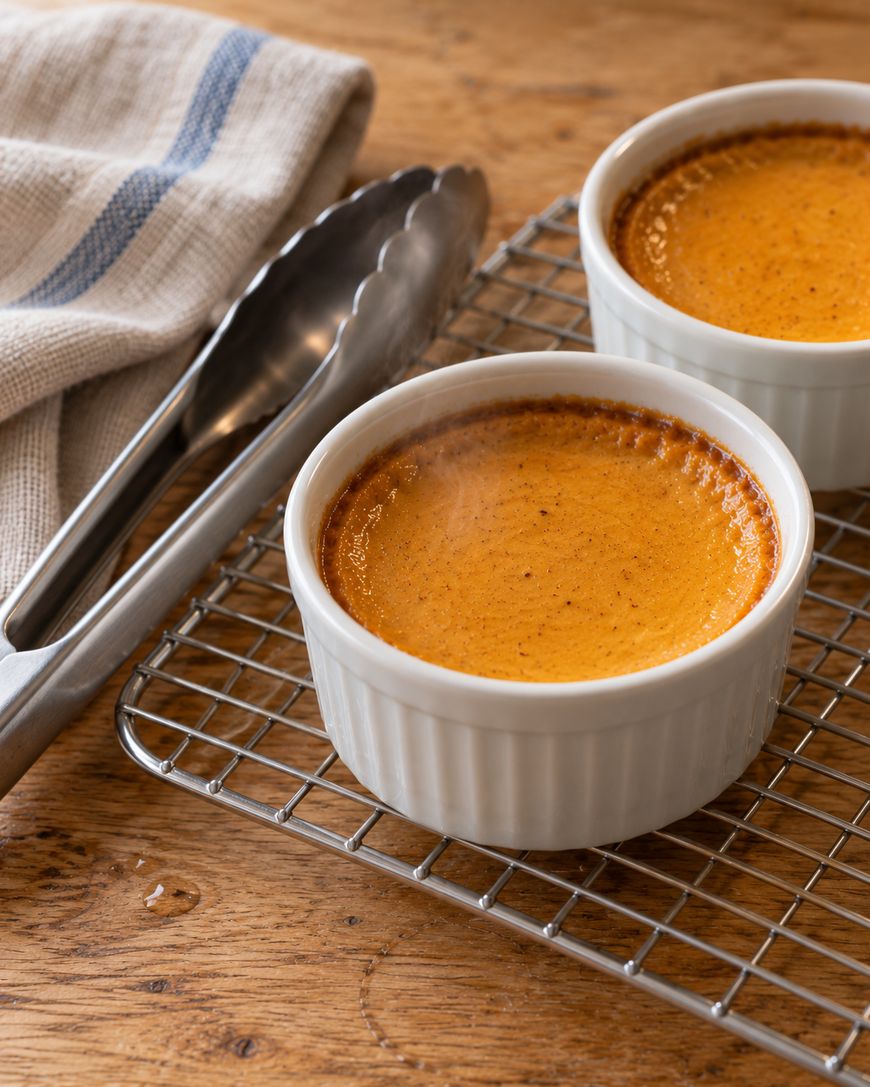
Chilling gives the custard its clean, creamy spoonability and lets the spices deepen. Make sure the custards are in the refrigerator within 2 hours of coming out of the oven, in line with USDA guidance on perishable foods.
Tips for the Silkiest Pumpkin Custard
The best pumpkin custard comes from three habits: straining the mixture, baking it gently in a water bath, and pulling it from the oven while the centers still jiggle. Each one protects the egg proteins from tightening too much, which is what causes weeping, cracks, and a grainy texture.
Why Straining Matters
Even a well-whisked mixture contains tiny strands of egg white and bits of fibrous pumpkin. Pressing it through a fine-mesh sieve removes them and gives you a custard with no lumps or streaks.
It takes 1 minute and makes a visible difference. Skip it only if your puree is exceptionally smooth and you whisked very gently.
Pull It While the Center Still Jiggles
Overbaked custard looks puffed at the edges, then sinks and develops tiny holes as it cools. Check at 40 minutes, and if the middle is still liquid rather than wobbly, give it another 2 to 3 minutes.
Ovens run hot or cool, so trust the jiggle and your thermometer over the clock. If you bake two batches back to back, let the oven return to 325°F before the second dish goes in.
Use Hot Water in the Bath
Starting with hot water keeps the oven temperature steady and helps the custards cook at the same pace. Cold water slows the bake and can leave the centers underdone while the edges overcook.
If the baking dish sits too close to the oven wall, rotate it halfway through. Do this gently so the water does not splash into the ramekins.
Pumpkin Custard Variations and Substitutions
Pumpkin custard is flexible when it comes to spices, sweeteners, and toppings, as long as the amount of egg and liquid stays the same. Keep the ratios on the recipe card and play with flavor instead.

Spice Swaps
If you prefer a single jar, replace the cinnamon, ginger, nutmeg, and cloves with about 2 teaspoons of pumpkin pie spice. The flavor will be nearly identical and you only dirty one measuring spoon.
For a deeper, warmer custard, add a pinch of ground cardamom. The card leaves this out, so treat it as optional.
Sugar and Dairy Swaps
Granulated sugar works in place of brown sugar in the same amount, though you lose a little of the caramel flavor. The custard also stays a touch lighter in color.
Heavy cream and whole milk are what give this custard its body. Lower-fat dairy will still set, but the texture turns thinner and less rich.
Toppings Worth Adding
A spoonful of lightly sweetened whipped cream is the classic finish, and a dusting of cinnamon on top makes the custard look bakery-ready. Toasted pecans, a drizzle of salted caramel sauce, or crushed gingersnap cookies add crunch.

Add toppings right before serving so they stay crisp. Wet toppings will soak into the surface if they sit for hours.
How to Store and Make Ahead Pumpkin Custard
Cover and refrigerate leftover pumpkin custard for up to 3 days. Because this is an egg dessert, get it into the refrigerator within 2 hours of baking, as USDA guidance recommends for perishable foods.
Make-Ahead Plan
Pumpkin custard is one of the easiest desserts to prepare a day before a gathering. Bake it the day before, cool it, cover it, and leave it in the refrigerator until dessert.
Take the ramekins out about 10 minutes before serving if you like the flavor a little less cold. Add the whipped cream and toppings at the last minute.
Freezing
We do not recommend freezing pumpkin custard. Frozen custard separates as it thaws and turns watery and grainy.
A Short History of Pumpkin Custard
Pumpkin custard sits between two long traditions: European baked custards and early American pumpkin cooking. Cooks in France and England have baked eggs, milk, and sugar into creamy desserts for centuries, as in crème caramel and the old English baked custard.
Food historians often point out that early American cooks baked pumpkin with milk, eggs, and spices long before pumpkin pie became the standard Thanksgiving dessert. Pumpkin custard is a close relative of both, and it skips the crust so the filling takes center stage.
Today it is popular because it feels special but asks very little of you. A single mixing bowl, a saucepan, and a handful of ramekins are all it takes.
Ready to bake? Use the recipe card below for the exact amounts, times, and nutrition details.

Pumpkin Custard
Silky baked pumpkin custard made with warm fall spices, cream, and eggs. Bake it in a water bath, chill it, and serve it with whipped cream.
Ingredients
- 1 cup canned 100% pure pumpkin puree
- 3 large eggs
- 1 large egg yolk
- 1/2 cup packed light brown sugar
- 1 cup heavy cream
- 3/4 cup whole milk
- 1 teaspoon vanilla extract
- 1 teaspoon ground cinnamon
- 1/2 teaspoon ground ginger
- 1/4 teaspoon ground nutmeg
- 1/8 teaspoon ground cloves
- 1/4 teaspoon fine salt
- Whipped cream, for serving
Instructions
- Heat the oven to 325°F with a rack in the center. Boil about 4 cups of water in a kettle. Place six 6-ounce ramekins in a 9x13-inch baking dish.
- Warm the heavy cream and whole milk in a medium saucepan over medium-low heat for about 4 minutes, until steaming with tiny bubbles at the edge. Do not let it boil.
- In a large bowl, whisk the pumpkin puree, brown sugar, cinnamon, ginger, nutmeg, cloves, and salt until smooth. Add the eggs and egg yolk and whisk gently until just combined.
- Slowly pour the warm cream mixture into the pumpkin mixture in a thin stream, whisking constantly. Stir in the vanilla extract.
- Pour the mixture through a fine-mesh sieve into a spouted measuring jug and skim off any foam.
- Divide the custard among the ramekins, filling each to about 1/4 inch below the rim.
- Slide the baking dish onto the oven rack, then pour the hot water into the dish until it reaches halfway up the sides of the ramekins.
- Bake for 40 to 45 minutes, until the edges are set, the centers jiggle slightly like gelatin, and an instant-read thermometer in the center reads at least 160°F.
- Lift the ramekins out of the water bath with tongs and cool on a wire rack for 30 minutes. Cover and refrigerate for at least 4 hours, within 2 hours of baking. Top with whipped cream before serving.
Notes
Egg dishes should reach at least 160°F per USDA FSIS. Use pure pumpkin puree, not pie filling. Refrigerate within 2 hours of baking and store covered for up to 3 days. Do not freeze. Granulated sugar can replace the brown sugar in the same amount, and about 2 teaspoons of pumpkin pie spice can replace the four ground spices. Cardamom is an optional extra that is not in the ingredient list.
Nutrition Information:
Yield:
6Serving Size:
1 custardAmount Per Serving: Calories: 285Total Fat: 19gSaturated Fat: 11gSodium: 160mgCarbohydrates: 24gFiber: 1gSugar: 22gProtein: 6g
Pumpkin Custard FAQs
Can you use pumpkin pie filling instead of puree?
No, because pumpkin pie filling already contains sugar and spices, so the custard would taste too sweet. Use canned 100% pure pumpkin puree.
Can you use fresh pumpkin puree?
Yes, as long as it is smooth and well drained. Watery homemade puree dilutes the custard, so blot it in a clean towel or cook it down until it matches the thickness of canned puree.
Do you really need a water bath for pumpkin custard?
Yes. The water bath protects the custards from direct oven heat, so they cook gently and stay creamy instead of curdling or cracking.
How do you know when pumpkin custard is done?
The edges should be set and the center should jiggle slightly like gelatin. A thermometer in the center should read at least 160°F, the FSIS minimum for egg dishes.
What can you bake pumpkin custard in without ramekins?
Oven-safe 6-ounce custard cups, small mason jars without lids, or ceramic teacups all work. Keep the sizes close to 6 ounces and check at 40 minutes.
Why This Pumpkin Custard Recipe Works
This pumpkin custard works because every step protects the eggs. Warm cream and milk are whisked in slowly so the eggs temper instead of scrambling, and straining removes anything that could turn the texture lumpy.
The water bath at 325°F then cooks the custards gently and evenly, which keeps them smooth rather than rubbery. Pulling them while the centers still jiggle lets carryover heat finish the job as they cool.
The ingredients do their own work too, with three whole eggs plus one extra yolk giving a rich, set custard and heavy cream and whole milk bringing body without heaviness.
Packed light brown sugar adds a hint of caramel that matches the cinnamon, ginger, nutmeg, and cloves.
Make This Pumpkin Custard Your New Fall Dessert
This pumpkin custard gives you all the cozy flavor of pumpkin pie in a make-ahead cup with a silky, crust-free texture. Strain the mixture, bake it in a water bath, and chill it for at least 4 hours.
Bake a batch this weekend, top it with whipped cream and a dusting of cinnamon, and see how fast the ramekins disappear. Save the recipe card to your favorite fall board so it is ready the next time you need an easy dessert.
Easy Flan Recipe With Silky Custard and Deep Amber Caramel That Unmolds Cleanly
Pumpkin Pie With a Silky, Crack-Free Filling You Can Make Ahead