Last updated: October 4, 2026
Roasted beets are the easiest way to turn earthy, firm roots into a sweet, tender side dish, and the recipe card below has every measurement you need.
Cut the beets into wedges, roast them at 425°F for 35 to 40 minutes, and finish with balsamic vinegar and honey.

What You Need to Make Roasted Beets
Roasted beets need only a handful of ingredients, and fresh beets are the star. Plan on 1 1/2 pounds, which is about four medium beets and makes four servings.
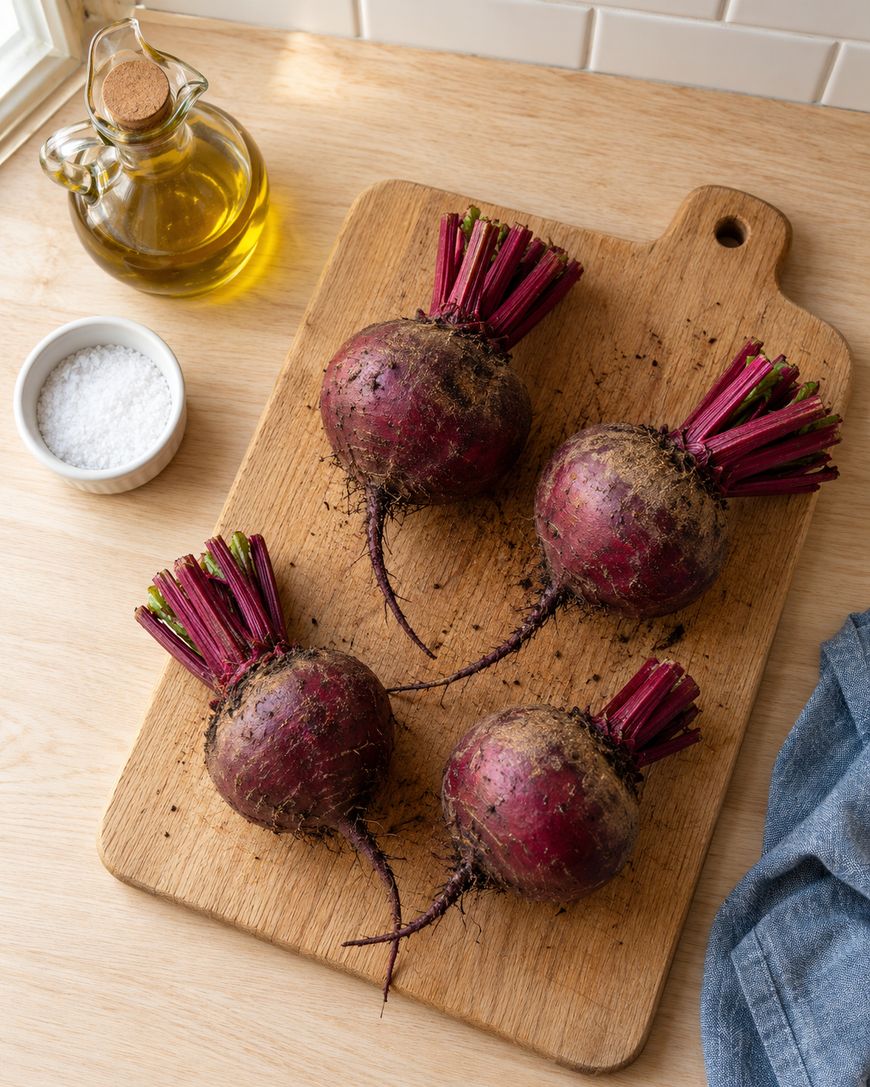
Choose beets that feel heavy for their size, with smooth skin and no soft spots. If the leafy tops are still attached, trim them off and save the greens for sautéing.
Olive oil carries the heat to the surface of each wedge and helps the edges brown. Two tablespoons coats the beets without leaving the pan greasy.
Kosher salt and black pepper do the seasoning, at 1/2 teaspoon and 1/4 teaspoon. Beets are naturally sweet, so a little salt makes the flavor taste fuller rather than saltier.
The finish is one tablespoon of balsamic vinegar whisked with one teaspoon of honey. The vinegar adds a tangy edge that keeps the sweetness from feeling flat.
Two toppings are optional. One tablespoon of fresh thyme leaves and two tablespoons of crumbled goat cheese turn a simple side into something worth serving to guests.
You also need one large rimmed baking sheet and parchment paper. Parchment keeps the sticky beet juices from baking onto the pan.
How to Make Roasted Beets Step by Step
The whole method takes about 50 minutes, and most of that is hands-off oven time. Each stage below builds on the one before it, so the beets brown evenly and finish tender.
Heat the Oven and Prep the Beets
Heat the oven to 425°F with a rack in the center position, then line the baking sheet with parchment. High heat is what caramelizes the natural sugars in beets instead of just steaming them.
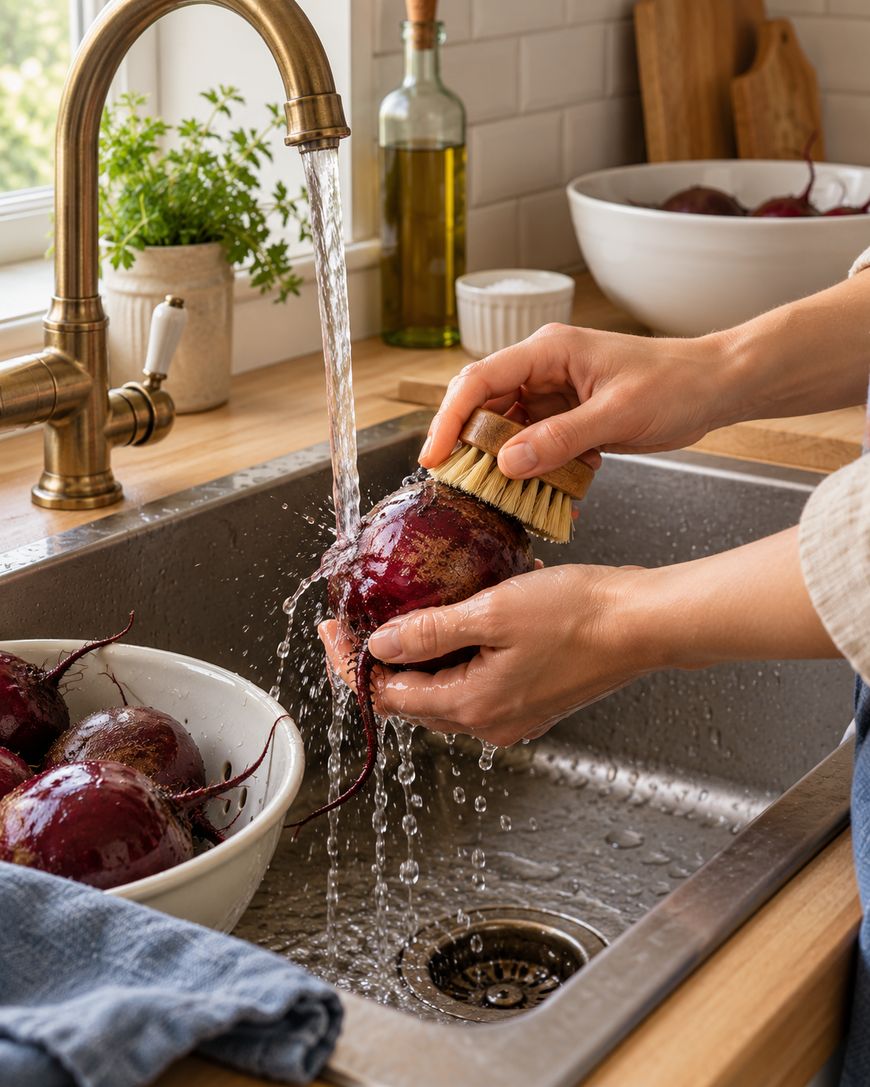
Scrub the beets under cool water and trim off the stems and the thin root tails. Peel them with a vegetable peeler, which takes about a minute per beet.
Cut the Beets into Even Wedges
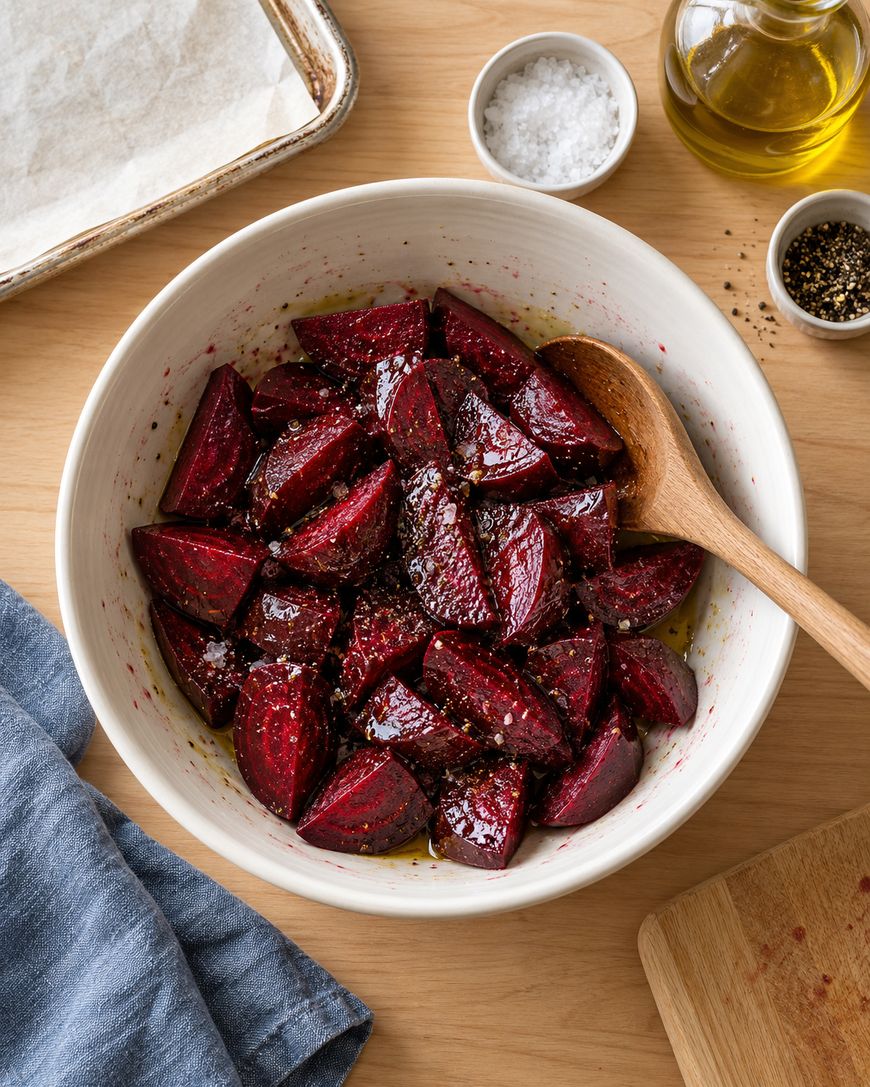
Cut each peeled beet into wedges about 1 inch thick. Larger beets may need to be halved first so the wedges stay a similar size.

Even pieces matter because small ones dry out while big ones stay firm in the center. Aim for wedges that look like thick apple slices.

Season and Spread
Pile the wedges on the baking sheet and drizzle with the olive oil. Sprinkle on the salt and pepper, then toss with your hands until every piece is glossy.
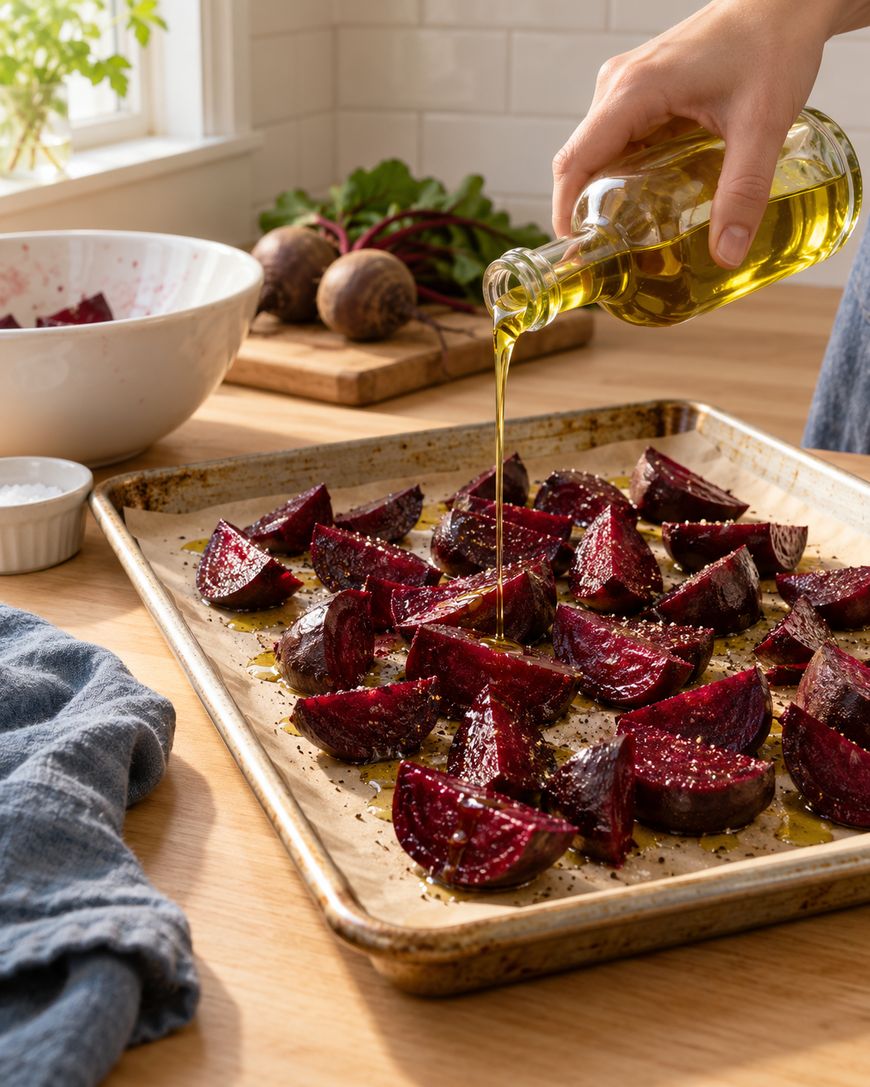
Spread the wedges into a single layer with a little space between them. Crowded beets steam in their own juices and turn soft instead of browned.

Roast and Flip
Slide the pan into the oven and roast for 35 to 40 minutes. Flip the wedges with a spatula halfway through so both sides pick up color.

The beets are done when a fork slides in with no resistance and the edges look browned and slightly wrinkled. Thicker wedges may need the full 40 minutes.
Add the Balsamic Honey Finish
Whisk the balsamic vinegar and honey together in a small bowl. Drizzle it over the hot beets right on the pan and toss to coat.

The warm beets soak up the glaze quickly, so the flavor goes all the way through. Scatter on the thyme and goat cheese if you are using them, then serve warm.
Tips for the Best Roasted Beets
The best roasted beets start with beets of similar size, because they cook at the same pace. If your bunch has one giant beet and a few small ones, cut the big one into smaller wedges.
Beet juice stains hands, cutting boards, and countertops. Wear disposable gloves while peeling and cutting, and rinse your board right away.
Do not skip the single layer. If you double the recipe, use two baking sheets instead of piling everything onto one.
Taste a wedge before you add the glaze. If your beets are especially sweet, the balsamic vinegar and honey will still balance them nicely, so there is no need to adjust the amounts on the card.
Use a metal spatula to flip the wedges, because it scrapes up the caramelized bits that stick to the parchment. Those browned edges are the best part of the pan.
Roasted Beets Variations and Substitutions
Golden beets and Chioggia beets roast the same way as red beets and use the same timing. Golden beets taste a little milder, and they will not stain your hands.

For a savory twist, swap the thyme for fresh rosemary or a pinch of cumin. A squeeze of orange juice over the finished beets also works well because citrus loves the earthy sweetness.
If you do not have goat cheese, crumbled feta or shaved Parmesan gives a similar salty contrast. Chopped toasted walnuts or pistachios add crunch, though the card leaves them out, so treat them as an extra.
Dairy-free eaters can skip the cheese and still enjoy a full-flavored dish. The olive oil and balsamic finish carry plenty of flavor on their own.
What to Serve with Roasted Beets
Roasted beets pair well with rich, savory mains that need something bright and slightly sweet on the side. Roast chicken, seared salmon, and grilled steak are all easy matches.
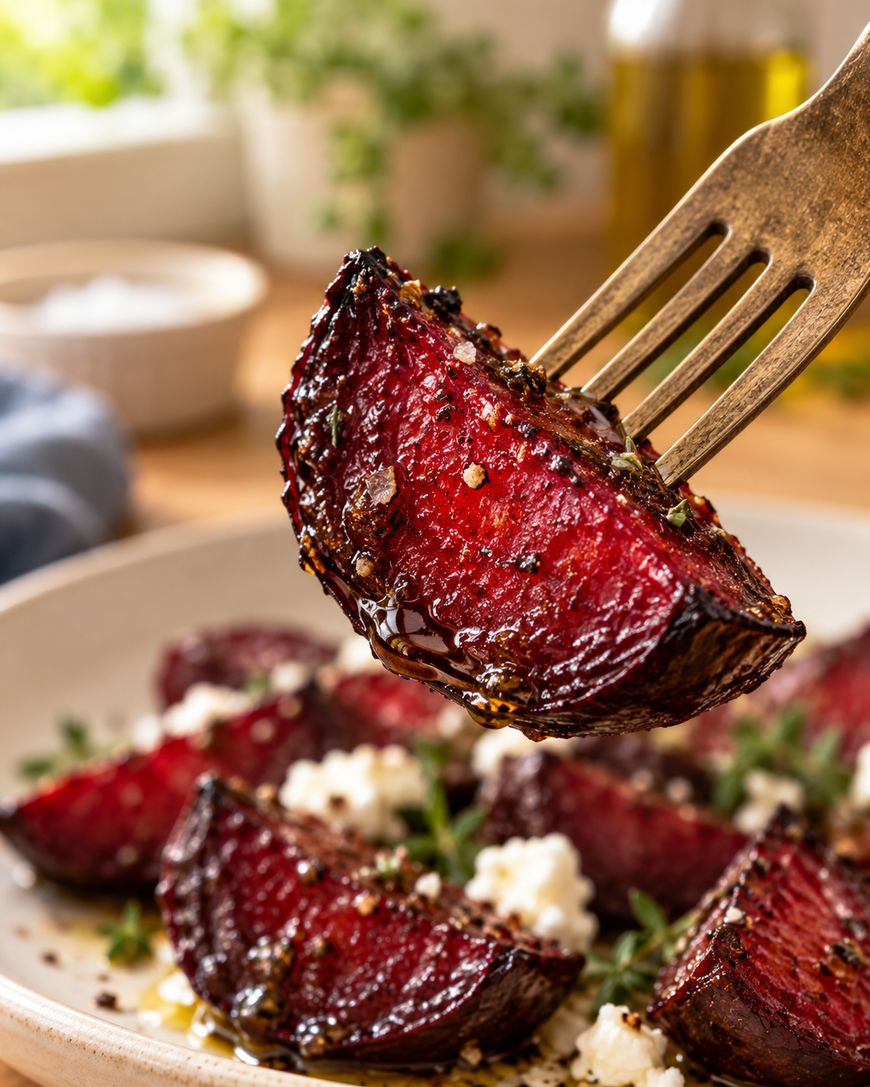
They also work as a salad base. Toss the cooled wedges with arugula, a little extra olive oil, and a handful of toasted nuts for a quick lunch.
At holiday meals, a platter of roasted beets adds deep ruby color next to mashed potatoes and green beans. Because the oven does the work, they fit into a busy holiday timeline.
You can also fold them into grain bowls with rice or quinoa, or tuck them into a sandwich with hummus and greens. Their sturdy texture holds up well next to soft or creamy foods.
Storing and Reheating Roasted Beets
Cool the beets to room temperature, then store them in an airtight container in the refrigerator for up to 4 days. The USDA advises eating refrigerated leftovers within 3 to 4 days, so we use the top of that range.
For easy meal prep, roast a full pan on Sunday and keep the wedges plain, then add the balsamic honey finish when you serve them. Plain wedges stay fresher in the container and take on the glaze better once they are warmed.
Reheat the wedges on a baking sheet in a 400°F oven for about 8 minutes, or enjoy them cold in salads. We do not recommend freezing roasted beets, since the texture turns watery once thawed.
The Story Behind Roasted Beets
Beets have been grown for centuries, and the red beet we know today descends from wild sea beets that grew along European coastlines. Early cooks valued the leaves first, and the sweet, fat root came later through selective breeding.
Roasting became a favorite method because dry oven heat concentrates the sugars that boiling washes away. Today roasted beets show up everywhere from farmhouse tables to restaurant salads.
Beets with tangy goat cheese is a classic combination for good reason. We borrow that idea here with a lighter touch, using just a sprinkle so the beets stay the star.
Use the recipe card below for the full ingredient list and numbered steps whenever you are ready to cook.

Roasted Beets
Sweet, tender roasted beets with caramelized edges and an easy balsamic honey finish, baked at 425°F on one sheet pan.
Ingredients
- 1 1/2 pounds beets (about 4 medium), scrubbed and trimmed
- 2 tablespoons olive oil
- 1/2 teaspoon kosher salt
- 1/4 teaspoon black pepper
- 1 tablespoon balsamic vinegar
- 1 teaspoon honey
- 1 tablespoon fresh thyme leaves (optional)
- 2 tablespoons crumbled goat cheese (optional)
Instructions
- Heat the oven to 425°F with a rack in the center position and line a large rimmed baking sheet with parchment paper.
- Peel the beets with a vegetable peeler and cut them into wedges about 1 inch thick.
- Place the wedges on the baking sheet, drizzle with the olive oil, sprinkle with the salt and pepper, and toss until evenly coated.
- Spread the wedges into a single layer with space between them.
- Roast for 35 to 40 minutes, flipping the wedges with a spatula halfway through, until a fork slides in easily and the edges are browned.
- Whisk the balsamic vinegar and honey together in a small bowl, drizzle over the hot beets on the pan, and toss to coat.
- Sprinkle with the thyme and goat cheese if using, and serve warm.
Notes
Store cooled beets in an airtight container in the refrigerator for up to 4 days. Reheat on a baking sheet in a 400°F oven for about 8 minutes, or serve cold in salads. We do not recommend freezing roasted beets. Wear gloves while peeling and cutting to avoid staining your hands. The thyme and goat cheese are optional.
Nutrition Information:
Yield:
4Serving Size:
about 1 cupAmount Per Serving: Calories: 140Total Fat: 7gSaturated Fat: 1gSodium: 420mgCarbohydrates: 19gFiber: 5gSugar: 13gProtein: 3g
Roasted Beets Questions and Answers
Do you have to peel beets before roasting?
The card peels the beets before roasting, which gives the most tender, evenly sweet wedges. Unpeeled beets are safe to eat if scrubbed well, but the skin can taste earthier and slightly chewy.
How do you keep roasted beets from staining everything?
Wear disposable gloves and work on a board you do not mind staining, or lay down parchment. Rinse the board and your tools in cool water right after cutting, before the juice sets.
How long do roasted beets last in the fridge?
Store them in an airtight container for up to 4 days. The USDA recommends eating refrigerated leftovers within 3 to 4 days.
Can you freeze roasted beets?
We do not recommend it. Thawed roasted beets release water and turn mushy, so it is better to roast a fresh batch.
Why are my roasted beets still hard?
Wedges that are too thick or a crowded pan are the usual causes. Cut wedges to about 1 inch, spread them in a single layer, and keep roasting until a fork slides in easily.
Can you roast beets whole?
Yes, but whole beets take much longer and need to be peeled after roasting. We stick with 1-inch wedges because they cook in about 40 minutes and caramelize more.
Why This Recipe Works
High heat is the secret. At 425°F the natural sugars in the beets caramelize at the edges, which gives the wedges a deeper flavor than a gentler oven would.
Cutting the beets into even 1-inch wedges and spreading them in a single layer helps every piece brown instead of steam. Flipping halfway through gives both sides the same color.
Parchment paper helps too, since it keeps the sugars from burning onto bare metal while still letting the bottoms brown. That means easier cleanup and better caramelization in the same step.
The balsamic honey finish is added while the beets are still hot, so the glaze soaks in instead of sitting on top. The vinegar balances the sweetness, and the salt makes the beets taste more like themselves.
Make Roasted Beets Part of Your Regular Rotation
Roasted beets are proof that a humble root can turn into a showstopping side with just oil, salt, and a hot oven. Heat the oven to 425°F, cut your wedges, and let the pan do the work.
Once you have the method down, try the thyme and goat cheese version or build a beet salad with the leftovers. Save the recipe card so your next batch of roasted beets is just as good.
Roasted Fingerling Potatoes That Come Out Crispy Every Single Time