Last updated: November 9, 2026
These easy sausage balls bake up golden outside and tender inside in about 20 minutes, with only three main ingredients.
Use the recipe card below for the quick version, and read on for the details that keep every batch soft instead of dry.
What Are Sausage Balls and Why Do Cooks Love Them?
Sausage balls are bite-size savory snacks made from raw ground pork sausage, shredded cheddar cheese, and baking mix, rolled into rounds and baked until golden. They are a staple on Southern holiday tables, game day spreads, and brunch buffets.

The appeal is simple. You stir three main ingredients together in one bowl, roll them by hand, and bake them on a sheet pan.
There is no rolling pin, no dough rising, and no cooking the sausage ahead of time. The fat in the sausage and the cheese melts into the baking mix as the balls bake, which gives you a crisp, browned outside and a soft, cheesy center.
Because they hold well at room temperature, sausage balls are a smart choice for potlucks, tailgates, and Christmas morning. A single batch makes 40 balls, which is enough to serve 20 people two each.
How to Make Sausage Balls Step by Step
This recipe uses one pound of ground pork breakfast sausage, three cups of original baking mix, and four cups of freshly shredded sharp cheddar cheese. The full method takes about 35 minutes from start to finish, and most of that is hands-off baking.
Ingredients and What Each One Does
Start with one pound of ground pork breakfast sausage, either mild or sharp. Jimmy Dean and Bob Evans both work well, and so does any store brand that comes in a tube.
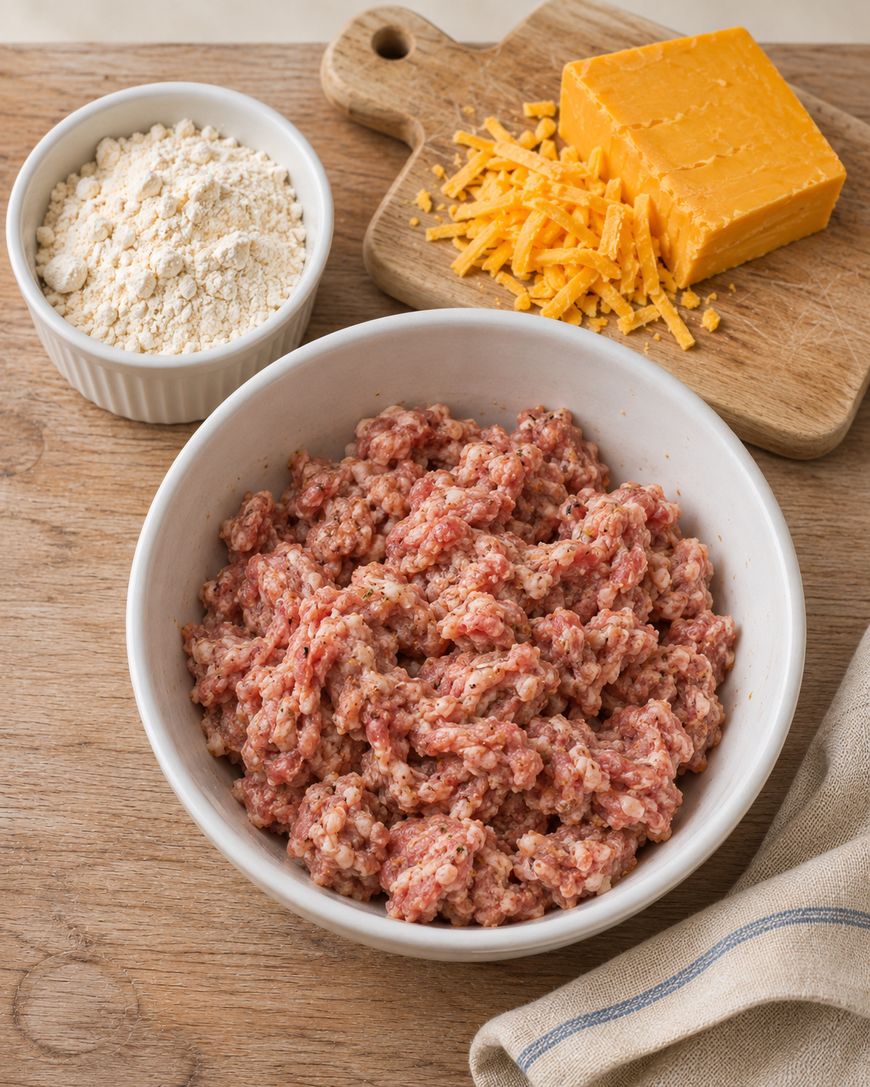
You also need three cups of original Bisquick baking mix, or a similar all-purpose baking mix. The mix supplies the flour, the leavening, and a little fat, which is what turns the dough into something tender instead of dense.
Four cups of freshly shredded sharp cheddar cheese, which is about 16 ounces, supplies the flavor and the richness. Half a teaspoon of garlic powder rounds out the savory side, and a quarter teaspoon of cayenne pepper adds a gentle warmth if you want it.
Keep one to two tablespoons of milk nearby. You only use it if the dough feels crumbly after mixing.
Prep the Oven and Pans
Preheat the oven to 375°F and line two rimmed baking sheets with parchment paper. Parchment keeps the bottoms from sticking and makes cleanup easy.
Take the sausage out of the refrigerator about 20 minutes before you mix. Room temperature sausage blends into the baking mix and cheese far more easily than cold sausage does.
Mix the Dough
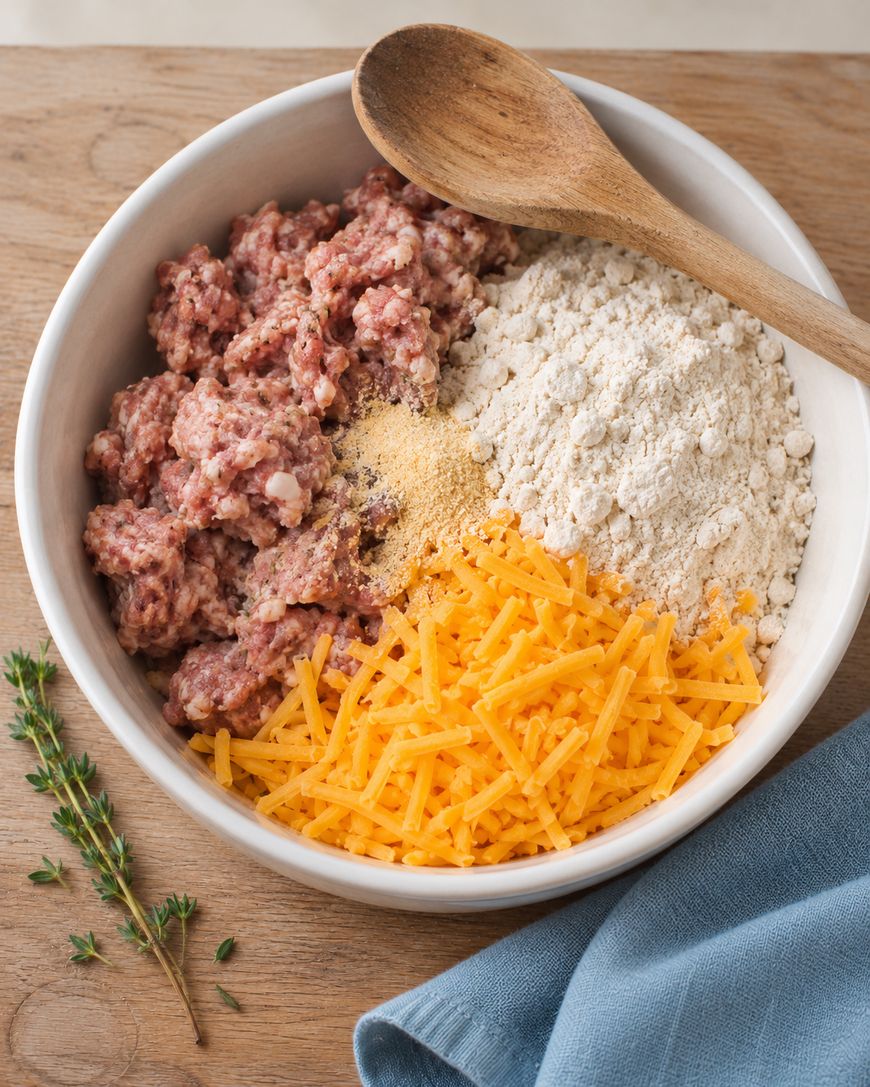
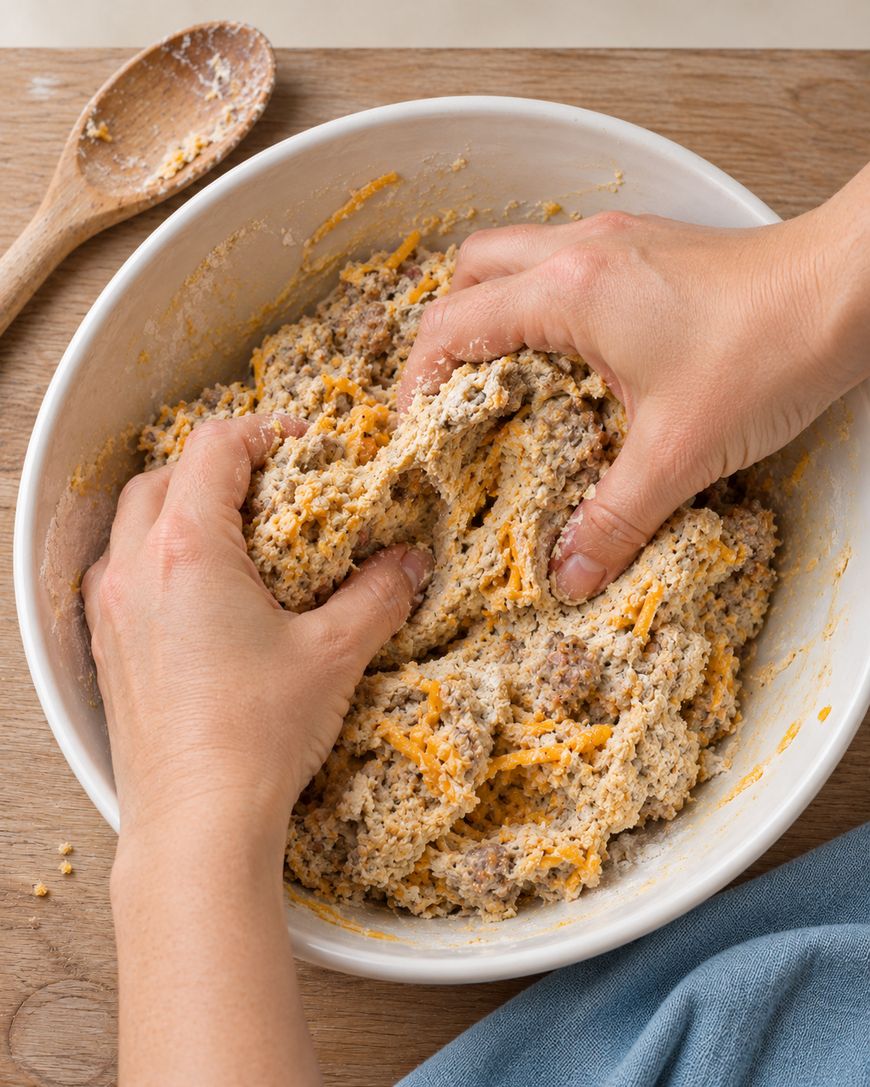
Add the sausage, baking mix, cheddar, garlic powder, and cayenne to a large bowl. Use your hands to squeeze and fold everything together until no dry streaks of baking mix remain.
The dough should hold together when pressed. If it feels crumbly, work in one to two tablespoons of milk, but add it a little at a time so the balls stay firm.
Roll and Bake the Sausage Balls
Roll the dough into 40 balls, using about one tablespoon of dough for each one. They should be roughly one inch wide.

Place them one inch apart on the lined baking sheets. Bake for 18 to 22 minutes, switching the pans between racks and rotating them halfway through, until the balls are deep golden brown.

How to Tell When Sausage Balls Are Done
Color is a good clue, but temperature is the real test. The USDA Food Safety and Inspection Service says ground pork must reach an internal temperature of 160°F to be safe to eat.
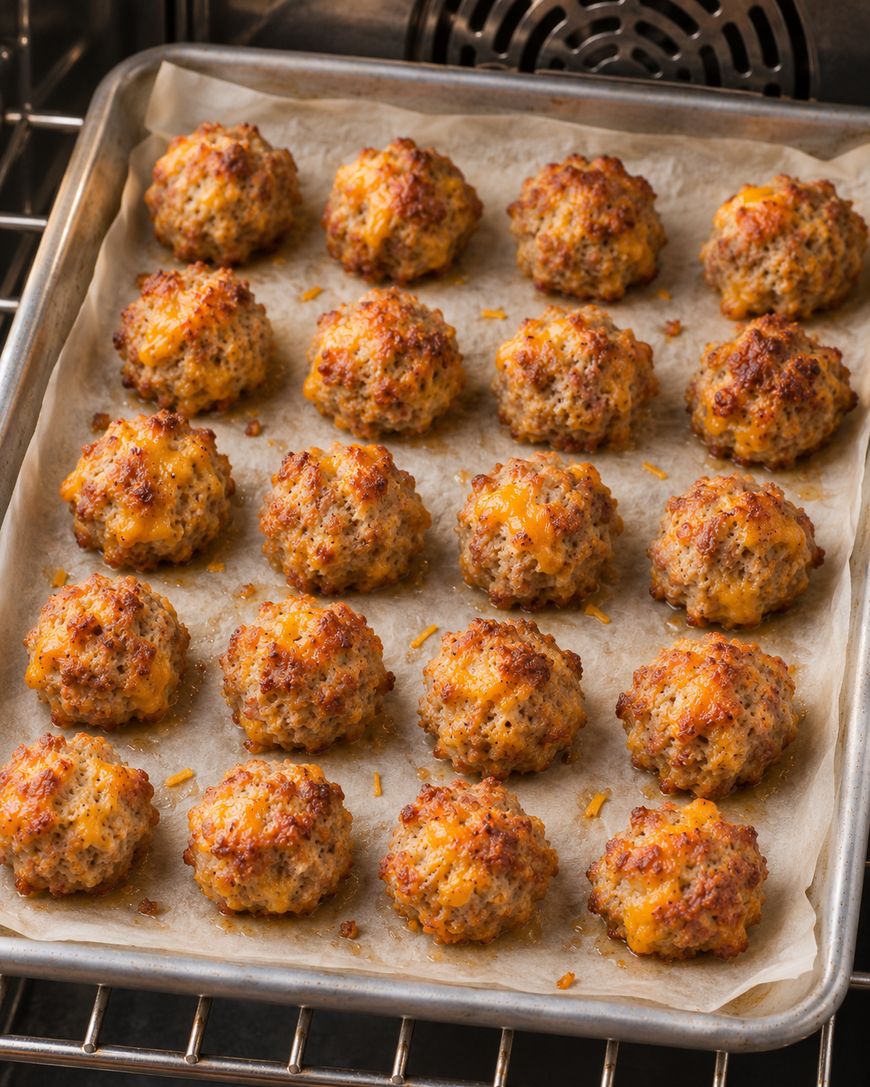
Insert an instant read thermometer into the center of a few balls from different parts of the pan. If any read below 160°F, return the pan to the oven for another two to three minutes and check again.

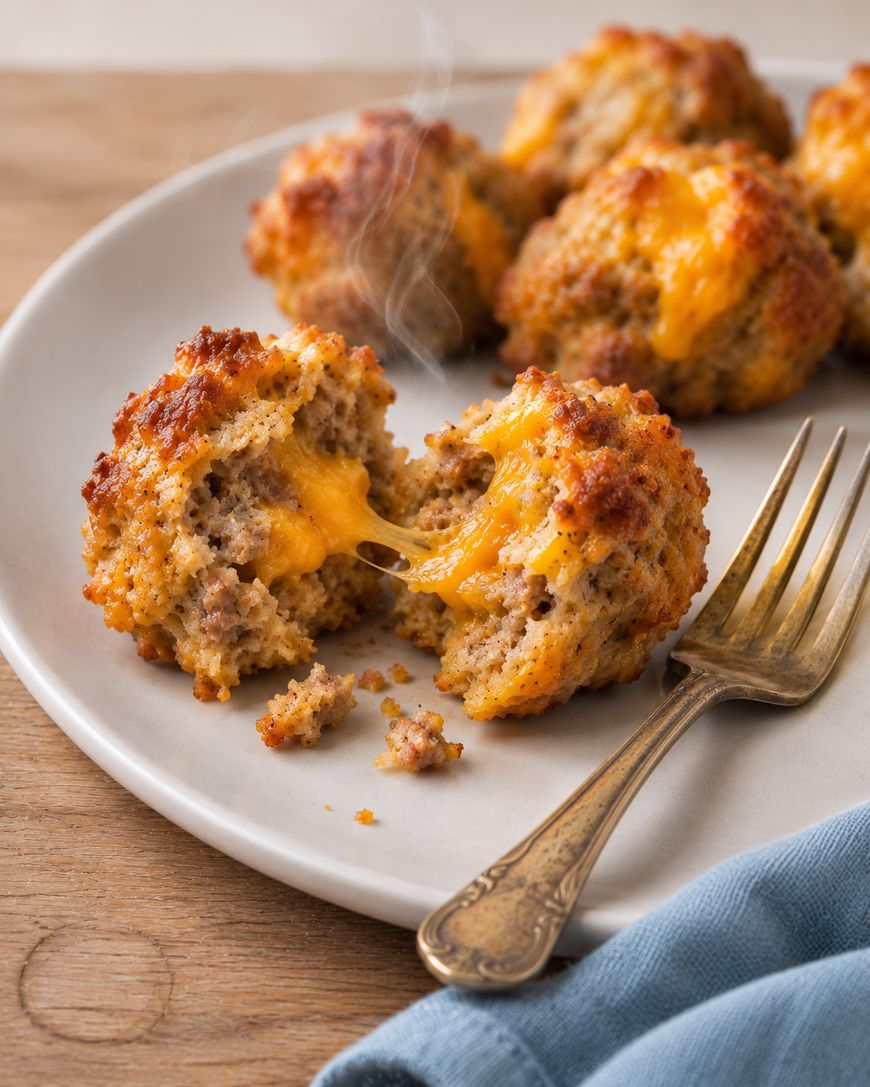
Let the sausage balls cool on the pan for five minutes before serving. This short rest firms up the cheese so the balls do not fall apart.
Tips for the Best Sausage Balls
The biggest difference between dry sausage balls and tender ones comes down to the cheese, the sausage, and how much you mix. These four habits solve most problems.
Shred Your Own Cheese
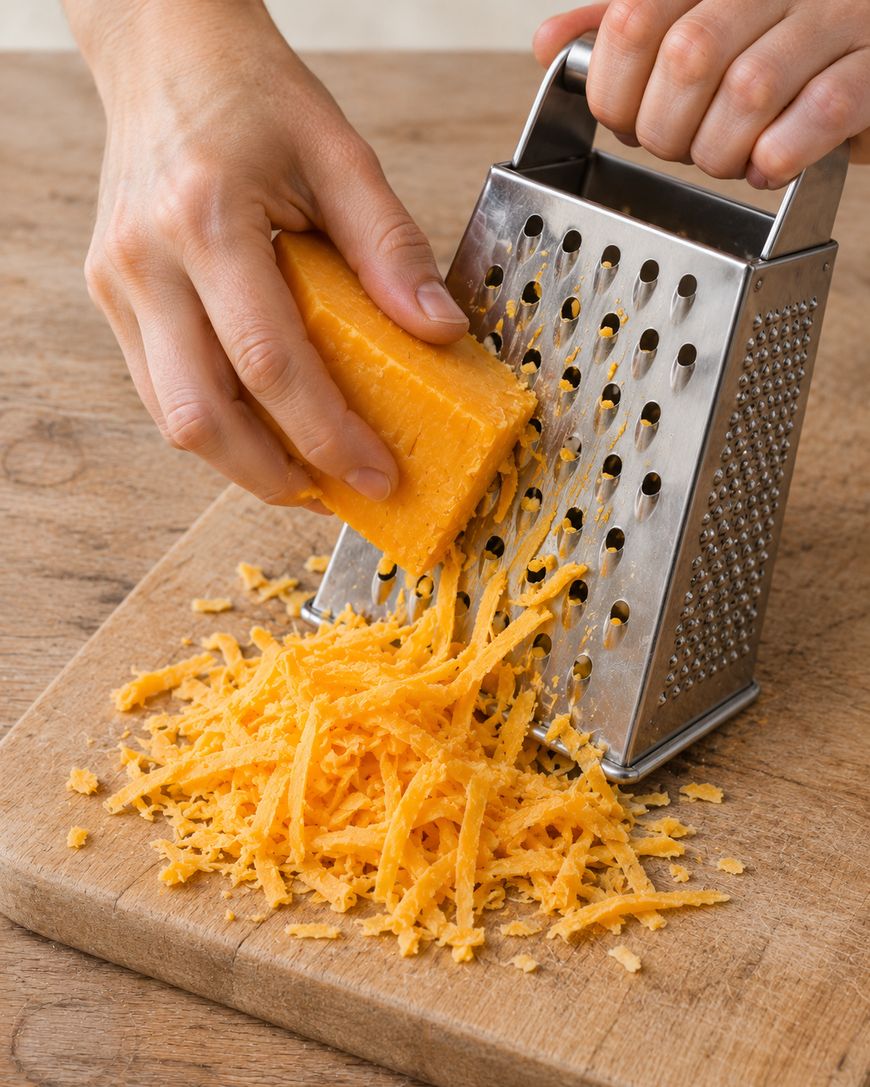
Pre-shredded cheese is coated with starch to keep the shreds from clumping, and that coating pulls moisture out of the dough. Shredding a block of sharp cheddar yourself gives you a softer, cheesier result.
Use the large holes on a box grater, and measure the cheese after shredding. Four packed cups is about 16 ounces.
Start With Room Temperature Sausage
Cold sausage resists the baking mix and leaves you overworking the dough to bring it together. Sausage that has sat out for 20 minutes mixes in easily with very little effort.
Mix Gently and Only Until Combined
Overmixed dough gets tough, and the balls bake up dense. Stop as soon as the dry streaks disappear and the dough holds together.
Roll Evenly Sized Balls
A one tablespoon cookie scoop keeps every ball the same size, so they all finish baking at the same time. Uneven balls mean some are dry while others are still underdone in the center.
Sausage Balls Variations and Substitutions
Classic sausage balls are wonderful as written, but the recipe is flexible. The card keeps the base recipe simple, so treat the swaps below as optional.
For more heat, use hot breakfast sausage in place of mild, using the same one pound. You can also swap the sharp cheddar for pepper jack, again using four cups, for a spicier and creamier bite.
If you like a little crunch and tang, fold in two tablespoons of finely diced pickled jalapeños. The card leaves these out, so they are an extra choice and not part of the base recipe.
Ground turkey or chicken breakfast sausage also works. The USDA says ground poultry must reach 165°F instead of 160°F, so bake those until the thermometer reads 165°F in the center.
A gluten free all-purpose baking mix can replace the original baking mix in the same amount. The texture will be slightly more delicate, so handle the balls gently when you lift them from the pan.
How to Store, Freeze, and Reheat Sausage Balls
Let the baked balls cool completely, then store them in an airtight container in the refrigerator for 3 to 4 days. That matches USDA guidance for refrigerated leftovers.
To reheat, warm them in a 350°F oven for 8 to 10 minutes until they reach 165°F, which is the temperature the USDA recommends for leftovers. The oven keeps the outside crisp, while a microwave makes them soft.
Sausage balls freeze beautifully. For best quality, freeze baked balls in a zip top freezer bag for up to 3 months, then reheat from frozen in a 350°F oven until they reach 165°F.
You can also freeze them unbaked. Place the rolled balls on a lined sheet pan, freeze until solid, then move them to a freezer bag for up to 3 months.
Bake them straight from the freezer at 375°F for 22 to 26 minutes, until they reach 160°F in the center.
What to Serve With Sausage Balls
Sausage balls are rich enough to stand on their own, but a dipping sauce makes them feel like a spread. Honey mustard is the classic partner, and ranch dressing, hot honey, and warm pepper jelly all work too.

For a brunch table, serve them beside scrambled eggs, fresh fruit, and a pot of coffee. For game day, set out a platter next to a cheese dip, crispy tater tots, and a crunchy slaw.
At holiday parties, sausage balls fit right in with a charcuterie board or a bowl of marinated olives. They stay good at room temperature for a couple of hours, so they are easy to put out and leave.
The Story Behind Sausage Balls
Sausage balls are closely tied to Southern home cooking, where they show up at Christmas mornings, church socials, and family reunions. Many families trace their recipe to the version printed on boxes of baking mix, which made the dish easy for any home cook to make.
The exact origin is hard to pin down, and every family seems to have its own twist. What stays the same is the idea of turning a few pantry and refrigerator staples into a warm, crowd-pleasing bite.
Today sausage balls have spread well beyond the South. They are a favorite for tailgates, baby showers, and holiday brunches everywhere.
Ready to bake a batch? Use the recipe card below for the full ingredient list and step-by-step method.

Sausage Balls
Easy sausage balls made with ground pork sausage, sharp cheddar, and baking mix. They bake golden in about 20 minutes and stay tender inside.
Ingredients
- 1 pound ground pork breakfast sausage, mild or hot, at room temperature
- 3 cups original baking mix (such as Bisquick)
- 4 cups freshly shredded sharp cheddar cheese (about 16 ounces)
- 1/2 teaspoon garlic powder
- 1/4 teaspoon cayenne pepper, optional
- 1 to 2 tablespoons milk, only if the dough is crumbly
Instructions
- Preheat the oven to 375°F and line two rimmed baking sheets with parchment paper.
- Let the sausage sit at room temperature for 20 minutes, then add it to a large bowl with the baking mix, cheddar, garlic powder, and cayenne if using.
- Mix with your hands until the dough comes together and no dry streaks remain. If it feels crumbly, work in 1 to 2 tablespoons of milk, a little at a time.
- Roll the dough into 40 balls, using about 1 tablespoon of dough each, and place them 1 inch apart on the baking sheets.
- Bake for 18 to 22 minutes, switching the pans between racks and rotating them halfway through, until golden brown and a thermometer inserted in the center of a ball reads 160°F.
- Cool on the pan for 5 minutes, then serve warm.
Notes
Food safety: The USDA Food Safety and Inspection Service says ground pork must reach 160°F. Ground turkey or chicken sausage must reach 165°F.
Refrigerate baked sausage balls in an airtight container for 3 to 4 days. Reheat in a 350°F oven for 8 to 10 minutes until they reach 165°F.
Freeze baked sausage balls in a freezer bag for up to 3 months and reheat from frozen at 350°F until they reach 165°F.
To freeze unbaked, freeze the rolled balls on a lined sheet pan until solid, then bag them for up to 3 months. Bake from frozen at 375°F for 22 to 26 minutes, until they reach 160°F in the center.
For the most tender results, shred your own cheese and mix only until combined.
Nutrition Information:
Yield:
20Serving Size:
2 sausage ballsAmount Per Serving: Calories: 225Total Fat: 15gSaturated Fat: 7gSodium: 470mgCarbohydrates: 12gFiber: 0gSugar: 1gProtein: 10g
Sausage Balls Q&A
Why are my sausage balls dry?
Dry sausage balls usually come from pre-shredded cheese, too much baking mix, or overbaking. Shred your own cheese, measure the baking mix with a spoon and level, and pull the pan out as soon as the balls hit 160°F.
Do I need to cook the sausage first?
No, the sausage goes into the dough raw and cooks fully as the balls bake. Just make sure the center of each ball reaches 160°F on a thermometer.
Can I make sausage balls ahead of time?
Yes, you can refrigerate baked balls for 3 to 4 days, or freeze rolled, unbaked balls for up to 3 months and bake them from frozen. Both methods are covered in the storage section above.
Can I use pre-shredded cheese?
You can, but the results are drier because of the anti-caking coating. If it is all you have, work in one to two tablespoons of milk only if the dough feels crumbly.
Can I use turkey sausage?
Yes, and the method stays the same. The only change is the doneness temperature, since ground poultry must reach 165°F instead of 160°F.
How many sausage balls does this recipe make?
One batch makes 40 balls, which serves 20 people at two balls each. Double the recipe for a larger crowd and use a third baking sheet.
Why This Sausage Balls Recipe Works
The ratio does most of the work. One pound of sausage to three cups of baking mix and four cups of cheese gives you a dough that holds a shape without needing eggs or extra liquid.
The fat in the sausage and the cheese keeps the inside tender as the balls bake. The leavening in the baking mix lifts the dough just enough so the center is soft and not dense.
Mixing by hand, using room temperature sausage, and stopping once the dough comes together all protect that tender texture. Rolling the balls to the same size and baking them at 375°F means every ball browns evenly and reaches 160°F at the same time.
Make Sausage Balls Your New Go-To Appetizer
Sausage balls are easy, affordable, and always the first thing to disappear from the table. With a block of sharp cheddar, a tube of breakfast sausage, and a box of baking mix, you can have a hot batch on the table in about 35 minutes.
Grab the ingredients on your next grocery run and bake a pan for your next brunch or party. Then save the recipe, because everyone will ask for it.
Hissy Fit Dip: The Cheesy Sausage Dip That Disappears at Every Party
Easy Pineapple Cheese Ball With Sharp Cheddar and Toasted Pecans That Disappears at Every Party