Last updated: October 22, 2026
This lemon caper sauce is a bright, buttery pan sauce that takes about 25 minutes and one small skillet. The full recipe card is below, and the tips along the way help you keep the sauce silky instead of greasy.
Lemon Caper Sauce Ingredients and What Each One Does
A good lemon caper sauce uses a short list of ingredients, and every one of them has a job. Knowing the role of each makes it easy to adjust the sauce to your taste.
The Butter
The recipe uses 4 tablespoons of unsalted butter, which is half a stick. One tablespoon goes into the skillet at the start to soften the shallot, and the other 3 tablespoons are cubed, kept cold, and whisked in at the end.
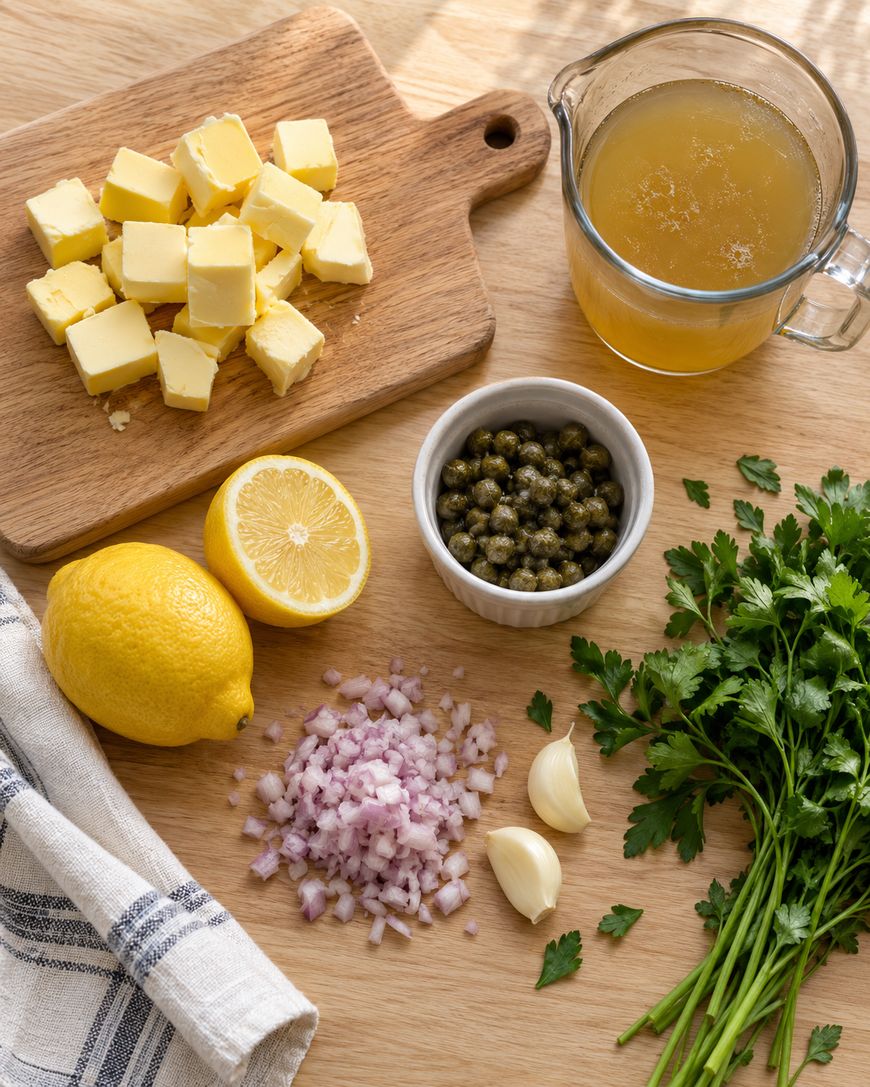
That cold butter at the finish is what gives the sauce its glossy, spoonable body. Brands like Land O’Lakes and Kerrygold both work well, and unsalted butter lets you control the salt.
The Shallot and Garlic
One medium shallot, minced to about 2 tablespoons, gives the sauce a mild, slightly sweet base that onion cannot quite match. Two minced garlic cloves add warmth without taking over.
The shallot goes in first and cooks for 2 minutes, and the garlic follows for just 30 seconds. Garlic burns fast in butter, and burnt garlic turns the whole sauce bitter.
The Wine, Broth, and Lemon
You need 1/4 cup of dry white wine, 1/2 cup of low sodium chicken broth, and 3 tablespoons of fresh lemon juice, which is about one large lemon. A crisp wine like Sauvignon Blanc or Pinot Grigio keeps the flavor clean.
The card also calls for 1 teaspoon of lemon zest, stirred in at the end for fragrance. If you skip the wine, use 1/4 cup more chicken broth and follow the same steps, but treat that swap as optional since the card uses wine.

The Capers, Parsley, and Seasoning
Two tablespoons of drained capers bring the briny pop that defines this sauce. Rinse them lightly so the sauce does not turn too salty.
Two tablespoons of chopped flat-leaf parsley add a fresh, green note at the end. The card uses just 1/4 teaspoon of kosher salt and 1/8 teaspoon of black pepper, because the capers and broth already carry plenty of salt.
How to Make Lemon Caper Sauce Step by Step
The method is simple, but the order matters. Prep everything first, because the sauce moves quickly once the skillet is hot.
Prep Before You Cook
Cube 3 tablespoons of the butter and keep it in the refrigerator until you need it. Zest the lemon first, then juice it, and mince the shallot, garlic, and parsley.
Having cold butter ready is the single most important prep step. Warm butter melts into the liquid instead of building a creamy emulsion.
Soften the Shallot and Garlic
Melt the remaining 1 tablespoon of butter in a small skillet over medium heat. Add the shallot and cook for 2 minutes, stirring, until it turns soft and translucent.

Stir in the garlic and cook for 30 seconds, just until you can smell it. Keep the heat at medium so nothing browns.
Reduce the Wine, Broth, and Lemon
Pour in the white wine and let it simmer for 2 minutes, scraping up any bits from the bottom, until it reduces by about half. Add the chicken broth and lemon juice, then simmer for 6 to 8 minutes.

You are looking for about 1/2 cup of liquid when you are done, which is roughly half of what you started with. This step concentrates the flavor and gives the sauce something to hold onto the butter.
Whisk in the Cold Butter
Take the skillet off the heat completely. Whisk in the cold butter one cube at a time, waiting for each piece to melt before adding the next.
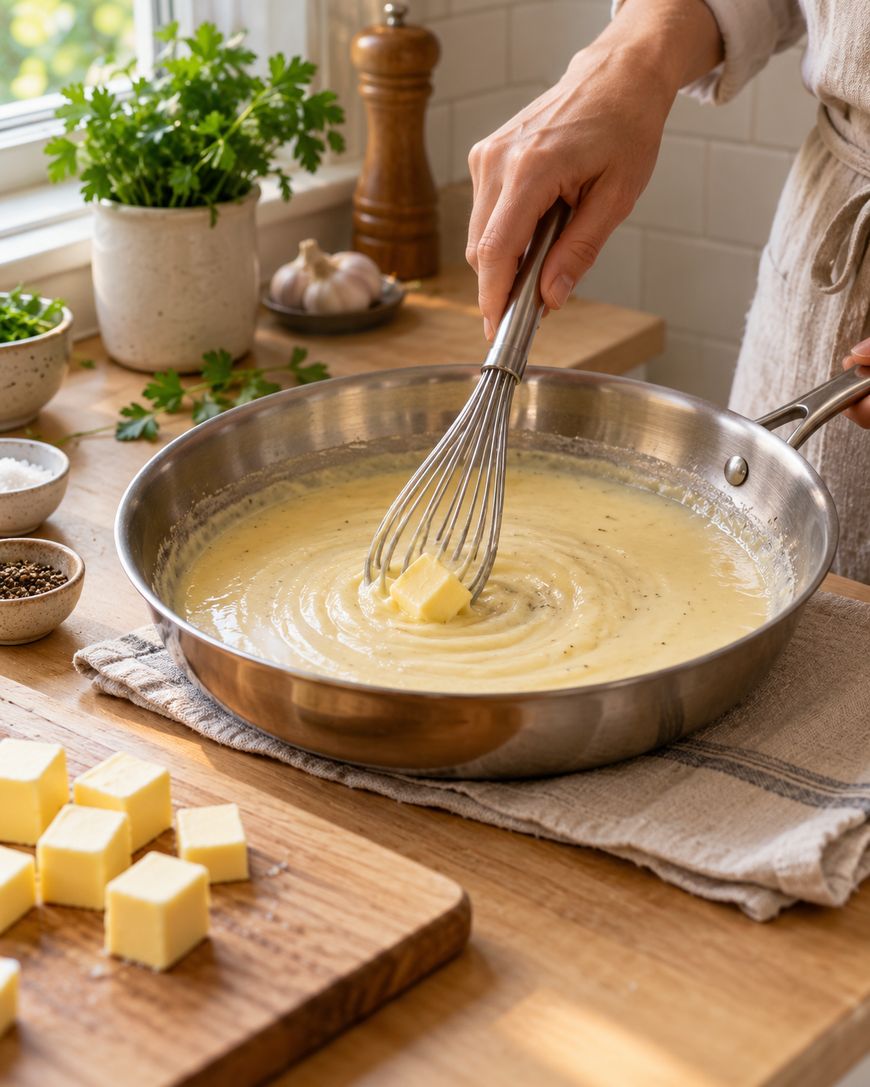
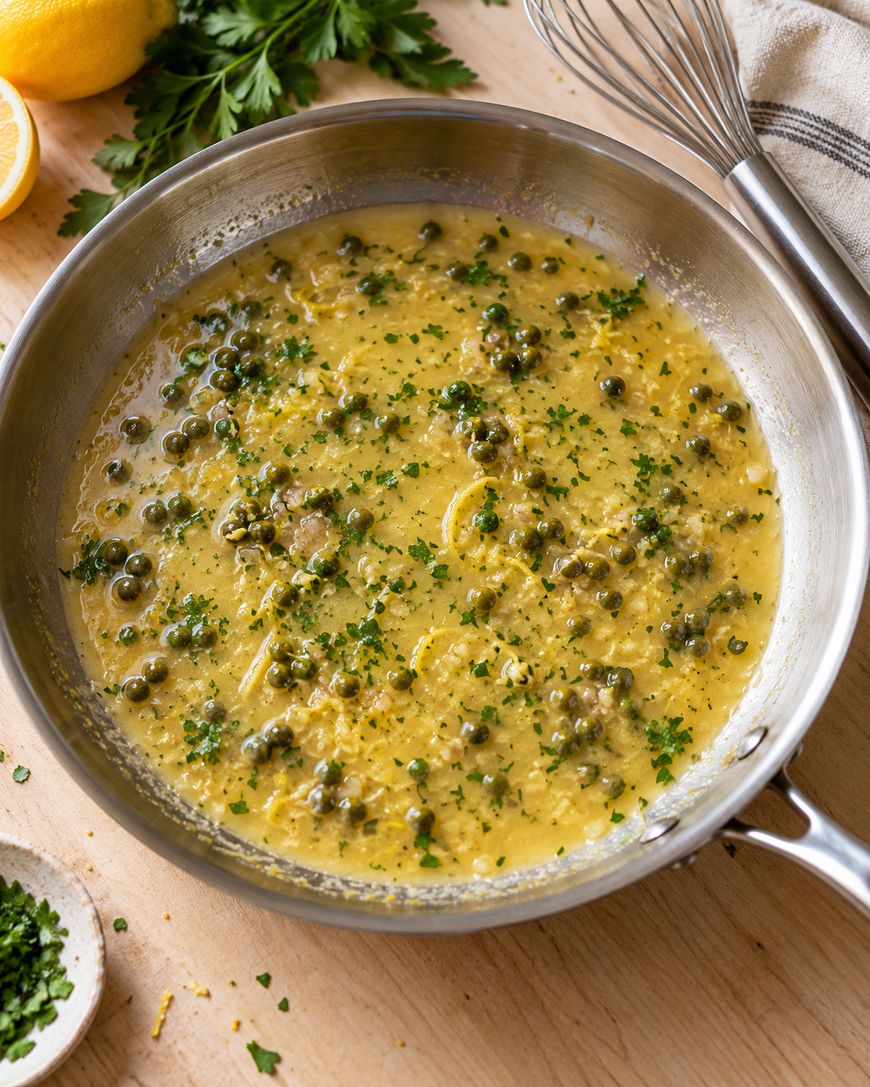
The sauce will turn pale, glossy, and slightly thick. Stir in the capers, lemon zest, parsley, salt, and pepper, then taste and adjust.
What to Serve With Lemon Caper Sauce
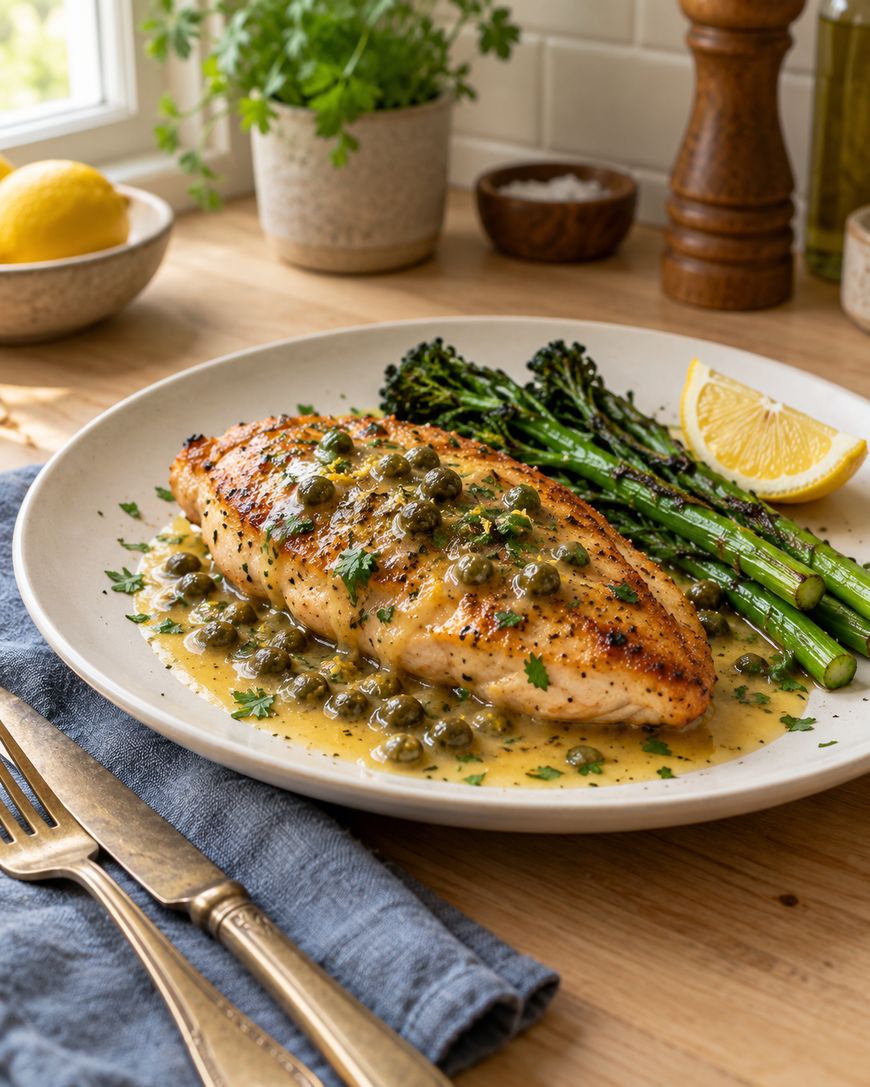
This sauce works best on mild, simply cooked foods that let the lemon and capers stand out. Pan seared chicken breasts and cutlets are the classic match, and the sauce rescues a piece of chicken that came out a little plain.
Cook chicken to an internal temperature of 165 degrees F, which is the safe minimum temperature set by the USDA Food Safety and Inspection Service. Spoon the sauce over the top right before serving so it stays glossy.
Fish and Seafood
Lemon caper sauce is a natural with salmon, cod, halibut, and seared scallops. The acidity cuts through rich fish like salmon, and the capers add a salty edge that suits white fish.
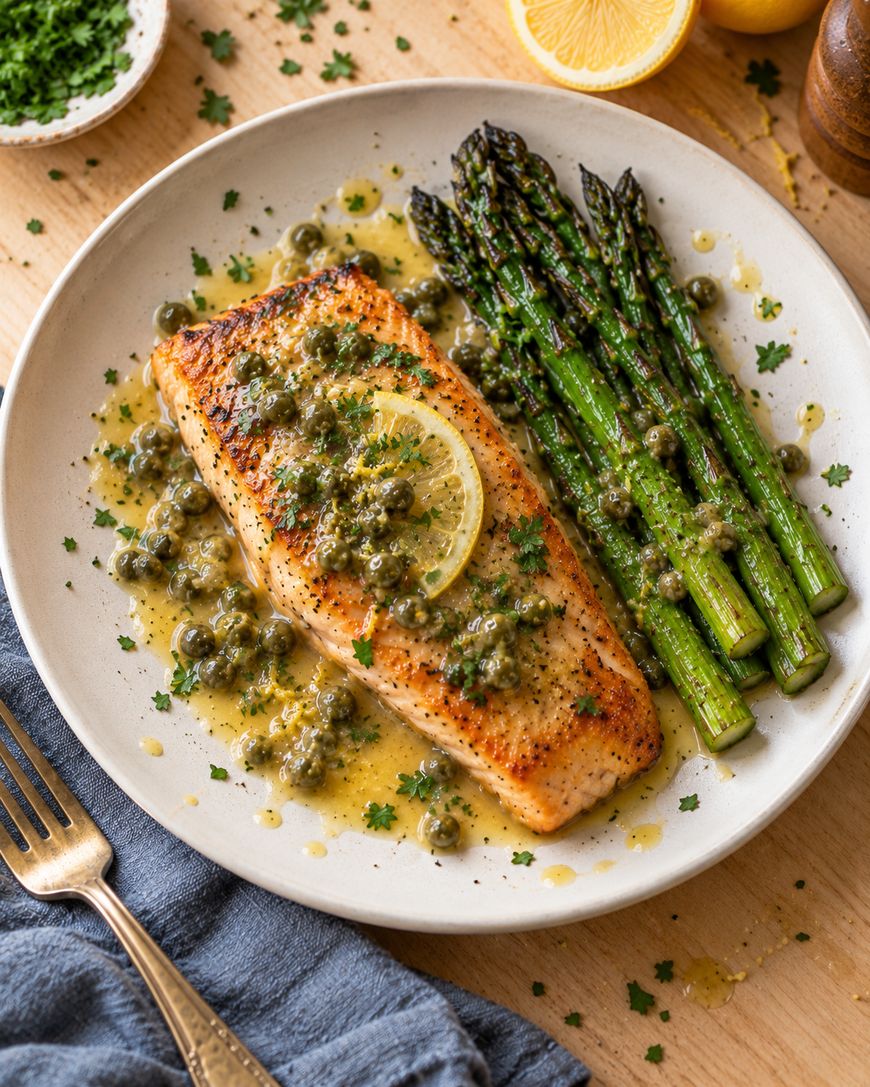
The USDA recommends cooking fish to 145 degrees F. Pat the fish dry before searing so it gets a golden crust that holds up under the sauce.
Vegetables, Pasta, and Potatoes
Try it over roasted asparagus, steamed green beans, or roasted cauliflower for a quick side dish. It also turns a bowl of plain angel hair pasta into a full dinner when you toss the noodles with a few spoonfuls.
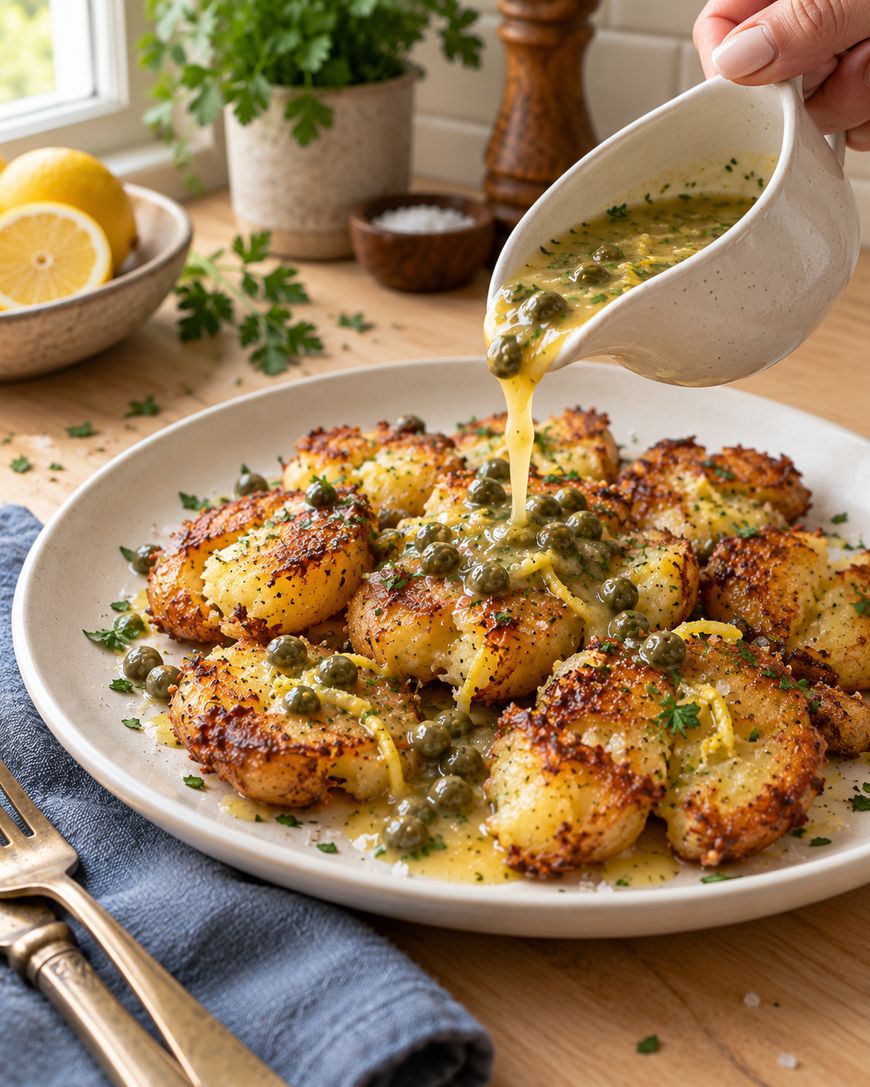
Boiled new potatoes and crispy smashed potatoes soak it up beautifully too. Because the recipe makes about 3/4 cup, plan on about 3 tablespoons per serving.
Lemon Caper Sauce Variations and Substitutions
The base recipe is flexible, and a few small changes create a different sauce each time. The card keeps things simple, so treat everything in this section as optional extras that are not in the card.
Make It Richer or Lighter
For a richer sauce, stir in 2 tablespoons of heavy cream after the broth reduces and simmer for 1 minute before taking it off the heat. For a lighter sauce, skip the cream and use the base recipe, which already tastes silky from the butter.
A teaspoon of Dijon mustard whisked in with the butter adds a gentle tang and helps the sauce stay emulsified.
Add a Little Extra
A teaspoon of caper brine at the end gives the sauce a sharper, saltier edge. A pinch of red pepper flakes adds quiet heat, and a tablespoon of chopped fresh dill pairs especially well with salmon.
If you prefer a sauce with more body, you can simmer a few extra minutes at the reduction stage, as long as you leave the butter for the very end.
Storing and Reheating Lemon Caper Sauce
Lemon caper sauce tastes best the moment it is made, but leftovers keep well. Store the sauce in an airtight container in the refrigerator for up to 3 days, which falls inside the 3 to 4 day window the USDA recommends for refrigerated leftovers.
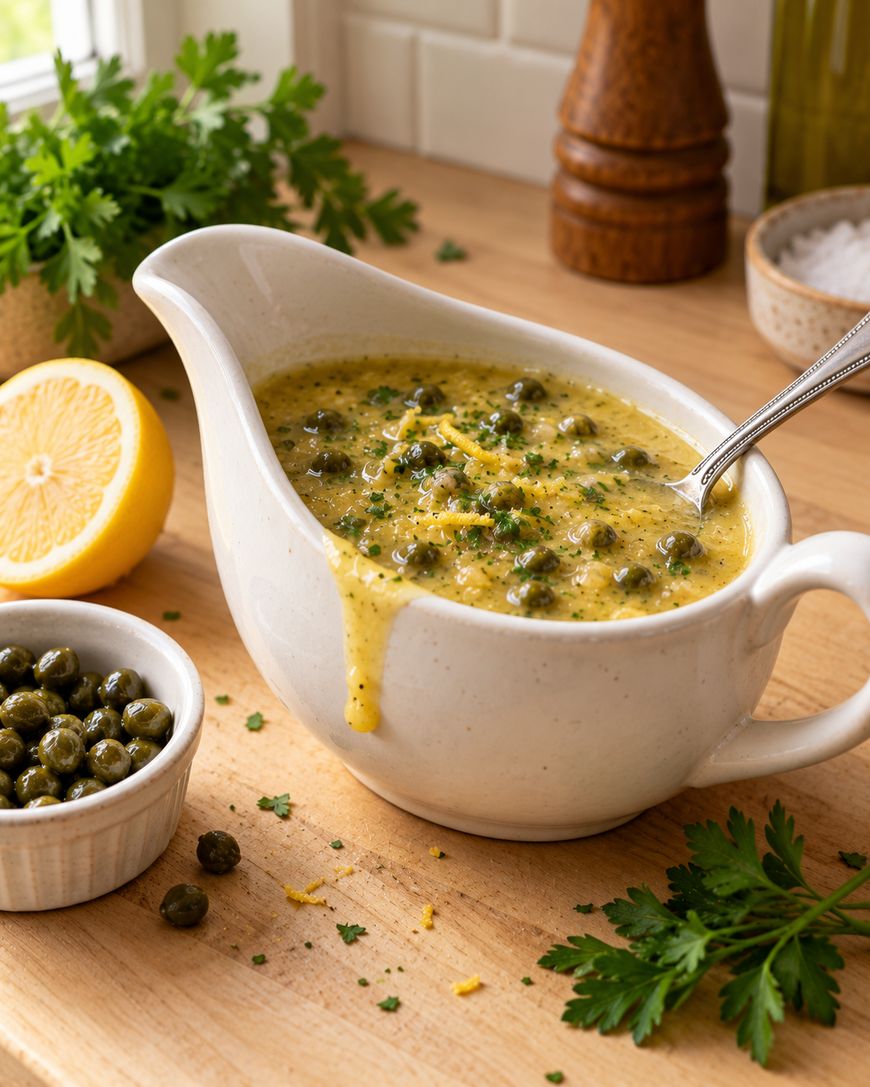
Reheat it gently in a small skillet over low heat with a splash of chicken broth, whisking constantly. High heat makes the butter separate, so go slowly.
This sauce does not freeze well because the butter emulsion breaks when it thaws. It is quick enough to make fresh, so freezing is rarely worth the trouble.
The Story Behind Lemon Caper Sauce
Lemon, butter, and capers go together in classic French and Italian cooking. The most famous version is piccata, an Italian American dish of thin cutlets in a lemon and caper pan sauce.
Capers are the pickled flower buds of a Mediterranean shrub, and they have been used in cooking around the Mediterranean for centuries. The salty, floral bite pairs naturally with lemon.
Home cooks love this sauce because it feels fancy but behaves like a weeknight shortcut. It uses pantry staples, it takes one pan, and it turns a plain protein into something that tastes like a restaurant dinner.

Use the recipe card below whenever you want the quick version with the exact measurements.
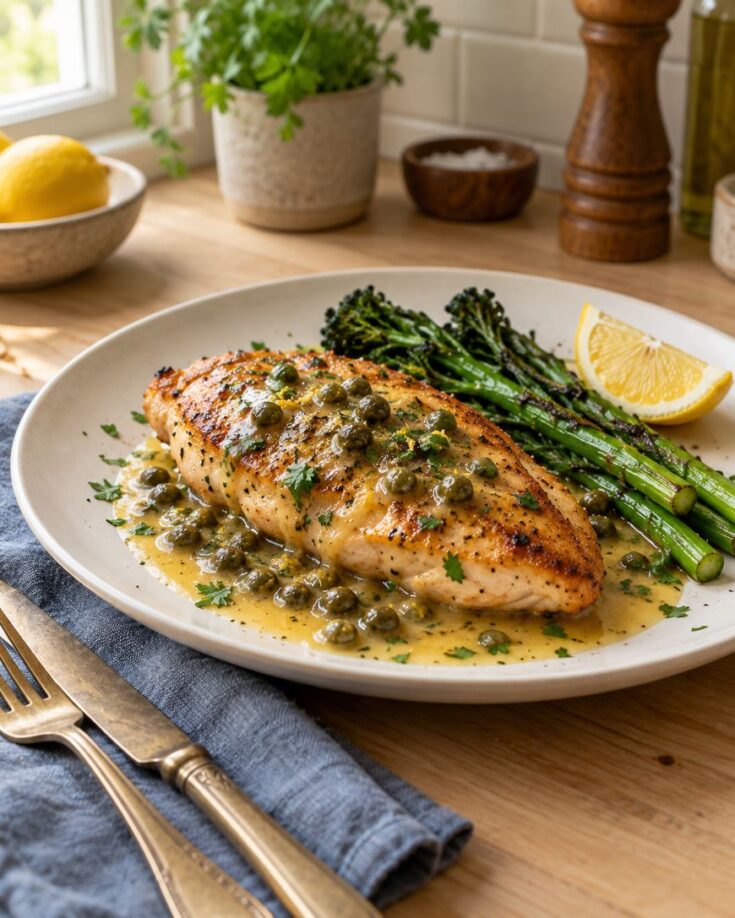
Lemon Caper Sauce
A silky, buttery pan sauce with shallot, white wine, fresh lemon, and briny capers that comes together in one small skillet in about 25 minutes.
Ingredients
- 4 tablespoons cold unsalted butter, divided
- 1 medium shallot, minced (about 2 tablespoons)
- 2 cloves garlic, minced
- 1/4 cup dry white wine
- 1/2 cup low sodium chicken broth
- 3 tablespoons fresh lemon juice (about 1 large lemon)
- 1 teaspoon lemon zest
- 2 tablespoons capers, drained and lightly rinsed
- 2 tablespoons chopped fresh flat-leaf parsley
- 1/4 teaspoon kosher salt, plus more to taste
- 1/8 teaspoon black pepper
Instructions
- Cube 3 tablespoons of the butter and keep it in the refrigerator until needed. Zest the lemon, then juice it, and mince the shallot, garlic, and parsley.
- Melt the remaining 1 tablespoon of butter in a small skillet over medium heat.
- Add the shallot and cook for 2 minutes, stirring, until soft and translucent. Stir in the garlic and cook for 30 seconds, until fragrant.
- Pour in the white wine and simmer for 2 minutes, scraping up any bits from the bottom, until reduced by about half.
- Add the chicken broth and lemon juice. Simmer over medium heat for 6 to 8 minutes, until the liquid reduces to about 1/2 cup.
- Remove the skillet from the heat. Whisk in the cold butter one cube at a time, letting each piece melt before adding the next, until the sauce is pale and glossy.
- Stir in the capers, lemon zest, parsley, salt, and pepper. Taste and adjust the seasoning.
- Spoon the sauce over chicken, fish, or vegetables right away.
Notes
Store in an airtight container in the refrigerator for up to 3 days and reheat gently over low heat with a splash of chicken broth. Do not freeze, because the butter emulsion breaks. No wine? Use 1/4 cup more low sodium chicken broth and follow the same steps. Optional extras not included in the card: 2 tablespoons heavy cream, 1 teaspoon Dijon mustard, 1 teaspoon caper brine, red pepper flakes, or 1 tablespoon chopped fresh dill. Cook chicken to 165 degrees F and fish to 145 degrees F, the safe minimums set by the USDA.
Nutrition Information:
Yield:
4Serving Size:
3 tablespoonsAmount Per Serving: Calories: 120Total Fat: 12gSaturated Fat: 7gSodium: 290mgCarbohydrates: 2gFiber: 0gSugar: 1gProtein: 0g
Lemon Caper Sauce Questions Answered
These are the questions that come up most often when making lemon caper sauce at home.
Can you make lemon caper sauce without wine?
Yes, you can replace the 1/4 cup of dry white wine with 1/4 cup of additional low sodium chicken broth. The method stays exactly the same, and the sauce will taste a little milder and less complex.
Why did my lemon caper sauce separate?
The most common cause is adding the butter while the skillet is still on the heat, or adding it all at once. Take the pan off the heat and whisk in cold butter one cube at a time.
If the sauce does break, whisk in a splash of warm chicken broth until it comes back together.
How long does lemon caper sauce last?
Store it in an airtight container in the refrigerator for up to 3 days. Reheat it gently over low heat with a splash of broth.
Do you need to rinse the capers?
A light rinse is a good idea if your capers are packed in salty brine. The recipe uses only 1/4 teaspoon of kosher salt, so taste the sauce after adding the capers and adjust from there.
Can you double this lemon caper sauce recipe?
Yes, double every ingredient and use a wider skillet so the liquid reduces evenly. Expect the reduction step to take a few minutes longer, and keep whisking in the butter one cube at a time.
Why This Lemon Caper Sauce Works
This lemon caper sauce works because every step builds on the one before it. Cooking the shallot gently in butter gives the sauce a sweet base, and reducing the wine, chicken broth, and lemon juice to about 1/2 cup concentrates the flavor.
The cold butter whisked in off the heat is the real secret. As each cube melts slowly, it forms a creamy emulsion that clings to the spoon instead of pooling into grease.
Adding the capers, zest, and parsley at the very end keeps their flavors bright and fresh. The result is a sauce that balances rich butter, sharp lemon, and salty capers in every spoonful.
Make This Lemon Caper Sauce Tonight
Lemon caper sauce proves that a few simple ingredients can make an ordinary dinner feel special. Cook your chicken, fish, or vegetables first, then make the sauce in the same skillet while everything rests.
Grab a lemon and a jar of capers, and make a batch tonight. Spoon it over your favorite protein, and save the recipe card for the next time you need an easy weeknight upgrade.