Last updated: September 20, 2026
You want scrapbook page ideas that feel fresh instead of the same photo-and-caption layout every time. Below you will find layout styles, themes, and simple techniques you can use right away, no matter your skill level.
Start With a Photo-First Layout
The easiest scrapbook page ideas begin with the photo, not the paper. Choose one strong image and build the rest of the page around it.

Crop the photo so the main subject fills most of the frame. You can add a smaller supporting photo in a corner for context without pulling focus.
Anchor your page with a single large photo and let everything else support it. This keeps busy pages from feeling cluttered and gives your eye a clear place to land.

Make a First Day of School Page
A first day of school page is one of the easiest yearly traditions to build a scrapbook around, since the photo practically takes itself every September. Pair that yearly photo with a few consistent details, like their height, their favorite subject, and what they want to be when they grow up, so the page doubles as a record of how much changes year to year.

If you keep this page format the same each year, an old-fashioned chalkboard sign, the same spot on the porch, the same handwriting prompts, the whole series becomes even more striking laid side by side in the album later. Add a small pocket for that year’s class photo or a torn corner of their school supply list for extra texture.
Keep the layout nearly identical from year to year so the changes in your child are what stand out, not the design. A repeated format turns a single page into a growing story.
Try a Pocket Page System
Pocket pages let you slide photos, tickets, and small notes into clear sleeves instead of gluing everything down. This works well for trips, holidays, or any event with a lot of small keepsakes.

You can mix photo sizes within the same pocket page for visual interest. A 4×6 photo next to two 2×3 photos creates a natural rhythm across the layout.
Use pocket pages when you have more mementos than time to design. They are faster to assemble and still look intentional.

Create a Road Trip Map Page
A road trip map page turns a trip’s route into the centerpiece of the layout instead of just another photo. Print a simple map of the area you traveled, mark each stop with a small pin sticker or a hand-drawn dot, and build the rest of the page around it with photos from along the way.

Tuck in small souvenirs from the drive itself, a gas station receipt, a postcard from a rest stop, a parking ticket, to capture the in-between moments most people forget to document. A short list of playlist songs or snacks eaten in the car adds a lighthearted detail that brings the whole trip back.
Save the map and any paper souvenirs during the trip itself, since they are easy to lose once you are home. A physical map does more to capture a road trip than photos of the scenery alone.
Layer Patterned Paper for Depth
Layering patterned paper behind your photos adds color and texture without adding clutter. Choose two or three papers that share a color family so the page still feels cohesive.
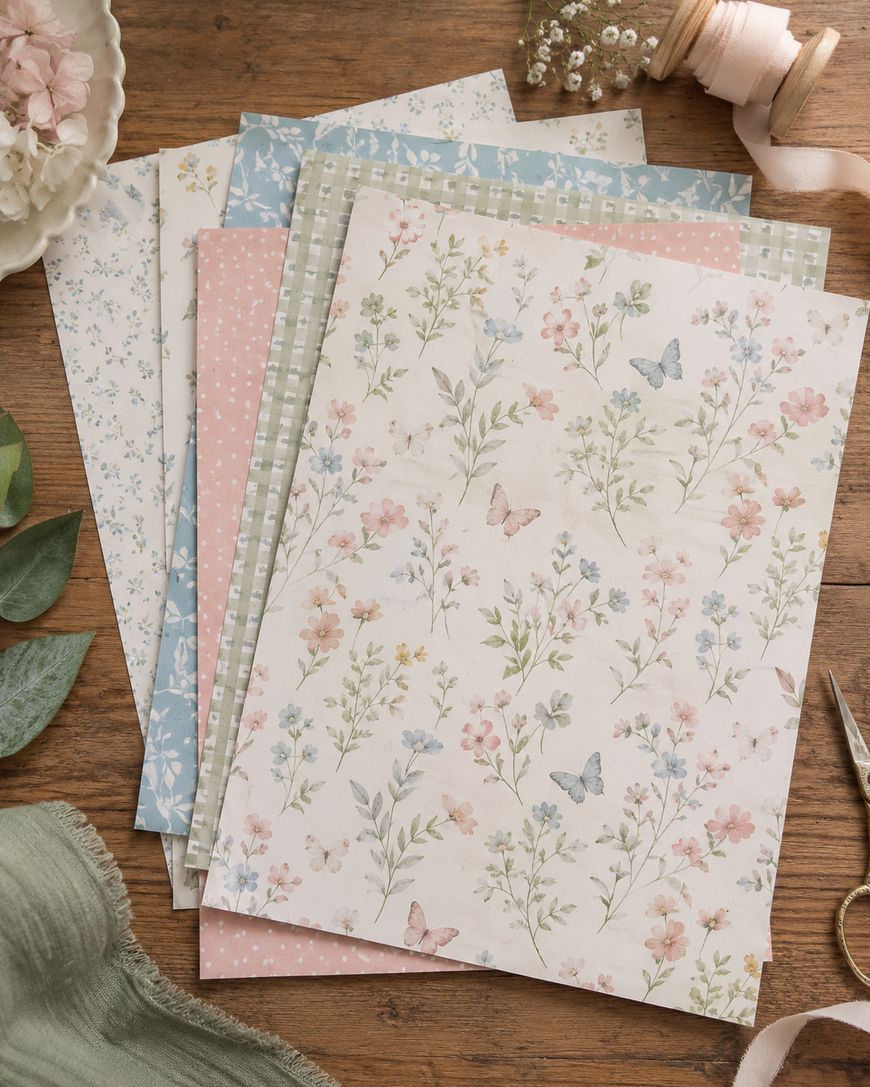
Cut the bottom layer slightly larger than the top layer so a thin border peeks out around the edges. This small trick makes handmade layouts look more polished.
Layer papers in odd numbers, like three sheets, for a more balanced look. Even numbers can sometimes feel stiff or too symmetrical.

Build a Family Recipe Page
A family recipe page preserves a dish the way a photo never could, by keeping the handwriting, the substitutions, and the story behind it all in one place. Copy the recipe out by hand, or scan and print an actual handwritten card from a parent or grandparent, and pair it with a photo of the finished dish.
Leave room for a short story about the recipe itself, who taught it to you, what occasion it is usually made for, or the one ingredient everyone in the family argues about. These small notes are often what turn a plain recipe card into something worth keeping.
Ask relatives for their handwritten recipe cards before digitizing them, since the handwriting itself becomes part of the keepsake. A typed-out recipe rarely carries the same weight.
Write a Letter to Your Future Self Page
A letter to your future self page is less about photos and more about a single sealed envelope, written today and meant to be opened a year, five years, or a decade from now. Include a current photo, a short list of hopes for the year ahead, and a few predictions about where you think life will be by the time it is opened.

Seal the letter into an envelope glued or taped to the page itself, with a note on the front marking when it should be opened. Some people build one of these pages every year, creating a running thread through the album that only gets more interesting with time.
Date the outside of the envelope clearly so you do not accidentally open it too soon. The anticipation of waiting is part of what makes this page idea worth doing.
Add Handwritten Journaling
Journaling turns a page of photos into a page of memories. A few sentences about where you were, who you were with, or how you felt make the page meaningful to look back on later.

You do not need perfect handwriting or a long paragraph. Short, honest notes tend to feel more genuine than anything overly polished.
Write your journaling first, then design the page around it, when the story matters more than the photo. This flips the usual order and keeps the words from feeling like an afterthought.
Build a Concert or Live Show Page
A concert page turns a single night out into a page built around sound and energy rather than just a photo. Center it on the ticket stub or wristband, and add the setlist if the venue posted one, a blurry crowd shot, and a note about the one song that made the whole night worth it.
These pages tend to look best a little messy and layered, since a polished, neatly-cut layout can undersell the chaos of a live show. Torn edges, an overlapping merch tag, or a folded flyer from the venue all add to the feeling of the night rather than distract from it.
Grab the setlist, wristband, or a flyer before you leave the venue, since these small pieces of paper rarely survive the walk to the car. A ticket stub alone tells half the story.
Use Washi Tape and Stickers With Restraint
Washi tape and stickers are fun scrapbook page ideas for adding color, but they can overwhelm a page fast. Pick one or two accent colors and repeat them in small doses across the layout.

Try using washi tape to frame a photo edge or to create a faux border along the top of the page. Stickers work well tucked into corners or layered slightly under a photo for depth.
Choose embellishments that echo a color already in your photo. This ties the whole page together without extra effort.
Make a New Home Page
A new home page marks the start of a new chapter with more than just a photo of the front door. Include the key to the house, a paint swatch from the first room you painted, or a torn corner of the moving boxes, alongside a photo of the empty rooms before anything was unpacked.
Leave space to jot down small details you will forget later, like the address, the day you got the keys, or the first meal you ate in the new kitchen. A floor plan sketch, even a rough one, makes a nice addition if you want the page to feel more like a keepsake than a snapshot.
Photograph the empty rooms on move-in day before furniture arrives, since that particular version of the house only exists for a few hours. It is easy to forget to document a home before it becomes lived-in.
Track a Holiday Tradition Page
A holiday tradition page follows one specific ritual, like decorating the tree, baking a certain cookie, or an annual pajama photo, across several years on facing pages instead of scattering it through a single year’s album. Seeing the same tradition repeated side by side makes small changes, a new house, a taller kid, a different dog, much more noticeable.
Keep the format consistent each year: same pose, same spot in the house, same short caption style, so the comparison does the work rather than the design. Add the date clearly to each year’s version so the sequence is easy to follow later.
Pick a tradition you already do every year rather than starting a new one just for the page, since consistency is what makes this format work. The repetition is the whole point.
Build Theme Pages Around a Single Idea
Instead of a general month or season, build a page around one narrow theme, like a favorite recipe, a pet’s first year, or a specific inside joke. Theme pages tend to feel more personal and are easier to design because the direction is already clear.

Gather three to five photos that all support the same idea before you start. This keeps the page focused and prevents you from cramming in unrelated pictures just because you have them.
Theme pages work especially well as gifts, since the recipient can follow the story in one glance. A single clear idea reads faster than a scattered collection of memories.
Track Pet Milestones on One Page
A pet milestone page gathers a first year of firsts onto a single spread: the day you brought them home, their first vet visit, the toy they destroyed within a week, and the moment they finally stopped chewing the furniture. Because pets grow and change so quickly in that first year, this page is often more fun to look back on than any single posed photo.
Include a small paw print, made with washable ink on a scrap of paper, alongside their name tag or a swatch of their first collar for a page that captures more than just their looks. A short list of nicknames they picked up along the way adds a personal touch.
Start the page within the first few months of adopting a pet, since the earliest milestones are the easiest ones to forget to document. A pet’s first year moves fast.
Document Baby’s First Year Page
A baby’s first year page condenses twelve months of change into a single spread, usually built around a monthly photo series alongside small keepsakes like a hospital bracelet, a lock of hair, or a tiny footprint taken in washable ink. Because babies change so quickly, even a photo taken a month apart can look dramatically different.
Add a short list of firsts, first smile, first word, first steps, with the date next to each one, since these details are almost always forgotten if they are not written down close to when they happened. A growth chart sticker or a note of their weight at each checkup adds another layer without needing much extra space.
Jot the date directly onto the back of each monthly photo as you take it, since a full year of nearly identical baby photos gets hard to sort later. A few seconds now saves a lot of guessing later.
Create a Friendship Page
A friendship page is built around a specific relationship rather than a single event, gathering photo booth strips, a birthday card, and a few candid shots taken over the years with one close friend. Unlike a themed trip or holiday page, this one can pull from any number of occasions as long as the through-line is the friendship itself.
Include a short handwritten note about how you met or an inside joke only the two of you would understand. A folded note passed in school, a coaster from a favorite bar, or a photo booth strip all work well as small anchoring keepsakes for this kind of page.
Ask the friend to write a line or two directly on the page if you can, since a page with both of your handwriting on it becomes more meaningful than one written by only you. It turns the page into something shared.
Why Scrapbooking Still Matters in a Digital World
Even with phones full of photos, scrapbook pages give memories a physical place to live. You can hold them, share them across a table, and revisit them without scrolling through a camera roll.
Scrapbooking also slows down how you engage with your own memories. Choosing which photos to print and how to arrange them asks you to think about the moment differently than a quick swipe through your phone does.
Frequently Asked Questions
What supplies do I need to start scrapbooking?
You need a scrapbook album, cardstock or patterned paper, adhesive, and a way to print photos. Scissors, a paper trimmer, and a few embellishments like stickers or washi tape are helpful but not required to get started.
How many photos should go on one page?
Most pages work well with one to four photos, depending on your layout style. A single large photo creates a bold focal page, while pocket pages can hold more without feeling crowded.
Do I need to journal on every page?
No, journaling is optional, but even a short date and location note adds context that photos alone cannot capture. You can always add journaling later if you want to keep your session moving quickly.
What size scrapbook album should I choose?
The two most common sizes are 12×12 and 8.5×11 inches. A smaller album is easier to store and mail as a gift, while a larger album gives you more room for bigger photos and layered designs.
Can I mix digital and printed photos on the same page?
Yes, many scrapbookers print digital photos at home or through an online printing service and use them alongside instant camera prints. Mixing print styles can even add visual interest to the page.
How do I keep my scrapbook pages from feeling cluttered?
Stick to a simple color palette and give your photos room to breathe with some open space around them. When in doubt, remove one embellishment rather than add another.
Try These Scrapbook Page Ideas on Your Next Layout
You do not need every technique above to make a page you love. Pick one or two scrapbook page ideas that fit the photos and memories you already have, and build from there.
Gather your supplies, choose a favorite photo, and start your next page this week.