Last updated: August 18, 2026
You don’t need special training to turn a plain boule into something that looks like it came from a bakery window. These sourdough scoring ideas walk you through ten designs, from the simplest slash to more detailed patterns, so you can pick one that matches your skill level today.
Below, you’ll find all ten ideas explained one by one, along with the tools and timing that help each cut open cleanly in the oven.
What You Need Before You Score
A sharp blade is the single biggest factor in a clean score. A bread lame with a fresh razor glides through the dough, while a dull blade drags and tears the surface instead of slicing it.
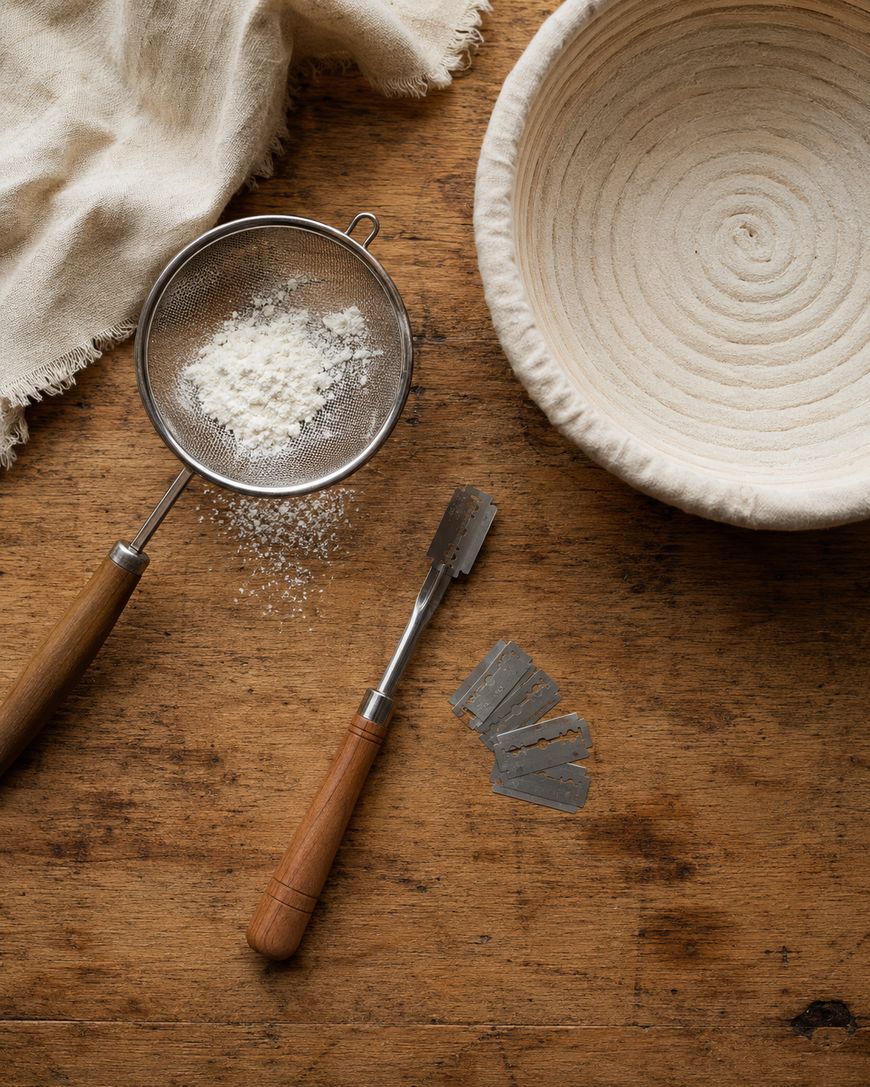
Chill your dough for 20-30 minutes before scoring if it feels soft or sticky. Firmer dough holds a line much better than dough that’s warm and relaxed.
Hold the lame at a slight angle, around 30-45 degrees, rather than straight up and down. This angle creates the “ear,” that dramatic lifted flap of crust that so many bakers chase.
Work quickly and confidently. Hesitant, slow cuts drag the dough and blur the pattern, so commit to each stroke before you start it.
Idea 1: The Classic Single Slash
This is the design every sourdough baker learns first, and it’s still one of the most reliable. One long, slightly curved cut down the center of the loaf lets steam escape evenly and produces a big, dramatic ear.
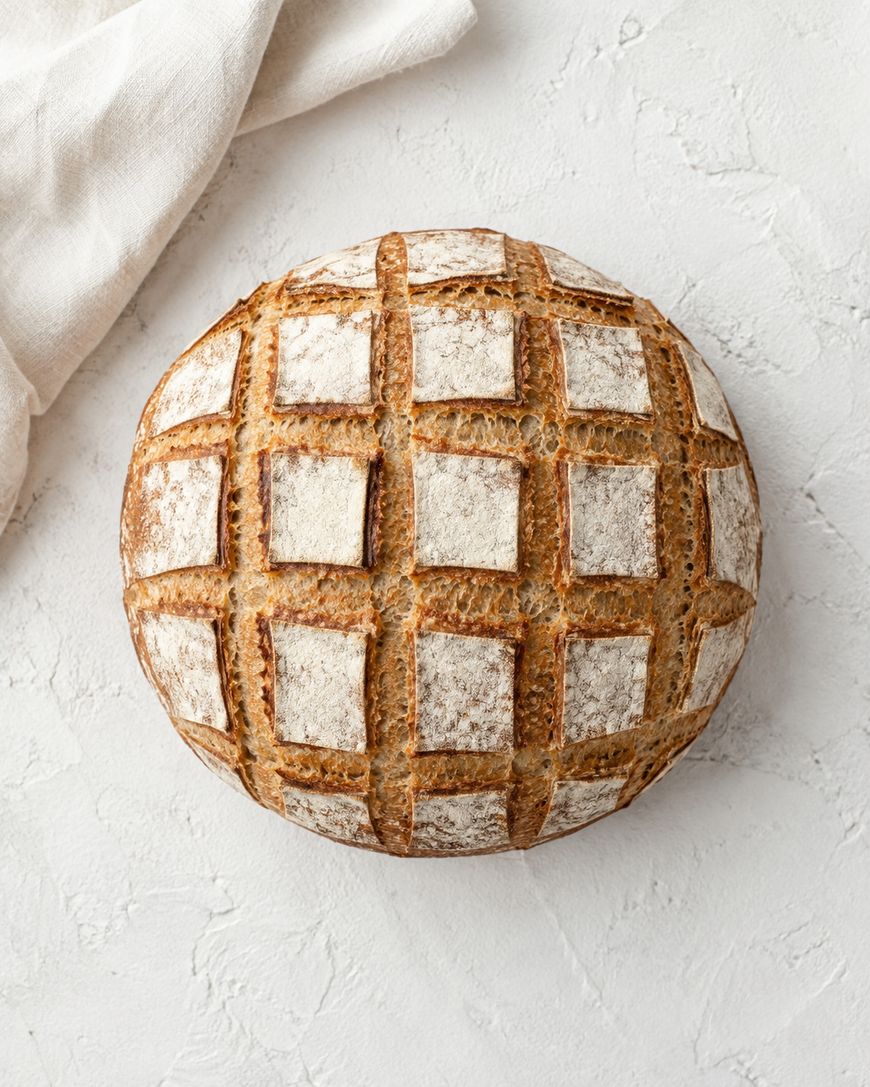
Angle your lame at 45 degrees and drag it in one smooth motion from one end of the loaf to the other. Keep the depth to about half an inch so the crumb underneath isn’t disturbed.
Idea 2: The Wheat Stalk
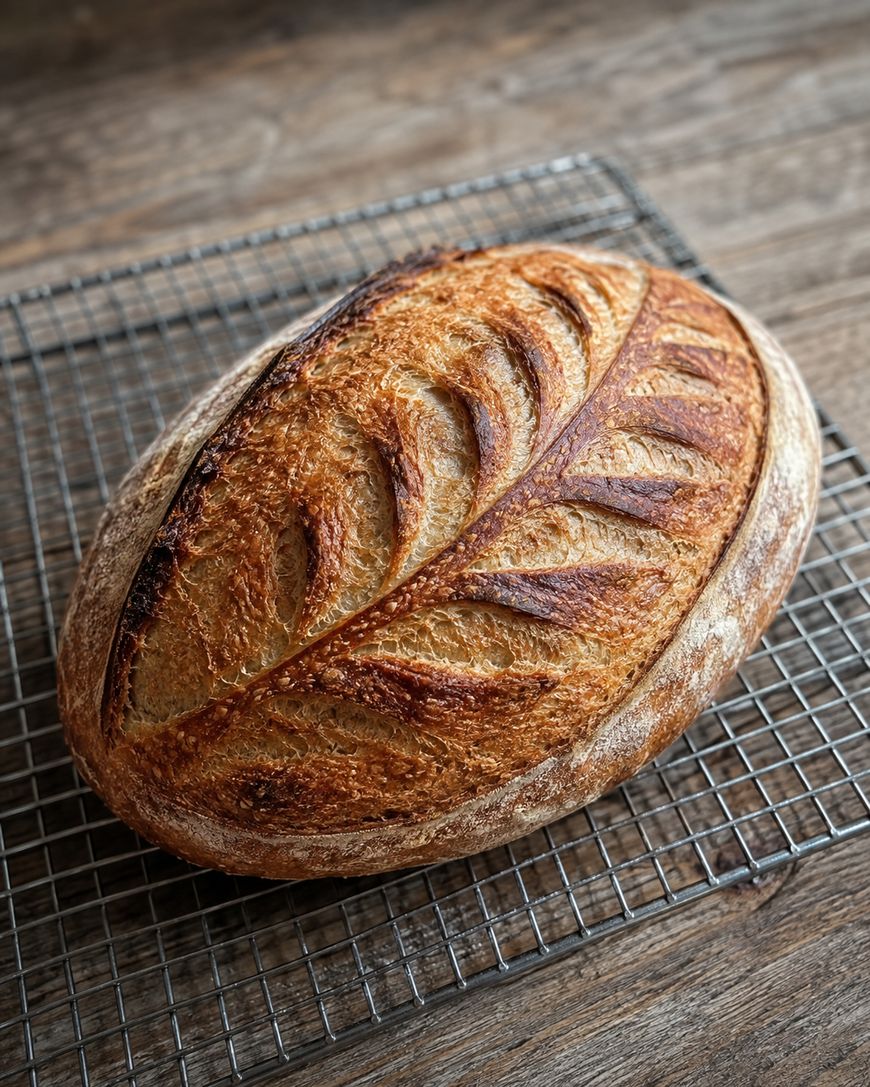
The wheat stalk pattern uses one long spine cut down the middle, then a series of short diagonal cuts branching off each side. It reads as elegant and a little rustic at the same time.
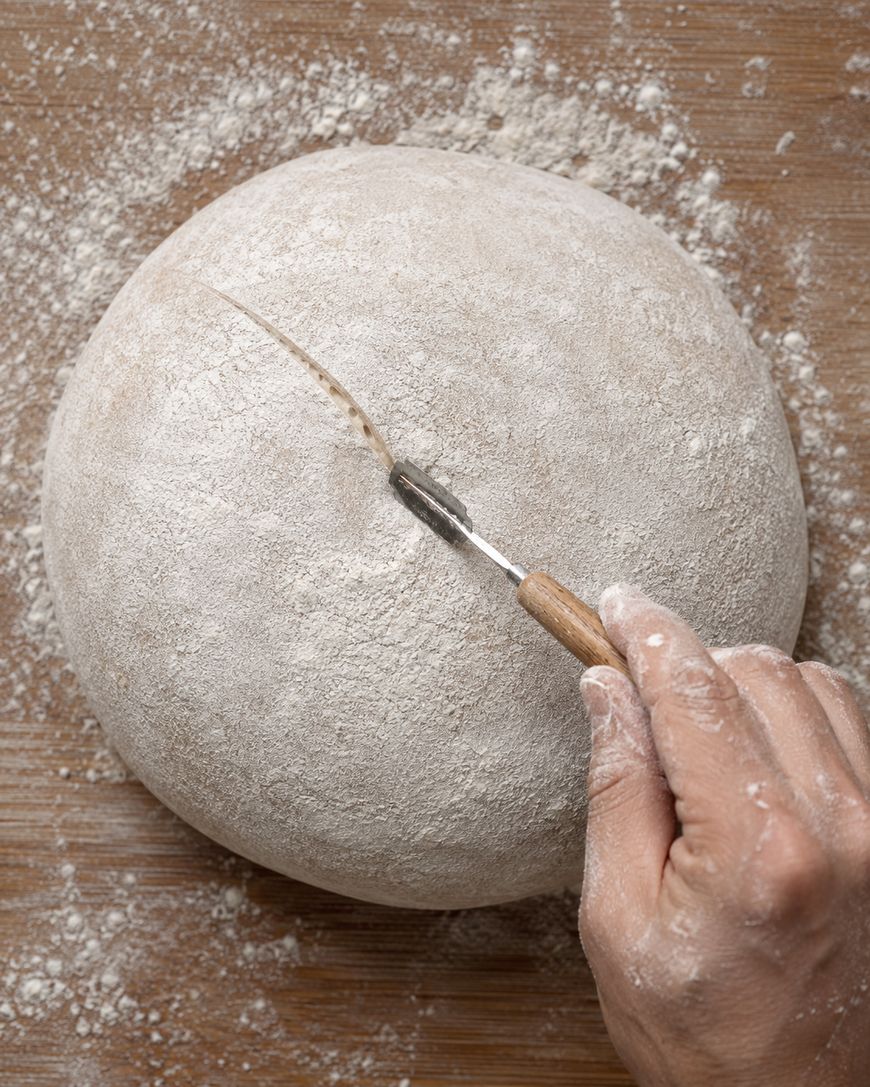
Score the spine first, then work outward from the top down, angling each small cut away from the center line. Keep the diagonal cuts short and evenly spaced for the cleanest look.
Idea 3: The Leaf Pattern
A leaf pattern uses a central vein cut with smaller veins branching diagonally outward, similar to the wheat stalk but with more curve to each line. This design works especially well on oval batards.
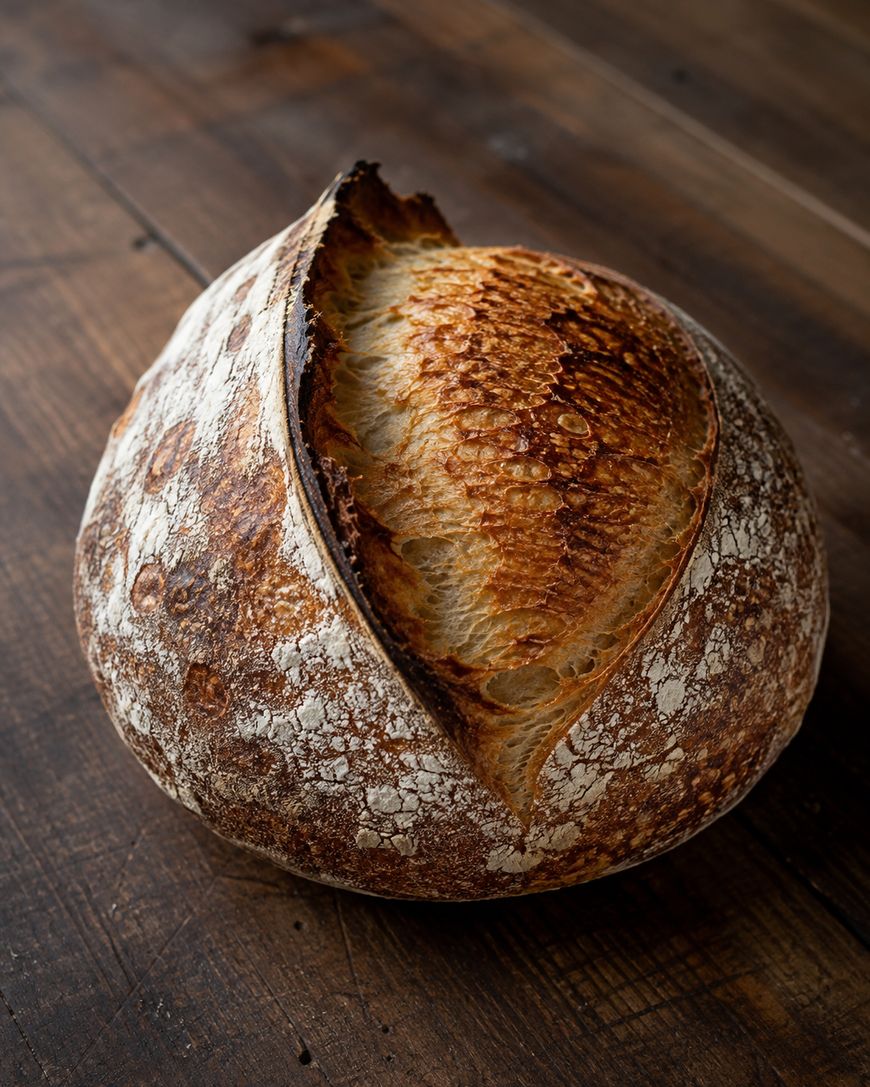
Curve your small cuts slightly rather than keeping them perfectly straight, since that subtle bend is what makes the pattern read as a leaf instead of a stalk.
Idea 4: The Crosshatch
A crosshatch uses two sets of parallel diagonal lines that cross over each other, creating a grid of little squares across the top of the loaf. It’s a striking option that photographs beautifully.
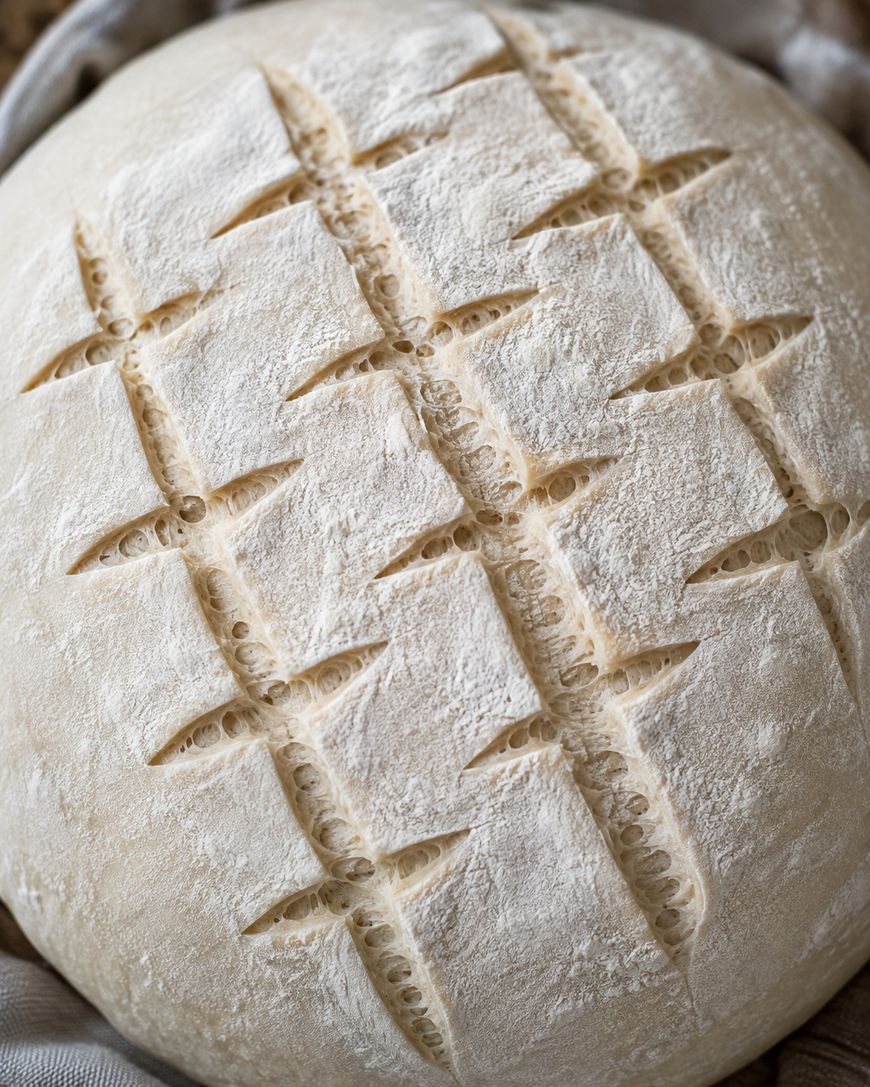
Space your first set of lines about an inch apart, then score a second set at the opposite angle over the top. This pattern works best on rounder boules with plenty of surface area.
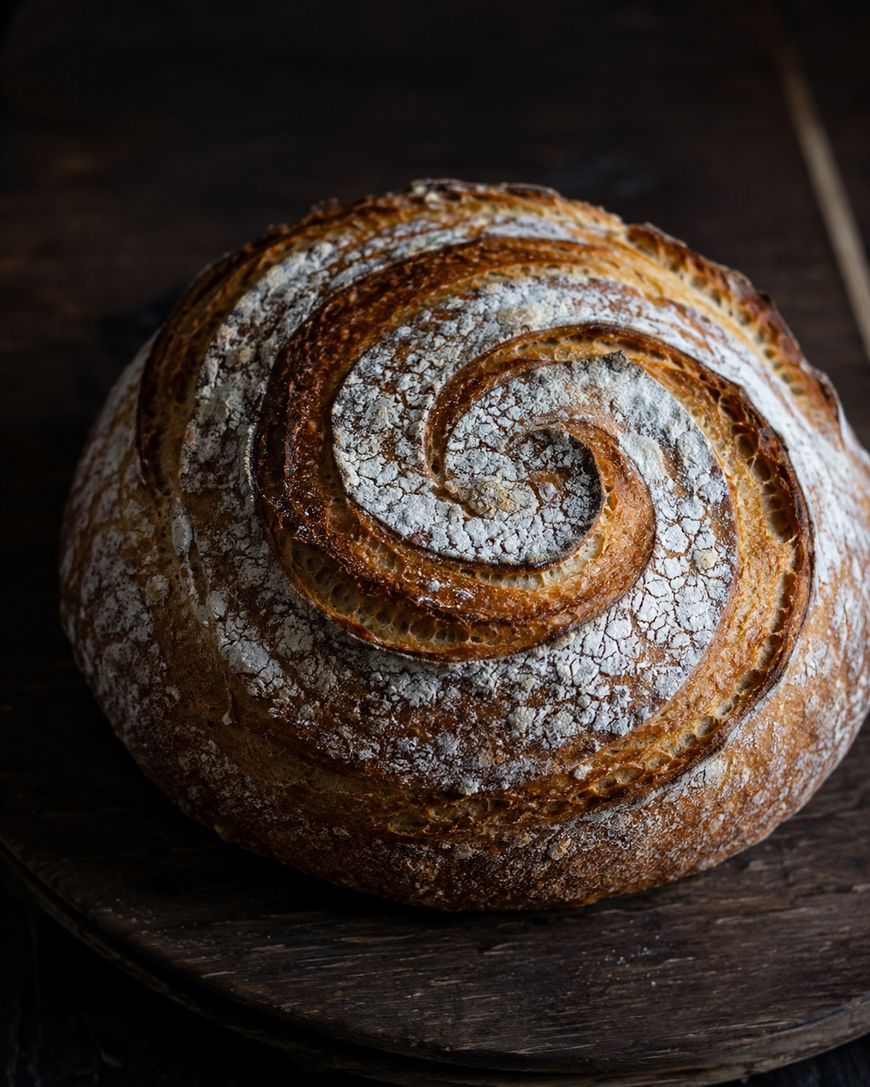
Idea 5: The Spiral
A spiral score starts at the center of the loaf and curls outward in a continuous line, almost like a snail shell. It’s more advanced, but it produces one of the most eye-catching finished loaves you can make.
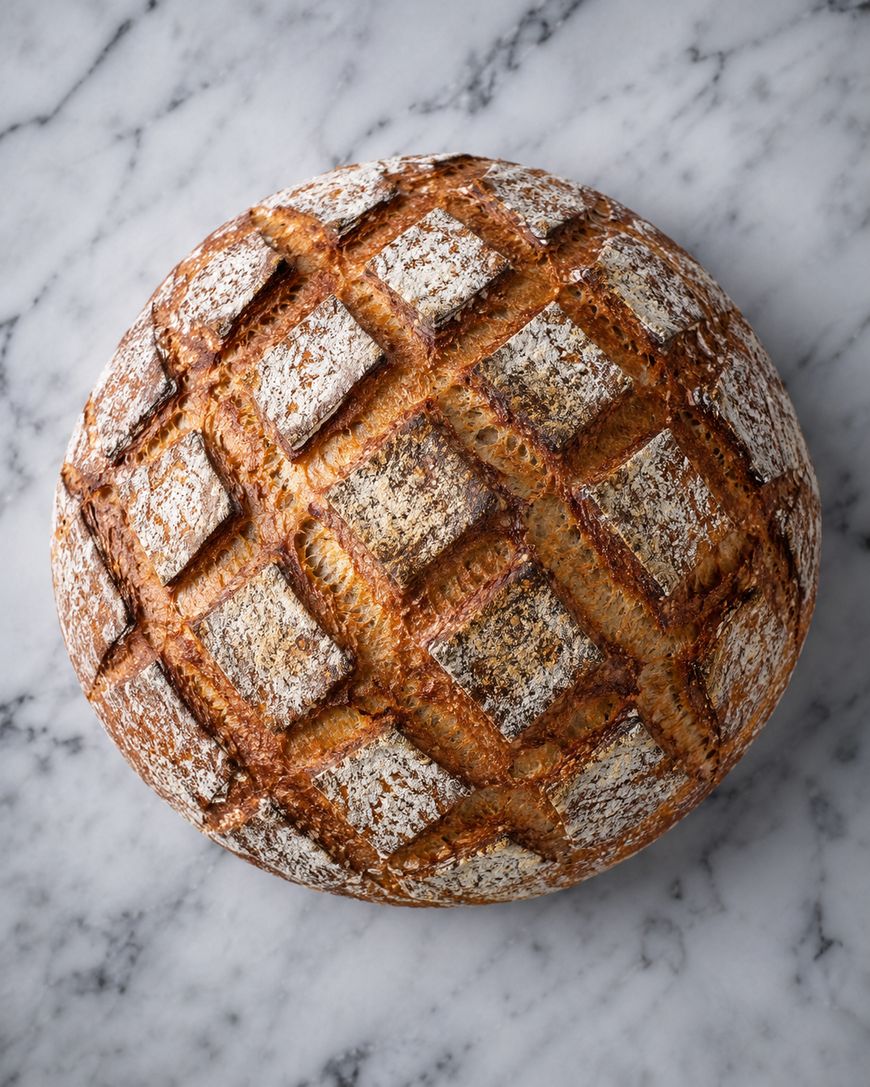
Start your cut at the very top center and rotate the loaf slightly as you go, keeping the spacing between rings even the whole way around.
Idea 6: The Basket Weave
The basket weave uses short, straight cuts arranged in alternating horizontal and vertical segments to mimic a woven texture. It takes patience but doesn’t require particularly advanced blade control.
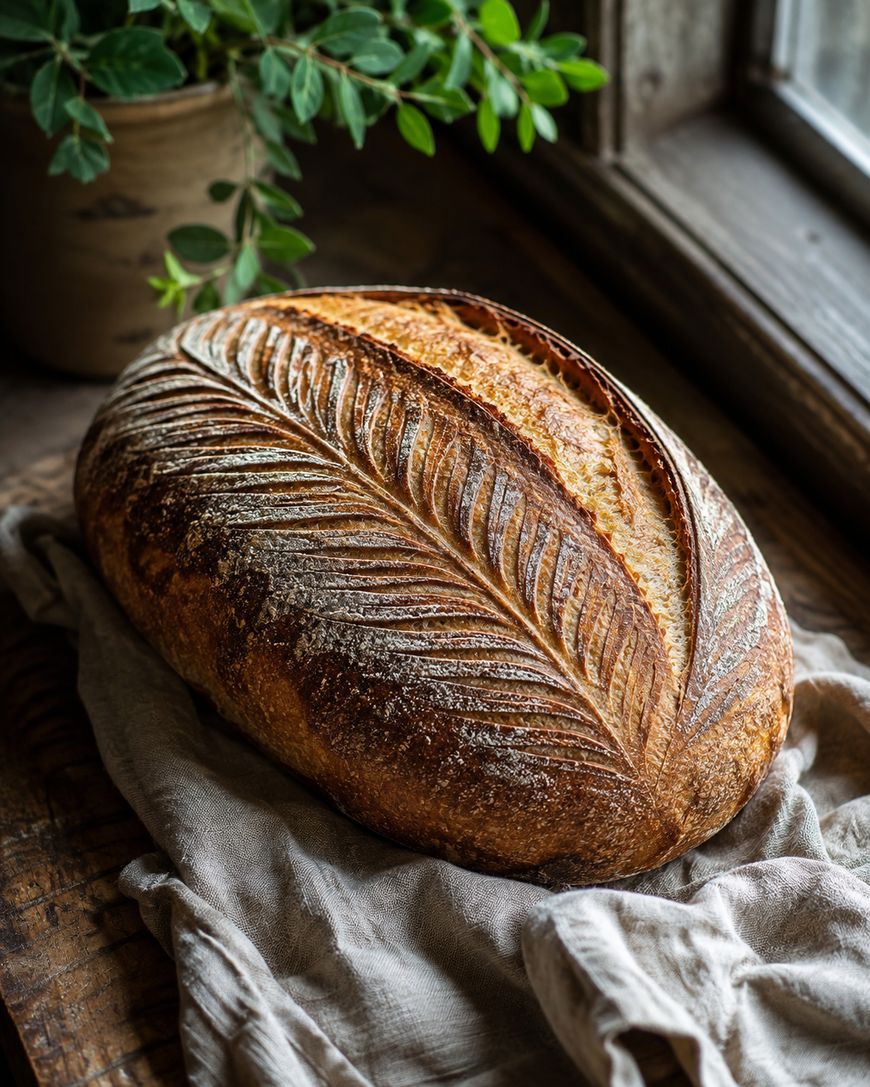
Work in small sections rather than trying to plan the whole loaf at once, and keep every cut the same length so the “weave” stays consistent.
Idea 7: The Half-Moon Border
Instead of one central cut, this design uses a row of small curved cuts along the outer edge of the loaf, framing the center rather than filling it. It leaves a clean, open middle that highlights a floured surface.
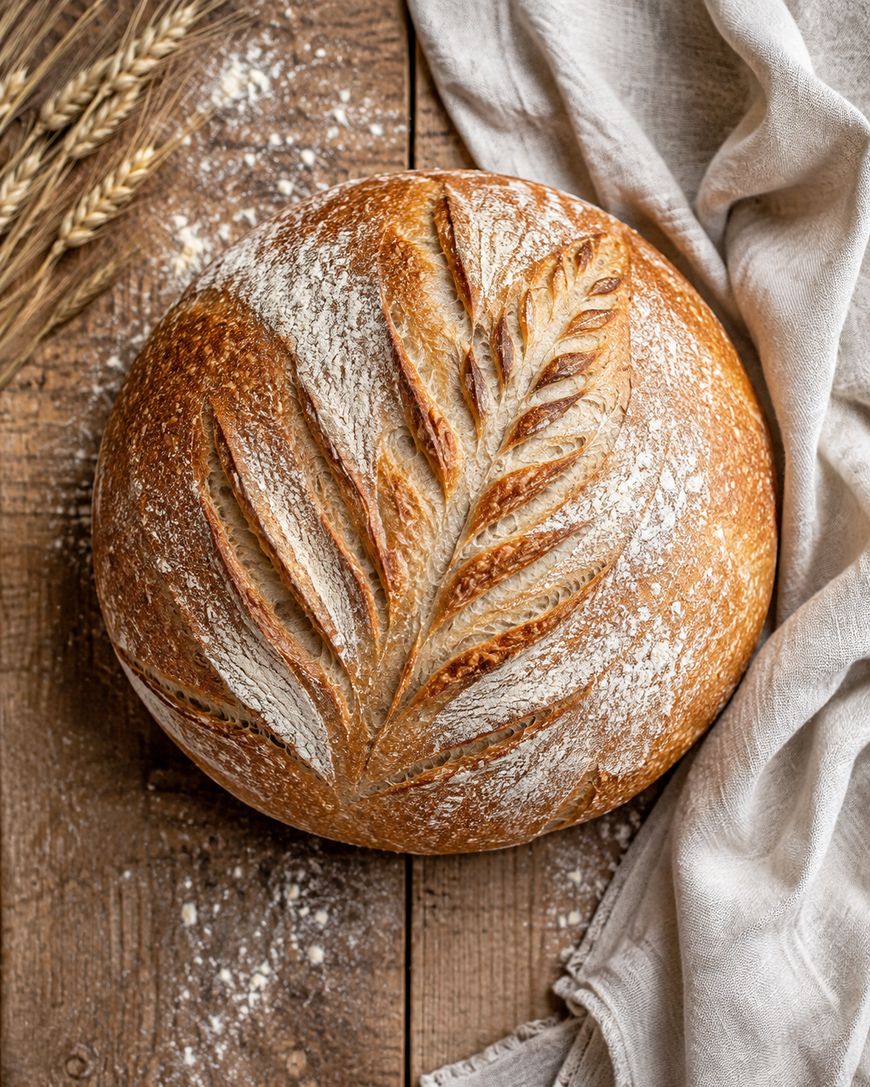
Space each half-moon evenly around the perimeter and keep the depth shallow so the border stays delicate rather than heavy.
Idea 8: The Feather
The feather pattern combines one gently curved central line with fine, closely spaced diagonal cuts along both sides, similar to a wheat stalk but softer and more detailed. It’s a favorite for special-occasion loaves.
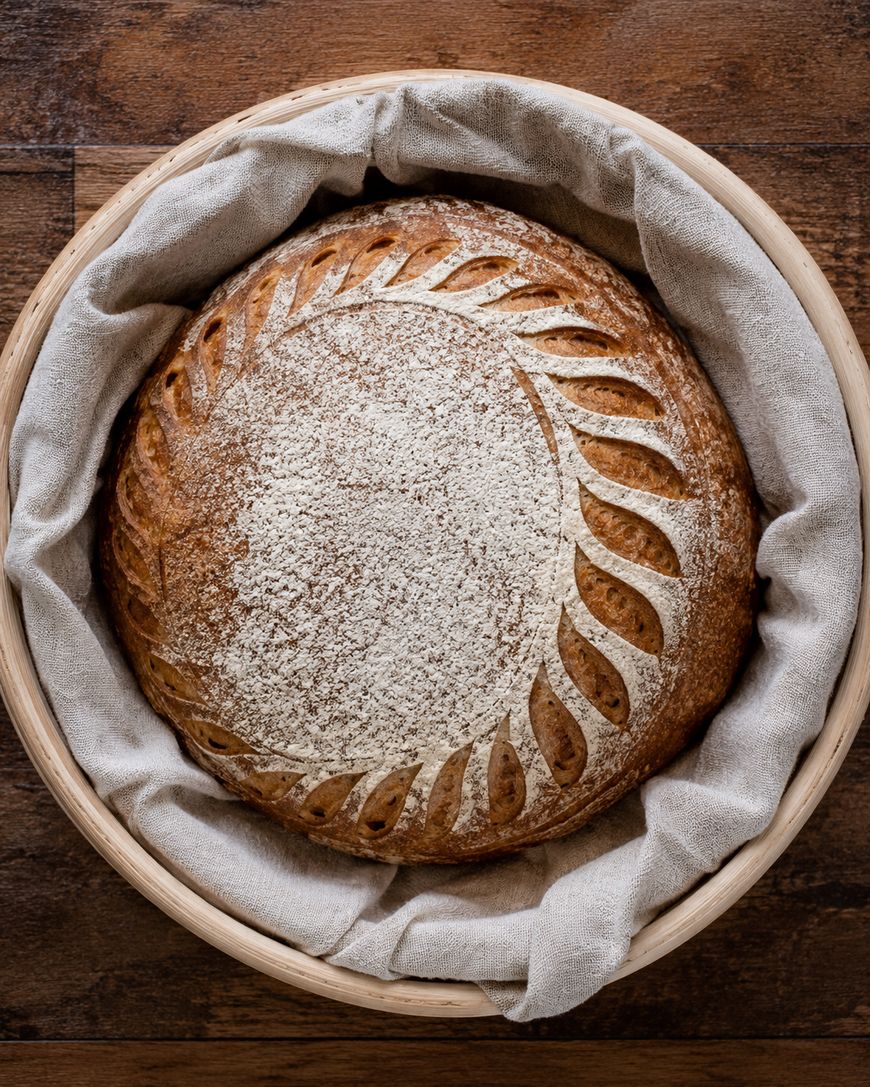
Because the cuts sit so close together, take your time and use very light pressure so each line stays distinct instead of blending into the next.
Idea 9: The Geometric Grid
A geometric grid uses straight, evenly spaced parallel lines running in just one direction, without any crossing or curves. It’s the most modern-looking option on this list and works well for bakers who want a clean, minimalist finish.
Measure your spacing with a ruler or a straightedge dough scraper if you want the lines perfectly even, since any inconsistency stands out more in a simple pattern than a busy one.
Idea 10: The Signature Monogram
A monogram score uses a single letter or initial cut into the top of the loaf, personalizing it for a gift or special occasion. This is the most advanced idea on the list since it requires steady, deliberate control.
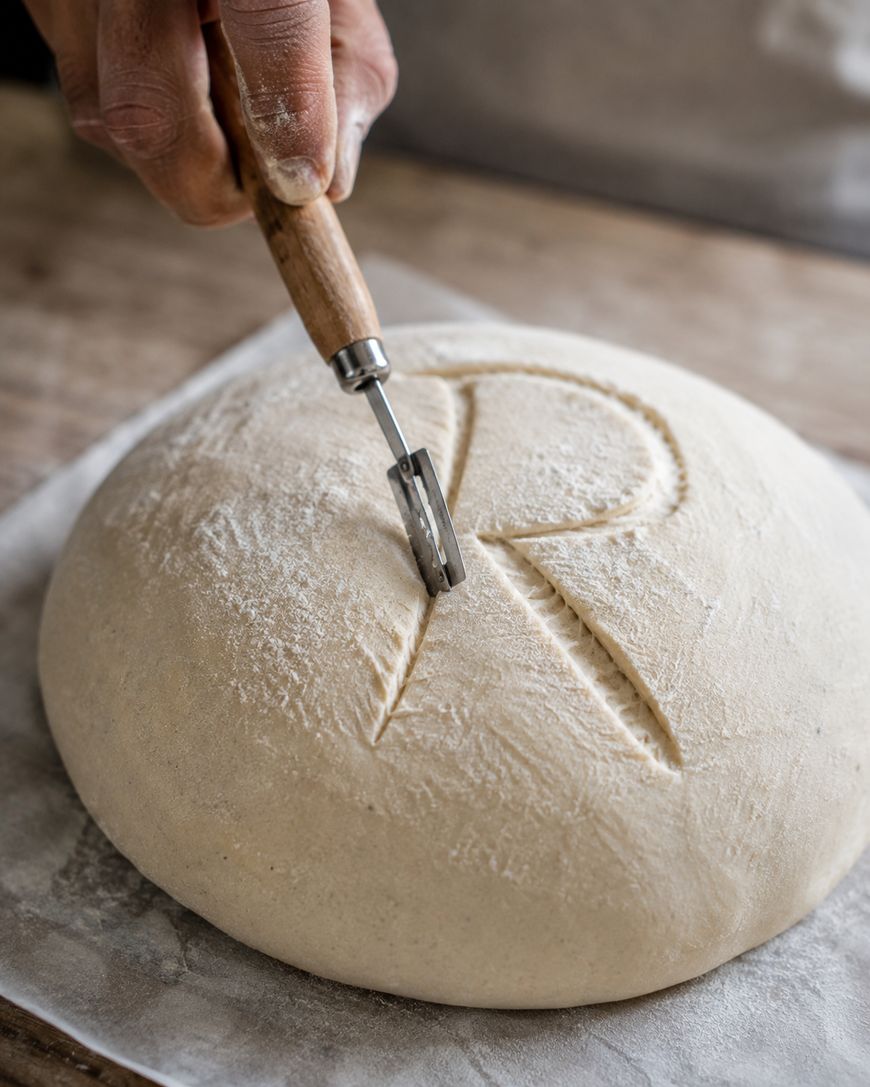
Practice the letter shape on a piece of parchment paper first so your hand knows the motion before you commit the blade to real dough.
Why Scoring Matters for Your Bake
Scoring isn’t just decorative. It controls exactly where your loaf expands in the oven, which keeps the crust from tearing randomly in weak spots.
A well-placed score also affects the crumb structure, since it releases built-up steam in a controlled way rather than letting it force its way out unpredictably. That’s part of why bakers treat scoring as a real skill worth practicing, not just a final flourish.
Your blade angle, dough temperature, and confidence all work together here. Once you’ve practiced a few of these sourdough scoring ideas, you’ll start to feel which one suits your dough’s hydration and your own steady hand.
Frequently Asked Questions
What’s the best blade for scoring sourdough?
A dedicated bread lame with a fresh, single-edge razor blade gives you the cleanest results. A very sharp paring knife can work in a pinch, but it doesn’t glide through dough the same way.
Why does my scored pattern disappear in the oven?
This usually happens when the dough is too warm and relaxed, or the cuts weren’t deep enough. Chilling the dough briefly before scoring helps the pattern hold its shape.
How deep should I score sourdough?
Most patterns only need about half an inch of depth. Cutting too deep can disturb the crumb structure underneath the crust.
Can I score sourdough without a lame?
Yes, a very sharp razor blade or a thin, sharp knife can substitute for a dedicated lame, though you may lose a bit of precision on detailed patterns like the feather or spiral.
Do I need to flour my loaf before scoring?
A light dusting of flour helps intricate patterns like the leaf or crosshatch stand out visually against the darker crust once baked.
What causes uneven ears after baking?
Inconsistent blade angle is the most common cause. Keeping your lame at a steady 30-45 degree angle throughout the cut produces a more even lift.
Try One of These Sourdough Scoring Ideas on Your Next Bake
Pick just one pattern from this list for your next loaf rather than trying to master all ten at once. With a sharp blade, a confident hand, and a little practice, these sourdough scoring ideas will start to feel like second nature.
Looking to put your sourdough to use? Check out these Sourdough Add-Ins for flavor inspiration.
Have extra starter on hand? Try these Sourdough Discard Recipes next.
New to sourdough? This Sourdough Starter Recipe walks you through building your own from scratch.