Last updated: September 28, 2026
You want a sweet potato casserole with marshmallows that comes out creamy underneath and golden and toasted on top, and this version gets you there every time.
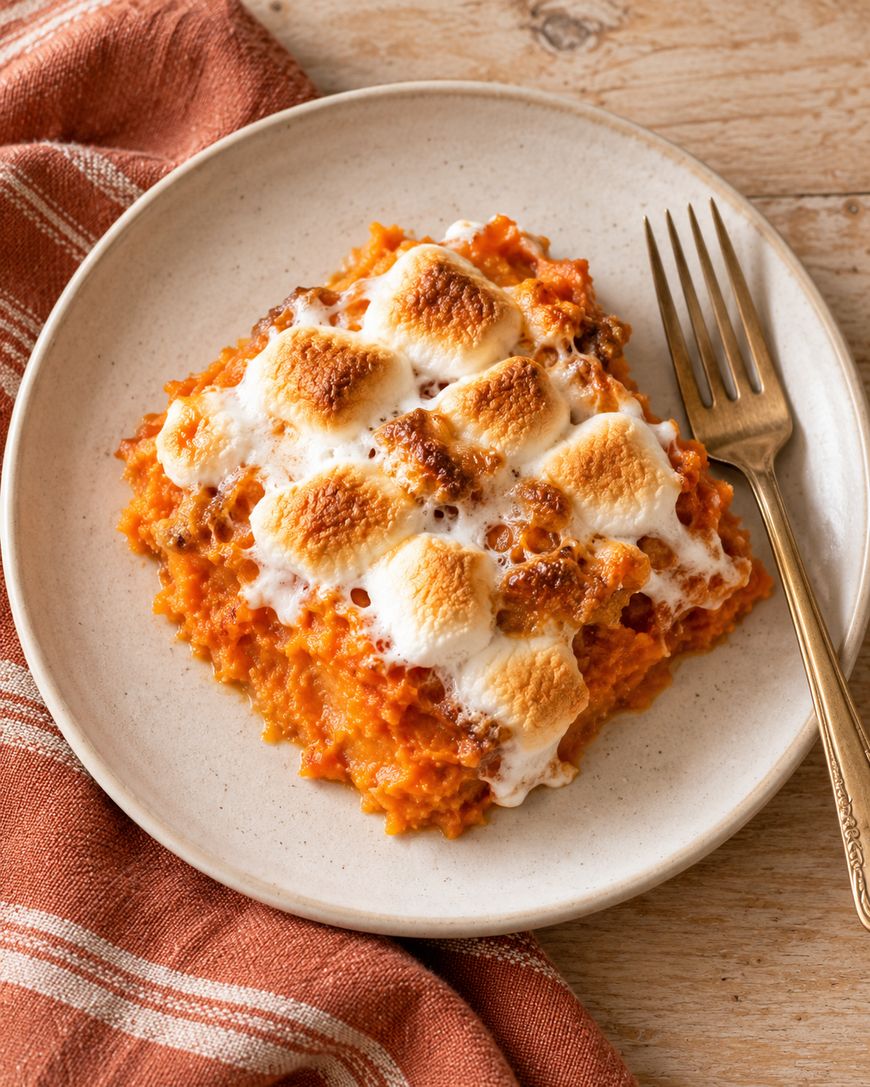
The recipe card below has the exact measurements and steps, so you can start cooking right away or read on for tips and variations first.
What Makes This Sweet Potato Casserole With Marshmallows Work
This dish comes down to two layers working together.
A soft, buttery sweet potato base sits under a blanket of marshmallows that puffs and browns in the oven.
You mash the sweet potatoes while they are still warm, since warm potatoes absorb the butter and brown sugar more evenly than cooled ones.
That warmth also helps the mixture set into a smooth, scoopable base instead of a grainy one.
Brown sugar brings a deeper, more caramel-like sweetness than white sugar would.
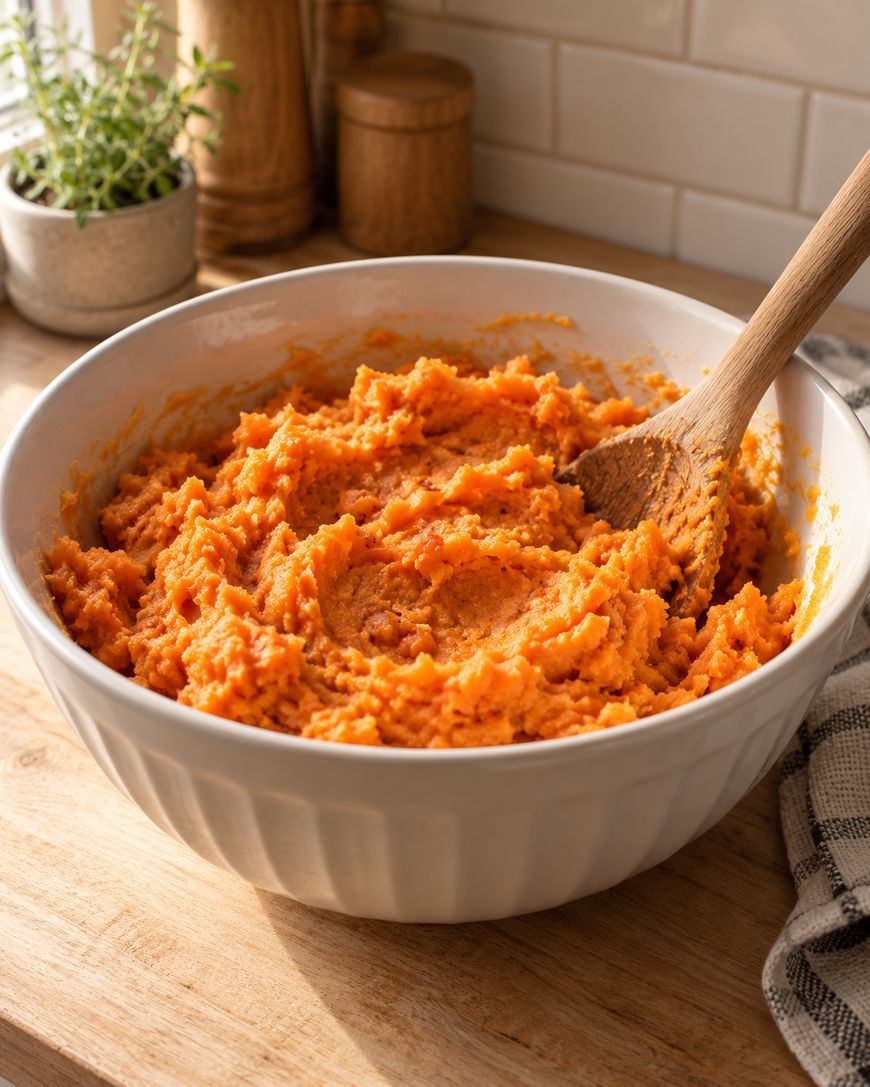
A touch of cinnamon and vanilla rounds out the flavor without turning the dish into dessert.
Choosing and Cooking the Sweet Potatoes
Look for sweet potatoes that feel firm and heavy for their size, with smooth, unblemished skin.
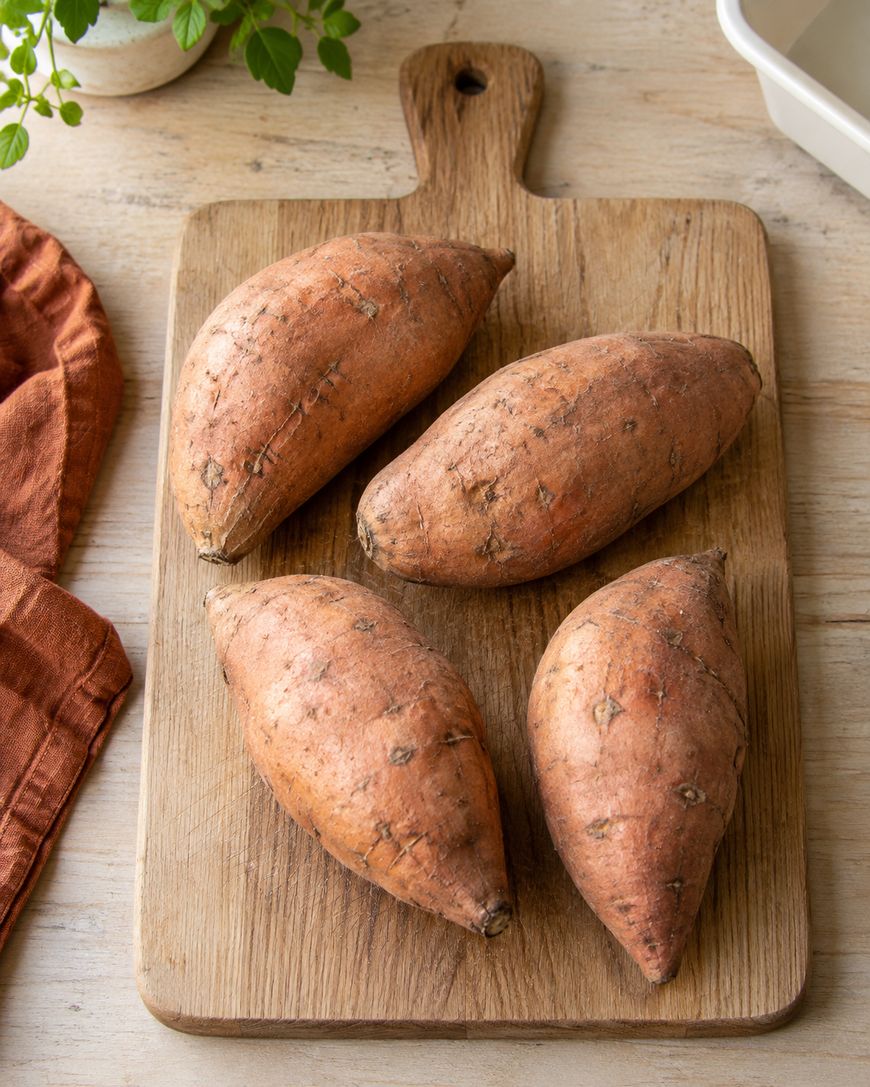
Medium sweet potatoes, roughly the length of your hand, cook more evenly than oversized ones.
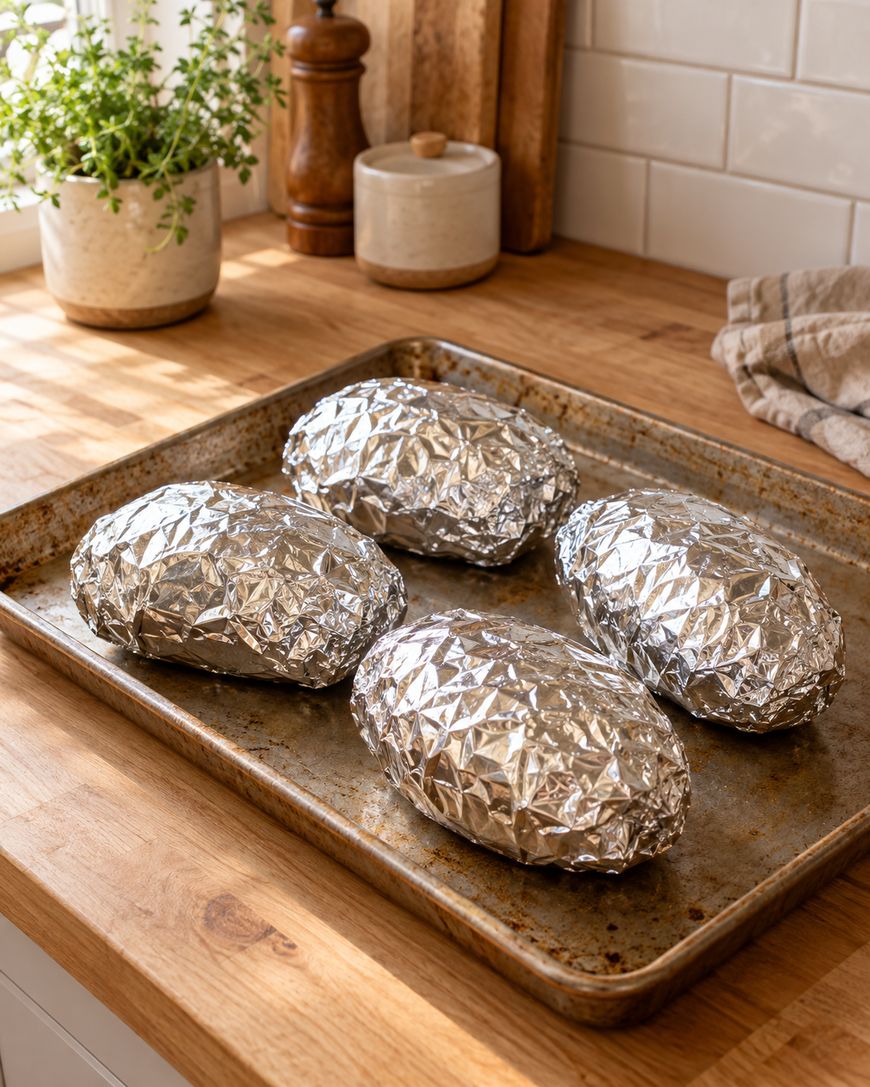
Baking the sweet potatoes whole in their skins concentrates their natural sugars far more than boiling does.
Wrap each one in foil and bake at 400°F for about an hour, until a fork slides in with no resistance.
Boiling works in a pinch and cuts the time down, but the flesh comes out slightly wetter.
If you boil them, drain thoroughly and let the pieces sit in the colander for a few minutes so excess water can escape before mashing.
Building the Sweet Potato Layer
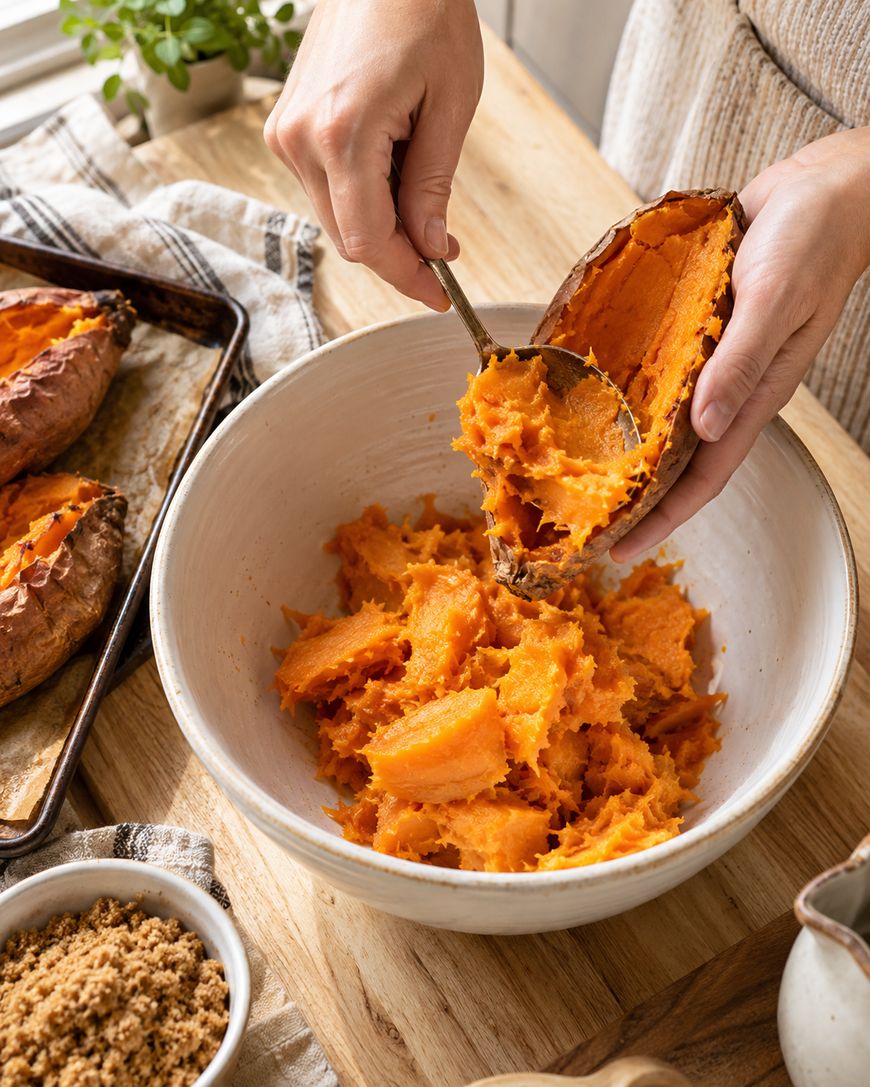
Scoop the warm flesh away from the skins and mash it until mostly smooth, a few small lumps are fine.
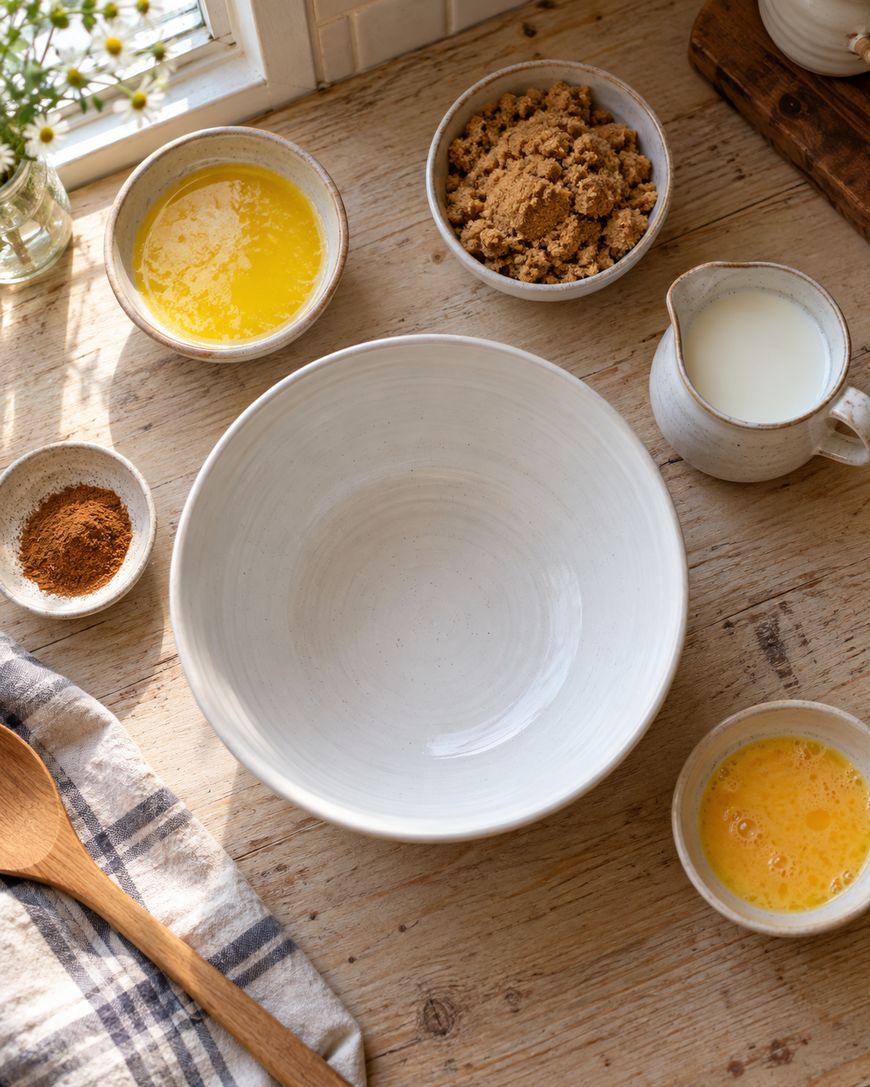
Stir in melted butter, brown sugar, milk, egg, vanilla, cinnamon, and salt until the mixture turns glossy and even in color.
The egg is what helps the layer hold its shape once baked instead of staying loose like plain mashed sweet potatoes.
Spread the mixture into a buttered baking dish in an even layer, pressing it gently into the corners.
If the mixture seems thin, a extra spoonful of brown sugar will not disturb the texture, but do not add extra egg, since that changes how the layer sets.

A wooden spoon works better than a mixer here, since overmixing can make the layer gummy.
Adding the Marshmallow Topping
Bake the sweet potato layer alone first, so it sets before the marshmallows go on.
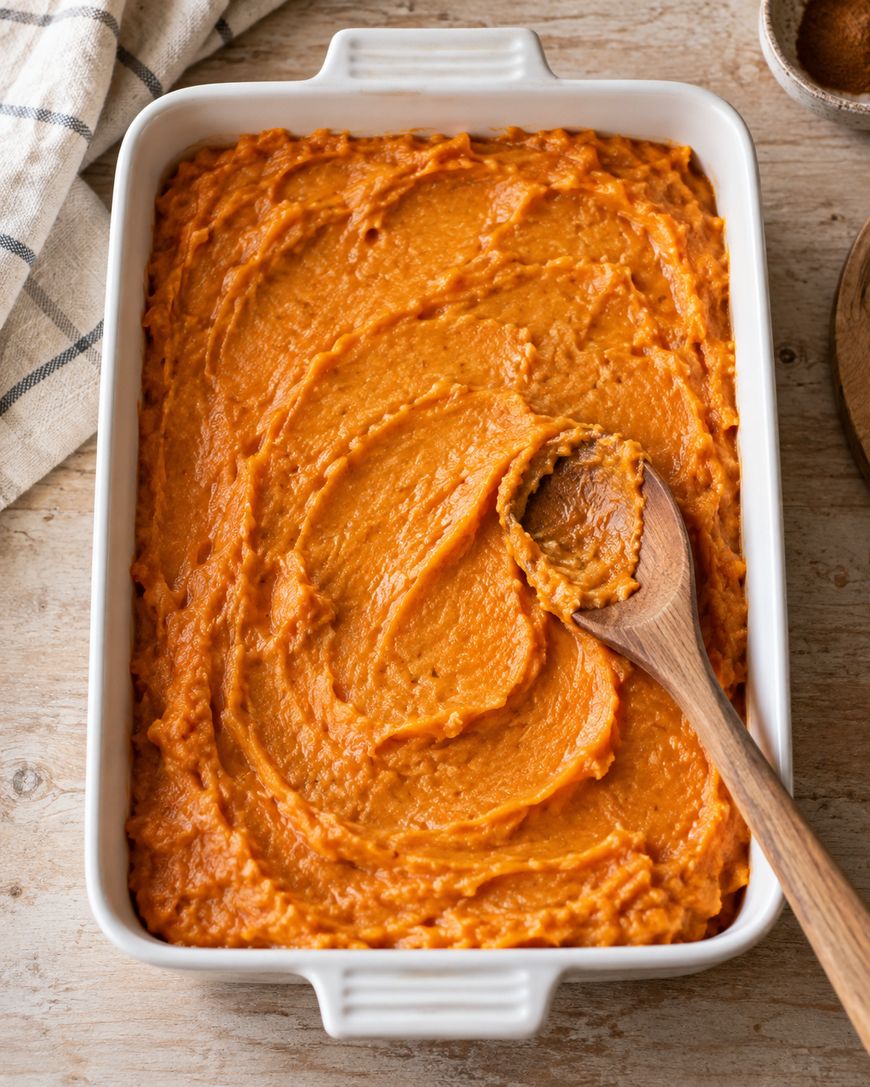
Adding marshmallows too early means they melt into the filling instead of toasting on top of it.
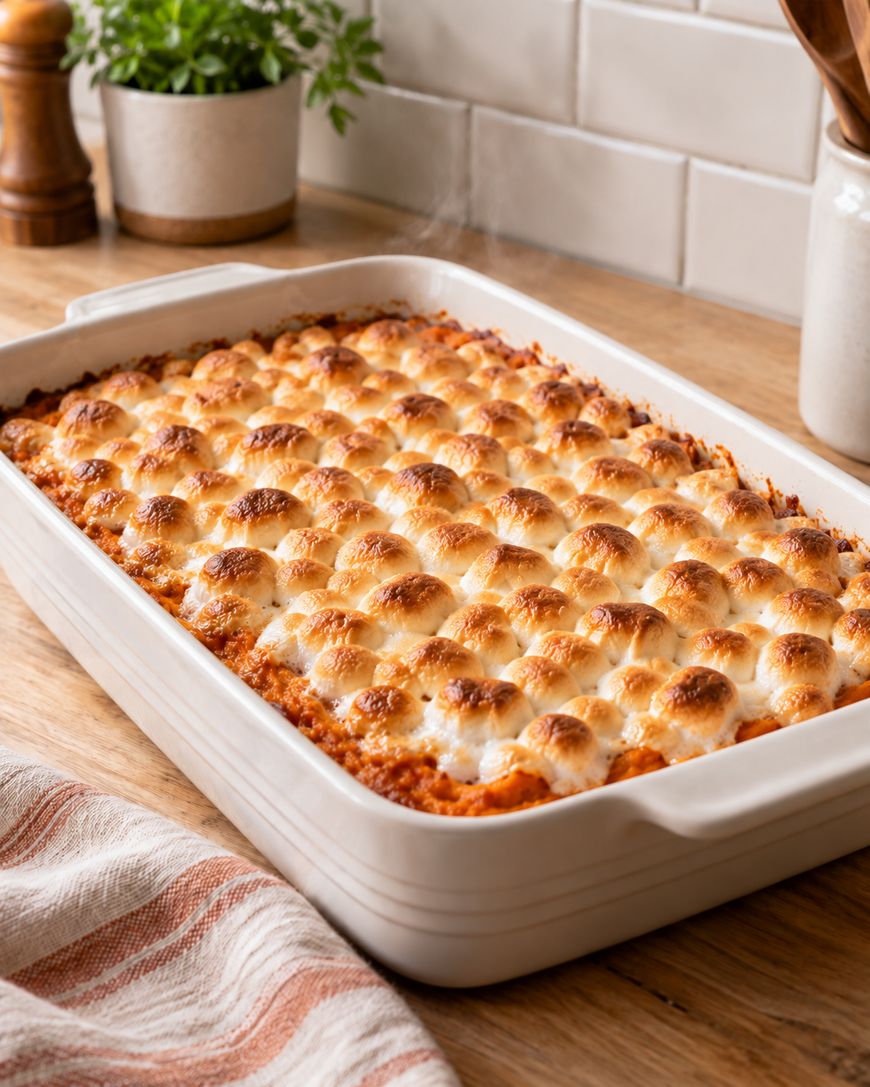
Once the base has baked and looks set at the edges, scatter mini marshmallows evenly across the surface.
Return the dish to the oven just long enough for the marshmallows to puff and turn golden brown, watching closely since they can go from perfect to burnt within a minute or two.
For extra color, a quick pass under the broiler for the final thirty seconds gives the marshmallows a toasted, slightly charred edge in spots.

Stay at the oven the entire time the broiler is on, since marshmallows scorch fast under direct heat.
Variations Worth Trying
A pecan streusel layered under the marshmallows adds crunch and a nutty contrast to the soft filling.
Mix chopped pecans with a little brown sugar and melted butter, then sprinkle it over the sweet potato layer before the marshmallows go on.
Swap mini marshmallows for large ones if you prefer bigger toasted pockets with more contrast between gooey and crisp.
A pinch of ground ginger or nutmeg alongside the cinnamon gives the filling a warmer, more spiced flavor for fall gatherings.
Maple syrup can replace part of the brown sugar for a different kind of sweetness with an earthier finish.
Orange zest stirred into the filling brightens the whole dish and pairs especially well with the marshmallow topping.
Make-Ahead and Storage Tips
Prepare the sweet potato layer up to two days ahead, cover it tightly, and refrigerate it unbaked.
Bring the dish closer to room temperature before baking so it heats through evenly, then add the marshmallows once the base is set.
Store leftovers covered in the refrigerator for up to four days.
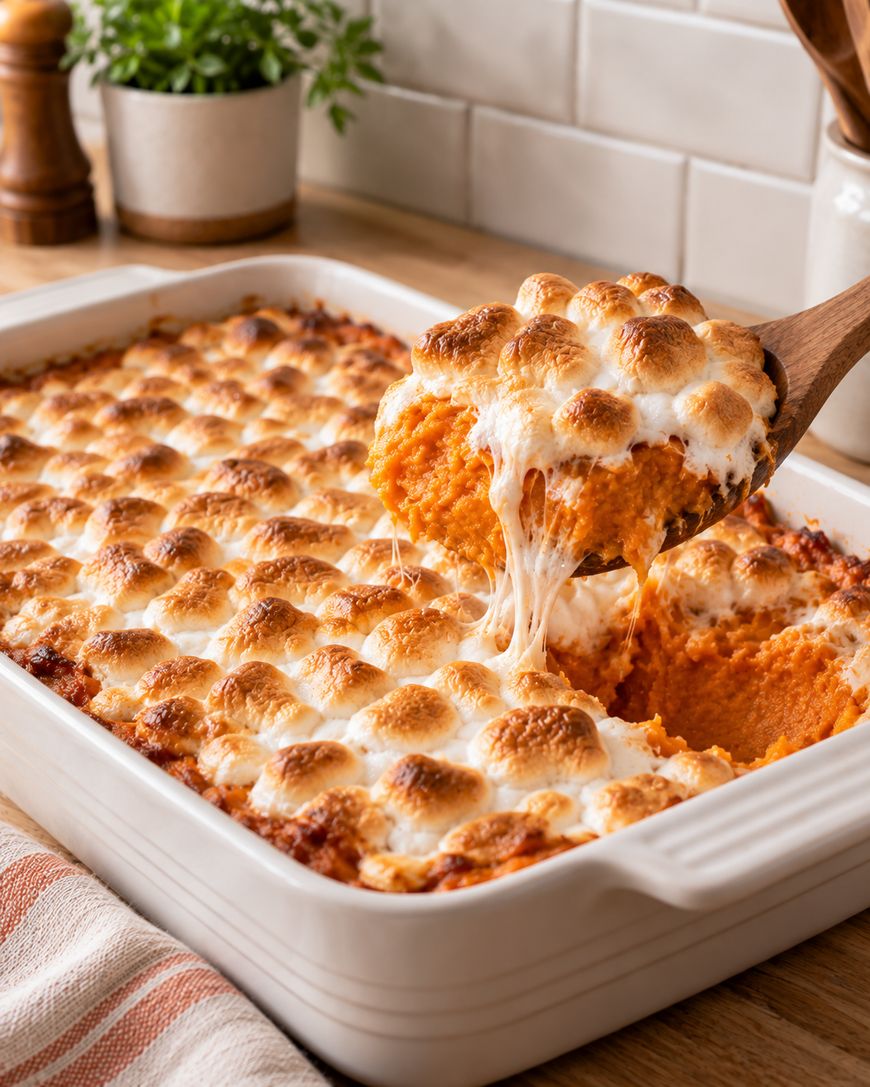
Reheat individual portions in the microwave, or warm the whole dish in a 350°F oven until heated through, adding a few fresh marshmallows on top if the originals have deflated.
This casserole does not freeze well once the marshmallows are baked on, since they turn rubbery after thawing.
If you want to freeze ahead, freeze only the unbaked sweet potato layer and add the marshmallows fresh after thawing and reheating.
Where This Sweet Potato Casserole With Marshmallows Comes From
Sweet potato casserole with marshmallows became a fixture on American holiday tables in the early twentieth century, once marshmallow manufacturers began promoting the pairing in recipe pamphlets.
The combination of a savory-leaning root vegetable with a candy-like topping caught on quickly and has stayed on Thanksgiving and Christmas tables ever since.

Some cooks in the South add the topping as more of a pecan streusel than marshmallows, reflecting older versions of the dish.
Both traditions now sit comfortably side by side, and plenty of tables serve a version that borrows from each.
Ready to bring this to your own table? Grab the full recipe card below and you will have it in the oven in no time.
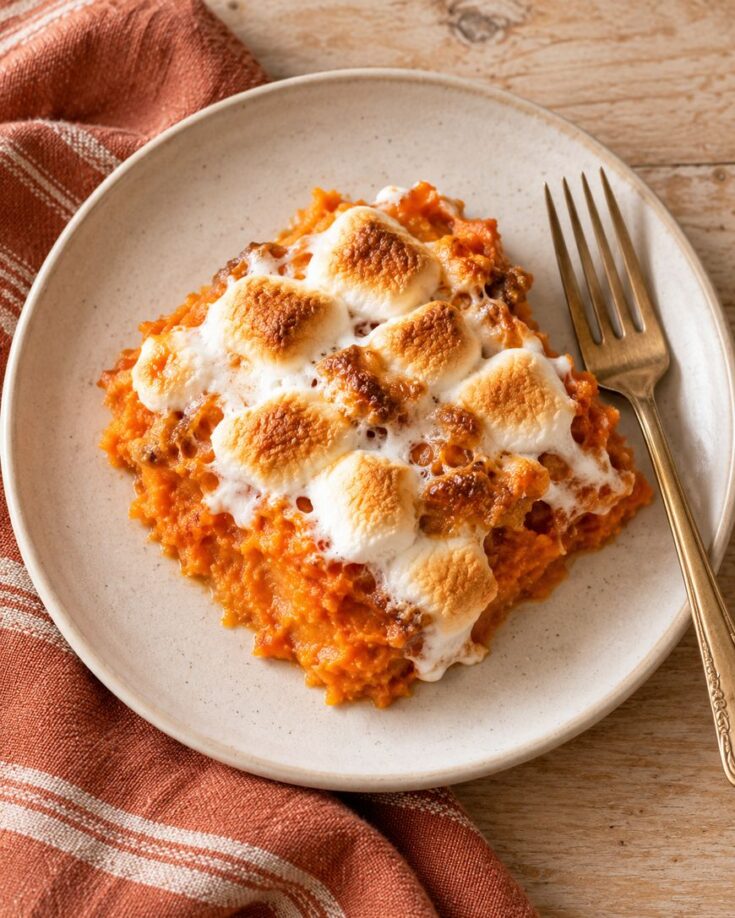
Sweet Potato Casserole With Marshmallows
A creamy brown sugar sweet potato casserole topped with golden toasted marshmallows, perfect for Thanksgiving and Christmas dinner.
Ingredients
- 4 pounds sweet potatoes (about 4 medium)
- 1/2 cup unsalted butter, melted
- 1/2 cup packed brown sugar
- 1/4 cup whole milk
- 1 large egg, beaten
- 1 teaspoon vanilla extract
- 1/2 teaspoon ground cinnamon
- 1/2 teaspoon salt
- 3 cups mini marshmallows
Instructions
- Preheat the oven to 400°F. Wrap each sweet potato in foil and bake for 1 hour, until fork-tender.
- Reduce the oven temperature to 350°F.
- Let the sweet potatoes cool slightly, then scoop the flesh into a large bowl and discard the skins.
- Mash the sweet potato flesh until mostly smooth.
- Stir in the melted butter, brown sugar, milk, egg, vanilla, cinnamon, and salt until evenly combined.
- Spread the mixture into a buttered 9x13-inch baking dish in an even layer.
- Bake for 20 minutes, until set at the edges.
- Remove from the oven and scatter the mini marshmallows evenly over the top.
- Return to the oven and bake for 8 to 10 minutes, until the marshmallows are puffed and golden.
- Let the casserole rest for 5 minutes before serving.
Notes
Store leftovers covered in the refrigerator for up to 4 days. The sweet potato layer can be made 2 days ahead and refrigerated unbaked; add marshmallows just before baking. Freeze only the unbaked sweet potato layer, since baked marshmallows turn rubbery after thawing.
Nutrition Information:
Yield:
8Serving Size:
1 cupAmount Per Serving: Calories: 290Total Fat: 9gSaturated Fat: 5gSodium: 220mgCarbohydrates: 49gFiber: 4gSugar: 27gProtein: 4g
Sweet Potato Casserole With Marshmallows Questions
Can you use canned sweet potatoes instead of fresh?
You can use canned sweet potatoes or canned yams in a pinch, just drain them well before mashing.
Fresh baked sweet potatoes give a deeper flavor and a less watery texture, so use fresh whenever you have the time.
Why did my marshmallows melt into the filling?
This usually happens when the marshmallows go on before the sweet potato layer has had time to set in the oven.
Bake the base first until it looks firm at the edges, then add the marshmallows for the final short stretch of baking.
Can you make this sweet potato casserole with marshmallows ahead of the holiday?
Yes, you can prepare the sweet potato layer up to two days in advance and refrigerate it unbaked.
Add the marshmallows only right before you bake it, so they come out freshly toasted.
Should you use mini or large marshmallows?
Mini marshmallows give an even, blanket-like top with a lot of surface toasting.
Large marshmallows create bigger pockets of gooey center with more contrast between toasted and soft.
What pairs well with this dish on a holiday table?
This casserole pairs naturally with roast turkey, glazed ham, and other classic holiday sides like green beans or dinner rolls.
Its sweetness also balances savory, herby dishes like stuffing or a simple roasted vegetable medley.
Can you double this recipe for a big gathering?
Yes, this recipe doubles well in a larger baking dish, just extend the initial baking time slightly since the layer will be thicker.
Watch the marshmallow topping closely regardless of batch size, since broiling times stay about the same.
Why This Recipe Works
Baking the sweet potatoes whole concentrates their sugars, so the filling tastes naturally sweet before any brown sugar even gets added.
Mashing them while warm lets the butter melt in fully, which keeps the texture smooth instead of streaky.
The egg gives the filling enough structure to hold its shape when sliced, while staying soft enough to scoop easily.
Baking the base before adding marshmallows keeps the two layers distinct, so you get a toasted top sitting on a creamy filling instead of a melted mess.
Watching the marshmallows closely under the broiler for only a short burst of time is what gives you that golden, slightly charred top without burning it.
Together, these small choices are what separate a forgettable holiday side from the sweet potato casserole with marshmallows people ask for by name every year.
This sweet potato casserole with marshmallows earns its spot on the holiday table through a few deliberate steps, not luck.
Follow the recipe card above and you will have a creamy, toasted casserole ready whenever your gathering calls for it.