Last updated: October 11, 2026
This sweet potato cornbread bakes in a hot cast iron skillet with crisp golden edges and a moist, tender center. The full recipe card is below, and everything you need to make it from scratch is right here in the post.
What Makes Sweet Potato Cornbread Different
Sweet potato cornbread is classic skillet cornbread with a cup of mashed roasted sweet potato stirred into the batter. The sweet potato adds moisture, a gentle natural sweetness, and a warm orange-gold color that plain cornbread never has.

The texture lands somewhere between traditional Southern cornbread and a tender quick bread. You still get the crumbly corn flavor and the crisp, buttery crust, but the inside stays soft instead of drying out by dinnertime.
This version uses equal parts cornmeal and all-purpose flour, which keeps the crumb tender instead of gritty. A little sugar, a spoonful of honey, and a pinch of cinnamon round out the flavor without turning it into dessert.
Because the sweetness is mellow, the bread works with both savory and sweet dishes. You can serve it next to chili and collard greens, or spread it with honey butter and call it a treat.
It is also an easy way to use up a sweet potato that has been sitting in your pantry. All you need is one large potato and a skillet.
How to Make Sweet Potato Cornbread in a Cast Iron Skillet
You need one large sweet potato and a 10 inch cast iron skillet, plus pantry staples you probably already have. The whole process takes about 1 hour and 25 minutes, and most of that is hands-off roasting time.
Gather the Ingredients
For the batter, you need 1 cup of mashed roasted sweet potato, 1 cup of yellow cornmeal, and 1 cup of all-purpose flour. You also need 1/4 cup of granulated sugar, 2 teaspoons of baking powder, 1/2 teaspoon of baking soda, 3/4 teaspoon of salt, and 1/2 teaspoon of ground cinnamon.

For the wet ingredients, you need 1 cup of buttermilk, 2 large eggs, 2 tablespoons of honey, and 8 tablespoons of unsalted butter. Six tablespoons of that butter go into the batter and the other 2 tablespoons go into the skillet for a crisp, golden crust.
Roast and Mash the Sweet Potato
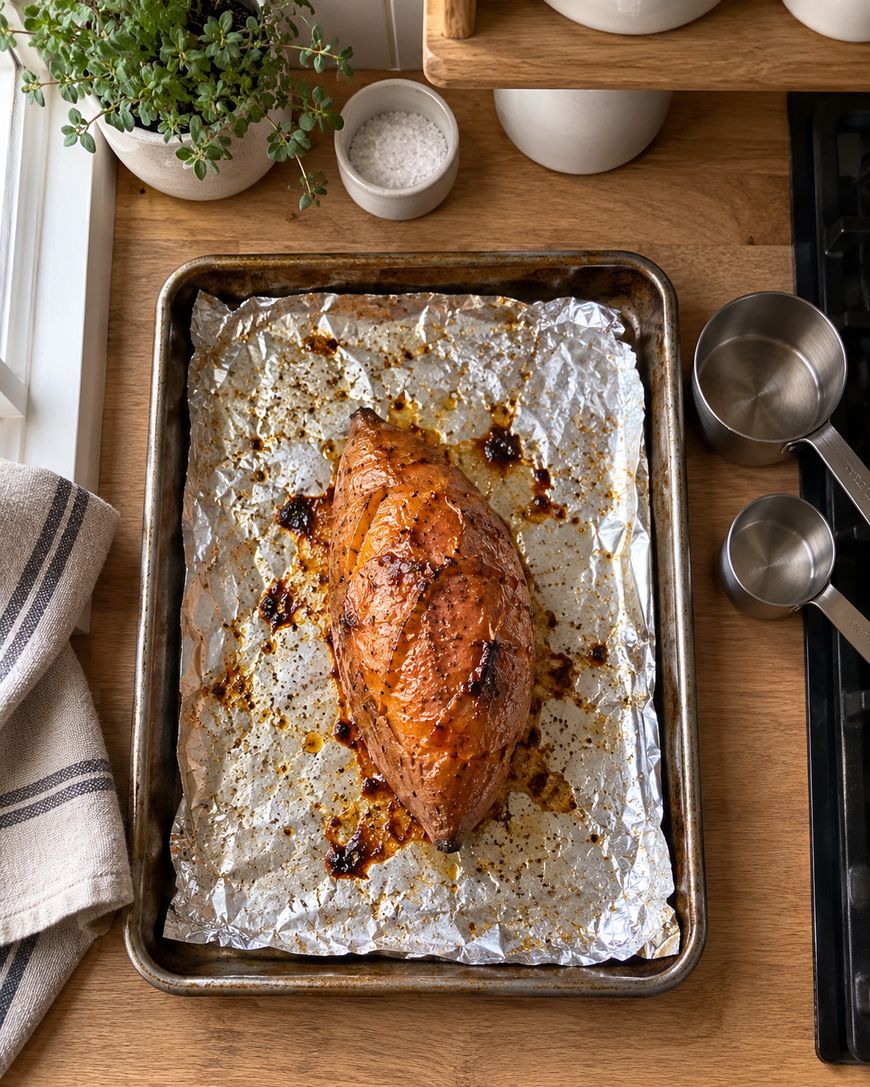
Heat the oven to 400°F, pierce one large sweet potato of about 10 to 12 ounces several times with a fork, and set it on a foil-lined baking sheet. Roast it for 45 to 50 minutes, until a knife slides in with no resistance.
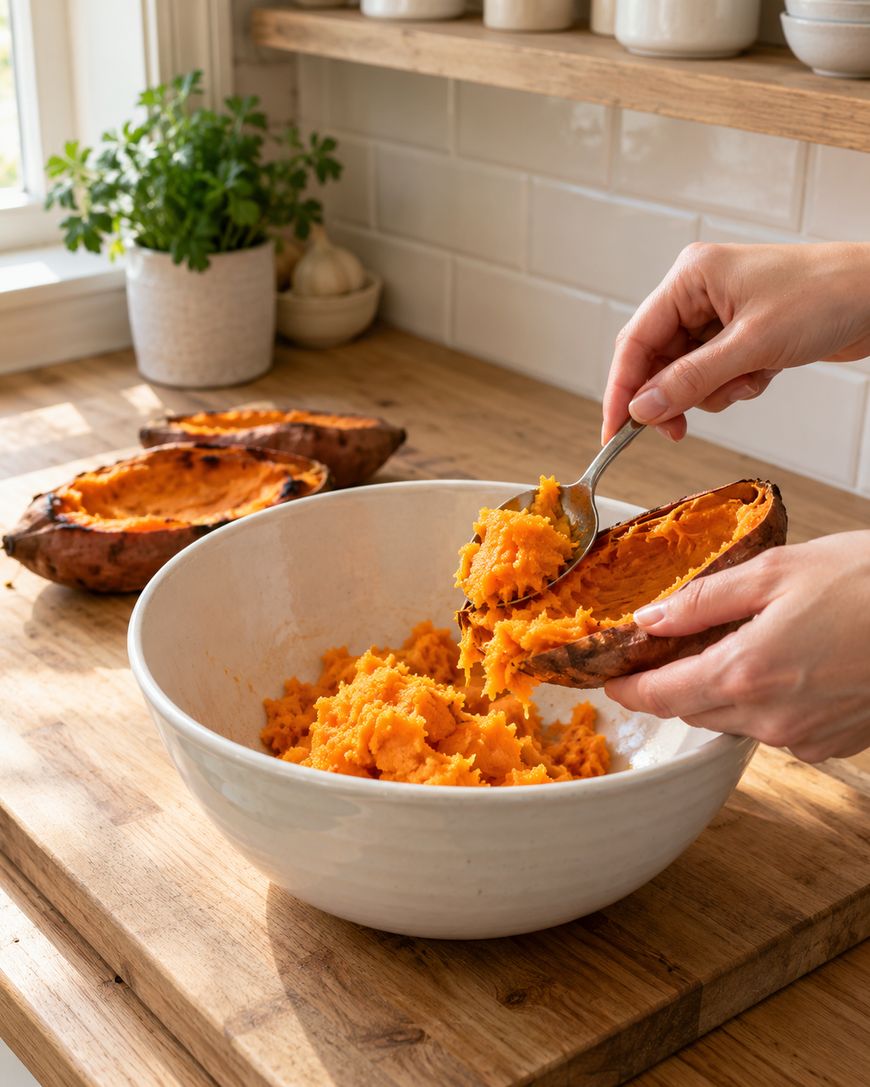
Scoop the flesh into a bowl and mash it until smooth, then measure out 1 cup. Let it cool for about 10 minutes while you melt the butter and measure the dry ingredients.
Mix the Batter
Whisk the cornmeal, flour, sugar, baking powder, baking soda, salt, and cinnamon together in a large bowl. In a second bowl, whisk the mashed sweet potato, buttermilk, eggs, honey, and 6 tablespoons of slightly cooled melted butter until smooth.

Pour the wet mixture into the dry ingredients and stir with a spatula until just combined. A few small streaks of flour are fine, since overmixing makes cornbread tough.

Heat the Skillet and Bake
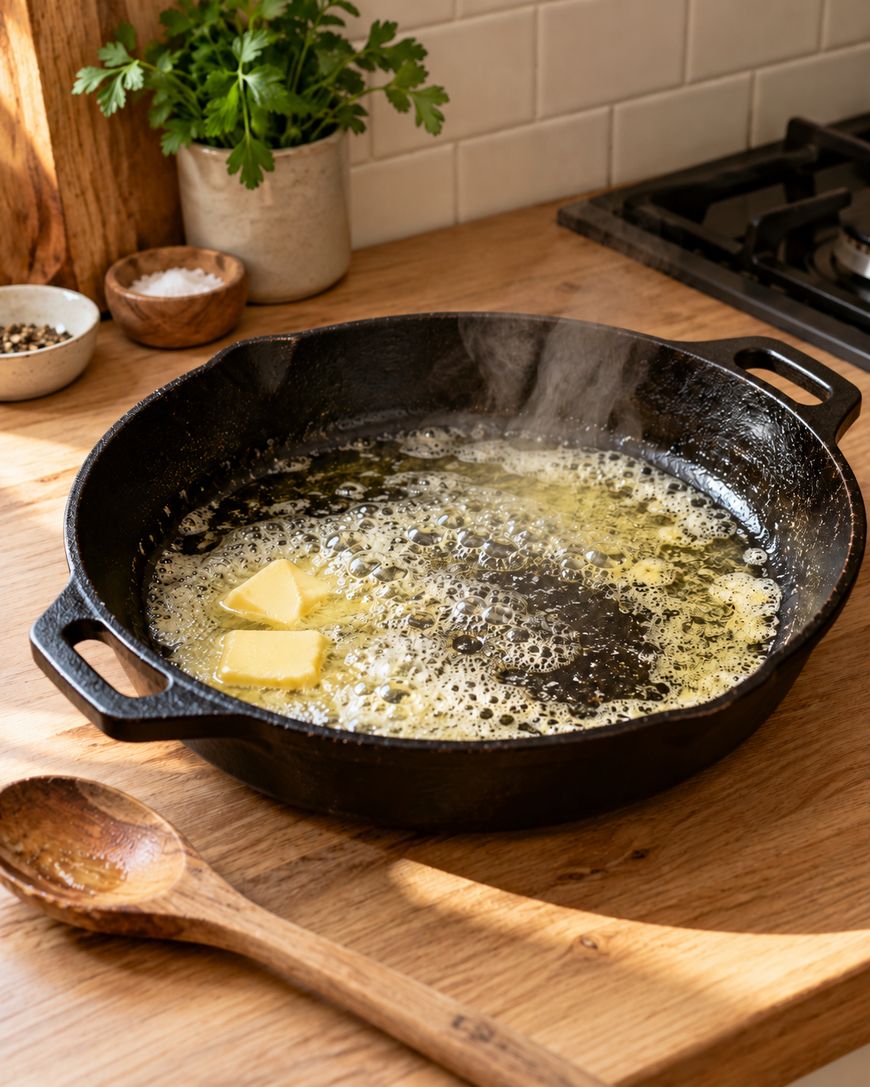
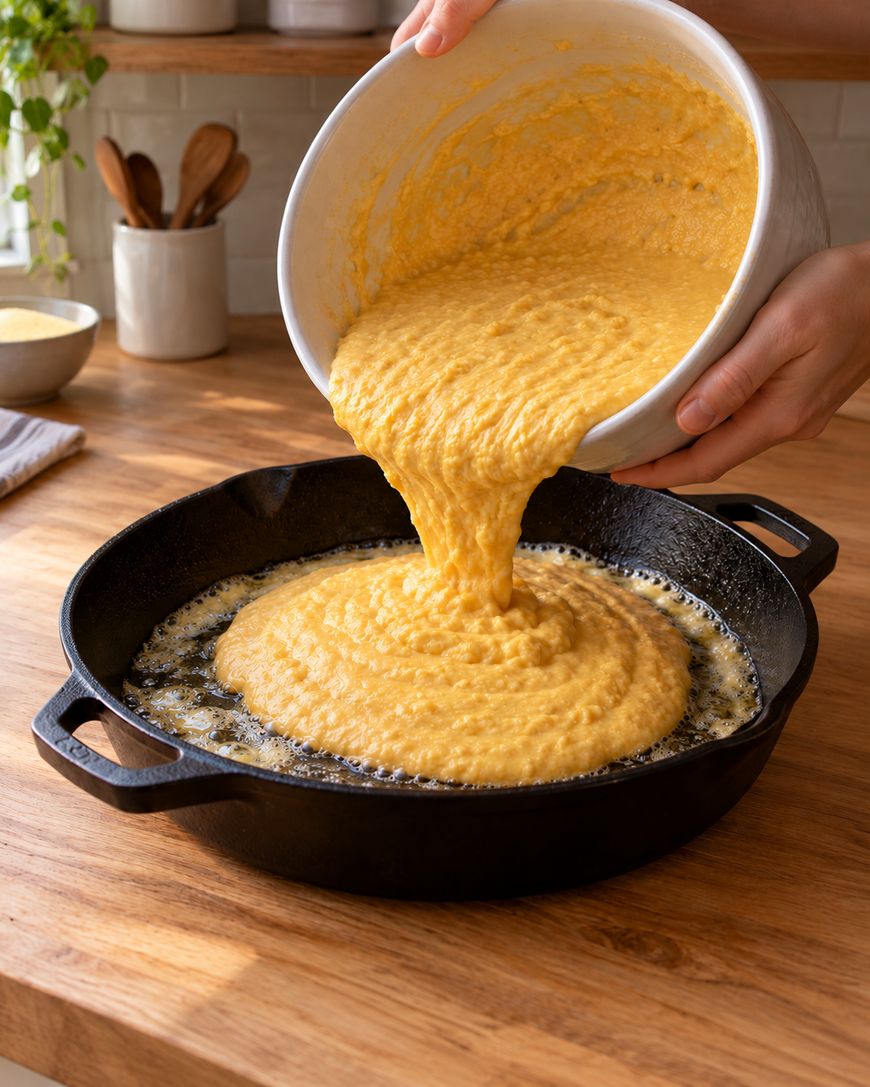
Keep the oven at 400°F, then set the cast iron skillet with the remaining 2 tablespoons of butter inside for about 5 minutes. When the butter is melted and sizzling, carefully pull out the skillet, tilt it to coat the bottom and sides, and pour in the batter.
Smooth the top and bake for about 20 minutes, until the edges are deep golden and a toothpick in the center comes out clean. Let the cornbread cool in the skillet for 10 minutes, then cut it into 8 wedges.
Tips for the Best Sweet Potato Cornbread
These four habits make the biggest difference in how your cornbread turns out.
Roast the Sweet Potato Instead of Boiling It
Roasting concentrates the sugars and drives off extra water, which keeps the batter thick and the crumb tender. Boiled sweet potato holds more water and can make the middle gummy.

Do Not Skip the Hot Skillet
Pouring batter into a preheated, buttered skillet is what creates the crisp, fried-style crust on the bottom and edges. A cold pan gives you a paler, softer crust.
Mix Only Until Combined
Stirring just until the flour disappears keeps the cornbread tender. Overmixing develops gluten and gives you a denser, tougher bread.
Choose a Medium Grind Cornmeal
Yellow cornmeal with a medium grind, such as Bob’s Red Mill medium grind cornmeal, gives the best balance of corn flavor and soft crumb. Stone-ground cornmeal tastes great but can make the bread a little more crumbly.
Sweet Potato Cornbread Variations and Substitutions
This recipe is flexible, so you can adjust it to your pantry and your table.
Make It Savory
For a savory version, cut the sugar to 2 tablespoons, skip the cinnamon, and fold in 1 cup of shredded sharp cheddar and 1 diced jalapeno. The recipe card below leaves these out, so treat them as optional changes.
Swap the Buttermilk
No buttermilk on hand? Stir 1 tablespoon of lemon juice or white vinegar into 1 cup of whole milk and let it sit for 5 minutes before using it.
Use Canned Sweet Potato Puree
Plain canned sweet potato puree with no added sugar or syrup works when you are short on time. Measure out 1 cup and skip the roasting step.
Add Pecans and Honey Butter
Fold 1/2 cup of chopped toasted pecans into the batter for crunch, which is optional and not listed on the card. For a quick honey butter, stir 4 tablespoons of softened butter with 1 tablespoon of honey and a pinch of salt.
How to Serve Sweet Potato Cornbread
Sweet potato cornbread is best served warm from the skillet, with softened butter or honey butter melting into each wedge. The crisp edges are at their best in the first hour out of the oven.
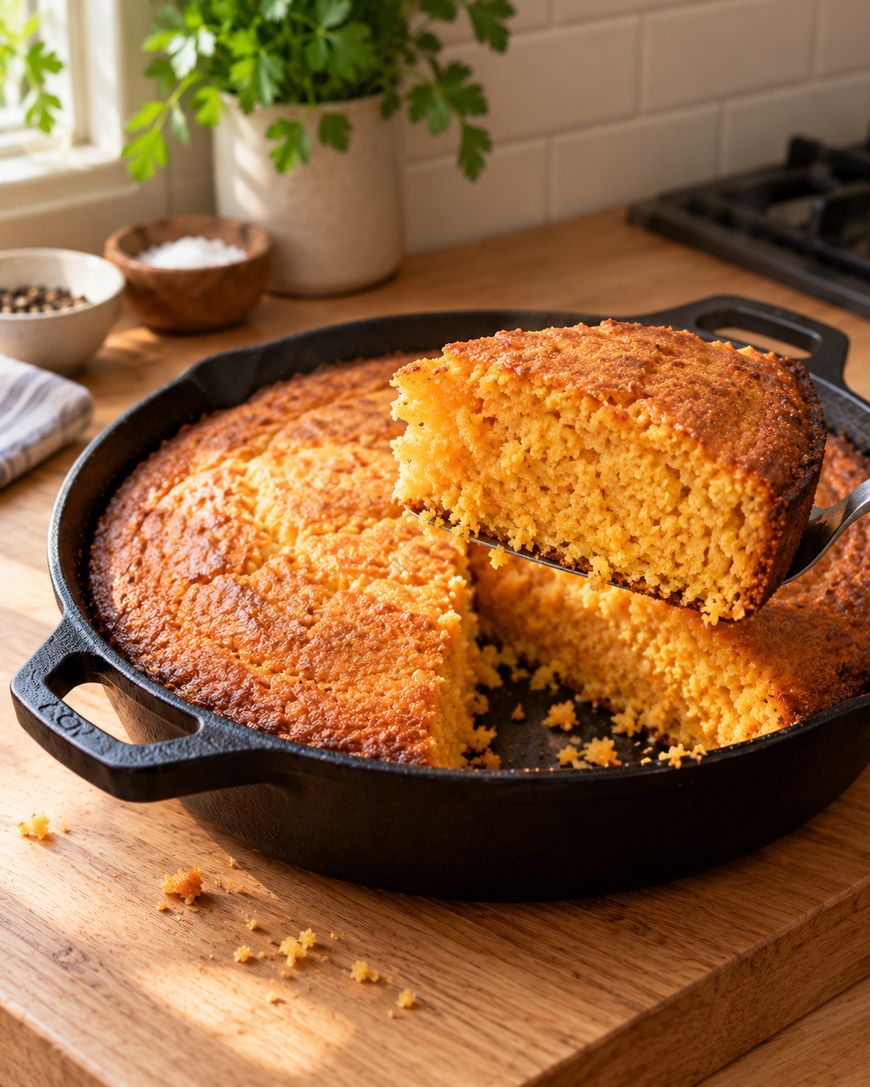
On a weeknight, serve wedges alongside a pot of chili, bean soup, or turkey soup. The mild sweetness balances spicy and smoky flavors beautifully.
For a Southern style dinner, pair it with collard greens, baked ham, or fried chicken. It soaks up pot liquor and gravy just as well as plain cornbread does.

At Thanksgiving, it holds its own next to turkey, gravy, and green bean casserole. It also saves you from making a separate pan of dinner rolls.
For breakfast, toast a leftover wedge in a buttered skillet and drizzle it with maple syrup. It tastes a little like a pancake with a crisp edge.

If you are serving a crowd, bake the cornbread right before dinner and keep it in the skillet. The cast iron holds heat, so the wedges stay warm at the table for a good while.
How to Store, Freeze, and Reheat Sweet Potato Cornbread
Let the cornbread cool, then cover it and refrigerate within 2 hours of baking, which follows USDA guidance on perishable foods. Refrigerated leftovers keep for up to 4 days, in line with the USDA recommendation for leftovers.
To freeze it, wrap cooled wedges individually in plastic wrap and place them in a freezer bag for up to 3 months. Thaw frozen wedges overnight in the refrigerator.
Wrap leftovers tightly so the crumb does not dry out in the cold air of the fridge. A zip-top bag or an airtight container both work well.
For the best texture, freeze wedges the day you bake them. Skip the microwave when reheating if you want to keep the edges crisp.
Reheat wedges in a 350°F oven for about 10 minutes, until hot all the way through. The USDA recommends reheating leftovers to an internal temperature of 165°F.
The Story Behind Sweet Potato Cornbread
Cornbread traces back to Native American cooking with ground corn, and Southern cooks later shaped it into the skillet bread we know today. Cast iron, buttermilk, and a hot pan became the signature of the style.
Sweet potatoes have long been a staple in Southern kitchens, so stirring them into cornbread was a natural step. Cooks used what was in the pantry, and the result was a moister, sweeter loaf.
Today the combination shows up on fall tables, holiday spreads, and barbecue plates across the South and well beyond it. It is humble food that tastes like home.
That history is why a skillet matters so much here. The hot pan gives you the same crisp crust cooks have been chasing for generations, while the sweet potato keeps the inside tender.
Ready to bake? The recipe card below has the full ingredient list, steps, and nutrition details.

Sweet Potato Cornbread
Skillet sweet potato cornbread with crisp golden edges and a moist, tender middle, made with roasted sweet potato, buttermilk, and a touch of honey.
Ingredients
- 1 cup mashed roasted sweet potato (from 1 large sweet potato, about 10 to 12 ounces)
- 1 cup yellow cornmeal
- 1 cup all-purpose flour
- 1/4 cup granulated sugar
- 2 teaspoons baking powder
- 1/2 teaspoon baking soda
- 3/4 teaspoon salt
- 1/2 teaspoon ground cinnamon
- 1 cup buttermilk
- 2 large eggs
- 2 tablespoons honey
- 8 tablespoons unsalted butter, divided (6 tablespoons melted for the batter, 2 tablespoons for the skillet)
Instructions
- Heat the oven to 400°F. Pierce the sweet potato several times with a fork, set it on a foil-lined baking sheet, and roast for 45 to 50 minutes, until very tender.
- Scoop the flesh into a bowl, mash until smooth, measure out 1 cup, and let it cool for about 10 minutes.
- Melt 6 tablespoons of the butter and let it cool slightly. Whisk the cornmeal, flour, sugar, baking powder, baking soda, salt, and cinnamon together in a large bowl.
- In a second bowl, whisk the mashed sweet potato, buttermilk, eggs, honey, and the 6 tablespoons melted butter until smooth.
- Pour the wet mixture into the dry ingredients and stir with a spatula until just combined. A few small streaks of flour are fine.
- Keep the oven at 400°F. Place a 10 inch cast iron skillet with the remaining 2 tablespoons of butter in the oven for about 5 minutes, until the butter is melted and sizzling.
- Carefully remove the hot skillet, tilt it to coat the bottom and sides with butter, and pour in the batter. Smooth the top.
- Bake for about 20 minutes, until the edges are deep golden and a toothpick in the center comes out clean.
- Cool in the skillet for 10 minutes, then cut into 8 wedges and serve warm.
Notes
Storage: Cool, then refrigerate within 2 hours of baking (USDA guidance). Leftovers keep up to 4 days in the refrigerator.
Freezing: Wrap cooled wedges individually and freeze in a freezer bag for up to 3 months. Thaw overnight in the refrigerator.
Reheating: Warm in a 350°F oven for about 10 minutes, until hot all the way through. The USDA recommends reheating leftovers to an internal temperature of 165°F.
Make ahead: Roast and mash the sweet potato up to 2 days ahead, keep it covered in the refrigerator, and bring it to room temperature before mixing. Bake the batter right away.
Substitutions: For homemade buttermilk, stir 1 tablespoon of lemon juice or white vinegar into 1 cup of whole milk and let it sit for 5 minutes. Plain canned sweet potato puree with no added sugar can replace the roasted sweet potato.
Pan option: A greased 9 inch round or 8 inch square pan should work. Start checking at 20 minutes.
Nutrition Information:
Yield:
8Serving Size:
1 wedgeAmount Per Serving: Calories: 330Total Fat: 14gSaturated Fat: 8gSodium: 455mgCarbohydrates: 44gFiber: 3gSugar: 14gProtein: 6g
Sweet Potato Cornbread FAQs
Can you use canned sweet potatoes?
Yes, as long as you use plain canned sweet potato puree with no added sugar or syrup. Measure out 1 cup and skip the roasting step.
Avoid canned yams packed in syrup, which make the cornbread too sweet and too wet.
Why is my sweet potato cornbread dry or crumbly?
Overbaking and overmixing are the usual causes. Pull the skillet out as soon as a toothpick comes out clean at about 20 minutes, and stir the batter only until the flour disappears.
Spoon the flour into your measuring cup and level it off, since packed flour makes dry bread.
Can you bake it in a baking pan instead of a skillet?
Yes, a greased 9 inch round or 8 inch square pan should work. Start checking for doneness at 20 minutes, since the crust will not be as crisp as it is in a preheated skillet.
Can you make sweet potato cornbread ahead of time?
Roast and mash the sweet potato up to 2 days ahead, keep it covered in the refrigerator, and let it come to room temperature before mixing.
Bake the batter right away, because the baking powder and baking soda start working as soon as they meet the buttermilk. Baked cornbread keeps for up to 4 days in the refrigerator or up to 3 months in the freezer.
Is sweet potato cornbread sweet?
It is lightly sweet and still corn forward. With 1/4 cup of sugar and 2 tablespoons of honey across 8 wedges, it tastes mellow rather than sugary.
Cut the sugar to 2 tablespoons if you want a more savory loaf.
Why This Sweet Potato Cornbread Works
Every step in this recipe has a job. Butter melted in a preheated cast iron skillet fries the outside of the batter on contact, which builds the crisp crust.
Mashed roasted sweet potato supplies moisture, natural sugar, and body, so the cornbread stays soft without extra oil. Equal parts cornmeal and flour keep the crumb tender instead of sandy.
Buttermilk reacts with the baking soda while the baking powder gives a steady second lift, so the wedges rise evenly. A short mix keeps the gluten relaxed and the center tender.
A spoonful of honey and a little sugar help the crust brown. Cinnamon adds warmth without overpowering the corn.
The result is a cornbread that is crisp at the edges, moist in the middle, and simple enough to make on a weeknight.
Because the method is short and the ingredients are common, you can repeat it with the same results every time.
Make Sweet Potato Cornbread This Weekend
Sweet potato cornbread gives you crisp edges, a moist center, and a mellow sweetness that fits every fall table. Roast one sweet potato, heat your skillet, and you will have warm cornbread in about 1 hour and 25 minutes.
Make it tonight, then leave a star rating and a comment below to tell us how it turned out. Save the recipe to your favorite Pinterest board so it is easy to find when the weather turns cozy.
Whether you serve it with a pot of chili or a big holiday dinner, this skillet cornbread earns its spot. Grab your skillet and get baking.
The wedges reheat well the next day, so there is no rush to finish them in one sitting. Leftovers rarely last that long, though.
If you try it, tell us which topping you loved most. Honey butter, plain butter, and a drizzle of maple syrup all have their fans.
Sweet Potato Bread That Bakes Up Moist, Tender, and Cozy Enough for Fall