Last updated: October 29, 2026
This vinaigrette dressing whisks together in 5 minutes with olive oil, red wine vinegar, Dijon mustard, and honey, and the full recipe card is waiting below.
You can have a jar ready to pour over a salad before the table is even set.
How to Make Vinaigrette Dressing in 5 Minutes
The short answer is to shake 1/2 cup of extra virgin olive oil with 3 tablespoons of red wine vinegar, 1 tablespoon of Dijon mustard, 1 teaspoon of honey, 1 tablespoon of water, 1/2 teaspoon of kosher salt, and 1/4 teaspoon of black pepper in a jar.

Thirty seconds of hard shaking turns those separate ingredients into a thick, creamy dressing that clings to every leaf.
The Ingredients You Need
Every ingredient in this vinaigrette dressing plays a specific role. The olive oil brings richness, the vinegar brings brightness, and the Dijon mustard holds the two together.

Honey softens the sharp edge of the vinegar, the water loosens the texture so the dressing pours easily, and the salt and pepper pull everything into focus. You will find the exact amounts in the recipe card below.
The Ratio Behind the Recipe
The classic French ratio is three parts oil to one part vinegar. This recipe sits just under that, with 1/2 cup of oil to 3 tablespoons of vinegar, because the mustard and water mellow the acid and keep the dressing bright rather than harsh.
Once you know that ratio, you can scale the recipe up or down without second guessing yourself. A little extra vinegar makes a punchier dressing, and a little extra oil makes a softer one.
Step by Step Method for Perfect Vinaigrette Dressing
Making a smooth, creamy dressing comes down to the order you add things. Start with everything except the oil, then bring the oil in last.
Start With the Vinegar Base
Add the red wine vinegar, Dijon mustard, honey, water, salt, and pepper to a clean half-pint (8-ounce) mason jar. Stir or whisk for about 15 seconds so the salt and honey dissolve completely.

Salt does not dissolve in oil, so this step matters. If you skip it, the dressing tastes uneven and a little gritty.
Add the Olive Oil and Shake
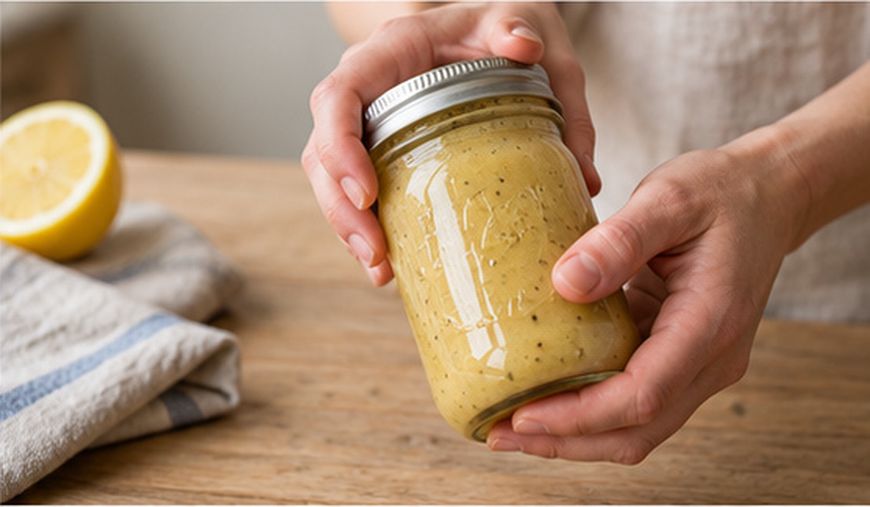
Pour in the olive oil, screw the lid on tightly, and shake hard for 30 seconds. The mixture should turn thick, creamy, and pale gold.

If you prefer a whisk, use a small bowl instead and drizzle the oil in slowly while whisking. The jar is simply faster, and it doubles as your storage container.
Taste and Adjust
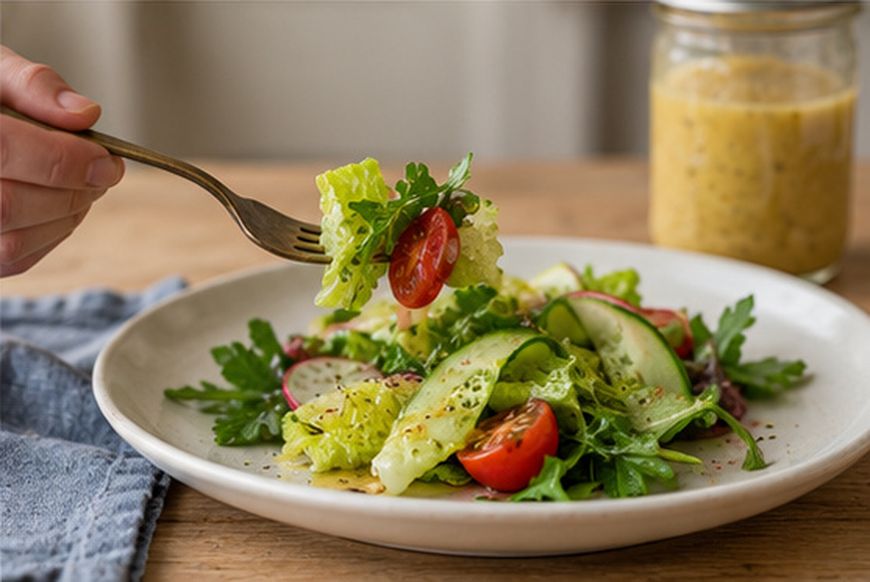
Dip a lettuce leaf into the dressing and taste it, because a leaf shows you how the dressing will actually taste on a salad. A spoonful on its own always tastes sharper than it will once it meets greens.
Add more salt, honey, or vinegar a little at a time until it tastes balanced. Give the jar one last shake before you pour, since a vinaigrette dressing always relaxes a little as it sits.
Tips for the Best Vinaigrette Dressing
A handful of small choices make the difference between a dressing that tastes like a restaurant house salad and one that tastes flat. These are the ones worth paying attention to.
Choose a Good Olive Oil
Extra virgin olive oil is the main flavor here, so pick one you enjoy tasting on its own. Colavita and California Olive Ranch are two widely available bottles that taste smooth rather than bitter.
Very peppery oils can turn sharp once they are shaken into a dressing. A milder bottle gives a friendlier result for everyday salads.
Pick the Right Vinegar
Red wine vinegar gives this recipe its classic bistro flavor. White wine vinegar, champagne vinegar, and sherry vinegar all work in the same amount if that is what you have on hand.
Skip distilled white vinegar, which tastes harsh and flat next to olive oil. The goal is a vinegar with a little fruitiness behind the tang.
Let the Mustard Do the Work
Dijon mustard is the emulsifier that keeps the oil and vinegar from splitting apart right away. Maille is a classic choice, but any smooth Dijon works.

Whole grain mustard adds texture but holds the dressing together less well. Stick with smooth Dijon for this recipe.
Vinaigrette Dressing Variations
The base recipe is a blank canvas. Every change in this section is optional and is not part of the recipe card, so treat these as extras to try once you have made the original.
Lemon Vinaigrette
Swap the red wine vinegar for 3 tablespoons of fresh lemon juice. The result is a brighter, summery dressing that suits arugula, asparagus, and grilled fish.
Balsamic Vinaigrette
Use 3 tablespoons of balsamic vinegar in place of the red wine vinegar and leave out the honey. Balsamic is already sweet, so the extra honey would make the dressing cloying.
Fresh Herb Vinaigrette
Stir 1 tablespoon of finely chopped parsley, chives, or basil into the amount of dressing you plan to use right away. Fresh herbs taste best on the day they are chopped.
Garlic or Shallot Vinaigrette
Stir 1 small grated garlic clove or 1 tablespoon of finely minced shallot into only the portion you will use that day. The storage section below explains why they stay out of the jar you keep in the refrigerator.
Maple Vinaigrette
Use 1 teaspoon of pure maple syrup in place of the honey for a version that suits vegan eaters. The flavor is slightly earthier and pairs well with fall salads.
How to Store Vinaigrette Dressing
Store this vinaigrette dressing in the sealed jar in the refrigerator for up to 1 week. Olive oil turns cloudy and semi-solid when it is chilled, which is completely normal.
Take the jar out 15 to 20 minutes before serving, let it come to room temperature, and shake it until it is smooth again.
Why Fresh Garlic Stays Out of the Jar
The USDA warns that raw garlic stored in oil can create conditions where Clostridium botulinum bacteria grow, which is why garlic in oil should never be left at room temperature. For that reason, this recipe keeps fresh garlic and shallot out of the stored batch.
Add them only to the portion you plan to eat the same day, and you get the flavor without the risk.
Make It Ahead for the Week
This dressing is a smart meal prep move. Shake up a jar on Sunday and use it through the following weekend.

Dress leafy greens right before serving so they stay crisp. Dressed salad left to sit turns soggy fast.
Ways to Serve Vinaigrette Dressing
A good vinaigrette dressing earns its spot in the refrigerator because it works on far more than lettuce. Once you have a jar on hand, you will reach for it constantly.
On Green Salads
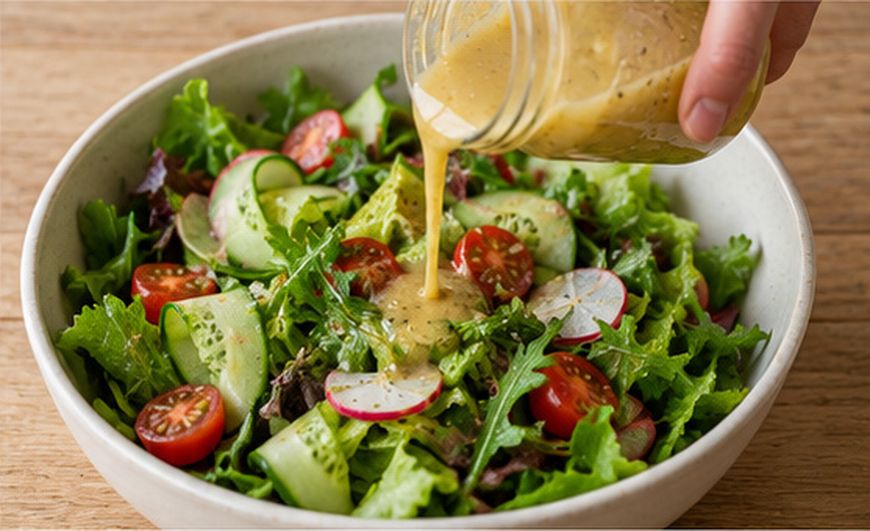
Toss about 2 tablespoons of dressing with a large bowl of mixed greens, romaine, or arugula. Start with less than you think you need, since you can always add more.
On Roasted Vegetables
Drizzle the dressing over warm roasted broccoli, green beans, or carrots right after they come out of the oven. The warmth helps the vegetables soak up the flavor.

On Grain Bowls and Pasta Salad
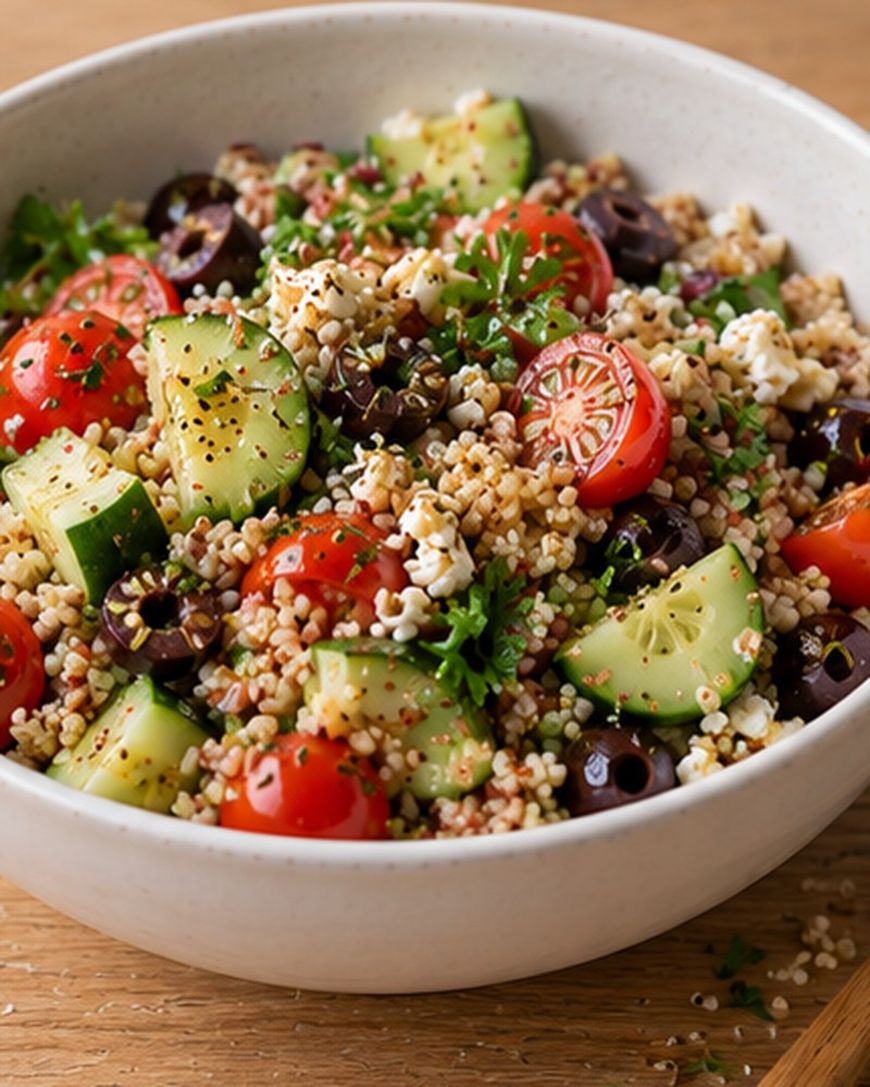
Stir a few spoonfuls into cooked quinoa, farro, or chilled pasta along with chopped cucumber, tomatoes, and olives. The dressing coats everything evenly and keeps leftovers tasting fresh for lunch.
On Sandwiches
A small drizzle over a turkey or Italian sub adds moisture and tang. It also stops bread from tasting dry.
The Story Behind Vinaigrette Dressing
The word vinaigrette comes from the French word vinaigre, meaning vinegar, with an ending that makes it a little vinegar sauce. French cooks have dressed salads with oil, vinegar, and salt for centuries, and the three to one ratio became the standard in classic French kitchens.
Dijon mustard joined the mix because it comes from the city of Dijon in Burgundy, France, and its smooth sharpness helps the dressing stay blended. Today that same simple formula sits behind countless house dressings in American restaurants.
The beauty of the formula is how little it asks of you. Oil, acid, salt, and a binder are all it takes, which is why home cooks have trusted it for generations and why a store-bought bottle rarely tastes as fresh as a jar you shake up yourself.
When you are ready to make it, use the recipe card below for the exact measurements, nutrition information, and notes.
Classic Vinaigrette Dressing
A creamy, balanced vinaigrette dressing made with olive oil, red wine vinegar, Dijon mustard, and honey. It shakes together in one jar in 5 minutes.
Ingredients
- 1/2 cup extra virgin olive oil
- 3 tablespoons red wine vinegar
- 1 tablespoon Dijon mustard
- 1 teaspoon honey
- 1 tablespoon water
- 1/2 teaspoon kosher salt
- 1/4 teaspoon black pepper
Instructions
- Add the red wine vinegar, Dijon mustard, honey, water, salt, and pepper to a clean half-pint (8-ounce) mason jar.
- Stir or whisk for about 15 seconds, until the salt and honey dissolve.
- Pour in the olive oil.
- Screw the lid on tightly and shake hard for 30 seconds, until the dressing is thick, creamy, and pale gold.
- Dip a lettuce leaf into the dressing and taste. Add more salt, honey, or vinegar a little at a time until balanced.
- Shake again just before serving and drizzle over salad.
Notes
Store in the sealed jar in the refrigerator for up to 1 week. Olive oil turns cloudy when chilled, so let the jar sit at room temperature for 15 to 20 minutes and shake before using. Fresh garlic, shallot, and herbs are optional add-ins for the portion you will use the same day, not for the stored batch. Prefer a whisk? Whisk the vinegar base in a small bowl and drizzle in the oil slowly.
Nutrition Information:
Yield:
6Serving Size:
2 tablespoonsAmount Per Serving: Calories: 165Total Fat: 18gSaturated Fat: 2.5gSodium: 245mgCarbohydrates: 1gFiber: 0gSugar: 1gProtein: 0g
Vinaigrette Dressing FAQ
What is the right ratio for vinaigrette dressing?
The classic ratio is three parts oil to one part vinegar. This recipe uses 1/2 cup of olive oil to 3 tablespoons of red wine vinegar, which is just under that ratio, and the Dijon, honey, and water round out the flavor.
How long does homemade vinaigrette dressing last?
It keeps for up to 1 week in a sealed jar in the refrigerator. Leave fresh garlic and shallot out of the stored batch, and add them only to the portion you will use that day.
Why did my vinaigrette separate?
Separation is natural, because oil and vinegar do not stay mixed on their own. The Dijon mustard slows it down, and a quick 10 second shake brings the dressing back together.
Why is my vinaigrette solid in the refrigerator?
Olive oil thickens and turns cloudy at refrigerator temperatures. Let the jar sit on the counter for 15 to 20 minutes, then shake it until it is smooth.
Does vinaigrette dressing still work without honey?
Yes, you can leave it out. The dressing will taste a little sharper, so add a pinch more salt or a splash more oil if the vinegar feels too strong.
Why This Vinaigrette Dressing Works
The Dijon mustard is the secret to the creamy texture. Mustard contains natural compounds that help oil and vinegar stay blended, so the dressing looks thick and glossy instead of oily.
Dissolving the salt and honey in the vinegar first means every drop tastes evenly seasoned. A tablespoon of water then loosens the dressing so it pours smoothly and coats leaves lightly.
Shaking the oil in last, in a sealed jar, forces it into tiny droplets that suspend in the vinegar base. The ratio keeps the whole thing balanced between rich and tangy, so it never tastes greasy or harsh.
Finally, tasting on a lettuce leaf lets you season for the way the dressing will actually be eaten. That one habit catches the small imbalances that a spoon test misses, and it is what makes the result taste dialed in every time.
Make Your Next Salad Better With Vinaigrette Dressing
This vinaigrette dressing proves that the best salad dressings are also the simplest. Seven simple ingredients, one jar, and 5 minutes are all it takes.
Once you have the base down, try the lemon, balsamic, or maple versions and keep a jar in the refrigerator all week. A homemade vinaigrette dressing turns a plain bowl of greens or a tray of roasted vegetables into something worth looking forward to.
Shake up a batch tonight, taste it on a lettuce leaf, and leave a rating in the recipe card to let us know how it turned out.