Last updated: November 1, 2026
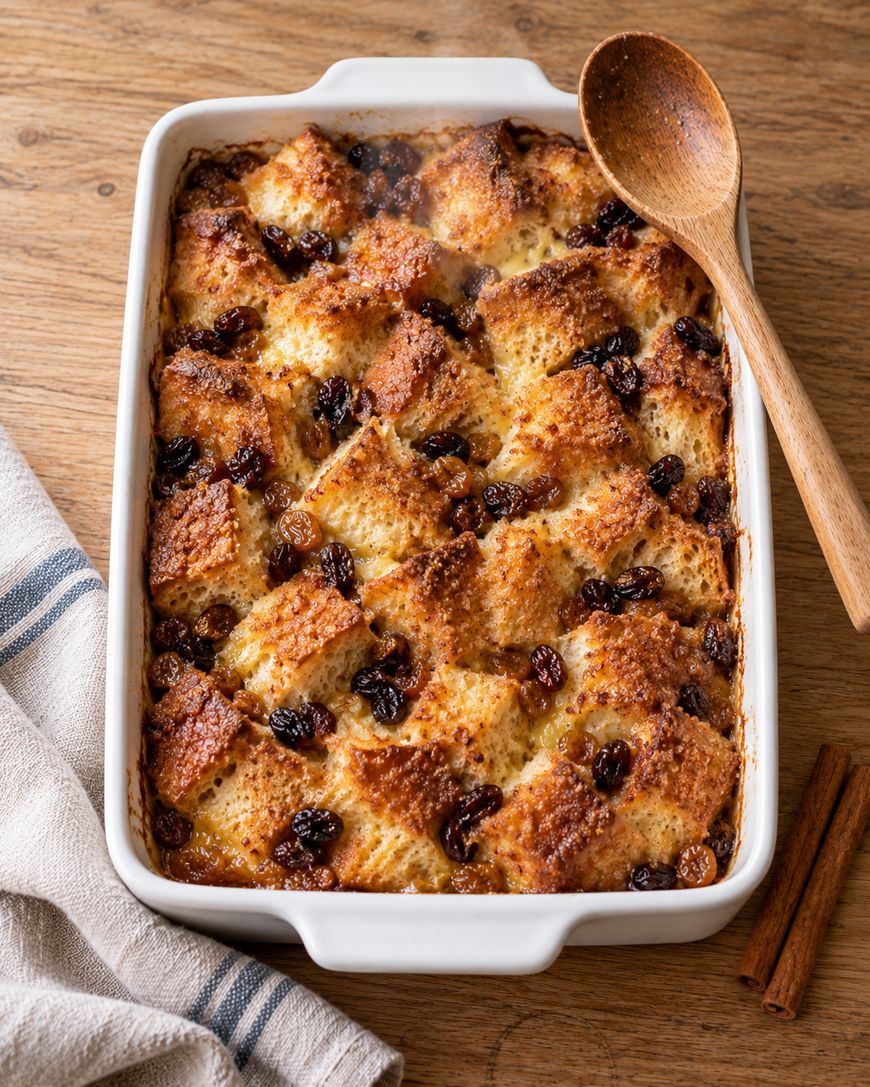
This bread pudding recipe gives you a soft, custardy center and a crisp, caramelized top using day-old bread, eggs, milk and cream.
The full recipe card is below, and this walkthrough covers every step so you can get it right the first time.
Bread Pudding Recipe Ingredients and What Each One Does
Bread pudding is a baked custard studded with cubes of bread, so every ingredient has a clear job. The bread gives structure, the eggs set the custard, and the milk and cream make it rich and spoonable.
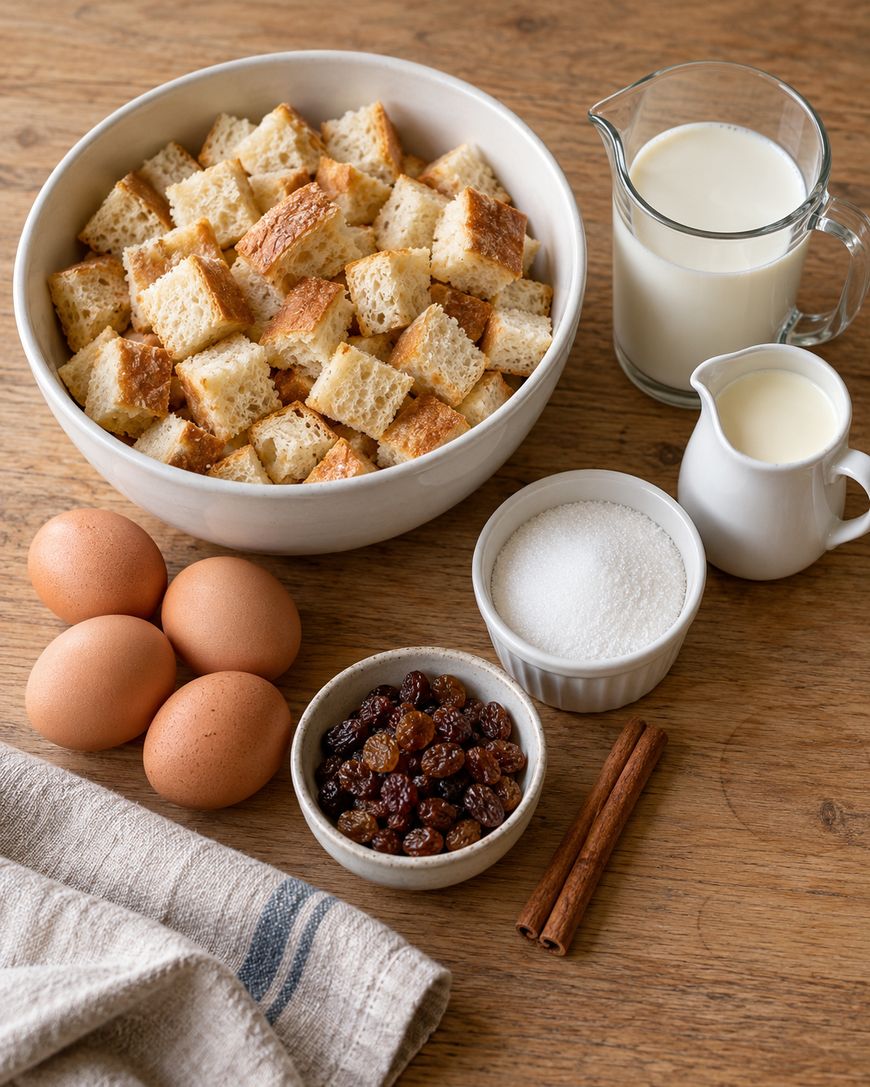
We keep the list short and use ingredients most kitchens already have. Each one is explained below so you know what to buy and what you can swap.
The Bread
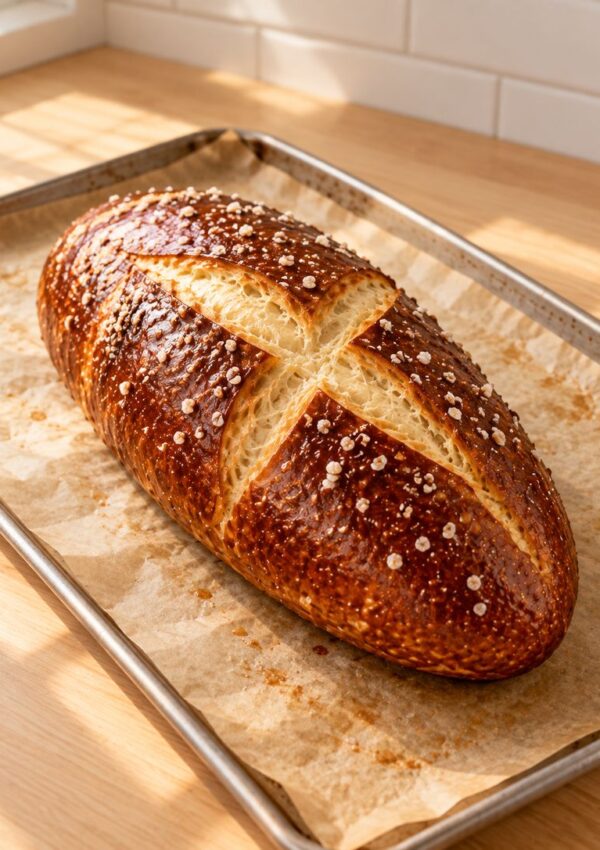
Use about 12 ounces of day-old French bread or brioche, cut into 1-inch cubes, which comes to roughly 8 cups. Stale bread is drier, so it drinks up the custard without turning to mush.

If your bread is fresh, spread the cubes on a baking sheet and dry them in a 300°F oven for 10 to 15 minutes. Let them cool before you use them.
The Custard
The custard is 4 large eggs, 3/4 cup of granulated sugar, 2 cups of whole milk and 1 cup of heavy cream. That works out to one egg for every 3/4 cup of dairy, which is the ratio that sets soft and creamy instead of firm and rubbery.
Whole milk and heavy cream give the best texture, because the fat keeps the center tender. Low-fat milk will set up thinner and taste less rich.
The Flavorings
Two teaspoons of vanilla extract, one teaspoon of ground cinnamon, 1/4 teaspoon of ground nutmeg and 1/2 teaspoon of salt turn plain custard into classic bread pudding. The salt matters more than it seems, because it sharpens the vanilla and keeps the sugar from tasting flat.
A quarter cup of melted unsalted butter tossed with the bread helps the edges crisp. Raisins are optional, and a final sprinkle of 2 tablespoons of coarse sugar gives the top its crackly crust.
How to Make Bread Pudding Step by Step
The whole recipe takes about 35 minutes of hands-on and soaking time, then 45 minutes in the oven. Nothing is difficult, but each stage has a reason, so it helps to follow the order.
Prepare the Pan and the Bread
Heat the oven to 350°F and butter a 9×13-inch baking dish. Add the bread cubes, drizzle them with the melted butter, and toss until the pieces are lightly coated.
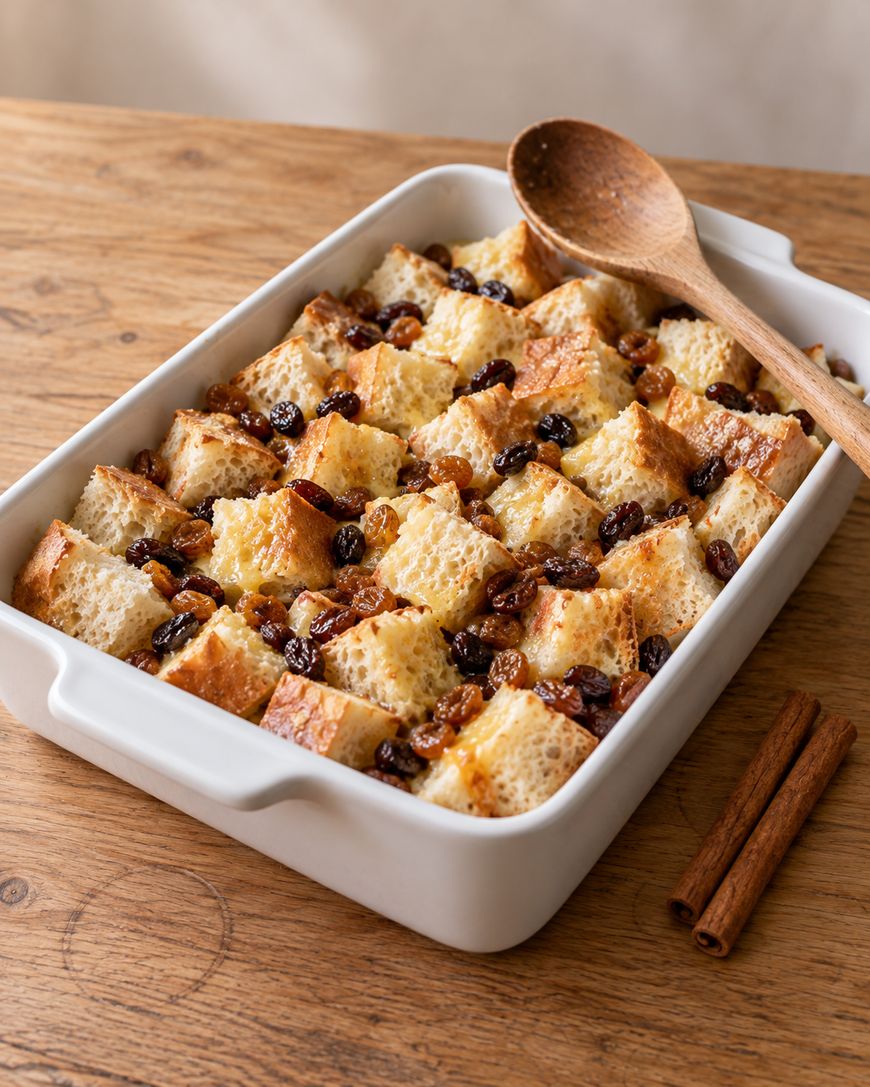
If you are using raisins, scatter 1/2 cup over the bread now. Spreading them through the cubes keeps them from scorching on top.
Whisk the Custard
In a large bowl, whisk the eggs and sugar for about a minute, until the mixture is smooth and slightly pale. Then whisk in the milk, cream, vanilla, cinnamon, nutmeg and salt.
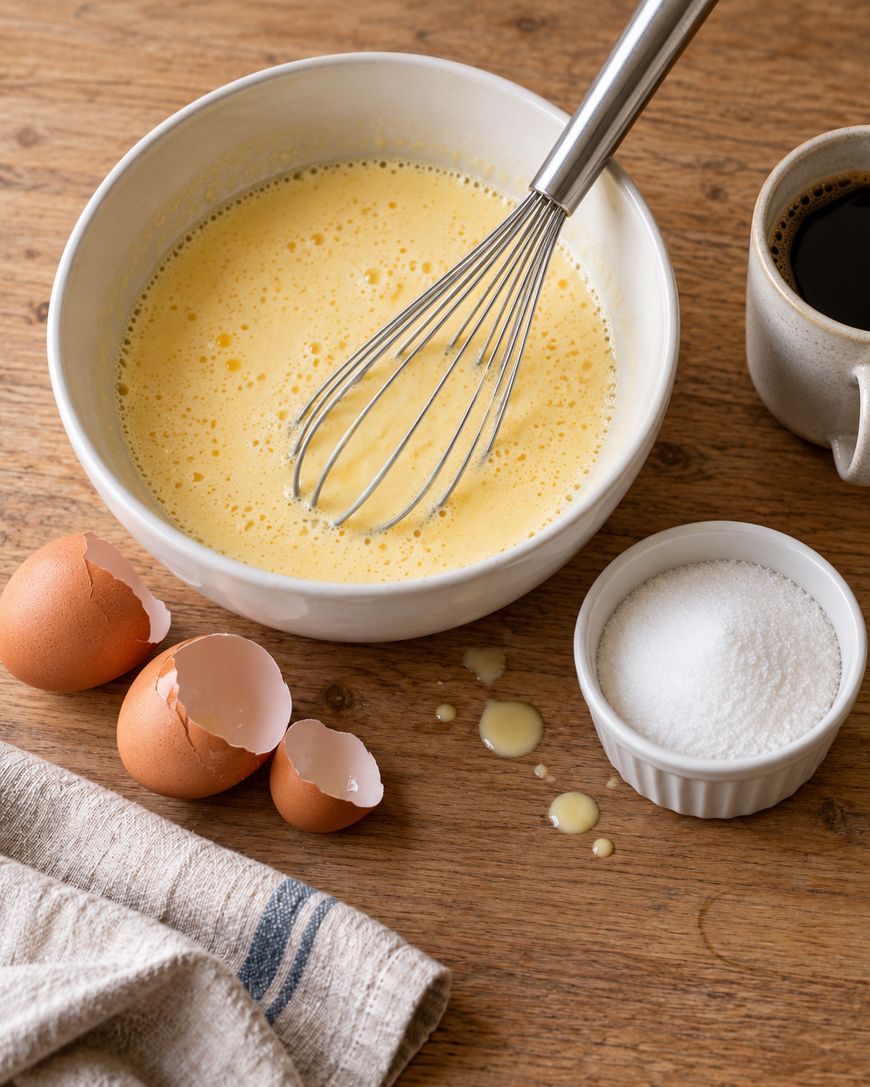
Whisk only until everything is combined. Too much air makes the custard foamy, and foam bakes into a spongy layer instead of a silky one.
Soak the Bread
Pour the custard evenly over the bread and press the cubes down gently with a spatula so every piece is moistened. Let the dish stand for 20 minutes, and press the bread down once more halfway through.
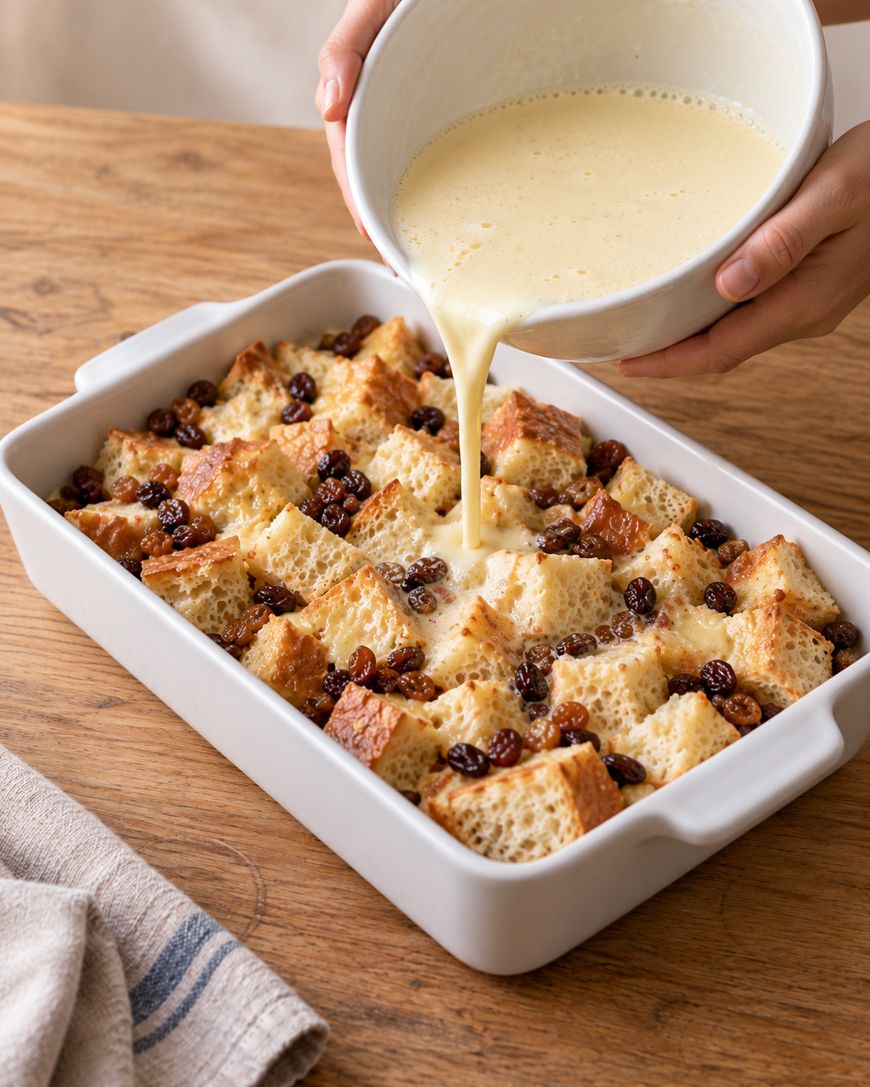
This soak is the secret to a custardy center. Bread that is only soaked on the surface bakes up dry in the middle.
Bake Until Set
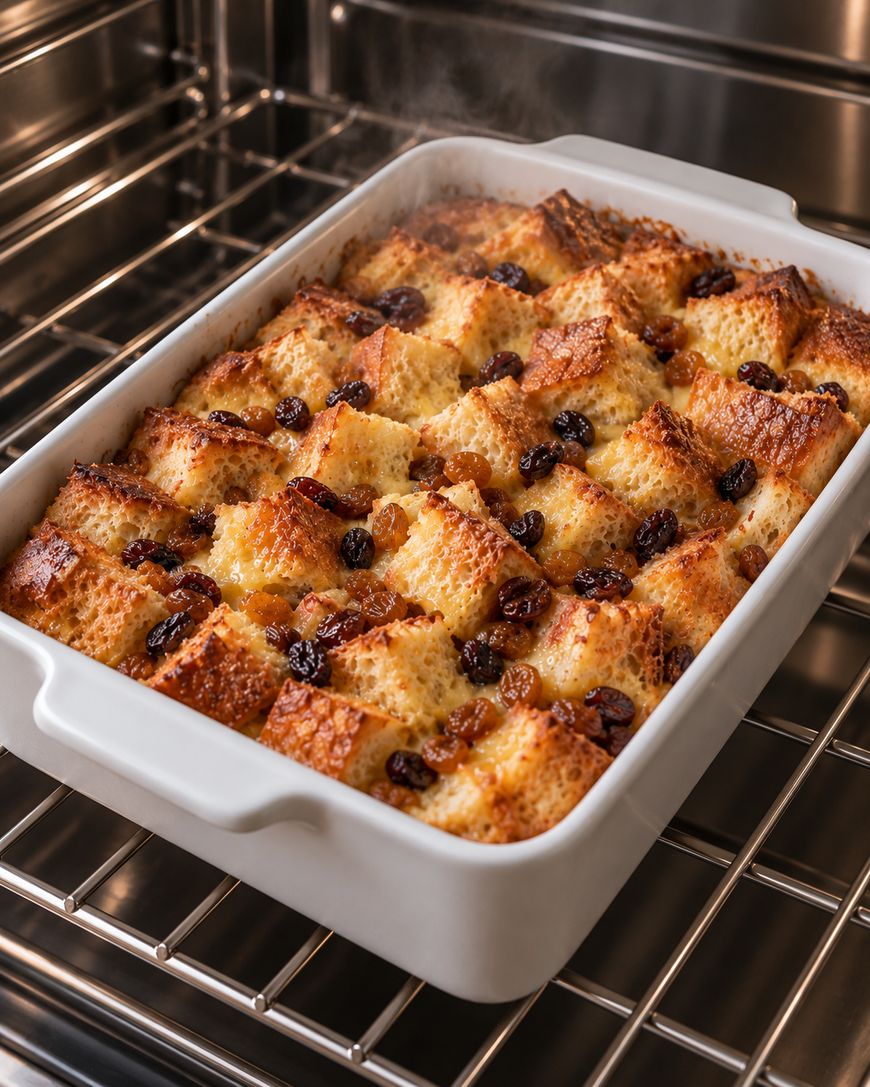
Sprinkle the top with the coarse sugar and bake for 45 minutes. The top should be deep golden, the center should no longer jiggle, and the middle should read 160°F on an instant-read thermometer.
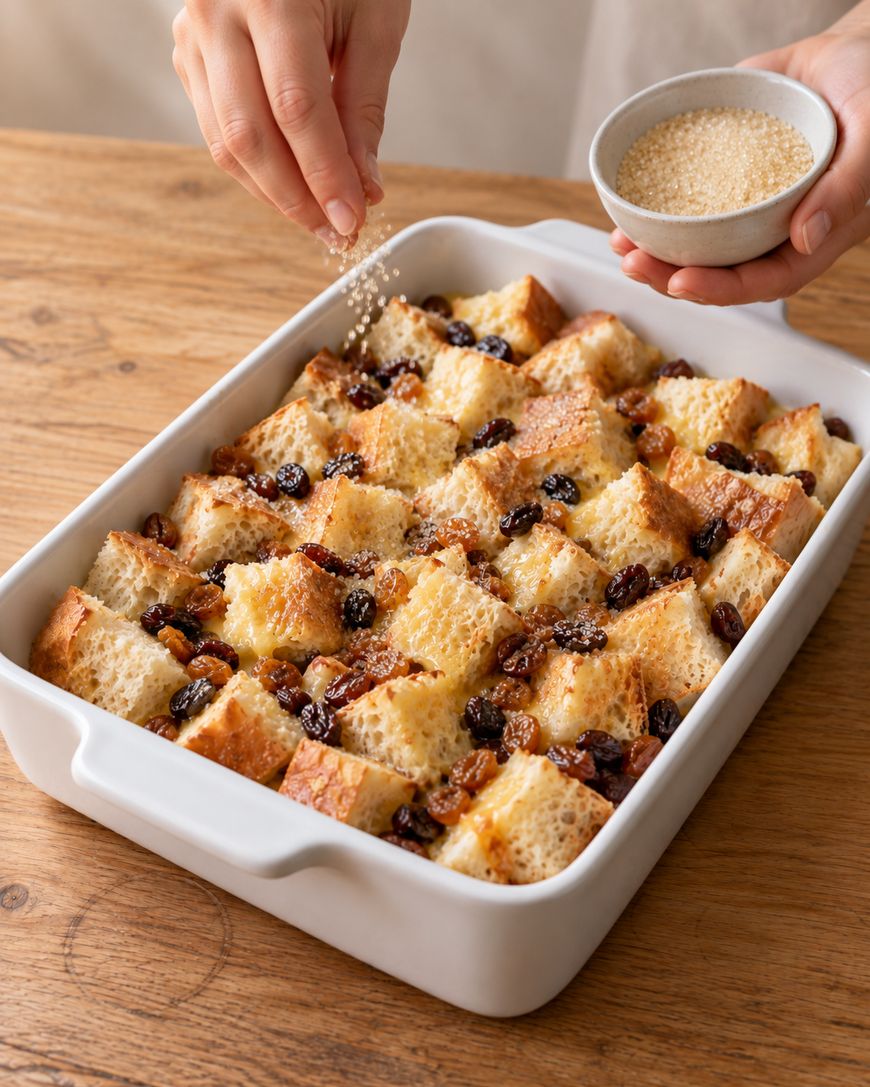
The USDA Food Safety and Inspection Service (FSIS) recommends cooking egg dishes to 160°F, so a thermometer is the most reliable way to know it is done. If the top browns before the center sets, tent the dish loosely with foil for the remaining time.
Rest Before Serving
Let the bread pudding rest for 10 minutes after it comes out of the oven. The custard finishes setting as it cools slightly, and the squares hold their shape when you cut them.

Bread Pudding Recipe Tips for Custardy Results
Most bread pudding problems come down to bread, ratio or timing. A few small habits fix nearly all of them.
Choose Sturdy Bread
Soft sandwich bread collapses when it soaks, so reach for French bread, brioche, challah or croissants instead. These breads have enough structure to stay in distinct, tender pieces.
Cut the cubes to about 1 inch. Smaller pieces turn dense and heavy, while larger ones stay dry in the center.
Do Not Skip the Soak
Twenty minutes gives the custard time to travel all the way into each cube. If you are short on time, you can shorten it slightly, but expect a less creamy middle.
Watch the Center, Not Just the Clock
Ovens vary, so the 45-minute mark is a guide. Check that the center is set and use the thermometer before you pull the dish.
A soupy middle means it needs more time, and a rubbery, weeping texture means it went too far. Aim for a gentle set that holds together when you press the surface.
Variations and Substitutions for Bread Pudding
Once the base recipe feels familiar, it is easy to change. The card below keeps to the classic version, so treat every idea in this section as optional.
Add Mix-Ins
A half cup of chocolate chips, chopped pecans or dried cranberries works well in place of the raisins. The card below leaves these out, so treat them as an optional swap.
For a cozy fall version, add a pinch of ground ginger and a little orange zest to the custard. For a richer flavor, use brown sugar in place of some of the granulated sugar.
Try Different Breads
Cinnamon raisin bread makes a spiced version without extra effort, and croissants make an especially buttery one.
If you use a very sweet bread, you may want to trim the sugar slightly. Taste the custard before you pour it over.
Make It Boozy or Alcohol Free
A splash of bourbon or dark rum in the custard gives a New Orleans style flavor. The card below leaves it out, so add it only if you like it, and keep the alcohol-free version as your default for families.
Storing, Freezing and Reheating Bread Pudding
Egg custard needs to be cooled and chilled promptly, so follow a few simple rules. According to USDA guidance, perishable leftovers should go into the refrigerator within 2 hours of cooking.

Refrigerator Storage
Cool the pudding, cover it tightly, and store it in the refrigerator for up to 4 days. The USDA advises eating most cooked leftovers within 3 to 4 days, so 4 days is the limit.
Freezer Storage
Wrap individual squares well and freeze them for up to 2 months for the best quality. Thaw them overnight in the refrigerator before reheating.
Reheating
Cover the dish with foil and warm it in a 350°F oven for 15 to 20 minutes, until hot all the way through. The USDA recommends reheating leftovers to 165°F.
Serving Ideas for Bread Pudding
Warm bread pudding is a dessert that welcomes a topping. Vanilla ice cream melting over a hot square is the classic choice, and softly whipped cream is lighter.
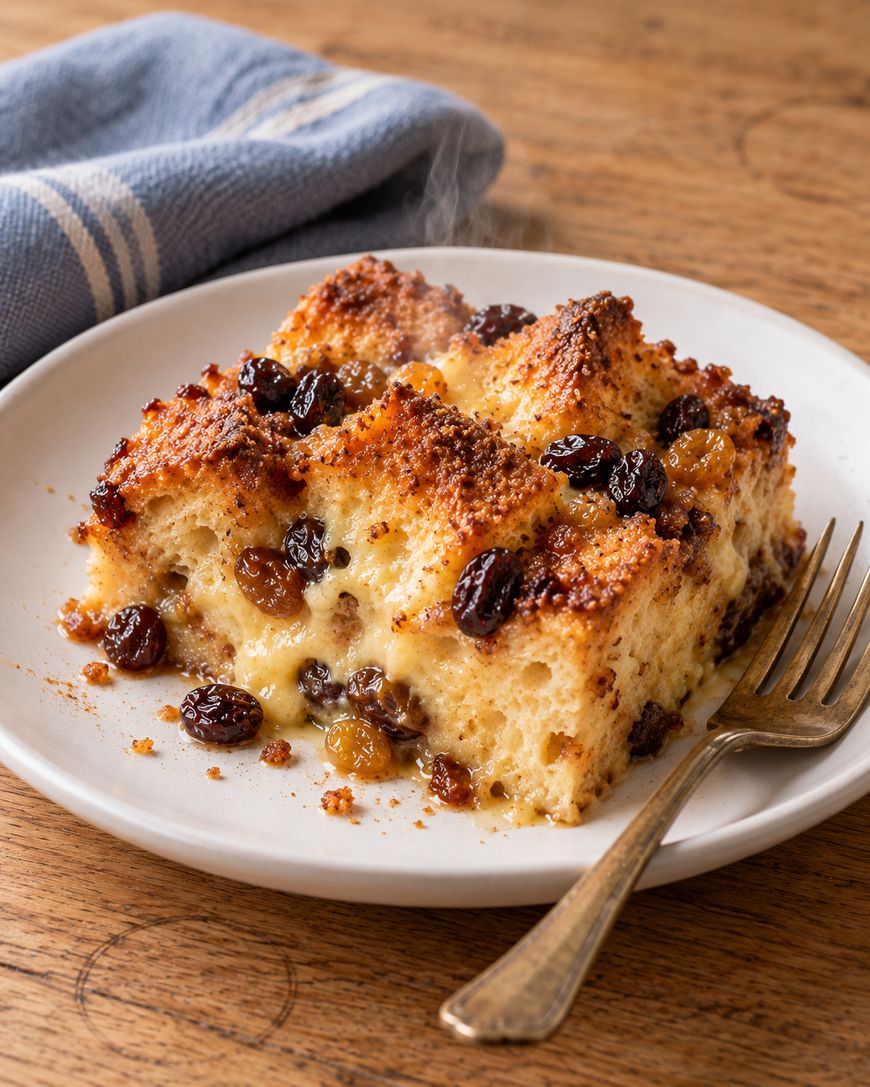
A drizzle of warm caramel sauce, a dusting of cinnamon, or a spoonful of vanilla sauce all work. For brunch, serve it with fresh berries and a hot cup of coffee.
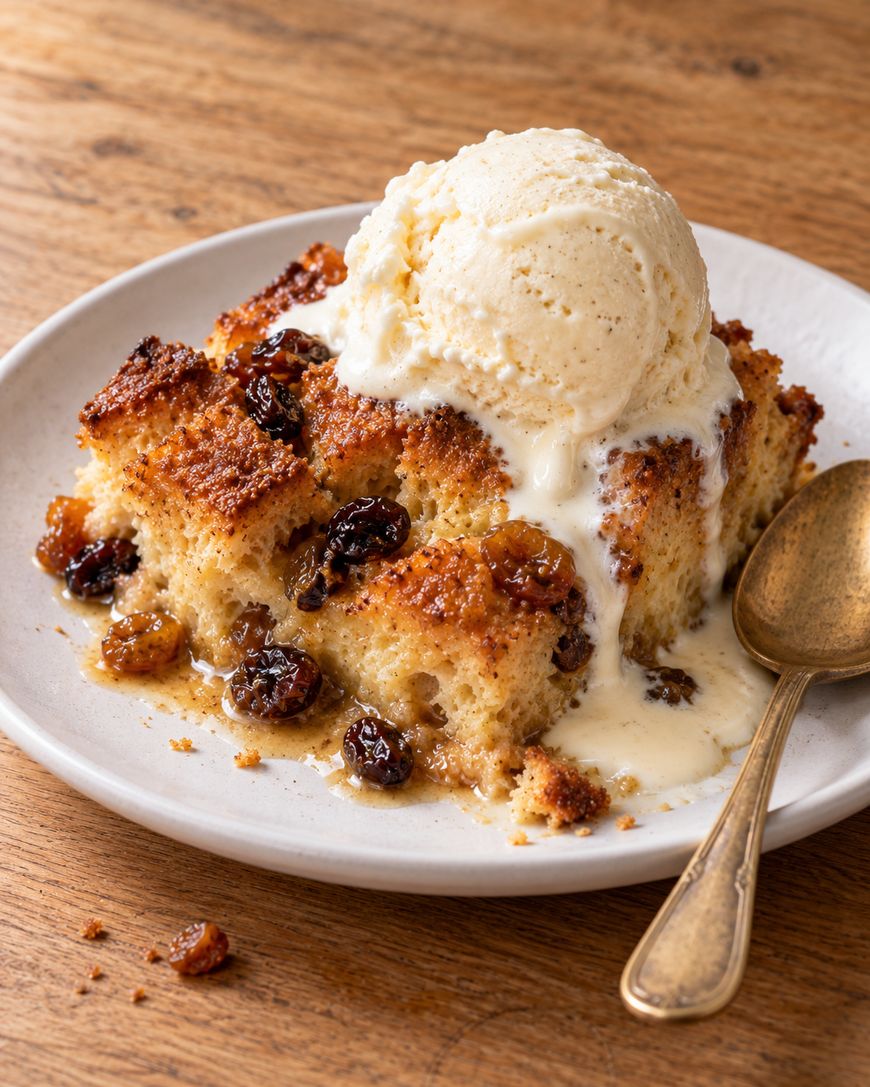
It also fits easily into a holiday spread. It travels well in its baking dish and stays warm under foil, which makes it a smart choice for Thanksgiving and Christmas gatherings.
The History of Bread Pudding
Bread pudding began as a thrifty way to use stale bread. European home cooks, especially in England, soaked leftover bread in milk, eggs and sugar for generations, and the dish spread with settlers to North America.
Regional versions grew from there. New Orleans cooks are known for versions served with a boozy sauce, while many American kitchens keep it simple with cinnamon and raisins.
Today it is just as popular with restaurants as with home bakers, because it turns inexpensive ingredients into something that tastes special.
Use the recipe card below for the full ingredient list, exact amounts and step-by-step directions.
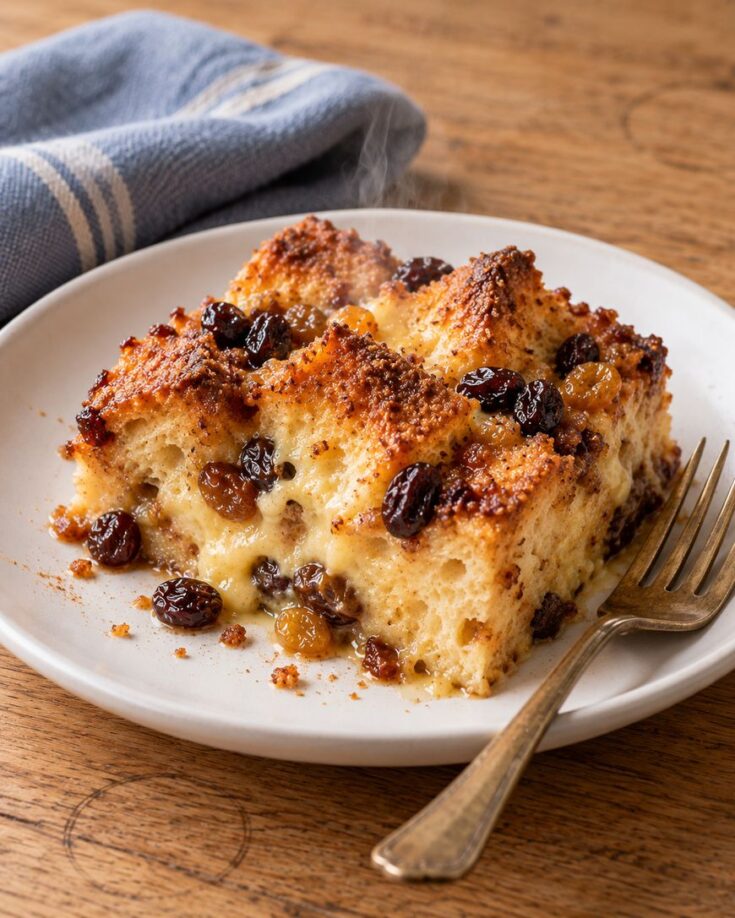
Bread Pudding Recipe
This classic bread pudding has a creamy vanilla custard center, tender bread cubes and a crisp, caramelized sugar top. It is an easy dessert made with day-old bread and simple pantry ingredients.
Ingredients
- 8 cups day-old French bread or brioche, cut into 1-inch cubes (about 12 ounces)
- 1/4 cup unsalted butter, melted, plus more for the dish
- 4 large eggs
- 3/4 cup granulated sugar
- 2 cups whole milk
- 1 cup heavy cream
- 2 teaspoons vanilla extract
- 1 teaspoon ground cinnamon
- 1/4 teaspoon ground nutmeg
- 1/2 teaspoon salt
- 1/2 cup raisins (optional)
- 2 tablespoons coarse sugar, for sprinkling
Instructions
- Heat the oven to 350°F and butter a 9x13-inch baking dish.
- Add the bread cubes to the dish, drizzle with the melted butter, and toss to coat. Scatter the raisins over the bread if using.
- In a large bowl, whisk the eggs and granulated sugar for about 1 minute, until smooth.
- Whisk in the milk, heavy cream, vanilla, cinnamon, nutmeg and salt until combined.
- Pour the custard evenly over the bread and press the cubes down gently so every piece is moistened.
- Let the dish stand for 20 minutes, pressing the bread down once halfway through.
- Sprinkle the coarse sugar over the top.
- Bake for 45 minutes, until the top is deep golden, the center is set, and the middle reads 160°F on an instant-read thermometer.
- Rest for 10 minutes before cutting into 12 squares and serving warm.
Notes
Egg dishes should reach 160°F, the temperature recommended by the USDA Food Safety and Inspection Service. If your bread is fresh, dry the cubes on a baking sheet at 300°F for 10 to 15 minutes and cool them before using. If the top browns before the center sets, tent the dish loosely with foil. Refrigerate leftovers within 2 hours and store covered for up to 4 days. Reheat covered with foil at 350°F for 15 to 20 minutes until hot, to 165°F. Freeze wrapped squares for up to 2 months and thaw overnight in the refrigerator.
Nutrition Information:
Yield:
12Serving Size:
1 squareAmount Per Serving: Calories: 310Total Fat: 15gSaturated Fat: 8gSodium: 310mgCarbohydrates: 37gFiber: 1gSugar: 20gProtein: 7g
Bread Pudding Recipe Questions
What is the best bread for bread pudding?
French bread, brioche and challah are the best choices because they hold their shape when soaked. Make sure the bread is day-old or lightly dried so it can absorb the custard.
Can you make bread pudding ahead of time?
Yes. Bake it, cool it, and refrigerate it for up to 4 days, then reheat covered with foil at 350°F for 15 to 20 minutes. It tastes just as good the next day.
How do you know when bread pudding is done?
The top should be deep golden, the center should be set, and the middle should read 160°F on an instant-read thermometer. A knife inserted near the center should come out clean, with no liquid custard on it.
Why is my bread pudding soggy or watery?
It is usually underbaked, or the bread was too fresh to absorb the custard. Bake it until the center reaches 160°F, and dry fresh bread in the oven before you use it.
Can you freeze bread pudding?
Yes. Wrap squares tightly and freeze them for up to 2 months for the best quality, then thaw overnight in the refrigerator and reheat at 350°F.
Why This Bread Pudding Recipe Works
This bread pudding recipe works because every step protects the texture of the custard. Day-old bread absorbs the liquid without turning mushy, and the ratio of 4 eggs to 3 cups of milk and cream sets the custard soft and silky instead of firm.
The 20-minute soak lets the custard reach the center of every cube, so the inside stays creamy while the butter-coated edges crisp up in the oven. A moderate 350°F oven cooks the eggs gently, and a coarse sugar sprinkle on top caramelizes into a crackly crust.
Checking for 160°F at the center takes the guesswork out of baking time and keeps the dessert safe.
Final Thoughts on This Bread Pudding Recipe
This bread pudding recipe turns simple leftovers into a warm, comforting dessert that tastes like it took much more effort. Once you have made it, you can tweak the bread, the mix-ins and the toppings to match any season.
Pick up a loaf of French bread or brioche, let it go a little stale, and bake a pan this week. Then save the recipe so it is ready the next time you want an easy dessert.
Sticky Toffee Pudding With a Moist Date Sponge and a Buttery Toffee Sauce
Homemade Custard Recipe That Turns Out Silky, Pourable, and Smooth Every Time