Last updated: October 25, 2026
This custard recipe gives you a silky, pourable vanilla custard on the stove with about 25 minutes of hands-on time and just six ingredients. Follow the walkthrough below or head straight to the recipe card further down the post.
How to Make This Custard Recipe From Start to Finish
You make this custard recipe by heating milk and cream, tempering egg yolks with the hot liquid, and stirring the mixture over gentle heat until it reaches 170°F to 175°F. Then you strain it, cool it over ice, and chill it for at least 2 hours.

Ingredients You Need
You need 2 cups of whole milk, 1/2 cup of heavy cream, 4 large egg yolks, 1/3 cup of granulated sugar, 1/8 teaspoon of fine sea salt, and 2 teaspoons of pure vanilla extract. That is the entire list, which is part of what makes this custard so easy to repeat.
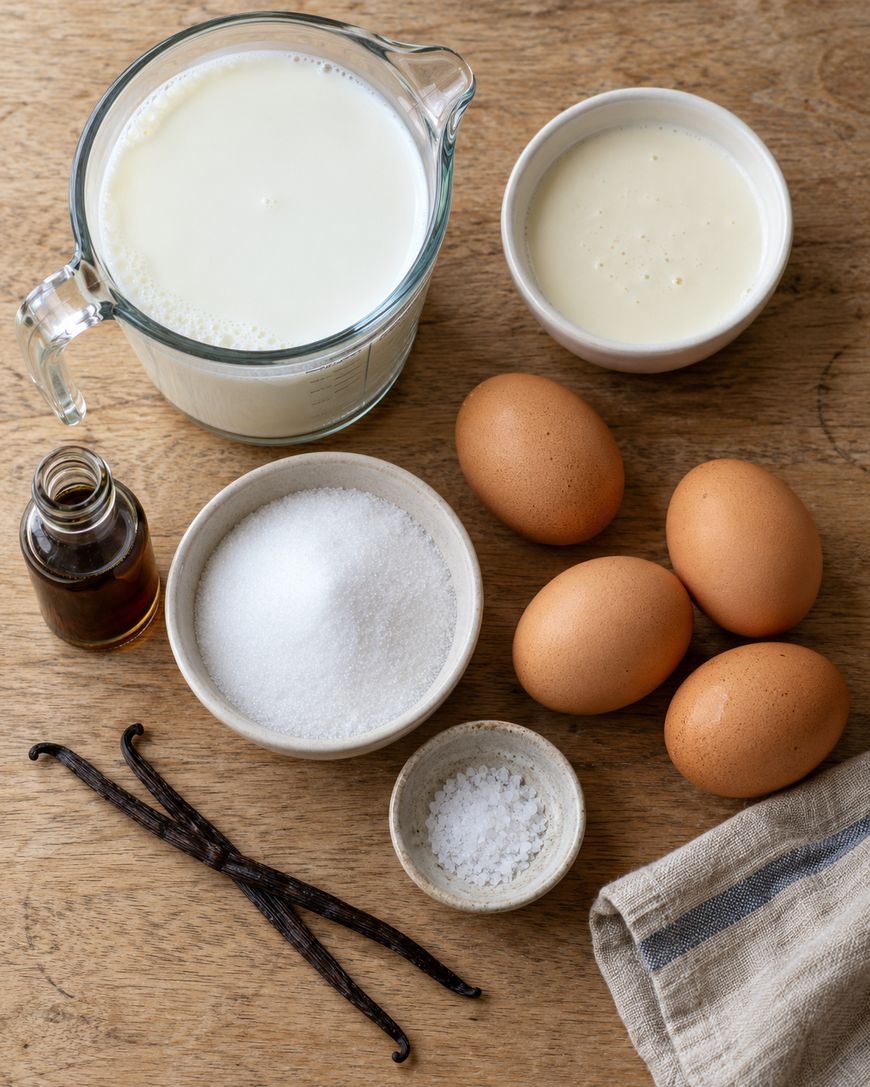
Whole milk and heavy cream together give the custard body without making it heavy. Milk alone tastes thin, while cream alone tastes more like melted ice cream.
Cold eggs separate more cleanly, so separate the yolks straight from the refrigerator. Save the whites for an omelet or a batch of meringue cookies.

Set Up Your Ice Bath First
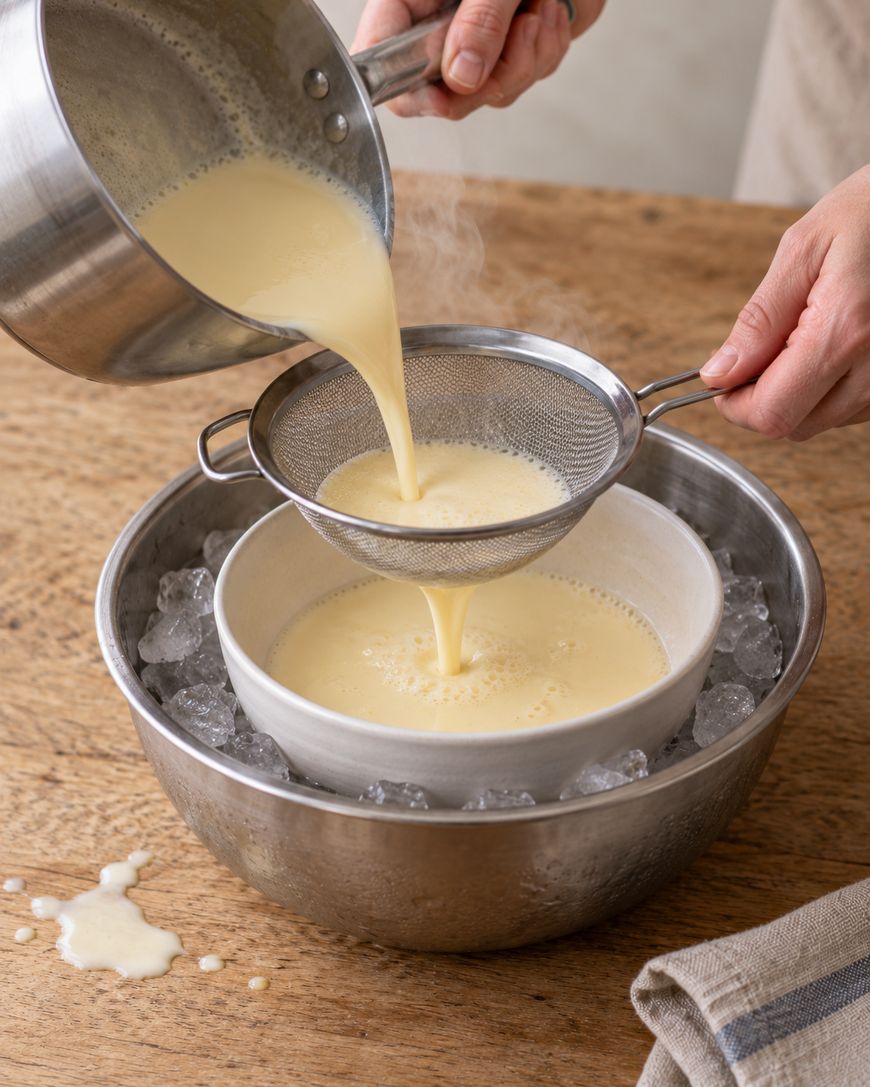
Set a fine-mesh sieve over a medium heatproof bowl, then nest that bowl inside a larger bowl filled with ice and cold water. Doing this before you turn on the heat means you can stop the cooking the moment the custard is ready.
Custard can move from perfect to scrambled in under a minute. Having the cooling station ready is the best insurance you have.
Heat the Milk and Cream
Pour the milk, cream, and salt into a medium saucepan and warm it over medium heat for about 5 minutes. You want steam rising and tiny bubbles around the edge, but not a full boil.
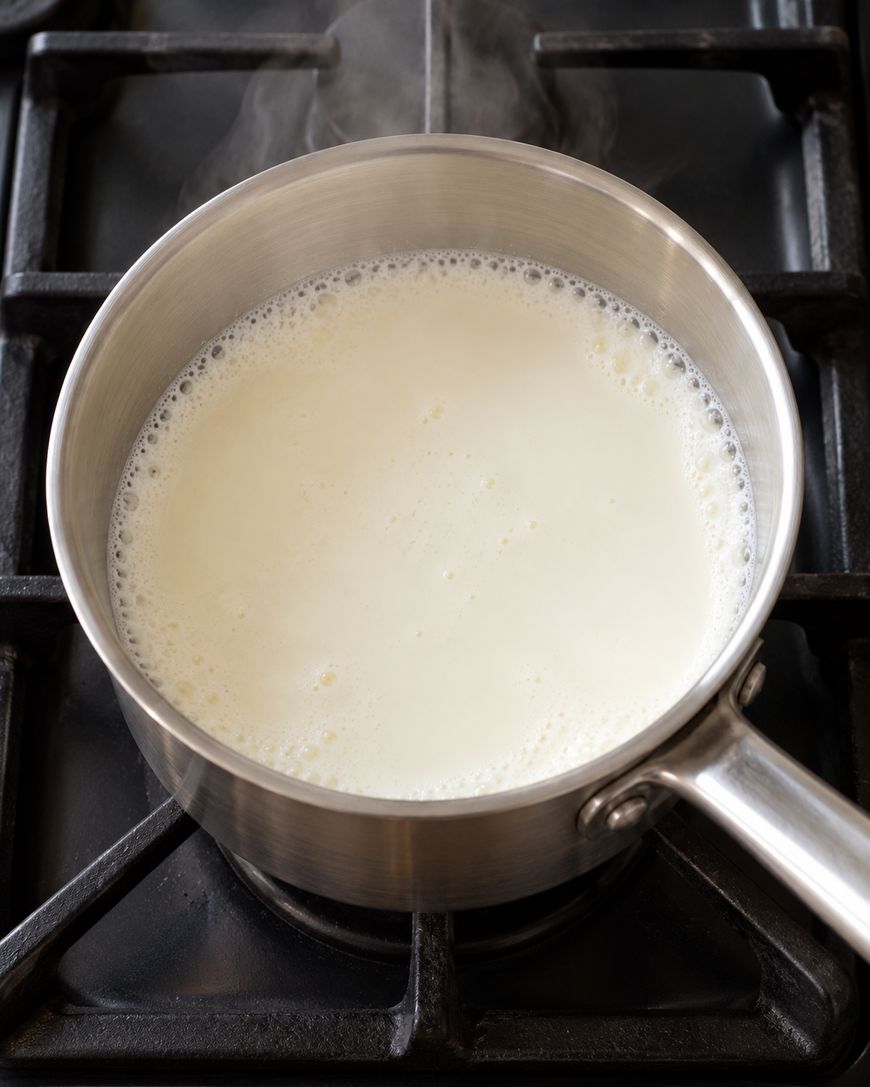
A heavy-bottomed saucepan, such as a stainless steel Cuisinart or an enameled Le Creuset, spreads the heat evenly. That helps prevent a scorched layer on the bottom of the pan.
Whisk and Temper the Yolks
While the milk warms, whisk the yolks and sugar together in a separate bowl for about 1 minute, until the mixture turns pale yellow and slightly thick. Do not let the sugar sit on the yolks without whisking, because it can leave tiny cooked specks.
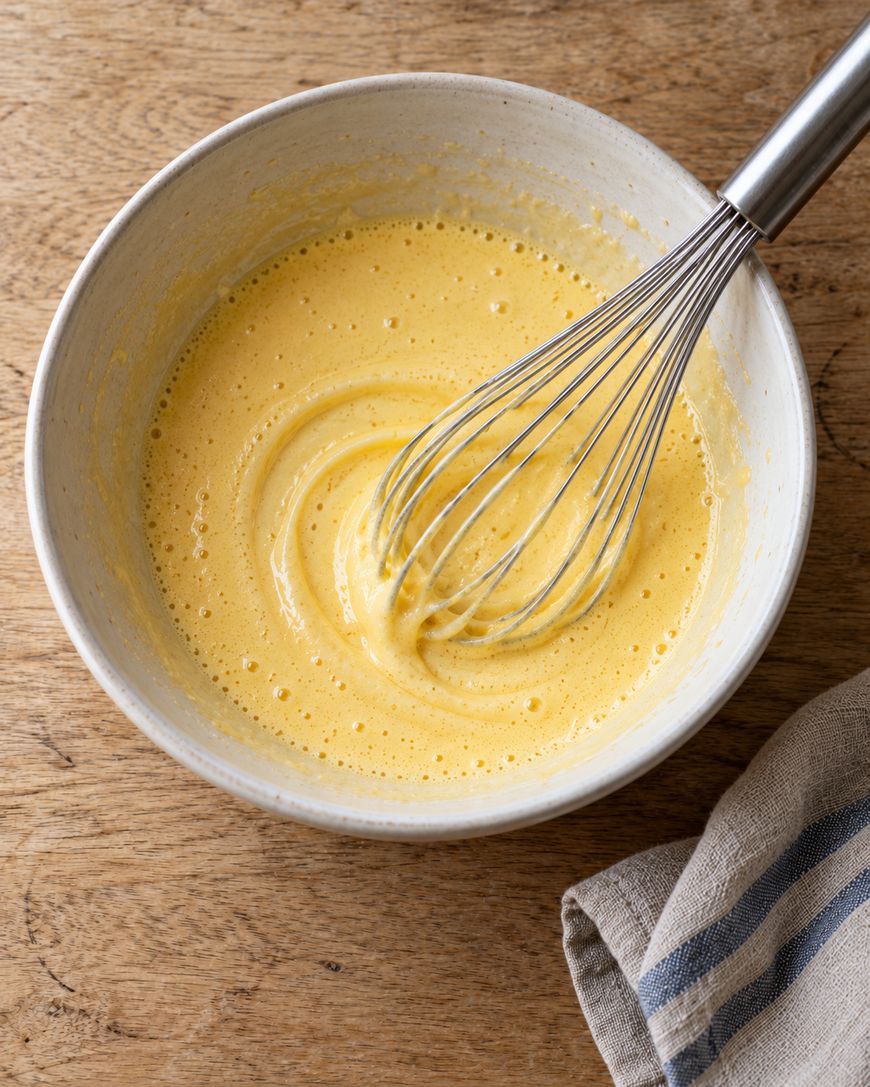
Next, slowly pour about 1 cup of the hot milk into the yolks in a thin stream while whisking constantly. This step is called tempering, and it raises the temperature of the eggs gently so they do not scramble when they meet the hot pan.

Pour the tempered yolk mixture back into the saucepan with the rest of the milk and whisk to combine.
Cook the Custard Until It Coats the Spoon
Cook the custard over medium-low heat for 6 to 8 minutes, stirring constantly with a wooden spoon or heatproof spatula in a figure-eight pattern. Scrape the bottom and corners of the pan on every pass so nothing settles and sets.

The custard is done when it coats the back of the spoon and a finger drawn across the spoon leaves a clean line. A digital thermometer such as a Thermapen or ThermoPop should read 170°F to 175°F at that point.

The USDA Food Safety and Inspection Service says egg dishes should reach an internal temperature of 160°F, so this custard clears the safe threshold with room to spare. Do not let it climb past 180°F, because that is where the yolks begin to scramble.
Strain, Cool, and Chill
Pour the hot custard right away through the sieve into the bowl set over ice, then stir in the vanilla extract. Stir for about 2 minutes so the custard cools quickly and stops cooking.
Press a piece of plastic wrap or parchment directly onto the surface to prevent a skin from forming, then refrigerate for at least 2 hours. The custard thickens as it chills, so do not worry if it seems thin while it is still warm.
Tips for the Best Custard Recipe Results
The three things that matter most are gentle heat, constant stirring, and a thermometer. Get those right and this custard recipe works every time.
Keep the Heat Gentle
Medium-low heat gives you time to react before the yolks overcook. If your burner runs hot, lift the pan off the heat for a few seconds whenever steam starts rising quickly.
Stir Constantly and Scrape the Corners
Eggs set first where the pan is hottest, which is the bottom and the corners. Stirring in a figure-eight pattern covers the whole base and keeps the custard moving evenly.
Rescue Custard That Looks Curdled
If the custard looks slightly grainy, pull the pan off the heat immediately and pour it through the sieve into the ice bath. A quick whisk or a few seconds with an immersion blender smooths out minor curdling, but custard that has fully scrambled cannot be saved.
Custard Recipe Variations and Substitutions
The base custard is plain vanilla, which makes it easy to adapt. The ideas below are optional and are not included in the recipe card.
Flavor Ideas
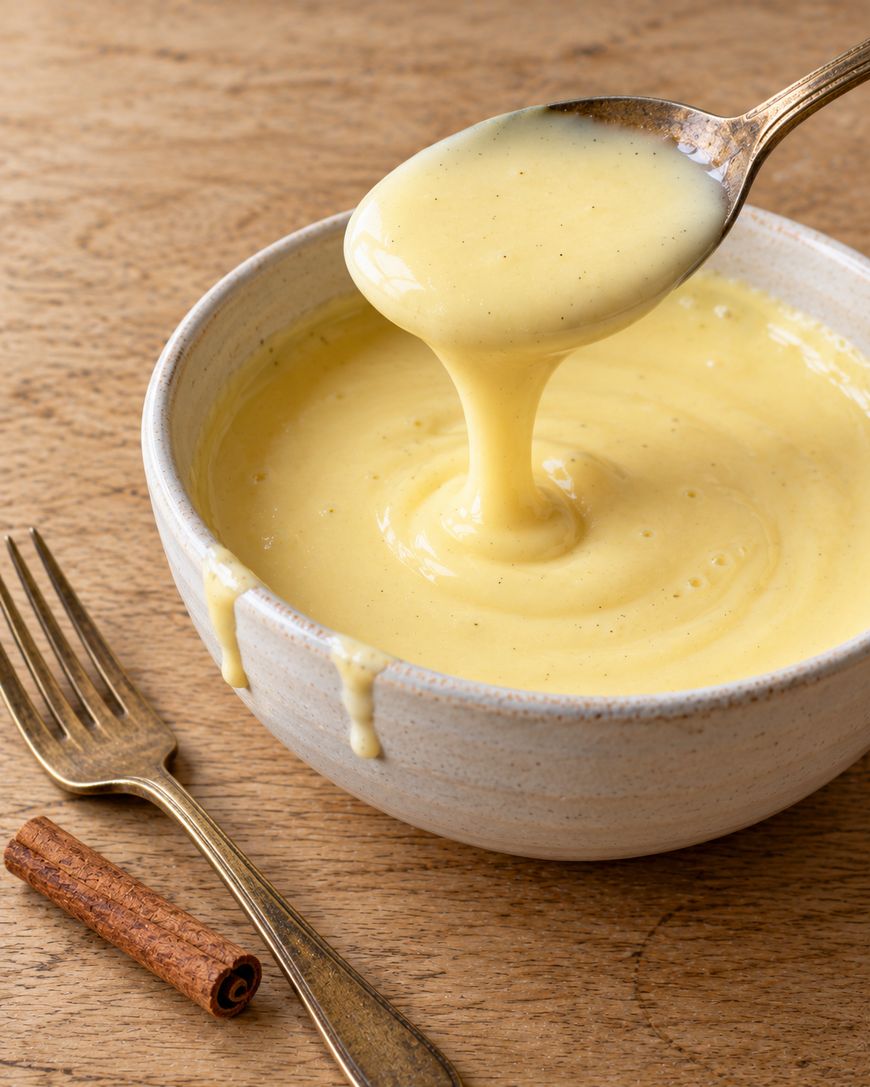
Steep a cinnamon stick or a few strips of orange zest in the milk and cream as they warm, then lift them out before you temper the yolks. You can also split one vanilla bean, scrape the seeds into the milk, and use it in place of the vanilla extract.
Dairy and Sugar Swaps
Using 2 1/2 cups of half-and-half in place of the milk and cream makes a slightly simpler version with a similar texture. Light brown sugar swaps in for granulated sugar one for one if you want a gentle caramel flavor.
Plant-based milks behave differently with egg yolks, and we have not tested them here. For the most reliable result, stick with dairy.
How to Serve and Store Custard
Homemade custard is wonderful cold from the refrigerator, and it is just as good spooned over something warm. It also keeps well for a few days, which makes it a great make-ahead dessert.
Serving Ideas
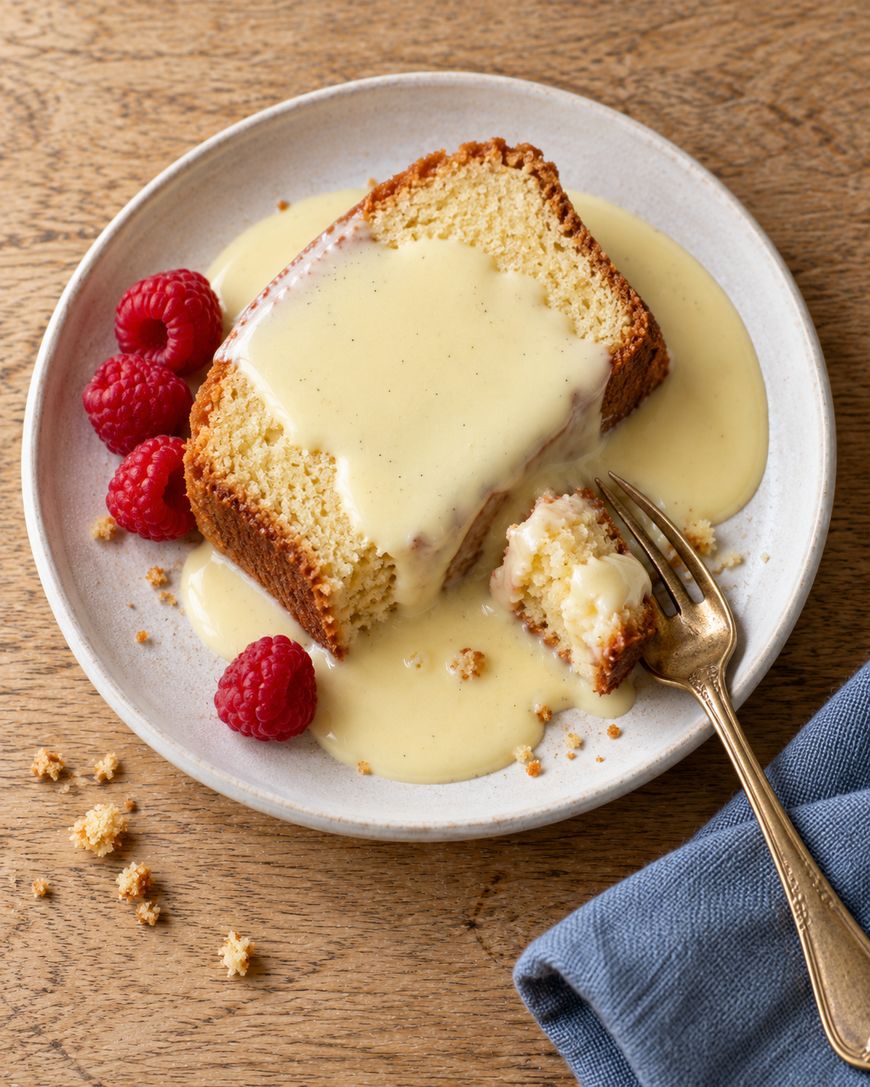
Spoon the custard over warm apple crisp, fresh berries, slices of pound cake, or a bowl of bread pudding. You can also layer it with sponge cake and raspberry jam for a quick trifle.
Storage and Make-Ahead Tips
Store the custard in an airtight container in the refrigerator for up to 3 days. USDA guidance says cooked egg dishes should go into the refrigerator within 2 hours, so chill it promptly.
Serve it cold, or rewarm it in a saucepan over the lowest heat, stirring constantly, until it reaches 165°F, which is the USDA recommendation for reheating leftovers. We do not recommend freezing, because the custard separates and turns grainy as it thaws.
The Story Behind Classic Custard
Custard has been part of European cooking since at least the Middle Ages, when the word described a baked egg filling set inside a pastry crust. The name comes from the old word crustade, which referred to that crust.
Over time cooks learned to thicken sweet milk with eggs right in the saucepan, and the stirred custard we know today was born. French cooks call a thinner version crème anglaise, which means English cream.
In 1837 an English chemist named Alfred Bird created an egg-free custard powder because his wife could not eat eggs. Bird’s Custard is still a staple in British kitchens, but nothing beats the flavor of the real thing made from fresh yolks.
Ready to cook? Use the recipe card below to print or save this custard recipe, then keep reading for answers to the most common questions.
Homemade Custard
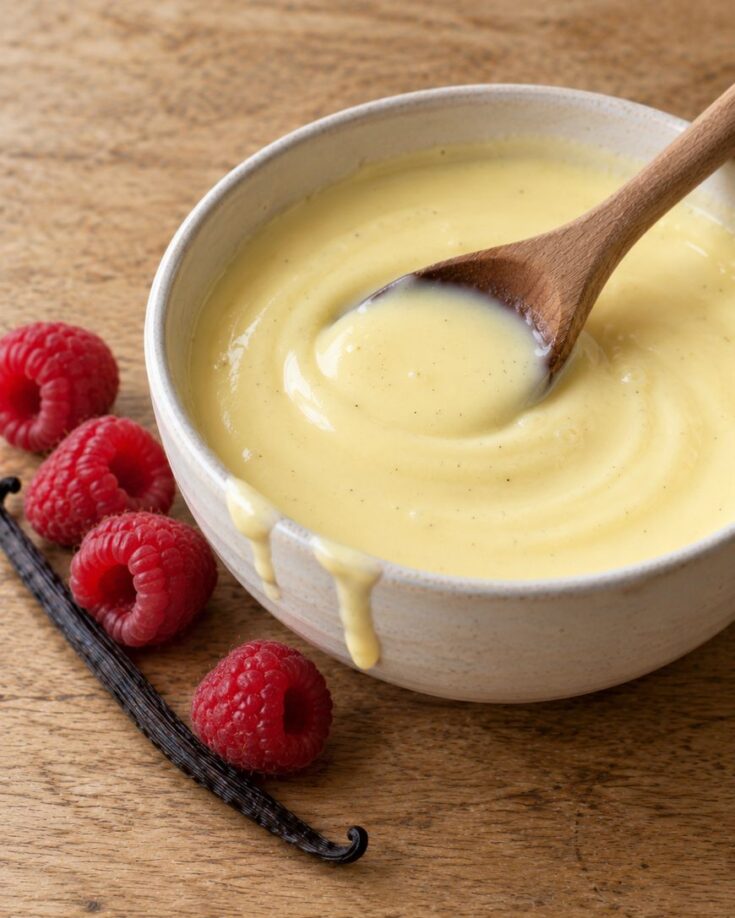
A silky, pourable vanilla custard made on the stove with egg yolks, milk, and cream. Chill it and spoon it over fruit, cake, or crisps.
Ingredients
- 2 cups whole milk
- 1/2 cup heavy cream
- 4 large egg yolks
- 1/3 cup granulated sugar
- 1/8 teaspoon fine sea salt
- 2 teaspoons pure vanilla extract
Instructions
- Set a fine-mesh sieve over a medium heatproof bowl, then nest that bowl in a larger bowl filled with ice and cold water.
- Combine the milk, cream, and salt in a medium saucepan and warm over medium heat for about 5 minutes, until steaming with tiny bubbles around the edge. Do not let it boil.
- While the milk warms, whisk the egg yolks and sugar in a separate bowl for about 1 minute, until pale yellow and slightly thick.
- Slowly pour about 1 cup of the hot milk into the yolks in a thin stream, whisking constantly. Pour the tempered yolk mixture back into the saucepan and whisk to combine.
- Cook over medium-low heat for 6 to 8 minutes, stirring constantly in a figure-eight pattern and scraping the bottom and corners, until the custard coats the back of a spoon and a thermometer reads 170°F to 175°F. Do not let it pass 180°F.
- Immediately pour the custard through the sieve into the bowl over the ice bath, stir in the vanilla extract, and stir for about 2 minutes to cool it quickly.
- Press plastic wrap or parchment onto the surface and refrigerate for at least 2 hours, until fully chilled. Serve cold.
Notes
Egg dishes should reach at least 160°F per USDA FSIS, and this custard is done at 170°F to 175°F. Refrigerate within 2 hours of cooking and store in an airtight container for up to 3 days. To serve warm, rewarm over the lowest heat, stirring constantly, until it reaches 165°F. Do not freeze.
Nutrition Information:
Yield:
4Serving Size:
2/3 cupAmount Per Serving: Calories: 295Total Fat: 19gSaturated Fat: 10gSodium: 130mgCarbohydrates: 24gFiber: 0gSugar: 23gProtein: 7g
Custard Recipe Questions Answered
Why did my custard scramble?
Scrambled custard happens when the yolks get too hot too fast, usually because the burner was too high or the hot milk went into the yolks too quickly. Pour the milk in a thin stream while whisking nonstop, and keep the heat at medium-low while you cook.
How do you know when custard is done without a thermometer?
Dip a wooden spoon into the custard and draw a finger across the back. If the line stays clean and the custard does not run back into it, the custard is ready, although a thermometer is the safest way to confirm it has passed 160°F.
Can you use whole eggs instead of yolks?
Whole eggs make a looser, less rich custard, so we recommend sticking with four yolks as written. The whites also add water that keeps the texture from being as silky.
How long does homemade custard last?
Stored in an airtight container in the refrigerator, this custard keeps for up to 3 days. Refrigerate it within 2 hours of cooking, as USDA guidance advises for cooked egg dishes.
Can you freeze custard?
Freezing is not recommended because the eggs and dairy separate as the custard thaws, leaving a watery, grainy texture. Make a fresh batch instead, since it only takes about 25 minutes of hands-on time.
Why This Custard Recipe Works
Using only egg yolks gives the custard a rich, velvety body without any cornstarch or flour. The fat in the yolks and the heavy cream is what makes it feel luxurious on the tongue.
Tempering and gentle stirring over medium-low heat bring the eggs up to temperature slowly, so they thicken instead of scrambling. Watching the thermometer between 170°F and 175°F takes the guesswork out of knowing when to stop.
Straining the custard through a fine-mesh sieve catches any tiny bits of cooked egg. The ice bath then stops the cooking right away, which keeps the texture smooth from the first spoonful to the last.
Make This Custard Recipe Tonight
You now have everything you need to make this custard recipe with confidence, from tempering the yolks to chilling it until silky. Grab a saucepan, warm the milk, and spoon the finished custard over your favorite dessert tonight.
Easy Flan Recipe With Silky Custard and Deep Amber Caramel That Unmolds Cleanly