Last updated: September 11, 2026
Elderberry syrup is one of those recipes you make once and then find yourself making every single year once the weather turns cold. This version below the recipe card walks you through the whole process, from simmering dried elderberries with warming spices to straining and sweetening the finished syrup.
What You Need for Elderberry Syrup
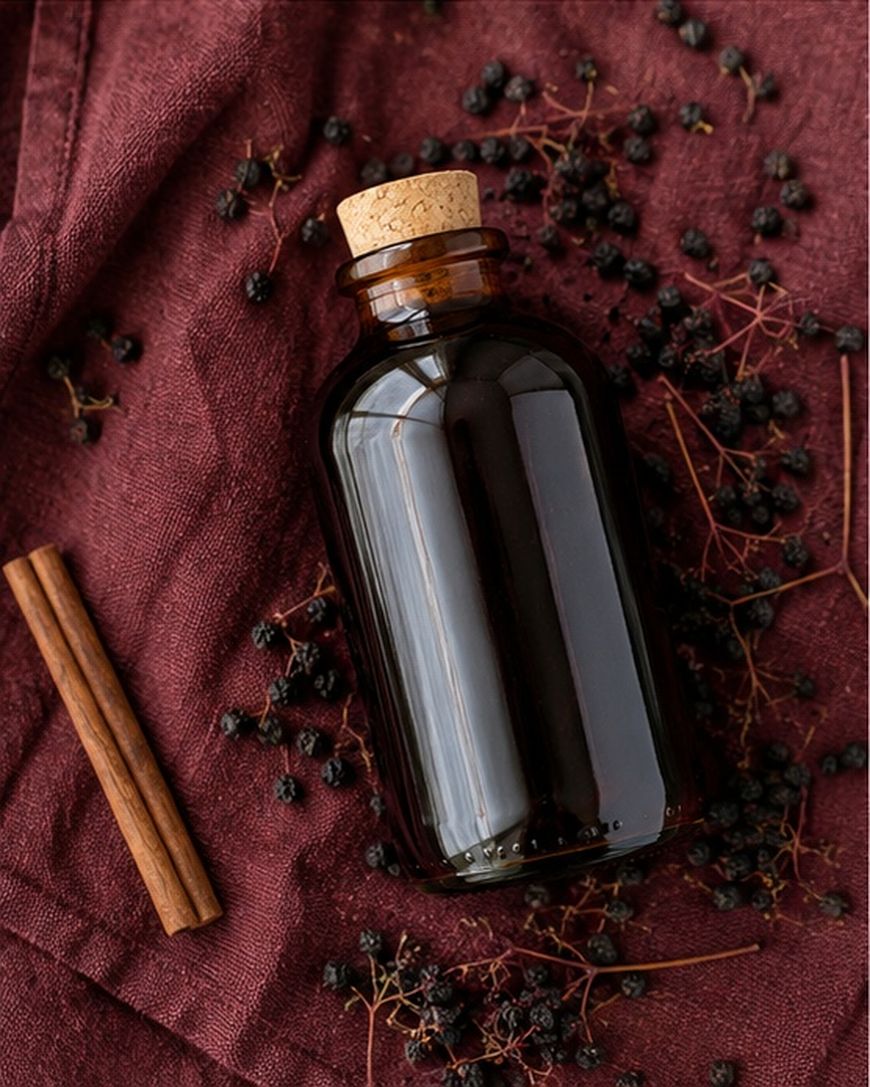
The base of this recipe is dried elderberries, which you can find at most health food stores or order online. Fresh elderberries work too, but you need roughly double the amount since dried berries are concentrated.
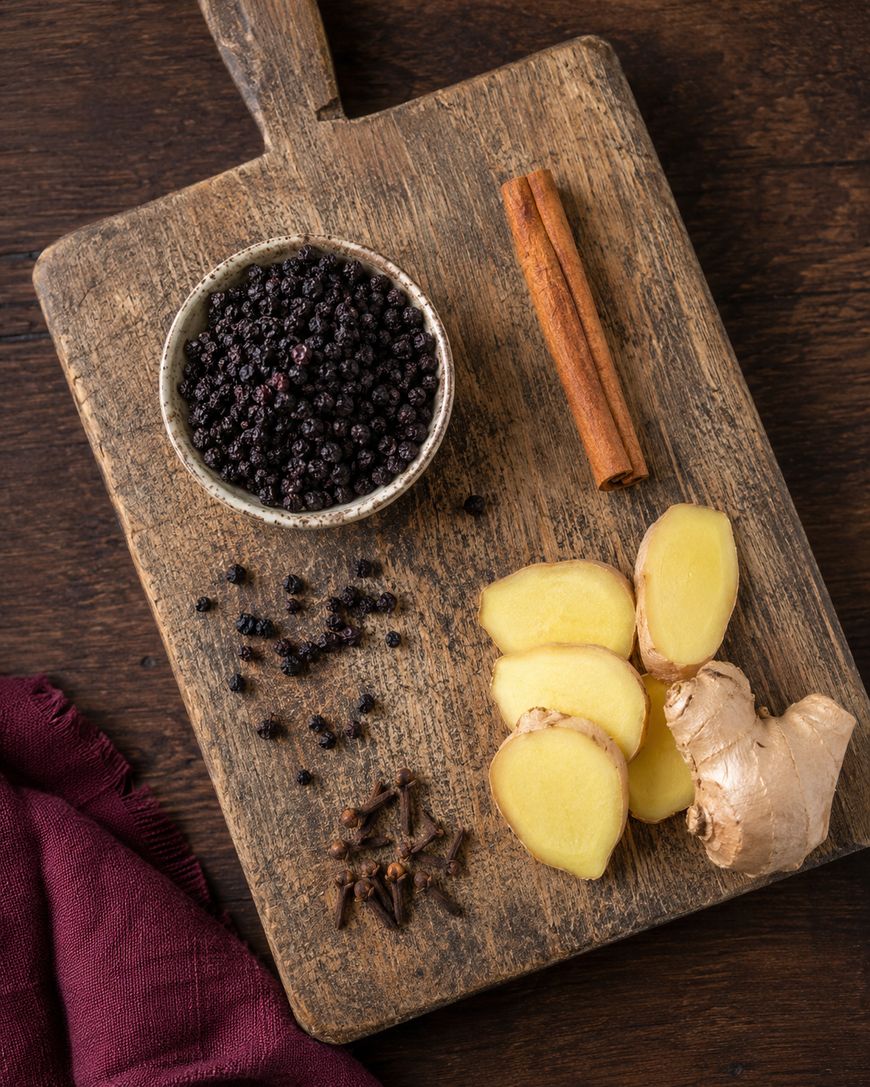
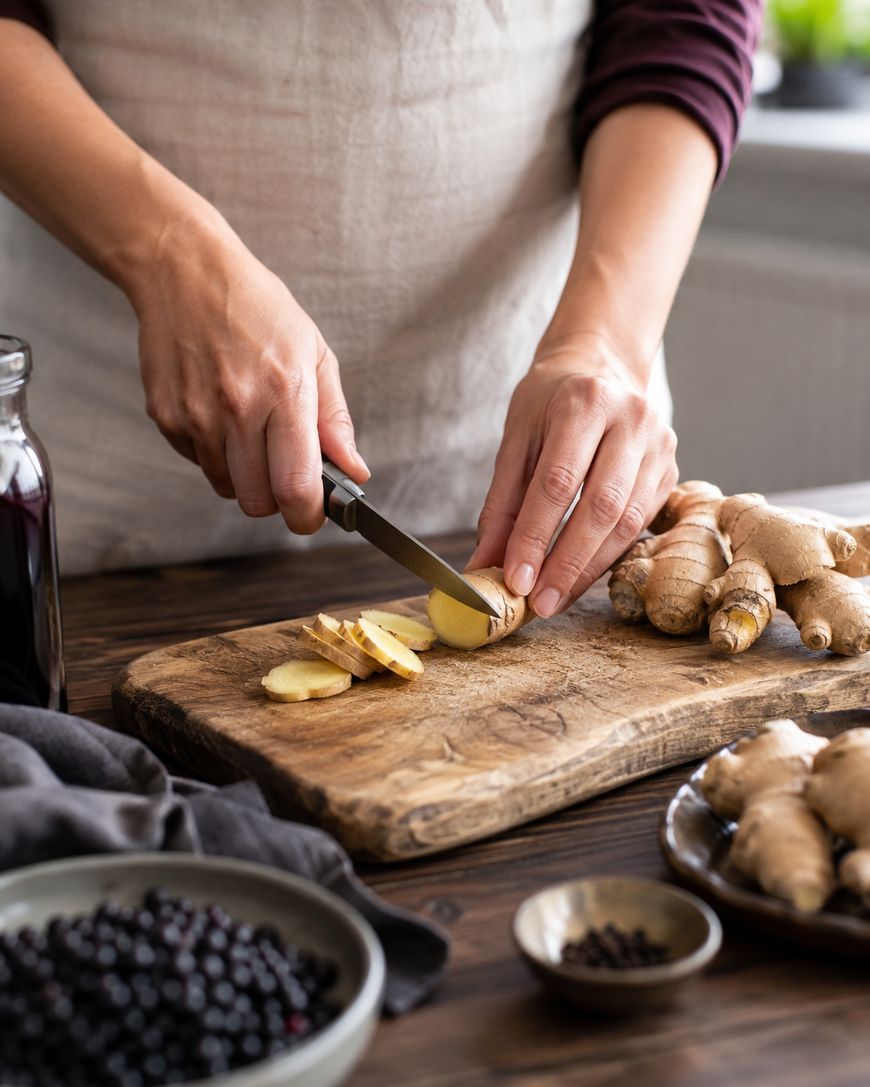
Alongside the berries, you will want fresh ginger, a cinnamon stick, and a few whole cloves. These spices do more than add flavor. They round out the tartness of the elderberries and give the syrup a warm, almost mulled-wine quality that makes it pleasant to take by the spoonful.
Raw honey is the traditional sweetener for elderberry syrup, stirred in only after the liquid has cooled. Honey cooked at high heat loses some of its floral character and takes on a flatter, caramelised note, so patience here pays off in flavour. Water rounds out the ingredient list, forming the base the berries and spices simmer in.
Choosing Your Elderberries
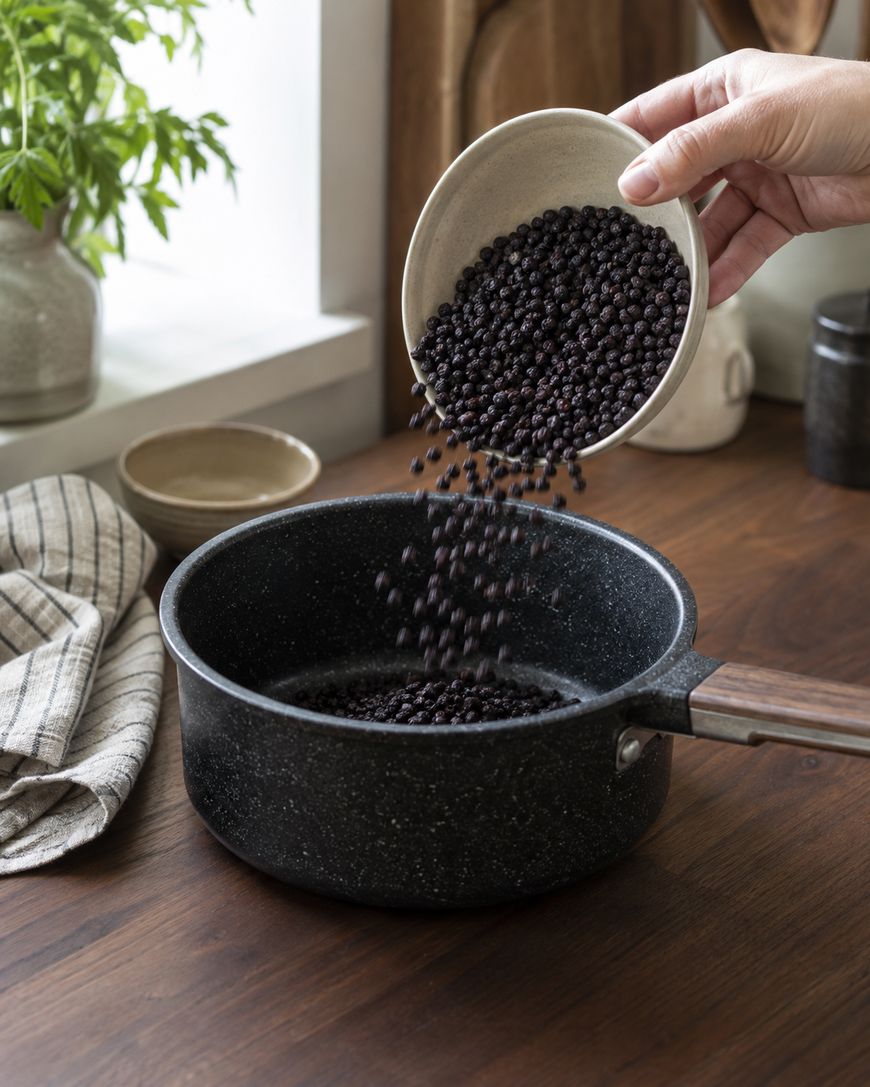
Look for elderberries labeled specifically for culinary or tea use, since raw elderberries and other parts of the plant are toxic and must never be eaten uncooked. Dried Sambucus nigra berries, the European black elderberry, are the standard choice and the most widely available online and in bulk spice shops.
How to Make Elderberry Syrup
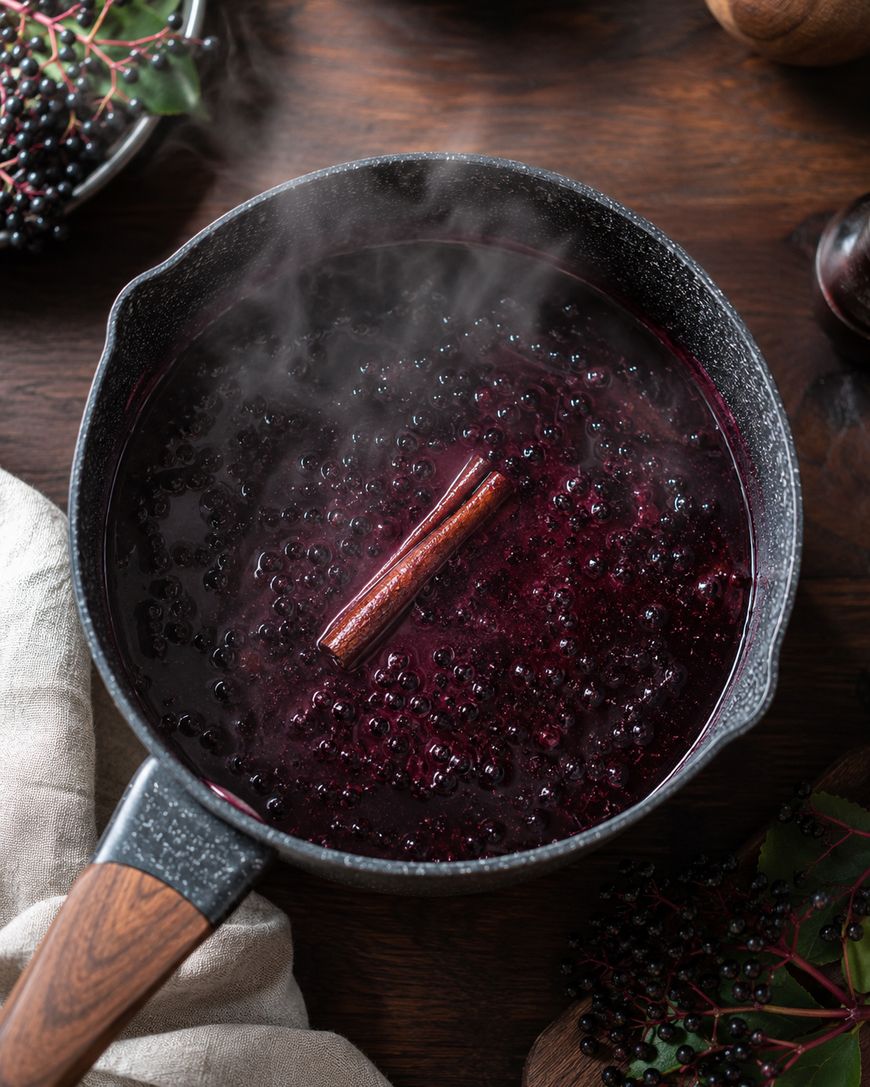
Start by combining the dried elderberries, sliced ginger, cinnamon stick, and cloves in a medium saucepan with the water. Bring the mixture to a boil, then reduce the heat and let it simmer uncovered for about 45 minutes, until the liquid has reduced by roughly half.
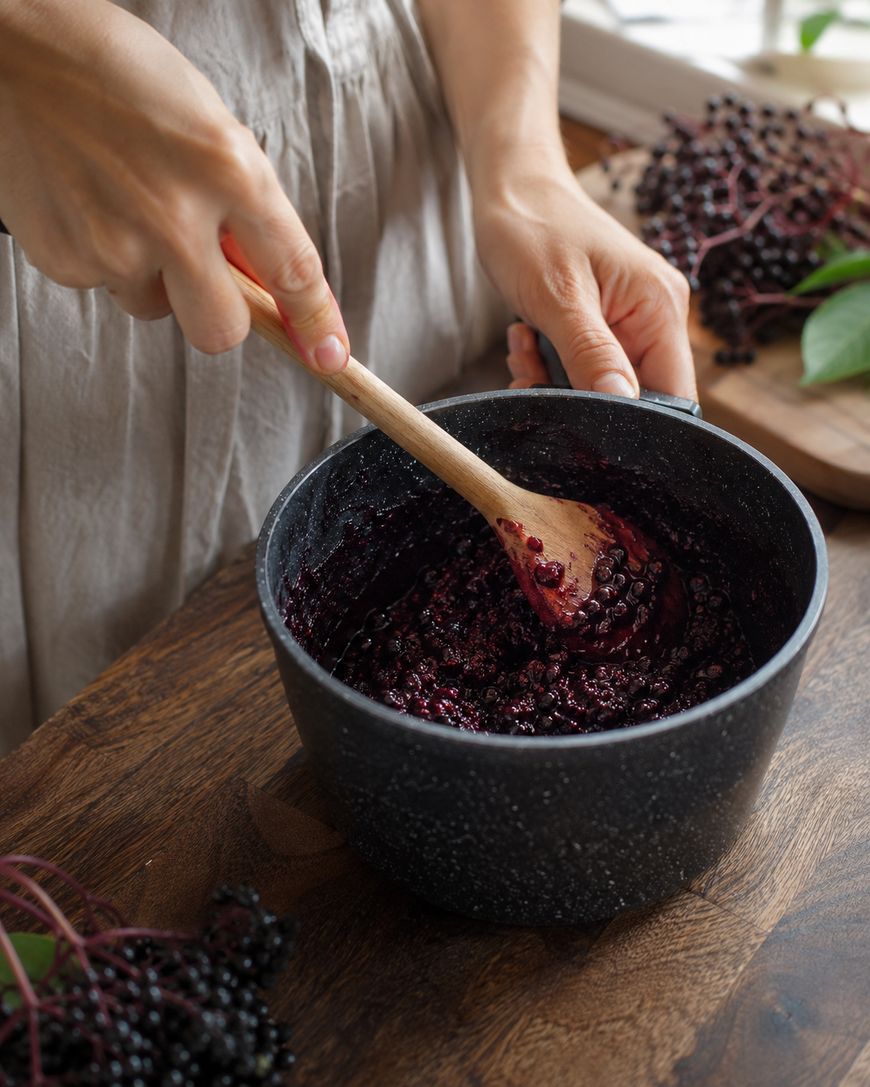
Mash the softened berries against the side of the pot with a wooden spoon partway through simmering. This helps release more of their juice and color into the liquid, giving you a deeper, richer syrup by the time it’s done.
Straining the Mixture
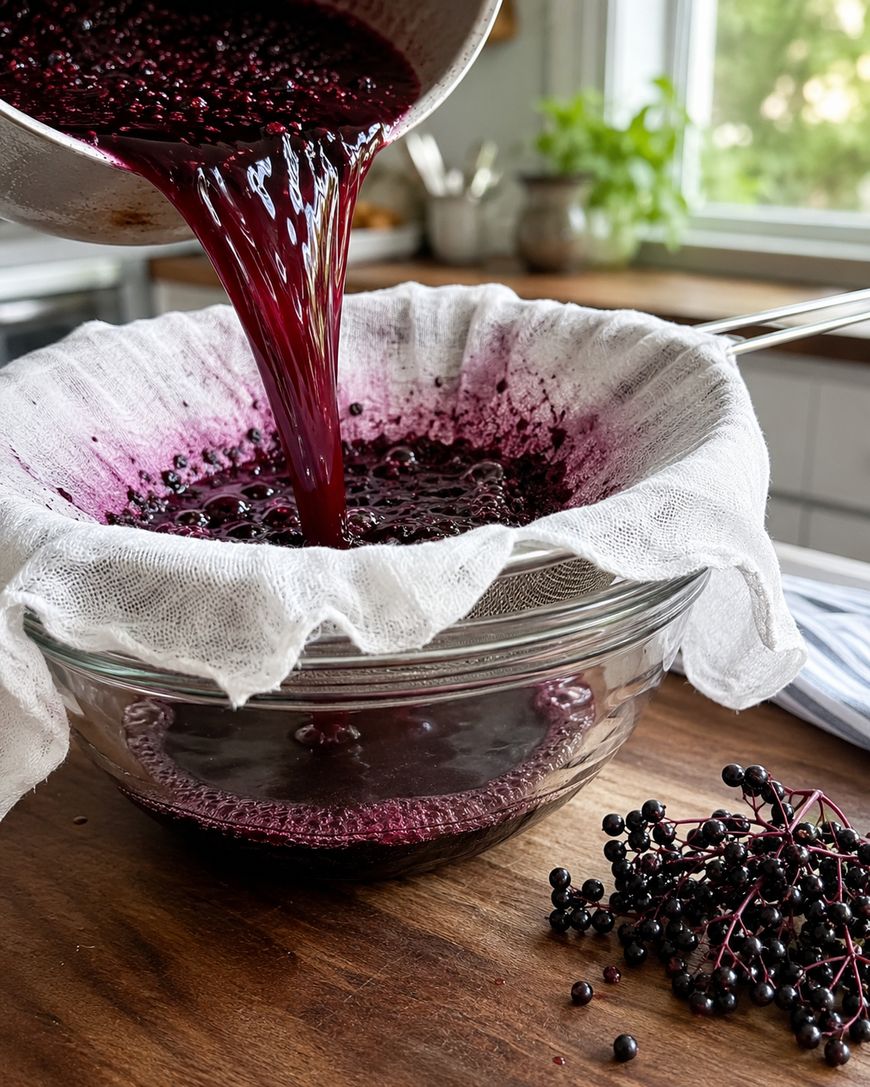
Once the liquid has reduced, remove the pot from the heat and let it cool for about fifteen minutes. Pour the mixture through a fine mesh strainer or a piece of cheesecloth set over a bowl, pressing the solids with the back of a spoon to extract every bit of liquid. Discard the spent berries and spices.
Sweetening and Storing
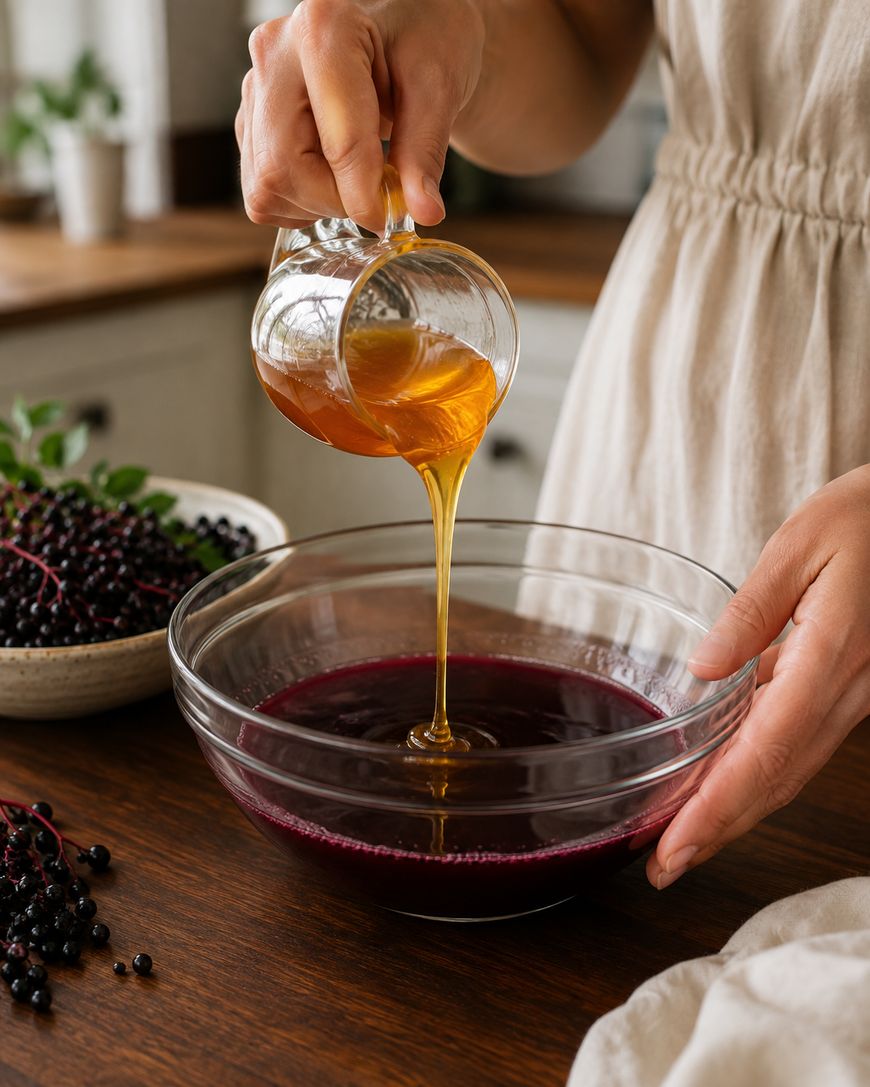
Let the strained liquid cool to lukewarm before whisking in the raw honey. Adding it while the liquid is still hot will work, but the honey tastes noticeably more cooked, so wait until it is just warm to the touch.
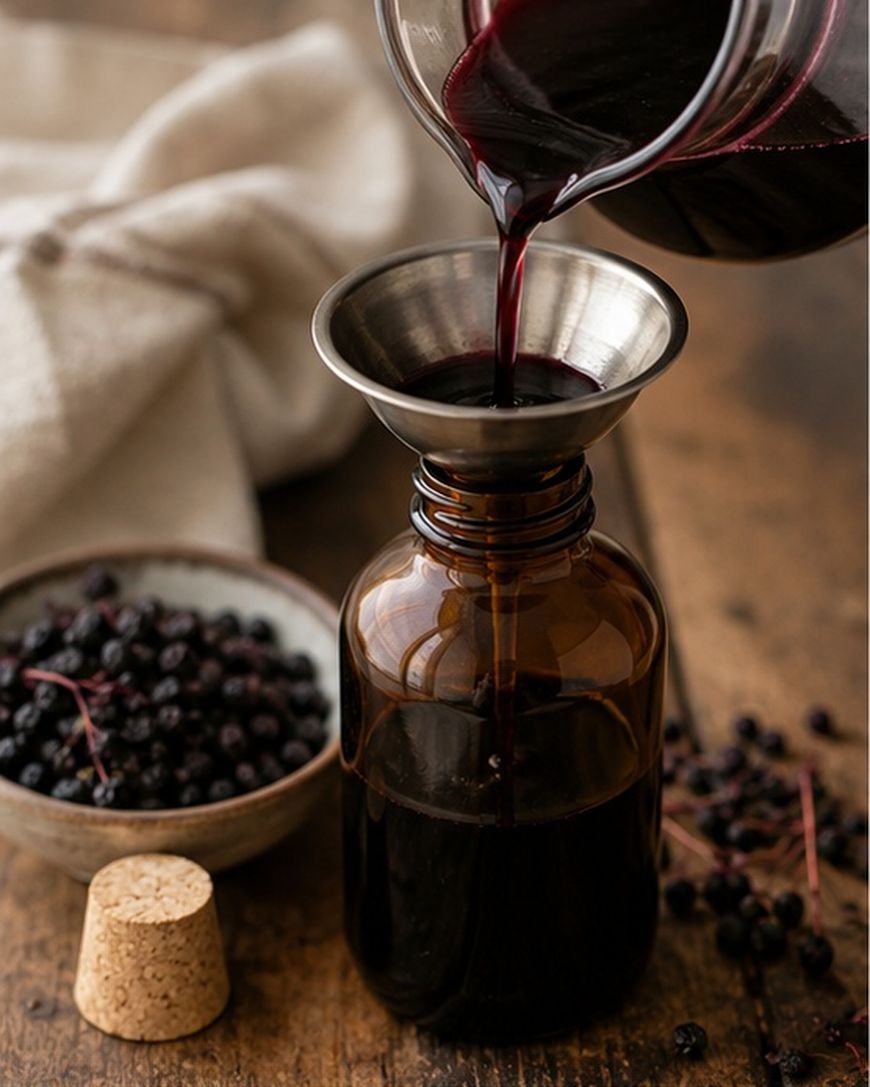
Pour the finished syrup into a clean glass jar or bottle with a tight-fitting lid. Stored in the refrigerator, this syrup keeps for two to three weeks. You will see much longer windows quoted online, but those assume a syrup that is at least half honey by volume; this one is sweetened more lightly than that, so treat it as a fresh refrigerated preparation and freeze anything you will not get through. Throw it out if it smells fermented, fizzes, or grows any film. Give the jar a gentle shake before each use, since some settling is normal.
Variations and Substitutions
Swap the cinnamon stick for a vanilla bean if you prefer a softer, sweeter background note, or add a few slices of orange for a citrusy brightness. Some people like to include a small piece of fresh turmeric root alongside the ginger for extra warmth and color.
If you’re out of raw honey, maple syrup makes a reasonable substitute, though the flavor will be noticeably different and less traditional. For a stronger tasting syrup, reduce the water slightly so the elderberry flavor comes through more concentrated.
Serving Suggestions
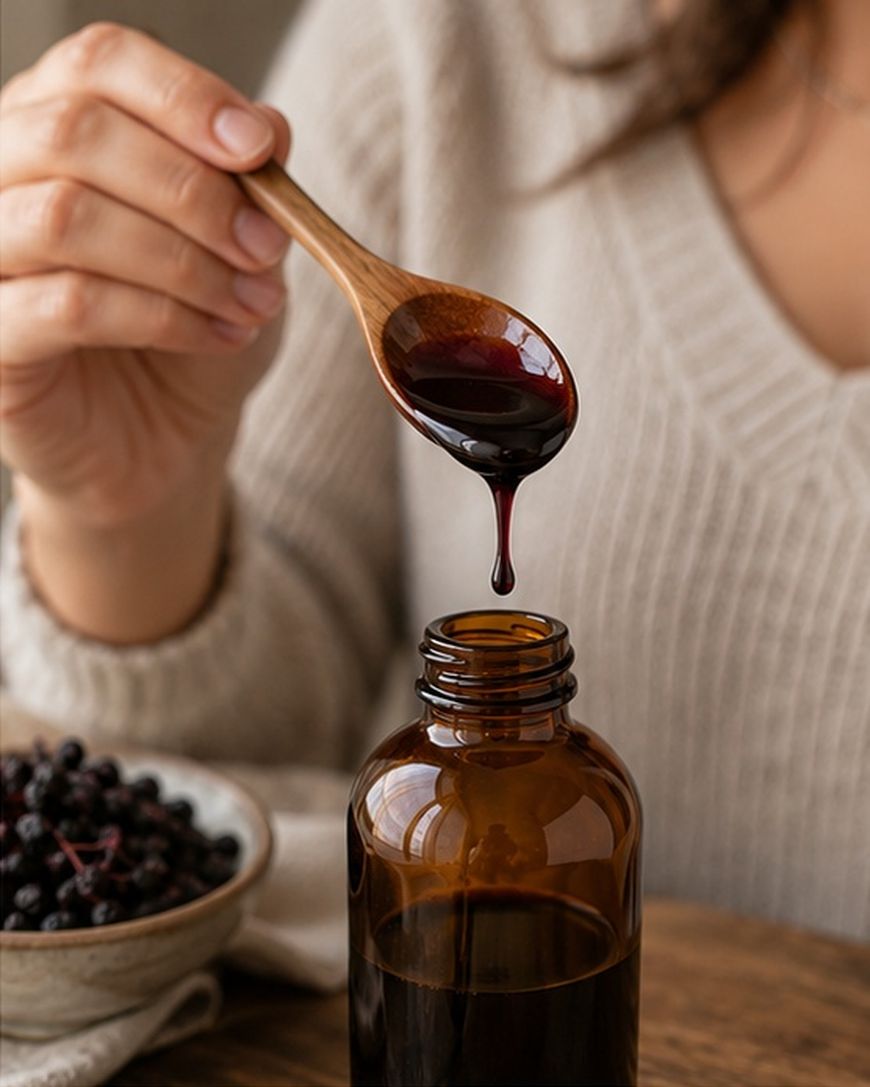
Most people take elderberry syrup straight by the spoonful, especially during the colder months. It also works stirred into warm water or tea, drizzled over yogurt or oatmeal, or shaken into a mocktail with sparkling water and a squeeze of lemon.
Where Elderberry Syrup Comes From
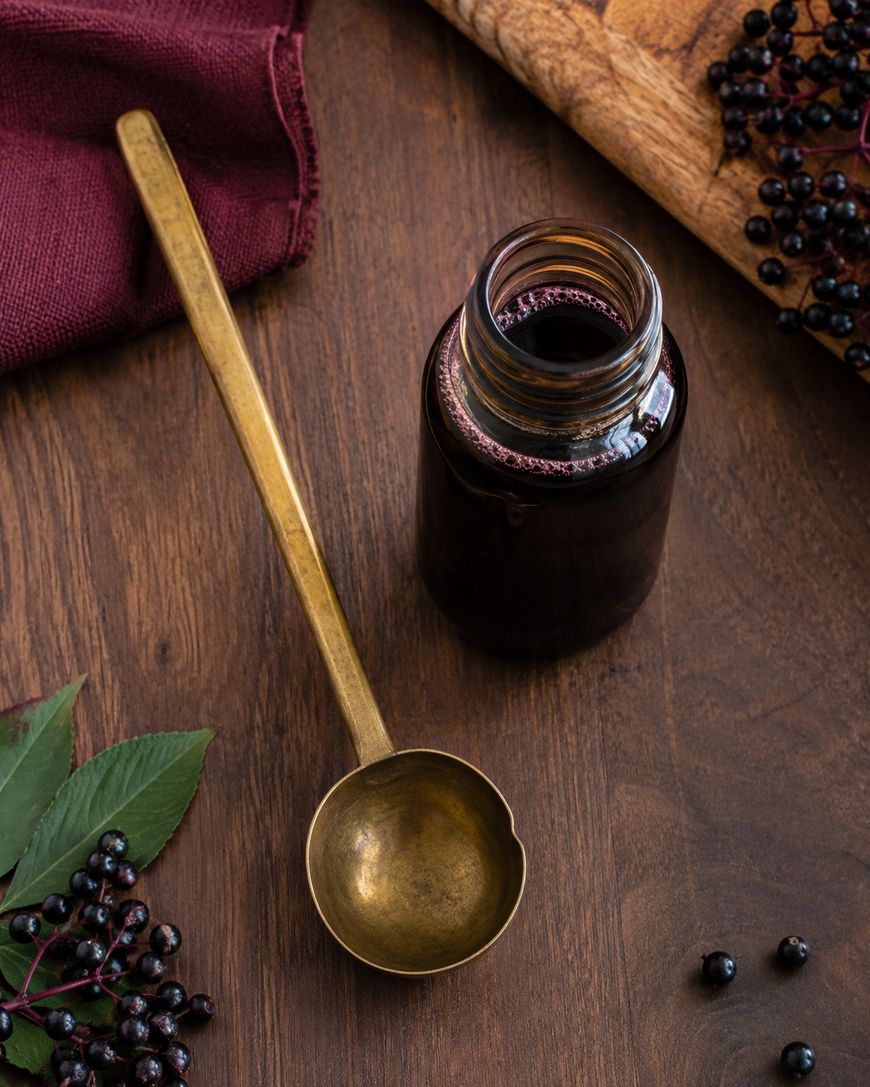
Elderberries have been used in folk preparations across Europe for centuries, long before the modern bottled versions showed up on pharmacy shelves. The elder tree itself shows up in old European folklore as a protective plant, often grown near homes and treated with a certain amount of reverence.
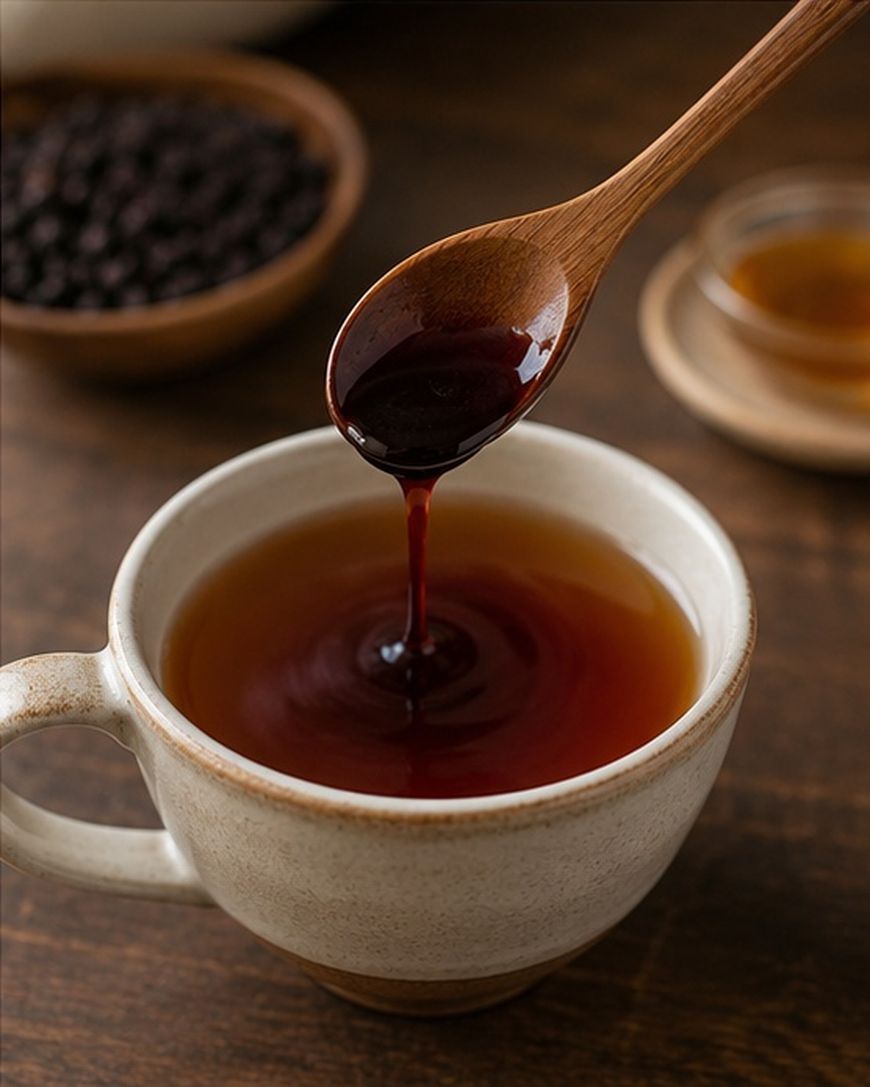
The syrup form specifically became popular as a practical way to preserve the short elderberry harvest season, which typically runs through late summer into early fall. Drying the berries extended that window even further, which is why dried elderberries are now the standard for home syrup makers year-round.
Ready to build your own batch? Use the recipe card below for exact measurements and step-by-step instructions.
Elderberry Syrup
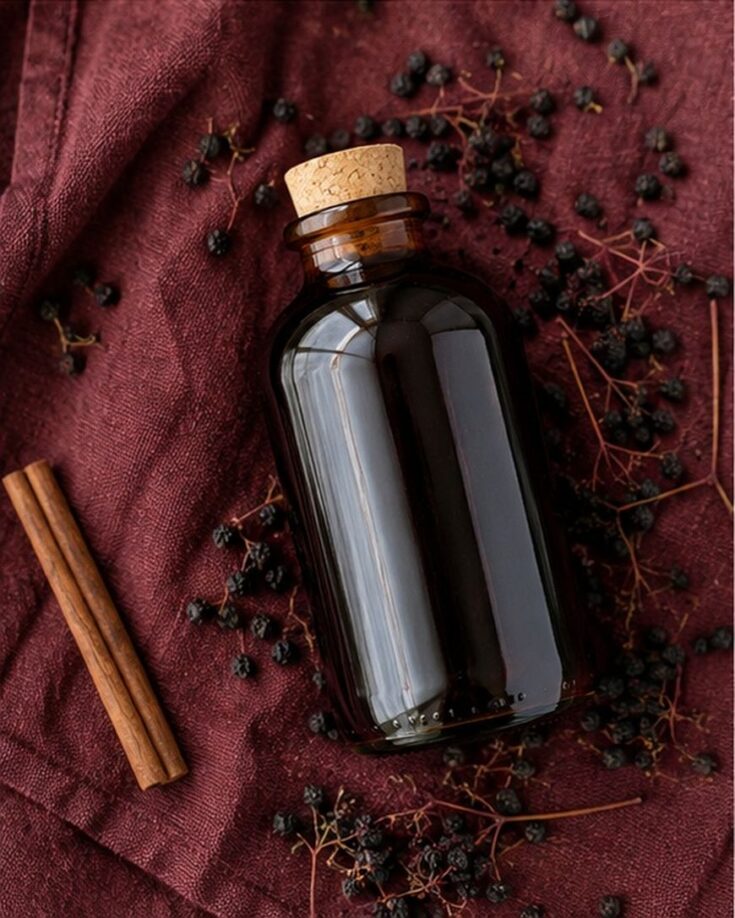
A warming homemade elderberry syrup made with dried elderberries, fresh ginger, cinnamon, and cloves, sweetened with raw honey.
Ingredients
- 2/3 cup dried elderberries
- 3 cups water
- 1 tablespoon fresh ginger, sliced
- 1 cinnamon stick
- 4 whole cloves
- 1 cup raw honey
Instructions
- Combine the dried elderberries, water, ginger, cinnamon stick, and cloves in a medium saucepan.
- Bring the mixture to a boil over medium-high heat.
- Reduce the heat to low and simmer uncovered for 45 minutes, until the liquid reduces by about half.
- Mash the softened berries against the side of the pot partway through simmering to release more juice.
- Remove the pot from the heat and let the mixture cool for 15 minutes.
- Strain the liquid through a fine mesh strainer or cheesecloth into a bowl, pressing the solids to extract all the liquid.
- Discard the spent berries and spices.
- Let the strained liquid cool to lukewarm.
- Whisk in the raw honey until fully combined.
- Pour the syrup into a clean glass jar or bottle with a tight-fitting lid.
- Store in the refrigerator for up to 2 to 3 months.
Notes
For a stronger flavor, reduce the water slightly. Honey should not be given to children under one year old; substitute maple syrup for that age group.
Nutrition Information:
Yield:
32Serving Size:
1 tablespoonAmount Per Serving: Calories: 35Total Fat: 0gSaturated Fat: 0gSodium: 1mgCarbohydrates: 9gFiber: 0gSugar: 9gProtein: 0g
This site provides estimated nutritional information. This information comes from online calculators. Although we try to provide accurate nutritional information, these figures are only estimates.
Elderberry Syrup Questions and Answers
Can I use fresh elderberries instead of dried?
Yes, though you’ll need about twice the amount of fresh berries to match the concentration of dried ones. Make sure the berries are fully ripe and dark purple, since unripe elderberries are more likely to cause stomach upset.
Is it safe to eat raw elderberries?
No, raw elderberries and other parts of the elder plant contain compounds that are toxic when uncooked. Cooking the berries, as this recipe does, breaks down those compounds and makes them safe to consume.
How much elderberry syrup should I take?
Commercial elderberry syrups typically suggest around a tablespoon a day for adults, with smaller amounts for children, but follow the guidance on the product you are used to rather than treating this as a recommended dose. This site is not offering medical advice, and elderberry syrup is not a treatment for any illness. Check with a healthcare provider before giving elderberry syrup to young children, or if you are pregnant, nursing, or taking any medication.
Can I make this syrup without honey?
Yes, maple syrup or coconut sugar are both reasonable substitutes if you avoid honey. Keep in mind honey is not recommended for children under one year old, so a substitute is necessary for that age group regardless of preference.
Why did my syrup turn out thin?
A thin syrup usually means the liquid wasn’t reduced enough during simmering. Let it cook a little longer next time, keeping an eye on it so the berries don’t scorch once most of the water has evaporated.
Can I freeze elderberry syrup?
Yes, elderberry syrup freezes well in ice cube trays or small freezer-safe containers for up to six months. Thaw individual portions in the refrigerator as needed rather than thawing the whole batch at once.
Why This Recipe Works
The long, slow simmer is what makes this elderberry syrup taste full and rounded rather than thin or overly tart. Reducing the liquid by half concentrates the fruit sugars and flavour, and the honey stirred in at the end does most of the work on texture, giving the finished syrup a body closer to maple syrup than to juice.
Adding the honey after the liquid cools is a small step that makes a real difference. It keeps the syrup’s flavor bright rather than cooked-tasting, and it is the same method used in traditional preparations.
The combination of ginger, cinnamon, and cloves isn’t just for flavor either. Together they balance the tartness of the elderberries into something genuinely enjoyable to take by the spoonful.
Wrapping Up This Elderberry Syrup
This elderberry syrup comes together with just a handful of ingredients and about an hour of mostly hands-off simmering. Keep a jar in the refrigerator through the colder months, and you’ll always have a spoonful ready when you need it.