Last updated: September 20, 2026
Starting a grimoire can feel exciting until you sit down with a blank page and freeze up. These grimoire page ideas give you a full list of sections you can add right away, so your book starts filling up instead of staying empty.
You can pick and choose the pages that fit your practice, or work through all 15 grimoire page ideas one by one. Either way, you will have a personal, useful book of shadows by the end.
1. A Table of Contents Page
You want to find things quickly once your grimoire grows past a dozen pages. A simple table of contents saves you from flipping through the whole book every time you need a spell or a note.

Leave the first few pages blank when you start your book so you can add entries as you go. You can update page numbers by hand or leave space for sticky tabs if you prefer a more visual system.
Group your table of contents by category instead of page number if that feels more natural to you. Categories like rituals, correspondences, and personal reflections make it easy to jump straight to what you need.
2. A Moon Phase Tracker
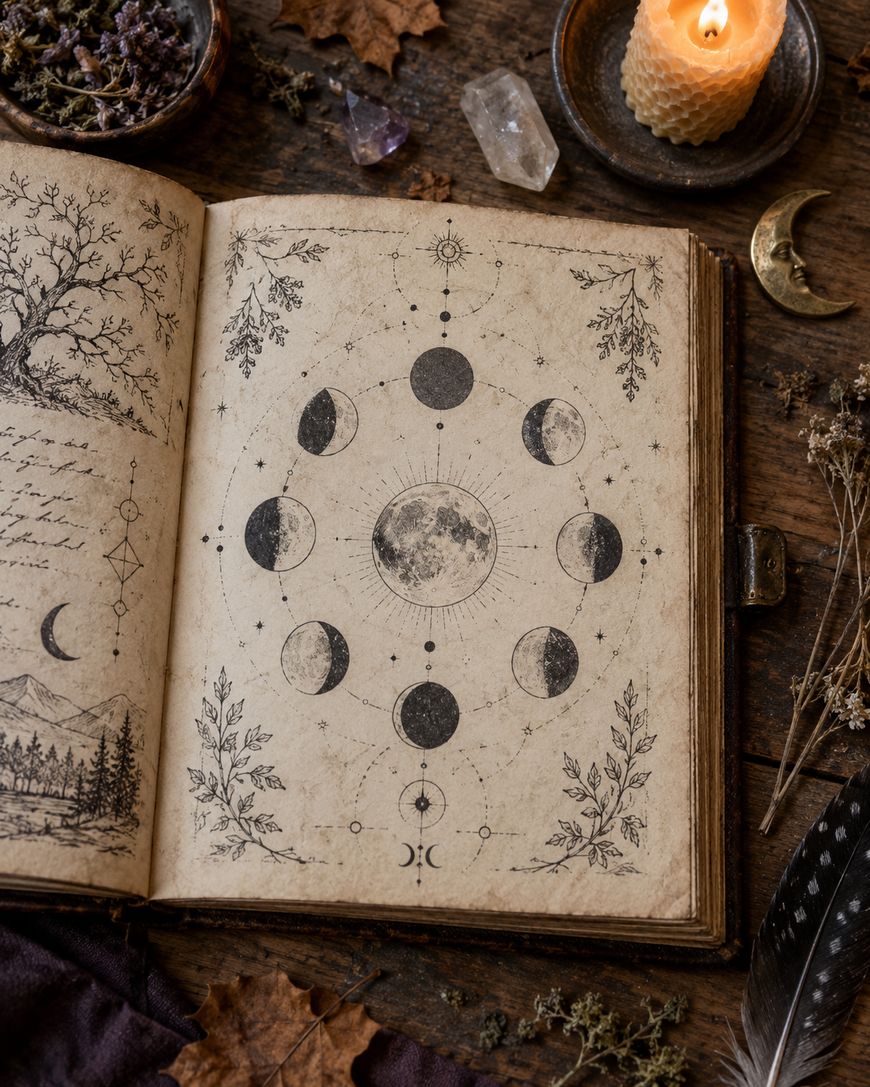
The moon phase tracker is one of the most popular grimoire page ideas because it ties directly into timing your workings. You can draw a simple monthly calendar with each phase marked, or sketch the eight main phases across a single spread.
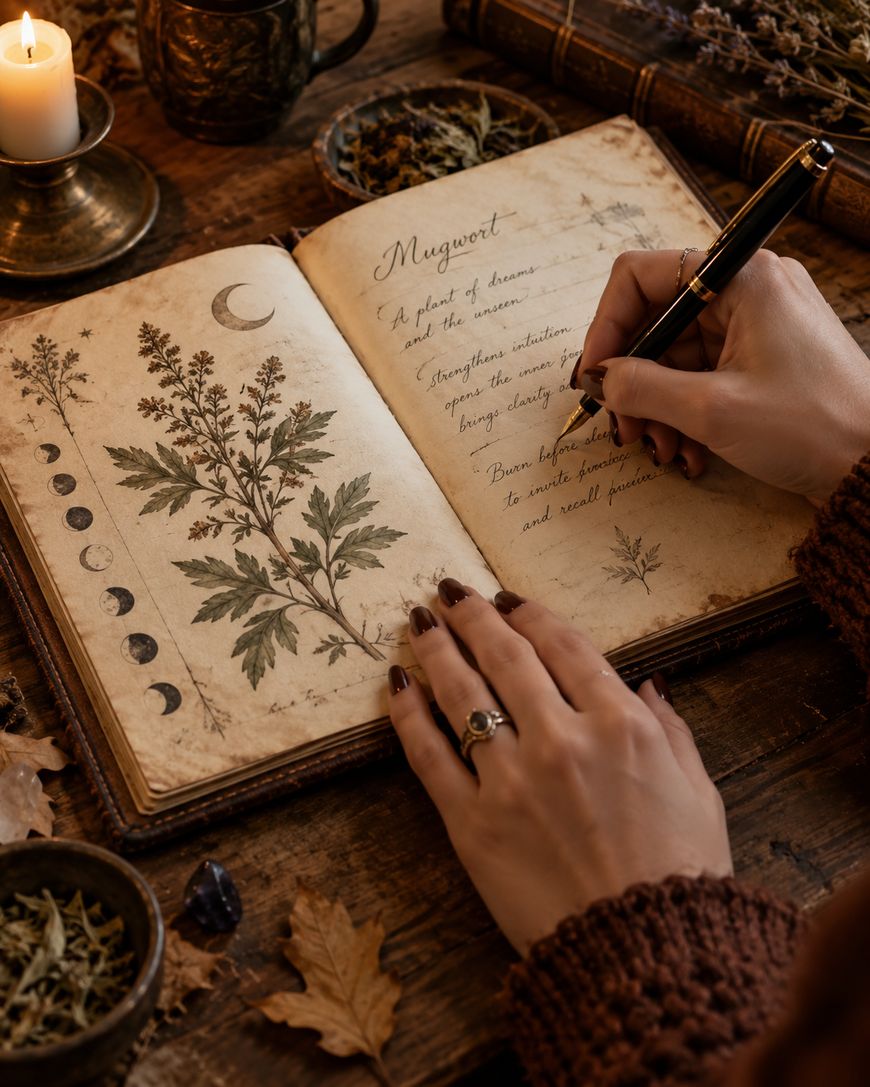
Use this page to note which phases you find most effective for your own practice. Over time, this becomes a personal record you can look back on.
You can add space next to each phase for short notes about energy, mood, or intentions. This turns a basic tracker into a useful long-term reference.
3. Correspondence Charts
Correspondence charts are reference pages that list the properties of herbs, crystals, colors, and days of the week. They save you time later because you will not need to look everything up again once it is written down.

Start with the categories you use most, such as herbs or candle colors, and build out from there. You do not need to fill every chart in one sitting.
Leave extra rows on each chart so you can keep adding items as you learn more. A correspondence section tends to grow the longest of any part of your grimoire.
4. A Personal Sigil or Symbol Key
If you create your own sigils or use recurring symbols in your work, a key page keeps everything consistent. Write down what each symbol means and where you tend to use it.
This page becomes especially useful if you share your grimoire with anyone else or plan to reread your own notes years from now. Symbols can be easy to forget without context.
5. Spell and Ritual Pages
This is the heart of most grimoires, so it deserves its own dedicated section. Record the intention, ingredients, timing, and steps for each spell or ritual you perform.
Add a results section at the bottom of each entry so you can track what worked. This turns your grimoire into a practical tool instead of just a collection of ideas.
Leave room for revisions, since many practitioners adjust their spells after the first attempt. A working spell often gets better with small tweaks over time.
6. A Dream Journal Section
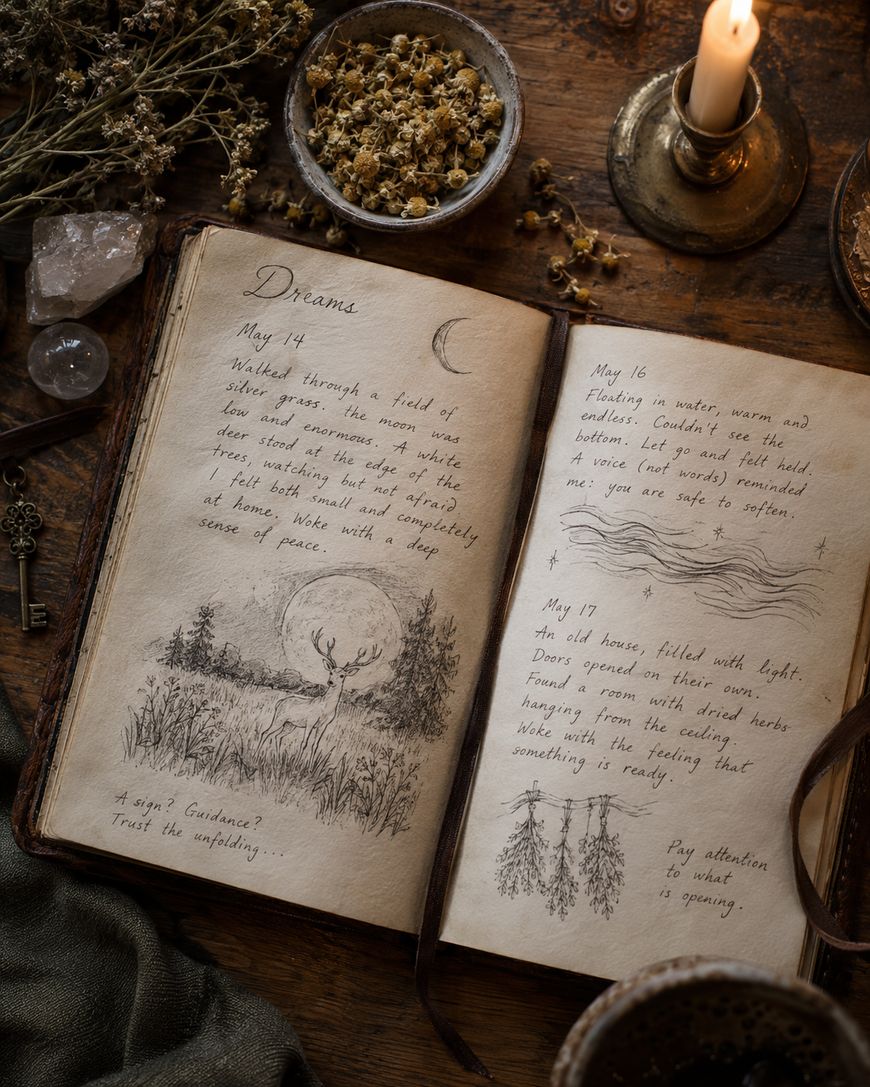
Many practitioners use their grimoire to record dreams alongside their other work. Pattern recognition over weeks and months can reveal recurring symbols or themes worth exploring further.
Keep entries short and dated so the section stays easy to scan. You can always add a longer interpretation page later if a dream feels significant.
7. Herb and Plant Profiles
Beyond a quick correspondence chart, some practitioners like a full profile page for herbs they use often. Include growing notes, traditional uses, and safety information for each plant.

This section works well for anyone who also gardens or forages, since it doubles as a practical reference alongside the magical one.
8. Crystal and Stone Pages
Crystal pages pair naturally with herb profiles and give you a dedicated place to record properties, cleansing methods, and personal experiences with each stone. Sketch or note the color and shape so you can identify pieces in your collection later.

Add a section for how you like to charge or cleanse each stone, since methods vary by material. Moonlight, sound, or earth burial all work differently depending on the stone.
9. A Sabbat and Holiday Calendar
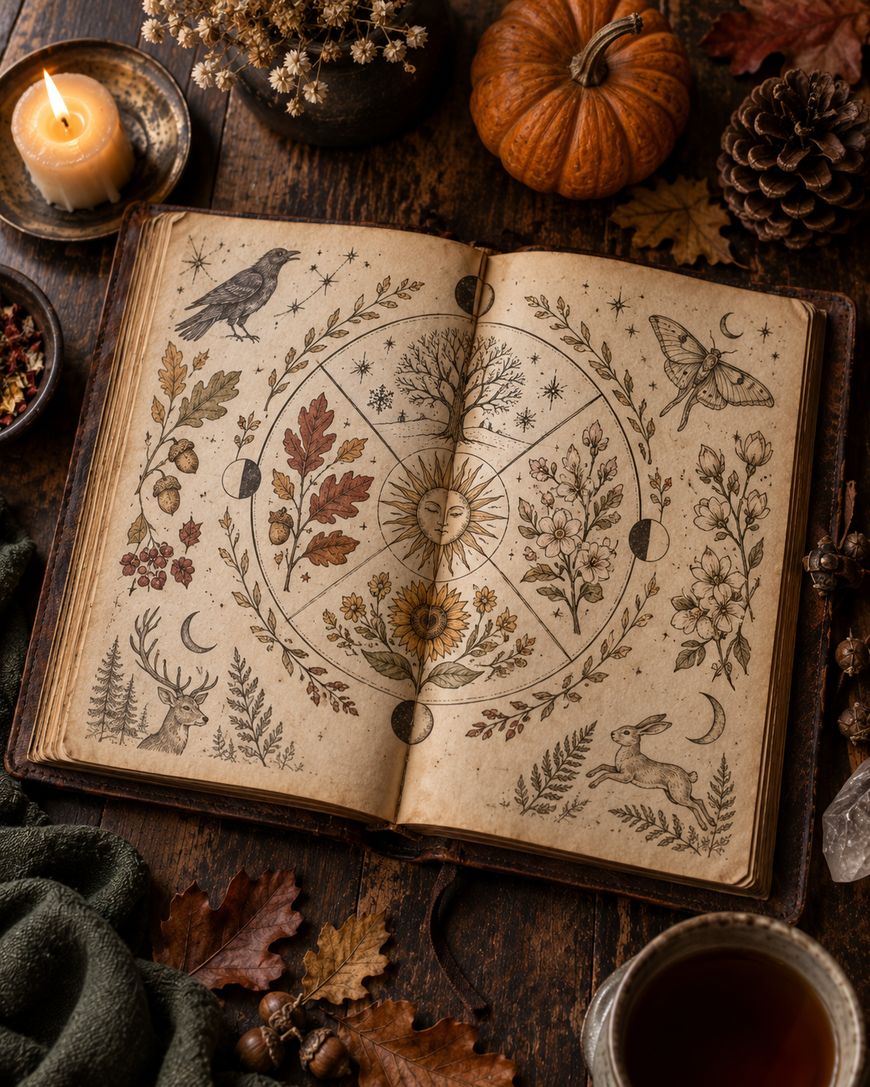
If your practice follows the wheel of the year or other seasonal holidays, a dedicated calendar page keeps upcoming dates in view. List the date, traditional themes, and any personal rituals tied to each one.

You can leave space under each holiday for notes after you celebrate it, similar to the moon tracker. This helps you build traditions that feel personal over time.
10. Altar Layout Sketches
Sketching your altar setups gives you a quick reference for rituals you want to repeat exactly. Note the placement of candles, tools, and offerings so you can recreate a working setup without guessing.
This page is especially helpful if you use different altar layouts for different types of work, such as protection versus abundance.
11. A Divination Log
Whether you use tarot, pendulums, or another method, a divination log lets you track readings and revisit them later. Record the question, the method, and the outcome or interpretation.
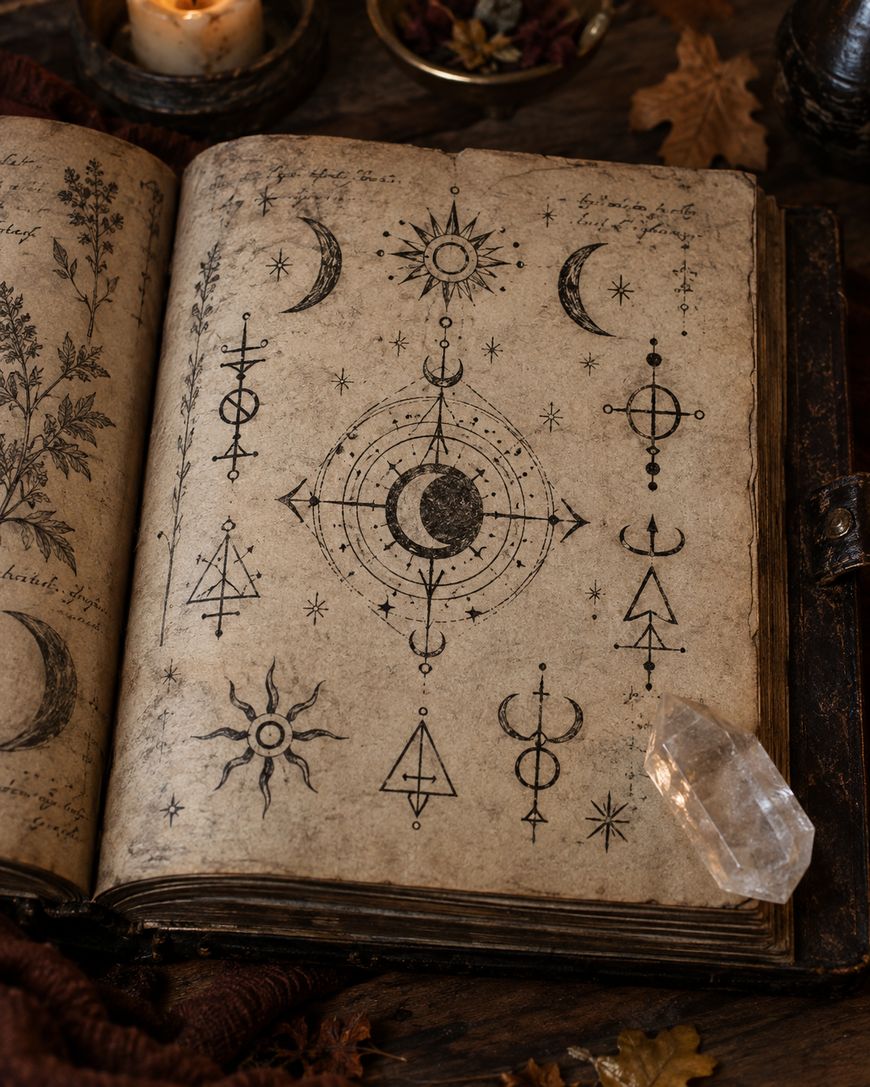
Reviewing old entries after a few months often reveals patterns you missed at the time. This page turns individual readings into a longer conversation with yourself.
12. A Personal Deities or Guides Page
If your practice includes work with deities, spirits, or guides, dedicate a page to each one you work with regularly. Note preferred offerings, symbols, and any personal experiences.
Keep this section flexible, since your relationships with these figures may shift over time. Leave room to add new pages as your practice grows.
13. A Protection and Cleansing Page
Protection and cleansing methods come up often enough that they deserve a quick-reference page separate from your general spell section. List your go-to methods for space clearing, personal protection, and tool cleansing in one place.
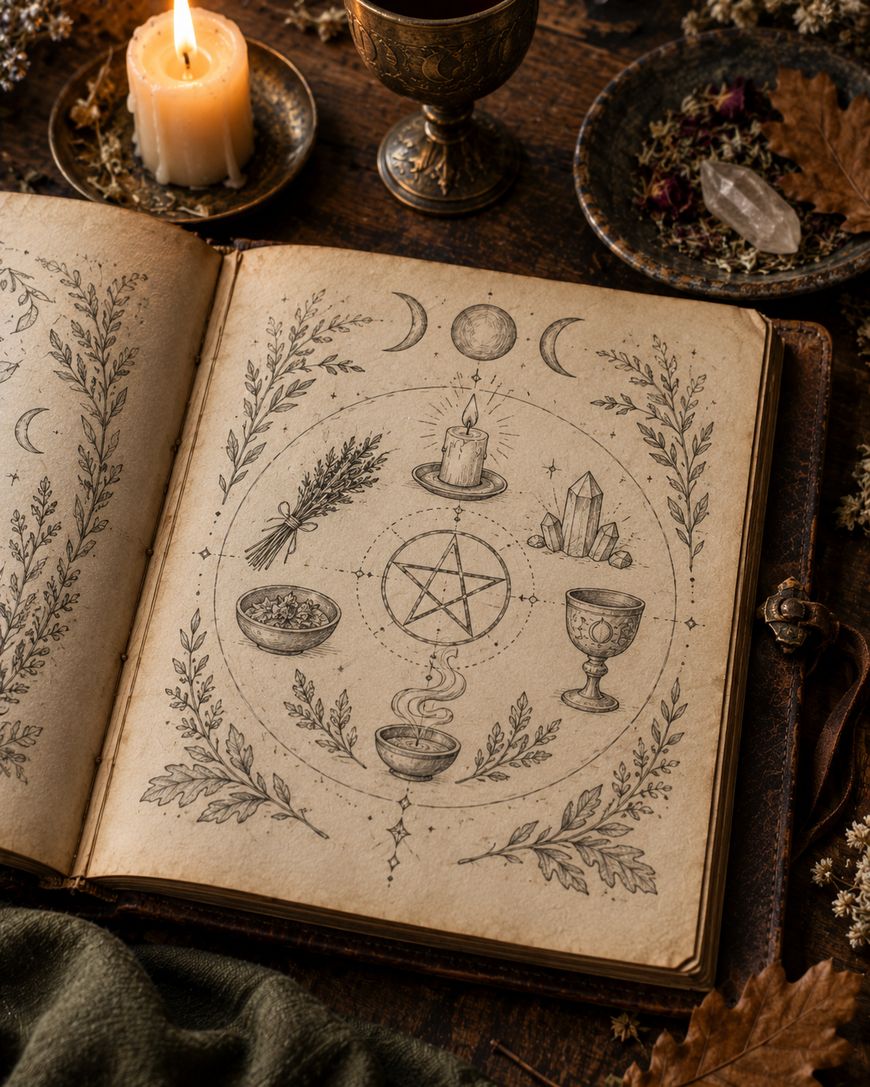
This page is useful to keep near the front of your grimoire since you may reach for it more often than other sections.
14. A Blank Notes and Reflection Section
Leave a section of your grimoire completely open for freeform notes, questions, and reflections. Not every thought fits neatly into a category, and having blank space prevents you from feeling boxed in.

This section often becomes one of the most personal parts of the book over time. You can revisit it later to see how your understanding of your own practice has changed.
15. A Glossary of Terms
A glossary page at the back of your grimoire helps you keep track of terms and definitions specific to your practice. This is especially useful if you are still learning and want a place to jot down new words as you encounter them.
You can organize it alphabetically or by category, whichever makes it easier for you to find what you need quickly.
Why Building a Grimoire Page by Page Works
Building your grimoire one section at a time keeps the process from feeling overwhelming. You get to decide which pages matter most to your own practice instead of copying someone else’s book exactly.
Your grimoire will naturally change shape as your interests grow, and that is part of the process. The pages you add first are rarely the ones you use most a year later, and that is completely normal.
Frequently Asked Questions
What is the difference between a grimoire and a book of shadows?
The terms are often used interchangeably, though some practitioners treat a book of shadows as more personal and a grimoire as a broader reference collection. You can use whichever term feels right for your own book.
Do I need to include all 15 grimoire page ideas in my book?
No, you can pick only the sections that fit your practice. These grimoire page ideas are meant as a starting menu, not a required checklist.
Can I keep a digital grimoire instead of a physical one?
Yes, many practitioners keep digital grimoires using note apps or spreadsheets. The same page ideas above work just as well in digital form as they do on paper.
How do I decorate my grimoire pages?
You can use washi tape, pressed flowers, hand lettering, or simple sketches to personalize each page. Decoration is optional, so focus on function first if you are just getting started.
What should go on the very first page of a grimoire?
Many practitioners start with a personal introduction page that states their intentions for the book. A table of contents placed right after works well too, since it grows alongside the rest of your pages.
How often should I update my grimoire?
There is no set schedule, since a grimoire is meant to grow at your own pace. Some people add a page every week, while others update theirs only after a new working or realization.
Start Filling Your Grimoire Today
You now have 15 grimoire page ideas to pull from whenever you sit down with your book. Pick one section that excites you most and start there, then let the rest of your grimoire grow naturally from that first page.