Last updated: June 18, 2026
Growing squash vertically means training vining squash plants to climb a sturdy support so the fruit stays cleaner, takes up less ground space, and is easier to spot and harvest. The simplest default approach is to plant a vining variety at the base of a strong trellis, tie the main vine up as it grows, and add simple slings to support larger fruits.
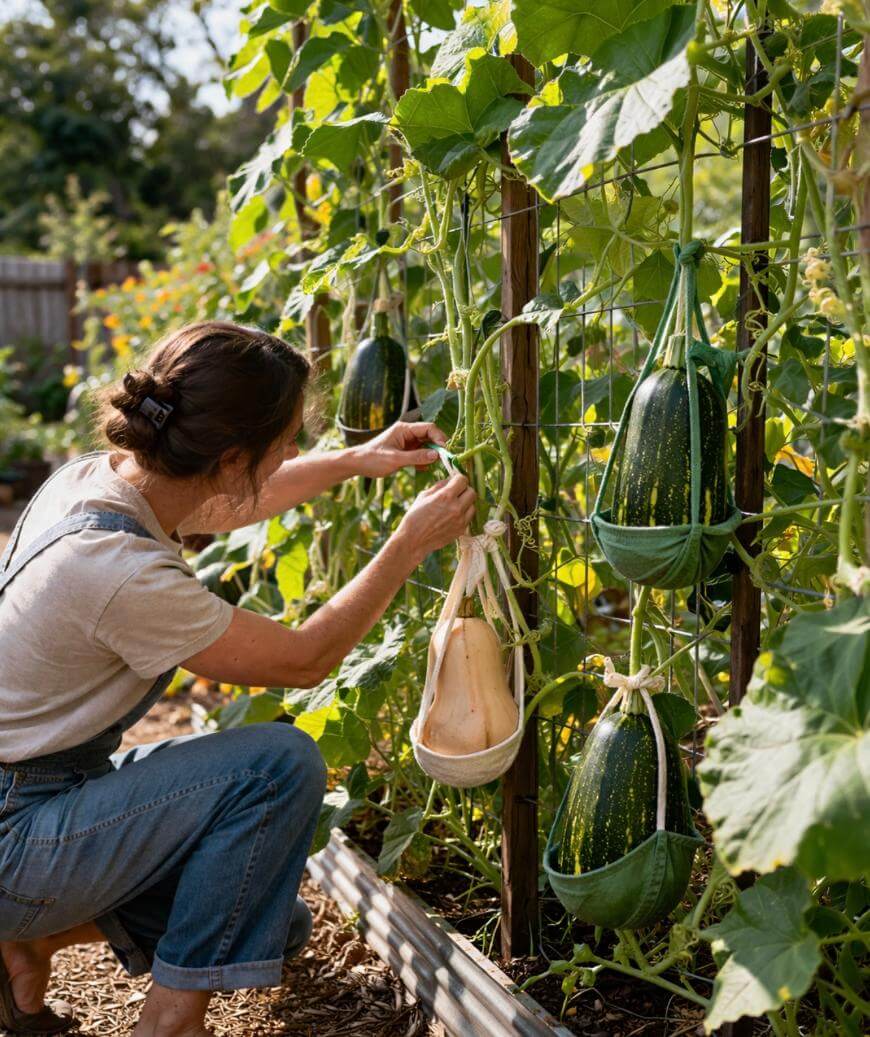
Growing Squash Vertically: The Core Setup That Works
1. Pick A Vining Type, Not A Bush Type
You want squash that naturally runs, because those vines are built to climb and keep producing along the length of the plant. If the seed packet says “bush,” it will stay compact and won’t benefit much from going up.
A practical shortcut is to choose vining zucchini, delicata, acorn, kabocha, or smaller pumpkins rather than giant varieties. If you only have one trellis spot, one healthy vining plant can often fill it.
2. Use A Support That Can Handle Real Weight
A squash trellis has to hold wind, wet foliage, and multiple heavy fruits at the same time. A lightweight garden arch or flimsy lattice usually fails right when the plant is at its peak.
A solid rule is to aim for a structure that can handle at least 50–100 pounds of load, because a few mature fruits plus vines can add up fast. Cattle panels, heavy-duty metal A-frames, and reinforced wooden trellises are the most forgiving options.
3. Place The Trellis Before You Plant
It is much easier to build and anchor your support first than to install it after vines start running. Once squash roots spread and stems toughen, moving anything becomes a plant-stressing mess.
Put the trellis in while the bed is still open, then plant 12–18 inches from the base so roots have room and the stem doesn’t sit right against the posts.
4. Give Each Plant Enough Space To Breathe
Vertical growing saves ground space, but squash still needs airflow to reduce mildew and pest pressure. If you crowd plants at the base, you can end up with a damp, shaded tangle.
A simple spacing target is 2–3 feet between vining squash plants along a trellis line. If your trellis is narrow, it’s usually better to grow fewer plants well than many plants poorly.
5. Start Training Early While Vines Are Flexible
Young vines are easy to guide, but older vines get stiff and can crack if you force them. The goal is to nudge the main vine upward a little at a time as it grows.
Check the plant every 2–3 days and gently wrap or angle new growth toward the support. If it keeps trying to run sideways, you can loosely tie it in place until it grabs on.
6. Tie With Soft Material That Will Not Girdle The Stem
Squash stems thicken fast, and tight ties can cut into the vine and slow growth. You want ties that hold the vine in place without pinching.
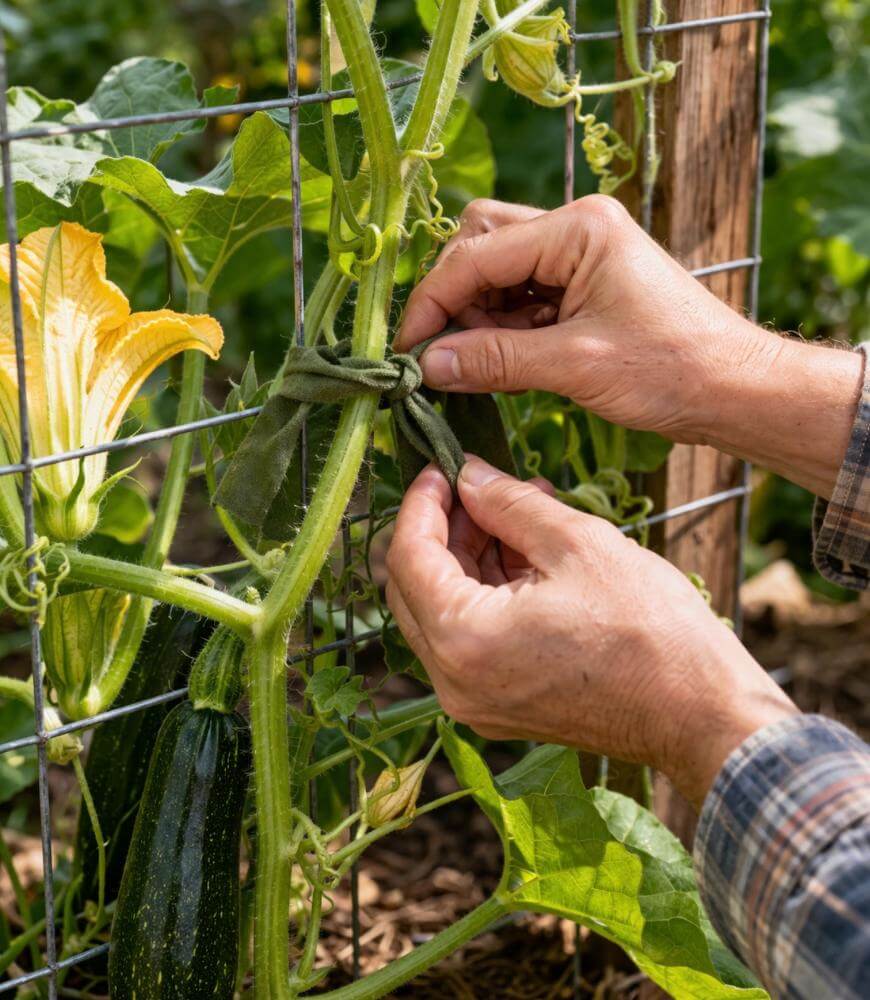
Use stretchy garden tape, cloth strips, or soft twine tied in a loose figure-eight. A good habit is to leave enough slack that you could slide a finger under the tie.
7. Prune Only What You Need To Keep It Manageable
You do not need heavy pruning, but vertical squash benefits from removing leaves that block airflow or drag on the ground. That’s especially helpful once the plant gets dense and humidity builds up.
A practical approach is to remove the lowest few leaves when they start yellowing and to trim any leaf that is badly mildewed. Avoid stripping too much at once, because leaves power fruit growth.
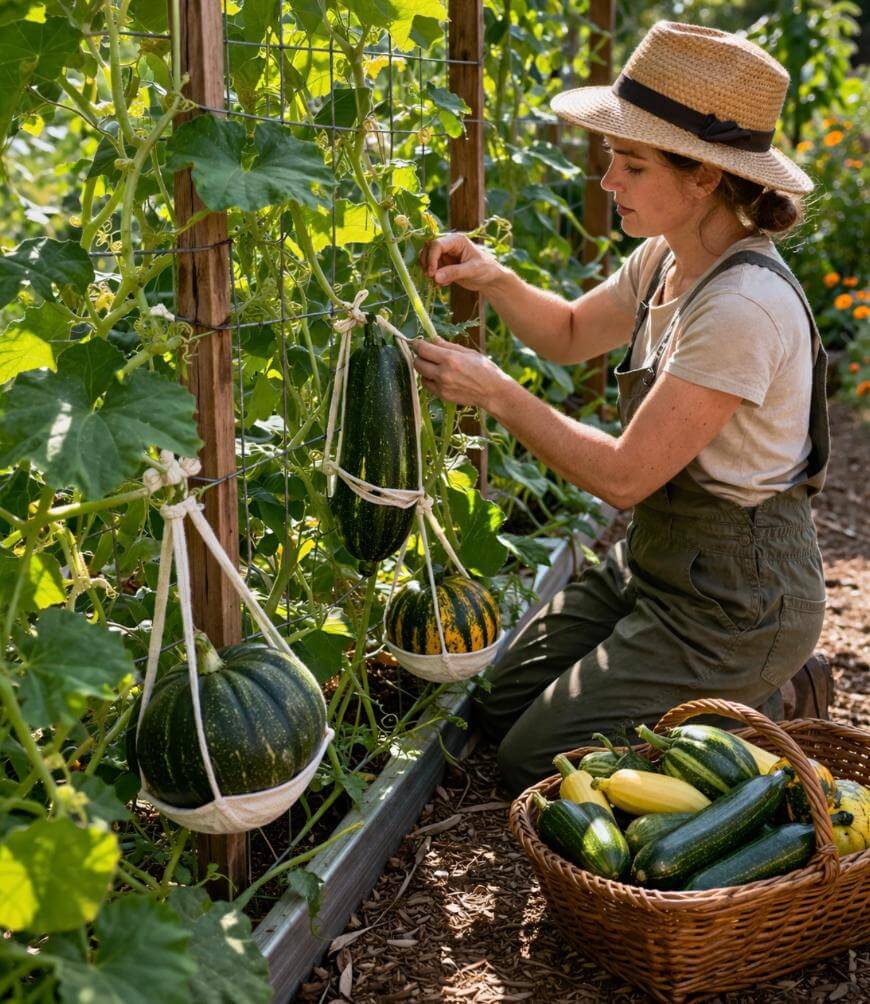
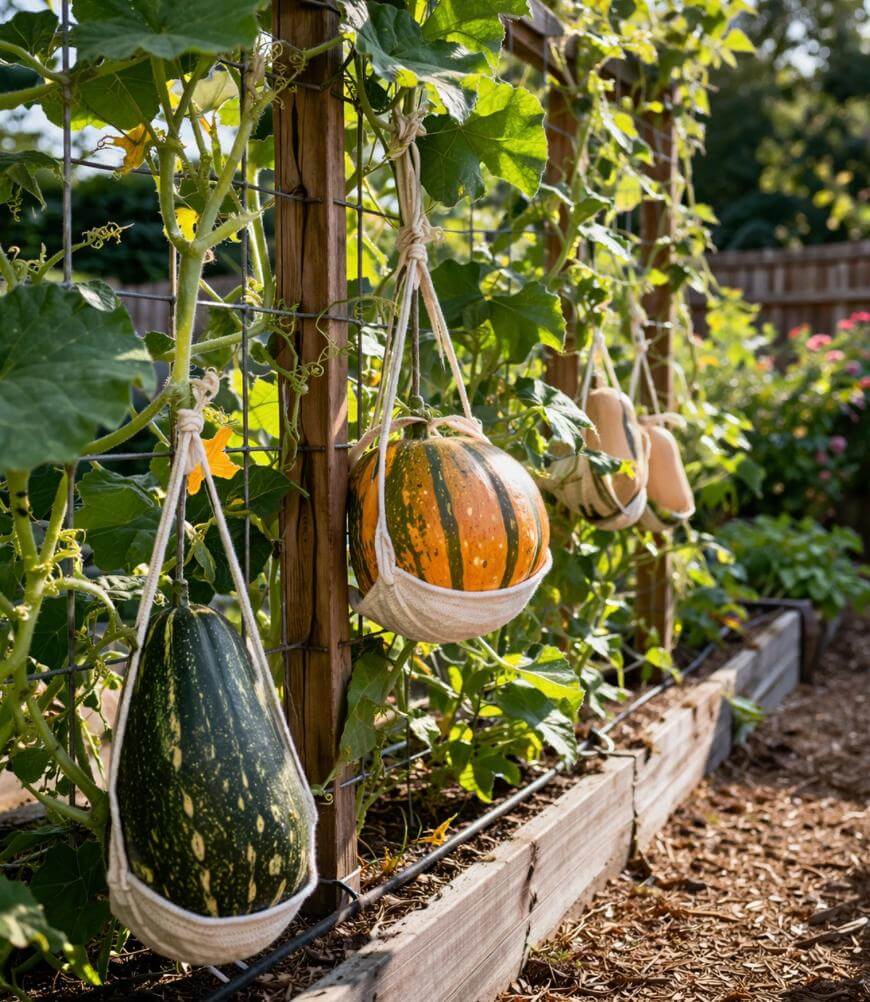
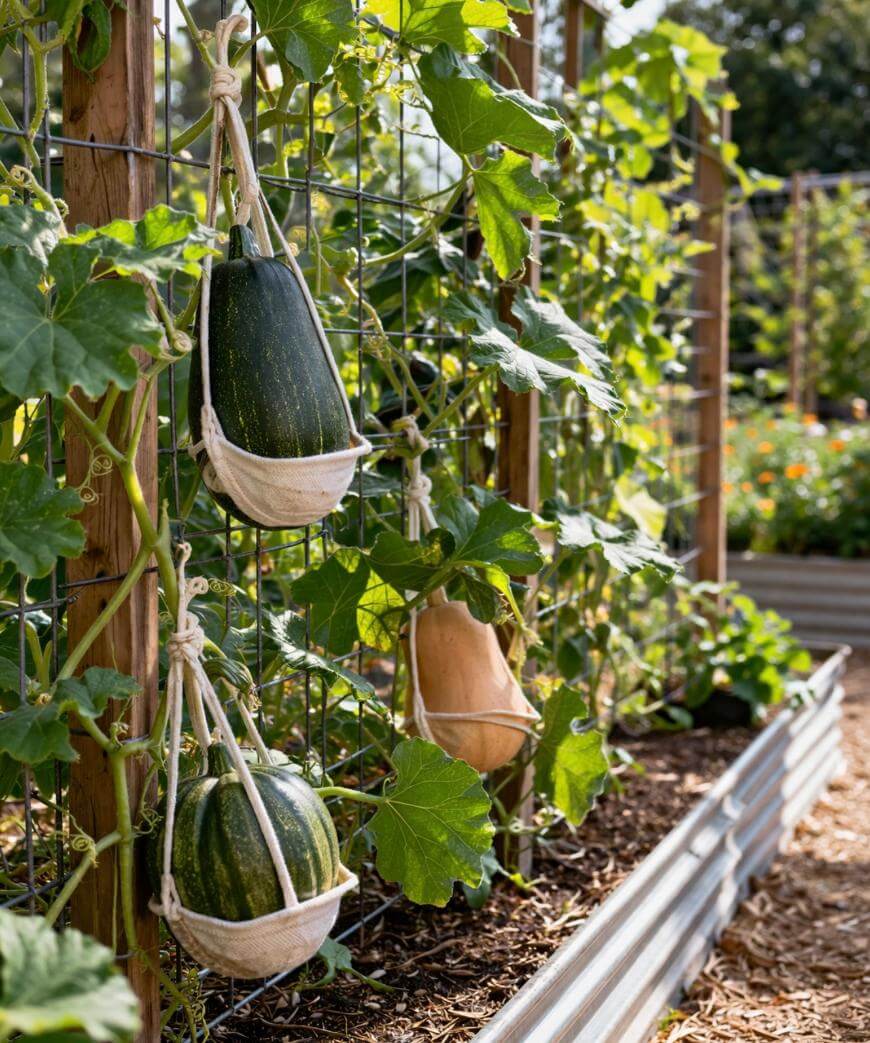
8. Use Slings To Support Heavy Fruit Before It Pulls
Some squash will hang fine without help, but larger fruits can stress the vine as they size up. Slings prevent breakage and let the fruit finish evenly.
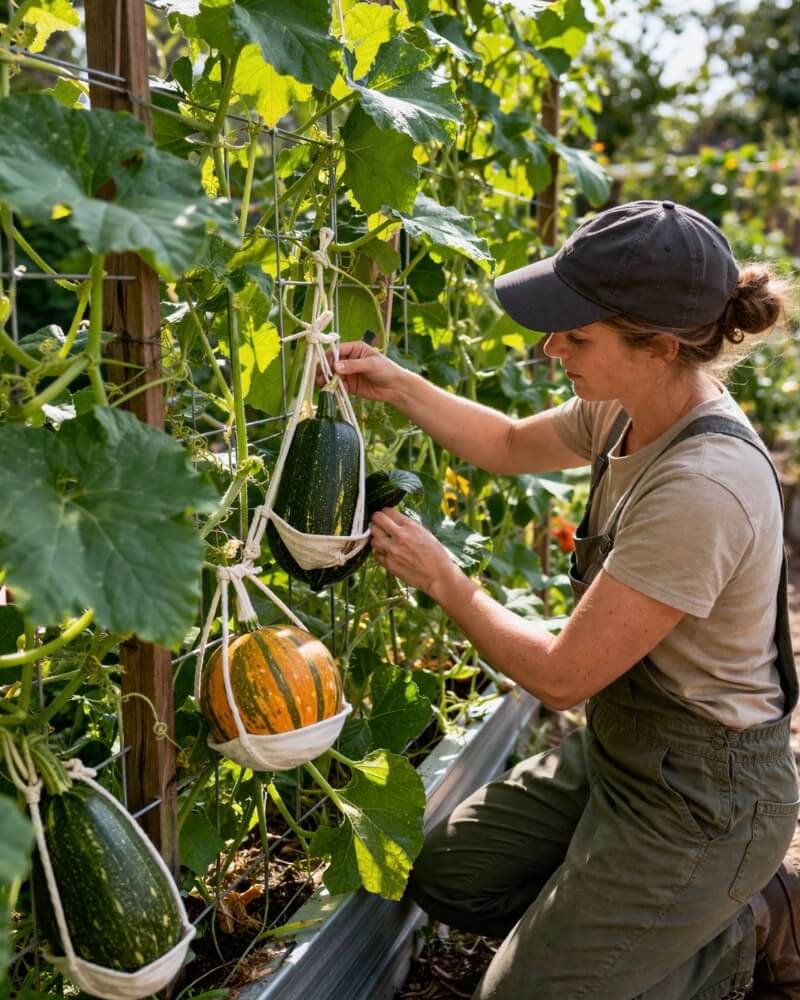
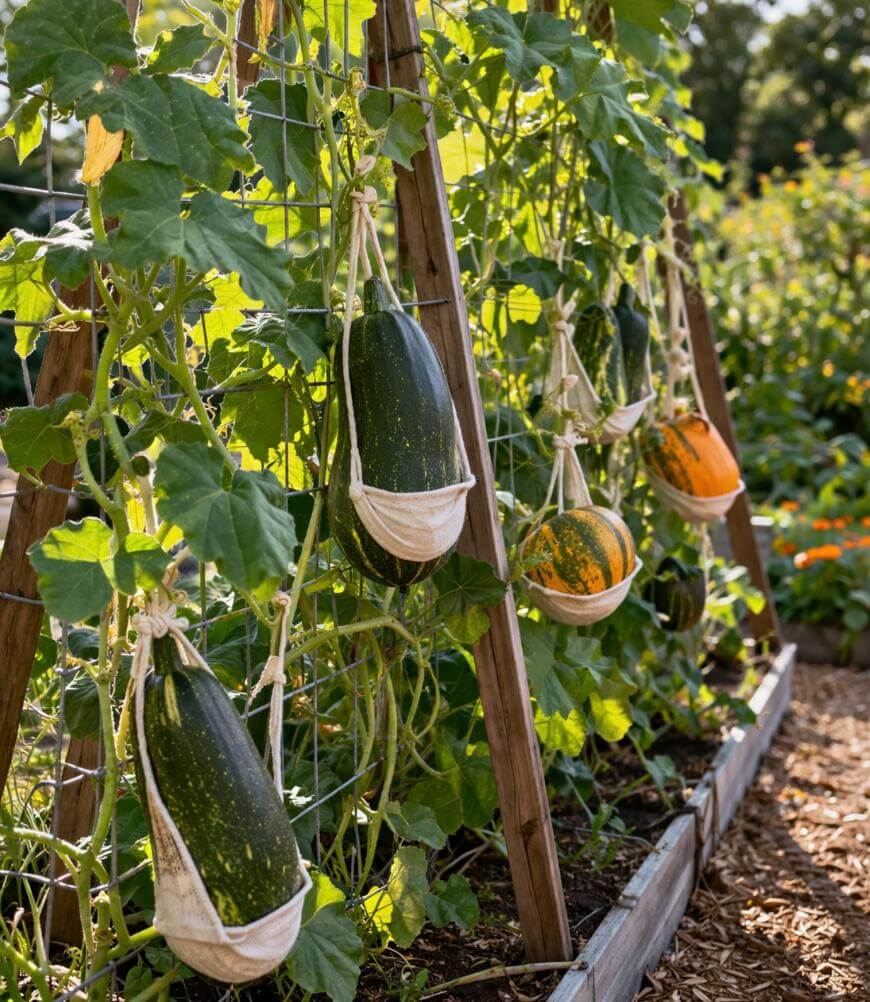
You can make slings from old T-shirts, stretchy fabric, or mesh produce bags, then tie the ends to the trellis so the fruit sits like it’s in a hammock. Add the sling when the fruit is about softball size so it’s supported early.

9. Guide Fruit Placement So It Does Not Wedge Or Scar
As fruit grows, it can get stuck between trellis wires or press hard against a support, which can scar the skin. That damage isn’t always fatal, but it can shorten storage life.
If you see a developing squash wedging, gently reposition it and add a sling. A small adjustment when it’s young is much safer than trying to move it when it’s full size.
10. Water Deeply At The Base, Not Over The Leaves
Vertical growth improves cleanliness, but overhead watering can still drive mildew and fungal issues. Squash likes consistent moisture, especially during flowering and fruit fill.
A reliable numeric target is about 1–1.5 inches of water per week from rain plus irrigation, adjusted for heat and your soil. Drip lines or slow soaking at the base keep leaves drier and plants steadier.
11. Feed Like A Fruit Crop, Not A Leafy Green
Squash is a heavy feeder once it starts producing, and a plant climbing a trellis is often making a lot of fruit over time. If you only feed early nitrogen, you can end up with big leaves and fewer squash.
A simple method is to mix compost into the planting area, then side-dress with compost or a balanced fertilizer when the first flowers appear. If production slows mid-season, one additional light feeding can restart momentum.
12. Hand-Pollinate If You See Flowers But No Fruit Set
Vertical vines make it easy to see blooms, and sometimes you’ll notice lots of flowers without many squash forming. That can happen when pollinators are scarce or the weather is off.
To hand-pollinate, pick a fresh male flower (no tiny fruit at the base), brush its pollen onto the center of a female flower (it has a small baby squash behind it), and do it in the morning. Even doing this a few times a week during peak bloom can noticeably improve yield.
13. Control Squash Vine Borers And Cucumber Beetles Early
Vertical growing helps visibility, which makes early pest checks easier. If you miss the first wave, pests can weaken vines and reduce fruit quality.
Check the base of the vine and underside of leaves a few times a week. If you see eggs or damage, remove what you can by hand and consider a physical barrier like row cover early in the season (removed when flowering starts for pollination).
14. Plan For Powdery Mildew Instead Of Being Surprised By It
Many gardeners get mildew eventually, and vertical squash can either improve it (airflow) or worsen it (dense canopy) depending on spacing. You want to catch it at the first dusty spots rather than after it spreads.
A practical habit is to thin a few leaves for airflow and remove the worst affected leaves as needed. If you use an organic spray, apply it early and consistently rather than as a one-time rescue.
15. Choose A Trellis Shape That Matches Your Space
Different trellis shapes change how easy it is to train vines and harvest fruit. The best shape is the one you can actually maintain weekly without wrestling plants.
An A-frame gives you two climbing sides and is stable in wind. A cattle panel arch creates a tunnel where fruit hangs down for easy picking, which is one of the simplest setups for a productive summer.
16. Keep The Ground Under The Trellis Mulched
Even with vertical growth, the base area can get weedy and dry, and weeds compete hard with squash. Mulch keeps soil moisture stable and reduces stress.
A good thickness is 2–3 inches of straw, shredded leaves, or untreated grass clippings (thin layers so it doesn’t mat). Keep mulch a couple inches away from the stem to reduce rot.
17. Rotate Where You Plant Squash Each Year
Squash shares diseases and pests with other cucurbits like cucumbers and melons. If you plant in the same spot repeatedly, problems usually ramp up.
A practical rule is to rotate your squash family crops to a new bed every year or two if you can. Even moving a few feet can help, but a bigger rotation is better.
18. Harvest On Time To Keep The Plant Producing
With vertical training, squash is easier to see, but that also means it’s easier to let one get huge and accidentally tell the plant to slow down. Regular harvesting encourages continued flowering.
For summer squash, picking when fruits are about 6–8 inches long keeps texture tender and production high. For winter squash, harvest when the rind is hard and the stem starts to dry, because that’s when storage quality improves.
19. Use A “Main Vine First” Strategy For A Cleaner Trellis
If you let every side shoot run wherever it wants, you can end up with a thick mass that is hard to manage. A cleaner method is to establish the main vine up the trellis first, then decide where laterals can go.
Guide the leader upward, then allow a limited number of side vines to fill open spaces. If one lateral is trying to dominate and block airflow, pinch it back so the whole plant stays balanced.
20. Anchor Against Wind Like You Mean It
A full-grown squash trellis acts like a sail in storms, and that’s where many vertical setups fail. It is not just about the trellis material, but how it is secured.
Use stakes, ground anchors, or deep-set posts, and make sure connections are tight. If you garden in a windy area, it’s worth overbuilding the structure because repairs mid-season can cost you the whole crop.
21. Match The Variety To Your Sling Comfort Level
Some varieties produce many small-to-medium fruits, while others make fewer, heavier ones that need more support. Your preference matters because sling work is real maintenance.
If you want the easiest vertical experience, prioritize varieties with smaller mature fruit size. If you want big winter squash, plan to sling earlier and use stronger fabric.
22. Keep One “Access Side” Clear For Easy Checks And Harvests
It’s tempting to plant on all sides, but then you have to reach through a wall of leaves to inspect pests and pick fruit. That leads to missed harvests and hidden problems.
A simple layout is to leave a 18–24 inch path on one side of the trellis so you can walk along it. You’ll catch issues faster and you’ll actually enjoy the setup.
Common Mistakes To Avoid When Growing Vertically
23. Using A Support That Is Strong But Not Stable
A support can be heavy-duty but still wobble if it is not anchored well. Wobble stresses stems and can cause micro-breaks where pests and disease enter.
Stability usually comes from deep posts, diagonal bracing, and secure ties at joints. If the trellis moves when you shake it now, it will move a lot more when the plant is loaded.
24. Waiting Until Fruit Is Large Before Adding Slings
If you wait until a squash is nearly full size, the vine has already been pulling against the weight for weeks. That’s when stems snap during a windy day.
Add slings early, then adjust them as the fruit grows. It’s a small habit that prevents the most heartbreaking mid-season failures.
25. Letting The Base Turn Into A Shaded, Damp Pile Of Leaves
A dense base traps humidity and invites mildew, slugs, and rot. Vertical growing is supposed to reduce that mess, so you want to manage it.
Remove the lowest leaves as needed and keep mulch tidy. If you can see the stem base and the soil surface, you’re in a good zone.
Key Takeaways
Growing squash vertically works best with vining varieties and a truly sturdy trellis.
Train the main vine early and use soft ties that won’t pinch stems.
Plan for 1–1.5 inches of water per week to keep fruit steady and prevent stress.
Add slings when fruit is small so heavy squash doesn’t snap vines.
Give each plant 2–3 feet of space to improve airflow and reduce mildew.
Harvest on time to keep flowering and production going.
FAQ
Can You Grow Zucchini Vertically?
Yes, you can grow vining zucchini vertically if you train it early and give it strong support. Use soft ties and check the vine every few days so it keeps climbing.
Do You Need Slings For All Squash?
No, you don’t need slings for every squash, but you often need them for heavier fruits. If the fruit is pulling down on the vine or wedging in the trellis, add a sling.
How Tall Should A Squash Trellis Be?
A squash trellis should typically be 5–7 feet tall for comfortable training and harvesting. Taller can work, but you’ll need a way to reach and you’ll want extra bracing for wind.
What If My Squash Vine Keeps Crawling Instead Of Climbing?
It can still happen, especially early on or with stiff growth. Redirect the vine toward the trellis, tie it loosely, and keep guiding new growth upward until it starts grabbing naturally.