Last updated: June 18, 2026
Most gardeners let their pumpkin vines sprawl across the ground, and while that works, it comes with a long list of problems. Ground-level vines are vulnerable to rot, pest damage, and powdery mildew because air can’t circulate freely around the leaves and stems.
When you train pumpkins vertically on a trellis, the fruit gets more sun exposure on all sides, which leads to more even ripening and better color. You also free up the surrounding soil for other crops, making your whole garden more productive in the same square footage.
The biggest concern most gardeners have is whether the trellis can actually hold the weight of full-grown pumpkins. The good news is that with a hammock-style sling and the right support structure, even varieties that reach 20 pounds can be grown vertically without a problem.
We’ll cover structures that work for small pumpkin varieties like Sugar Pie and Jack-Be-Little, as well as sturdier builds that can handle medium-weight types like Cinderella and Long Pie. Knowing your variety’s mature weight is the first step to choosing the right support.
Simple DIY Pumpkin Trellis Ideas for Beginners
You don’t need advanced carpentry skills or a big budget to build a functional pumpkin trellis. Some of the most effective setups cost less than $20 and can be built in an afternoon.
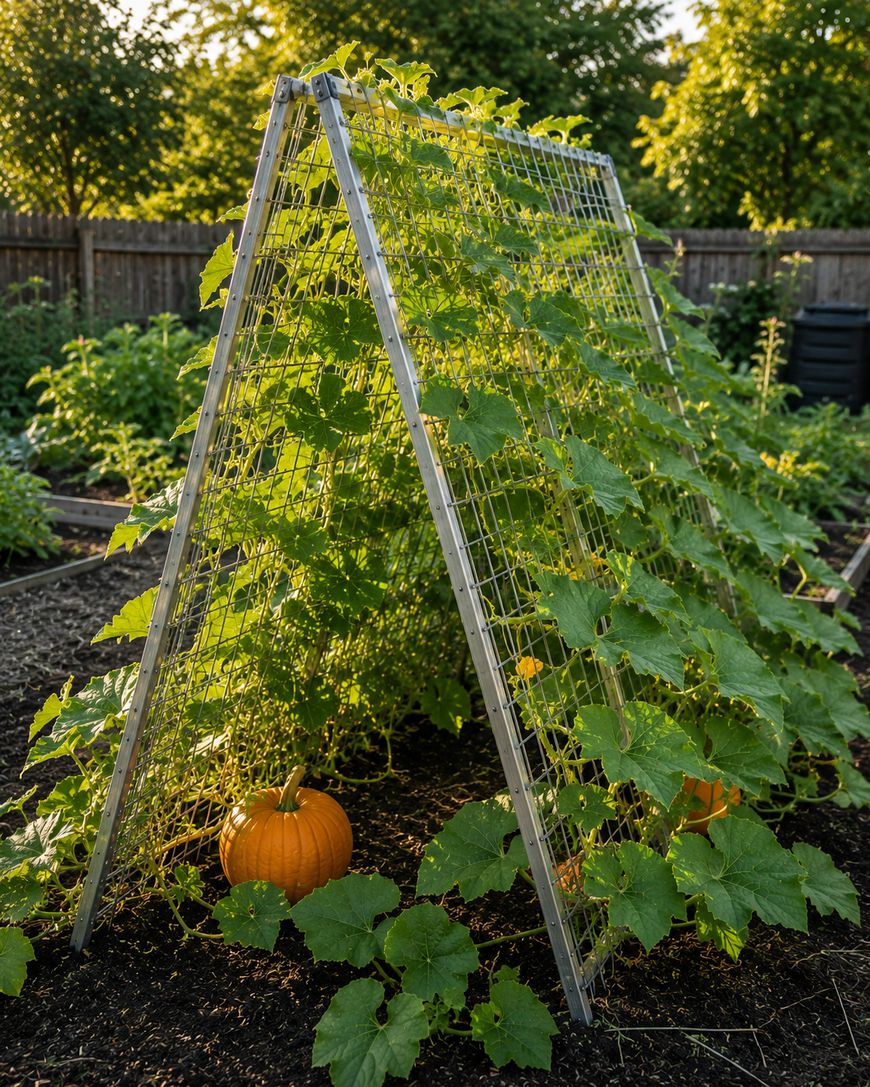
A basic A-frame trellis is one of the most beginner-friendly options you’ll find. You build two panels of wire mesh or cattle panel, lean them against each other at the top, and secure them with zip ties or wire. The A-frame shape creates stability without requiring posts set deep into the ground, and the angled surface gives you natural airflow on both sides of the vine.
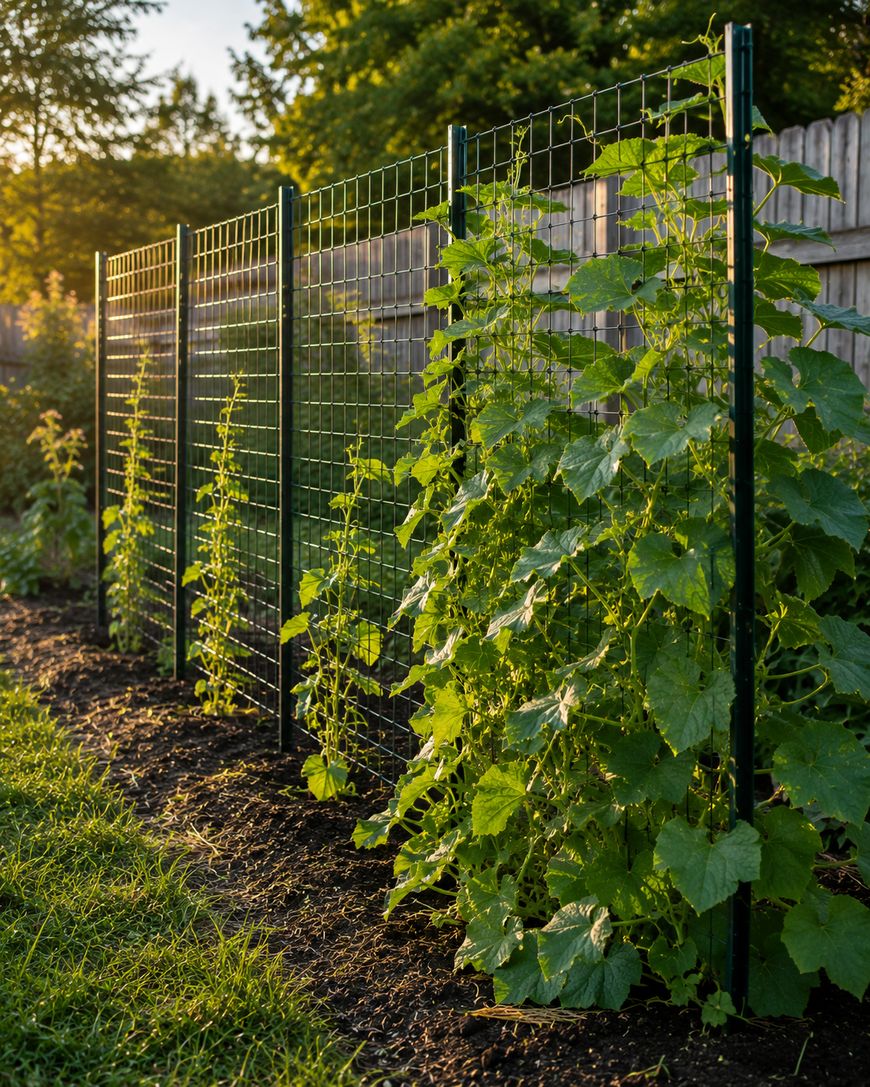
Another great starter option is a simple T-post and wire setup along a fence line. Drive T-posts into the ground every four to five feet, string heavy-gauge wire between them at multiple heights, and you have a ready-made climbing surface for pumpkin vines. This method works especially well along the perimeter of a raised bed or garden border where you want to keep vines from spreading outward.
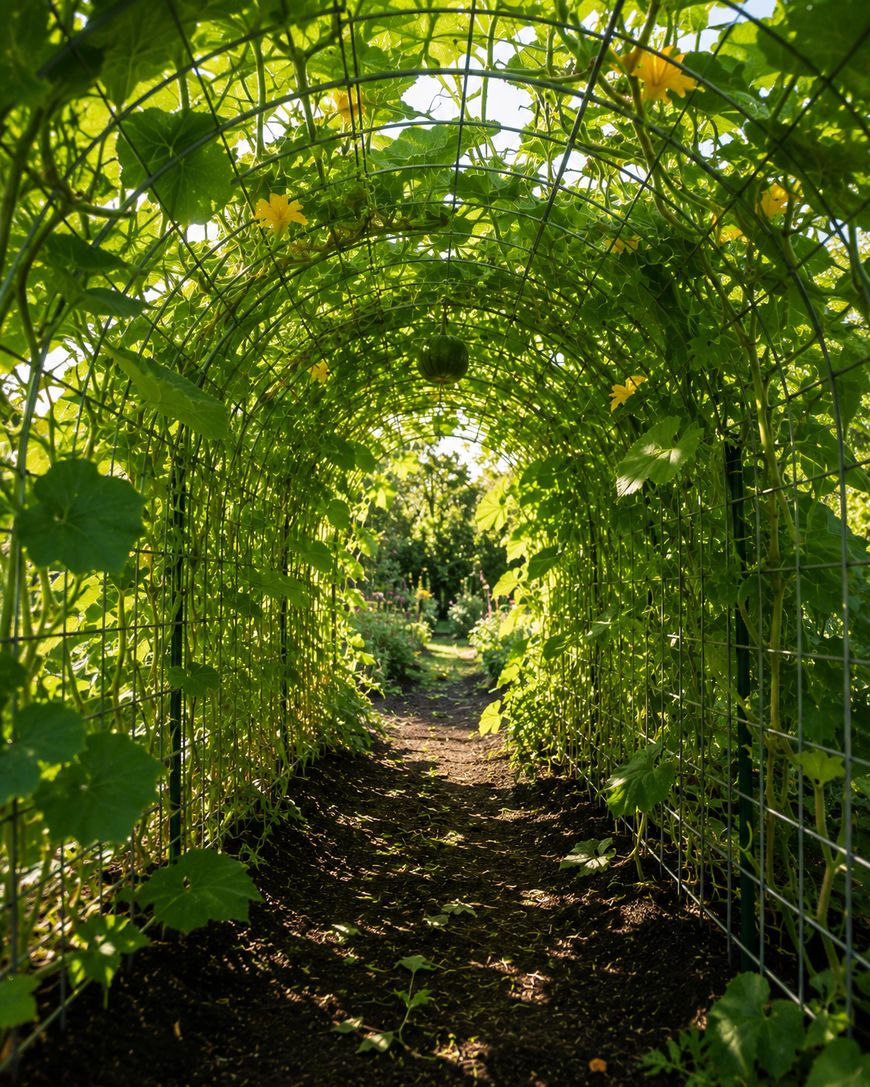
For gardeners with even less time, a cattle panel arch makes an excellent pumpkin trellis with almost no construction required. Bend a single 16-foot cattle panel into an arch shape, drive the ends into the soil on either side of a garden row, and you have a sturdy tunnel structure that pumpkin vines will happily climb. You can walk through the arch to harvest and tend your plants, and the shape looks beautiful once the vines fill in.
Strong Trellis Builds for Heavier Pumpkin Varieties
If you’re growing anything larger than a small Sugar Pie pumpkin, you need a trellis with serious structural integrity. Heavier varieties require posts that are anchored securely and wire or mesh that won’t stretch or sag under weight.
A lumber frame trellis built with 4×4 posts and crossbeams is one of the strongest options for a garden setting. Set the posts at least 18 inches into the ground, attach horizontal crossbeams at the top and at mid-height, and stretch galvanized wire mesh or livestock fencing between the uprights. This type of structure can support multiple vines simultaneously and will last for many growing seasons with minimal maintenance.
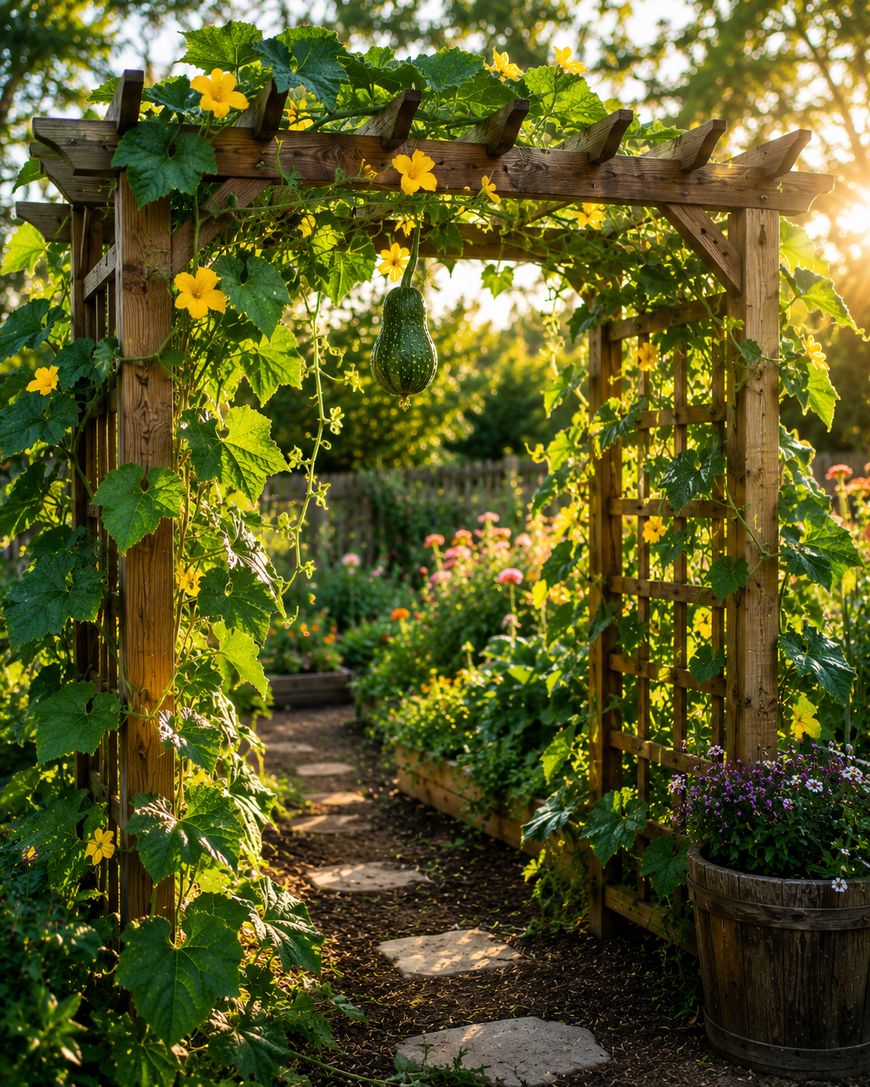
For a more polished look, you can build a pergola-style trellis using cedar or pressure-treated lumber. Cedar is naturally rot-resistant and holds up beautifully outdoors without any chemical treatment, making it a great long-term investment. A pergola-style build also doubles as a shade structure and gives your garden a defined focal point.
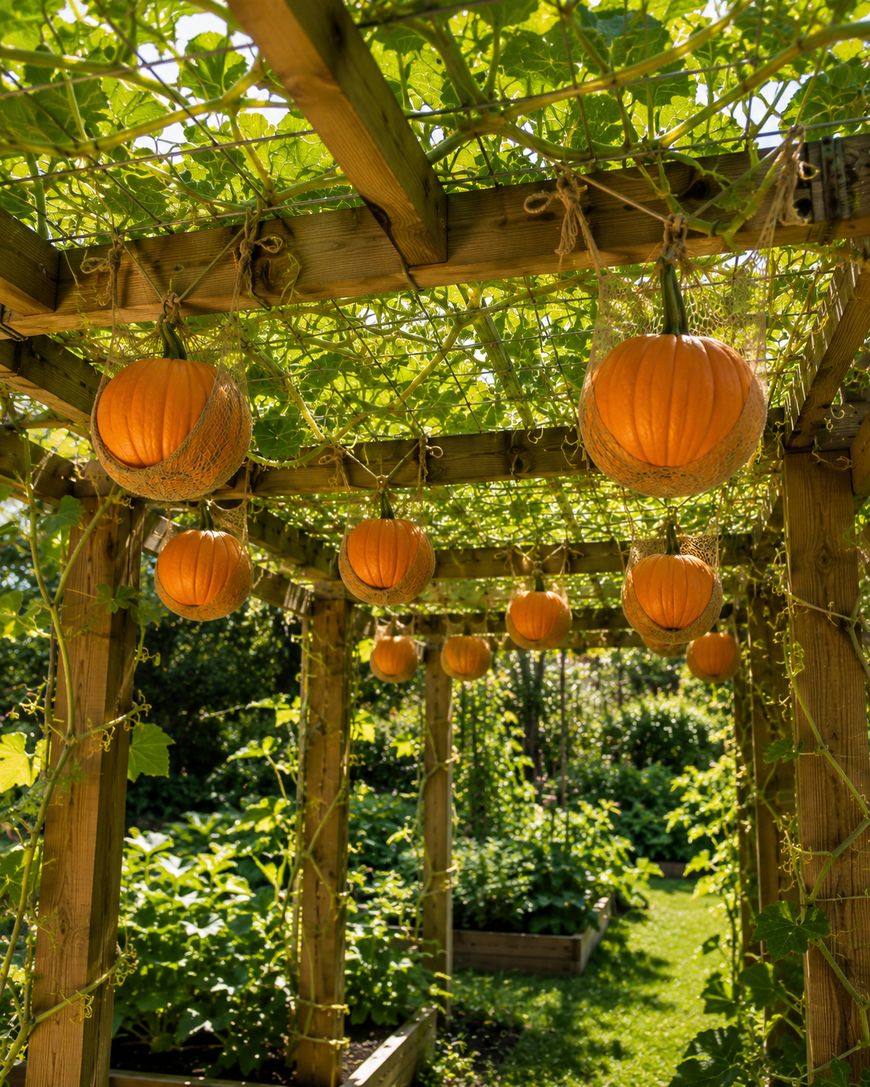
Chain-link fence panels repurposed as trellis panels are another excellent heavy-duty option. The small openings in chain-link fence mesh give vines plenty of anchoring points as they climb, and the rigid structure holds its shape even when loaded with fruit. You can often find used chain-link fencing at salvage yards or online marketplaces for very little cost.
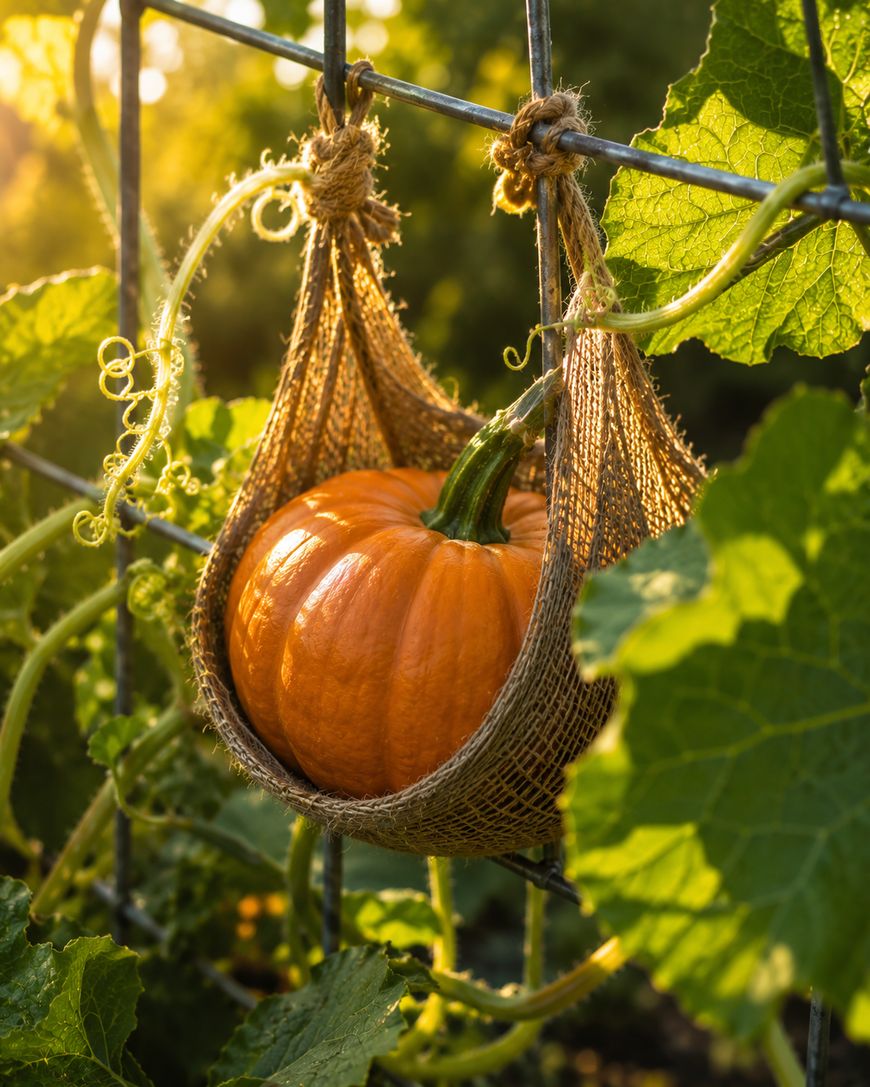
No matter what material you use for a heavy-duty trellis, the most important step is making the slings. Each developing pumpkin needs to be cradled in a fabric or mesh hammock tied to the trellis structure. Old pantyhose, strips of burlap, mesh onion bags, and even sections of t-shirt fabric all work well. The sling distributes the pumpkin’s weight evenly and prevents the stem from snapping under the load.
Creative Pumpkin Trellis Ideas Using Repurposed Materials
One of the most satisfying parts of building a pumpkin trellis is that you can often do it entirely from materials you already have on hand. Repurposed and upcycled trellis builds are not only budget-friendly but they also add a unique, charming quality to your garden space.
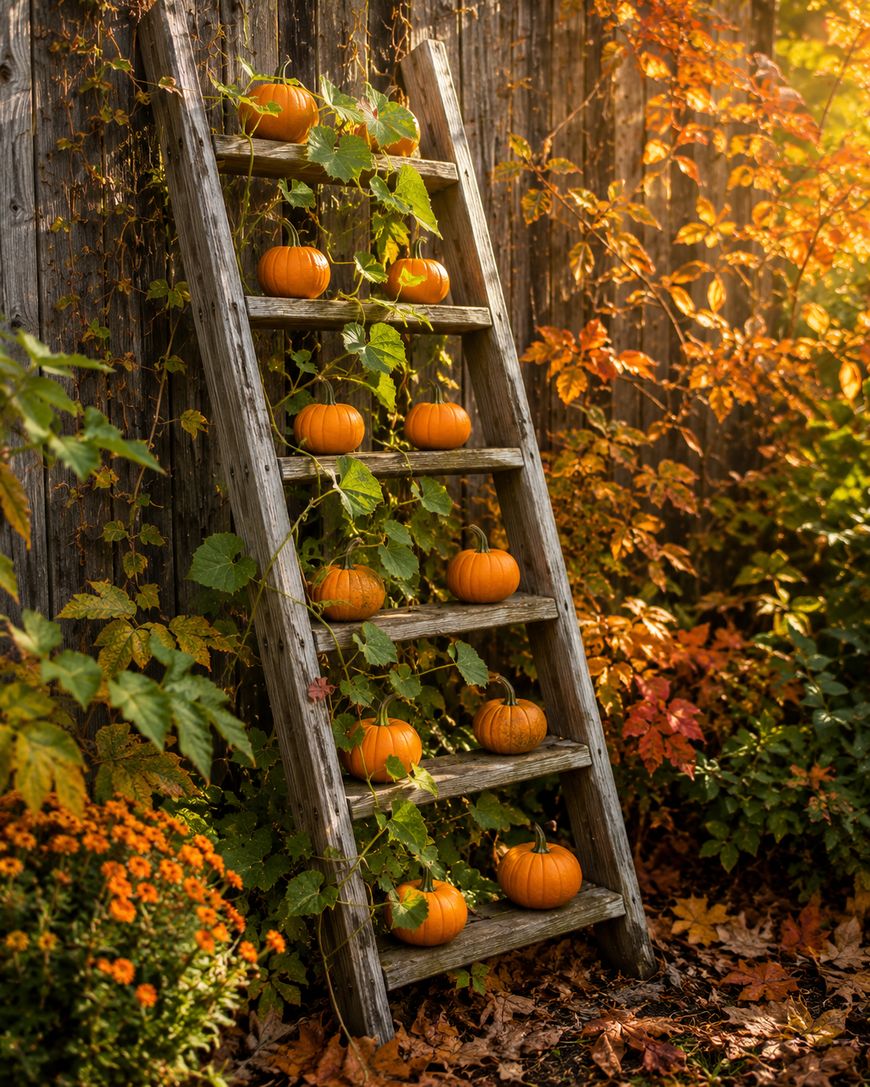
An old wooden ladder propped against a fence or wall makes a surprisingly effective pumpkin trellis for smaller varieties. The rungs give the vine easy places to attach its tendrils, and the vertical angle keeps air flowing freely around the plant. Sand and seal the ladder first if you want it to last more than one season.
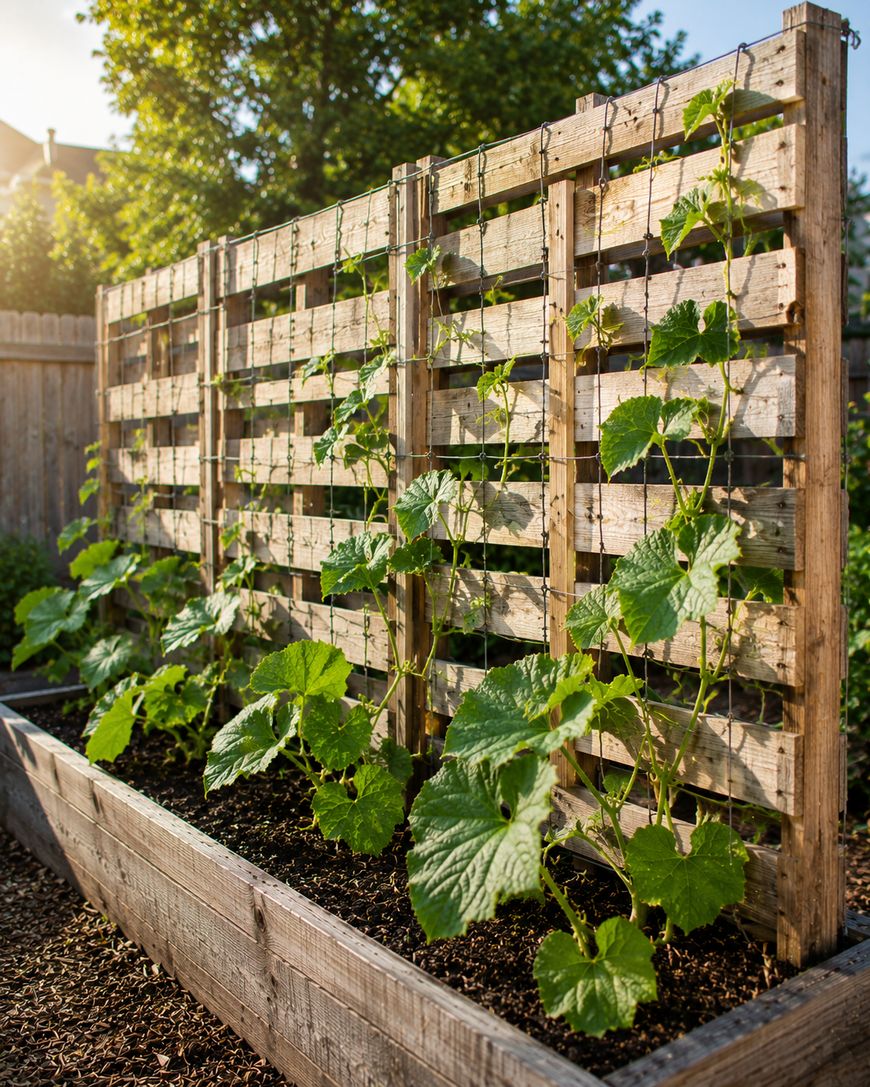
Wooden pallets stacked and wired together create a flat, open-grid trellis surface that works well for training pumpkin vines in a specific direction. The wide slats give you plenty of room to tie guide stems without damaging the plant, and pallets are often available for free from garden centers, furniture stores, or grocery warehouses.
An old metal bed frame with the spring removed makes an unexpectedly sturdy trellis. Set the frame upright and secure it to a fence or stake it into the soil, and you have a ready-made grid that pumpkin tendrils will naturally cling to. This works best for small to medium pumpkin varieties where the weight stays manageable.
Bamboo is another excellent repurposed trellis material. Bamboo stakes lashed together into an A-frame or teepee shape create a lightweight but reasonably strong support structure. You can often harvest bamboo from an overgrown stand in your own yard and put it to use the same day.
How to Train Pumpkin Vines on a Trellis
Building the trellis is only half the job. Getting your pumpkin vines to actually climb the structure takes some early guidance, especially in the first few weeks after planting.
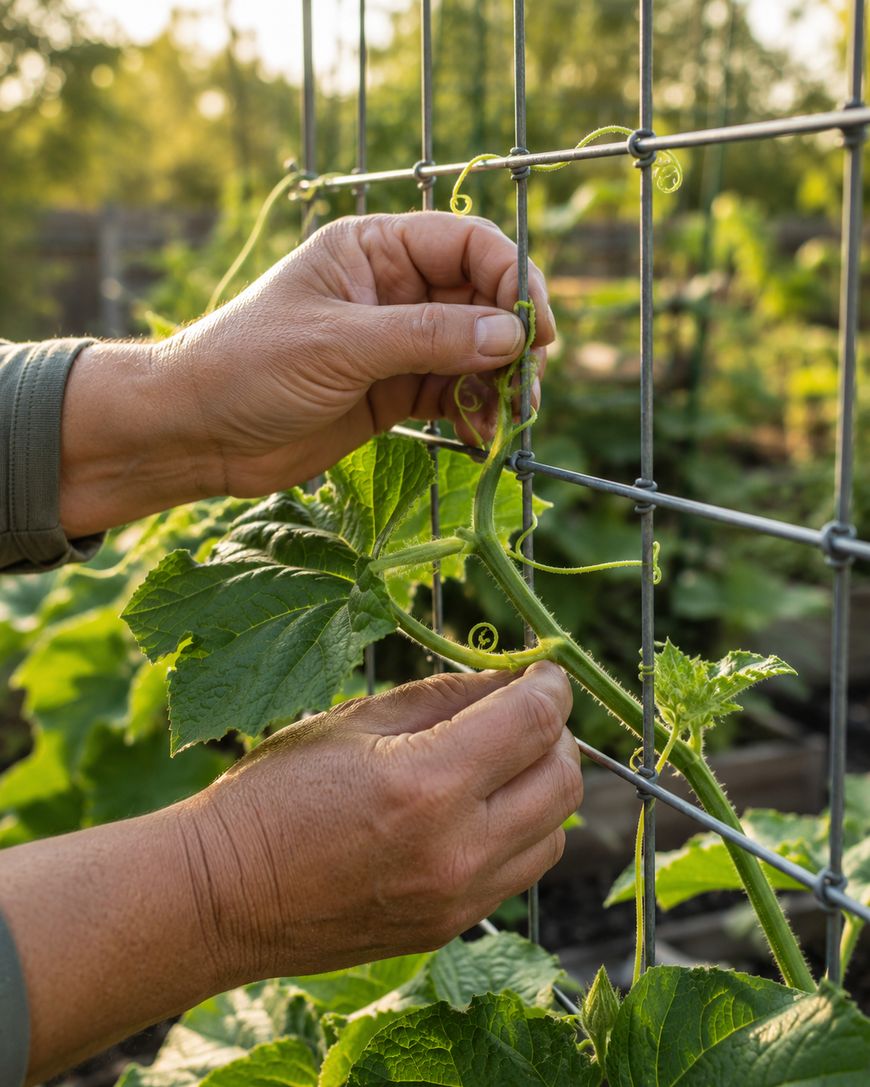
Start by planting your pumpkins at the base of the trellis and positioning the young vine to lean toward the structure from the beginning. As the vine grows, gently weave the main stem through the openings in your mesh or tie it loosely to horizontal wires with soft garden twine. You never want to tie the vine tightly enough to constrict it, just enough to keep it headed in the right direction.
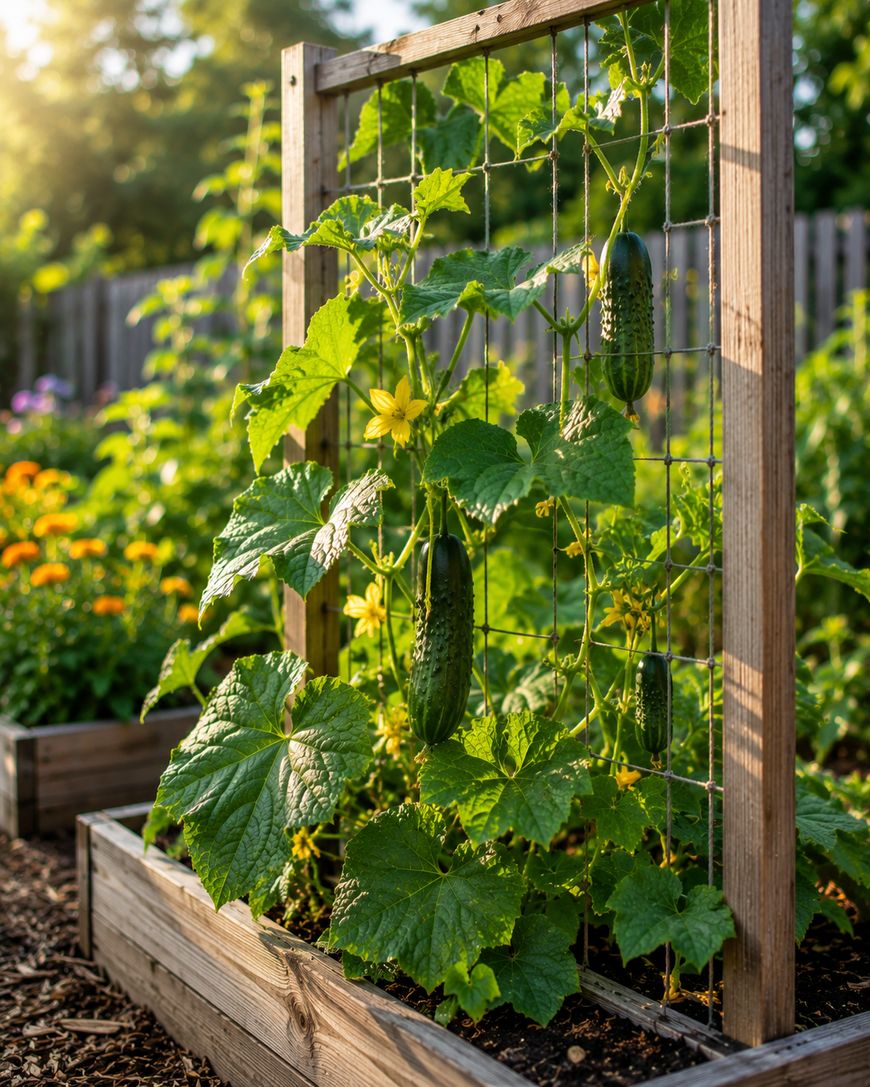
Pumpkin vines put out their own curling tendrils that will latch onto wire mesh on their own once they make contact. Your job in the early weeks is mostly to redirect any stems that are growing away from the trellis and to keep the main leader vine heading upward rather than sideways.
Once the vine reaches the top of the trellis, you can let it cascade back down the other side or pinch the growing tip to encourage the plant to put more energy into fruit development. Most gardeners growing pumpkins on a trellis allow two to three fruit to develop per vine for best results.
Choosing the Right Pumpkin Variety for Trellis Growing
Not every pumpkin is equally suited to vertical growing, and your choice of variety matters a lot when you’re planning a trellis setup. Smaller and medium varieties are naturally easier to train and support vertically.
Sugar Pie pumpkins are a classic choice for trellis growing because the mature fruits stay compact and sweet, usually weighing between four and eight pounds. Jack-Be-Little miniature pumpkins are another excellent option, producing dozens of tiny fruits that barely need support at all.
Cinderella pumpkins, also called Rouge Vif d’Etampes, have a flattened shape that actually makes them easier to sling on a trellis than round varieties of similar weight. Long Pie pumpkins are cylindrical and heavy but their shape distributes weight along the sling evenly.
If you have your heart set on growing a large variety like Atlantic Giant, a ground-level setup is almost always the better choice. The risk of stem damage and structural failure increases significantly when fruits exceed 25 to 30 pounds.
Pumpkin Trellis Ideas Q&A
Can you really grow pumpkins on a trellis?
Yes, and many gardeners find that trellised pumpkins actually grow healthier than ground-level vines. Better air circulation reduces disease pressure, and the fruit gets more even sun exposure all around. The key is choosing a variety appropriate for vertical growing and supporting each pumpkin with a sling as it develops.
What is the best trellis for pumpkins?
The best trellis depends on your variety and your budget. For small to medium pumpkins, a cattle panel arch or A-frame wire trellis works beautifully. For heavier varieties, a lumber-framed trellis with galvanized mesh provides the structural strength you need. Whatever style you choose, make sure it’s anchored securely in the ground.
How do you support pumpkins growing on a trellis?
Each developing pumpkin needs to be cradled in a sling attached to the trellis. Old pantyhose, burlap strips, mesh produce bags, and strips of stretchy fabric all work well. Tie the sling to a crossbar or section of wire mesh so the pumpkin’s weight is fully supported without putting stress on the stem.
Do pumpkins need a lot of sun when grown vertically?
Pumpkins need full sun regardless of whether they’re grown on the ground or on a trellis, ideally six to eight hours of direct sunlight per day. One advantage of vertical growing is that the elevated position often gives the leaves and fruit access to more unobstructed sun than they would get sprawling at ground level.
How long does a pumpkin trellis need to be?
Most pumpkin vines grow between six and fifteen feet long depending on the variety, so a trellis that’s five to six feet tall gives you enough vertical height to work with. You can always let the vine loop back down once it reaches the top, which is especially useful in smaller garden spaces.
When should you start training pumpkins onto a trellis?
Start guiding the vine toward the trellis as soon as it puts out its first few true leaves, usually within two to three weeks after germination. The earlier you establish the direction of growth, the easier it is to keep the vine climbing where you want it. Trying to redirect a vine that has already sprawled several feet can damage the stems and roots.
Bring Your Pumpkin Trellis Ideas to Life This Season
Whether you build a simple A-frame from wire mesh or invest in a sturdy timber pergola, growing pumpkins vertically is one of the most rewarding changes you can make to your garden. You’ll gain space, improve plant health, and get a genuinely beautiful growing display that becomes a focal point all season long.
Start with one of these pumpkin trellis ideas this year, pick a variety suited to your structure, and don’t forget to have your slings ready by midsummer. Once you see how well your pumpkins do off the ground, you’ll never go back to letting them sprawl.