Last updated: September 11, 2026
Orange marmalade turns simple citrus into a glossy, deeply flavored spread you will want to put on everything from toast to roast pork. You only need a handful of ingredients and this recipe walks you through the process from bitter pith to the recipe card below.
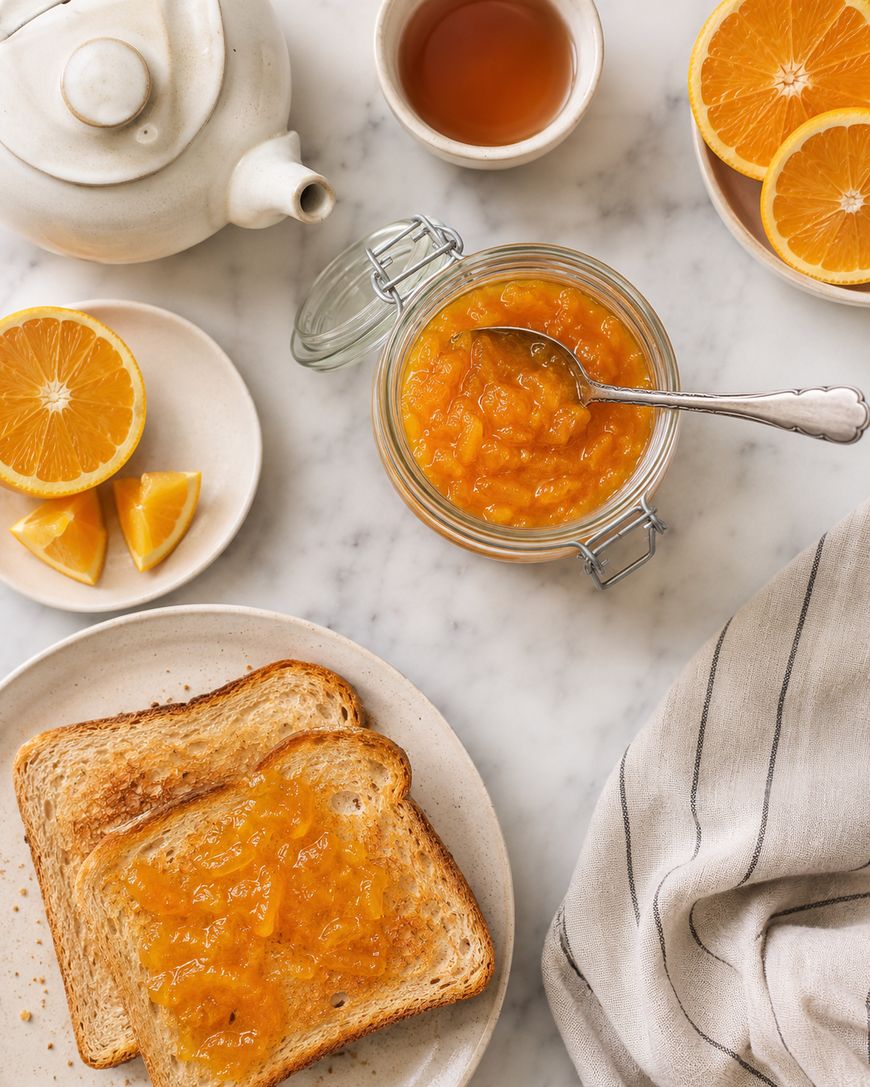
What Is Orange Marmalade
Orange marmalade is a citrus preserve made by cooking sliced oranges, sugar, and water down until the peels turn tender and the liquid sets into a soft gel. Unlike jam, marmalade keeps the peel in the finished product, which gives it a slightly bitter, chewy texture that balances the sweetness of the sugar. Seville oranges are the classic choice in British marmalade because their high pectin content sets without added thickener, but navel oranges and blood oranges also work well for a milder, sweeter jar.
The Role of Pith and Peel
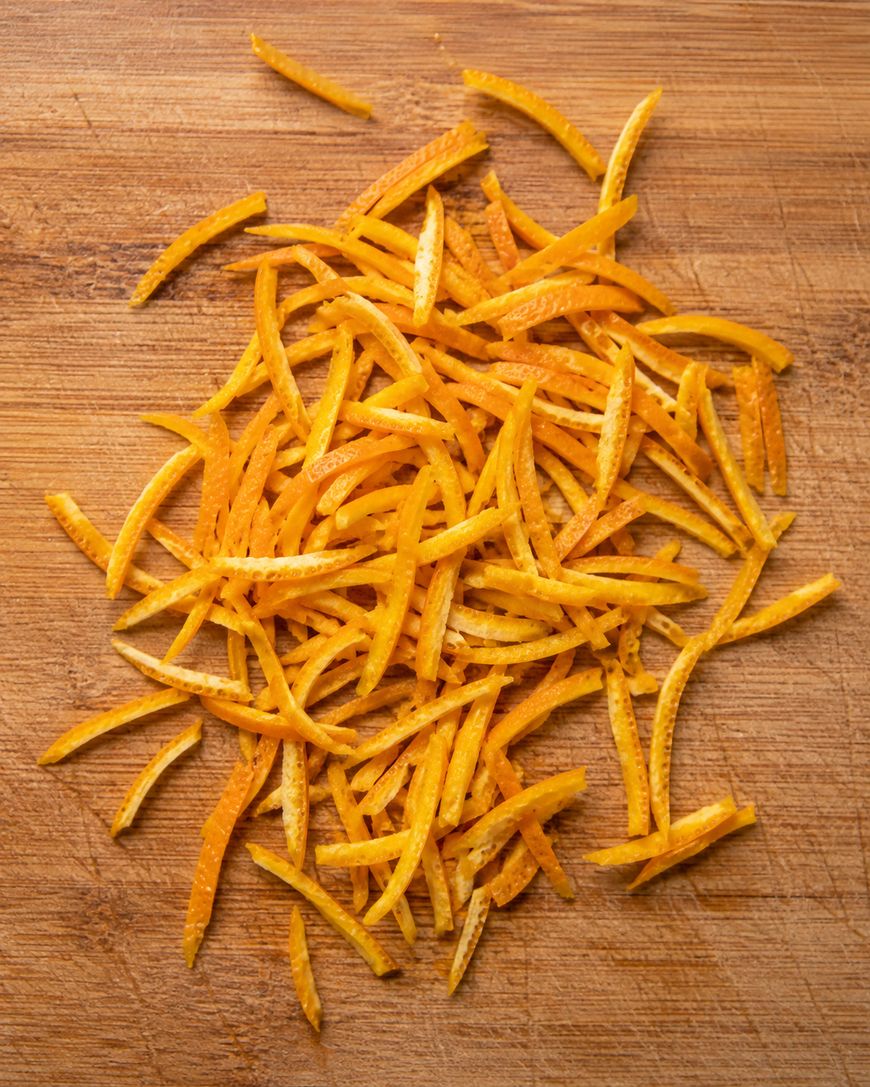
The white pith just under the orange skin holds most of the natural pectin, so leaving some of it intact helps the marmalade set properly. Too much pith turns the final spread bitter, so most recipes call for trimming away the thickest layer while keeping a thin coating attached to the peel. Slicing the peel thinly, whether in matchsticks or fine shreds, also determines the final texture, so use a sharp knife or mandoline for even pieces.
Ingredients for Orange Marmalade
You need just three ingredients for a classic batch: oranges, granulated sugar, and water. Choose oranges with unblemished, firm skin since you are eating the peel, and organic fruit is worth seeking out to avoid pesticide residue on the rind. A splash of lemon juice adds acidity that helps the pectin activate and brightens the overall flavor.
Choosing the Right Oranges
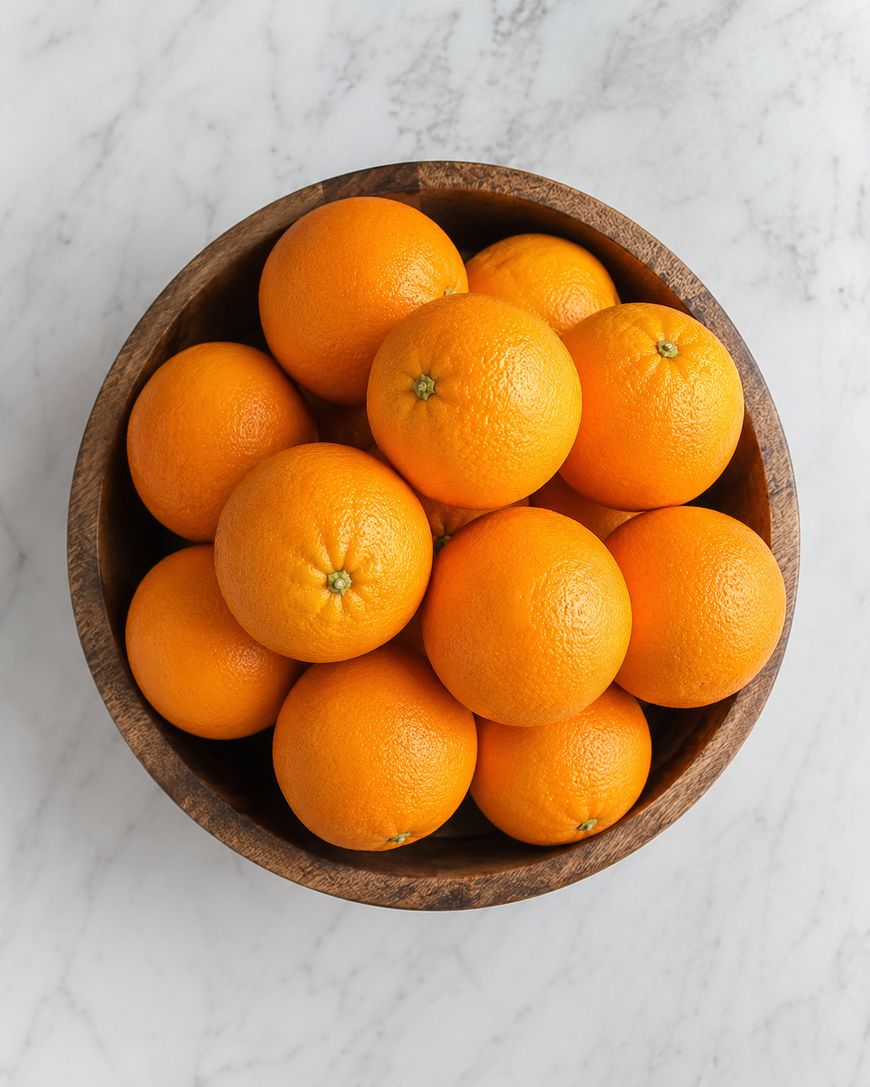
Seville oranges, available briefly in January, are prized for marmalade because of their bitterness and natural pectin, but they can be hard to find outside specialty grocers. Navel oranges are the easiest substitute since they are seedless and widely available year round, though your marmalade will be sweeter and set slightly softer. Blood oranges bring a rosy color and berry-like note if you want a more dramatic presentation.
How to Make Orange Marmalade
Making marmalade happens in three stages: softening the peel, cooking with sugar, and testing the set. Each stage matters for the final texture, so resist the urge to rush the process even though the total active time is short.
Softening the Peel
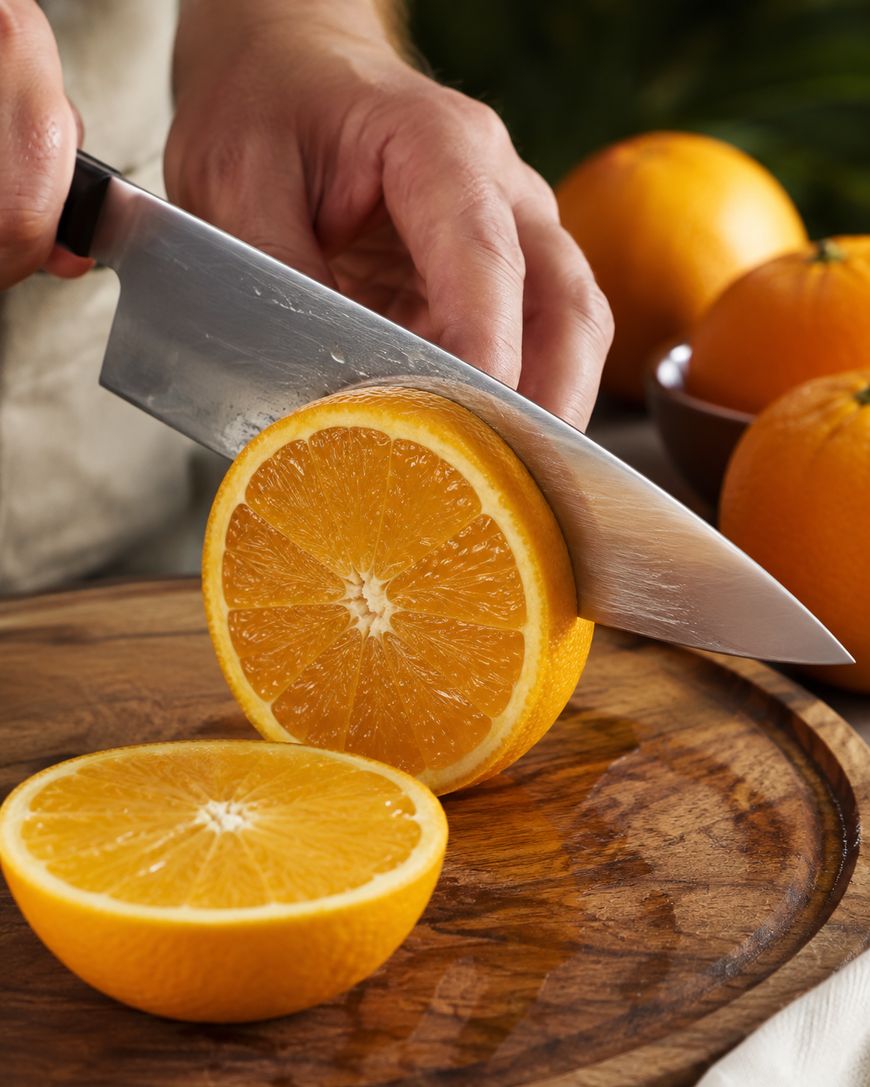
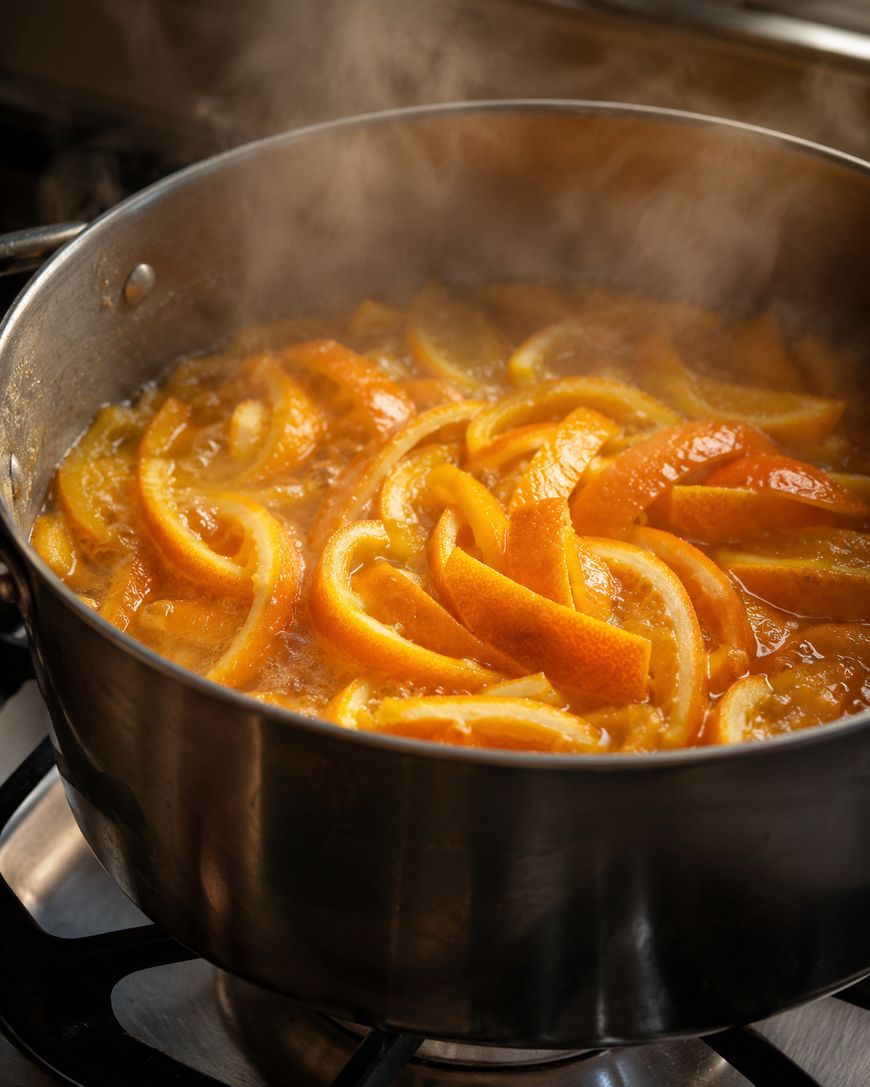
Start by washing the oranges well, then slicing them in half and juicing them, reserving both the juice and the pips. Slice the peel and remaining pith into thin strips, then combine the peel, juice, and any pips tied in a cheesecloth pouch with water in a large pot. Simmer this mixture gently for about an hour, or until the peel is completely tender and can be pierced easily with a fork, since peel that is still tough will stay tough even after the sugar is added.
Cooking With Sugar
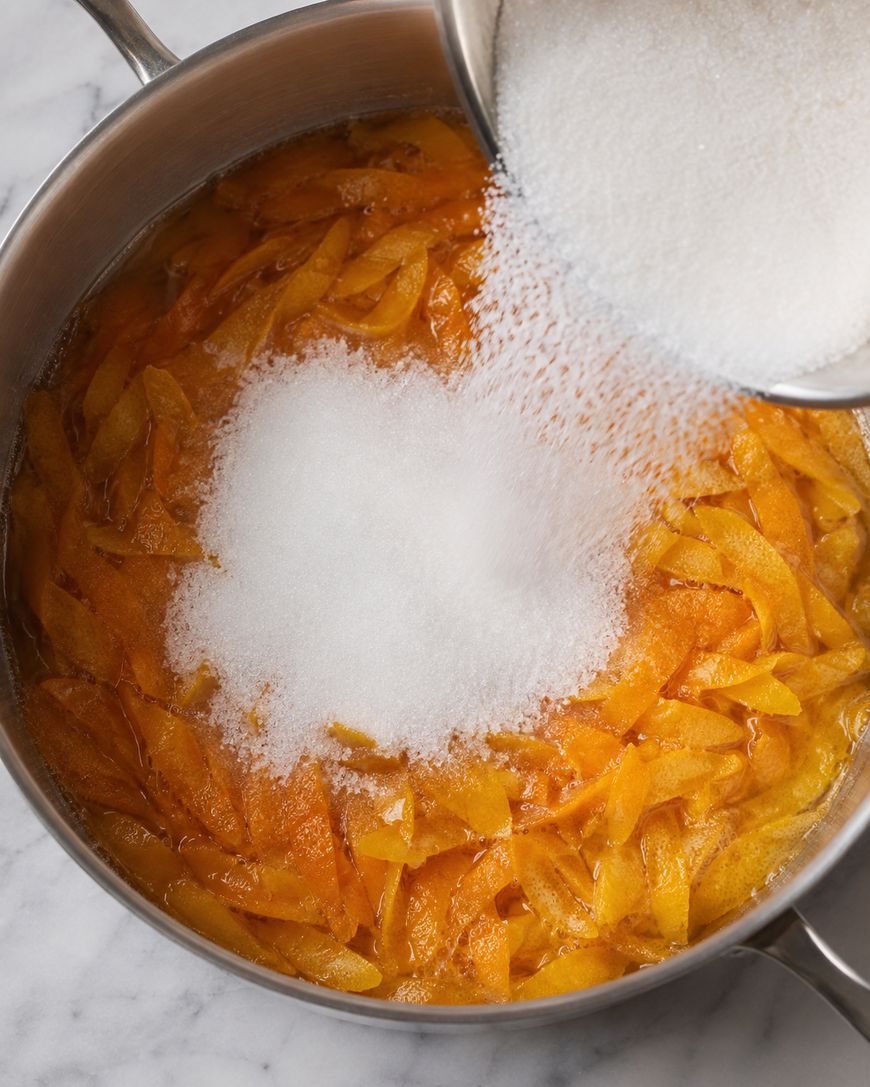
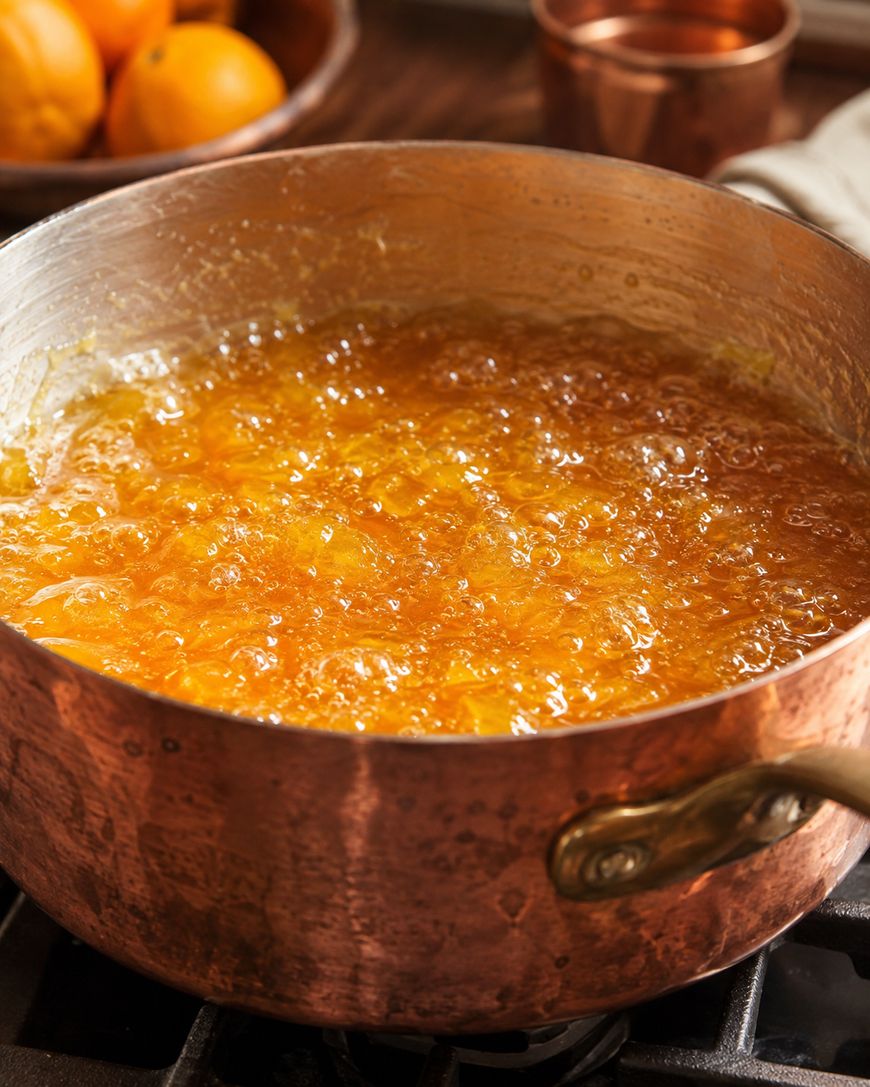
Once the peel is soft, remove the cheesecloth pouch of pips, squeezing it well since it releases extra pectin into the pot. Add the sugar and stir over low heat until it fully dissolves, then raise the heat and bring the mixture to a rolling boil. Boil the marmalade for 15 to 20 minutes, stirring occasionally to prevent scorching on the bottom of the pot, until the mixture thickens and the bubbles slow down.
Testing for Set
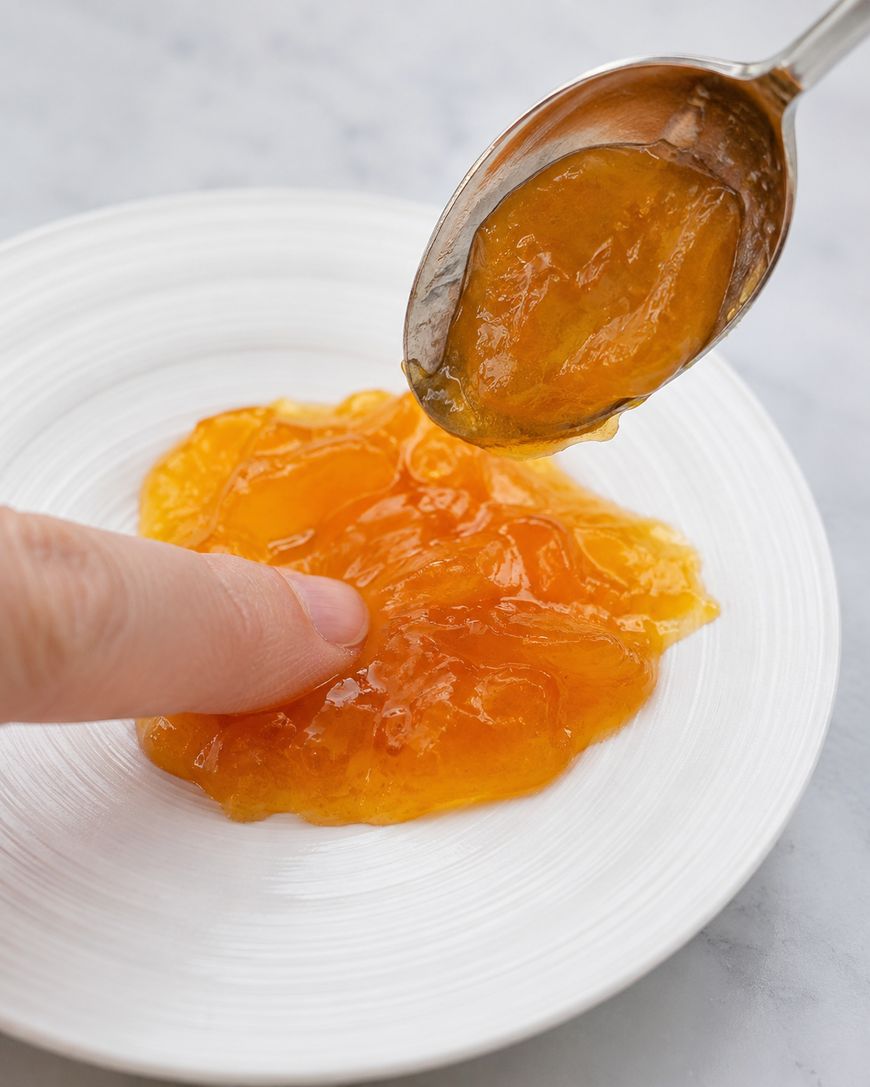
The most reliable way to test marmalade for doneness is the cold plate test: place a small spoonful on a chilled plate, wait 30 seconds, then push it with your finger. If it wrinkles and holds a line, your marmalade has reached setting point. A candy thermometer reading of 220°F is a helpful backup indicator, though the plate test is more forgiving of altitude and sugar variations.
Canning and Storing Orange Marmalade
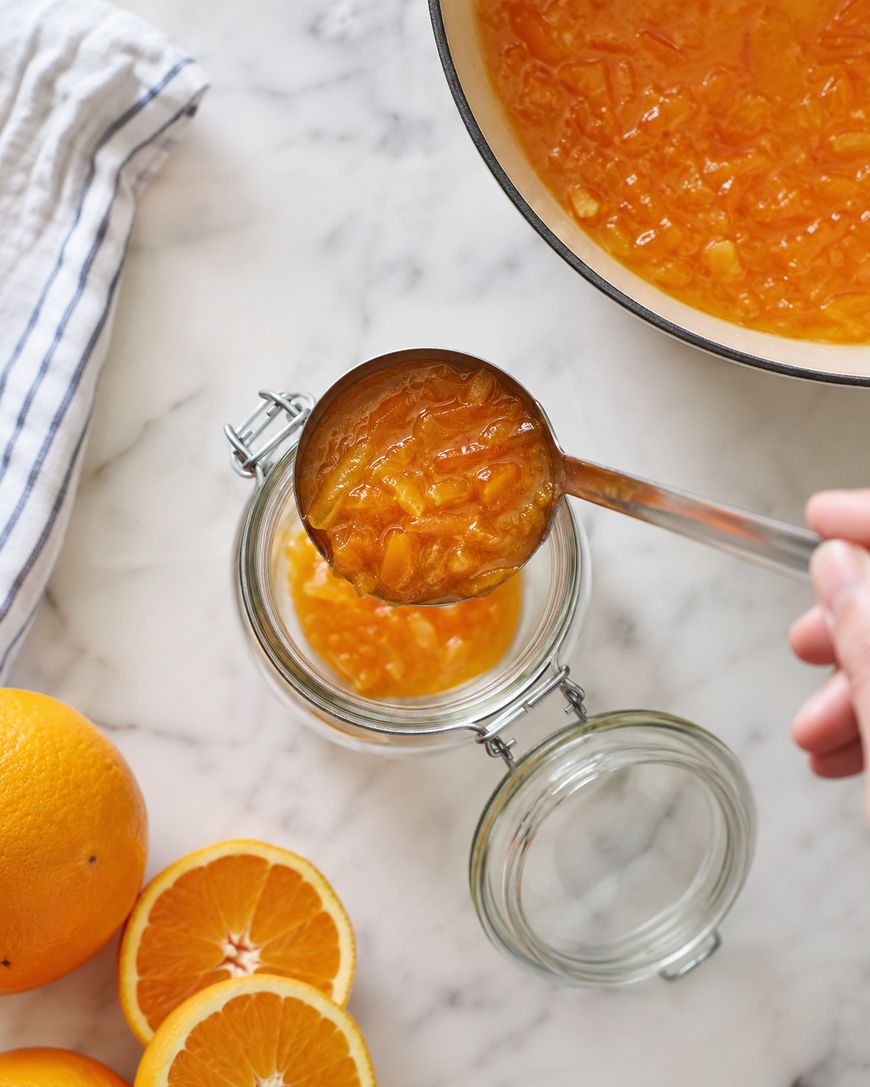
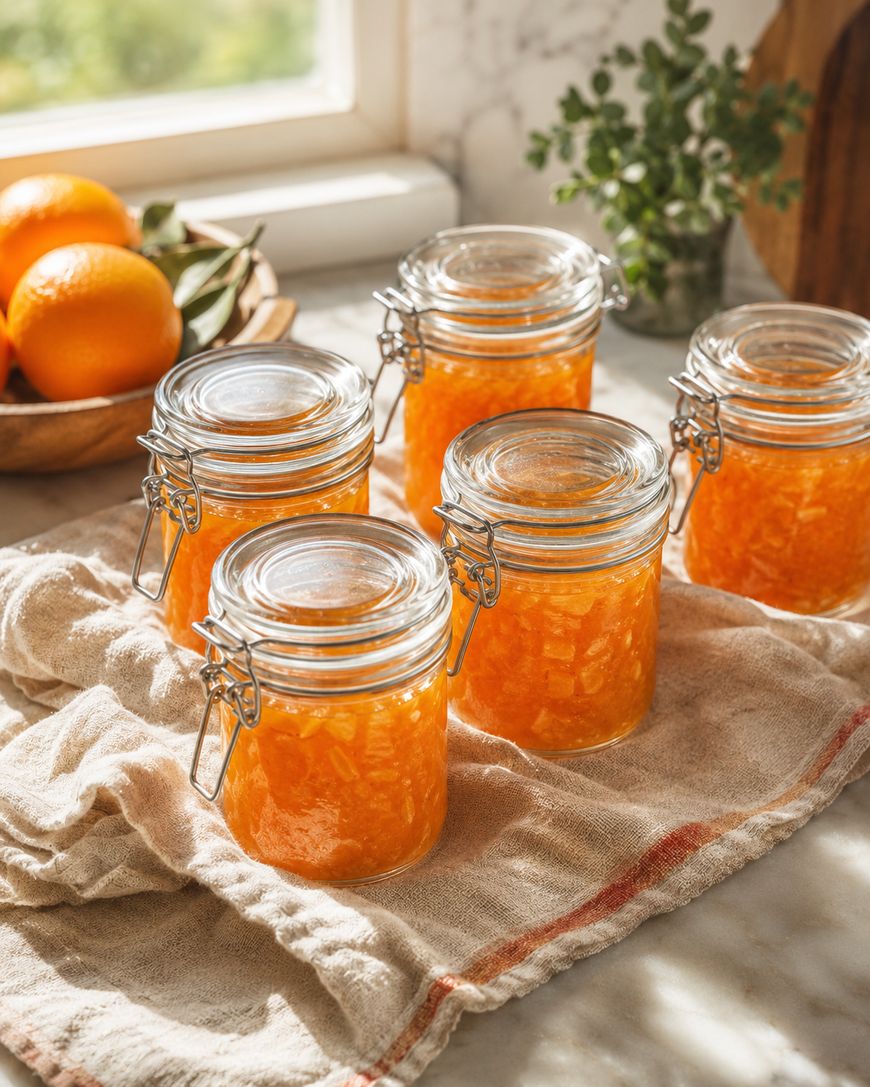
Once your marmalade reaches setting point, remove it from the heat and let it sit for five minutes so the peel distributes evenly instead of floating to the top of the jar. Ladle the hot marmalade into sterilized jars, leaving a quarter inch of headspace, then process in a boiling water bath for 10 minutes Add time for altitude: 5 extra minutes at 1,001–3,000 ft, 10 at 3,001–6,000 ft and 15 above 6,000 ft, since water boils below 212°F the higher you are and a flat 10 minutes under-processes the jars. if you plan to store jars at room temperature. Unprocessed jars keep in the refrigerator for up to three weeks, while properly processed jars stay shelf stable for up to a year in a cool, dark pantry.
Freezing Marmalade
If you would rather skip canning altogether, orange marmalade freezes beautifully in freezer-safe containers for up to six months. Leave extra headspace in the container since the marmalade expands slightly as it freezes, and thaw it overnight in the refrigerator before use.
Variations and Substitutions
Ginger marmalade is a popular twist, made by adding a few tablespoons of grated fresh ginger during the sugar-cooking stage for a warm, spicy edge. Whiskey marmalade, another classic variation, gets a tablespoon or two of bourbon stirred in right at the end of cooking for depth without overpowering the citrus. If you want a low sugar version, pectin sold specifically for reduced sugar recipes lets you cut the sugar by up to half while still achieving a proper set.
Using Other Citrus
Grapefruit, lemon, and lime all make excellent marmalade using the same basic method, though you may need to adjust sugar to account for their differing sweetness and acidity. A mixed citrus marmalade combining orange, lemon, and grapefruit brings complexity to the jar and is a great way to use up whatever citrus is on hand.
Serving Suggestions
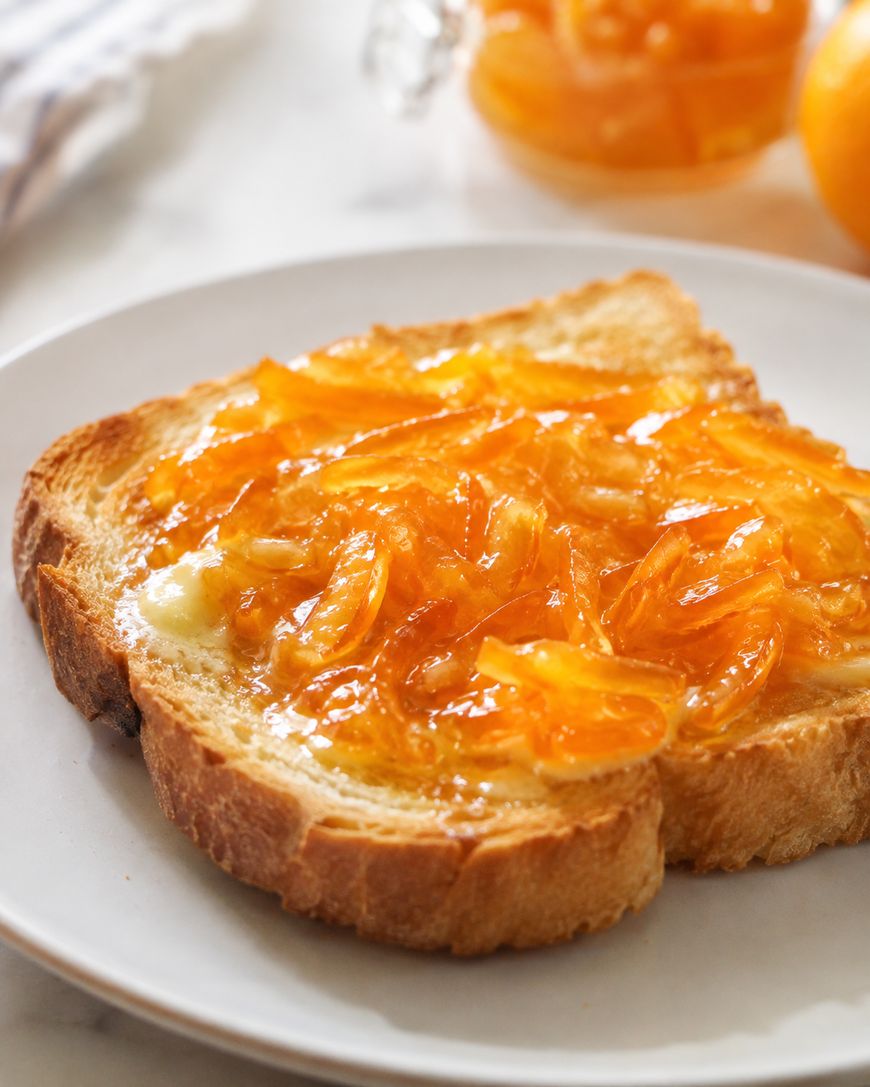
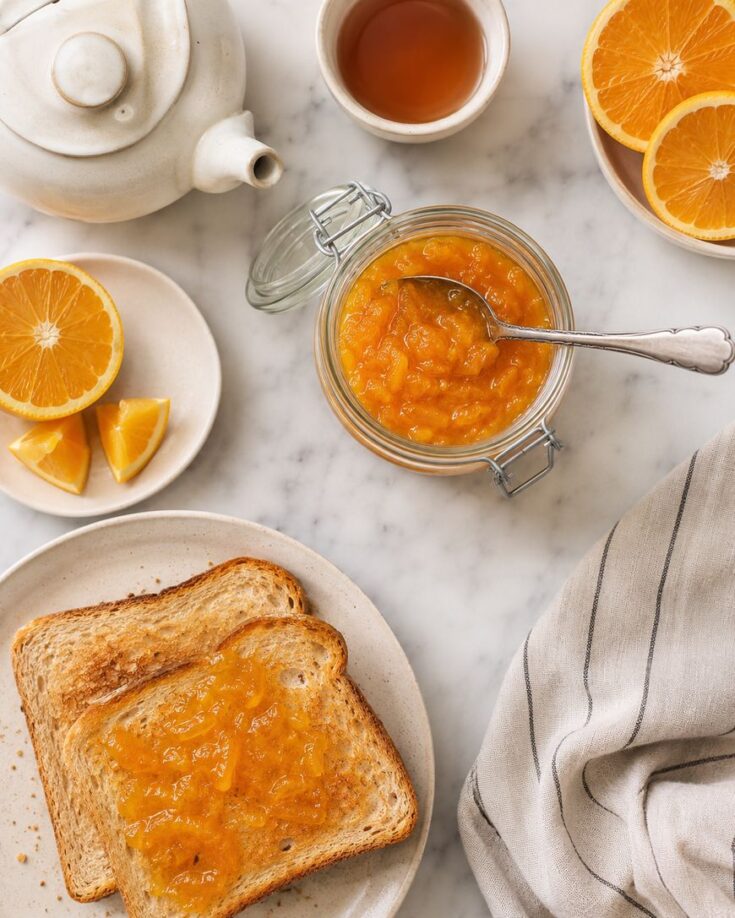
Orange marmalade is classic on buttered toast or scones, but it also shines as a glaze for roasted chicken, pork, or salmon in the last few minutes of cooking. Stir a spoonful into vinaigrette for a citrusy salad dressing, or swirl it into plain yogurt or oatmeal for a bright breakfast upgrade. It also makes a lovely thumbprint cookie filling or a simple accompaniment to a cheese board alongside sharp cheddar.
The Origin of Orange Marmalade
Marmalade traces its roots to Portugal, where the word comes from “marmelada,” a quince paste that predates the citrus version by centuries. The citrus marmalade most people recognize today became a British staple in the 18th century after a Dundee grocer began preserving a shipment of bitter Seville oranges that arrived from Spain. Since then, marmalade has remained a fixture of the British breakfast table, traditionally served alongside toast and a proper pot of tea.
Ready to see the full ingredient list and step-by-step instructions in one place? Use the recipe card below to cook along.
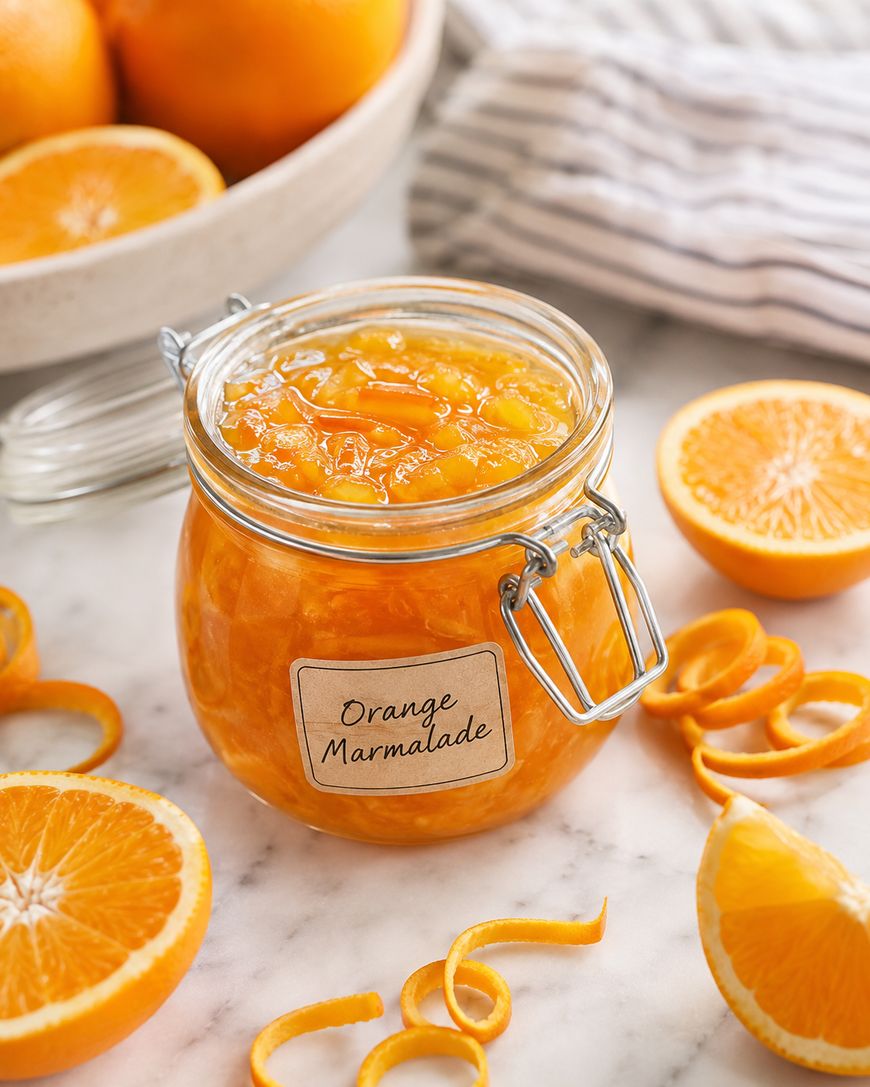
Orange Marmalade
A bright, glossy orange marmalade made with just three ingredients, no added pectin required.
Ingredients
- 4 large navel oranges, washed
- 1 lemon, juiced
- 6 cups water
- 4 cups granulated sugar
Instructions
- Halve the oranges and squeeze out the juice, reserving the juice and setting aside the pips.
- Slice the orange peel and pith into thin strips.
- Combine the sliced peel, orange juice, lemon juice, and water in a large heavy-bottomed pot. Tie the pips in a cheesecloth pouch and add to the pot.
- Bring to a simmer and cook gently for about 1 hour, until the peel is very tender.
- Remove and squeeze the cheesecloth pouch of pips, then discard it.
- Add the sugar to the pot and stir over low heat until fully dissolved.
- Raise the heat and bring the mixture to a rolling boil, stirring occasionally.
- Boil for 15 to 20 minutes, or until a spoonful wrinkles on a chilled plate.
- Remove from heat and let sit for 5 minutes so the peel distributes evenly.
- Ladle into sterilized jars, leaving a quarter inch of headspace, and seal.
- Process in a boiling water bath for 10 minutes for shelf-stable storage, or refrigerate for immediate use.
Notes
For a spiced variation, stir in 2 tablespoons of grated fresh ginger with the sugar. Marmalade keeps refrigerated for up to 3 weeks or shelf stable for up to a year if properly canned.
Nutrition Information:
Yield:
32Serving Size:
1 tablespoonAmount Per Serving: Calories: 45Total Fat: 0gSaturated Fat: 0gSodium: 0mgCarbohydrates: 12gFiber: 0gSugar: 11gProtein: 0g
This site provides estimated nutritional information. This information comes from online calculators. Although we try to provide accurate nutritional information, these figures are only estimates.
Orange Marmalade Questions
Why is my marmalade not setting?
Marmalade that will not set usually needs more cooking time to reach the correct sugar concentration, or it may be missing enough natural pectin from the pith and pips. Try boiling it a few minutes longer and retesting with the cold plate method before giving up on the batch.
Can I use bottled orange juice instead of fresh oranges?
Bottled juice will not work for marmalade since the recipe relies on the whole peel and pith for both flavor and pectin. Fresh whole oranges are essential to get the characteristic chewy peel and proper set.
How long does homemade orange marmalade last?
Refrigerated marmalade in a sealed jar lasts about three weeks, while properly water bath canned jars stay shelf stable for up to a year. Once opened, keep any jar refrigerated and use it within a month for the best flavor.
Do I need special equipment to make marmalade?
A large heavy-bottomed pot and a sharp knife are the only true essentials, though a candy thermometer and canning jars make the process easier if you plan to store jars long term. A cheesecloth pouch for the pips is helpful but a fine mesh bag works just as well.
Why is my marmalade bitter?
Bitterness usually comes from leaving too much pith on the peel or from using Seville oranges, which are naturally more bitter than navel oranges. If you prefer a milder marmalade, trim the pith more closely and choose sweeter orange varieties.
Can I double this recipe?
You can double the recipe, but keep the mixture in a wide, shallow pot so it still reaches a proper boil and sets correctly, since a deep pot with a large volume can take much longer to reduce. Doubling also means the peel may need a few extra minutes in the initial simmering stage to become fully tender.
Orange marmalade rewards a little patience with jars of bright, glossy preserve that beat anything from the store. Once you have made a batch, you will find yourself reaching for it well beyond breakfast toast.