Last updated: October 1, 2026
Roasted frozen broccoli can taste just as crispy and caramelized as fresh broccoli when you use the right technique, and you get an answer to soggy trays in this post right away. You skip a step most people don’t skip, and that single change is what makes all the difference. This recipe card below gives you exact times and temperatures so you can get it right on the first try.

Why Frozen Broccoli Usually Turns Out Soggy
Frozen broccoli holds a surprising amount of water inside its florets. When you dump a frozen bag straight onto a sheet pan, that water thaws and pools on the pan as the broccoli heats.
The broccoli ends up steaming in its own liquid instead of roasting. You get a dull, limp result instead of the crispy edges you actually want.
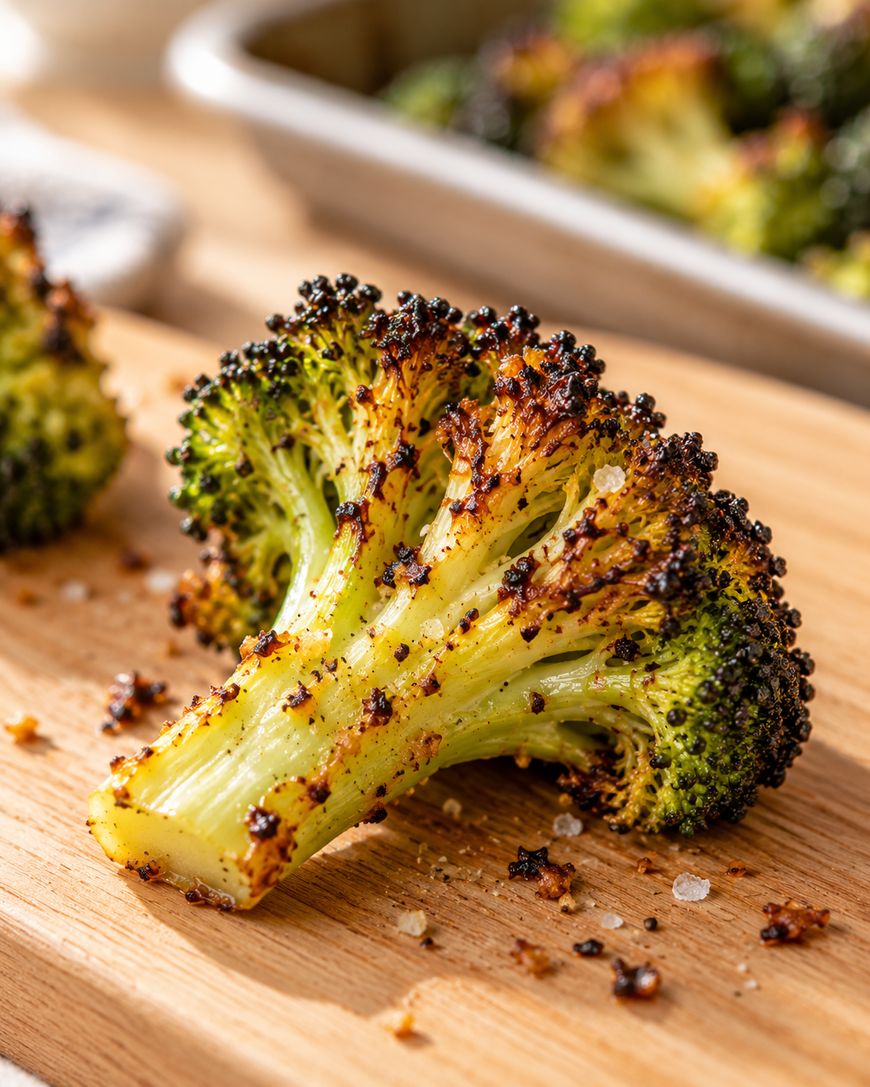
The fix is simple once you know it. You dry the broccoli out before it ever hits high heat, and you give it enough room on the pan to actually roast instead of crowd.
What You Need for Roasted Frozen Broccoli
You only need a few pantry staples for this recipe. A bag of frozen broccoli florets, a good olive oil, kosher salt, black pepper, and garlic powder cover the basics.
Grated parmesan is optional but highly recommended, since it melts into little crispy bits on the pan. A squeeze of fresh lemon at the end brightens the whole dish and cuts through the richness of the oil.
You do not need to thaw the broccoli first. In fact, going straight from frozen to a hot oven is part of what makes this method work.
How to Roast Frozen Broccoli Step by Step
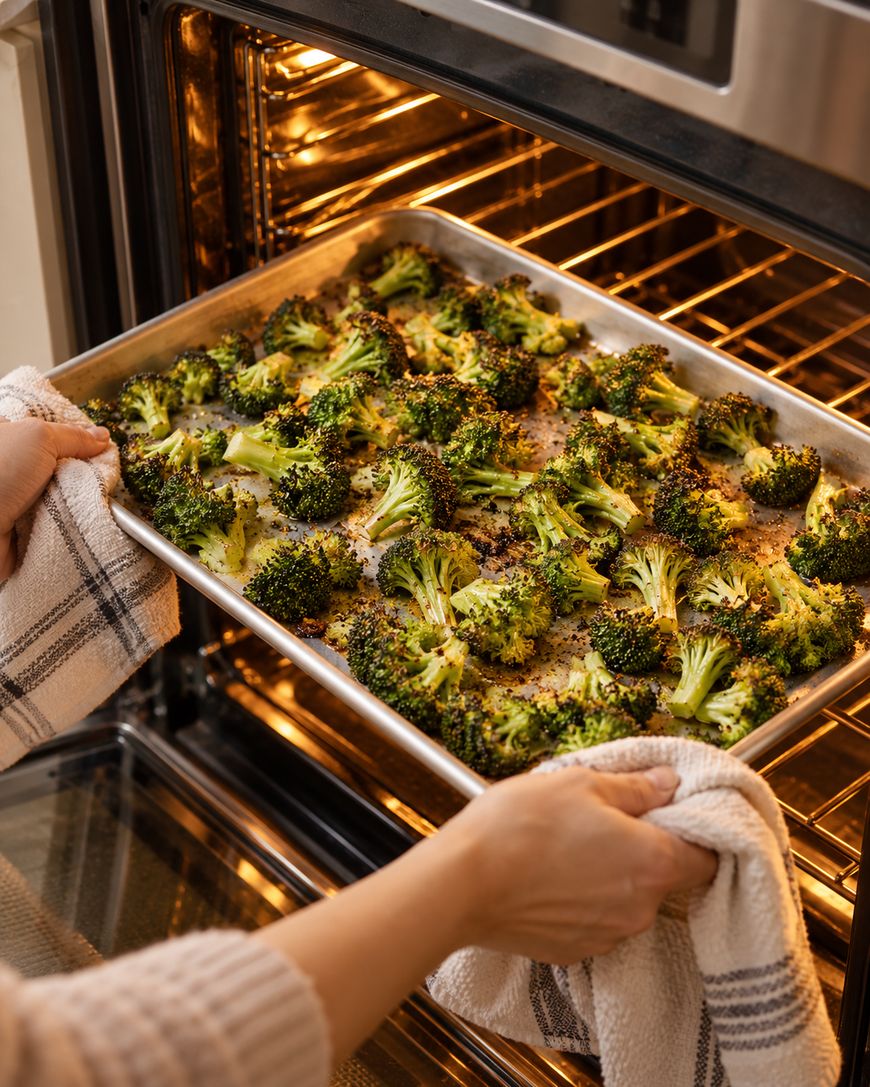
You start by heating your oven as hot as it will comfortably go, since high heat is what drives off moisture fast and gives you caramelized edges. A preheated sheet pan placed in the oven while it heats gives you an instant sizzle the moment the broccoli hits it.
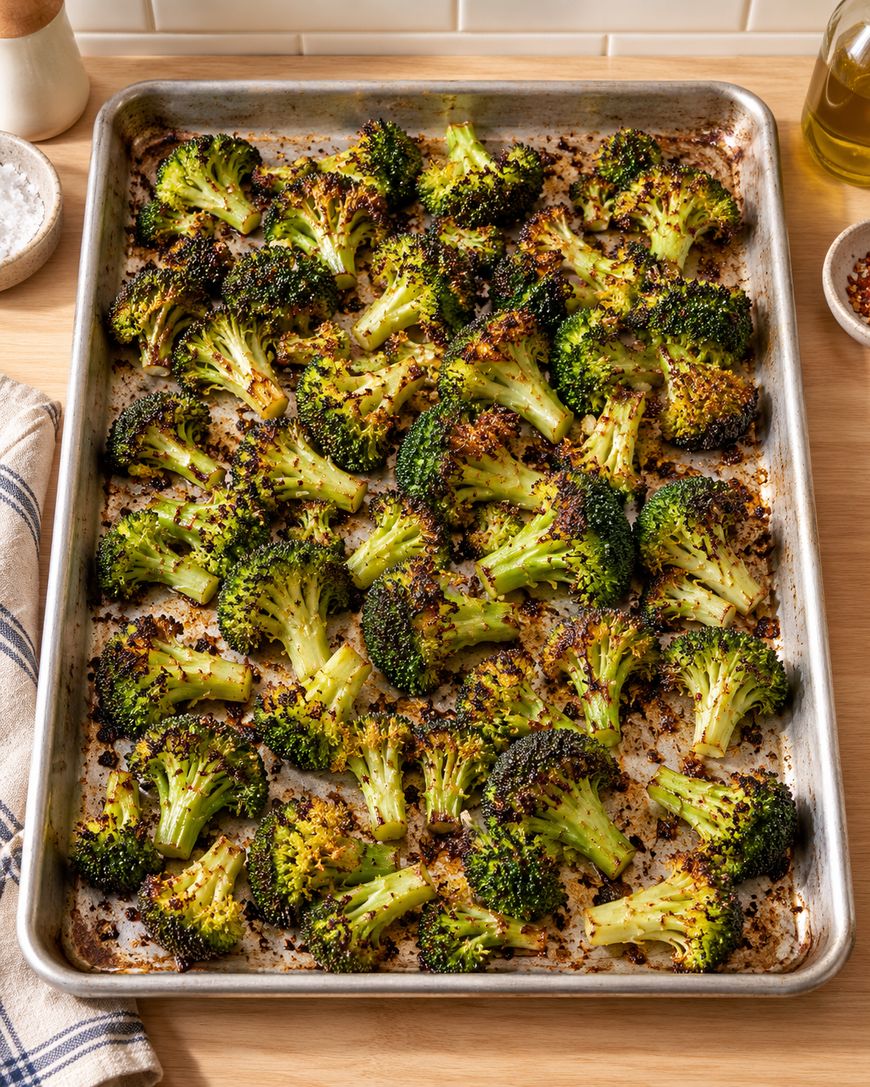
Spread the frozen florets in a single layer on that hot pan, leaving space between each piece. Crowding the pan traps steam the same way a lid does, so give the broccoli room to breathe.
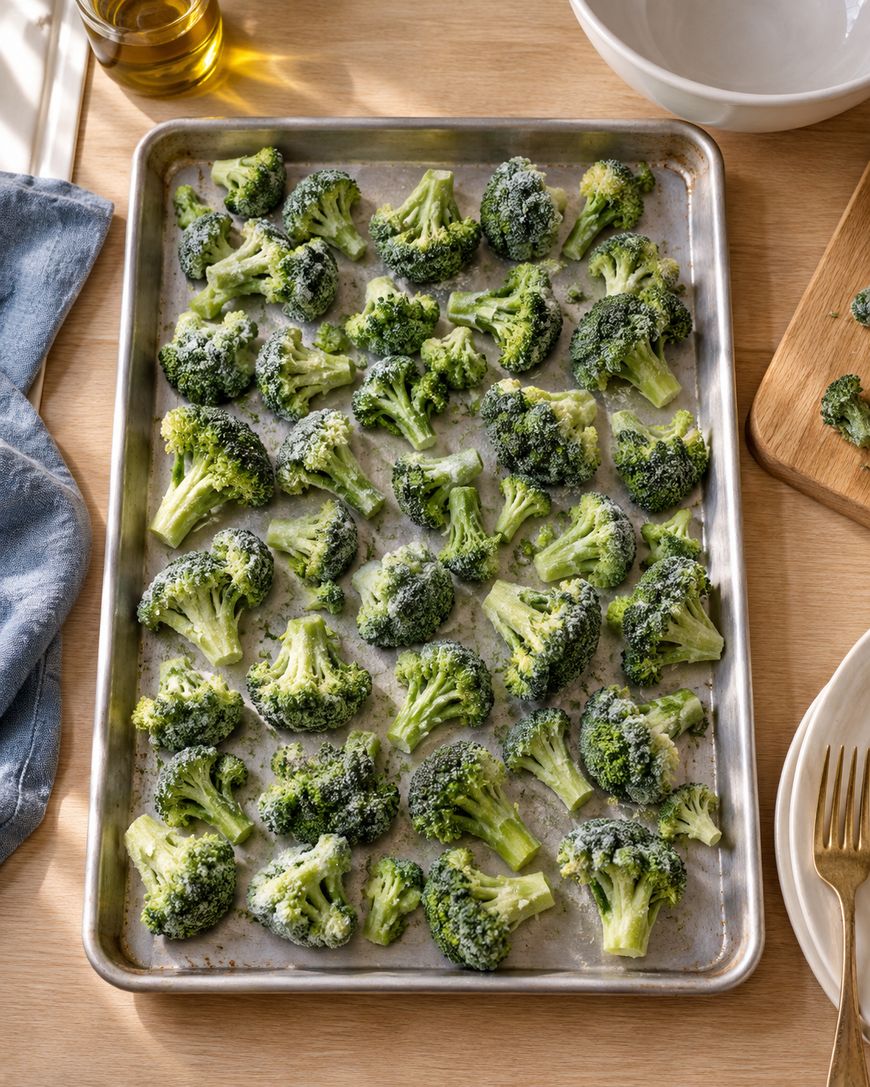
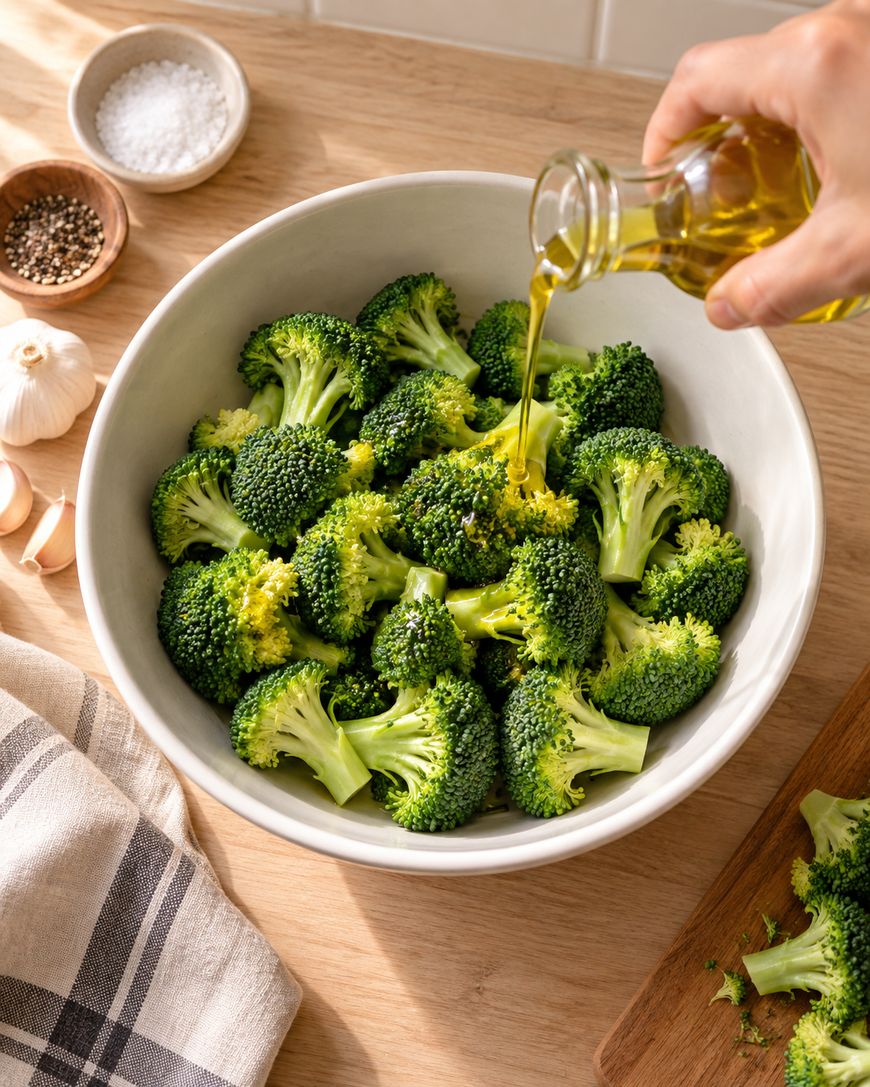
Drizzle the olive oil generously and toss right on the pan so every piece gets coated. Season with salt, pepper, and garlic powder, then slide the pan back into the oven.
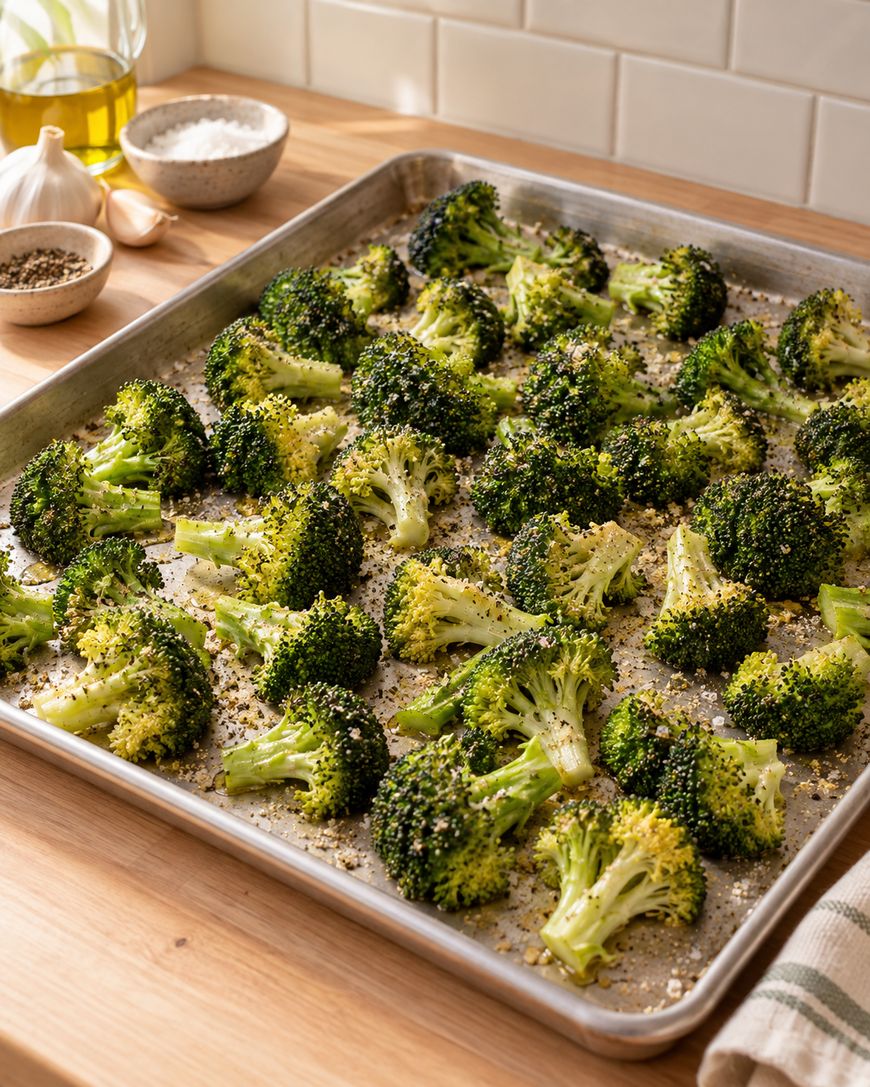
You want to resist the urge to stir constantly. Let the broccoli sit undisturbed for the first stretch of cooking so the bottoms develop real color before you flip anything.
Halfway through, flip the pieces so both sides get exposed to the hot pan. Finish with the parmesan sprinkled on during the last few minutes so it melts and crisps rather than burns.
The Trick That Stops Soggy Broccoli for Good
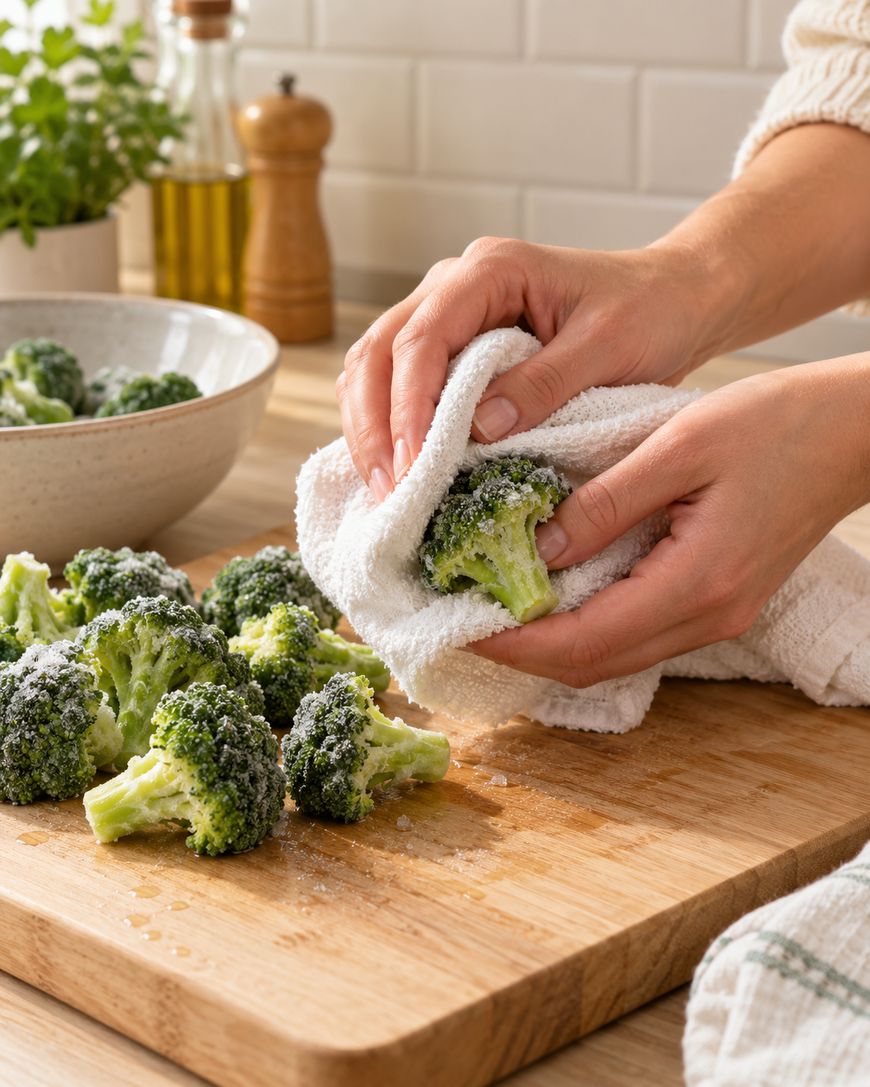
The trick people miss most often is patting the broccoli dry before it goes anywhere near oil or seasoning. Even a quick pass with a clean kitchen towel pulls off the surface frost and ice crystals that would otherwise melt into standing water.
A hot pan matters just as much as a dry vegetable. Preheating your sheet pan in the oven means the broccoli starts sizzling and roasting the second it lands, rather than sitting in a slowly warming pan while it releases liquid.
Spacing is the third piece of the puzzle, and it is the one most people skip because it feels wasteful to use two pans instead of one. Two half-full pans roast beautifully, while one crowded pan steams no matter how hot your oven is.
Seasoning Variations to Try
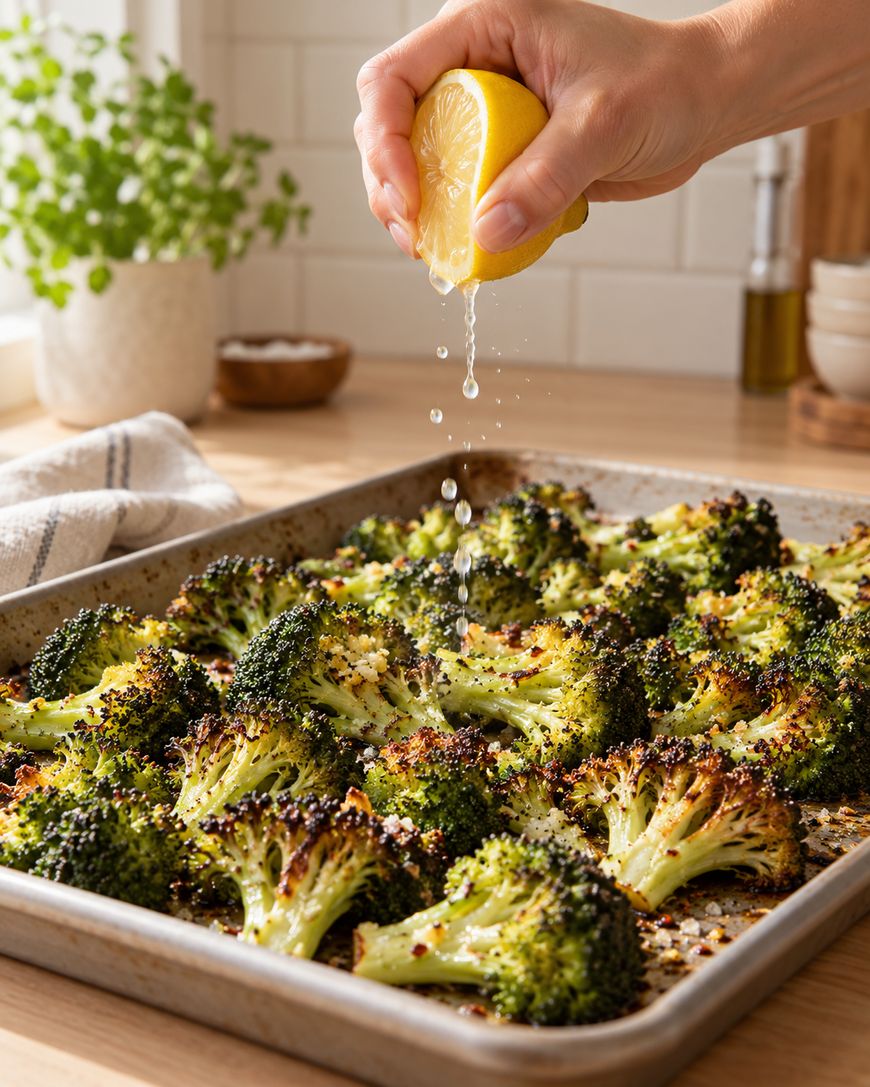
Roasted frozen broccoli takes well to almost any seasoning direction you want to take it. A squeeze of lemon juice and a handful of toasted almonds turns this into a bright, crunchy side dish for grilled chicken or fish.
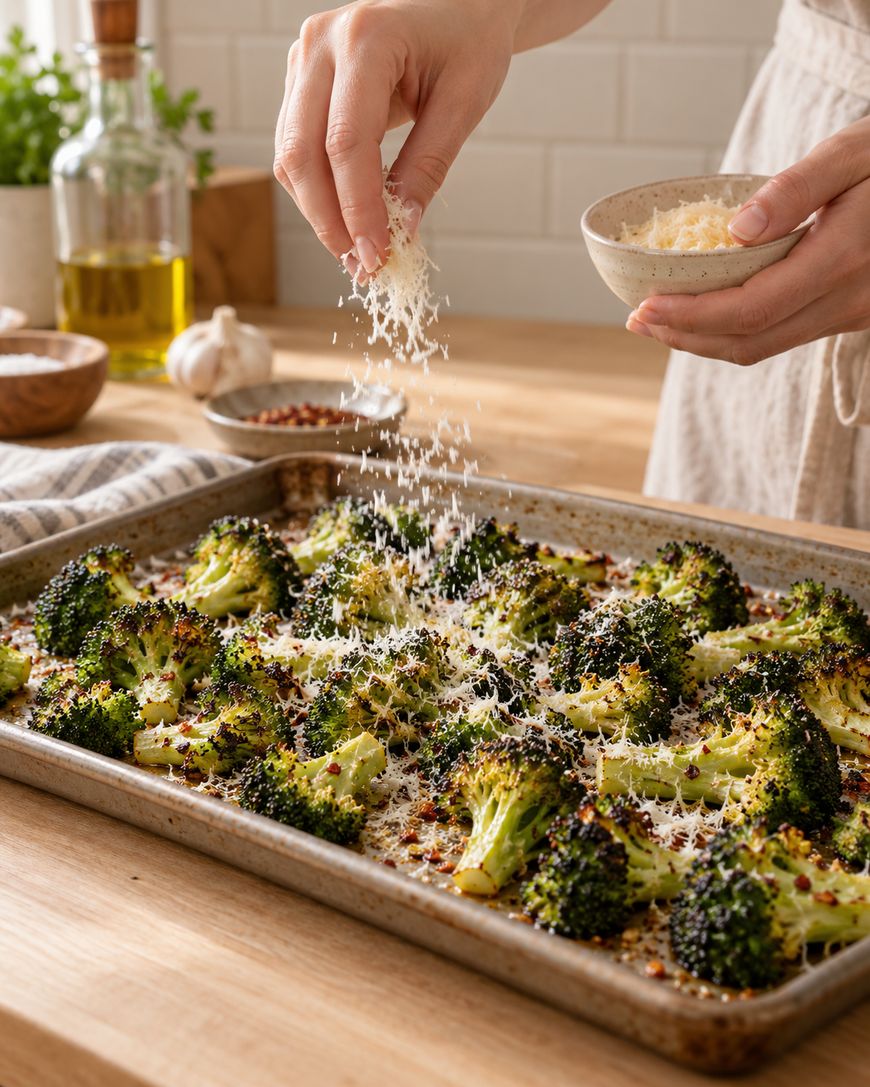
Red pepper flakes and a drizzle of honey give you a sweet and spicy version that pairs well with roasted pork or a sheet pan dinner. Smoked paprika and cumin lean into a warmer, more savory direction that works alongside tacos or grain bowls.
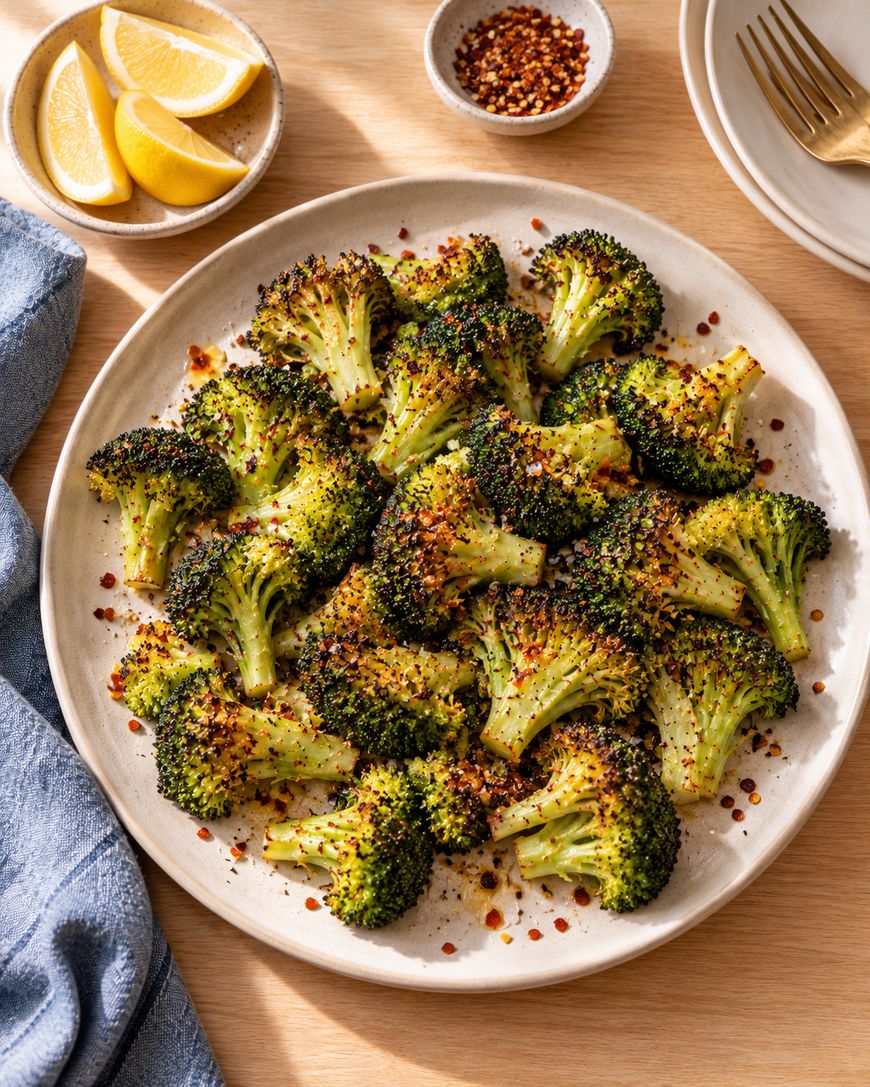
You can also toss the finished broccoli with soy sauce, sesame oil, and a sprinkle of sesame seeds for an easy stir fry style side. Whatever direction you pick, keep the core method the same and just swap what goes on at the end.
What to Serve with Roasted Frozen Broccoli
This broccoli works as an easy weeknight side next to roasted chicken, baked salmon, or a simple steak. Its crispy edges and savory flavor also make it a great topping for grain bowls, baked potatoes, or a bed of pasta.
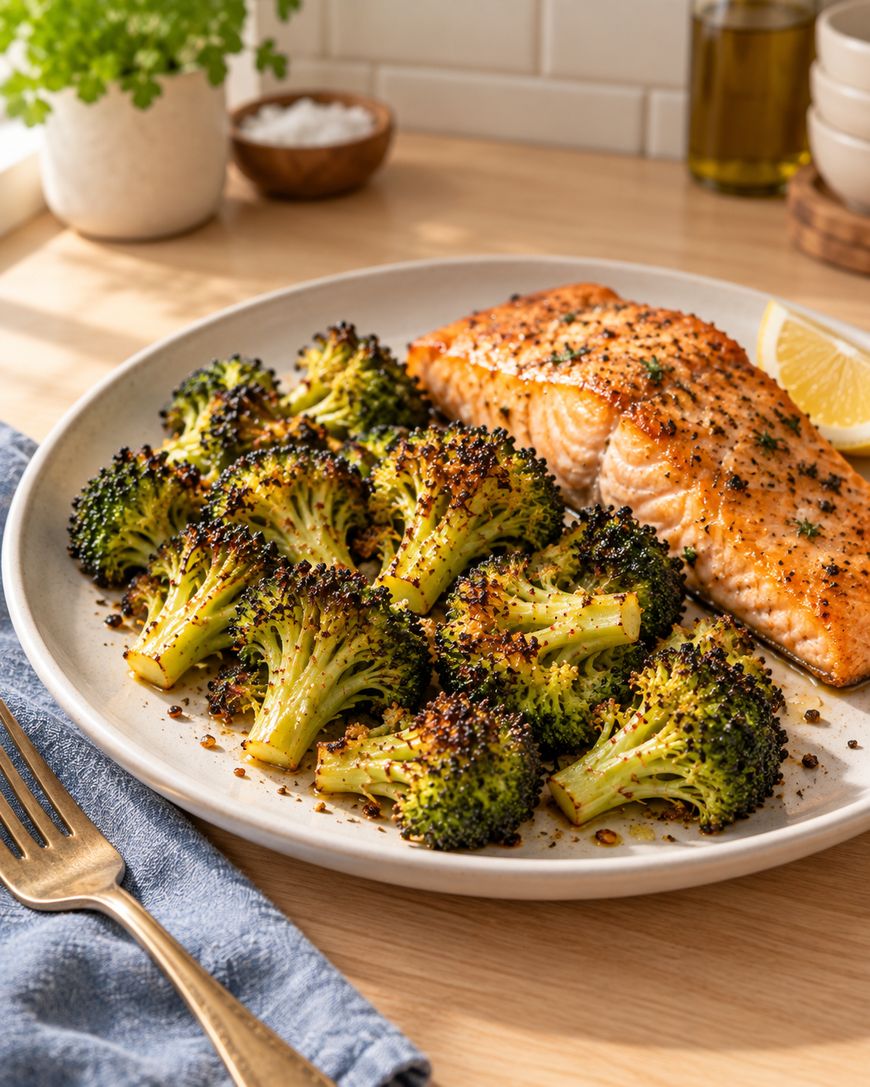
You can toss cooled leftovers into a salad for texture, or chop it up and fold it into a quiche or frittata the next morning. Because it holds its texture well, it does not turn mushy the way some cooked vegetables do when added to other dishes later.
For a heartier meal, pair it with roasted fingerling potatoes and a protein of your choice for a full sheet pan dinner. The recipe card below has everything measured out so you can build your own combination with confidence.
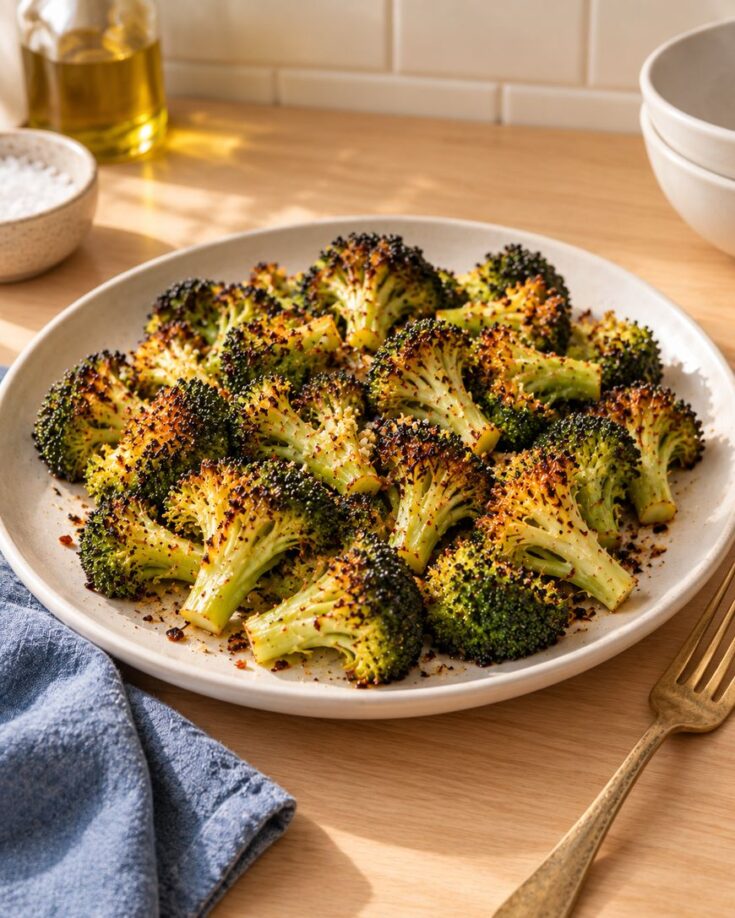
Roasted Frozen Broccoli
Crispy, caramelized roasted frozen broccoli made right from the freezer, no thawing required.
Ingredients
- 24 oz frozen broccoli florets
- 3 tablespoons olive oil
- 1 teaspoon kosher salt
- 1/2 teaspoon black pepper
- 1/2 teaspoon garlic powder
- 1/4 cup grated parmesan cheese
- 1 tablespoon fresh lemon juice
Instructions
- Preheat the oven to 450 degrees F and place a large sheet pan inside to heat up.
- Pat the frozen broccoli florets dry with a clean kitchen towel to remove excess ice and surface moisture.
- Carefully remove the hot sheet pan from the oven and spread the broccoli florets across it in a single layer, leaving space between pieces.
- Drizzle the olive oil over the broccoli and toss directly on the pan to coat evenly.
- Sprinkle with kosher salt, black pepper, and garlic powder.
- Roast for 15 minutes without stirring, then flip the florets and roast for another 8 to 10 minutes.
- Sprinkle the parmesan cheese over the broccoli during the last 3 minutes of roasting.
- Remove from the oven, squeeze fresh lemon juice over the top, and serve immediately.
Notes
Use two sheet pans if needed to avoid crowding, since overcrowding causes steaming instead of roasting. Leftovers keep in an airtight container in the fridge for up to 4 days.
Nutrition Information:
Yield:
4Serving Size:
1 cupAmount Per Serving: Calories: 140Total Fat: 11gSaturated Fat: 2gSodium: 480mgCarbohydrates: 8gFiber: 3gSugar: 2gProtein: 4g
Frequently Asked Questions About Roasted Frozen Broccoli
Do you need to thaw frozen broccoli before roasting it?
No, you should not thaw it first. Going straight from the freezer to a hot oven actually helps the broccoli roast instead of steam, since less time passes for ice to melt into standing water on the pan.
Why is my roasted frozen broccoli soggy?
Soggy broccoli almost always comes down to too much moisture and too little space on the pan. Pat the florets dry before seasoning, preheat your pan, and give the pieces room so they roast instead of steam.
Can you use frozen broccoli florets instead of a whole frozen head?
Yes, pre-cut frozen florets work best for this recipe since they cook evenly and give you plenty of surface area for browning. A whole frozen head would need to be broken down first, which adds an extra step you don’t need.
How long does roasted frozen broccoli last in the fridge?
Stored in an airtight container in the fridge, roasted frozen broccoli keeps well for up to 4 days. Reheat it in a hot oven or air fryer rather than the microwave to bring back some of the crispiness.
Can you freeze roasted broccoli after cooking it?
You can, though the texture will be softer once thawed and reheated since the roasting process already changed its structure once. If you plan to freeze it, reheat directly from frozen in a hot oven rather than thawing first.
What can you add to roasted frozen broccoli for more flavor?
Parmesan cheese, lemon juice, garlic, and red pepper flakes are the easiest ways to add flavor without extra effort. A drizzle of good olive oil right when it comes out of the oven also makes a noticeable difference.
Why This Recipe Works
This recipe works because it treats frozen broccoli’s biggest obstacle, excess moisture, as the thing to solve first rather than something to work around. Patting the florets dry and using a preheated pan both address that moisture directly instead of just cooking around it.
High heat does double duty here, since it drives off remaining surface moisture quickly while also giving the broccoli’s edges time to caramelize. That caramelization is where the flavor actually comes from, not from the seasoning alone.
Giving the broccoli space on the pan means each piece is surrounded by dry, hot air instead of by other wet vegetables. That airflow is the difference between a tray of crispy florets and a tray of dull green mush, and it costs nothing beyond using a second sheet pan when needed.
Wrapping Up Roasted Frozen Broccoli
Roasted frozen broccoli turns out crispy every time once you pat it dry, preheat the pan, and give it room to roast. Keep the recipe card above handy, and this will become the side dish you reach for on busy weeknights.
Roasted Garlic Potatoes That Turn Golden and Crispy Every Time