Last updated: September 29, 2026
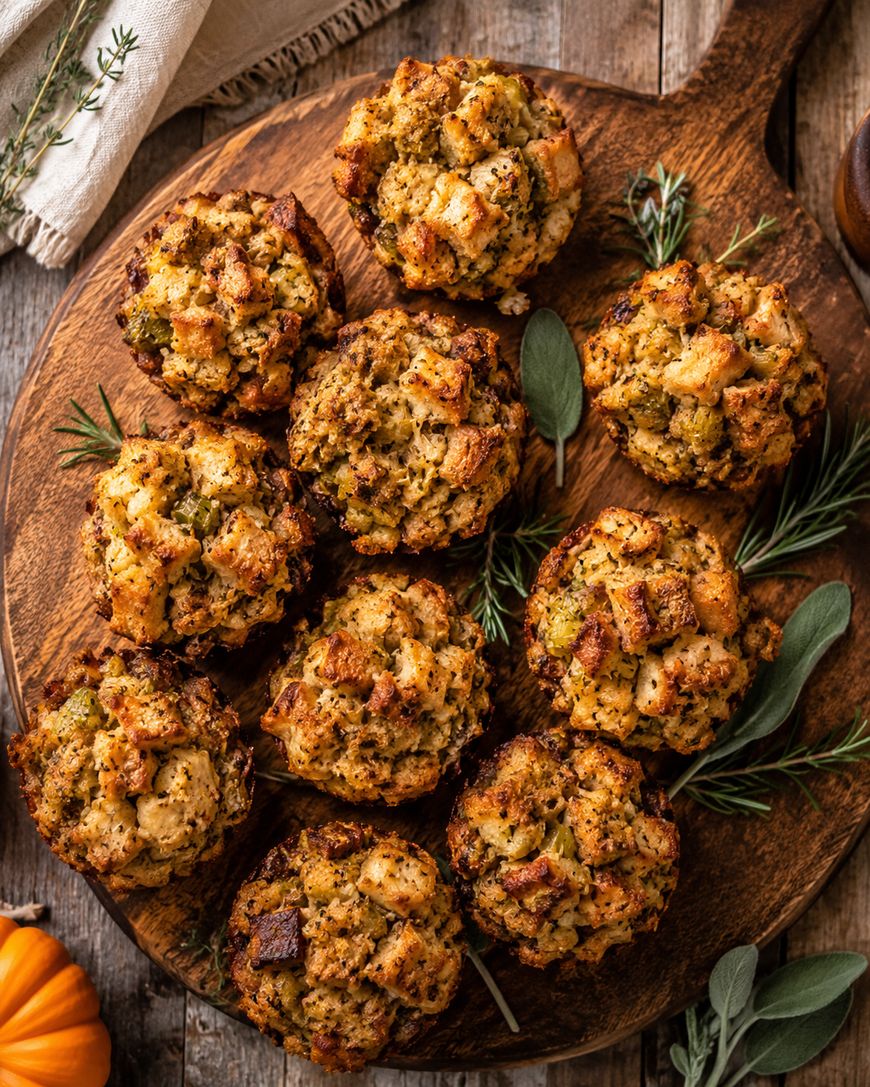
Stuffing muffins take everything you love about a holiday stuffing and bake it into perfectly portioned, crispy-edged cups, and the recipe card below has the exact quantities and timing you need.
You will have a golden, buttery top on every single one, which is honestly the best part of a big pan of stuffing anyway.
Why You Will Love This Stuffing Muffins Recipe
This recipe solves the biggest stuffing complaint you probably have, which is that a casserole dish only gives you a few coveted crispy corner pieces.
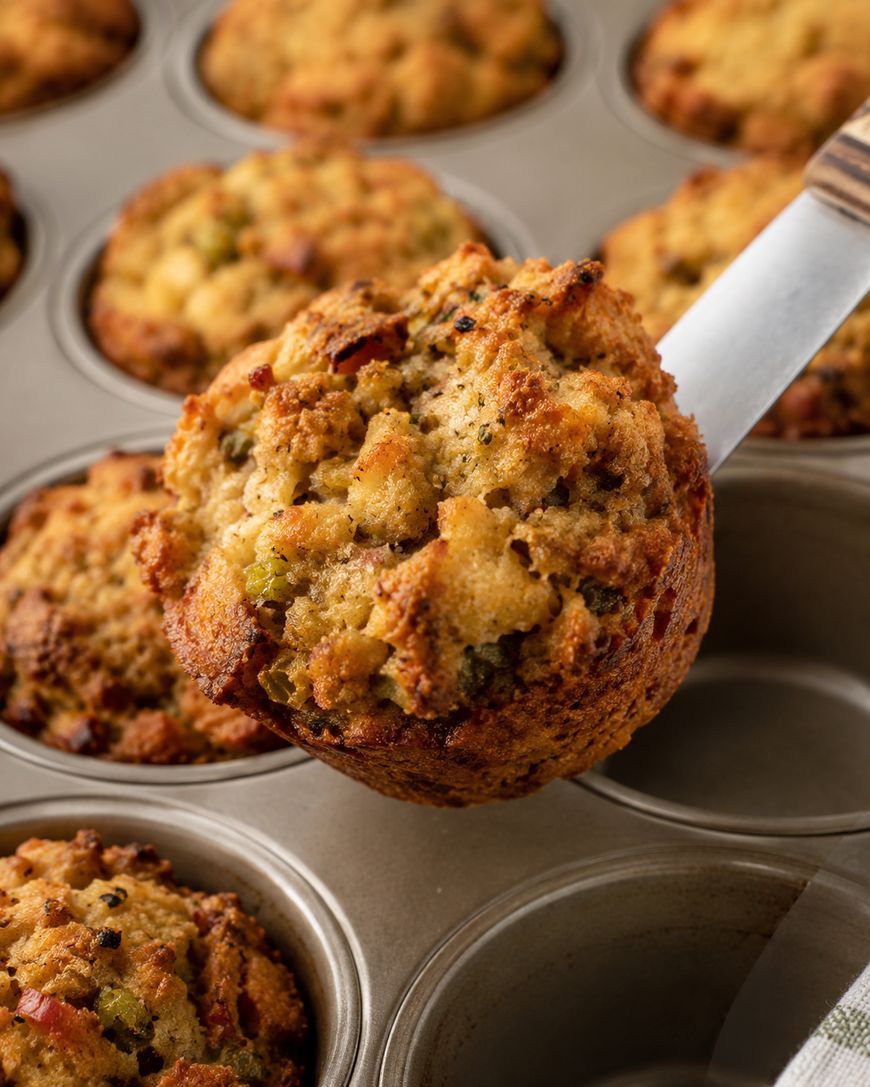
Baking the mixture in a standard muffin tin means every serving gets that crunchy, caramelized edge along with a soft, savory center.
A Faster Path to the Table
You also get a shorter bake time than a full casserole, since the muffin cups are shallow and heat through quickly.
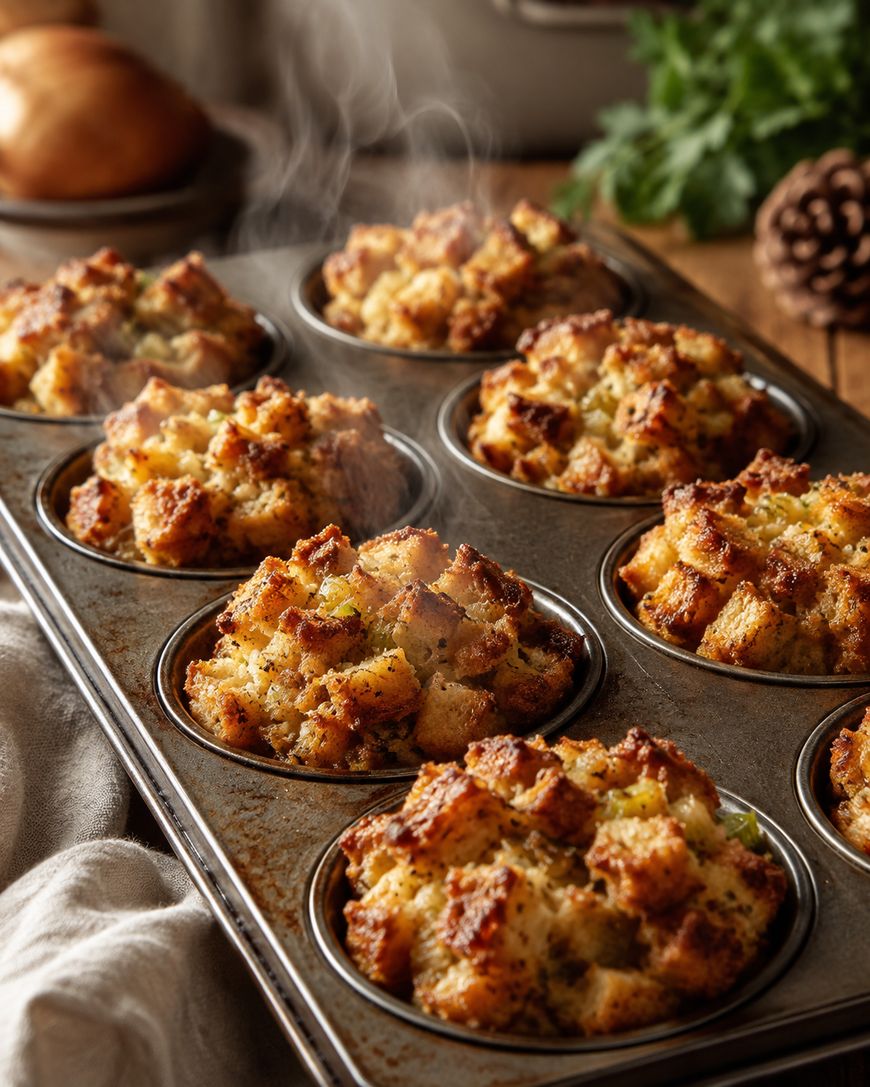
That matters on a Thanksgiving morning when your oven is already juggling a turkey, a sweet potato casserole, and dinner rolls.
Portion Control Without the Fuss
Individual portions mean no one has to fight over the crispy bits, and leftovers reheat far better than a soggy scoop from a casserole dish.
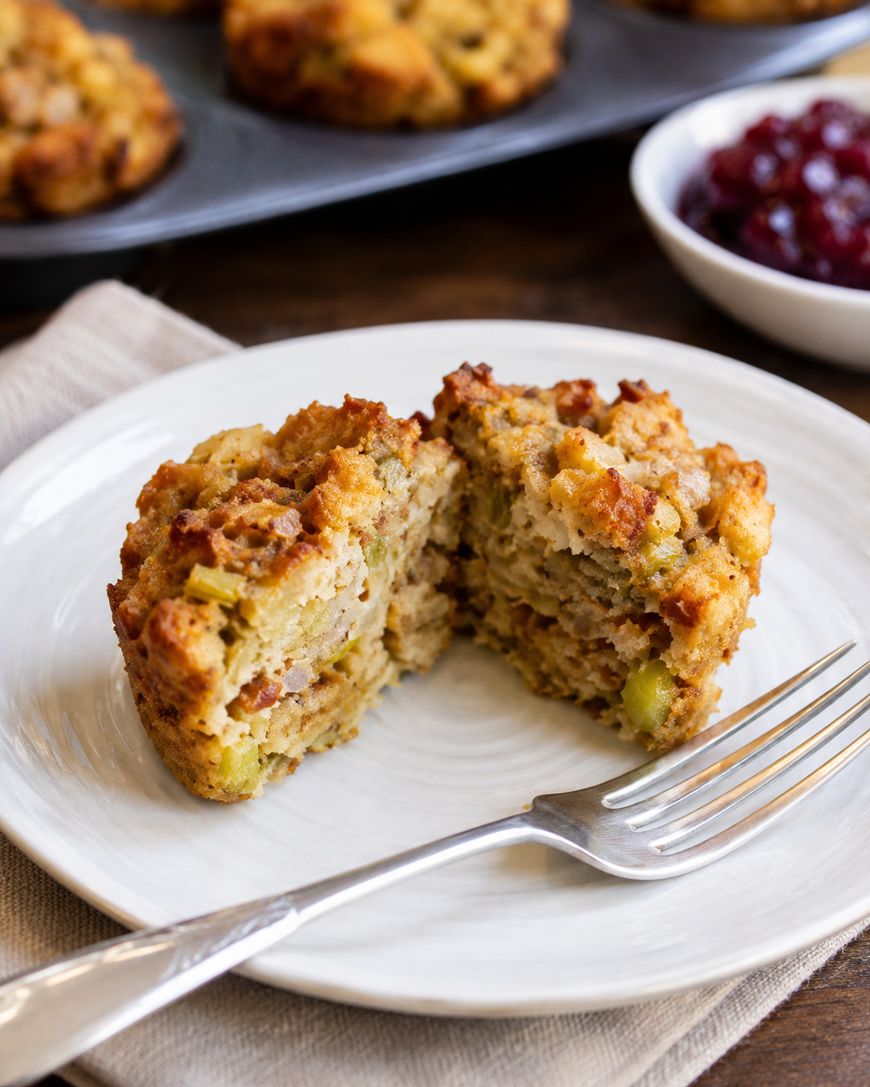
You can also freeze the extras in a single layer, which is not something you can easily do with a whole pan of stuffing.
Ingredients for Stuffing Muffins
The full ingredient list with exact measurements lives in the recipe card below, but here is what each component contributes to the finished bite.
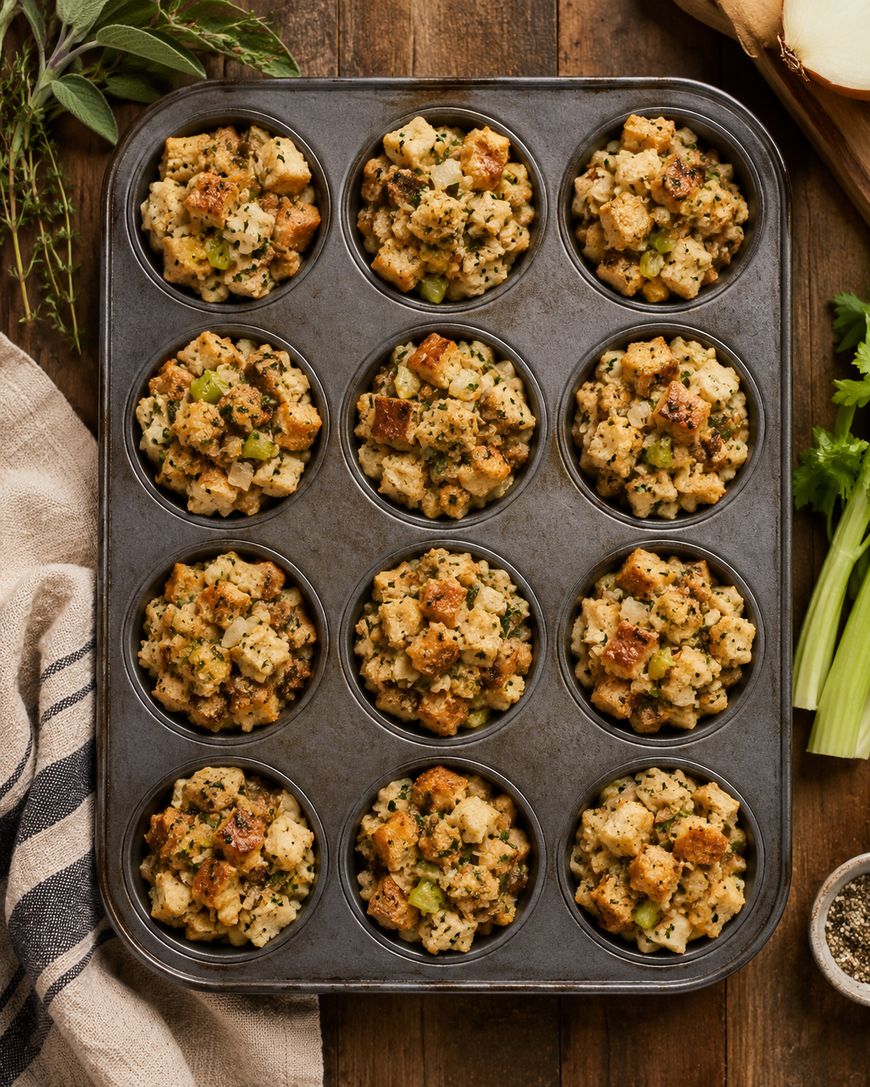
The Bread Base
Day-old cubed bread, such as a sturdy French or sourdough loaf, is what gives stuffing muffins their structure.
Stale bread absorbs the broth without turning to mush, so if your loaf is fresh, cube it and leave it out on the counter overnight, or dry it in a low oven for about ten minutes.
The Aromatics
Yellow onion and celery are the backbone of any good stuffing, and cooking them slowly in butter until they turn soft and translucent builds the savory flavor that carries through every bite.
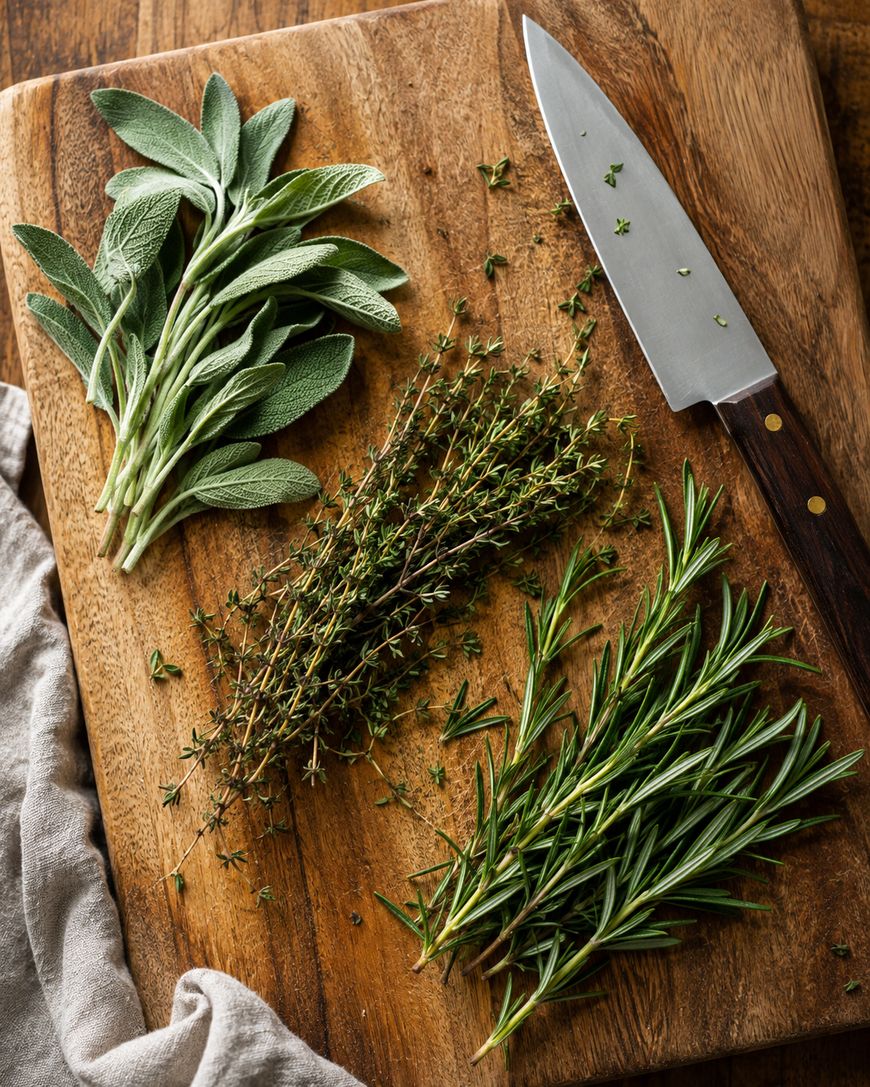
Fresh sage, thyme, and rosemary bring the classic Thanksgiving aroma, and you can swap in poultry seasoning if that is what your family has always used.
The Binder
Eggs and chicken or vegetable broth hold the mixture together so it bakes up like a muffin rather than falling apart, and this is the step that trips people up most often.
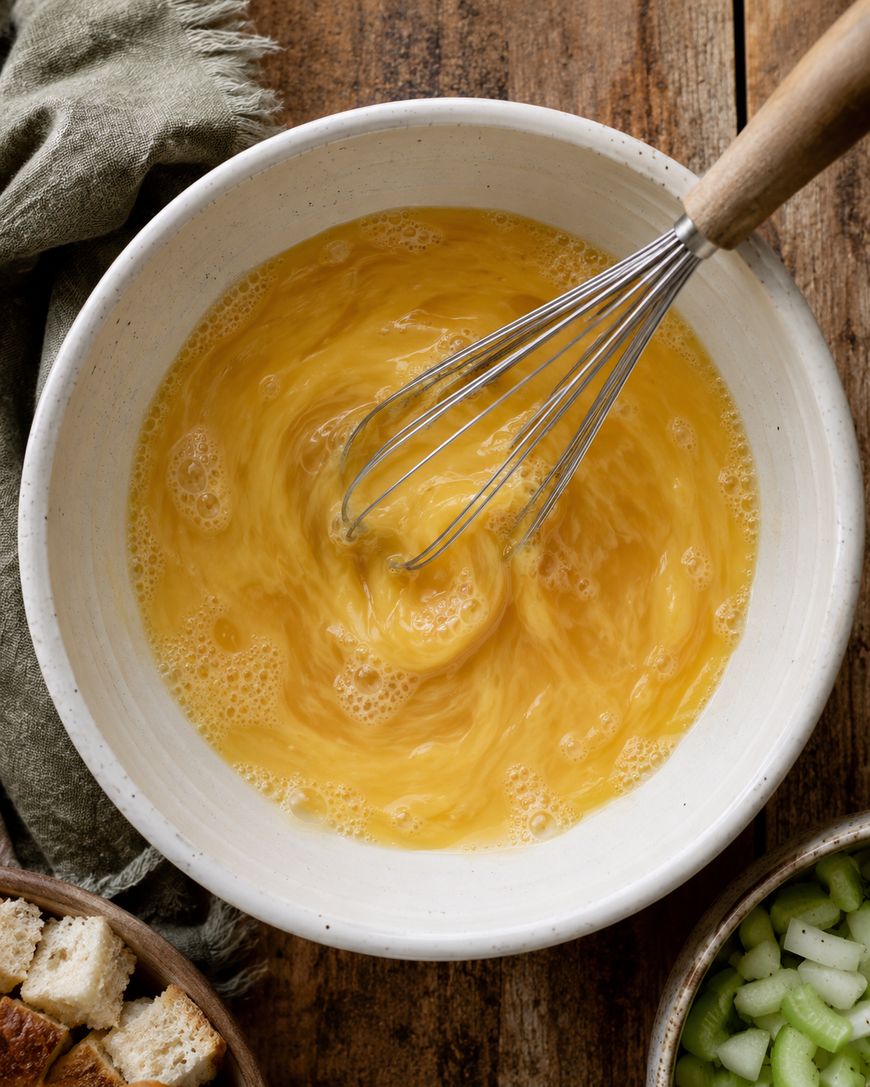
Too little liquid leaves you with dry, crumbly muffins, while too much makes them dense, so measure carefully and let the bread cubes soak for a few minutes before you portion the batter.
How to Make Stuffing Muffins
Follow the numbered steps in the recipe card for exact timing, but here is the reasoning behind each stage so you understand what is happening as you cook.
Toast the Bread Cubes
Spread the cubed bread on a sheet pan and toast it in the oven until it feels dry and slightly crisp at the edges.
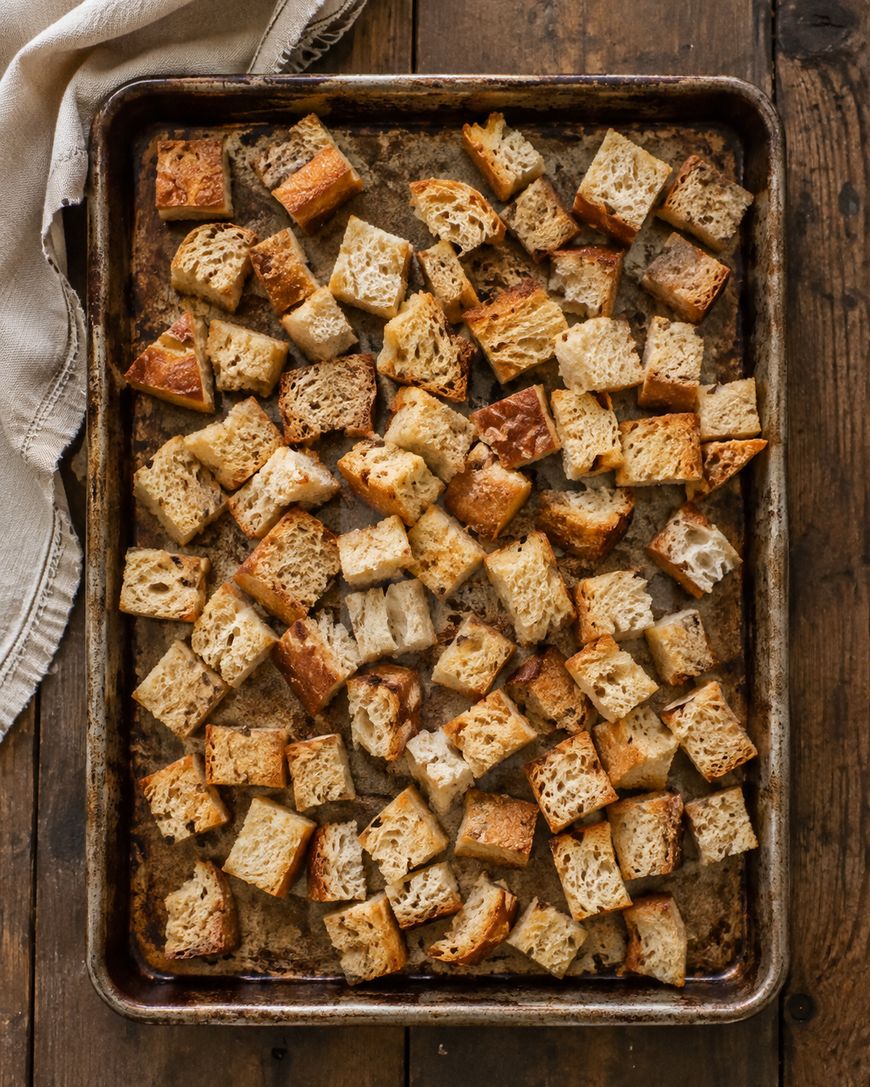
This step matters even if your bread is already a day old, because a dry crumb is what lets the muffins soak up the broth mixture evenly instead of turning gummy in the center.
Cook the Vegetables
Melt the butter in a large skillet over medium heat, then add the diced onion and celery and cook until they soften, about eight to ten minutes.
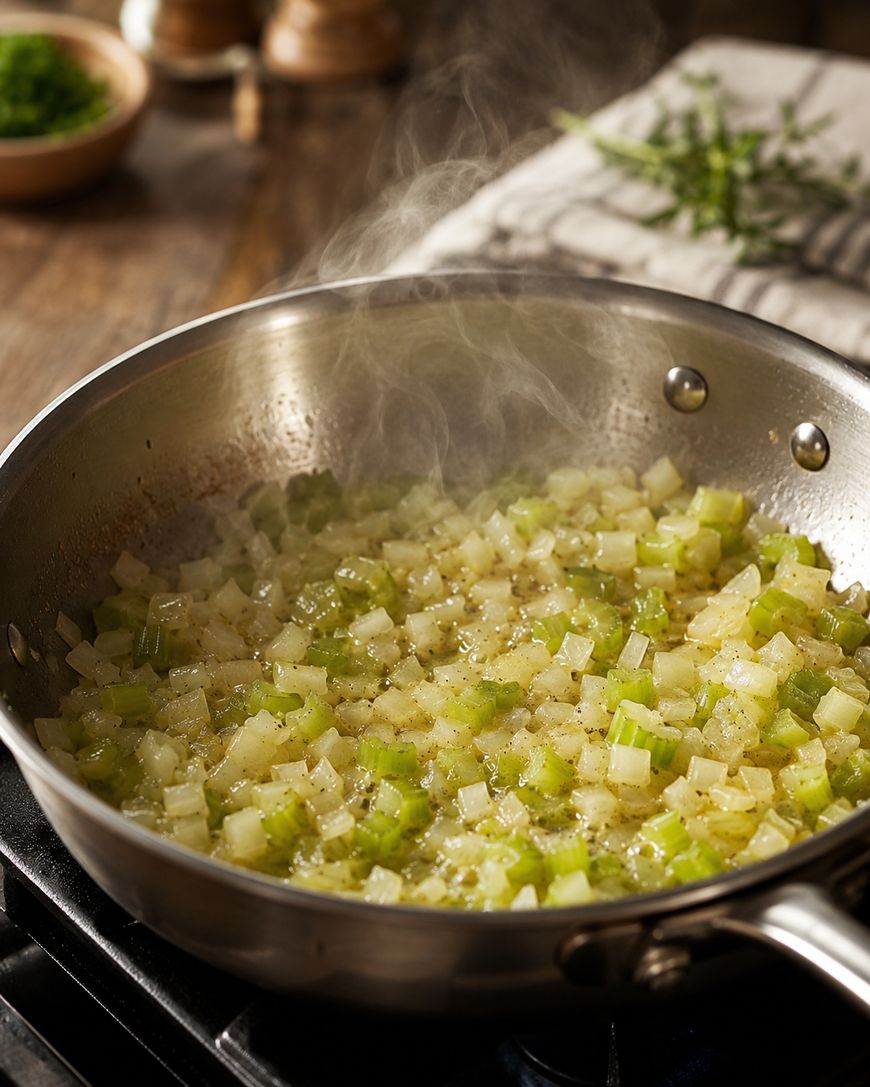
Stir in the garlic and fresh herbs during the last minute so they bloom in the warm butter without scorching.
Combine and Rest
Toss the toasted bread cubes with the cooked vegetables in a large bowl, then whisk the eggs and broth together separately before pouring the mixture over the bread.
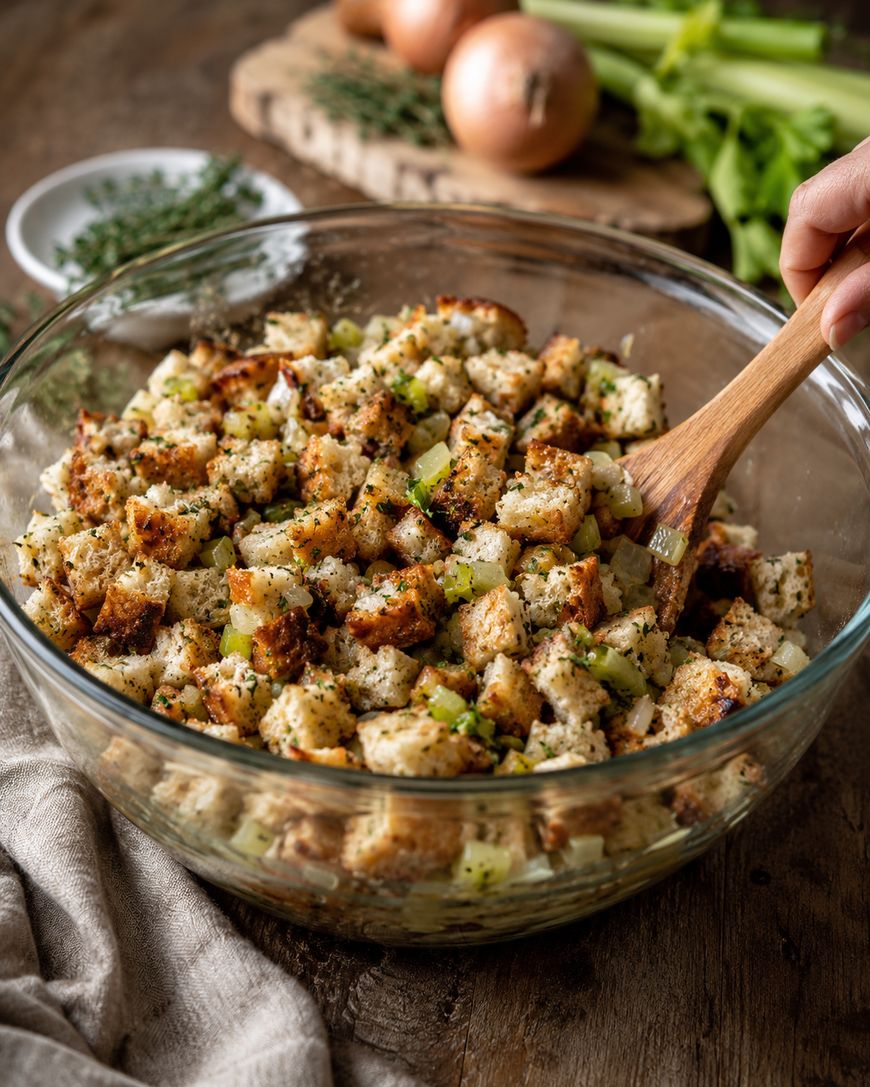
Let everything rest for five to ten minutes so the bread cubes fully absorb the liquid, which is the secret to a stuffing muffin that holds together once it comes out of the tin.
Fill and Bake
Generously grease a standard 12-cup muffin tin, then pack the mixture into each cup, mounding it slightly above the rim since it will settle as it bakes.
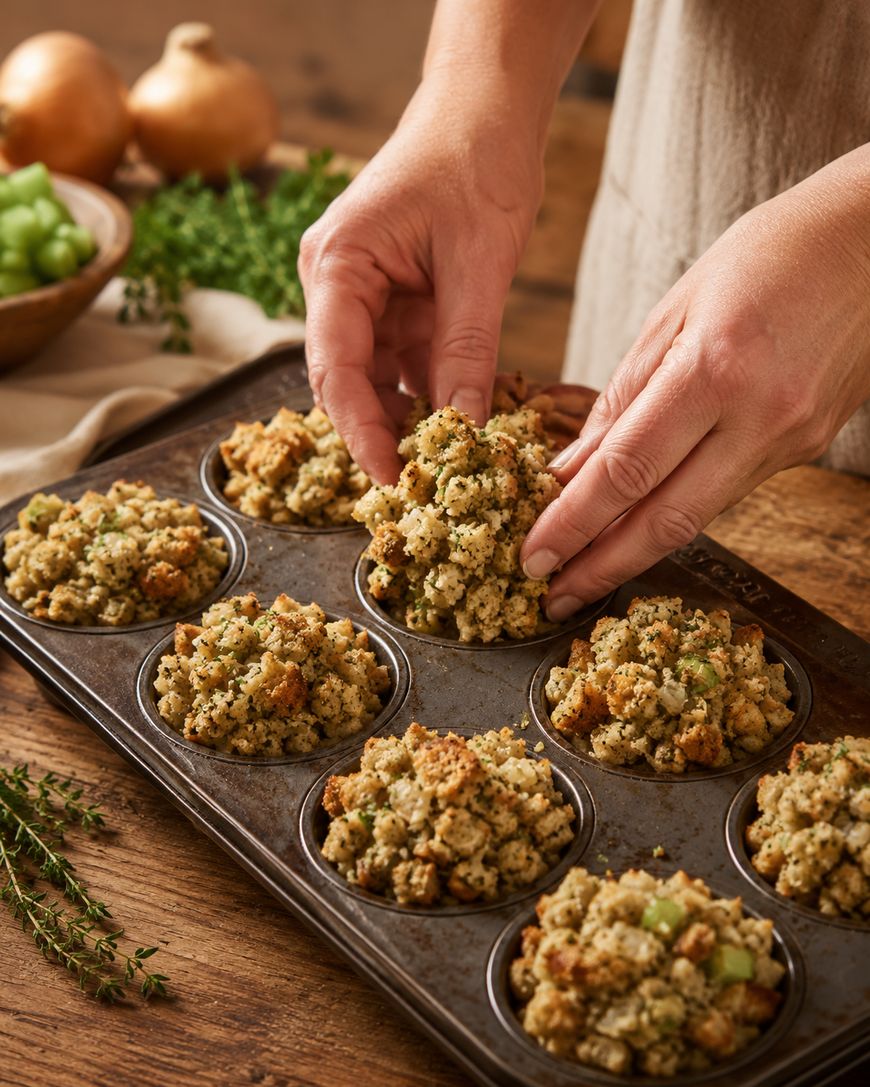
Bake at 375°F until the tops are deep golden brown and the centers reach 165°F on an instant-read thermometer, then let the muffins cool in the tin for five minutes before running a thin knife around the edges to release them.
Variations on Classic Stuffing Muffins
Stuffing muffins are a forgiving base, so you can adapt them to match whatever your family expects on the holiday table.
Add-Ins for More Flavor
Crumbled cooked breakfast sausage or diced apple both work beautifully folded into the mixture before baking, and dried cranberries add a pop of tartness that plays well against the savory herbs.
Toasted pecans or walnuts give a bit of crunch if your family likes texture beyond the crispy muffin top.
Bread Swaps
Cornbread cubes make a Southern-style version with a slightly sweeter crumb, and a mix of half white bread and half cornbread splits the difference nicely.
Sourdough adds a subtle tang that pairs especially well with sage and brown butter.
Dietary Adjustments
Swap the chicken broth for vegetable broth and skip any sausage to make these fully vegetarian, and the muffins hold together just as well.
For a dairy-free version, substitute a plant-based butter for the butter used to cook the vegetables.
Storage and Reheating
Store leftover stuffing muffins in an airtight container in the refrigerator for up to four days, since the moist filling does not hold up well left out at room temperature.
Reheat them in a 350°F oven for about ten minutes to bring back the crispy top, since a microwave will leave them soft all the way through.
Freezing Instructions
Freeze the fully cooled muffins in a single layer on a sheet pan, then transfer them to a freezer bag once solid so they do not stick together, and they will keep well for up to two months.
Reheat directly from frozen in a 350°F oven for fifteen to twenty minutes, until warmed through and crisp on top again.
Serving Suggestions
Stuffing muffins sit naturally alongside roast turkey and cranberry sauce, and their individual size makes them easy to add to a Thanksgiving plate without a serving spoon.
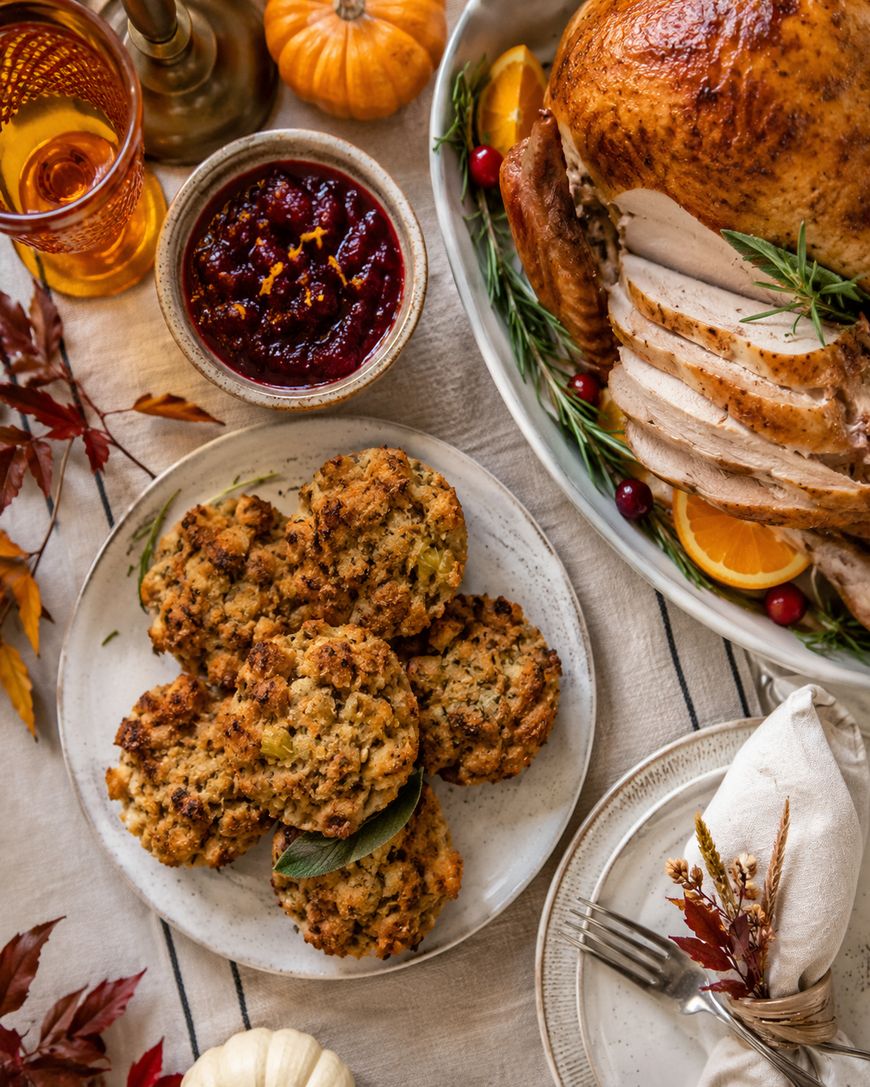
They also make a great addition to a holiday brunch spread, especially if you top one with a fried egg and a drizzle of gravy.
The Origin of Stuffing as a Holiday Staple
Stuffing has roots that go back centuries, with early versions in European cooking used to stretch meat dishes by filling the cavity of poultry with bread, herbs, and drippings.
In the United States, stuffing became a defined Thanksgiving fixture over the twentieth century, evolving alongside regional traditions like cornbread stuffing in the South and oyster stuffing in New England.
Baking stuffing in a muffin tin is a modern shortcut that keeps all of that flavor history intact while solving the very practical problem of feeding a crowd without a single casserole dish holding up the whole meal.
Ready to see the exact ingredients, quantities, and step-by-step instructions? Use the recipe card below to make your own batch of stuffing muffins.

Stuffing Muffins
Golden, crispy-topped stuffing muffins bring all the cozy flavor of classic Thanksgiving stuffing to a perfectly portioned, individual-serving bite.
Ingredients
- 8 cups day-old bread, cubed (about 1 pound, French or sourdough)
- 6 tablespoons unsalted butter, divided
- 1 cup yellow onion, diced
- 1 cup celery, diced
- 2 cloves garlic, minced
- 2 tablespoons fresh sage, chopped
- 1 tablespoon fresh thyme leaves
- 1 teaspoon fresh rosemary, chopped
- 2 large eggs
- 1 3/4 cups chicken or vegetable broth
- 1 teaspoon salt
- 1/2 teaspoon black pepper
Instructions
- Preheat the oven to 375°F and grease a standard 12-cup muffin tin.
- Spread the bread cubes on a sheet pan and toast in the oven for 8 to 10 minutes, until dry and lightly golden.
- Melt 4 tablespoons of butter in a large skillet over medium heat, then add the onion and celery and cook for 8 to 10 minutes, until softened.
- Add the garlic, sage, thyme, and rosemary to the skillet and cook for 1 more minute, then remove from heat.
- In a large bowl, combine the toasted bread cubes with the cooked vegetable mixture.
- In a separate bowl, whisk together the eggs, broth, salt, and pepper.
- Pour the egg mixture over the bread mixture and toss to combine, then let rest for 5 to 10 minutes to absorb the liquid.
- Melt the remaining 2 tablespoons of butter and drizzle it over the mixture, tossing once more.
- Pack the stuffing mixture firmly into the prepared muffin cups, mounding slightly above the rim.
- Bake for 22 to 25 minutes, until the tops are deep golden brown and the centers reach 165°F.
- Let the muffins cool in the tin for 5 minutes, then run a thin knife around the edges to release and serve warm.
Notes
For a vegetarian version, use vegetable broth in place of chicken broth. Store leftovers in an airtight container in the refrigerator for up to 4 days, or freeze for up to 2 months. Reheat in a 350°F oven for best texture.
Nutrition Information:
Yield:
12Serving Size:
1 muffinAmount Per Serving: Calories: 180Total Fat: 9gSaturated Fat: 5gSodium: 340mgCarbohydrates: 19gFiber: 1gSugar: 2gProtein: 5g
This site provides estimated nutritional information. This information comes from online calculators. Although we try to provide accurate nutritional information, these figures are only estimates.
Stuffing Muffins Questions and Answers
Can I make stuffing muffins ahead of time?
Yes, you can assemble the mixture up to a day in advance and refrigerate it in a covered bowl, then portion it into the muffin tin right before baking.
You can also bake the muffins fully, refrigerate them, and reheat them in the oven the day you serve them.
Why are my stuffing muffins falling apart?
This usually means the mixture needed more liquid or a longer resting time before baking, since dry bread cubes will not bind together on their own.
Make sure you let the bread soak in the egg and broth mixture for at least five minutes, and pack the muffin cups firmly rather than loosely.
Can I use store-bought stuffing mix instead of cubing my own bread?
Yes, a bagged stuffing mix works as a shortcut, though you may need slightly less broth since packaged cubes are often drier and more absorbent than fresh bread.
Taste the seasoning before baking, since most bagged mixes already include herbs and salt.
How do I know when the stuffing muffins are done?
The tops should be deep golden brown and firm to the touch, and an instant-read thermometer inserted into the center should read 165°F.
If the tops are browning too quickly before the centers are set, loosely tent the muffin tin with foil for the last few minutes of baking.
Can I make these in a mini muffin tin for appetizers?
Yes, a mini muffin tin works well for a bite-sized appetizer version, and you should reduce the bake time to around 15 to 18 minutes since the smaller portions cook faster.
Keep an eye on them after the fifteen-minute mark so the tops do not overbrown.
What can I substitute for eggs in this recipe?
A flax egg, made from one tablespoon of ground flaxseed mixed with three tablespoons of water, works as a binder if you need an egg-free version.
The texture will be slightly denser, but the muffins will still hold together well.
Final Thoughts on Stuffing Muffins
Stuffing muffins give you all the cozy, herby flavor of a classic Thanksgiving stuffing in a form that bakes faster, portions perfectly, and delivers a crispy top in every single bite.
Once you try this method, a plain casserole dish of stuffing may start to feel like it is missing something.