Last updated: September 11, 2026
You are in exactly the right place for a Vietnamese coffee recipe that actually tastes like the real thing. Scroll down to the recipe card whenever you are ready, or read through the full walkthrough below first.
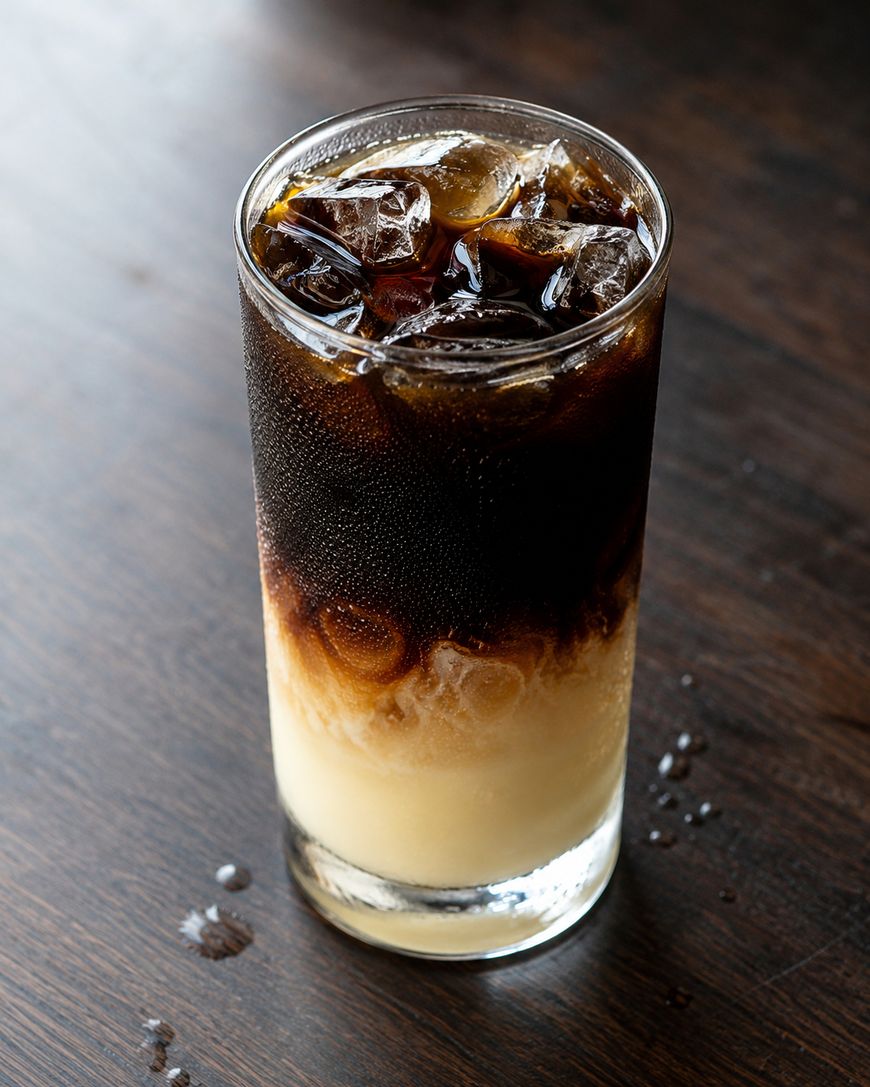
What Makes Vietnamese Coffee Different
Vietnamese coffee, known as ca phe sua da, is built on two things that set it apart from every other iced coffee style: Robusta beans and sweetened condensed milk. Robusta contains roughly twice the caffeine of Arabica and delivers a bold, slightly bitter, earthy flavour that stands up beautifully to ice and creamy milk. Without Robusta, the result is just iced coffee — with it, it is ca phe sua da.
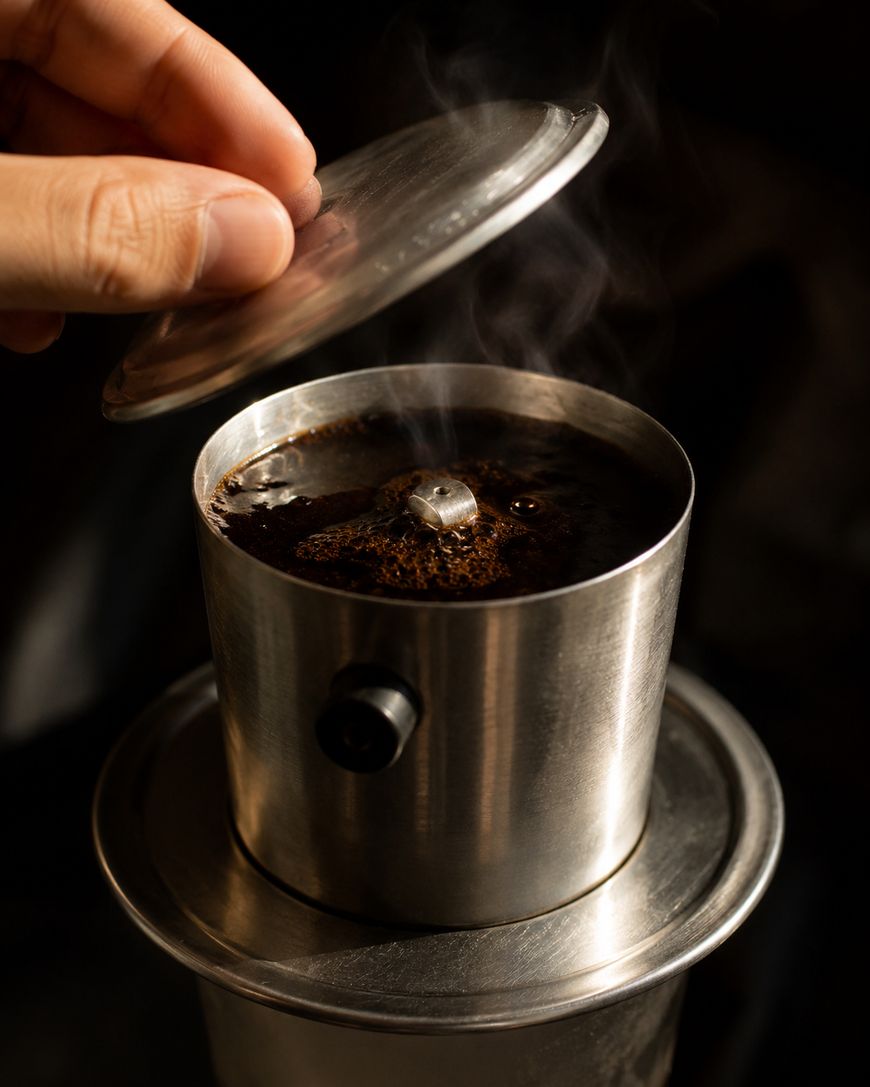
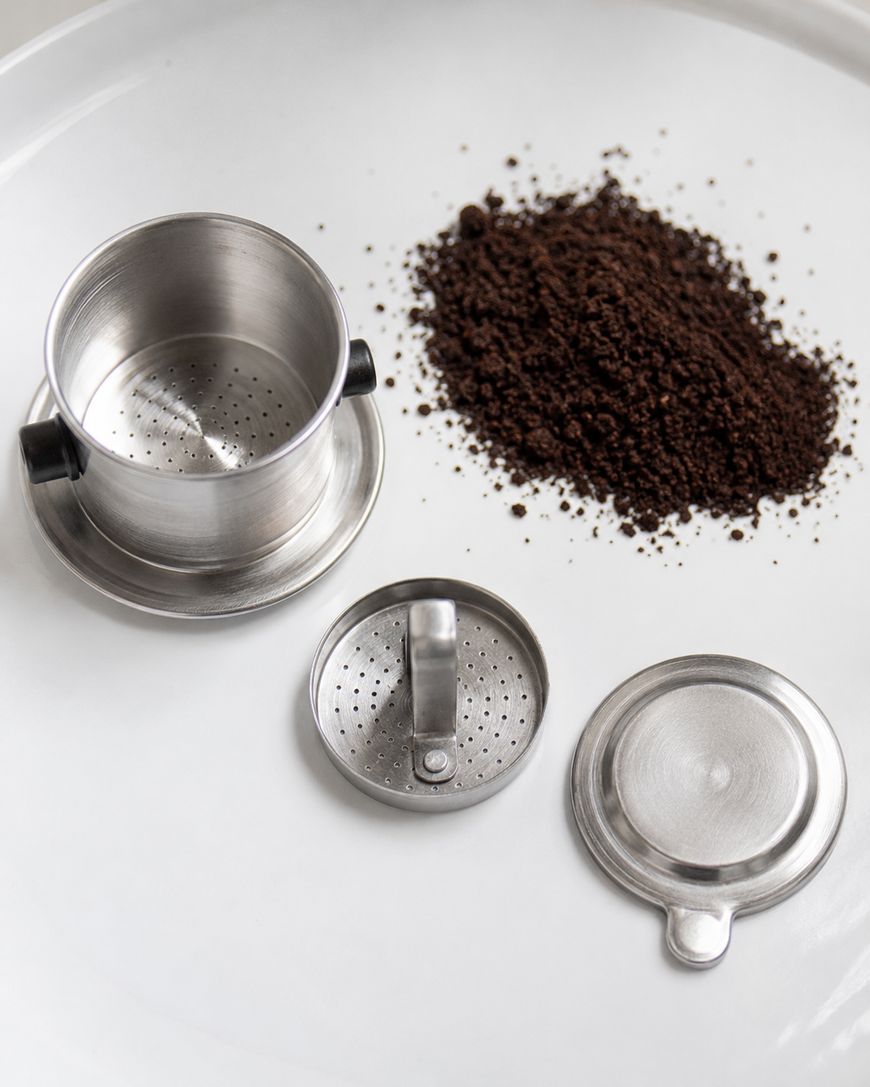
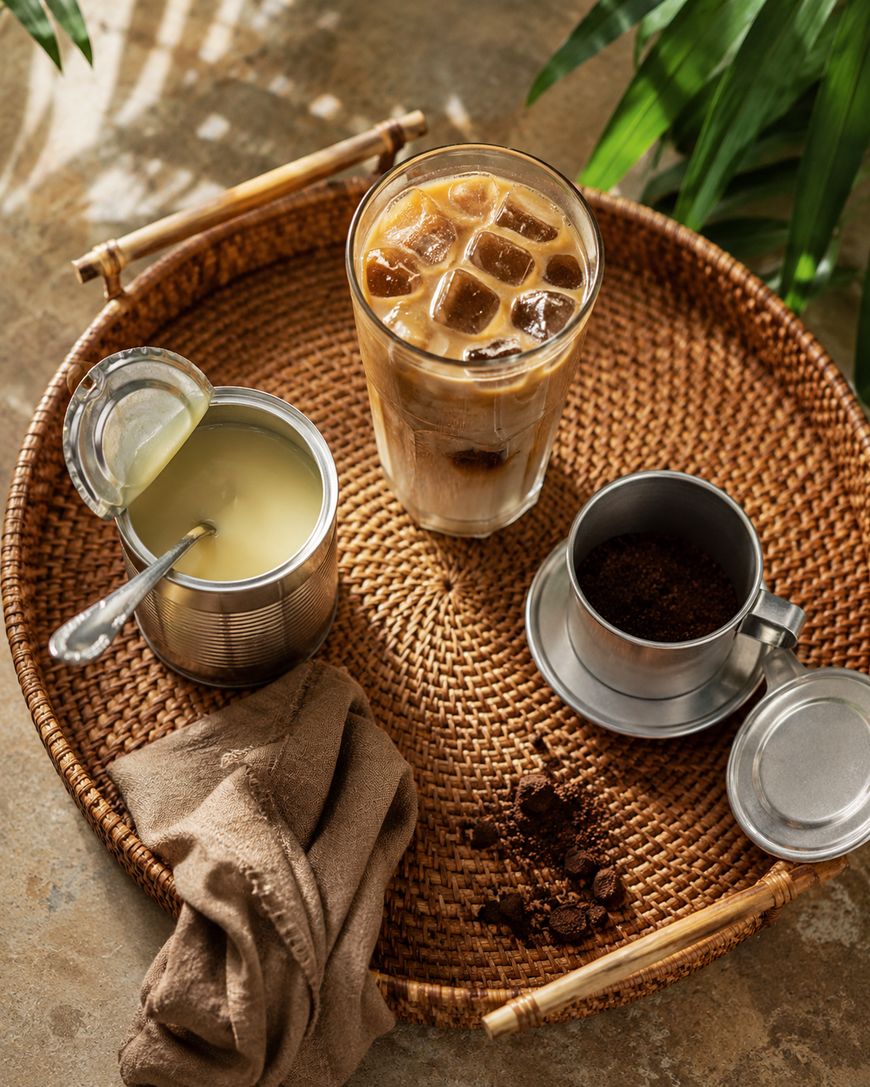
The brew method is equally important. A phin filter, a small stainless steel drip device that costs under ten dollars, sits on top of a glass and slowly releases espresso-strength coffee one drop at a time. That slow extraction pulls out every bit of intensity from the grounds, which is exactly what this recipe needs.
The Ingredients You Need
Robusta Coffee Grounds
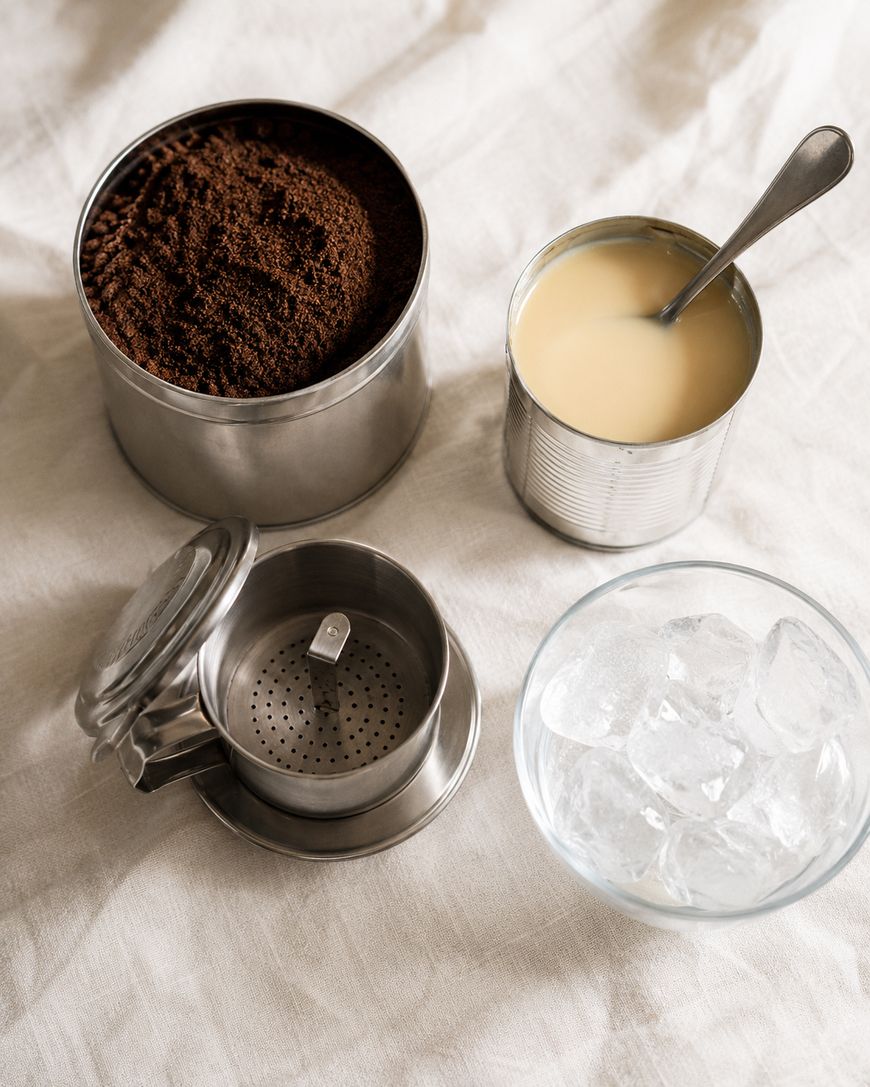
The single most important ingredient is ground Robusta coffee or a Robusta-forward blend. Trung Nguyen is the most widely available Vietnamese coffee brand outside of Vietnam and is sold in most Asian grocery stores as well as online. Cafe du Monde, a New Orleans blend of coffee and chicory, is a widely used substitute that delivers a similarly bold and slightly bitter cup. Use a coarse-to-medium grind — too fine and the phin will clog; too coarse and the brew will be weak.
Sweetened Condensed Milk
Sweetened condensed milk is the traditional sweetener and creamer for this recipe. Longevity Brand (Ong Tho) is the Vietnamese standard and is worth seeking out for its slightly richer flavour compared to Western brands. Spoon two tablespoons into the bottom of your glass before brewing — the hot coffee drips directly onto it and begins to dissolve and incorporate as it falls.
Ice
Use plenty of full-size ice cubes rather than crushed ice. Crushed ice melts too quickly and dilutes the brew before you can stir and enjoy it. A tall 16-ounce glass filled to the top with cubes gives the coffee time to cool without watering down.

How to Brew Vietnamese Coffee Step by Step
Step 1: Prep Your Glass and Phin
Add two tablespoons of sweetened condensed milk to the bottom of a tall glass. Set the phin filter on top of the glass. Unscrew the gravity press insert and set it aside.

Step 2: Bloom the Coffee
Add three tablespoons (approximately 20 grams) of ground Robusta coffee to the phin chamber. Give the chamber a gentle shake to level the grounds. Place the gravity press on top and press down very lightly — do not tamp hard like espresso, just enough for the press to sit flush. Pour about a tablespoon of near-boiling water (just off the boil, around 200F / 93C) over the grounds and wait 30 seconds. This bloom step releases CO2 and ensures even saturation.
Step 3: Brew
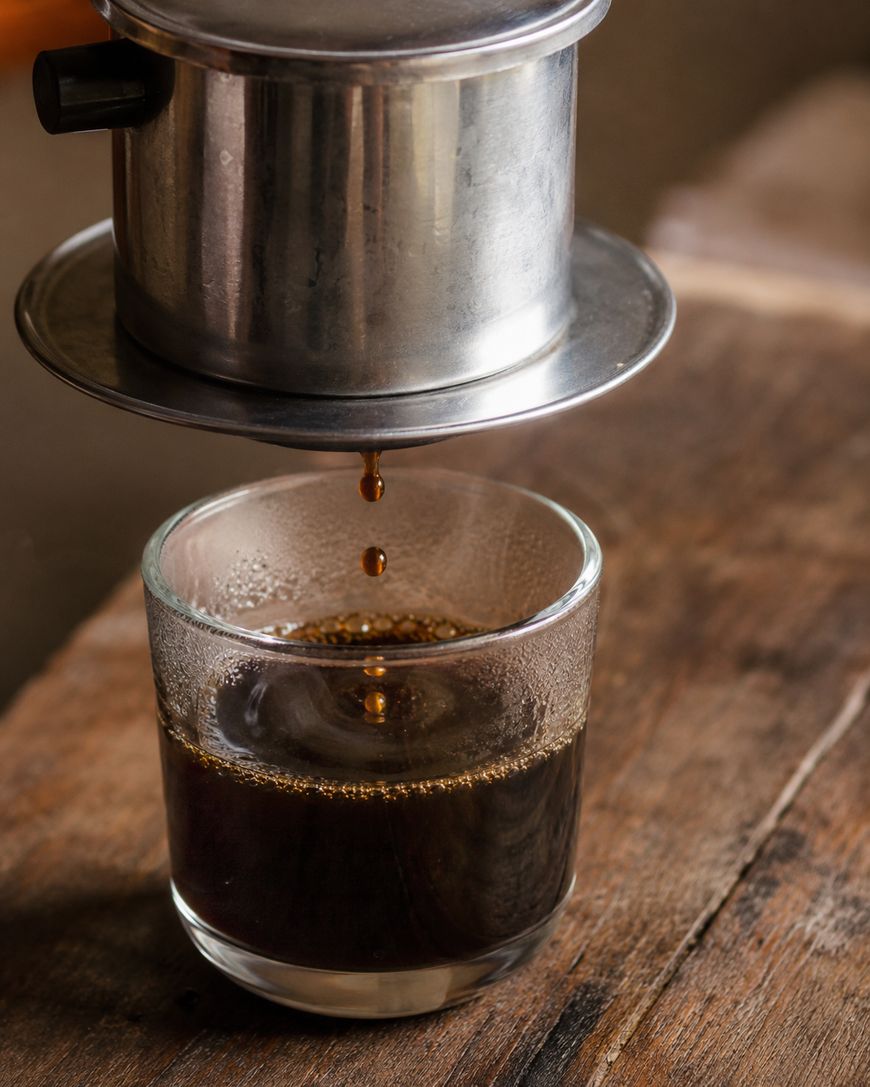
Pour 4 ounces (120ml) of hot water slowly over the gravity press. Place the lid on top to retain heat. The coffee should begin dripping through in about 30 to 45 seconds. A full brew takes 4 to 5 minutes. If it drips in under 3 minutes your grind is too coarse; if it takes longer than 7 minutes your grind is too fine or you pressed too hard.
Step 4: Stir and Pour Over Ice
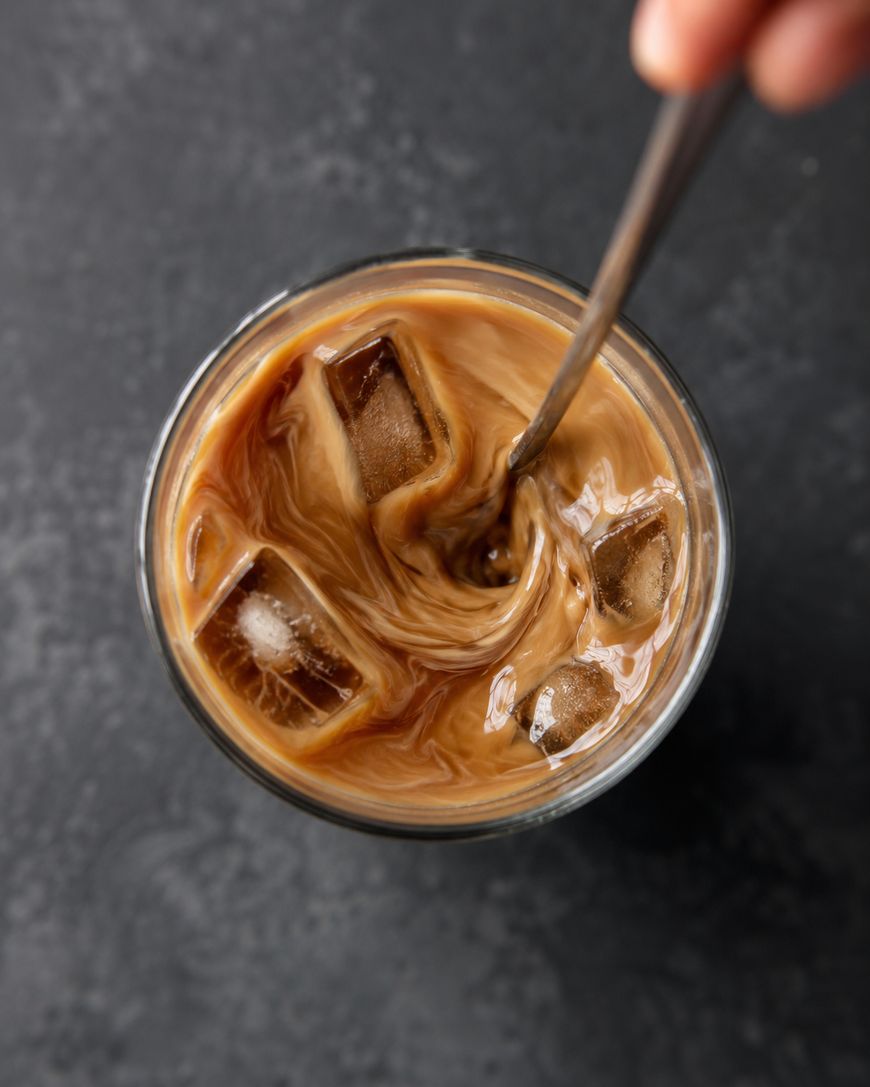
Once all the water has dripped through, remove the phin. Stir the hot coffee and condensed milk together vigorously until the milk is fully dissolved and the colour is uniform. Fill a second tall glass completely with ice cubes, then pour the coffee mixture over the top. Stir once more and serve immediately.
Variations Worth Trying
Ca Phe Sua Nong (Hot Vietnamese Coffee)
Skip the ice entirely and serve the brewed coffee and condensed milk mixture hot in a small ceramic cup. This is the traditional morning version in Vietnam and is just as satisfying in cooler weather.

Egg Coffee (Ca Phe Trung)
A Hanoi specialty, egg coffee whips an egg yolk with sweetened condensed milk and a little sugar until it forms a thick, pale foam. Use pasteurised eggs, since the yolk stays raw, and skip it if you are pregnant, elderly or immunocompromised. The hot brewed coffee sits underneath and the foam is spooned on top. It is rich, custardy, and completely unlike anything else.
Coconut Coffee (Ca Phe Cot Dua)
Blend two tablespoons of coconut cream with ice and a shot of brewed Vietnamese coffee for a frozen, tropical variation popularised in Ho Chi Minh City. Sweeten with condensed milk to taste.
Dairy-Free Version
Replace sweetened condensed milk with a plant-based condensed milk such as Nature’s Charm coconut condensed milk. The flavour profile shifts slightly toward coconut but remains rich and satisfying. Oat milk condensed milk is also available from several specialty brands online.
Storage and Make-Ahead Tips
Brewed Vietnamese coffee concentrate keeps well in a sealed jar in the refrigerator for up to five days. Brew a double or triple batch using the phin and refrigerate the concentrate without the milk added. When you are ready to serve, spoon the condensed milk into a glass over ice and pour the cold concentrate over the top. This is the fastest possible way to serve ca phe sua da on demand.
Do not store the coffee and milk already mixed — the condensed milk separates and the flavour flattens. Always combine fresh at serving time for the best result.
Serving Suggestions
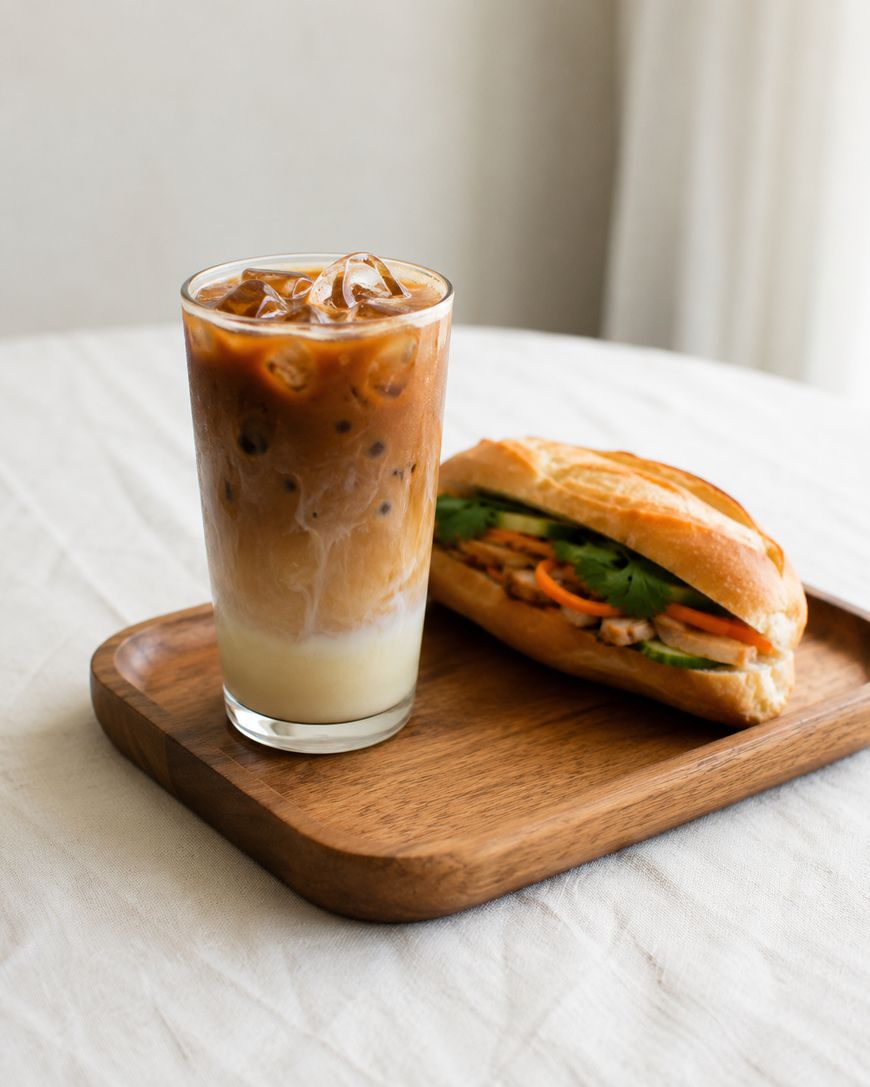
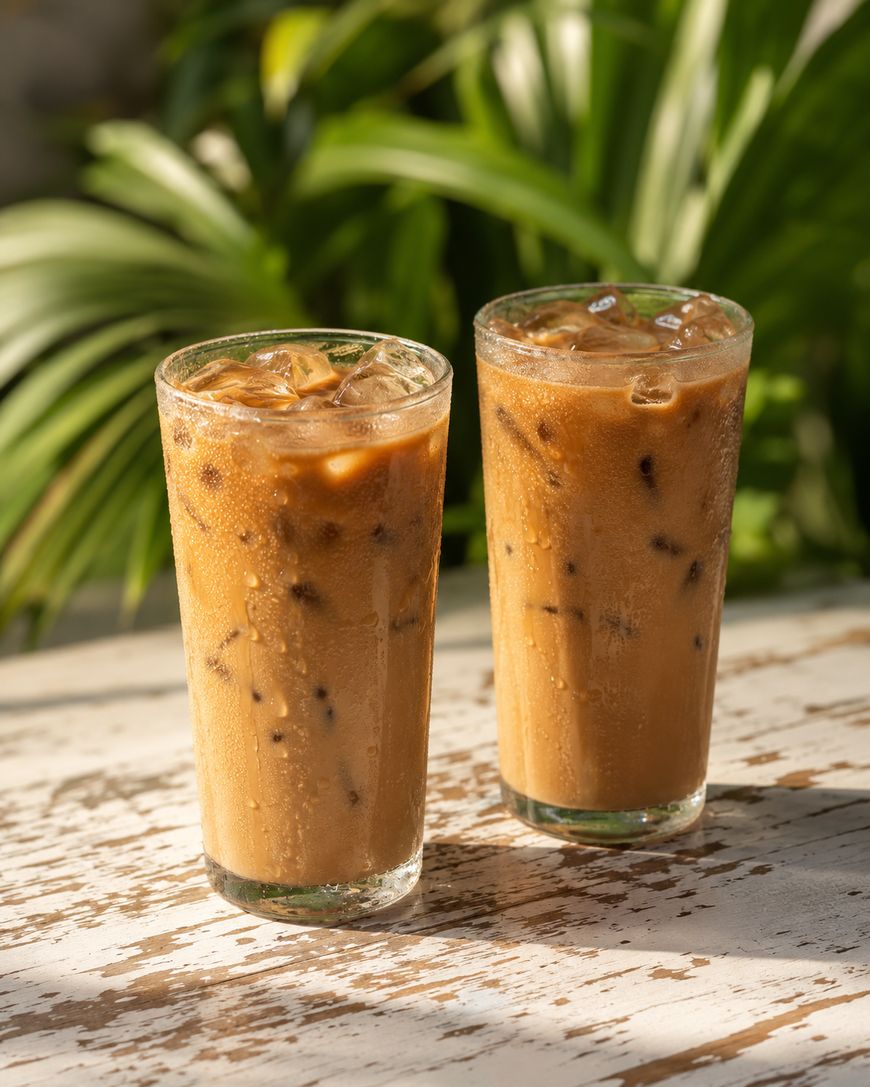
Vietnamese iced coffee pairs perfectly with a banh mi sandwich, pandan waffles, or a simple bowl of congee. The bitterness of the Robusta cuts through rich, fatty foods beautifully. It is also excellent alongside sweet pastries like mochi donuts or a slice of Vietnamese pandan cake. Serve in a tall clear glass so the layered gradient of dark coffee over pale milk over ice is visible before stirring — it is one of the most beautiful drinks you can put on a table.
The Story Behind Ca Phe Sua Da
Vietnam is the second-largest coffee producer in the world, behind only Brazil, and nearly all of its output is Robusta. French colonists introduced coffee to Vietnam in the mid-1800s, planting it in the central highlands of Dalat and the surrounding provinces where the altitude and red basalt soil proved ideal. Because fresh dairy was scarce under colonial administration, sweetened condensed milk became the standard substitute and eventually the defining ingredient of Vietnamese coffee culture.
Ca phe sua da translates literally as “coffee milk ice” — a perfectly accurate description. Street vendors in Ho Chi Minh City (Saigon) and Hanoi serve it from ca phe stalls before dawn, and it remains the daily ritual for millions of Vietnamese people. The phin filter predates the French and is thought to have evolved from traditional Vietnamese brewing vessels, although its exact origin is debated among food historians.
This recipe works because it respects those origins. The Robusta base, the slow phin extraction, and the sweetened condensed milk are not shortcuts or approximations — they are the actual method, unchanged for generations.

Vietnamese Coffee Recipe (Ca Phe Sua Da)
Bold Robusta coffee brewed through a traditional phin filter, stirred with sweetened condensed milk, and poured over ice. Rich, strong, and ready in under 10 minutes.
Ingredients
- 3 tablespoons (20g) Vietnamese Robusta ground coffee (such as Trung Nguyen or Cafe du Monde)
- 2 tablespoons sweetened condensed milk (such as Longevity Brand / Ong Tho)
- 4 oz (120ml) hot water, just off the boil (around 200F / 93C)
- 1 cup ice cubes (full-size, not crushed)
Instructions
- Spoon the sweetened condensed milk into the bottom of a tall glass. Set the phin filter on top of the glass.
- Add the ground coffee to the phin chamber. Shake gently to level the grounds. Place the gravity press insert on top and press lightly — just enough to sit flush, do not tamp firmly.
- Pour a small splash of hot water (about 1 tablespoon) over the press to bloom the coffee. Wait 30 seconds.
- Slowly pour the remaining hot water (4 oz / 120ml total) over the press. Place the lid on the phin to retain heat. Allow the coffee to drip through completely, about 4 to 5 minutes.
- Remove the phin. Stir the hot coffee and condensed milk together vigorously until fully combined and the colour is uniform.
- Fill a second glass completely with ice cubes. Pour the coffee mixture over the ice. Stir once and serve immediately.
Notes
Substitutions: Cafe du Monde (coffee and chicory blend) is an excellent substitute for Vietnamese Robusta. For dairy-free, use Nature's Charm coconut condensed milk or any plant-based sweetened condensed milk.
Storage: Brew concentrate (without condensed milk) keeps in a sealed jar in the refrigerator for up to 5 days. Do not store coffee and milk pre-mixed.
Make-ahead: Brew multiple phin batches and refrigerate the concentrate. Assemble glasses to order with condensed milk and fresh ice.
Technique tips: If the phin drips in under 3 minutes, use a finer grind. If it takes longer than 7 minutes, use a coarser grind or press more lightly. The brew is correct at 4 to 5 minutes.
Grind size: Coarse to medium. Too fine will clog the phin; too coarse will produce a weak brew.
Nutrition Information:
Serving Size:
1 servingAmount Per Serving: Calories: 130Total Fat: 3gSaturated Fat: 2gSodium: 50mgCarbohydrates: 22gFiber: 0gSugar: 22gProtein: 3g
This site provides estimated nutritional information. This information comes from online calculators. Although we try to provide accurate nutritional information, these figures are only estimates.
Use the recipe card above to save, print, or scale this Vietnamese coffee recipe for any crowd.
Frequently Asked Questions
Can I use regular coffee instead of Vietnamese coffee grounds?
You can use any dark-roast Robusta or Robusta-blend coffee and get a very close result. A pure Arabica dark roast will produce a thinner, more acidic cup that lacks the depth of traditional ca phe sua da. Cafe du Monde is the most accessible non-Vietnamese alternative and works very well.
Do I need a phin filter or can I use another method?
A phin filter is ideal and inexpensive, but you can approximate the result using a French press or an AeroPress with a longer steep time. Brew the coffee as strong as possible — aim for a 1:4 coffee-to-water ratio — and proceed with the same condensed milk and ice method.
How much caffeine is in Vietnamese iced coffee?
A standard ca phe sua da made with 20 grams of Robusta grounds and 120ml of water contains approximately 150 to 200mg of caffeine, depending on the brand and grind. Robusta has roughly double the caffeine of Arabica, making this one of the stronger everyday coffee drinks available.
Is Vietnamese coffee very sweet?
With two tablespoons of sweetened condensed milk it is noticeably sweet but balanced by the intense bitterness of the Robusta. You can reduce the condensed milk to one tablespoon for a less sweet cup, or increase to three tablespoons if you prefer a dessert-style drink. Taste and adjust before pouring over ice.
Why is my phin dripping too slowly?
Slow dripping — longer than 7 minutes — usually means the grind is too fine, the gravity press was pressed too firmly, or both. Loosen the grind setting slightly or press the insert down more gently next time. A properly calibrated phin should complete a full brew in 4 to 5 minutes.
Can I make this ahead for a crowd?
Yes — brew a large concentrate batch using multiple phin sessions or a French press, refrigerate in a sealed jar for up to five days without the milk added, and assemble glasses to order. Set out the condensed milk, ice, and concentrate and let guests assemble their own for a Vietnamese coffee bar experience.
Why This Vietnamese Coffee Recipe Belongs in Your Rotation
A Vietnamese coffee recipe this straightforward deserves to be made weekly. It delivers more flavour, more caffeine, and more personality than any drip coffee or pod machine can manage, and it costs a fraction of a cafe visit. Once you have a phin and a bag of Trung Nguyen on the shelf, ca phe sua da is five minutes away at any time. Make it once and it will become your permanent warm-weather ritual.